
Arts and GH Heritage
10 Things You Need To Know About Ghana and Ghanaian Culture


There is a reason why Ghana has become the go-to destination for travelers looking to experience one of Africa’s most vibrant countries. Ghana is a country ripe with entertainment, tradition, exquisite landscapes and phenomenal food, and if you’re one of many who has developed a fascination with the country, you might want to learn a bit more about its culture. Here are ten things you need to know about Ghanaian culture.
Food
You can tell a lot about a culture by its cuisine. Historically, Ghanaians love to prepare dishes that include a starchy component (fufu or waakye), which typically goes with a soup or stew and protein. Most soups and stews have a tomato base and come with beef, goat, lamb, chicken, shrimp, fish or crab. Some popular stapes are jollof, banku, red red, tuo zaafi, boiled yam with kontomire stew and plantain with egg stew. Most dishes are eaten by hand, and a popular dish like fufu is scooped up in pieces with the right hand and then dipped in an accompanying soup (typically goat soap).
Tipping
While we’re on the topic of food, you should note that tipping is not a requirement in Ghana. In fact, it comes as a surprise when diners tip. Tipping should be at the discretion of the patron, but keep in mind that many servers work on paltry wages so adding a tip is a kind gesture they truly appreciate.
Language
Of the more than 90 languages spoken in the country, English is Ghana’s official language with more than 80% of the population speaking it fluently. English was first spoken when England colonized Ghana (then the Gold Coast) in 1867. Even after the country’s independence in 1957, it continued to use English as its official language to conduct government and business affairs. It is also the standard language used in schools.
Sayings, Gestures & Slang
Don’t be surprised if a stranger hisses or smooches at you while around town. Hissing and smooching is a signal to gain someone’s attention and is not something to take offense to. Other popular phrases include “Chale” (which means “my friend”), “Saaaa” (meaning “really?”) and “Akwaaba” (meaning “Welcome”). A sucking of teeth means a person is frustrated.
Music
Before Afrobeats became a hit music genre across the globe, it was deep-rooted in the country and continues to make a huge impact. Ask anyone about Kwami Eugene, Kidi or Sarkodie and you’re sure to be greeted with a smile since their music adds life to any party or get together. What makes music in Ghana special is that it never loses its heritage. Before Afrobeats became popular, highlife dominated the scene, and up until this day, if a DJ plays icons like Fela Kuti or Ebo Taylor, you can almost guarantee the crowd will hit the dance floor.
Festivals
Festivals have increasingly become a part of the Ghanaian experience, especially during the holidays when many tourists visit. From Afrochella to CHALE WOTE, there are countless festivals that cater to individual tastes. In 2018, festivals attracted more than 30,000 people who all experienced the country’s art, music, food and history. You can view the more than 30 festivals hosted each year here.
Customs
Ghanaians are very, very communal so don’t be taken aback if you’re greeted with hugs and back pats when you meet someone for the first time. It is also not uncommon to see a group of people eating a dish from the same plate together. And unlike in many Western countries, Ghanaians like to be in close proximity of each other rather than needing personal space. Also, when you enter a room, it is customary to greet with either a Good Morning, Afternoon or Evening. Never give or receive money with your left hand and always invite others to eat with you. (They will almost always say “Thank you” – which means “No, thank you”) and then continue to eat your meal.
Fashion
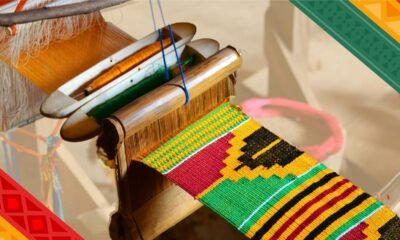
It is no secret that African fabric dominates Ghanaian fashion. From bold patterns to intricate designs, African fabric remains entrenched in Ghanaian culture. Kente cloth, which became popular with African Americans during the Civil Right Movement, is originally from Ghana. Typically, consumers will buy the fabric of choice from a local market, then a tailor will sew their design. Other options are to buy made-to-wear African clothing made of lycra or elastane, which fits all shapes and body types. The latter is especially popular with female pants and dresses.
Religion
Ghana has a huge religious population. A 2018 analysis reported by The Guardian found that of over 106 countries, Ghana and Georgia were the only two countries where people under 40 were more religious than their older compatriots. Christianity remains to be the largest religion in Ghana taking up 70% of the entire population. Following Christianity is Islam, which makes up 25%. Of the 70% who make up Christianity, 18% are Protestant, 13% are Roman Catholic and 5% are Traditionalists.
Tribes…Lots of tribes
There are more than 100 ethnic groups living in Ghana. The Akan tribe is the largest, encompassing approximately 20 million people. The most spoken language of the Akan language is Twi (which comes in four different variations). Other popular tribes in Ghana include Ewe, Fante, Ashanti and Ga.
Article authored by Zaina Adamu. Originally published by Demand Africa. Read originally article here.




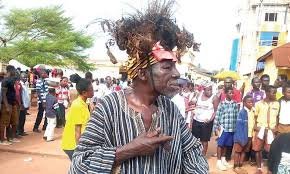





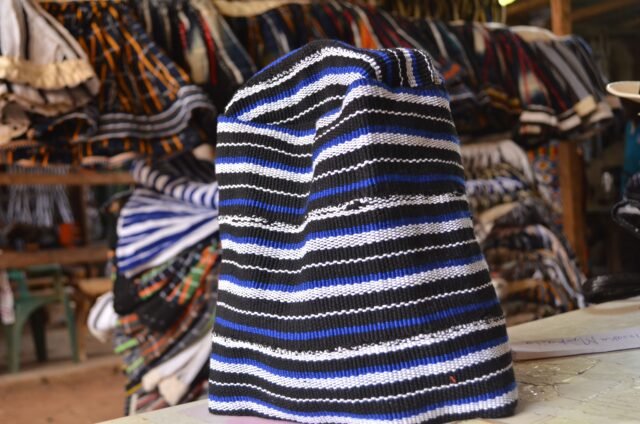
In Ghana’s Upper East Region, a seemingly simple fold of fabric can speak louder than words. Wear your fugu hat the wrong way, and you might just find yourself paying a fine — in goats, sheep, or even a cow.
The fugu, also known as batakari, is a handwoven smock beloved across Ghana. But it’s the matching hat — soft, flexible, and worn like a beanie — that carries a traditional code many outsiders overlook.
Depending on how you fold its topmost part, you could be signalling loyalty to a chief, declaring friendship with all, or, dangerously, claiming spiritual power you don’t possess.
Isaaka Munkaila, a smock dealer with 25 years of experience in Bolgatanga’s fugu market, knows the rules well. He demonstrates the styles one by one.
First, fold the hat’s tip to the back. “That is how chiefs wear it,” he says. “It says: ‘I have many followers. I am a head of community.’” An ordinary person wearing it that way in a chief’s palace risks being seen as a rival. The penalty? Depending on the traditional area, a goat, sheep, or cow.
But not all chiefs are quick to punish. Naab Sierig Soore Sobil IV, divisional chief of Pelungu in the Nabdam district, says ignorance can be a defence.
“If someone from the south comes to my palace wearing it like that, I will correct him and teach him. But if a local does it, the elders will demand a fine — to deter others.”
Fold the tip to point skyward, and you’re safe. That’s the everyday style for ordinary people. “It simply acknowledges God’s presence everywhere,” Munkaila says. Fold it to the left or right, and you’re saying: “I belong with everyone — young and old.”
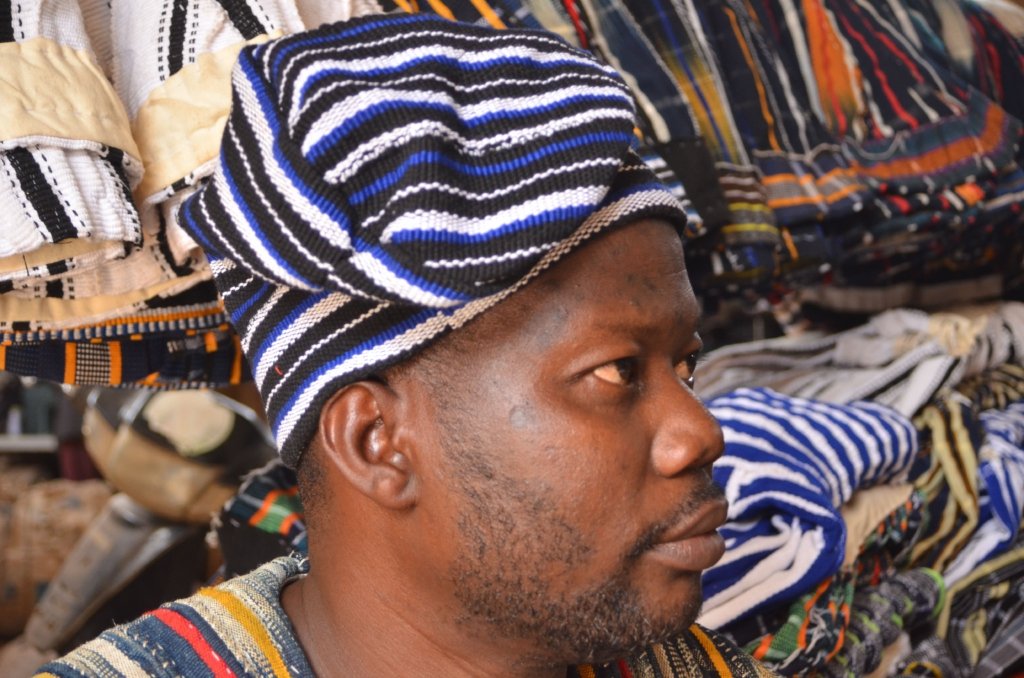
The most dangerous fold? Flat onto the forehead. That style is reserved for spiritually powerful individuals — those with “juju.”
Wear it without the backing of traditional spiritual strength, Munkaila warns, and someone stronger might test you. “You don’t wear it that way if you don’t have the powers.”
While no recorded harm has come from a wrong fold, chiefs have scolded and sanctioned offenders. In the Upper East Region, fines remain small, chiefs acknowledging poverty and changing times. Further north, in the Northern Region, customs are stricter.
For most Ghanaians who grow up with these traditions, the code is second nature. But for visitors, the fugu hat is a quiet reminder: in the north, fashion carries meaning — and sometimes consequences.
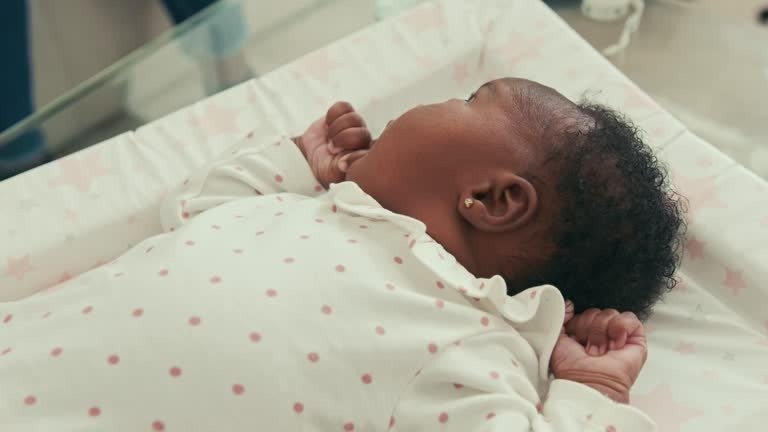
In the frantic pace of the modern world, the arrival of a newborn is often met with a flurry of social media announcements, hospital visits, and immediate pressure on the mother to “bounce back.”
But in Ghana, ancient wisdom dictates a different tempo—one of silence, seclusion, and a profound respect for the threshold between the spiritual and the physical.
For the first seven days of a child’s life, the world is kept at bay. This is not merely a custom; it is a spiritual and physical quarantine designed to protect the most vulnerable. According to traditional belief, a child does not fully inhabit its place on Earth the moment it is born.
Instead, the soul is thought to linger in a transitional state, gradually settling into its new physical form over the first week. During this time, the baby is not yet named. To name the child prematurely would be to call them into a world they haven’t yet fully committed to joining.
This “heavenly” week of seclusion serves a dual purpose that is as practical as it is mystical. While the baby finds its footing, the mother is granted the rare gift of total restoration. In Ghanaian culture, the “fourth trimester” is taken literally.
A mother is expected to retreat, often under the dedicated care of her own mother, who arrives to manage the household for the first month. There are no errands to run and no guests to entertain.
“There is an understanding that there is a physical element of exhaustion and rest that is needed,” the tradition suggests. It acknowledges that birth is a massive emotional and physical ordeal. By closing the doors to the “craziness of our world,” the family creates a vacuum of peace.
@ghanathemotherland Ghana’s numerous and amazing traditions and cultures. #visitGhana #Ghanaourmotherland #fyp #Ghana #ghanatiktok🇬🇭 ♬ original sound – Ghana Our Motherland 🇬🇭
This intimacy allows for uninterrupted bonding, ensuring that the first voices the baby hears and the first energy they absorb is that of their primary protectors.
The climax of this period is the Outdooring or naming ceremony on the eighth day. Only then, once the soul is believed to be firmly rooted, is the child introduced to the community and given their name—often reflecting the day of the week they were born.
It is a transition from the private to the public, from the spiritual “elsewhere” to a concrete identity on Earth.
For a global audience, these practices offer a compelling critique of how we handle birth today. While modern medicine focuses on the clinical, Ghanaian tradition focuses on the holistic. It views the postpartum period not as a hurdle to be cleared, but as a sacred bridge.
By protecting the mother from social expectations and the baby from sensory overload, these traditions provide a blueprint for stability. In the end, the seven-day silence isn’t about isolation—it’s about ensuring that when the soul finally arrives, it finds a home that is rested, ready, and remarkably peaceful.
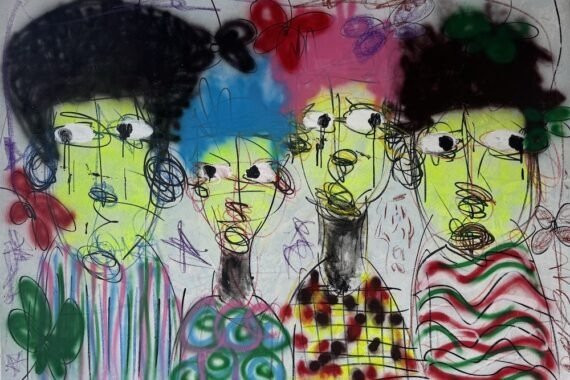
In a quiet gallery space in Accra, a group of painted figures stands tall—faces calm yet heavy with emotion, eyes carrying stories that words often fail to express. This is the world of “Kingdom of Pride,” a new exhibition by Ivorian-Togolese artist Ismael Tamek currently on display at Mix Design Hub.
The exhibition invites visitors into a deeply personal reflection on pride—one of humanity’s most complex and misunderstood emotions. Rather than portraying pride simply as arrogance or ego, Tamek presents it as a powerful force that can both shield and isolate the human spirit.
Through a series of expressive figurative paintings, the artist explores how pride shapes relationships, communities, and even entire societies. His central idea is strikingly simple: many conflicts are not born from hatred, but from pride standing in the way of dialogue. In this sense, pride becomes an invisible wall—quietly blocking empathy while keeping people locked within their own emotional fortresses.
The figures in Tamek’s paintings seem caught within this tension. Their faces reveal a mixture of dignity, vulnerability, and restraint. Each portrait suggests an internal struggle—strength balanced against fragility. The characters stand upright and composed, echoing the sculptural elegance of traditional Yoruba statuary, where posture communicates endurance and resilience.
Another visual signature of the exhibition is hair—painted in vivid bursts of colour that immediately draw the eye. In Tamek’s work, these vibrant tones go beyond decoration. They represent diversity itself: the different identities, beliefs, and cultures that shape human experience. The message is subtle but clear—difference is not a threat but an essential part of coexistence.
For visitors walking through the gallery, the experience becomes quietly introspective. Each painting invites viewers to examine their own relationship with pride: when it protects dignity, and when it quietly builds emotional distance.
Set against the growing energy of Accra’s contemporary art scene, “Kingdom of Pride” adds another thoughtful voice to conversations about identity, emotion, and shared humanity.
The exhibition remains open at Mix Design Hub until April 15, offering audiences a rare chance to encounter Tamek’s work and reflect on the fragile kingdoms we all carry within ourselves.


EU Approves $23 Million Grant to Upgrade Ghana’s Tema-Mpakadan Railway

Ghana Nears Approval of Cannabis Licences as Country Prepares to Launch Regulated Industry

Prof Prempeh Slams Supreme Court, Police Officer Killed in Road Crash and Other Big Stories in Ghana Today
-

 Opinion15 hours ago
Open Letter to the British Ambassador on Reparatory Justice: Ghana’s Call to the British Government
-

 Festivals & Events2 days ago
Celebrating Black Voices in Fiction at the 2026 Black Girl Book Fair
-

 Business2 days ago
Making Sense of the Controversy Surrounding Award of Damang Gold Mine to Engineers & Planners (E&P) Owned by the President’s Brother
-

 Ghana News3 hours ago
Newspaper Headlines Today: Wednesday, April 10, 2026
-

 Ghana News2 days ago
Ghana Celebrates Link to NASA’s Historic Artemis II Lunar Mission Through Astronaut Christina Koch
-

 Taste GH13 hours ago
Smoke, Sweetness and Street Life: The Timeless Charm of Ghana’s Roasted Corn
-

 Ghana News16 hours ago
7 Dead, 2 Missing After Boat Capsizes on Volta Lake in Ghana
-

 Opinion2 days ago
Why President Mahama must not be the new Akufo-Addo