
Culture
Northern Nigeria’s ‘Human Excavator’ Tradition Is Going Viral: This is What the World Can Learn From It (VIDEO)


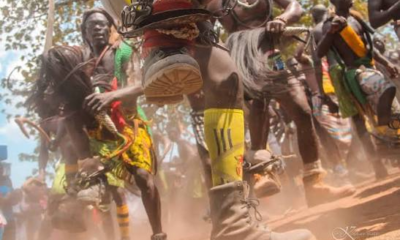
A viral Instagram video from Curious Rock (@curiousrock27) has sparked global fascination with a centuries-old practice from Northern Nigeria known as Geyya or Geya — a communal farming system where dozens of men dig the earth in flawless, musical sync.
The clip, captioned “Why Do These Men Dig in Perfect Sync?”, shows what looks like a human-powered machine: rows of men lifting and striking shovels at precisely the same moment, their movements controlled by one thing — the drum.
“This might be the most efficient way humans have ever worked,” the narrator says. “No machines, just rhythm.”
The Drum as Engine
At the heart of Geya is a single drummer who sets the tempo. His beat dictates every movement. Instead of communicating verbally or coordinating visually — both of which slow large groups down — the men rely entirely on rhythm. The result is astonishing: one sound, one motion, dozens of bodies working as one.
Anthropologists note that rhythm-based labor isn’t unique to Nigeria. Similar techniques were once common in West African fishing crews, Pacific Island canoe building, Afro-Caribbean sugar plantations, and even European chain gangs. But few traditions today maintain the level of coordination and cultural significance that Geya still holds.
Work as Community, Not Chore
Geya isn’t just about efficiency — it’s about mutual support. Once a week, an entire village gathers to help one household complete its hardest farm tasks, from digging new fields to preparing land ahead of the planting season.
Next week, the community moves to another home. No money is exchanged. No one is left behind.
For rural families facing labor shortages or difficult terrain, this rotating support system can be the difference between a good harvest and a failed one. It also reinforces social bonds, teaching younger generations cooperation, timing, and respect for collective work.
Why It Resonates Globally
In many parts of the world, community labor systems — from barn-raisings in the American Midwest to harambee gatherings in Kenya — have faded under the pressures of individualism and mechanization. Geya’s sudden viral fame reflects a nostalgia for forms of cooperation that feel increasingly rare.
It also raises questions the narrator poses at the end of the clip: Could this kind of system work in other parts of the world? Experts say versions of it already do — from community gardens to time-banking — but Geya offers a powerful reminder that coordinated, communal labor can be both highly efficient and profoundly human.
In an era of automation, the sight of synchronized shovels hitting earth in unison is more than mesmerizing. It’s a lesson in what people can achieve together, guided not by machines, but by rhythm, trust, and tradition.











Reels & Social Media Highlights
Ghana’s Timeline Erupts: Showboy’s Crude Plea, Asantewaa’s Silence, and a Nation Divided


On Wednesday, 14th October 2026, Ghana’s social media didn’t just trend — it combusted. At the center of the firestorm: Showboy, a deported ex-convict and self-styled provocateur, posting a video begging TikTok star Asantewaa to sleep with him because “everyone has chopped her except me.”
The phrase — crude street slang for sex — detonated across Facebook, X, and TikTok, splitting users between outrage, disgust, and reluctant laughter.

The Asantewaa saga had been simmering for weeks. First, rapper AMG Armani claimed a one-night stand and a pregnancy.
@notorioustrend1 Showboy Goes Hard On Asantewaa For Exp0sing Some Secret In Her Marriage On TikTok Live #ghanabloggers #ghanatiktok🇬🇭 #asantewaaaaa #showboy #notorioustrend ♬ original sound – Notorious🥷 Trend📸
Then Asantewaa herself explained she left her husband over sickle cell genotype compatibility, insisting she wasn’t with Armani until after the split. Showboy’s video poured petrol on the embers.
But the timeline wasn’t only burning with celebrity gossip. In Obuasi, the GES interdicted a headmaster accused of sexual misconduct after students rioted and vandalized school property.
The story — girls alleging assault inside the headmaster’s bungalow, a menstruation claim used as pretext, a school in ruins — resonated because it echoed a painful national truth: institutions meant to protect children often fail them.
Meanwhile, in Agona Nkwanta, a viral video of a man assaulting his wife led to a three-month jail sentence on the very same day, a rare moment of accountability that many users celebrated, even as they questioned why it took a viral clip for justice to move.
What made October 14th distinctly Ghanaian was the collision of these stories.
A culture wrestling publicly with how women are treated — by men like Showboy who see clout in disrespect, by authority figures who abuse trust — while simultaneously turning tragedy into meme fodder, joke captions, duet videos.

As the festive season winds down, Accra has one more reason to stay awake. Live in Ghana – MaddFest arrives at Alora Beach Resort on January 3, 2027, promising six hours of nightlife and celebration for partygoers eager to keep Ghana’s festive spirit alive.
Organised by December in Ghana, an event organiser with experience hosting entertainment events, MaddFest forms part of the social energy surrounding Ghana’s popular festive season, when music, nightlife and gatherings draw locals and international visitors together.
A Night Out by the Beach
Scheduled for Sunday, January 3, from 10 p.m. to 4 a.m., the event offers an opportunity to experience Accra after dark in a beach resort setting.
While specific performers, food offerings and activities have not yet been detailed, the event’s late-night format promises an extended opportunity for guests to socialise and enjoy the city’s entertainment scene.
Ghana’s December festivities have grown into a major attraction for the diaspora and international travellers, with concerts, parties and cultural gatherings creating opportunities to reconnect with home and discover contemporary Ghanaian music and lifestyle.
Events such as MaddFest contribute to this atmosphere, where entertainment becomes a meeting point for different generations and cultures.
Why MaddFest Deserves a Place on Your Calendar
For visitors, MaddFest offers a chance to experience Accra’s nightlife beyond daytime sightseeing.
Ghanaians returning from abroad may also find it an opportunity to reconnect with friends and enjoy the country’s lively entertainment culture.
The event is not presented as a traditional cultural festival, but its social setting reflects the role music, dancing and shared celebrations play in Ghanaian life.
With Alora Beach Resort providing the setting, guests can plan a night out that extends into the early hours of Monday morning.
Whether you are visiting Ghana for the festive season or simply looking for another reason to enjoy Accra, Live in Ghana – MaddFest offers a date worth considering. Check the official event listing for ticket details and announcements before making plans.
Arts and GH Heritage
Inside Togo’s Abandoned Colonial Building, African Artists Reclaim Cultural Memory
A shared bowl of palm wine, a handful of kola nuts or a lively exchange between market traders can tell a story that words alone cannot capture.
In Atakpamé, Togo, artists Kojo Biney and Ray Agbo are exploring these everyday encounters as powerful expressions of African identity, using art to reconnect cultural memory with a complicated colonial past.
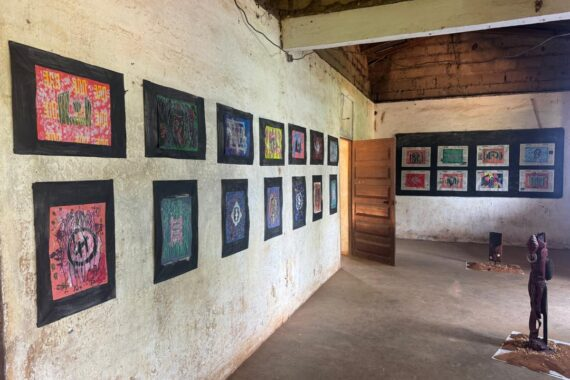
Their exhibition, Conversations: Symbolism and Lifestyle, forms part of the Karp Kamina Artists and Researchers Residency 2026.
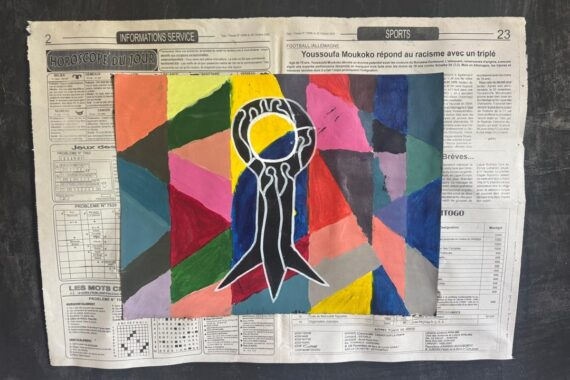
Presented inside an abandoned German colonial building, the exhibition brings paintings and sculptures into dialogue with newspaper pages, creating an unusual encounter between personal memory, public history and contemporary African expression.
Reading the Symbols of Everyday Life
Atakpamé, known as the “city of seven hills”, sits within a cultural landscape shaped by Ana and Ewe-speaking communities. Here, social relationships are often expressed through gestures, shared rituals and objects whose significance extends beyond their practical use.
Biney and Agbo draw attention to these familiar practices, inviting audiences to recognise the cultural knowledge embedded in ordinary interactions.
Their work suggests that traditions survive not only through formal ceremonies or written records, but also through repeated acts of hospitality, negotiation and togetherness.
A Colonial Space, Reclaimed Through Art
The exhibition’s setting adds another dimension. A building associated with German colonial rule becomes a place where contemporary African artists examine the identities and relationships that history cannot fully contain.
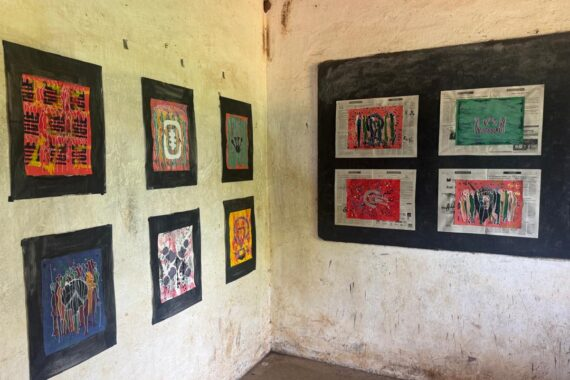
The newspapers displayed alongside the artworks further complicate the encounter, prompting questions about whose stories are recorded and how collective memory is preserved.
Closing on October 16, 2026, the exhibition offers a timely reminder that heritage is not simply inherited; it is continually interpreted.
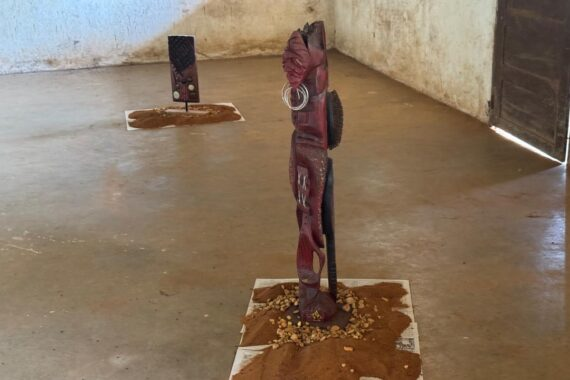
By transforming an abandoned building into a space for artistic exchange, Biney and Agbo invite visitors to see cultural memory as something communities can actively question, share and renew.


Dressing for Your Shape: How Strategic Styling Can Transform Everyday Fashion

The Scale Can Lie: Why Lifting Weights May Help You Lose More Fat

Ghana’s Timeline Erupts: Showboy’s Crude Plea, Asantewaa’s Silence, and a Nation Divided
-

 Ghana News21 hours ago
OBITUARY: Gamal Gorkeh Nkrumah, Son of Ghana’s Founding President, Dies in Cairo
-

 Festivals & Events2 days ago
LALID LIVE 2026: An Evening of Entertainment and Connection in Accra
-

 Sights and Sounds1 day ago
EPP BookShop at Legon: A Destination for Students, Families and Book Lovers
-

 Health & Wellness23 hours ago
Walking Is More Than Exercise: Small Steps That Can Transform Your Health
-

 Festivals & Events19 hours ago
MaddFest 2027: Welcome the New Year with a Night of Celebration in Accra
-

 Taste GH2 days ago
From Waakye to Fufu: How to Enjoy Ghanaian Food and Eat Well
-
 Homes & Real Estate1 day ago
Building Smarter in Ghana: Could Plastic Rebar Clips Improve Construction Efficiency?
-
 Arts and GH Heritage1 day ago
Inside Togo’s Abandoned Colonial Building, African Artists Reclaim Cultural Memory