
Perspectives
What the US strike on Venezuela could mean for global oil prices


In this analysis, Adi Imsirovic of University of Oxford surmises that the U.S. military strike on Venezuela in early January 2026 – which included airstrikes and the capture of President Nicolás Maduro – has raised questions about its effects on global oil prices.
——-
The capture of former Venezuelan president Nicolás Maduro by the US intelligence services and armed forces has resulted in a frenzy of speculation about its consequences. But there is no doubt that the events were closely linked to the oil riches of the country. While the political situation in Venezuela remains fluid, there is far more certainty about its position as an oil producer.
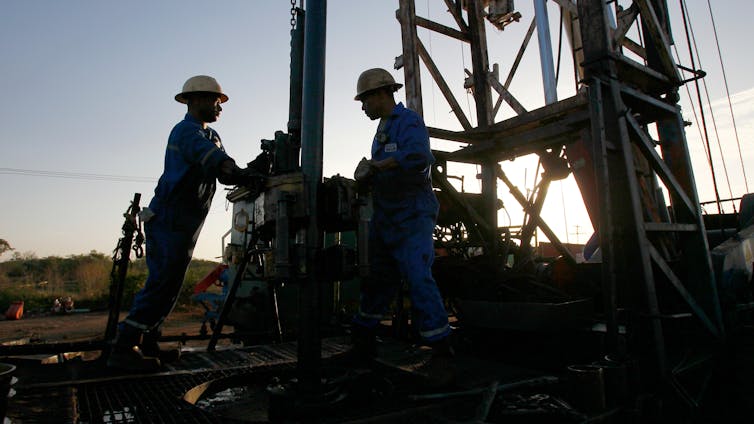
For a start, Venezuela has one of the highest proven oil reserves in the world. The number frequently thrown around is 300 billion barrels, more than any other country, including Saudi Arabia.
But it’s important to be cautious about the numbers coming from the outside of the Organisation for Economic Cooperation and Development (OECD). Statistics used within the OECD clearly distinguish between proved, probable, possible and contingent reserves and require consistency over time.
Proven reserves are defined as the oil in the ground that can be extracted economically, with the prevailing technology. It is a variable, not a constant – and the Venezuelan reserves estimate goes back to 2008.
As oil prices increase, the reserves increase too. This is because higher profits can justify the higher costs of extracting additional oil that would otherwise remain in the ground.
Initial production is usually easy due to the natural gas pressure of the well. Over time, this pressure falls and additional measures such as gas and water injection may have to be used – and these are expensive.
In 2008, the international oil prices approached US$140 (£104) a barrel. Currently, most of the Venezuelan oil sells at a US$25 discount to the Brent benchmark, at around US$35 a barrel. All other things being equal, the current proven oil reserves may be well below 100 billion barrels – less than a third of the figure that’s frequently cited.
The problem with Venezuela’s oil
Most Venezuelan oil is very heavy (tar-like) and contains a lot of sulphur. This makes production and transportation very expensive. Heavy oil needs to be diluted with naphtha (a liquid hydrocarbon) or gas oil first, and sulphur must be removed during the processing with expensive hydrogen.
Only very sophisticated refineries on the US Gulf Coast and some new refineries in India, the Middle East and China can process this kind of oil. It is no coincidence that Venezuelan oil is sold at huge discounts relative to other grades.
American oil companies started their activities in Venezuela almost a century ago, and by 1960s, the US was the largest foreign investor in the country. In line with most countries in the Organization of the Petroleum Exporting Countries (Opec), the Venezuelan oil industry was nationalised in 1971 and turned into the country’s oil monopoly, Petróleos de Venezuela SA (PDVSA).
The Venezuelan oil industry then suffered from decades of political mismanagement, purges and US sanctions. Due to the lack of investment, production in the country has fallen from over three million barrels a day (mbd) in the early 2000s to below one mbd last year (see the graph below). This decline was particularly noticeable during the Maduro regime when the ruling party used PDVSA as a cash cow, investing little or nothing back into the industry.
Due to the state of the oil sector, even a relatively small increase in oil production in Venezuela would require billions of dollars of investment. A significant increase would require years of massive funding – even with a stable political environment.
It is not clear that events in Venezuela will have any significant immediate impact on the global oil market. The initial reaction was for the oil price to fall. But the global oil market is oversupplied right now and even the total loss of Venezuelan exports (which is unlikely) would have only a minor impact on the prices.
The decline of Venezuelan oil production:
In the long term, the state of the industry can only improve (barring wars and civil strife). Additional barrels from Venezuela would only make life harder for Opec and other producers by making the oversupply worse. Indeed, oil prices tumbled again after US President Donald Trump vowed to seize up to 50 million barrels of Venezuelan oil.
Claims that the events would hurt China seem overblown. China (together with India) has been a major buyer of Venezuelan oil, but it represented no more than 5% of the volume of Chinese imports. Canada is another producer of heavy oil, and it has been shifting its exports from the US to China for some time. This trend is likely to continue.
Overall, there is little economic rationale for a “takeover” of the Venezuelan oil industry. If the US wanted Venezuelan oil, it could simply have lifted the sanctions imposed by Trump in 2019 and let their oil companies buy it, like everyone else.
It is the long-term political consequences of this legally dubious US action that are worrying the oil market. President Trump appears to have a growing appetite for military adventure which may include further attacks on Iran, a major oil-producing nation and a member of Opec.
Nobody is quite sure what Trump may do next, and the US action may also be used to legitimise Russia’s invasion of Ukraine. This had already rattled energy markets. The last thing the oil market needs right now is more uncertainty.
Adi Imsirovic, Lecturer in Energy Systems, University of Oxford
This article is republished from The Conversation under a Creative Commons license. Read the original article.





Digital Storytelling Team, The Conversation
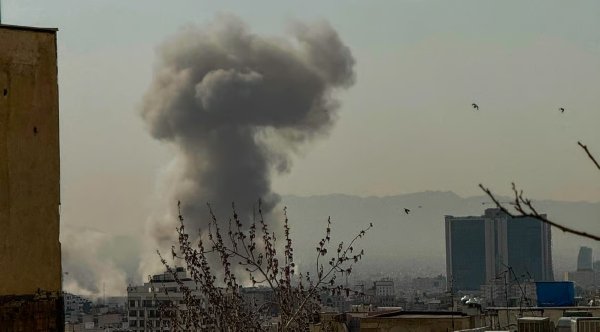
The US and Israel have launched joint coordinated attacks on Iran, prompting retaliatory strikes from Iran on Israel and US military bases in the region.
Ayatollah Ali Khamenei, Iran’s supreme leader for 36 years, has been killed in the strikes, Iranian state media reported.
Iran’s Supreme National Security Council says he was killed early Saturday morning at his office. Satellite imagery shows significant damage to parts of the Leadership House compound, which is Khamenei’s office in Tehran.
Iranian school struck
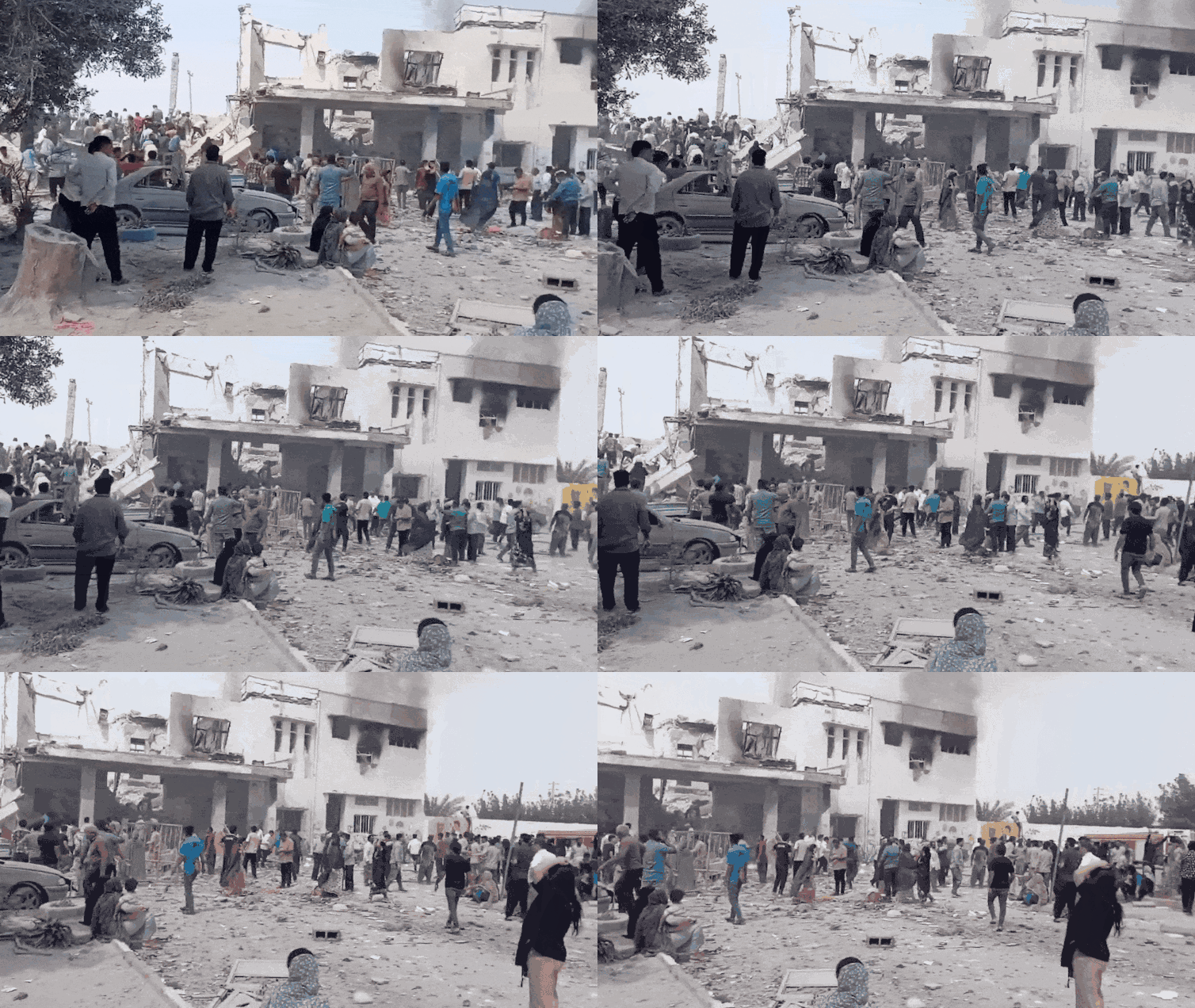
More than 100 children have reportedly been killed by US and Israeli air strikes on a school, according to Iranian authorities. They say the strikes hit a girls’ elementary school in the city of Minab in the country’s south.
Video has emerged of crowds of people searching through the rubble.
“Hundreds of civilians have been killed and injured as a result of the aggression and atrocious crime of the United States regime and the Israeli regime, and the deliberate … targeting of civilian infrastructure,” Amir-Saeid Iravani, Iran’s ambassador to the United Nations, told an emergency meeting of the UN Security Council.
Digital Storytelling Team, The Conversation
This article is republished from The Conversation under a Creative Commons license. Read the original article.
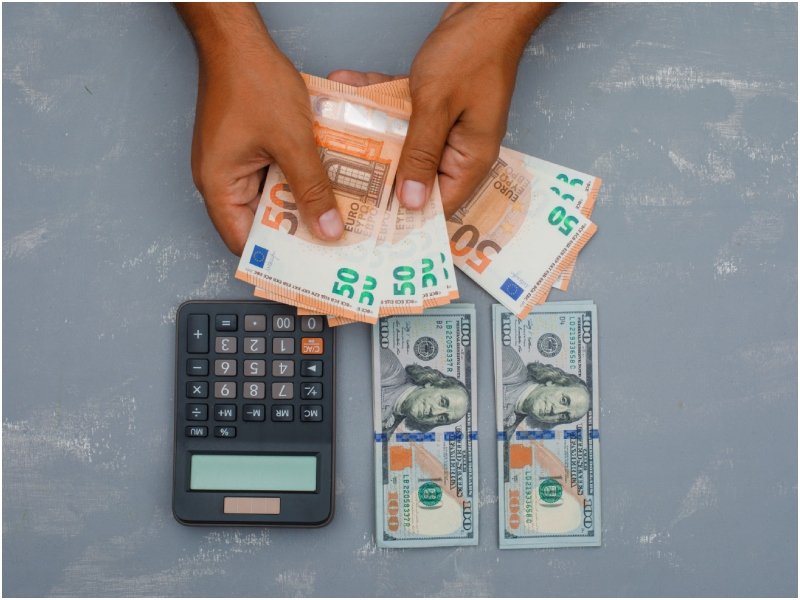
While Ghana’s headline macroeconomic indicators—falling inflation, a sharply appreciating cedi, and IMF programme progress—have earned international praise, a deeper, quieter crisis continues to erode the daily lives of ordinary citizens, writes Dominic Senayah. In this powerful opinion piece, the policy analyst and international relations professional argues that the country’s recent exchange-rate stability masks a structural cost-of-living emergency that no salary can reasonably sustain.
What the Exchange Rate Conceals: Ghana’s hidden cost of living crisis
By Dominic Senayah
There is a quiet arithmetic to suffering. It does not make front pages. It does not generate dramatic headlines that bring in international cameras or set Parliament alight. It happens instead at the market stall, at the landlord’s door, at the end of the month when the salary notification arrives, and the mental calculation begins and fails. It is the arithmetic of a country where the cost of simply existing has outpaced the means by which ordinary people are expected to exist. This is Ghana’s hidden cost of living crisis, and those of us who love the country, who hold its passport, who carry it with us wherever we go in the world, can no longer afford to normalise it.
I write this as a Ghanaian living and working in England. The distance has not made me detached. If anything, the contrast has sharpened my concern. I know what a functioning relationship between wages, housing, and food looks like in practice. And I know that what Ghana has at present falls far short of what it is capable of delivering to its people.
The Rent That No Salary Can Justify
Let us begin where every life begins, with a roof. As of early 2026, a one-bedroom apartment in Accra commands around GH₵2,200 per month, with Cantonments, Airport Residential, and Labone pushing considerably higher. But the monthly rate is only part of the punishment. It is normal in Ghana to pay one or two years of rent upfront, placing an enormous financial demand on a tenant before they have even moved in. The average monthly salary sits at approximately GH₵2,579 — roughly $210 at current exchange rates — with entry-level civil servants earning between GH₵2,200 and GH₵3,200. A mid-level public servant asked to pay two years upfront on a modest Accra flat faces a demand exceeding a full year of gross salary, payable before a single sock has been unpacked.
The comparison with Nigeria is instructive. Lagos — Africa’s most commercially intense city, far larger and more complex than Accra, regularly offers comparable housing at lower dollar-equivalent rates. That a smaller city prices its residents more aggressively is a structural anomaly deserving frank scrutiny. Ghana’s landlord class, hedging against cedi depreciation through dollar-denominated rents, has turned housing into a mechanism of extraction that the wage economy cannot support. The result is a generation of professionals commuting three to five hours daily because they cannot afford to live near where they work.
A Country That Grows Food and Cannot Afford to Feed Itself
Ghana spans multiple agro-ecological zones supporting cocoa, yams, plantains, cassava, tomatoes, pepper, groundnuts, maize, and rice. The ecological potential is profound. And yet the price of tomatoes in an Accra market routinely exceeds what the same produce costs in countries that must import it from thousands of miles away. This is a policy failure, not a natural one. According to the World Food Programme, Ghana loses US$1.9 billion annually to post-harvest waste due to poor road networks, inadequate storage, and the near-total absence of cold chain infrastructure, with losses estimated between 20 and 50 per cent across various crop types. The farmer in Brong-Ahafo who watches tomatoes rot on the roadside because the truck did not come is not a lazy farmer. He is a farmer abandoned by systems never built with sufficient urgency.
At the consumer end, supply is erratic, middlemen extract margins at every link, and what arrives in the city comes bruised and expensive. Ghana, once a significant tomato producer in West Africa, now imports over 7,000 metric tons of tomatoes annually from neighbouring countries. The same logic applies to rice, poultry, and a growing range of processed foods. Ghana has fertile land and an empty value chain, and until the infrastructure connecting the two is treated as a national emergency, this contradiction will persist.
Salaries, Corruption, and the Structural Explanation Nobody Wants to Give
Petty corruption in Ghana is routinely framed as a moral failure. The condemnation is not unwarranted, but it rarely arrives at the structural diagnosis necessary for real solutions. When a port official takes an unofficial payment or a nurse charges informally for a service that should be free, the issue is often not characterised. It is mathematics. If the average salary is GH₵2,579 and a basic one-bedroom flat in Accra costs between GH₵1,500 and GH₵2,800 per month, the gap between income and shelter is insurmountable before a single meal or school fee is considered. People in structurally impossible positions find structural workarounds. Ghana cannot build trustworthy institutions on the foundation of a workforce that cannot survive on its formal income. The enforcement agencies expected to police corruption while living within these same constraints are being asked to do something human societies have always found very difficult to sustain.
The Import Economy’s Double Standard
Walk through any Ghanaian market, and the shelves are full of Chinese electronics with dubious longevity, imported cooking oil, and imported clothing. The quality differential between goods manufactured for African markets and those produced by the same factories for Western consumers is not accidental. It is a calibrated response to weak regulatory environments. Where consumer protection law lacks enforcement, the incentive to produce durably disappears. Ghanaian consumers are being sold shorter lifespans in their goods and longer suffering in their wallets. Capital that could fund agro-processing in the forest belt or cold chain infrastructure in the north instead cycles through import speculation with a six-month horizon, extracting from the population rather than building it up.
Towards Price Regulation: What Is Actually Feasible
This is where most commentary on Ghana’s cost of living crisis falls short, diagnosing the problem without engaging seriously with solutions. Full command-style price fixing is not the answer. Ghana tried broad price controls under the Rawlings era, and the outcome was predictable: market distortions, shortages, and a thriving black market that harmed the very people it was meant to protect. But there is a meaningful space between laissez-faire chaos and discredited command economies, and Ghana has both the institutional architecture and the precedent from comparable economies to occupy it.
The first viable intervention is a national reference pricing system for staple goods. The government already publishes some commodity price data, but inconsistently and with almost no reach into the market itself. A properly resourced weekly publication of government-verified benchmark prices for staple foods displayed at market entrances, bus terminals, and broadcast via radio and SMS to rural communities arms the consumer with information, which is the most powerful and least distorting check on seller greed. Rwanda has implemented this model for agricultural produce with a measurable effect on price gouging at the retail level. It preserves market freedom while eliminating the information asymmetry that predatory pricing depends upon.
The second is a functioning rent tribunal. Ghana’s Rent Act of 1963 technically prohibits excessive advance payment demands, but it is widely ignored because the mechanism for enforcing it is inaccessible to ordinary tenants. A simplified housing tribunal modelled on those that operate effectively in South Africa and the United Kingdom, that allows tenants to challenge dollar-denominated rents and multi-year upfront demands, would be a targeted, enforceable intervention requiring legislative update rather than significant fiscal outlay. The legal framework exists. What is missing is the political will to resource and publicise it.
The third is deeper utilisation of the Ghana Commodity Exchange, launched in 2018 but still dramatically underused. A functioning commodity exchange creates transparent, publicly visible price discovery for agricultural goods, which structurally reduces the power of middlemen to arbitrarily inflate margins between farm gate and urban market. Integrating smallholder farmers and market women through mobile phone access is both technically feasible and commercially attractive given Ghana’s mobile penetration rates. This is not a distant aspiration. It is an operational gap in an existing institution.
The fourth is consumer protection enforcement with genuine deterrent value. Current fines under the Consumer Protection Agency Act are derisory relative to the profits available from price exploitation. Raising penalty thresholds meaningfully and giving the agency a publicised rapid-response function, a hotline that triggers market inspection within 48 hours of a complaint,t would shift the risk calculus for sellers without requiring price fixing of any kind. None of these measures alone resolves the crisis. Together, they constitute a coherent, Ghana-feasible regulatory architecture that addresses greed at its structural root rather than its moral surface.
Where the Government Has Done Well — And What Must Follow
Macroeconomic honesty requires acknowledging what has been achieved. Inflation fell for thirteen consecutive months, from 23.5 per cent in January 2025 to 3.8 per cent in January 2026, single digits for the first time since 2021. The cedi appreciated 40.7 per cent against the dollar in 2025, reversing the prior year’s 19.2 per cent depreciation, earning World Bank recognition as the best-performing currency in Sub-Saharan Africa. The IMF completed its fifth Extended Credit Facility review in December 2025 with positive assessments across growth, reserves, and debt trajectory. Currency stability anchors import prices, reduces the landlord’s dollar-denomination incentive, and creates the predictability businesses need. But stability is the floor of a better economy, not its ceiling. The ceiling requires structural transformation in agriculture, manufacturing, institutional quality, and the wage-to-cost relationship,p which stabilisation enables but cannot itself deliver.
The Reorientation Ghana Needs
Ghana will not become Denmark overnight, and no reasonable person expects that. But the distance between where Ghana is and where it is capable of being is not as vast as learned helplessness suggests. Wealthy Ghanaians must be persistently encouraged, through deliberate policy incentives andcultural expectationsn, to invest in domestic productive capacity rather than import speculation or offshore accumulation. Patient capital that builds agro-processing, cold chain networks, or quality housing is less glamorous than a Shenzhen container but far more durable as national wealth.
Young Ghanaians expressing frustration are not being ungrateful. They are giving accurate feedback to a system that has not yet decided to work for them. Their constrained futures are not the inevitable consequence of poverty but the outcome of choices about investment, infrastructure, and the relationship between wages and the cost of living that can be made differently.
The exchange rate is the number the world watches closely. What it conceals is the daily life Ghanaians actually live. The stability of 2025 has been earned. Now comes the harder, more human work of making it mean something to the nurse in Tamale, the graduate in Kumasi, and the family in Nima who still cannot make the numbers add up.
About the Author

Dominic Senayah is an International Relations professional and policy analyst based in England, specialising in African political economy, humanitarian governance, and migration diplomacy. He holds an MA in International Relations from the UK and writes on trade policy, institutional reform, and Ghana–UK relations for audiences across Africa, the United Kingdom, and the wider Global South.
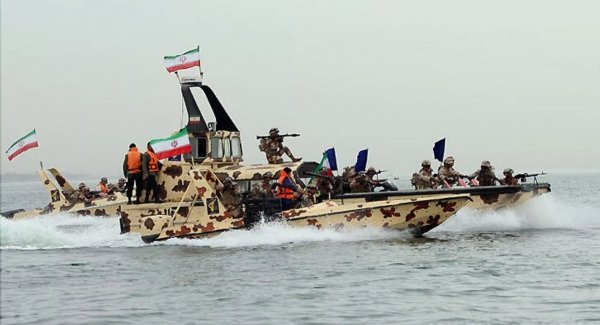
The US and Israel’s unprovoked attack on Iran and Iran’s retaliatory closure of the narrow chokepoint exit from the Persian Gulf may have “cascading consequences for the global economy,” culminating in severe blows to the US dollar and other fiat currencies, says energy economist Dr. Kazi Sohag.
“Approximately 17-20 million barrels of oil – representing over 20% of the world’s daily consumption – pass through this narrow waterway every day. These shipments originate primarily from Saudi Arabia, Iraq, the UAE, Kuwait, Iran, and Qatar, and flow toward major importers including China, India, Japan, South Korea, and the European Union,” Sohag explained.
“But the ripple effects would not stop there. The Bab el-Mandeb Strait and the Suez Canal—already volatile due to Houthi activity in the Red Sea—could also face further disruptions. Currently, 8.8 to 9.2 million barrels of oil and 4.1 billion cubic feet of liquefied natural gas transit those routes daily. A synchronized blockade across these chokepoints would magnify the supply shock exponentially.”
If sustained, the “immediate consequence” of the supply disruption will be “a sharp spike in energy prices,” not only via physical shortages of crude, but thanks to amplification by financial market speculators, hedge funds, banks and algorithmic traders trading futures, Sohag explained.
More broadly, the energy crunch may cause global stock markets to plunge and inflation to surge, “not just in fuel, but across transport, manufacturing and food production, rendering basic goods and services unaffordable for many.”
Worse yet, “as the gap between monetary supply and real economic output widens, confidence in fiat currencies could erode, potentially triggering a crisis in the global monetary system,” Sohag stressed.
“Oil-exporting countries such as Russia, Nigeria, Angola, Malaysia, and even the United States could see short-term gains from rising prices. But for the US, the benefits would be mixed. While energy producers might profit, a collapse in global trade and a reduction in dollar-denominated transactions could weaken the dollar’s international standing.”
“The world must now brace for a cascade of economic, financial, and geopolitical consequences that could redefine the contours of international stability for years to come,” the economist summed up.


Ibrahim Mahama Acquires New $70 Million Private Jet

Ghana’s Top Muslim Leader Condemns Khamenei Assassination, Calls for New World Order Based on ‘Right Over Might’

The New Wave of “Afro-Minimalism”: Redefining Luxury Beyond the Print
-

 News13 hours ago
Ghana Gears Up for Vibrant 69th Independence Day Celebrations: Parades, Plays, Poetry, and Heritage in Focus
-

 Tourism11 hours ago
Emirates Resumes Limited Flights from Dubai as Middle East Airspace Slowly Reopens Amid Ongoing Conflict
-

 Ghana News14 hours ago
Newspaper Headlines Today: Tuesday, March 3, 2026
-
 Ghana News14 hours ago
Ayawaso East By-Election Results Trickle in, ECG Audits Fast-Reading Meters, and Other Trending Topics in Ghana (March 3, 2026)
-

 Ghana News2 days ago
Court Slaps Barker-Vormawor with GH₵5m for Defaming Kan Dapaah and Other Trending Topics in Ghana (March 2, 2026)
-
 Fashion & Style5 hours ago
The New Wave of “Afro-Minimalism”: Redefining Luxury Beyond the Print
-
 Ghana News4 hours ago
Ghana’s Top Muslim Leader Condemns Khamenei Assassination, Calls for New World Order Based on ‘Right Over Might’
-
 Commentary11 hours ago
At a glance: US‑Israel attack on Iran