
Arts and GH Heritage
W.E.B. Du Bois’ Ghana Exile: Why America’s Reject Became Africa’s Historian

The house at No. 22 First Circular Road in Cantonments is quiet now. Bougainvillea spills over the perimeter wall. The grounds, as visitors often note, possess a “tranquil beauty” that seems deliberately removed from the clamor of Accra’s traffic-choked arteries.
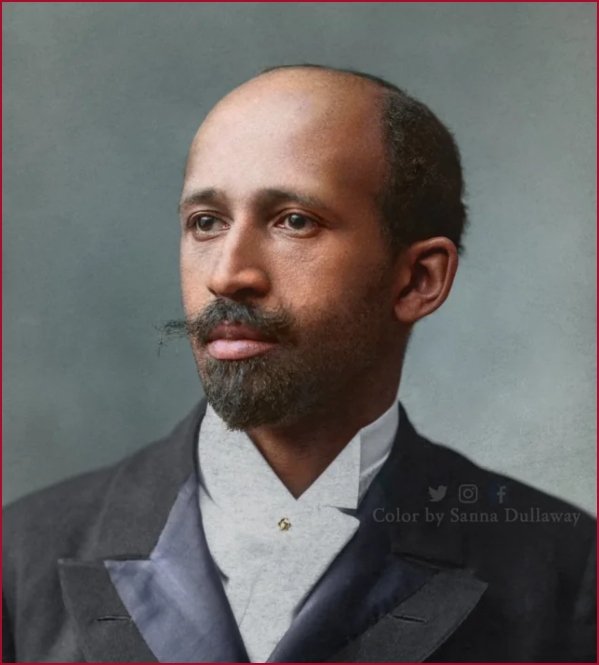
It is here, in this unassuming bungalow, that William Edward Burghardt Du Bois spent the final two years of his life. It is here that he died, on August 27, 1963, at the age of 95. And it is here, in a marble mausoleum behind the house, that he and his wife, Shirley Graham Du Bois, are interred.
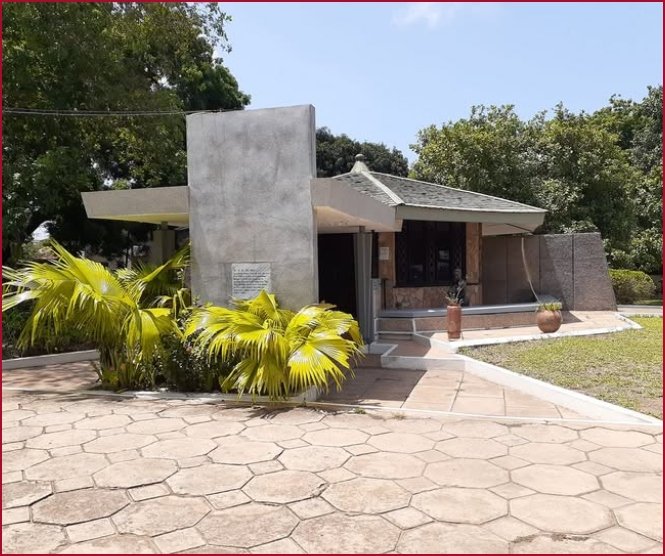
But for the thousands of African American tourists who have made pilgrimage to this site since Ghana’s 2019 Year of Return campaign, the Du Bois Centre represents something far more complex than a grave. It is the physical manifestation of a question that haunts the Black American encounter with Ghana: What does it mean to be embraced by a country that your own rejected?
“We didn’t really get to know him,” one Black American traveler, visiting the Centre with a heritage tour group, recently remarked. “He was a hero to Black America, but not necessarily to white America. And while you’re going through that museum, you get to see why.”
The observation, captured in a travel vlog from a retired military couple’s first trip to Ghana, cuts to the heart of Du Bois’ American erasure—and Ghanaian reclamation.
The Scholar and the Stateless
By the time Du Bois arrived in Accra in 1961, he had already lived several lifetimes. He was the first Black American to earn a Ph.D. from Harvard. He was a founder of the NAACP and the editor of The Crisis for a quarter-century. He had published 21 books, organized five Pan-African Congresses, and established himself as the preeminent Black intellectual of the 20th century.
He was also, at 93, a man without a country.
The United States government, in the throes of Cold War anti-communist hysteria, had refused to renew his passport. Du Bois had been indicted in 1951 as an unregistered foreign agent for his peace activism; though acquitted, he remained under FBI surveillance and was effectively barred from international travel.
“Hounded by the U.S. government and marginalized by the academic and policy establishments that once welcomed him,” writes historian Zachariah Mampilly, “Du Bois was fleeing his homeland. It was a figurative exile that turned literal when the U.S. State Department refused to renew his passport, rendering him functionally stateless.”
Enter Kwame Nkrumah.
Ghana’s first president, then three years into his experiment in independent African governance, extended an invitation: Come to Accra. Direct the Encyclopedia Africana. Help us document, for the first time, the history and civilization of the African people.
Du Bois accepted. He did not renounce his American citizenship, but he became a citizen of Ghana—a symbolic act of repatriation that Nkrumah understood as both political and profoundly personal.
The Project That Remains Unfinished

The Encyclopedia Africana was Du Bois’ final intellectual obsession. Conceived as a corrective to centuries of European scholarship that denied Africa its own history, the project aimed to produce a comprehensive, multi-volume record of African life and achievement “from the standpoint of Africa and peoples of African descent”.
Du Bois drafted the proposal in Brooklyn in October 1960, outlining the terms for Ghanaian government involvement and support. He arrived in Accra the following year, set up his library in the Cantonments bungalow, and began recruiting contributors.
But the work moved slowly. Du Bois was frail. The resources were modest. And the vision was staggering in its ambition.
He died 23 months after arriving, his great project incomplete.
“He spent the next two years in Ghana, where local and international activists and thinkers embraced him warmly, but he made little progress,” Mampilly notes . The Encyclopedia Africana would not be published until 1999—and then only in a partial, pilot edition.
Yet the failure to complete the encyclopedia may be less significant than the fact that Ghana invited him to attempt it at all.
From Neglect to Reclamation
For decades after Du Bois’ death, the Cantonments bungalow existed in a state of suspended animation. Opened as a public memorial in 1985 under President Jerry John Rawlings, the Centre housed his personal library, his papers, and his grave. But funding was erratic. Maintenance was deferred. By the 2010s, visitors reported books “slowly decomposing in the heat” and a general atmosphere of benign neglect.
“It’s hard to argue that Du Bois is underrecognized,” Mampilly writes. “Despite the acclaim, however, Du Bois remains underappreciated”.
The Year of Return changed that calculus.
In 2019, President Nana Addo Dankwa Akufo-Addo visited New York and announced a historic partnership with the W.E.B. Du Bois Museum Foundation. The goal: transform the neglected memorial into a “state-of-the-art museum complex and world-class destination for scholars and heritage tourists”.
Designed by Sir David Adjaye—the celebrated Ghanaian-British architect behind the Smithsonian National Museum of African American History and Culture in Washington—the new complex will feature a library, reading room, event hall, outdoor auditorium, amphitheater, lecture space, and a guest house for visiting scholars. The refurbished bungalow will remain, preserved as it was when Du Bois lived and worked there.
The projected cost: between $50 million and $70 million.
“This agreement will build on the government’s ‘Year of Return’ and ‘Beyond the Return’ campaigns that encourage the return of the African diaspora from around the world,” Akufo-Addo said at the 2021 signing ceremony. He urged African Americans to “follow in the footsteps of W.E.B. Du Bois by making Africa their home and contributing to the development of the continent.”
Pilgrimage and Pedagogy
For Black American visitors, the Du Bois Centre now functions as both shrine and classroom.
Japhet Aryiku, executive director of the W.E.B. Du Bois Museum Foundation, was himself inspired at a young age by Du Bois’ writings. A Ghanaian-American with more than four decades in corporate America, Aryiku describes the redevelopment project as a form of ancestral repatriation—not of bodies, but of legacy.
“All the money that we are going to invest in here, there is no money going back anywhere,” Aryiku said at the Centre’s 40th anniversary celebration in 2025. “It is not a loan. It is a grant.”
That same year, the African American Association of Ghana marked Juneteenth with a parade from the Du Bois Centre to the Accra Tourist Information Centre—a deliberate routing that positioned Du Bois’ grave as the symbolic starting point for Black America’s emancipation commemoration.
Maurice Cheetham, vice-president of the association, emphasized the educational imperative. The goal, he said, was “to educate Ghanaians about the history and significance of Juneteenth, which is not widely known in the country.” But implicit in the event was a parallel education for African American participants: the lesson that Ghana had embraced a man America had cast out.
The Irony of Return
There is a profound irony embedded in the Du Bois pilgrimage, one that many visitors only fully grasp when they stand before his grave.
Du Bois came to Ghana because he was not welcome in the United States. He was denied a passport, surveilled by his own government, and effectively exiled from the country of his birth. He did not choose repatriation as a leisure pursuit; he chose it as a survival strategy.
Yet today, the very infrastructure of diaspora tourism—the flights, the hotels, the heritage itineraries, the naming ceremonies—depends on framing Ghana as a site of voluntary return.
“Welcome home,” the airport greeters say. “You have come back to your ancestral land.”
Du Bois never heard those words at Kotoka International Airport. When he arrived in 1961, there was no Year of Return, no Beyond the Return, no state-sponsored campaign to lure the diaspora home. There was only Nkrumah’s invitation and the quiet desperation of a 93-year-old man who had outlived his country’s tolerance.
That his final residence has now become the central pilgrimage site for the very tourism industry his exile helped inspire is not lost on those who visit.
“This trip is more than just travel,” the retired military veteran reflected in her vlog. “It was for us. It was a reconnection with our roots.”
Her husband, standing beside her at the Du Bois Centre, added:
“We didn’t know anything about him. But it’s a beautiful museum, and we got the chance to see what you’re thinking about when you’re doing those things.”
The Future of the Legacy
The new Du Bois Museum Complex is expected to open within the next three to five years, transforming what was once a neglected memorial into what the government promises will be “a premier global institution and heritage site.”
Jeffrey Du Bois Peck, the great-grandson of W.E.B. and Shirley Graham Du Bois, has pledged his commitment to preserving his ancestors’ legacy. At the 40th anniversary celebration, he stood alongside Ghanaian officials and foundation executives, a living link between the scholar who arrived in 1961 and the diaspora tourists who now arrive by the thousands.
Whether the new complex can resolve the tensions inherent in Du Bois’ story—between exile and return, between American rejection and Ghanaian embrace, between unfinished scholarship and completed pilgrimage—remains an open question.
But perhaps that is not the measure of success.
The Centre’s current condition, as described by one visitor, includes “numerous original photographs” of Du Bois alongside images of Paul Robeson, Malcolm X, Nkrumah, and Martin Luther King Jr. There are photos of his friendship with Mao Tse-Tung and his visits to China. His subterranean bath, built so the 93-year-old could enter it without difficulty, remains intact.
These are the artifacts of a life lived across continents, across movements, across the shifting boundaries of belonging and exile. They do not resolve into a single narrative. They accumulate, like the bougainvillea on the perimeter wall, covering the hard edges with persistent, flowering life.
And every Saturday, behind the house where Du Bois died, a farmers’ market operates. Vendors sell fresh local foods, products, clothes, jewelry. Tourists wander through, posing for selfies.
It is not the Encyclopedia Africana that Du Bois envisioned. But it is, perhaps, something he would have recognized: the ordinary, enduring commerce of a people reclaiming their own story.












Arts and GH Heritage
Rhythm of Dagbon: How Bamaya and Takai Preserve Northern Ghana’s Cultural Memory
In the courts and ceremonial grounds of the Dagomba people, two dances often rise above the others for their history and symbolism: Bamaya and Takai.

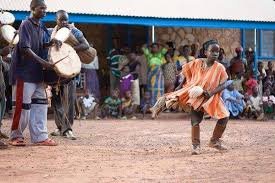
Drums roll across the savannah of northern Ghana, their rhythm sharp and commanding. Dancers step forward in bright traditional attire, shoulders squared and feet striking the earth with deliberate confidence.
In the courts and ceremonial grounds of the Dagomba people, two dances often rise above the others for their history and symbolism: Bamaya and Takai. Each carries a story—one born from hardship and humility, the other from discipline and warrior pride.
A Dance Born from Drought
The origins of Bamaya trace back generations in the northern kingdom of Dagbon. Oral history tells of a devastating drought that once gripped the land. Crops failed, rivers thinned, and the community searched desperately for answers.
According to tradition, the elders consulted spiritual leaders who revealed an unusual cause: the men of the community had angered the gods through their treatment of women. To restore balance and bring rain, the men were instructed to humble themselves by dressing in women’s clothing and performing a dance that honored femininity.
Reluctantly at first, the men obeyed. They tied cloth around their waists, covered their heads, and danced in exaggerated movements meant to mimic the grace of women. Soon after, rain is said to have returned to the land.
From that moment, Bamaya—often translated as “the river has overflowed”—became part of Dagomba tradition. Even today, the dance preserves that symbolic gesture: male performers wear skirts and scarves while moving energetically to the beat of drums and flutes. What began as a ritual act of humility evolved into one of northern Ghana’s most recognizable cultural performances.
The Discipline of Takai
While Bamaya carries a playful and dramatic origin story, Takai reflects a different side of Dagomba heritage. This dance emerged from the traditions of warriors and royal court performers who entertained kings and chiefs.
Takai movements are controlled and deliberate. Dancers wear traditional smocks and trousers, often decorated with talismans believed to offer protection. Their steps are measured, shoulders steady, arms firm. The rhythm of the drums drives the performance, while dancers maintain a dignified composure that reflects strength and discipline.
Historically, Takai was performed at royal gatherings and important ceremonies within the Dagbon kingdom. It honored bravery, unity, and the cultural authority of traditional leadership.
Tradition Alive in Northern Ghana
Today, both dances remain central to celebrations across northern Ghana, especially in communities around Tamale. Festivals, cultural events, and state ceremonies often feature Bamaya’s lively flair and Takai’s regal precision.
For the Dagomba people, these dances are more than entertainment. Bamaya serves as a reminder of humility, respect, and the delicate balance between people, nature, and spirituality. Takai, in contrast, celebrates discipline, heritage, and the enduring structure of traditional authority.
Together, they tell a broader story about Dagomba identity—one shaped by resilience, spirituality, and a deep respect for history. To watch the dances today is to witness living history in motion, where every drumbeat echoes generations of memory.
Arts and GH Heritage
Lost Grooves of the 1970s: New Compilation Celebrates Ghana’s Highlife Revolution
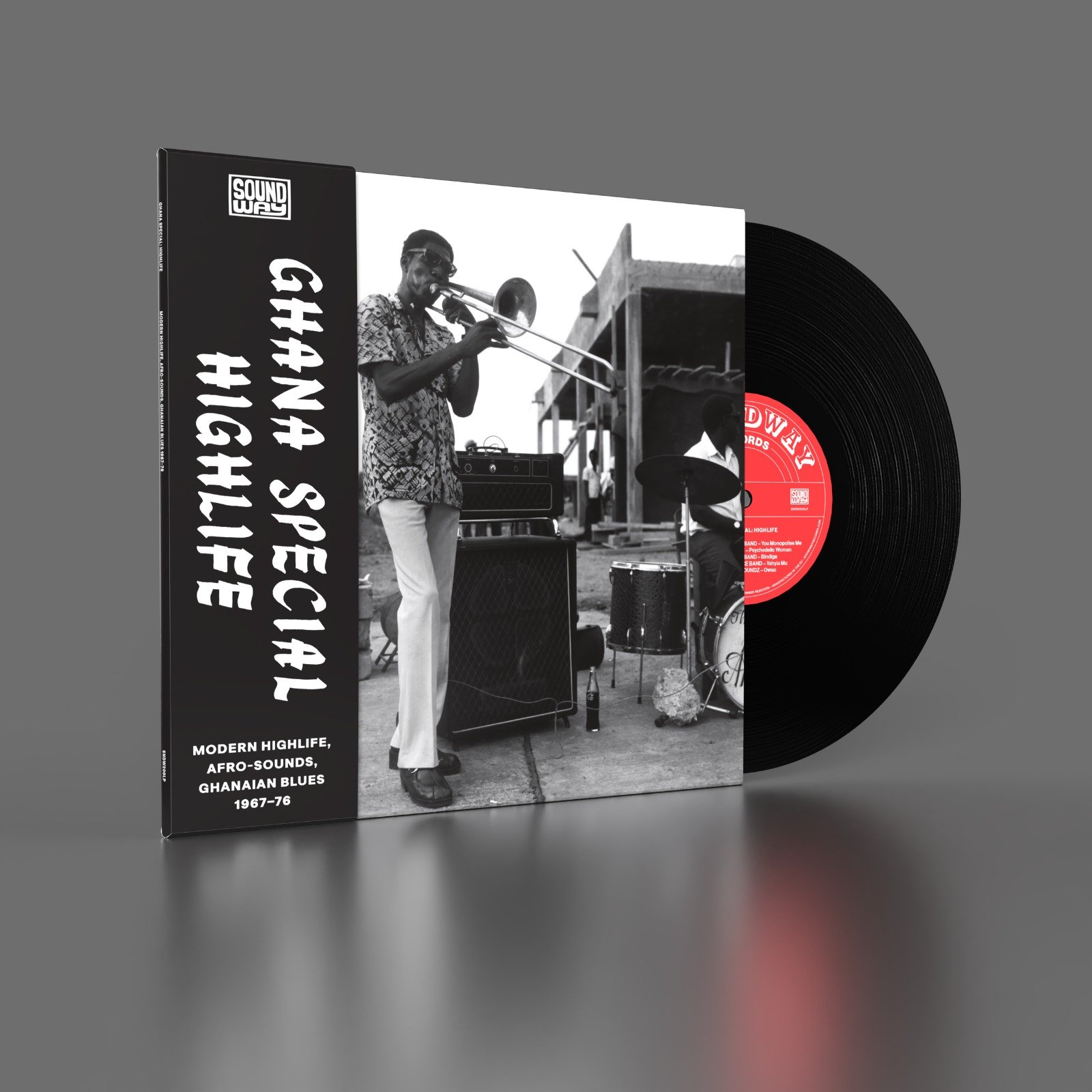
A new compilation album is bringing one of the most dynamic periods of Ghanaian music back into the spotlight, offering global audiences another chance to experience the experimental sound that defined the country’s highlife scene in the late 1960s and 1970s.
The UK-based label Soundway Records has released Ghana Special: Highlife, a curated single-LP selection highlighting Ghanaian recordings from 1967 to 1976. The release distills music originally featured in Soundway’s acclaimed 2009 five-LP box set Ghana Special, now long out of print and highly sought after by collectors.
The new edition focuses on a decade widely regarded as a creative peak for Ghanaian music, when highlife absorbed elements of rock, soul, and funk while remaining rooted in traditional rhythms and storytelling. The compilation brings together seminal recordings from groups such as The Ogyatanaa Show Band, Hedzoleh Soundz, and the celebrated guitarist and composer Ebo Taylor with his group Honny & the Bees Band.
Among the standout tracks is “You Monopolise Me” by The Ogyatanaa Show Band, produced by Ghanaian studio innovator Kwadwo Donkor. The song captures the playful songwriting and soulful arrangements that defined much of the era’s highlife output.
Another highlight is “Edinya Benya” by Hedzoleh Soundz, a group known for blending traditional Ghanaian rhythms with electric instrumentation and spiritual themes. Their music gained traction in the 1970s under the guidance of promoter and cultural impresario Faisal Helwani, who helped reshape Ghana’s live music scene with showcase events that mixed concerts with fashion shows, competitions and cultural performances.
Helwani was also instrumental in promoting young artists across West Africa and played a role in bringing Nigerian legend Fela Kuti and his early band Koola Lobitos to perform in Ghana.
The compilation also revisits the influential track “Psychedelic Woman” by Honny & the Bees Band, which gained renewed international attention when British producer Bonobo remixed it in 2005, introducing the sound of 1970s Ghanaian highlife to new audiences within the electronic music community.
A standout element of the release is its cover artwork: an unpublished 1976 photograph by renowned Ghanaian photographer James Barnor. The image, taken during a Rothmans factory Christmas party in Accra, captures a musician mid-performance and offers a rare visual glimpse into the country’s social and musical life of the era.
One of the compilation’s most historically rich recordings is “Ohiani Sua Efrir” by Asaase Ase, a project led by Ebo Taylor that returned to traditional folk roots. Inspired by groups such as Hedzoleh Soundz and Wulomei, the project featured musicians from the streets of Cape Coast performing stripped-down folk songs with guitar, percussion and vocals. Taylor described the track as “a real African blues,” telling the story of a hunter whose traps yield only snakes while wealthier hunters return with bush meat.
By condensing a landmark anthology into a more accessible format, Ghana Special: Highlife reintroduces listeners to a period when Ghanaian musicians fused local traditions with global influences, producing a sound that continues to inspire artists around the world.
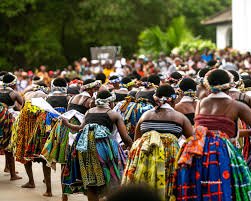
On a warm evening in southeastern Ghana, the first drumbeat cuts through the air like a signal. A circle forms almost instantly. Women adjust their cloth around the waist, men step forward with a confident sway, and the rhythm begins to gather pace. Feet shuffle, shoulders roll, hips tilt to the pulse of drums and rattles. This is Borborbor, one of the most beloved social dances of the Ewe people, and in communities across the Volta Region, its rhythm still brings people together the way it did generations ago.
Borborbor did not begin as a grand cultural performance. Its roots lie in community life during the mid-20th century, when Ewe youth began creating new dance styles that reflected changing times. Oral histories often trace their emergence to the 1950s in the town of Kpando.
At the time, young people were fascinated by the brass band music played at military parades and public events during the late colonial period. The marching rhythms, steady drum patterns, and lively call-and-response singing inspired them to create something of their own.
What emerged was Borborbor—a dance that blended traditional Ewe drumming with the cadence of parade music. The name itself echoes the rolling sound of the drums. Soon, the style spread rapidly across towns and villages. It became especially popular at community gatherings, funerals, festivals, and celebrations where large groups could participate.
Unlike some ceremonial dances reserved for specific occasions, Borborbor is open and social. The drummers sit at the center, surrounded by dancers who move in loose formations. The steps are energetic but playful: knees bending low, feet stamping lightly into the ground, arms swinging in rhythm. Women often lead with graceful hip movements while men respond with confident footwork. Colorful cloth wraps, beads, and headscarves add visual flair as the dancers move.
Music is the lifeblood of the performance. A lead singer calls out verses—sometimes humorous, sometimes reflective—and the crowd answers in chorus. The songs can comment on daily life, celebrate community figures, or simply encourage dancers to move with more spirit. Laughter often breaks out mid-performance as dancers improvise gestures or tease one another through movement.
For the Ewe people today, Borborbor represents far more than entertainment. It carries a sense of belonging. At funerals, the dance becomes a way to honor the life of someone who has passed, celebrating their journey rather than dwelling only on grief. During festivals or family gatherings, it reinforces bonds between generations. Elders clap along proudly while younger dancers bring fresh energy to the circle.
Even beyond the Volta Region, Borborbor has traveled widely. Cultural troupes perform it on international stages, introducing global audiences to the pulse of Ewe music and dance. Yet its heart remains in the community spaces where it began—village squares, open courtyards, and festival grounds where drums echo long into the night.
When the rhythm starts, people rarely stay seated for long. Borborbor invites participation. It asks the body to listen, respond, and celebrate the simple joy of moving together.


Renowned Global Bodies Warn Middle East War Will Scuttle Africa’s 2026 Growth

Ex-President Akufo-Addo and President Mahama Exchange Pleasantries on Easter

Mahama Calls Christ’s Birthplace an ‘Epicentre of War’, New Airport Concourse Planned and Other Big Stories in Ghana Today
-

 Ghana News1 day ago
Ghana President Convenes Emergency Cabinet Meeting to Cushion Ghanaians from Soaring Fuel Prices
-
 Ghana News1 day ago
Mahama Calls Christ’s Birthplace an ‘Epicentre of War’, New Airport Concourse Planned and Other Big Stories in Ghana Today
-
 Ghana News1 day ago
Ex-President Akufo-Addo and President Mahama Exchange Pleasantries on Easter
-
 Business1 day ago
Renowned Global Bodies Warn Middle East War Will Scuttle Africa’s 2026 Growth