
Arts and GH Heritage
From Kpando to the World: The Story Behind the Borborbor Dance

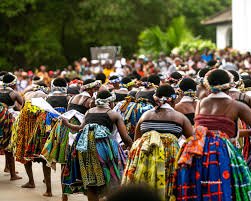
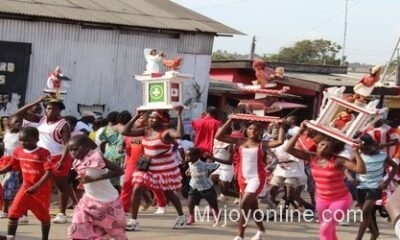
On a warm evening in southeastern Ghana, the first drumbeat cuts through the air like a signal. A circle forms almost instantly. Women adjust their cloth around the waist, men step forward with a confident sway, and the rhythm begins to gather pace. Feet shuffle, shoulders roll, hips tilt to the pulse of drums and rattles. This is Borborbor, one of the most beloved social dances of the Ewe people, and in communities across the Volta Region, its rhythm still brings people together the way it did generations ago.
Borborbor did not begin as a grand cultural performance. Its roots lie in community life during the mid-20th century, when Ewe youth began creating new dance styles that reflected changing times. Oral histories often trace their emergence to the 1950s in the town of Kpando.
At the time, young people were fascinated by the brass band music played at military parades and public events during the late colonial period. The marching rhythms, steady drum patterns, and lively call-and-response singing inspired them to create something of their own.
What emerged was Borborbor—a dance that blended traditional Ewe drumming with the cadence of parade music. The name itself echoes the rolling sound of the drums. Soon, the style spread rapidly across towns and villages. It became especially popular at community gatherings, funerals, festivals, and celebrations where large groups could participate.
Unlike some ceremonial dances reserved for specific occasions, Borborbor is open and social. The drummers sit at the center, surrounded by dancers who move in loose formations. The steps are energetic but playful: knees bending low, feet stamping lightly into the ground, arms swinging in rhythm. Women often lead with graceful hip movements while men respond with confident footwork. Colorful cloth wraps, beads, and headscarves add visual flair as the dancers move.
Music is the lifeblood of the performance. A lead singer calls out verses—sometimes humorous, sometimes reflective—and the crowd answers in chorus. The songs can comment on daily life, celebrate community figures, or simply encourage dancers to move with more spirit. Laughter often breaks out mid-performance as dancers improvise gestures or tease one another through movement.
For the Ewe people today, Borborbor represents far more than entertainment. It carries a sense of belonging. At funerals, the dance becomes a way to honor the life of someone who has passed, celebrating their journey rather than dwelling only on grief. During festivals or family gatherings, it reinforces bonds between generations. Elders clap along proudly while younger dancers bring fresh energy to the circle.
Even beyond the Volta Region, Borborbor has traveled widely. Cultural troupes perform it on international stages, introducing global audiences to the pulse of Ewe music and dance. Yet its heart remains in the community spaces where it began—village squares, open courtyards, and festival grounds where drums echo long into the night.
When the rhythm starts, people rarely stay seated for long. Borborbor invites participation. It asks the body to listen, respond, and celebrate the simple joy of moving together.







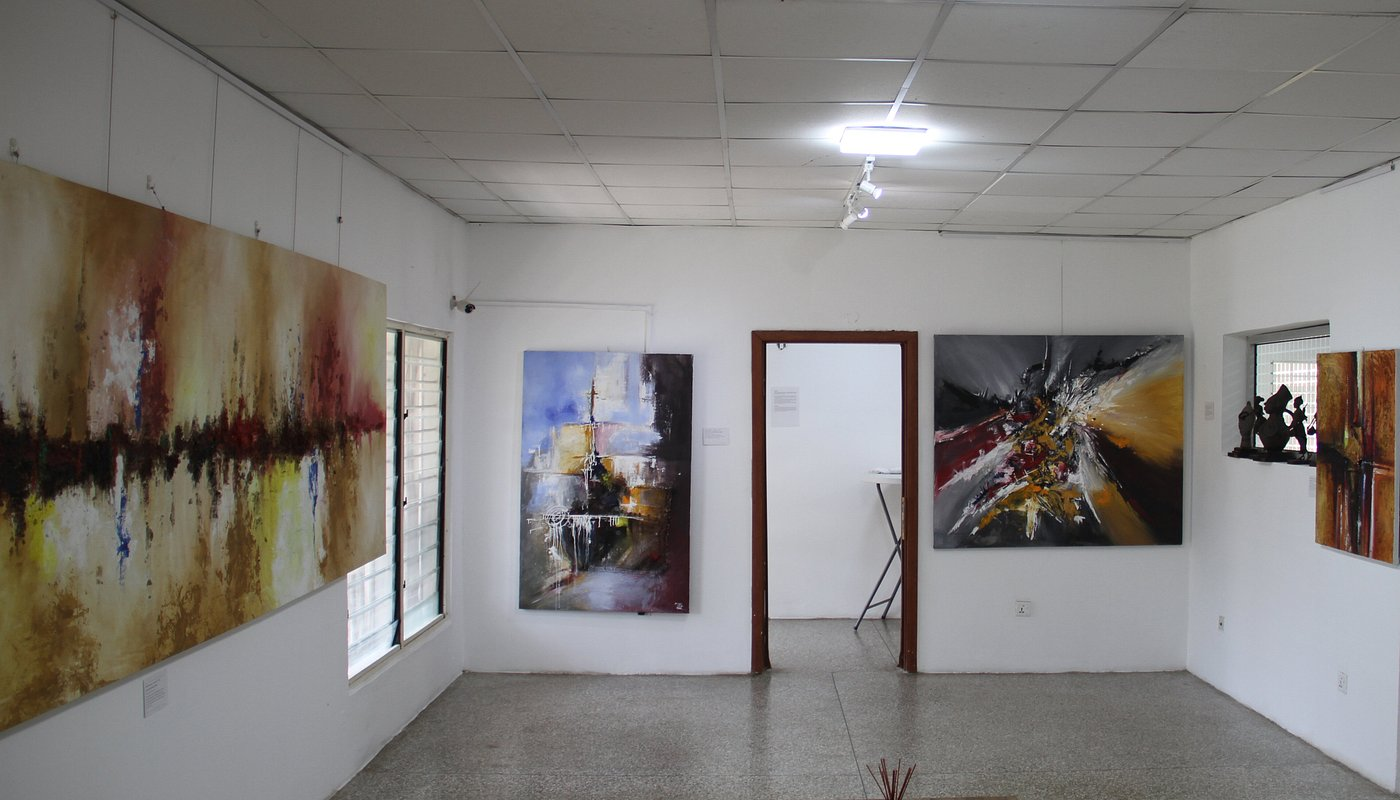
Every memorable art gallery begins with someone who believes a painting deserves more than a wall—it deserves an audience.
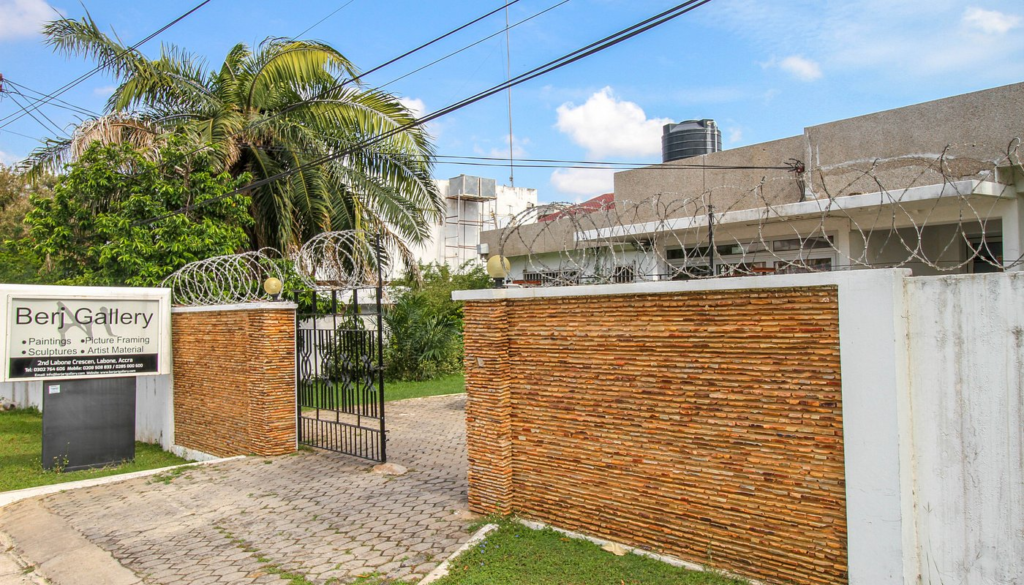
In Accra, that belief has shaped Berj Art Gallery into one of Ghana’s enduring champions of West African art.
Founded in 1996 by collector Joyce Quarshie, Berj emerged at a time when many Ghanaian artists were still searching for spaces that could connect their work with wider audiences.
More than three decades later, Quarshie’s commitment has grown into a gallery that celebrates both established masters and emerging voices under one roof.
A Living Story of West African Art
Walking through Berj feels less like entering a showroom and more like stepping into a conversation across generations.
Bold paintings share space with finely carved wooden sculptures, bronze works catch the light from different angles, and photographs add contemporary perspectives to centuries-old artistic traditions.
The gallery’s strength lies in that balance. Acclaimed painters stand alongside rising talents, creating a rare opportunity for visitors to see Ghana’s artistic evolution unfolding in real time.
It is a reminder that culture is not frozen in history; it continues to grow with every new brushstroke and every fresh creative voice.
More Than a Gallery
For international visitors exploring Accra, Berj offers something deeper than a sightseeing stop. It opens a window into Ghana’s creative identity, where craftsmanship, storytelling and heritage intersect.
As the gallery continues hosting exhibitions that bring together local and international artistic influences, it reinforces a simple but powerful truth: preserving culture is not only about protecting the past.
It is about creating spaces where the next generation of artists can imagine—and exhibit—the future.
A family photograph resting on a shelf may look like decoration. A half-finished piece of woven cloth may seem incomplete. A living room may simply be a place to sit.
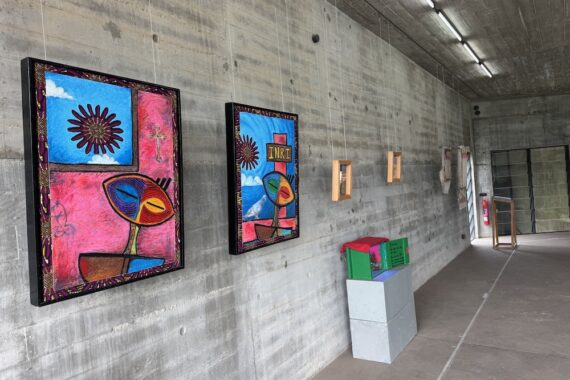
At Nubuke Foundation in Accra, however, these familiar things are being asked to tell deeper stories.
Weight of the Ordinary, a group exhibition featuring Josiah Tsibu Manu, Priscilla Agbeti, Blanche Boni-Mississo, King David Osabutey (Kakalicka) and Sena Burgundy Appau, turns its attention to the overlooked details of daily life—and finds history hiding there.
Manu’s domestic interiors are particularly evocative. Furniture, photographs and household details become unofficial archives, recalling how Ghanaian homes often carry memories that never enter formal histories.
In Agbeti’s unfinished woven works, meanwhile, labour refuses to disappear behind polished craftsmanship.
The incomplete becomes deliberate, leaving viewers to consider the economic and social histories carried by textiles.
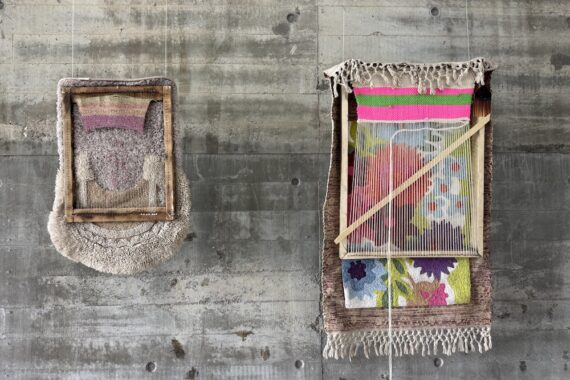
Elsewhere, Boni-Mississo examines how spaces determine who can move freely and who is kept at the margins. Kakalicka draws on Akan cosmology through his Ɔhɔhoɔ, or stranger, connecting questions of displacement and belonging with indigenous ideas.
Appau’s monumental blue figures turn inward, contemplating the uncertainty and possibility of becoming.
Together, the artists suggest that the everyday is not neutral. It is where memory is stored, identities are formed and social boundaries are experienced.
For audiences in Ghana and abroad, the exhibition offers an invitation to look again at what familiarity can conceal. Sometimes, the objects closest to us have the most to say.
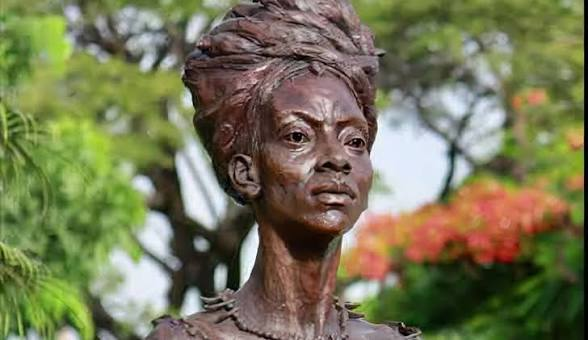
Sometimes history survives not in monuments, but in memory. In Ghana, the beat of the atumpan once carried messages across kingdoms.
In Jamaica’s mist-covered Blue Mountains, that same language of rhythm became a weapon of survival.
Queen Nanny’s story begins in oral tradition, which holds that she was born among the Akan people before being captured during the transatlantic slave trade and forced to Jamaica.
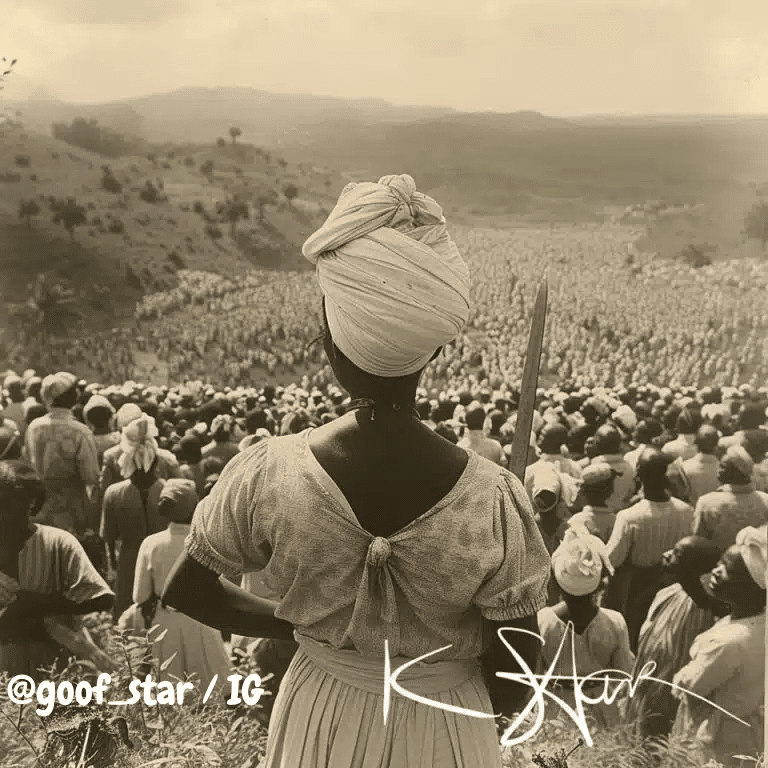
What followed transformed her into one of the Caribbean’s most celebrated freedom fighters.
When the drum became a battlefield language
Leading the Windward Maroons, Nanny turned the rugged mountains into a fortress. British troops struggled against hidden trails, surprise attacks and a commander who understood that knowledge of the landscape could outweigh military strength.
Just as remarkable was her reported use of the atumpan, the Akan talking drum. What colonial forces dismissed as eerie sounds echoing through the hills became a coded communication system that helped coordinate resistance.
Years of failed campaigns eventually forced Britain to negotiate. The 1739 peace agreement with the Maroons remains one of the most striking acknowledgements that enslaved Africans had built a resistance too formidable to erase.
A bridge between Ghana and Jamaica
Today, Queen Nanny is Jamaica’s only female National Hero, and her portrait appears on the Jamaican $500 banknote.
Her legacy also reaches back across the Atlantic, reminding Ghanaians that culture can outlive displacement.
The rhythms that once echoed through Akan communities did not disappear at the coast.
They crossed an ocean, climbed a mountain, and became part of one of history’s most remarkable stories of resistance.


The Guns Turned Inward: Niger’s Mutiny and Russia’s Fragile Bargain in the Sahel | By Joseph McCarthy

Game-Changing Move: Ghana Sets Up New Fiscal Council to Scrutinize Government Spending and Win Back Investors

Ghana’s Persistence Pays Off: AU Formally Commits to Tabling Xenophobia Petition in January 2027
-

 Ghana News2 days ago
Top Headlines From Ghanaian Newspapers: Tuesday, Sept. 8, 2026
-

 Ghana News1 day ago
How Ghana’s Government Pressured MTN, Telecel, and AirtelTigo to Cut Data Prices
-
 Arts and GH Heritage2 days ago
The Stories We Live With: Inside Nubuke Foundation’s Weight of the Ordinary
-

 Ghana News1 day ago
Buckingham Palace Responds to Jamaica’s $10 Billion Reparations Demand, But the UK Government’s Wallet Remains Shut
-
 Ghana News13 hours ago
Ghana’s Persistence Pays Off: AU Formally Commits to Tabling Xenophobia Petition in January 2027
-

 Africa Watch2 days ago
British-Nigerian Influencer Dies After Penis Enlargement Procedure in Thailand
-

 Ghana News14 hours ago
Top Headlines From Ghanaian Newspapers: Wednesday, Sept. 9, 2026
-
 Ghana News13 hours ago
Game-Changing Move: Ghana Sets Up New Fiscal Council to Scrutinize Government Spending and Win Back Investors