
Arts and GH Heritage
Threads of Memory, Strokes of Now: A Guide to Ghana’s Living Art Scene

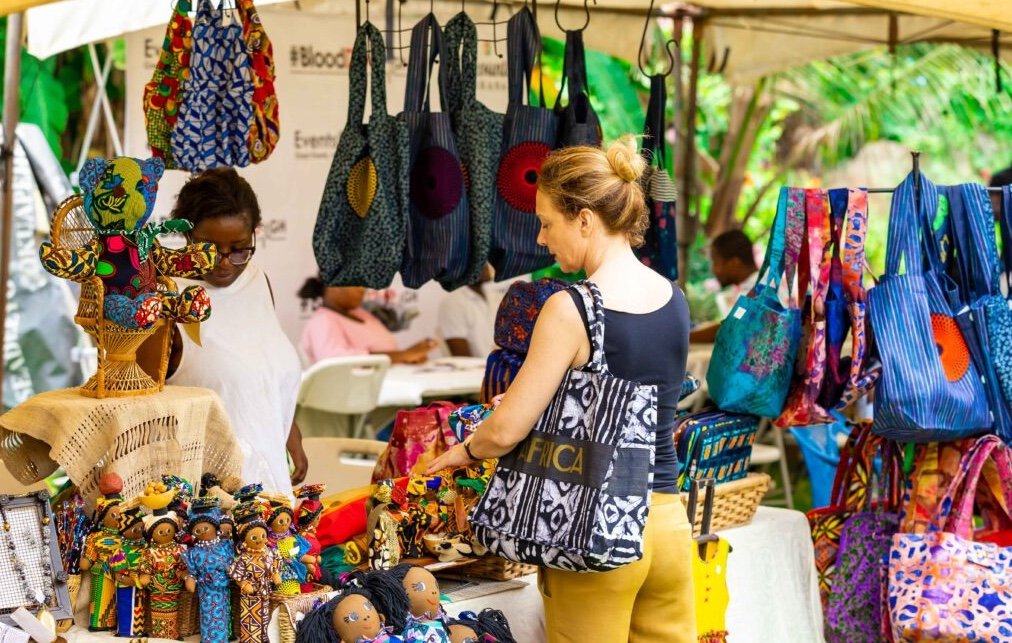
If you’ve ever stood far from home and felt a tug at the sound of a talking drum or the sight of woven colour, Ghana’s art scene will feel like a quiet homecoming.
The art world in Ghana is not usually behind white walls. It lives in courtyards, roadside workshops, coastal galleries and northern warehouses, many of which are rooted in memory, restless with new ideas. For those in the diaspora searching for connection beyond genealogy charts, Ghana’s arts and crafts offer something tactile, human, and deeply familiar.
Where It All Begins: Art as Language, Not Ornament
Long before galleries and residencies, art in Ghana was a way of speaking. Cloth, symbols, beads, wood and clay carried meaning—status, philosophy, faith, resistance. That legacy still shapes the country’s creative pulse today. What makes Ghana compelling is how effortlessly the old and the new share space. Tradition here adapts, questions, and sometimes argues with the present.
Accra: The Capital of Constant Reinvention
Start in Accra, where the art scene mirrors the city itself—layered, loud, reflective.
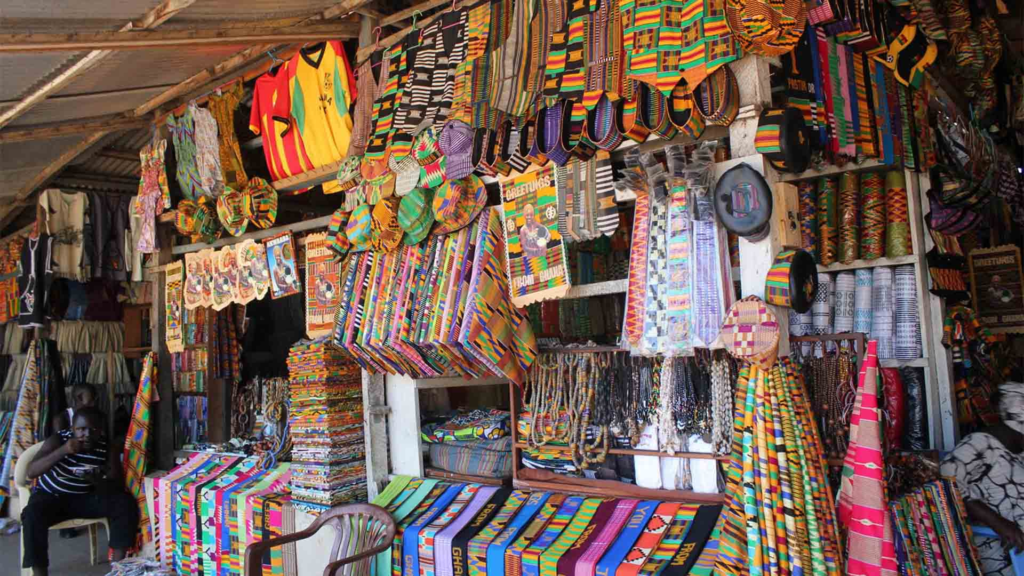
Near Independence Square, the Art Centre in Accra hums with movement. This isn’t a museum experience; it’s a conversation. Carvers shape masks in real time, traders argue prices with humour, and every stall tells a story of lineage and labour. It’s the first place where art feels less like display and more like family business.
A quieter but no less powerful stop is the Nubuke Foundation.
Set away from the city’s rush, it offers space to think. Exhibitions here are thoughtful, sometimes unsettling, often intimate—perfect for anyone curious about how Ghanaian artists are interrogating identity, migration, and memory.
The Ano Institute of Arts and Knowledge
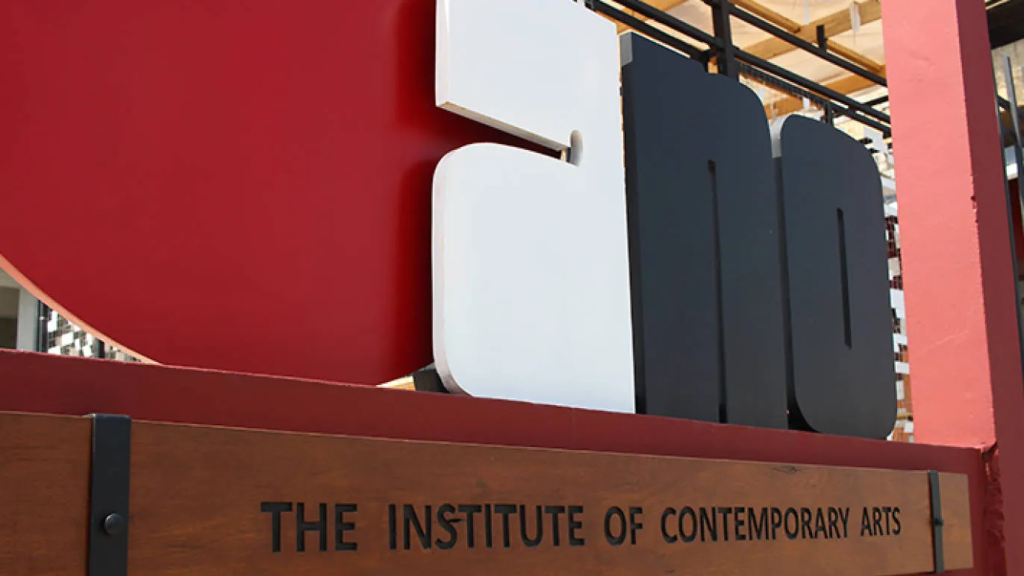
Just a short drive away, the Ano Institute of Arts and Knowledge deepens the experience. Part archive, part exhibition space, Ano invites visitors to slow down and listen to oral histories, visual essays, and stories that don’t always make it into textbooks.
Gallery 1957
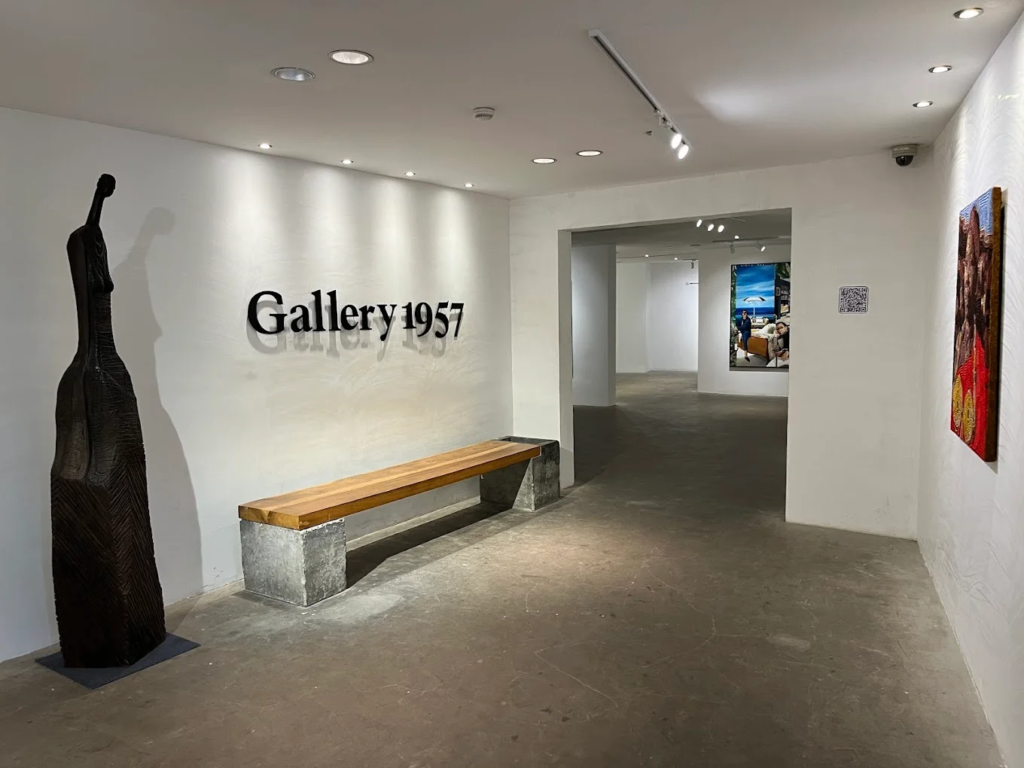
For a polished counterpoint, Gallery 1957, tucked inside the Kempinski Hotel Gold Coast City, presents African contemporary art with global confidence. Its where Ghanaian creativity meets the international art circuit, without losing its grounding.
Artists Alliance Gallery
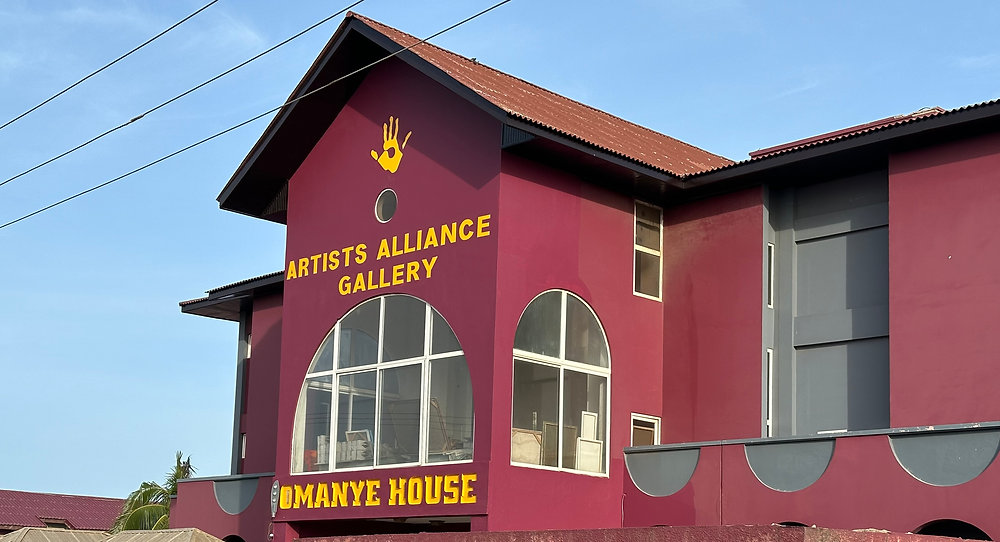
Along the coast, the Artists Alliance Gallery feels expansive in every sense. Three floors of paintings, sculpture, and traditional objects unfold like a visual archive of West African creativity—ideal for anyone wanting breadth and depth in one visit.
Art Africa Gallery
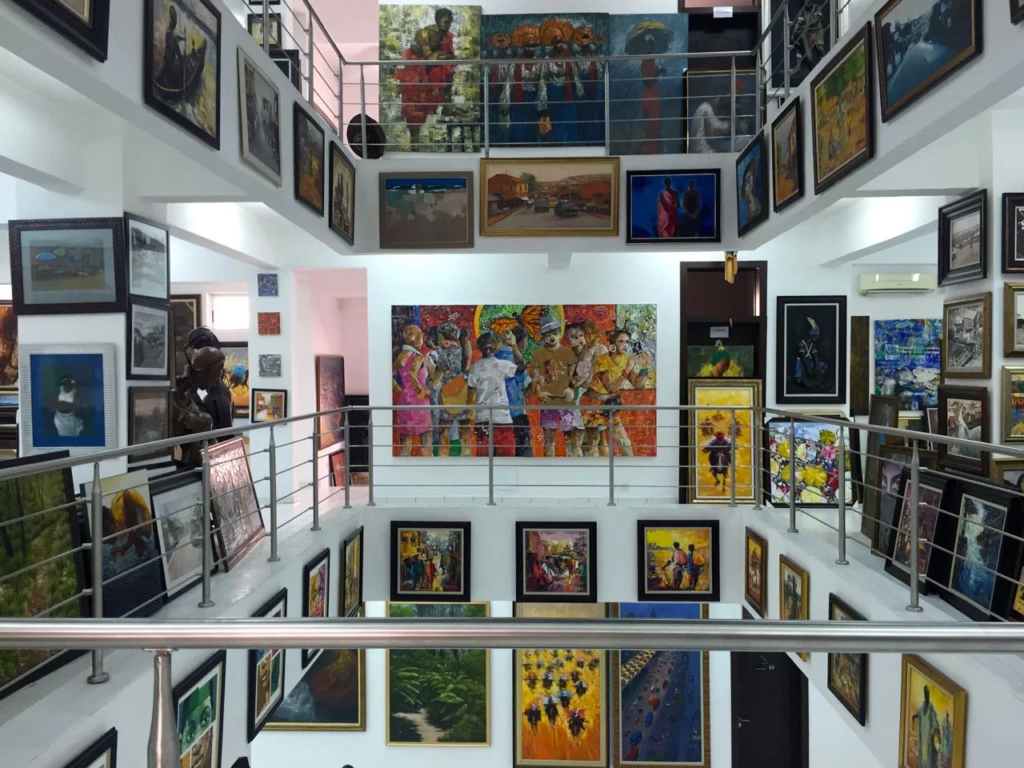
And in East Legon, Art Africa Gallery offers an intimate encounter with works that speak across generations, blending the past with present-day realities.
Kumasi and the Ashanti Heartland
Leaving the coast for Kumasi is like stepping into the spiritual engine room of Ghanaian art. The Art Centre in Kumasi showcases mastery in wood, clay and textile traditions that have shaped Ghana’s visual language for centuries.
Bonwire Kente
Just outside the city lies Bonwire, where Kente is not fashion but inheritance. Watching the weavers work is a reminder that skill is memory passed hand to hand—something no factory can replicate.
Northern Ghana: Art as Architecture and Activism
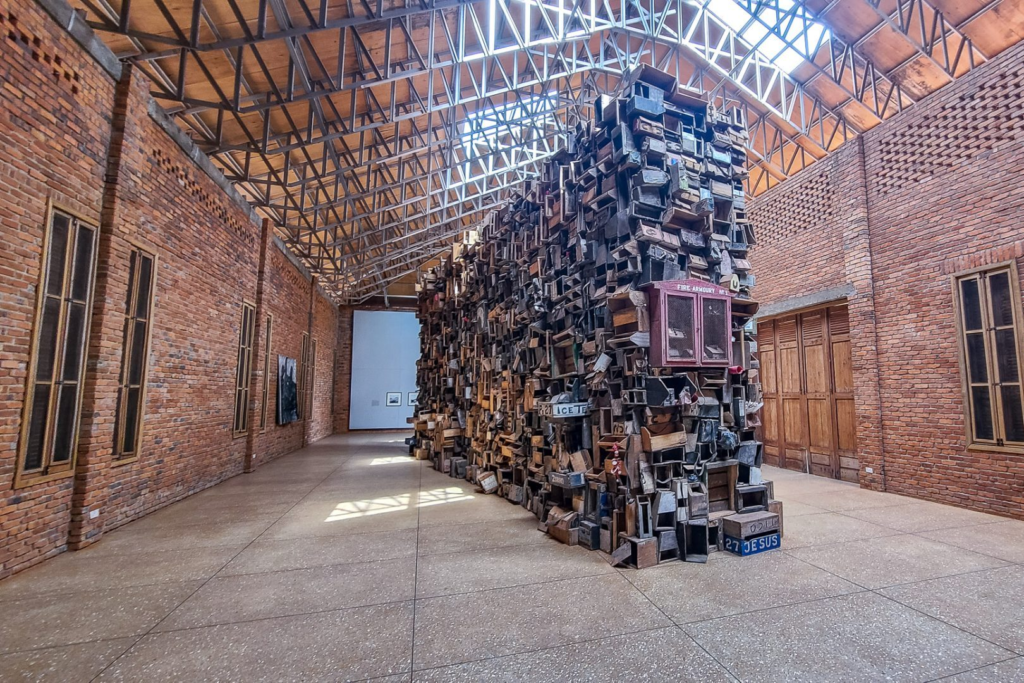
In Tamale, the Red Clay Studio reshapes what an art space can be. Created by Ibrahim Mahama, it fuses installation, architecture, and community life. Here, art doesn’t just comment on society; it builds within it.
Why This Matters
To walk through Ghana’s art spaces is to confront questions many in the diaspora carry quietly: What did we inherit? What was interrupted? What can still be reclaimed? These galleries and craft centres don’t offer neat answers—but they offer something better: dialogue.
Ghana’s art scene isn’t asking to be admired from a distance. It invites touch, debate, memory, and return. And for anyone tracing their way back—culturally, creatively, or emotionally—it offers a map drawn not in ink, but in clay, cloth, wood, and bold new ideas.



Arts and GH Heritage
Rhythm of Dagbon: How Bamaya and Takai Preserve Northern Ghana’s Cultural Memory
In the courts and ceremonial grounds of the Dagomba people, two dances often rise above the others for their history and symbolism: Bamaya and Takai.
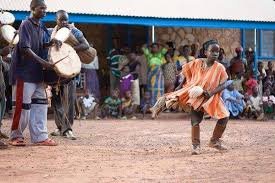
Drums roll across the savannah of northern Ghana, their rhythm sharp and commanding. Dancers step forward in bright traditional attire, shoulders squared and feet striking the earth with deliberate confidence.
In the courts and ceremonial grounds of the Dagomba people, two dances often rise above the others for their history and symbolism: Bamaya and Takai. Each carries a story—one born from hardship and humility, the other from discipline and warrior pride.
A Dance Born from Drought
The origins of Bamaya trace back generations in the northern kingdom of Dagbon. Oral history tells of a devastating drought that once gripped the land. Crops failed, rivers thinned, and the community searched desperately for answers.
According to tradition, the elders consulted spiritual leaders who revealed an unusual cause: the men of the community had angered the gods through their treatment of women. To restore balance and bring rain, the men were instructed to humble themselves by dressing in women’s clothing and performing a dance that honored femininity.
Reluctantly at first, the men obeyed. They tied cloth around their waists, covered their heads, and danced in exaggerated movements meant to mimic the grace of women. Soon after, rain is said to have returned to the land.
From that moment, Bamaya—often translated as “the river has overflowed”—became part of Dagomba tradition. Even today, the dance preserves that symbolic gesture: male performers wear skirts and scarves while moving energetically to the beat of drums and flutes. What began as a ritual act of humility evolved into one of northern Ghana’s most recognizable cultural performances.
The Discipline of Takai
While Bamaya carries a playful and dramatic origin story, Takai reflects a different side of Dagomba heritage. This dance emerged from the traditions of warriors and royal court performers who entertained kings and chiefs.
Takai movements are controlled and deliberate. Dancers wear traditional smocks and trousers, often decorated with talismans believed to offer protection. Their steps are measured, shoulders steady, arms firm. The rhythm of the drums drives the performance, while dancers maintain a dignified composure that reflects strength and discipline.
Historically, Takai was performed at royal gatherings and important ceremonies within the Dagbon kingdom. It honored bravery, unity, and the cultural authority of traditional leadership.
Tradition Alive in Northern Ghana
Today, both dances remain central to celebrations across northern Ghana, especially in communities around Tamale. Festivals, cultural events, and state ceremonies often feature Bamaya’s lively flair and Takai’s regal precision.
For the Dagomba people, these dances are more than entertainment. Bamaya serves as a reminder of humility, respect, and the delicate balance between people, nature, and spirituality. Takai, in contrast, celebrates discipline, heritage, and the enduring structure of traditional authority.
Together, they tell a broader story about Dagomba identity—one shaped by resilience, spirituality, and a deep respect for history. To watch the dances today is to witness living history in motion, where every drumbeat echoes generations of memory.
Arts and GH Heritage
Lost Grooves of the 1970s: New Compilation Celebrates Ghana’s Highlife Revolution
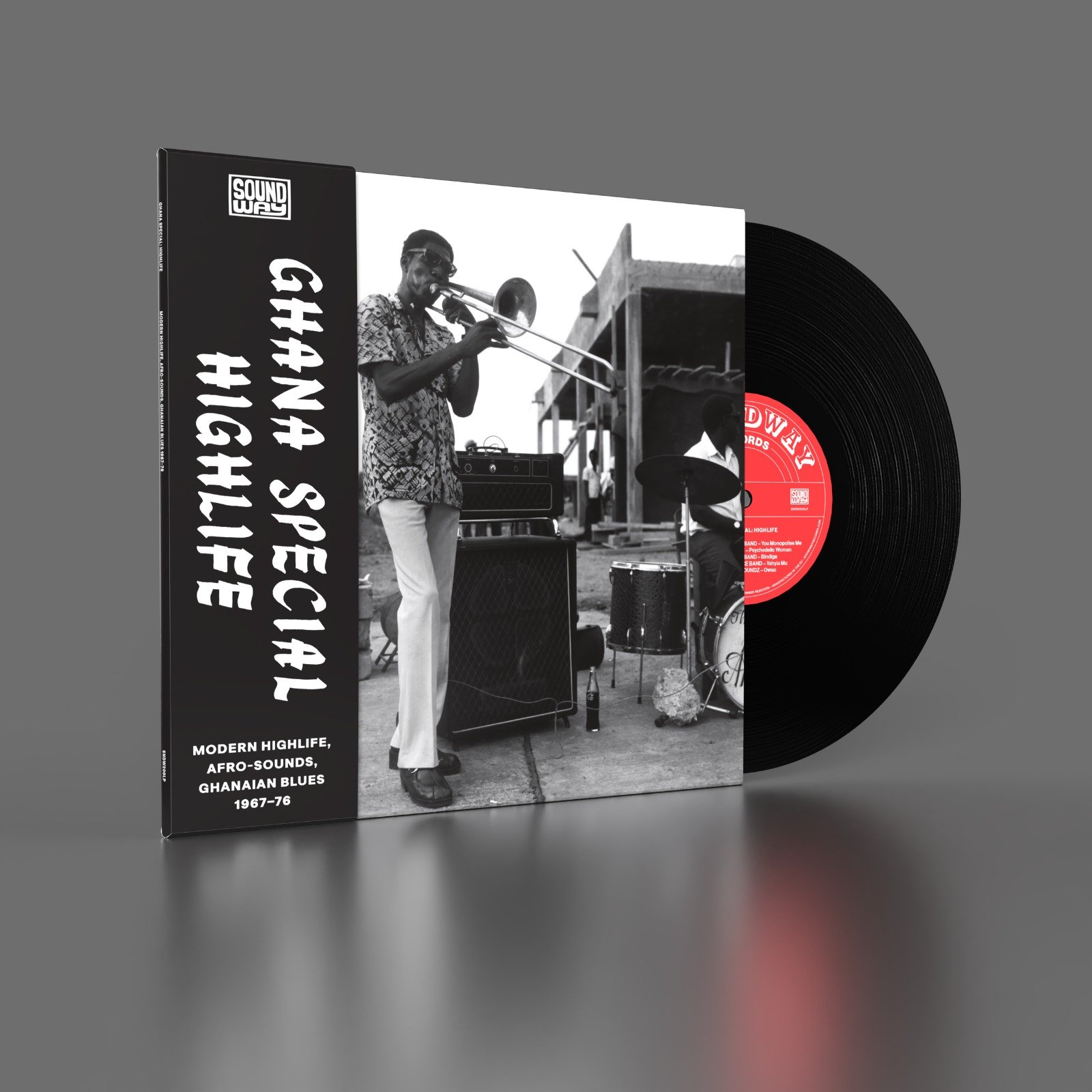
A new compilation album is bringing one of the most dynamic periods of Ghanaian music back into the spotlight, offering global audiences another chance to experience the experimental sound that defined the country’s highlife scene in the late 1960s and 1970s.
The UK-based label Soundway Records has released Ghana Special: Highlife, a curated single-LP selection highlighting Ghanaian recordings from 1967 to 1976. The release distills music originally featured in Soundway’s acclaimed 2009 five-LP box set Ghana Special, now long out of print and highly sought after by collectors.
The new edition focuses on a decade widely regarded as a creative peak for Ghanaian music, when highlife absorbed elements of rock, soul, and funk while remaining rooted in traditional rhythms and storytelling. The compilation brings together seminal recordings from groups such as The Ogyatanaa Show Band, Hedzoleh Soundz, and the celebrated guitarist and composer Ebo Taylor with his group Honny & the Bees Band.
Among the standout tracks is “You Monopolise Me” by The Ogyatanaa Show Band, produced by Ghanaian studio innovator Kwadwo Donkor. The song captures the playful songwriting and soulful arrangements that defined much of the era’s highlife output.
Another highlight is “Edinya Benya” by Hedzoleh Soundz, a group known for blending traditional Ghanaian rhythms with electric instrumentation and spiritual themes. Their music gained traction in the 1970s under the guidance of promoter and cultural impresario Faisal Helwani, who helped reshape Ghana’s live music scene with showcase events that mixed concerts with fashion shows, competitions and cultural performances.
Helwani was also instrumental in promoting young artists across West Africa and played a role in bringing Nigerian legend Fela Kuti and his early band Koola Lobitos to perform in Ghana.
The compilation also revisits the influential track “Psychedelic Woman” by Honny & the Bees Band, which gained renewed international attention when British producer Bonobo remixed it in 2005, introducing the sound of 1970s Ghanaian highlife to new audiences within the electronic music community.
A standout element of the release is its cover artwork: an unpublished 1976 photograph by renowned Ghanaian photographer James Barnor. The image, taken during a Rothmans factory Christmas party in Accra, captures a musician mid-performance and offers a rare visual glimpse into the country’s social and musical life of the era.
One of the compilation’s most historically rich recordings is “Ohiani Sua Efrir” by Asaase Ase, a project led by Ebo Taylor that returned to traditional folk roots. Inspired by groups such as Hedzoleh Soundz and Wulomei, the project featured musicians from the streets of Cape Coast performing stripped-down folk songs with guitar, percussion and vocals. Taylor described the track as “a real African blues,” telling the story of a hunter whose traps yield only snakes while wealthier hunters return with bush meat.
By condensing a landmark anthology into a more accessible format, Ghana Special: Highlife reintroduces listeners to a period when Ghanaian musicians fused local traditions with global influences, producing a sound that continues to inspire artists around the world.
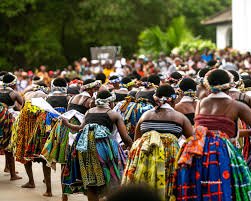
On a warm evening in southeastern Ghana, the first drumbeat cuts through the air like a signal. A circle forms almost instantly. Women adjust their cloth around the waist, men step forward with a confident sway, and the rhythm begins to gather pace. Feet shuffle, shoulders roll, hips tilt to the pulse of drums and rattles. This is Borborbor, one of the most beloved social dances of the Ewe people, and in communities across the Volta Region, its rhythm still brings people together the way it did generations ago.
Borborbor did not begin as a grand cultural performance. Its roots lie in community life during the mid-20th century, when Ewe youth began creating new dance styles that reflected changing times. Oral histories often trace their emergence to the 1950s in the town of Kpando.
At the time, young people were fascinated by the brass band music played at military parades and public events during the late colonial period. The marching rhythms, steady drum patterns, and lively call-and-response singing inspired them to create something of their own.
What emerged was Borborbor—a dance that blended traditional Ewe drumming with the cadence of parade music. The name itself echoes the rolling sound of the drums. Soon, the style spread rapidly across towns and villages. It became especially popular at community gatherings, funerals, festivals, and celebrations where large groups could participate.
Unlike some ceremonial dances reserved for specific occasions, Borborbor is open and social. The drummers sit at the center, surrounded by dancers who move in loose formations. The steps are energetic but playful: knees bending low, feet stamping lightly into the ground, arms swinging in rhythm. Women often lead with graceful hip movements while men respond with confident footwork. Colorful cloth wraps, beads, and headscarves add visual flair as the dancers move.
Music is the lifeblood of the performance. A lead singer calls out verses—sometimes humorous, sometimes reflective—and the crowd answers in chorus. The songs can comment on daily life, celebrate community figures, or simply encourage dancers to move with more spirit. Laughter often breaks out mid-performance as dancers improvise gestures or tease one another through movement.
For the Ewe people today, Borborbor represents far more than entertainment. It carries a sense of belonging. At funerals, the dance becomes a way to honor the life of someone who has passed, celebrating their journey rather than dwelling only on grief. During festivals or family gatherings, it reinforces bonds between generations. Elders clap along proudly while younger dancers bring fresh energy to the circle.
Even beyond the Volta Region, Borborbor has traveled widely. Cultural troupes perform it on international stages, introducing global audiences to the pulse of Ewe music and dance. Yet its heart remains in the community spaces where it began—village squares, open courtyards, and festival grounds where drums echo long into the night.
When the rhythm starts, people rarely stay seated for long. Borborbor invites participation. It asks the body to listen, respond, and celebrate the simple joy of moving together.


Renowned Global Bodies Warn Middle East War Will Scuttle Africa’s 2026 Growth

Ex-President Akufo-Addo and President Mahama Exchange Pleasantries on Easter

Mahama Calls Christ’s Birthplace an ‘Epicentre of War’, New Airport Concourse Planned and Other Big Stories in Ghana Today
-
 Ghana News2 days ago
Ghana President Convenes Emergency Cabinet Meeting to Cushion Ghanaians from Soaring Fuel Prices
-
 Ghana News2 days ago
Mahama Calls Christ’s Birthplace an ‘Epicentre of War’, New Airport Concourse Planned and Other Big Stories in Ghana Today
-
 Ghana News2 days ago
Ex-President Akufo-Addo and President Mahama Exchange Pleasantries on Easter
-
 Business2 days ago
Renowned Global Bodies Warn Middle East War Will Scuttle Africa’s 2026 Growth