
Ghana News
Rawlings Honored With New Life Size Statue

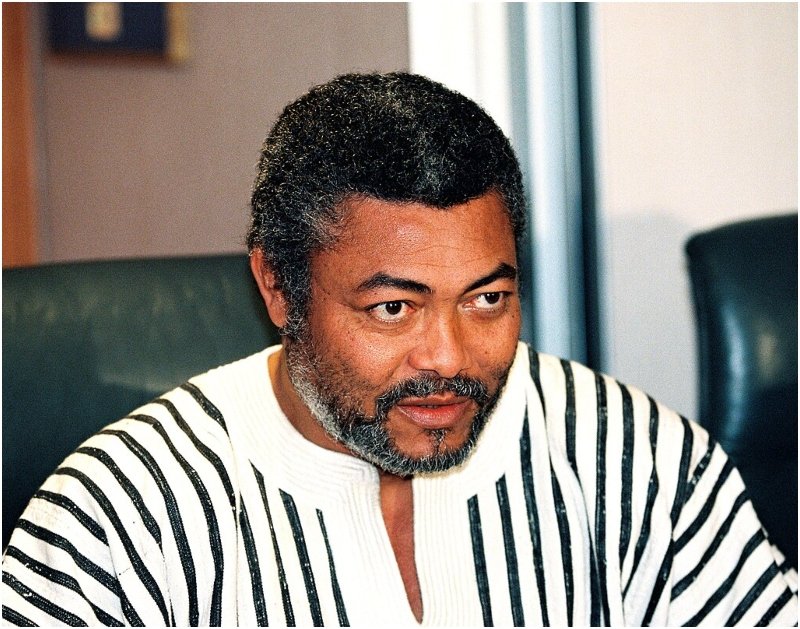
A statue honoring the late former President Flight Lieutenant Jerry John Rawlings was unveiled on January 7, 2026, in Dzelukope in the Keta Municipality of the Volta Region.
The brief event drew dignitaries, political figures and well-wishers to celebrate his enduring legacy in Ghana’s political history.
The life-size monument was unveiled exactly 33 years after Rawlings was sworn in as the first President of Ghana’s Fourth Republic, a pivotal moment that restored democratic governance after years of military rule.

Sponsored by local benefactors Mawuko Dzikunu and Clifford Selasi Kekeshie, the statue now stands in the Parks and Gardens at Keta-Dzelukope as a tangible tribute to a leader whose influence shaped modern Ghana.
Dr. Zanetor Agyeman-Rawlings, Member of Parliament for Klottey-Korle and daughter of the late head of state, spoke at the ceremony, urging Ghanaians to honour her father’s legacy by embodying the values he championed, including probity, accountability and service to the nation. She noted that, while Rawlings often insisted he preferred to “live in the hearts of people rather than on walls,” the statue serves as a focal point for remembrance and inspiration.
National Democratic Congress (NDC) National Chairman Johnson Asiedu Nketia described Rawlings as a “great patriot” whose commitment to unity and national development continues to resonate across generations, adding that the monument aims to preserve his memory for young Ghanaians who did not witness his leadership firsthand.
Other speakers at the unveiling, including regional traditional leaders and government officials, highlighted Rawlings’ roots in the Volta Region and his role in steering Ghana through economic recovery, democratic consolidation and regional peace efforts.
Rawlings, who died in November 2020 at the age of 73, served as Ghana’s head of state first under the Provisional National Defence Council (PNDC) from 1981 to 1992 and later as a democratically elected president from 1993 to 2001. His long tenure and transformative leadership left an indelible mark on the nation’s political landscape.
The unveiling of the statue offers both a moment of reflection on Ghana’s democratic journey and a symbolic reminder of the enduring influence of one of its most prominent leaders.







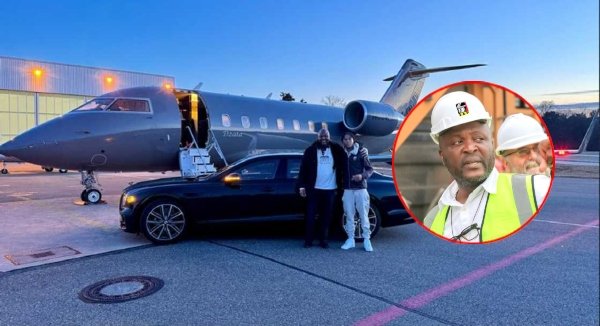
Accra, Ghana – March 3, 2026 – Ghanaian business tycoon Ibrahim Mahama has added a state-of-the-art Bombardier Global 6500 to his aviation fleet, with the ultra-long-range private jet valued at approximately $70 million.
The aircraft was purchased in 2024 and officially delivered in February 2026. A viral video circulating on social media today shows Mahama boarding the sleek grey-and-white jet, which proudly displays his signature “Dzata” (meaning “Lion”) branding on the tail—symbolizing strength, leadership, and his personal identity.
The Bombardier Global 6500 is one of the most advanced business jets in the world, boasting:
-A range of up to 6,600 nautical miles (enough for non-stop flights from Accra to New York, London, or Dubai)
-Maximum speed of Mach 0.90
A- spacious, customizable cabin featuring private suites, lounge areas, office space, high-end entertainment systems, and advanced climate control
-Bombardier’s cutting-edge Vision flight deck for enhanced safety and navigation
Ibrahim Mahama, younger brother of President John Dramani Mahama, is one of Ghana’s most prominent entrepreneurs and philanthropists.
His business empire spans mining (through Engineers & Planners), cement production (Dzata Cement), infrastructure development, and various charitable initiatives. The new jet aligns with his reputation for blending bold business moves with luxury and innovation.
The acquisition comes amid growing interest in private aviation among Africa’s high-net-worth individuals and reinforces Ghana’s position as a hub for influential business figures on the continent.
Ghana News
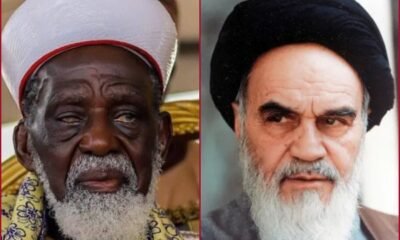
Ghana’s Top Muslim Leader Condemns Khamenei Assassination, Calls for New World Order Based on ‘Right Over Might’

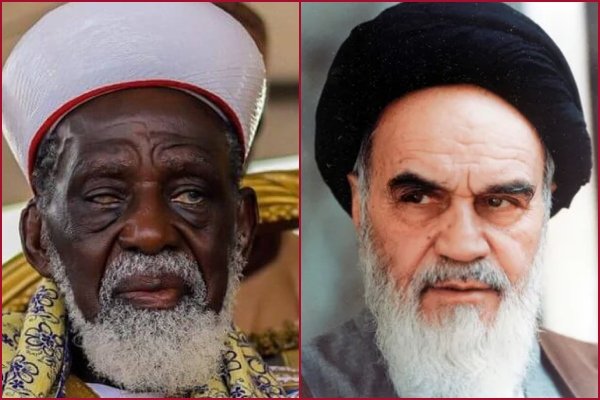
ACCRA, GHANA – March 3, 2026 – In a strongly worded message that resonates far beyond West Africa, Ghana’s highest spiritual authority for the Muslim community has officially condemned the killing of Iran’s Supreme Leader, Ayatollah Ali Khamenei.
National Chief Imam, Shaikh Dr. Osman Nuhu Sharubutu, issued a passionate plea for a global restructuring based on ethical principles over military power.
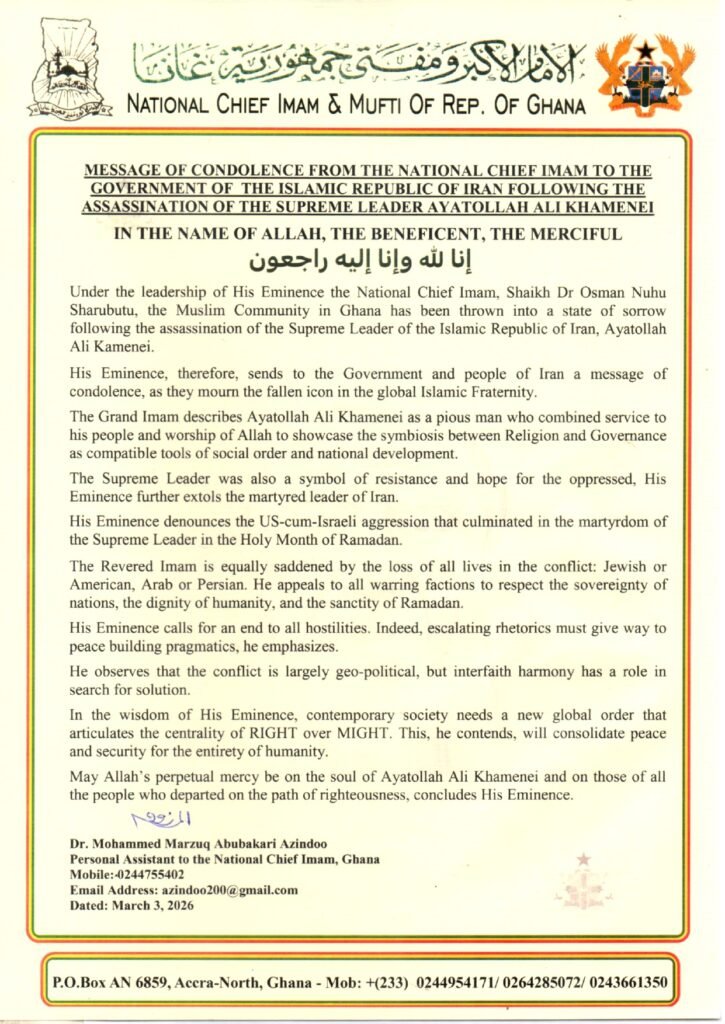
The message from the National Chief Imam released to the media in Ghana describes the late Iranian leader as a “pious man” and a “symbol of resistance and hope for the oppressed.”
The statement directly denounces the operation that led to his death as a “US-cum-Israeli aggression” carried out during the holy month of Ramadan.
The statement, released by his Personal Assistant Dr. Mohammed Marzuq Abubakari Azindoo on Tuesday, March 3, 2026, throws the Ghanaian Muslim community’s moral weight behind Tehran, describing the killing of the Ayatollah not as a political assassination but as a “martyrdom” that has thrown the global Islamic fraternity into sorrow.
A Broader Plea for Humanity
However, in a move that underscores the complexities of modern geopolitics, the Chief Imam’s message extends beyond sectarian lines. He explicitly expressed sadness over the loss of all lives in the ongoing conflict, including “Jewish or American, Arab or Persian.”
This inclusive tone positions the respected Ghanaian religious leader as a potential voice of moderation. He urged all warring factions to respect the sovereignty of nations, the dignity of humanity, and the sanctity of the Ramadan period.
“In the wisdom of His Eminence, contemporary society needs a new global order that articulates the centrality of RIGHT over MIGHT,” the statement reads. “This, he contends, will consolidate peace and security for the entirety of humanity.”
Geo-politics and Interfaith Harmony
The Chief Imam’s office acknowledged the deeply “geo-political” nature of the current tensions but insisted that “interfaith harmony has a role in search for solution.”
His call for an immediate end to hostilities and a shift from “escalating rhetorics” to “peace building pragmatics” arrives at a moment of extreme volatility in the Middle East.
By invoking the spirit of Ramadan—a time of reflection and mercy—Shaikh Sharubutu is appealing to the shared values of the Abrahamic faiths to de-escalate the situation.
The statement has been described by experts as a significant diplomatic signal from Ghana, a nation known for its religious tolerance and stable democracy. It places the country’s Muslim leadership firmly on the side of dialogue and against what it perceives as foreign aggression, while simultaneously calling for the protection of all innocent life.
As the world watches the fallout from Tehran, the voice from Accra adds a distinct moral dimension to the debate: a call for a global order where ethical right, rather than geopolitical might, determines the future of international peace.
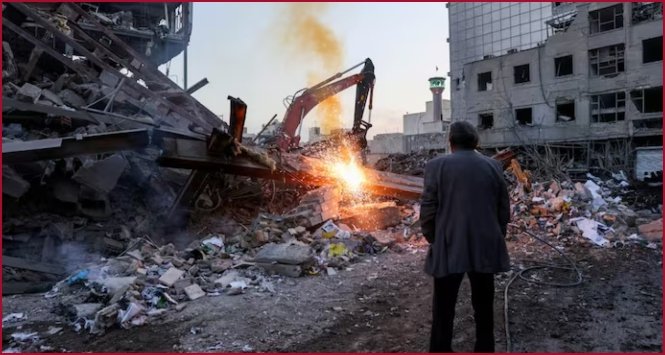
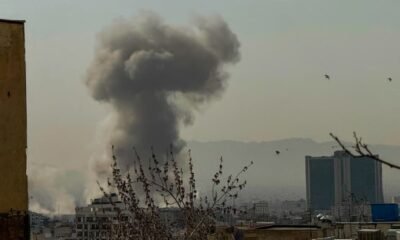
Accra, Ghana – March 3, 2026 – As the US-Israel-Iran conflict enters its third day, marked by deadly airstrikes, missile barrages, and the reported killing of Iran’s Supreme Leader Ayatollah Ali Khamenei, global audiences are flooded with breaking alerts, viral claims, and instant analysis.
In a special segment on Firstpost’s Vantage, veteran journalist Palki Sharma Upadhyay addressed the most pressing viewer-submitted questions to cut through the noise and provide clear, concise answers.
Key points from the explainer:
1. What exactly is happening?
The US and Israel launched attacks on Iran, resulting in the death of Supreme Leader Ayatollah Khamenei. Iran retaliated with missile strikes on US bases and allied interests across the Gulf.
2. Is this war going to get bigger?
It appears likely. The conflict shows no immediate signs of stopping.
3. When will it end?
No one knows. The situation remains highly unpredictable.
4. Will Russia, China, or NATO join the war?
No. Major powers are not expected to enter directly.
5. Will this go nuclear?
Highly unlikely. Nuclear escalation is not anticipated.
6. What role is the United Nations playing?
The UN has condemned the violence but is limited to diplomatic calls for restraint.
7. What does it mean for oil-importing countries like Ghana and other African nations?
It is not good news. Disruptions in the Strait of Hormuz or Gulf supply routes could drive up crude and LNG prices, directly impacting energy costs, inflation, and household budgets in import-dependent economies.
8. Why is the US doing this at all?
The motivation remains unclear even to many Americans—43% disapprove of the strikes according to recent polls.
9. What should you do if you’re stuck in the region?
Do not panic. Follow official advisories, contact your embassy, and stay where you are.
10. Does anyone actually have an exit strategy?
It depends on decisions made by US President Donald Trump.
The segment reflects growing global anxiety over the conflict’s trajectory, with African governments—including Ghana—issuing shelter-in-place advisories, partial embassy evacuations, and travel warnings for nationals in the Gulf and Iran.
The potential for higher oil prices and disrupted shipping routes threatens to reverse recent single-digit inflation gains in oil-importing African countries.


Ibrahim Mahama Acquires New $70 Million Private Jet

Ghana’s Top Muslim Leader Condemns Khamenei Assassination, Calls for New World Order Based on ‘Right Over Might’

The New Wave of “Afro-Minimalism”: Redefining Luxury Beyond the Print
-
 News11 hours ago
Ghana Gears Up for Vibrant 69th Independence Day Celebrations: Parades, Plays, Poetry, and Heritage in Focus
-
 Tourism9 hours ago
Emirates Resumes Limited Flights from Dubai as Middle East Airspace Slowly Reopens Amid Ongoing Conflict
-

 Ghana News12 hours ago
Newspaper Headlines Today: Tuesday, March 3, 2026
-
 Ghana News11 hours ago
Ayawaso East By-Election Results Trickle in, ECG Audits Fast-Reading Meters, and Other Trending Topics in Ghana (March 3, 2026)
-
 Ghana News2 days ago
Court Slaps Barker-Vormawor with GH₵5m for Defaming Kan Dapaah and Other Trending Topics in Ghana (March 2, 2026)
-
 Ghana News2 hours ago
Ghana’s Top Muslim Leader Condemns Khamenei Assassination, Calls for New World Order Based on ‘Right Over Might’
-
 Fashion & Style2 hours ago
The New Wave of “Afro-Minimalism”: Redefining Luxury Beyond the Print
-
 Commentary8 hours ago
At a glance: US‑Israel attack on Iran