
Global Update
Powered by Oil Wealth, Guyana Launches Digital School Aimed at Transforming Caribbean Education

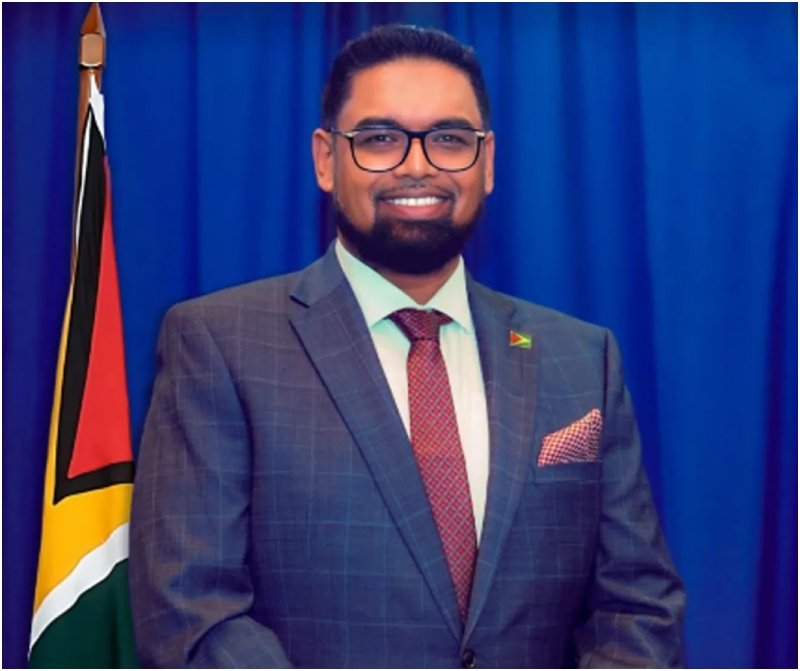
Guyana—now one of the world’s fastest-growing economies thanks to massive offshore oil discoveries—is channeling some of its newfound wealth into what officials say will become one of the most significant education reforms in the region.
The Caribbean country has rolled out a fully online high school accessible across the region.
More than 30,000 students from Guyana and neighboring islands have already enrolled in the newly launched Guyana Digital School, a platform President Irfaan Ali unveiled late Friday. The school currently offers standard high school subjects, with plans to expand its curriculum next year. Students from as far away as India have reportedly logged on.
For Guyana, a country where many communities in the Amazonian interior face acute shortages of teachers and poor access to physical schools, the digital shift is particularly consequential.
“This is a program that will provide real quality education for students across the entire country simultaneously,” Deputy Chief Education Officer Ritesh Tularam said. “We are also providing free access to our Caribbean neighbors. This will be a game changer for education delivery in Guyana.”
Tularam pushed back against critics who question the government’s heavy investment in digitization.
“The future of the world will be digital… and the future of work will be digital,” he said. “We’re not investing to be fashionable; we’re investing because this is where global opportunity is being created.”
The digital school is not intended to replace physical classrooms, but to complement them—especially in remote regions where consistent access to teachers has long been a challenge.
Earlier this year, Guyana restored free university education for the first time since the mid-1990s, a move made possible by the country’s rapidly expanding petroleum revenues—now delivering nearly $10 million a day to the national treasury.
Regional leaders have embraced the project as a model for Caribbean integration.
Barbados Prime Minister Mia Mottley praised the initiative, saying it levels the playing field for students regardless of geography.
“Whether it is in the coastlands or hinterlands of Guyana, whether in Barbados or St. Lucia, we want our children to have the ability to learn at their fingertips,” she said.
Grenada’s Prime Minister Dickon Mitchell said he has already directed his education ministry to ensure Grenadian students take advantage of the platform.
With oil money reshaping Guyana’s economic trajectory, the digital school may become one of the most enduring symbols of its transformation.






Global Update
UK-France Led Coalition Intensifies Push to Reopen Strait of Hormuz as the World Faces Soaring Fuel Costs

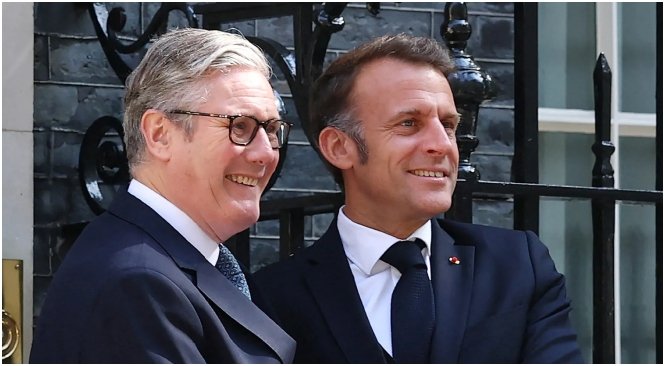
A growing international coalition led by the United Kingdom and France, now numbering nearly 30 countries, is stepping up diplomatic and military efforts to reopen the Strait of Hormuz, the vital chokepoint for global oil shipments that has been largely paralysed by ongoing conflict and attacks in the region.
The initiative gained momentum after a March 19 meeting of leaders from the UK, France, Germany, Italy, the Netherlands, and Japan, who issued a joint statement condemning the laying of mines and repeated drone and missile strikes that have effectively halted safe commercial shipping through the strait.
The countries called on Iran to immediately cease hostilities and comply with UN Security Council Resolution 2817.
Since then, the coalition has expanded significantly, with Britain and France scheduled to chair talks this week aimed at formalising a joint mission to restore safe navigation.
UK media reports indicate that defence chiefs are expected to meet in the coming days, and Britain has offered to host a follow-up summit in Portsmouth or London to finalise operational plans. Officials have stated that the coalition is prepared to act “as soon as the conditions are right.”
The urgency is being driven in part by the severe economic fallout being felt across Africa. South Africa is bracing for sharp fuel price increases due to disrupted global supply routes and India’s recent imposition of export duties on refined petroleum products.
Nigeria has already seen fuel prices rise by approximately 39% in recent weeks, while many other oil-importing African nations are struggling with higher freight costs, tighter supply, and weakening local currencies.
Reopening the Strait of Hormuz, through which roughly one-fifth of the world’s oil normally passes, is seen as critical to easing global energy price pressures and preventing further economic hardship in import-dependent regions.
Global Update
Federal Judge Orders Full Restoration of Voice of America Operations, Reinstating Over 1,000 Employees After Year-Long Shutdown
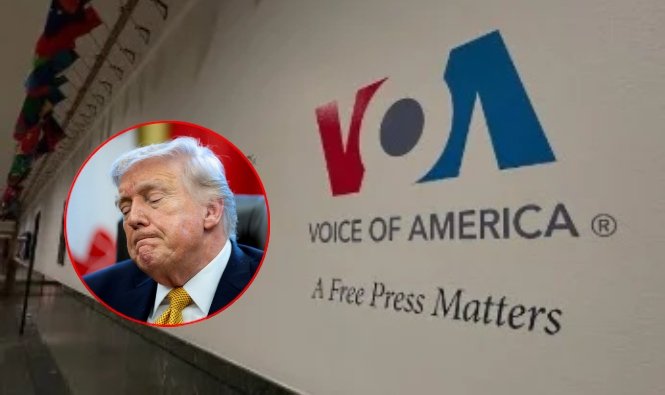
Washington, D.C. – A U.S. federal judge has directed the Trump administration to immediately reverse sweeping cuts that had effectively dismantled much of the Voice of America (VOA), reinstating 1,042 of the broadcaster’s 1,147 employees who had been placed on administrative leave or sidelined for nearly a year.
In a strongly worded ruling issued March 18, 2026, U.S. District Judge Royce C. Lamberth declared the administration’s actions “arbitrary and capricious” and in violation of federal law. The decision reverses moves that reduced VOA to a bare “statutory minimum” operation, severely curtailing multilingual programming and forcing the agency to halt most original journalism production.
The judge gave the U.S. Agency for Global Media (USAGM) seven calendar days to submit a detailed restoration plan, including timelines for resuming full broadcasts and returning staff to active duty. Non-compliance could trigger contempt proceedings.
The cuts stemmed from an executive order issued by President Donald Trump and were implemented under Kari Lake, his unconfirmed acting director of USAGM. Last week, Judge Lamberth had already ruled that Lake lacked legal authority to carry out the reductions due to her lack of Senate confirmation.
Major Implications for Workers
The ruling delivers immediate and substantial relief to more than 1,000 federal employees who had been in limbo since mid-2025:
- Immediate Return to Duty — The 1,042 affected journalists, editors, producers, technicians, and support staff will be reinstated to active roles, ending prolonged administrative leave.
- Restoration of Full Pay & Benefits — Workers regain uninterrupted salary, health insurance continuity, retirement contributions, and other federal employee protections that had been frozen or placed at risk.
- Reclamation of Professional Mission — Employees can resume their core journalistic work after nearly a year of enforced idleness, many of whom described the period as professionally demoralizing.
- Job Security & Seniority — The decision protects career progression, accumulated leave, and seniority rights that were threatened by the indefinite “statutory minimum” staffing model.
Patsy Widakuswara, VOA’s White House bureau chief and a lead plaintiff in the lawsuit, welcomed the outcome:
“We are eager to begin repairing the damage Kari Lake has inflicted on our agency and our colleagues, to return to our congressional mandate, and to rebuild the trust of the global audience we have been unable to serve for the past year. We know the road to restoring VOA’s operations and reputation will be long and difficult. We hope the American people will continue to support our mission to produce journalism, not propaganda.”
Broader Context
Founded during World War II, Voice of America broadcasts independent news in 49 languages to an estimated 362 million weekly listeners, often in countries with restricted press freedom. The near-total shutdown had drawn sharp criticism from press freedom organizations, former VOA staff, and foreign policy experts who argued it undermined U.S. soft power and global information access.
The Trump administration has not yet indicated whether it will appeal. President Trump has since nominated Sarah Rogers, current Under Secretary of State for Public Diplomacy, to lead USAGM on a permanent basis — a nomination that requires Senate confirmation.
The decision reinforces protections under the Administrative Procedure Act against politically motivated dismantling of congressionally mandated agencies and reaffirms that acting officials without Senate approval cannot unilaterally override statutory obligations.
Global Update
How Global Nations Are Scrambling with Drastic Measures as Trump’s Iran War Triggers Historic Oil Crisis
The escalating U.S.-led conflict with Iran, sparked by President Donald Trump’s military strikes, has unleashed what experts are calling the most severe energy crisis since the 1970s.
The situation is forcing countries worldwide to implement emergency responses to cope with soaring fuel prices, supply shortages, and economic ripple effects.
With the Strait of Hormuz effectively blockaded — halting safe passage for tankers carrying up to one-fifth of global oil — major producers like Saudi Arabia have slashed output, Iraq’s production has plummeted to less than one-third of pre-war levels, and force majeure declarations by energy firms in Qatar, Kuwait, and Bahrain have disrupted contracts.
Beyond fuel, the crisis is choking supplies of petroleum-derived products like fertilizers, plastics, and industrial raw materials, threatening food security and manufacturing.
Nations are responding with unprecedented austerity and conservation tactics:
- Bangladesh has shuttered all universities nationwide to curb electricity use and reduce commuting demands, aiming to stretch limited fuel reserves amid fears of broader blackouts.
- The Philippines has mandated a four-day work week for employers in Manila and other regions, specifically to conserve energy and minimize transport fuel consumption as diesel and gasoline supplies dwindle.
- Vietnam is grappling with widespread fuel outages, with gas stations in Hanoi displaying “sold out” signs and rationing supplies, prompting long queues and emergency imports.
- Pakistan is hiking gas prices to discourage private vehicle use, prioritizing diesel for essential trucks and buses in a bid to maintain logistics and food distribution chains.
- Japan has seen industrial fallout, with a major plastics plant north of Tokyo scaling down production due to shortages of petroleum-based raw materials, while aluminum smelters and other energy-intensive facilities face shutdowns.
The Wall Street Journal and CNBC have dubbed this the “biggest oil supply disruption in history,” with Brent crude prices surging amid global stockpiling. Analysts warn of cascading effects: higher fertilizer costs could spike food prices worldwide, while manufacturing halts risk supply-chain breakdowns.
Trump has described the war as benefiting “other parts of the world,” but critics argue the self-imposed crisis is backfiring, exacerbating inflation and instability far beyond the Middle East.
As diplomatic efforts falter, affected nations are bracing for prolonged economic pain unless a ceasefire restores safe passage through the strait.


Renowned Global Bodies Warn Middle East War Will Scuttle Africa’s 2026 Growth

Ex-President Akufo-Addo and President Mahama Exchange Pleasantries on Easter

Mahama Calls Christ’s Birthplace an ‘Epicentre of War’, New Airport Concourse Planned and Other Big Stories in Ghana Today
-
 Ghana News1 day ago
Ghana President Convenes Emergency Cabinet Meeting to Cushion Ghanaians from Soaring Fuel Prices
-
 Ghana News1 day ago
Mahama Calls Christ’s Birthplace an ‘Epicentre of War’, New Airport Concourse Planned and Other Big Stories in Ghana Today
-
 Ghana News1 day ago
Ex-President Akufo-Addo and President Mahama Exchange Pleasantries on Easter
-
 Business1 day ago
Renowned Global Bodies Warn Middle East War Will Scuttle Africa’s 2026 Growth