
Culture
Northern Nigeria’s ‘Human Excavator’ Tradition Is Going Viral: This is What the World Can Learn From It (VIDEO)


A viral Instagram video from Curious Rock (@curiousrock27) has sparked global fascination with a centuries-old practice from Northern Nigeria known as Geyya or Geya — a communal farming system where dozens of men dig the earth in flawless, musical sync.
The clip, captioned “Why Do These Men Dig in Perfect Sync?”, shows what looks like a human-powered machine: rows of men lifting and striking shovels at precisely the same moment, their movements controlled by one thing — the drum.
“This might be the most efficient way humans have ever worked,” the narrator says. “No machines, just rhythm.”
The Drum as Engine
At the heart of Geya is a single drummer who sets the tempo. His beat dictates every movement. Instead of communicating verbally or coordinating visually — both of which slow large groups down — the men rely entirely on rhythm. The result is astonishing: one sound, one motion, dozens of bodies working as one.
Anthropologists note that rhythm-based labor isn’t unique to Nigeria. Similar techniques were once common in West African fishing crews, Pacific Island canoe building, Afro-Caribbean sugar plantations, and even European chain gangs. But few traditions today maintain the level of coordination and cultural significance that Geya still holds.
Work as Community, Not Chore
Geya isn’t just about efficiency — it’s about mutual support. Once a week, an entire village gathers to help one household complete its hardest farm tasks, from digging new fields to preparing land ahead of the planting season.
Next week, the community moves to another home. No money is exchanged. No one is left behind.
For rural families facing labor shortages or difficult terrain, this rotating support system can be the difference between a good harvest and a failed one. It also reinforces social bonds, teaching younger generations cooperation, timing, and respect for collective work.
Why It Resonates Globally
In many parts of the world, community labor systems — from barn-raisings in the American Midwest to harambee gatherings in Kenya — have faded under the pressures of individualism and mechanization. Geya’s sudden viral fame reflects a nostalgia for forms of cooperation that feel increasingly rare.
It also raises questions the narrator poses at the end of the clip: Could this kind of system work in other parts of the world? Experts say versions of it already do — from community gardens to time-banking — but Geya offers a powerful reminder that coordinated, communal labor can be both highly efficient and profoundly human.
In an era of automation, the sight of synchronized shovels hitting earth in unison is more than mesmerizing. It’s a lesson in what people can achieve together, guided not by machines, but by rhythm, trust, and tradition.



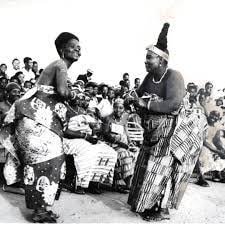










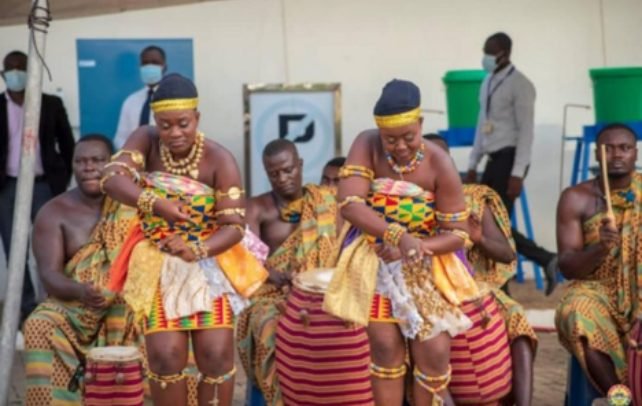
Imagine a dying queen mother, a desperate kingdom, and a frantic search for a miracle. This is where the story of Ghana’s most beloved dance begins. It wasn’t in a rehearsal hall, but in the quiet depths of an Ashanti forest.
The year is lost to memory, but the tale remains. The Ashanti Kingdom’s Queen Mother, Abrewa Tutuwa, lay gravely ill.
Her healers had failed. In their desperation, the elders turned to the gods. The message was clear: find a live antelope, a creature of the wild, to be part of a sacred healing ritual.
The kingdom’s bravest warriors, the Asafo companies, were dispatched into the thick forest . For days, they searched with no luck.
Defeated and tired, they decided to turn back home. But on their return journey, something strange happened.
Read Also: The Whispering Rocks of Tengzug: Invoking the Rain at the 2026 Gologo Festival
They saw it—an antelope, moving through the undergrowth with a grace they had never witnessed.
It wasn’t just walking; it was performing. It dipped and swayed, its feet tracing patterns on the earth, its head turning with a quiet dignity.
The warriors froze. They watched, mesmerized, and began to quietly mimic the animal’s movements, committing them to memory.
When they finally arrived back in the village without the antelope, they didn’t come empty-handed. They brought something far more lasting: a dance.
In front of the anxious household, they re-enacted the antelope’s mesmerizing performance, a gift of movement to lift the queen mother’s spirit.
The elderly women of the village watched the warriors’ imitation and saw its beauty.
They took these raw, masculine movements, softened them, and gave them rhythm and expression. They perfected the steps, shaping them into the dance we now call Adowa—the Twi name for that very same royal antelope.
Today, Adowa has travelled far beyond that forest encounter. It has become the voice of the Akan people, speaking at funerals, festivals, and the durbar of chiefs.
But if you watch closely, you can still see its origins. When a dancer bends low, you see the antelope bowing its head. The subtle, fluttering gestures of a white handkerchief?
Perhaps an echo of an animal twitching an ear in the quiet bush. The flick of a foot, the proud arch of a neck—it is all there.
A living, breathing memory of a moment when nature taught us how to move, and a dying queen mother was gifted a dance that would outlive us all.

If Ghana’s social media landscape were a marketplace, today’s chatter on Facebook and X would be the busiest stalls, hawking a mix of political tension, societal grief, and delicious carbs.
On March 18th, 2026, three distinct conversations are vying for the nation’s attention, reflecting a country grappling with the rule of law, public safety, and cultural identity.
The ‘Free Abu Trica’ Movement Intensifies
The courtroom drama surrounding businessman Abu Trica has exploded onto the streets and timelines. Following his court appearance at the Gbese High Court today, tensions in Swedru escalated as youth protested his potential extradition to the U.S. on fraud charges.
Read Also: Ghana’s Social Media Pulse: From Viral Dances to Political Firestorms
A video of community members making a direct, emotional appeal to President Mahama has gone viral, with one protester pleading, “President Mahama, do not let a few sell seekers destroy your government”.
The debate on X is razor-sharp; while some see nationalism, others argue, “no one is above the law”.
This is not a political issue, but we are all praying for Trica. Laws shouldn’t work because you voted for a party. Let him prove himself against the law.
— Afia Papabi (via Yen.com.gh)
Mob Justice: A “Too Frequent” Tragedy
A darker narrative is unfolding in the Ashanti Region. The lynching of two scrap dealers, Alhassan and Nagolo, at Ntensere has sparked national outrage.
Residents accused the men of attempting to steal a child, leading to a brutal mob killing that has left the Scrap Dealers Association president crying out against the frequency of such attacks.
This tragedy has reignited a fierce conversation on X about jungle justice, with users demanding police reform and condemning the ease with which communities resort to violence.
The ‘Akyeke’ Takeover
On a lighter note, your timeline is likely making you hungry. As part of Heritage Month, the Ivorian-adopted dish, Akyeke, is officially the trending cuisine.
From street vendors in Sunyani to high-end Accra brunch spots, the fermented cassava dish is being served as “Akyeke Jollof” or with grilled tilapia.
It’s a delicious debate on cultural integration, with foodies celebrating how Ghana has “naturalized” the dish as its own.
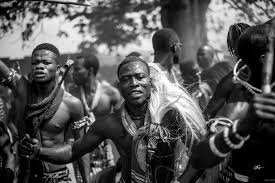
As the harsh harmattan winds of the north begin to soften and the cracked earth of the Upper East Region thirsts for relief, a transformation takes place in the hills of Tengzug.
While much of the world is caught in the frantic pace of the modern spring, the Talensi people are stepping back into a rhythm as old as the rocks themselves.
Throughout March 2026, the Gologo Festival (often called the Golib) serves as a profound spiritual negotiation between humanity and the divine for the survival of the coming year.
The Divine Regulator of the Harvest
To understand Gologo, you must understand the relationship the Talensi have with their land. This isn’t just a party; it is a vital agricultural necessity. The festival is centered around the Nnoo Shrine and the Golib god, the deity believed to hold the keys to the heavens.
In a region where the success of the early millet crop determines the well-being of every household, the stakes are high.
From March 1 to March 31, the air in the Tengzug hills is thick with the scent of traditional brews and the smoke of sacred sacrifices.
The chiefs and elders lead the community in seeking protection from the earthly gods, ensuring that when the seeds finally hit the soil, the rains will follow in abundance.
Read Also: The Sacred Weight of the President’s Sword
A Sensory Journey for the Global Soul
If you are a tourist venturing into Ghana this March, the Gologo Festival offers an experience that defies the typical “safari and beach” itinerary.
Tengzug is famous for its unique architecture and its incredible rock formations, which are integrated into the very homes of the people.
During the festival, these rocks become the stage for mesmerizing dances and rhythmic chanting that vibrate through your chest.
Participating in Gologo means stepping into a living museum. You aren’t just a spectator; you are a witness to a community reinforcing its identity.
You’ll see the traditional attire—richly woven smocks and intricate beadwork—and hear the distinct sounds of the Talensi flutes that signal the transition from the dry season to the life-giving rains.
For the native Ghanaian, Gologo is a powerful reminder of our indigenous resilience. In an era of climate uncertainty, there is something deeply grounding about watching a community come together to honor the earth.
It is a time to strip away the complexities of city life in Accra or Kumasi and reconnect with the foundational belief that we are stewards of the land, dependent on the grace of the ancestors and the environment.
Why You Can’t Miss the 5:00 PM Finale on March 31
The month-long celebration builds toward a crescendo that balances solemnity with communal joy.
By the time the festival officially concludes at 5:00 pm on March 31, the spiritual “green light” has been given for the sowing of the early millet.
To be present during these final hours is to feel a collective sigh of relief and hope. It is the moment when the community shifts from petition to preparation, ready to face the planting season with the backing of the Golib god.
Recommendation
If you make the trip to the Upper East Region, stay in Zuarungu or Bolgatanga and hire a local guide who understands the nuances of Talensi customs.
To truly appreciate the heritage, visit the Tongo Whistling Rocks, where the wind through the stones creates a haunting melody that many locals believe is the voice of the spirits themselves.
Pack light, stay hydrated, and bring an open heart; the dust of Tengzug will wash off, but the memories of the Gologo songs will stay with you forever.


The Taste of the Sidewalk: Chasing Ghana’s Perfect Bite of Ghana’s Kofi Broke Man

The Night They Banned the Song: How a Highlife Guitar Felled a General and Renamed an Airport

5 Realistic Guide to Weight Loss on Ghanaian Foods
-

 Ghana News2 days ago
Newspaper Headlines Today: Wednesday, March 18, 2026
-

 Ghana News2 days ago
UK Engages Ghana on Counterterrorism and Maritime Security
-
Ghana News23 hours ago
Newspaper Headlines Today: Thursday, March 19, 2026
-

 Ghana News2 days ago
Two Scrap Dealers Lynched, Video of Mahama’s Reaction After Atta Mills’ Death Resurfaces and Other Trending Issues Today (March 18, 2026)
-

 Ghana News23 hours ago
New Video Captures Victims Piloting Microlight Before Fatal Crash, Dormaahene Breaks Down in Tears and Other Trending Issues Today (March 19, 2026)
-

 Ghana News2 days ago
Germany Hands Over Four Operational Shelters to Ghana Immigration Service at Aflao Border
-

 Ghana News22 hours ago
Ghana to Table Landmark UN Resolution on Slave Trade in September
-

 Ghana News22 hours ago
54 Ghanaian Soldiers Return Home After Successful Hurricane Relief Mission in Jamaica