
Commentary
“One Phone Call Ended It All”: The Hidden Crisis Breaking Diaspora Marriages

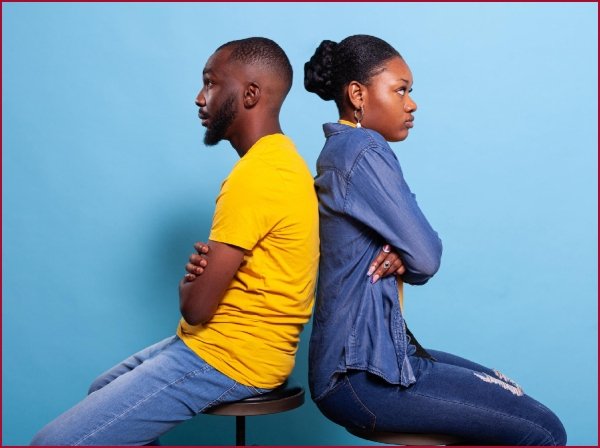
A growing number of Ghanaian men in the diaspora are becoming reluctant to sponsor their wives to join them abroad—or even marry at all—due to fears that ordinary marital disputes can escalate into police intervention, immediate eviction from the home, restraining orders, loss of immigration status, or deportation. The article by Stephen Armah Quaye highlights real-life cases from the diaspora where wives called the police during heated arguments, leading to husbands being removed from their own homes (sometimes becoming homeless or deported), and warns that the shift from traditional African family mediation to quick resort to law enforcement is tearing families apart, traumatising children, and reshaping perceptions of marriage as a legal and financial risk rather than a source of stability.
My wife called police on me: Inside the hidden crisis destroying diaspora marriages
Kwame never thought his marriage would end with flashing blue lights.
Not in a courtroom. Not before a judge. Not even after a formal separation.
It ended in his living room when his wife picked up her phone, dialled the police, and told officers she felt unsafe.
Within minutes, he was ordered to leave the house he paid for. That night, Kwame slept on the streets of London. By morning, his marriage was effectively over.
For years, a troubling question has echoed across Ghanaian communities at home and abroad: Why are many Ghanaian men living overseas no longer eager to bring their wives to join them abroad after marriage?
Closely tied to this is another uncomfortable inquiry, “Why are many Ghanaian women living in Canada, the United States, the United Kingdom, and Germany no longer interested in marrying Ghanaian men and sponsoring them overseas?”
These questions point to a deeper crisis reshaping marriage among Ghanaians in the diaspora.
Marriage and family have always been the backbone of African society. Yet in a remarkably short time, the institution has undergone a dramatic transformation. Among Ghanaians living abroad and increasingly back home, marriage is now frequently linked with separation, police intervention, and divorce.
In countries such as the United Kingdom, Canada, the United States, Germany, Belgium, and others, divorce statistics continue to rise steadily among African immigrant communities. Many people quietly accept this as “normal,” but behind closed doors, families are unravelling at alarming rates.
More troubling is a growing pattern shared by many husbands during ordinary marital disputes; some wives now call the police, triggering immediate removals from the home, restraining orders, or immigration consequences, often without thorough investigation in the early stages.
Two cases from London, England, illustrate how devastating this trend has become.
CASE ONE: HE SPONSORED HIS FAMILY—BUT NOT HIMSELF
A Ghanaian man living in London without legal status worked tirelessly to regularise his family’s situation. Through savings, loans, and years of labour, he successfully secured legal residency for his wife and children.
Ironically, he remained undocumented.
When he began to suspect that his wife was having an affair with a close acquaintance, he confronted her. The argument escalated. Instead of seeking family mediation or counselling, the wife called the police.
Officers arrived and ordered the man to leave the house immediately. With no legal status, no access to shelters, and no family nearby, he slept outside that night.
“I suffered to bring my family together,” the man later lamented in a viral video. “Today, I am homeless in a country I struggled to survive in.”
CASE TWO: TWO CALLS, TWO DEPORTATIONS
In another incident, a Nigerian businessman sponsored his wife and two children to live with him in London. After discovering that his wife was allegedly involved with a male co-worker, an argument erupted.
The wife called the police.
The husband was arrested and subsequently deported to Nigeria.
Angered by what he viewed as betrayal, the man reported to authorities that his wife’s immigration documents were fraudulent.
The police investigated and deported the woman as well.
Two parents removed from the country.
Two children left behind.
One family destroyed.
All because of phone calls made in anger.
THE FEAR DRIVING MEN AWAY FROM MARRIAGE
Stories like these circulate widely on social media, WhatsApp groups, and community platforms. They have created deep fear among many African men living abroad.
Some now avoid marriage altogether.
Others marry but refuse to sponsor their spouses.
Many prefer long-distance relationships rather than risk losing everything.
Marriage, once seen as a blessing, is increasingly viewed as a legal trap.
A SHIFT FROM MEDIATION TO POLICING
Traditionally, African marriages relied on conflict resolution through family elders, clan heads, chiefs, pastors, imams, and respected community leaders. Disputes were treated as family matters requiring dialogue and healing.
Today, those structures are weakening.
Police have replaced elders.
Courts have replaced family meetings.
Lawyers have replaced counsellors.
While law enforcement is essential in cases of real abuse and danger, using the police as a first response to normal marital conflict has devastating consequences.
A police record can destroy employment.
Immigration status can be jeopardised.
Children can be traumatised.
And reconciliation becomes nearly impossible.
A CALL FOR BALANCE
This is not an argument against women seeking protection.
Any woman facing physical violence, sexual abuse, or serious threats must seek immediate help from authorities.
But not every argument is abuse.
Not every disagreement is a crime.
Couples must relearn the art of dialogue, patience, counselling, and mediation.
TIME FOR A NATIONAL CONVERSATION
Chiefs, queen mothers, clergy, legal experts, and community leaders must come together to re-examine how marriages are protected in the diaspora.
If families collapse, societies collapse.
If marriage fails, the future suffers.
As Ghanaian communities wrestle with these painful realities, one truth stands clear.
One phone call made in anger can change a life forever.
In the next edition, I will examine divorce rates in Canada, major causes of marital breakdown, and possible pathways toward restoration.
Article by Stephen Armah Quaye | Toronto, Canada


Conventional wisdom dictates that rising prices should lead to falling demand. However, this article challenges that notion by delving into the complex and often counterintuitive relationship between global oil prices and petrol consumption in Ghana. Drawing on recent research analyzing market data from 2016 to 2024, Rafael Adjpong Amankwah reveals that higher crude oil prices do not automatically suppress demand. Instead, factors like consumer hoarding behavior in anticipation of future hikes and the essential nature of petrol for transport and logistics can keep consumption stable or even cause it to spike temporarily.
Rising oil prices could trigger unexpected petrol demand in Ghana
Fuel prices may rise again soon, but what if higher prices don’t actually reduce petrol consumption in Ghana?
Discussions about rising global crude oil prices are once again dominating energy market conversations, raising concerns about higher petrol prices and increased transport costs across Ghana.
Yet the relationship between oil prices and petrol consumption may not be as straightforward as many assume. Conventional economic theory suggests that when fuel prices rise, consumers should reduce consumption. However, recent research analyzing Ghana’s petrol market reveals a more complex pattern of behavior.
The study finds that crude oil prices exhibit a positive relationship with petrol consumption, indicating that higher prices do not necessarily suppress demand as standard models predict.
This pattern reflects several structural characteristics of Ghana’s economy.
First, alleged BDC’s stockpiling increases the potential for increased purchases(demand) vis a vis consumption as consumers often engage in anticipatory or hoarding behavior when price increases are expected.
Second, global crude oil price increases do not necessarily reduce petrol consumption in Ghana in the short run. Petrol is an essential input for transport, logistics, and small business operations, meaning substitution possibilities are limited. As a result, consumption may remain stable or even increase due to inventory adjustments and expectations of further price hikes
These findings also carry an important methodological implication that Traditional symmetric demand models, which assume that price increases and decreases produce equal but opposite responses in consumption, appear to misrepresent the dynamics of Ghana’s petrol market.
When asymmetric price behavior such as the Rock-and-Feathers effect interacts with structural demand constraints, consumption responses become more complex than standard theory predicts.
Using monthly national data from 2016 to 2024 and applying a nonlinear econometric approach, the study examined how crude oil prices, exchange rates, inflation, and domestic fuel taxes affect petrol consumption.
The findings show that petrol consumption in Ghana responds asymmetrically to price changes. In practical terms, this means that price increases and price decreases do not affect consumption in the same way.
The research also highlights the importance of exchange rate movements. Because Ghana imports most of its refined petroleum products, a depreciation of the cedi significantly increases the local cost of fuel and tends to reduce consumption.
Perhaps the most influential factor identified in the study is domestic fuel taxation. Changes in taxes, levies and margins have a stronger effect on petrol consumption than movements in global crude oil prices. In particular, reductions in fuel taxes tend to stimulate consumption much more strongly than tax increases suppress it.
These findings suggest that policymakers seeking to manage fuel demand, inflation, and fiscal stability should pay close attention to domestic fuel pricing structures rather than focusing solely on international oil price movements.
As global oil markets face renewed volatility, understanding how Ghanaian consumers and businesses respond to fuel price changes will become increasingly important for economic planning and energy policy
Understanding the behavioral responses behind fuel consumption is critical for managing energy affordability, fiscal stability, and economic resilience.
The next time fuel prices rise in Ghana, the assumption that “higher prices reduce consumption” may need to be reconsidered.
In reality, the dynamics of petrol demand are shaped by behavioral responses, policy decisions, and exchange rate pressures, not just global crude oil prices. Understanding these asymmetries could be the difference between reacting to fuel price shocks and actually managing them.
Rafael Amankwah is a professional in Ghana’s downstream energy sector with a background in energy economics and investment strategy. He is passionate about advancing sustainable energy solutions and applies research, behavioral insights, and innovation to support smarter energy policies and business models.
Commentary
Ghana Must Choose Diplomacy Over Alignment in the Israel–Iran Crisis: Lessons from Ghana’s Peacekeeping and Non-Aligned Legacy
In an open letter to Israel’s ambassador, author Seth K. Awuku argues that Ghana must resist pressure to take sides in the escalating Israel-Iran conflict. Drawing on the recent wounding of Ghanaian peacekeepers in Lebanon and the nation’s non-aligned legacy, he calls for a return to diplomacy, restraint, and the protection of national interest over strategic alignment. Read the full commentary below.
Ghana Must Choose Diplomacy Over Alignment in the Israel–Iran Crisis: Lessons from Ghana’s Peacekeeping and Non-Aligned Legacy
By: Seth K. Awuku
Your Excellency Ambassador Roey Gilad,
I extend sincere diplomatic courtesy and appreciation for your prompt humanitarian response following the missile strike that wounded Ghanaian peacekeepers in southern Lebanon.
In times of shared sorrow, words carry profound weight. Your description of the attack as “tragic” and “catastrophic,” along with your wishes for the swift recovery of the injured soldiers, reflects genuine compassion. Ghana receives such gestures with gratitude, for they affirm our shared humanity amid the smoke of conflict.
Yet only two days earlier, on March 5, during a public briefing in Accra, you urged Ghana to “join its voice” in confronting Iran and to support a strategic change in its leadership to end threats and instability.
That appeal, understandable from Israel’s perspective, now stands in painful contrast to the fresh wounds suffered by Ghanaian soldiers serving under the United Nations. Tragedy, once named, requires more than sympathy—it demands reflection.
The attack of March 6 tore through the Ghanaian battalion headquarters in southern Lebanon, leaving two soldiers critically injured and another traumatized. Ghanaian peacekeepers have served in Lebanon for decades, often under dangerous and unpredictable conditions.
These events revive older concerns about the security of our personnel abroad and the broader risks that accompany escalating regional conflict.
They also follow a troubling incident in December 2025 at Ben Gurion International Airport, where several Ghanaians including members of an official delegation were detained for hours and subjected to questioning and searches that Ghana later described as humiliating and degrading. Such incidents, when repeated, inevitably strain trust.
Reciprocity, transparent investigation, accountability, and credible assurances against recurrence are essential to rebuilding confidence.
Your Excellency, during the Israel–Hamas War in November 2023, I addressed an open letter to your predecessor, Shlomit Sufa, cautioning that if the conflict escalated unchecked, it “may not be like other wars; it may be apocalyptic in scope and possibly destructive of our globe.” That warning was offered not in division, but in concern for the safety and future of all peoples caught in the widening arc of war.
Recent missile exchanges between Israel and Iran demonstrate the growing lethality of modern warfare and the alarming vulnerability of civilian populations – even in countries equipped with advanced defense systems. Ghana, however, does not possess such protections.
Our security priorities focus primarily on internal stability and peacekeeping obligations. We do not have missile interception systems, sophisticated air defenses, or the strategic infrastructure necessary to withstand retaliatory strikes in a wider regional confrontation. Alignment in conflicts of this magnitude, without equivalent protection, exposes vulnerabilities that Ghana cannot afford. Our ports, markets, infrastructure, and communities would all be at risk should tensions expand beyond the Middle East.
Precisely because great powers often allow strategic rivalries to overshadow the urgency of peace, middle powers like Ghana carry a different kind of responsibility. Our diplomatic tradition, shaped by the non-aligned vision of Kwame Nkrumah, strengthened through decades of peacekeeping, and inspired by the global statesmanship of Kofi Annan, places upon us a quiet but meaningful moral authority.
We can call for restraint without appearing weak, advocate dialogue without conceding defeat, and remind the world that wisdom in diplomacy is often measured not by the volume of power, but by the courage to prevent catastrophe.
The Hebrew Scriptures offer a powerful reminder of the difference between victory and legacy. In 1 Chronicles, King David is told he cannot build the temple because he has shed too much blood. Instead, that task falls to his son Solomon, whose name signifies peace and rest. True greatness, the text suggests, lies not only in the victories of war but in the achievements of peace.
History also remembers another figure: Samson, the blinded warrior who in despair pulled down the pillars of the temple, destroying himself and his enemies alike. If modern conflicts are pushed toward such desperation; if nuclear doctrines or catastrophic retaliation ever become reality, the consequences would extend far beyond the borders of any single nation. Ghana therefore pleads for wisdom over pride and restraint over escalation.
In moments such as this, the measure of leadership is not found in the power to escalate conflict, but in the wisdom to pause, reflect, and choose the harder path of peace.
May the calm voice of diplomacy silence the roar of war.
May the wounded recover before new wounds are inflicted.
May the pain of mistrust fade like morning mist across the savanna.
And may history remember not the clash of weapons, but the courage of those who chose dialogue over destruction.
With respect for your office, hope for the recovery of the injured, and a shared aversion to catastrophe,
I remain,
By Seth K. Awuku
Principal, Sovereign Advisory
Former Immigration and Refugee Lawyer (Ottawa, Canada)
Writer on international law, diplomacy, and refugee governance
Commentary
Influencer Shanell R. Oliver Delivers Powerful Message to All Blacks: “We Are One African People Living in Different Places”
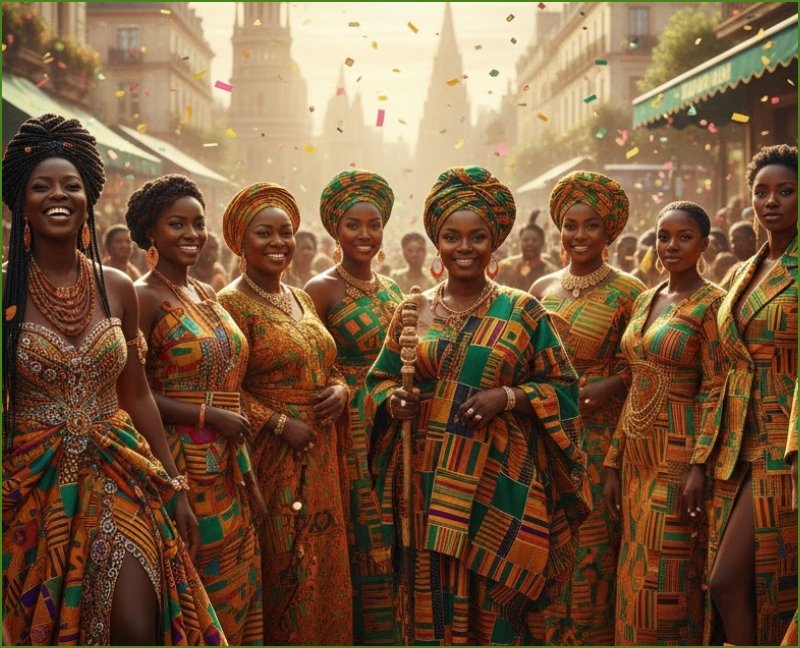
Accra, Ghana – March 6, 2026 – U.S.-based influencer Shanell R. Oliver (@shanellroliver) shared a viral Facebook video reminding the global African diaspora of their shared West and Central African roots, urging unity across borders and continents.
In the emotional post, Oliver reminds Blacks across the world that more than 12.5 million Africans were forcibly trafficked during the transatlantic slave trade, with over 90% originating from the same core regions: the Congo Kingdom, Akan States (including modern Ghana), Yoruba and Dahomey lands (Nigeria and Benin), Igbo heartlands, and Senegambia. This common ancestry links African Americans, Afro-Brazilians, Haitians, Jamaicans, Trinidadians, Cubans, Dominicans, and Afro-descendant communities in Colombia, Venezuela, and beyond.
“Our spiritual systems, drum patterns, foods, dances, languages, and resistance movements all mirror each other because we come from one cultural foundation,” Oliver says in the video. “European invaders scattered us, but they couldn’t scatter our identity.”
She points to DNA evidence showing that 70% of African Americans trace roots to Nigeria, Ghana, Benin, Cameroon, Congo, and Angola—the same zones that shaped Afro-Brazilian and Caribbean cultures.
The message resonates deeply on Independence Day, when Ghanaians and the diaspora celebrate shared heritage and resilience.
Oliver closes with a call to recognition: “We’re not different kinds of Black. We are one African people living in different places. And we are finally remembering that.”
The post has sparked widespread shares and comments across the diaspora, reinforcing the enduring connection between continental Africans and their kin worldwide.


Renowned Global Bodies Warn Middle East War Will Scuttle Africa’s 2026 Growth

Ex-President Akufo-Addo and President Mahama Exchange Pleasantries on Easter
