
Ghana News
Insider Reveals 2 Assassination Attempts On Ghana’s Special Prosecutor Amid Calls To Scrap Office: ‘The Work We Do Is Dangerous’

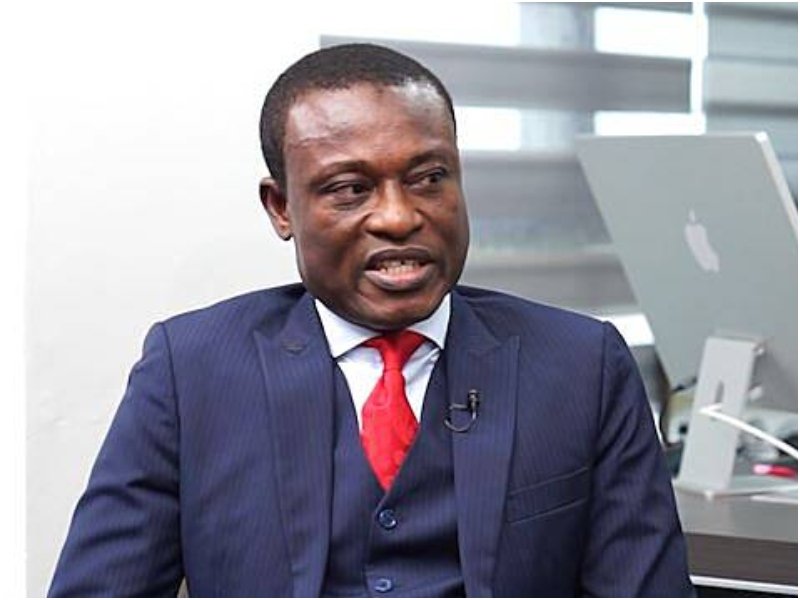
The debate over the future of Ghana’s Office of the Special Prosecutor (OSP) has taken a dramatic and deeply personal turn.
This is after a senior official revealed that Special Prosecutor Kissi Agyebeng has survived two assassination attempts, demonstrating the high-stakes environment in which the anti-corruption body operates.
Speaking on Joy News’ Newsfile on Saturday, Samuel Appiah Darko, Director of Strategy, Research and Communications at the OSP, peeled back the curtain on the toll the job has taken on staff. Though Parliament is calling for the OSP to be abolished over “lack of results,” Appiah Darko painted a much darker, more complex picture.
“The men and women in that office… do a lot of covert reporting and it is important we protect their identity,” he said. “They have young families that need to be protected.”
Then came the revelation that jolted the conversation.
“The Special Prosecutor has survived two assassination attempts… There are so many things we don’t put out,” Appiah Darko said.
“Myself, I have been handcuffed and beaten before by 17 police officers. So yes, the work that we do is dangerous. The people we are dealing with are very powerful.”
For many Ghanaians, it was the first time anyone inside the OSP openly described the level of physical risk confronting the institution. It cast a new light on the public conversation—one that Parliament had largely framed as a performance issue.
Parliament Moves to Scrap the OSP
The revelations arrive amid strong calls from Ghana’s Parliament—both Majority and Minority— for the office to be scrapped.
Last week, Speaker Alban Bagbin and MPs agreed unanimously to recommend abolishing the OSP, arguing that after eight years and significant public investment, the office has failed to deliver measurable progress in fighting corruption.
Majority Leader Mahama Ayariga reignited the debate when he disclosed the controversial detention of private legal practitioner Martin Kpebu, who had publicly criticised Agyebeng’s methods. The arrest, he said, showed a pattern of overreach.
The Kpebu incident became a political flashpoint. Social media outrage forced the OSP to release him, but the damage was done.
Ayariga was blunt:
“We have experimented with it and we cannot see any achievements… It is time to abolish it.”
He argued that Ghana should instead strengthen the constitutionally established Attorney-General’s office—an institution he believes should have been the country’s primary anti-corruption engine all along.
The Speaker agreed wholeheartedly, noting that Parliament had long known the OSP sat awkwardly within Ghana’s constitutional framework.
“We cannot continue to allocate huge sums to the same office when we are not getting the results,” Bagbin said.
A Fight Bigger Than an Institution
Appiah Darko’s claims complicate Parliament’s narrative. If true, they suggest the problem isn’t simply bureaucratic failure—but the immense power and reach of the individuals the OSP is mandated to investigate.
If staff are being beaten, if the Special Prosecutor is surviving assassination attempts, if even officers’ names cannot safely be mentioned on air—then the question shifts from “Why hasn’t the OSP delivered results?” to “Who is preventing it from doing so?”
And what does it mean if an anti-corruption institution is being dismantled at the very moment insiders say the pressure is highest?








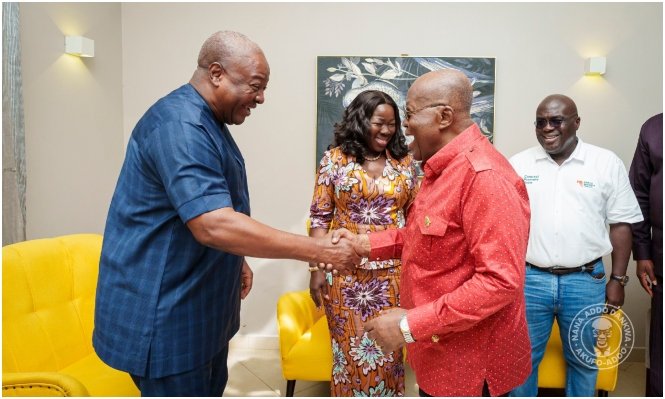
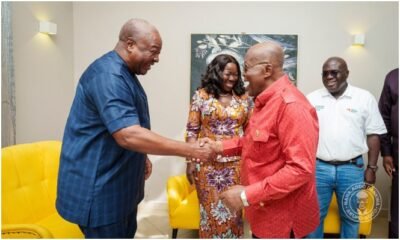
Kwahu, Ghana – Former President Nana Akufo-Addo paid a courtesy call on President John Dramani Mahama on Holy Saturday, April 4, 2026, while both leaders were in the Kwahu enclave for the annual Easter celebrations.
The meeting took place as President Mahama participated in activities linked to the Kwahu Business Forum, a major event held alongside the Easter festivities.
Akufo-Addo, who has maintained a nearly two-decade tradition of spending Easter in Kwahu, described the visit as a cordial engagement during the sacred period.
In a Facebook post, the former president wrote: “On the Holy Saturday of Easter, while in Kwahu where for almost two decades I have consecutively visited during the sacred period of Easter, I called on the President of the Republic, H. E. John Dramani Mahama who is also in Kwahu.”
The encounter highlights a moment of peaceful political civility between the current and immediate past leaders of Ghana amid the festive season. No further details about the substance of their discussion were made public.
The visit comes at a time when both leaders are actively involved in national and regional development conversations, with Mahama using the Kwahu platform to engage stakeholders on economic matters.
Ghana News
Mahama Calls Christ’s Birthplace an ‘Epicentre of War’, New Airport Concourse Planned and Other Big Stories in Ghana Today
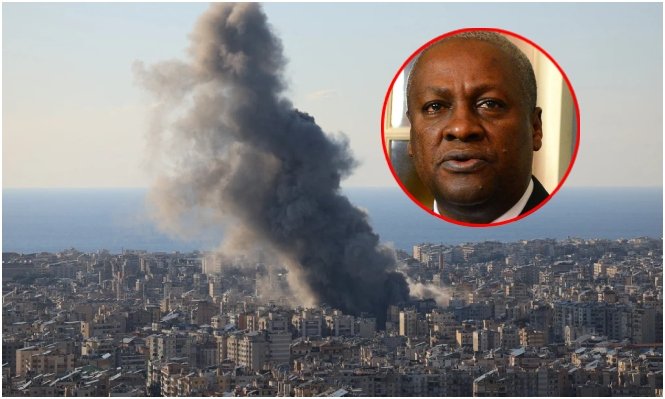
We have curated the most relevant and impactful stories from Ghana to keep you informed.
‘It’s Painful Christ’s Birthplace Now an Epicentre of War’ – President Mahama
President John Dramani Mahama has described the ongoing violence in the Middle East as a “painful irony,” noting that the birthplace of Christianity and the land where Christ preached love, forgiveness, and peace has become a major centre of conflict. In his Easter message delivered at Black Star Square on April 3, 2026, Mahama said the suffering in the Holy Land cannot be ignored during the season of Easter. He extended Ghana’s thoughts and prayers to the people of Israel, the United Arab Emirates, Qatar, Iran, and the wider Middle East region, urging world leaders to embrace restraint, dialogue, and respect for human dignity.
Read the full story here
Gov’t to Construct New Concourse at Accra International Airport to Ease Congestion
The Ghana Airports Company Limited will begin construction this month on an ultra-modern concourse linking Terminal 2 and Terminal 3 at Kotoka International Airport. The project aims to eliminate current operational bottlenecks, enable seamless passenger transfers, and significantly improve hub efficiency. Key features include five additional passenger boarding bridges, five passenger holding areas, bi-directional travelators, new escalators and elevators, a VIP lounge, four business lounges, and four retail and duty-free pods. The expansion forms part of a broader modernisation drive to provide world-class facilities and strengthen Ghana’s position as a competitive aviation hub in West Africa.
Read the full story here
Gov’t Procures Over 24,000 Medical Equipment to Support Free Primary Healthcare Rollout
The Ghanaian government has acquired 24,534 pieces of medical equipment to strengthen health facilities ahead of the nationwide rollout of its free primary healthcare policy. The consignment, inspected by Health Minister Kwabena Mintah Akandoh, includes baby incubators, radiant warmers, oxygen concentrators, X-ray machines, ultrasound devices, laboratory analysers, vital signs monitors, glucometers, patient monitors, infusion devices, delivery beds, and hospital beds. The equipment will be distributed across government hospitals to improve diagnostics, newborn care, and overall service delivery at the primary level.
Read the full story here
Ghana to Manufacture First Vaccine with Support from Indonesia
Ghana is set to begin local production of its first vaccine with technical and partnership support from the Indonesian government. Honorary Consul of Indonesia to Ghana, Paskal A B Rois, confirmed that a high-level delegation from Ghana’s National Vaccine Institute, Food and Drugs Authority, and GIZ visited Indonesia late last year to finalise arrangements. Once operational, Ghana will become the third African country — after Senegal and South Africa — to manufacture vaccines domestically. The initiative is expected to enhance the country’s health security and reduce dependence on imported vaccines.
Read the full story here
No Business Thrives Without Trust in Justice System — Chief Justice
Chief Justice Paul Baffoe-Bonnie has emphasised that trust in the judicial system is essential for business growth and investor confidence in Ghana. Speaking at the Kwahu Business Forum on April 4, 2026, he stated that contracts must be honoured, property protected, and disputes resolved fairly and predictably for any economy to flourish. The Chief Justice announced that the judiciary is repositioning itself to become an active partner in creating a business-friendly environment anchored in the rule of law. He warned that delays and uncertainty in the justice system carry real economic costs by discouraging investment.
Read the full story here
Ghana News
Ghana President Convenes Emergency Cabinet Meeting to Cushion Ghanaians from Soaring Fuel Prices
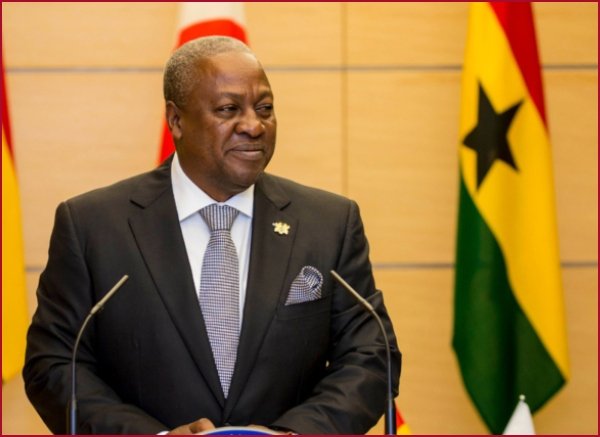
President John Dramani Mahama has convened an emergency cabinet meeting to address the sharp rise in fuel prices caused by the ongoing conflict in the Middle East, particularly the escalation involving Iran.
Speaking on Saturday, April 4, 2026, during the second day of the Kwahu Business Forum, President Mahama stated that the meeting will focus on practical interventions to ease the burden on citizens.
He specifically mentioned the possibility of adjustments in fuel margins and other components of the price build-up to help keep prices relatively stable while hoping for de-escalation of the conflict.
“I have called for this emergency cabinet meeting to decide on specific measures we can take to cushion petroleum prices,” Mahama said. “There are adjustments we can make, particularly in the margins, to help maintain relatively stable prices as we pray for the war to cease.”
The President assured Ghanaians that the government remains committed to protecting the economy from external shocks and has taken steps to build resilience.
“I can confidently tell you that the economy will not collapse because of the war in Iran,” he stated.
Mahama also commended transport unions for showing restraint by not immediately increasing lorry fares despite the fuel price surge.
He urged them to continue exercising patience as the government works on relief measures. Fuel prices rose significantly effective April 1, 2026, with petrol increasing to approximately GH¢13.30 per liter (a 15% hike) and diesel to GH¢17.10 per liter (a 19% hike) for the first half of April.
The government is reviewing options including reductions in margins and levies to provide relief to consumers.
This latest development highlights the direct link between global geopolitical tensions and domestic living costs in Ghana, as the government balances immediate relief with longer-term economic stability.


Renowned Global Bodies Warn Middle East War Will Scuttle Africa’s 2026 Growth

Ex-President Akufo-Addo and President Mahama Exchange Pleasantries on Easter

Mahama Calls Christ’s Birthplace an ‘Epicentre of War’, New Airport Concourse Planned and Other Big Stories in Ghana Today
-
 Business2 days ago
Ghana Turns to Russian Fuel to Cushion Impact of Global Energy Crisis
-
 Tourism2 days ago
5 Things You Need to Know About Ghana’s Visa-Free Entry for All Africans
-
 Ghana News10 hours ago
Ghana President Convenes Emergency Cabinet Meeting to Cushion Ghanaians from Soaring Fuel Prices
-
 Ghana News10 hours ago
Mahama Calls Christ’s Birthplace an ‘Epicentre of War’, New Airport Concourse Planned and Other Big Stories in Ghana Today
-
 Ghana News10 hours ago
Ex-President Akufo-Addo and President Mahama Exchange Pleasantries on Easter
-
 Ghana News2 days ago
Ghanaian Stowaways Bound for Europe End Up in Nigeria After Five Days at Sea
-
 Ghana News2 days ago
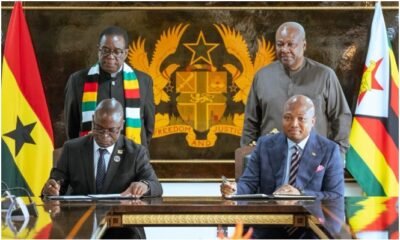
Here Are the 10 Key Agreements Signed Between Ghana and Zimbabwe During Mnangagwa’s State Visit
-

 Health & Wellness2 days ago
3 Surprising Signs Your Body Is Building Muscle
Pingback: Ghana Orders Full-Scale Probe After SP Assassination Claims