
News
Ken Ofori-Atta’s U.S. Court Appearance Explained: Where the Case Will Be Heard, What It’s About, and What Comes Next

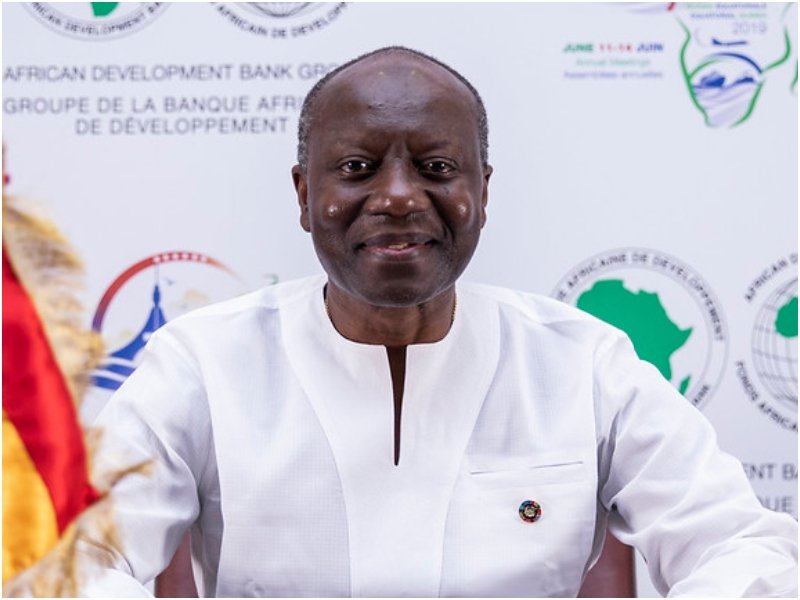
Former Ghanaian Finance Minister Ken Ofori-Atta is scheduled to appear before a United States court today, Tuesday, January 20, in a case that has drawn international attention and carries potential implications for his return to Ghana.
Below is a clear, reader-friendly explainer of what is known so far and what to expect as the legal process unfolds.
1. Where Will the Case Be Heard?
Mr Ofori-Atta is expected to appear before a U.S. immigration court, following actions taken by U.S. Immigration and Customs Enforcement (ICE). Such hearings are typically held in jurisdictions linked to the individual’s detention or residence and may be conducted virtually, a common practice in U.S. immigration proceedings. Details of the court and judge scheduled to hear the case are not presently available.
2. What Is the Nature of the Case?
The immediate case before the court is an immigration status hearing, not a direct extradition trial. ICE has reportedly determined that Mr Ofori-Atta no longer has lawful status to remain in the United States, prompting the court process.
However, Ghana’s Attorney-General and Minister for Justice, Dr Dominic Ayine, has stressed that the matter goes beyond a routine visa issue. According to him, Mr Ofori-Atta’s visitor visa was actively revoked by U.S. authorities, rather than expiring naturally.
“This is not simply an immigration issue. His visa did not expire; it was revoked,” Dr Ayine said earlier this month, adding that the visa was originally due to run until February.
3. Why Was the Visa Revoked?
Dr Ayine maintains that the revocation was intentional and linked to ongoing investigations, not standard immigration enforcement. He disclosed that Ghana’s request for Mr Ofori-Atta’s extradition is connected to investigations being conducted by the Office of the Special Prosecutor (OSP), particularly relating to the Strategic Mobilisation Limited (SML) case.
He further noted that Ghanaian and U.S. authorities have been cooperating closely on the matter.
4. What Does Today’s Hearing Mean for Extradition?
Today’s court appearance could open the legal pathway for extradition proceedings, but it does not itself determine whether Mr Ofori-Atta will be sent back to Ghana.
If the court upholds ICE’s position, U.S. authorities may proceed with removal or extradition processes, which would involve separate legal steps and diplomatic considerations.
5. What Time Is the Hearing?
Specific details about the exact time of the hearing have not been publicly disclosed, which is common in immigration cases. Updates are expected after proceedings conclude.
6. Are There Other Related Cases?
In a related development, Sedina Tamakloe-Attionu, former Chief Executive Officer of the Microfinance and Small Loans Centre (MASLOC), is also expected to appear before a U.S. court on January 21 in proceedings connected to a possible extradition to Ghana.
Why This Matters
The case marks a rare moment where U.S. immigration law, international cooperation, and Ghana’s anti-corruption investigations intersect, making it one to watch closely both at home and abroad.
Updates are expected as the hearing concludes and further legal steps become clearer.












Ghana News
‘We Need Justice’: Families Demand Accountability After Best Friends from Ghana Die in Wrong-Way Crash in Canada

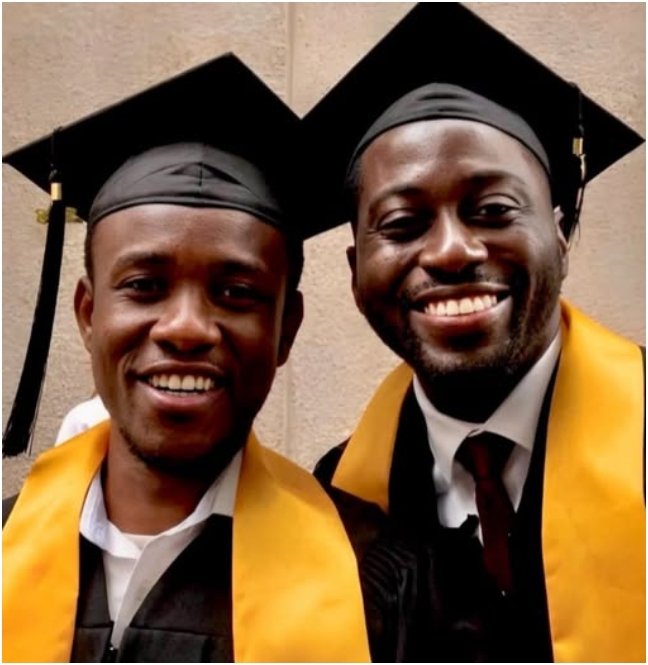
The families of two Ghanaian men killed in a devastating wrong-way collision on Vancouver Island, British Columbia, are demanding justice as they mourn the loss of their loved ones, whose lives were cut short while returning home after work.
Emmanuel Lamptey, 35, and Ernest Kojo Appiah, 29, died in a head-on collision on August 27, 2026, near Lantzville and Nanoose Bay in British Columbia, Canada. The two men, who were best friends and roommates, were travelling together shortly after 3 a.m. when their vehicle collided with a Kia minivan reportedly travelling in the wrong direction on Highway 19.
The driver of the minivan, a 16-year-old girl, was arrested at the scene on suspicion of impaired driving causing death. The police investigation remains ongoing.
The tragedy has left two Ghanaian families grieving thousands of kilometres from their homeland, while members of the Ghanaian community in Nanaimo are joining calls for accountability and progress in the justice process.
On November 13, relatives, friends and members of the Ghanaian community gathered in Nanaimo for a memorial and funeral service honouring the two men.
“This morning is to honour and remember the lives of our beloved brothers Emmanuel Lamptey and Ernest Kojo Appiah,” said Philip Otchere, a pastor with the Church of Pentecost’s Victoria-Nanaimo District, one of the church communities involved in the service.
For the families, however, the gathering was not only an opportunity to celebrate the lives of the deceased but also to demand answers about the circumstances surrounding their deaths.
Kenneth Amoah, Ernest Kojo Appiah’s brother, expressed frustration over what the family considers a prolonged wait for progress in the justice process.
“This is negligence of somebody who took their lives,” he said. “We need to make sure the court system is taking care of that. We’ve been waiting and waiting and nothing is going on, so all we seek is justice.”
Another brother, Lawrence Appiah, also appealed for accountability, saying that justice would help bring some measure of peace to the grieving families.
“Whoever that can help out to bring this justice system for these two brothers Emmanuel and Ernest, I think the family would be at peace,” he said.
Lawrence recalled how excited Ernest had been when he first shared his decision to pursue studies abroad in Canada.
“I embraced that decision and he was so happy stepping into Nanaimo,” he said, remembering the optimism with which his younger brother had begun a new chapter of his life.
That future was abruptly cut short by the August collision.
“We need justice for Ernest,” Lawrence declared.
Two lives, two promising journeys cut short
Both men were born in Ghana and had established lives in Canada through education and employment.
Ernest Kojo Appiah moved to Canada in 2024 and graduated with a diploma in project management from Vancouver Island University in June 2026, just months before his death.
Emmanuel Lamptey, who was 35, had also pursued higher education at Vancouver Island University, completing a master’s degree. He worked at Quality Foods and Mid-Island Co-op.
The two friends had been working at Quality Foods in Parksville before the fatal collision. Their deaths have sent shockwaves through their families and the Ghanaian community in British Columbia, particularly among those who knew them as hardworking young men pursuing opportunities abroad.
Their mothers travelled from overseas to participate in the final farewell, as relatives and members of the community came together to honour their lives and support the grieving families.
A community’s demand for accountability
The deaths have renewed attention on the devastating consequences of impaired driving and the importance of accountability when dangerous road behaviour results in fatalities.
While the 16-year-old driver was arrested at the scene, an arrest does not in itself establish criminal guilt. The investigation and any subsequent legal proceedings will determine the circumstances and legal responsibility for the collision.
For the families of Lamptey and Appiah, the priority remains obtaining answers and seeing the justice system address the deaths of the two men.
Their loss is also a painful reminder of the sacrifices made by many Ghanaians who travel abroad in pursuit of education, employment and better opportunities.
Emmanuel Lamptey and Ernest Kojo Appiah left Ghana with ambitions for the future. Their families are now left with memories, unanswered questions and a demand that their deaths should not go without accountability.
May they rest in peace.
Global Update
Content Creation Is Now a College Degree: Universities Turn Influencing Into a Professional Career Path

Content creation is moving beyond social media hobbyism and self-taught influencing, as universities in the United States increasingly recognize the creator economy as a professional industry worthy of formal academic training and dedicated degree programs.
Several colleges are now offering bachelor’s degrees, undergraduate minors and postgraduate qualifications in content creation, digital storytelling, social media strategy and creator entrepreneurship, reflecting the growing commercial importance of online platforms and the businesses built around digital audiences.
The programs are designed to equip students with skills that extend beyond producing videos, posting photographs or attracting followers. They explore the creative, technical and commercial dimensions of digital media, including brand partnerships, audience development, multimedia production, content monetization and digital marketing.
Among the institutions embracing this emerging academic discipline are Emerson College, Arizona State University, St. Bonaventure University, Syracuse University and Quinnipiac University.
Emerson College: Bachelor’s degree in Content Creation

Emerson College in Boston, Massachusetts, is introducing a Bachelor of Arts in Content Creation, with its first class scheduled to begin in Fall 2027.
The program is designed to prepare students for careers across content creation, media production, marketing and the commercial side of the creator economy.
Its introduction reflects the increasing demand for professionals who understand not only how to produce compelling digital content but also how to develop sustainable careers and businesses around it.
Arizona State University: Bachelor’s degree in Content Creation

Arizona State University in Arizona is also offering a Bachelor of Arts in Content Creation.
The program focuses on teaching students how to create, grow and monetize content across digital platforms.
The emphasis on monetization is particularly relevant as creators increasingly operate as entrepreneurs, building personal brands, developing audiences and generating income through advertising, sponsorships and other digital business models.
St. Bonaventure University: Content Creation with practical experience

St. Bonaventure University in New York has introduced a dedicated Bachelor of Arts in Content Creation.
Its curriculum combines social media, digital storytelling, multimedia production and community management.
An important feature is the inclusion of real-world internship experience, giving students opportunities to apply their skills in professional environments rather than relying exclusively on classroom instruction.
The approach recognizes that successful content creation requires practical knowledge of audiences, production processes and the demands of the digital media industry.
Syracuse University: Creator Economy minor

Syracuse University in New York is approaching the emerging industry through an undergraduate Creator Economy minor.
The program explores content creation, monetization, brand partnerships and the business of digital media.
It places particular emphasis on creator entrepreneurship and media strategy, helping students understand how digital creators build commercial relationships, develop business opportunities and turn online influence into sustainable enterprises.
Quinnipiac University: Content Creation and Influencing

Quinnipiac University in Connecticut offers a Content Creation and Influencing minor that combines content production, audience growth, platform strategy and ethical digital influence.
The university also offers a Content Creation Certificate and a master’s degree in Digital Content Creation and Strategy.
Its postgraduate offering signals that the discipline is developing beyond entry-level social media skills into a broader field involving strategic communication, digital business and professional media management.
The creator economy is becoming a serious profession
The emergence of these programs reflects a significant change in how universities and employers view the creator economy.
Content creators are increasingly functioning as independent media businesses, managing production teams, negotiating brand partnerships, analyzing audience behavior and developing multiple revenue streams.
What once appeared to be an informal activity built around posting online has developed into a commercial ecosystem involving advertising, entertainment, public relations, marketing, journalism and entrepreneurship.
For students, formal academic qualifications could provide a structured route into an industry where creativity must increasingly be supported by business knowledge, technical expertise and an understanding of digital audiences.
The development also raises opportunities for universities outside the United States, including institutions in Africa, where a growing population of young digital entrepreneurs is exploring careers in social media, video production, online entertainment and digital marketing.
As the creator economy expands globally, the question is no longer simply whether people can make a living creating content. Increasingly, it is whether universities can prepare the next generation to build sustainable careers and businesses in an industry that continues to reshape media and communication.
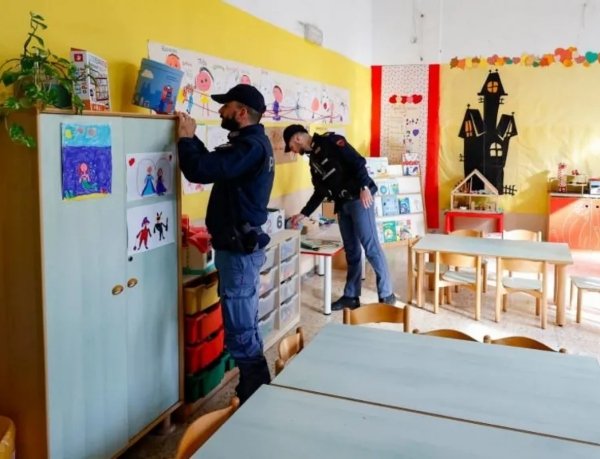
Hundreds of schools in Italy, Ireland, and the United Kingdom received bomb threats on Wednesday, November 11, 2026, triggering evacuations and renewed concern over a growing pattern of suspected hybrid attacks targeting public institutions, transport networks and media organizations across Europe.
Authorities found no explosives, and the threats were assessed as hoaxes. No group has credibly claimed responsibility for the incidents. However, the latest warnings follow dozens of similar threats last week against airlines and media outlets, intensifying security concerns as European leaders gather for a security summit in Ireland.
The incidents have raised questions about whether hostile actors are exploiting digital communications and easily recruited individuals to disrupt everyday life, undermine public confidence and place pressure on European governments.
Threats disrupt schools and national broadcaster
Among the organizations targeted last week was Ireland’s national broadcaster, RTÉ, which abruptly interrupted its radio programming on Friday morning after receiving an email warning that explosives would detonate inside its building within 45 minutes.
The message was signed by a man using the name Mikhail Andropov and claimed to represent the group responsible for the bomb threats against dozens of airlines. It threatened further attacks on aircraft, cruise ships, subway stations and trains.
The warning prompted an interruption to broadcasting, but no explosion occurred. RTÉ resumed its regular programming within approximately an hour.
On Wednesday, around 300 schools in Italy were evacuated after receiving similar threats, also signed with the name Mikhail Andropov. Schools in Ireland and the UK were among those targeted in the wider wave of warnings.
The repeated use of the same name has attracted attention. The surname Andropov is associated with former Soviet leader Yuri Andropov, who previously headed the Soviet Union’s KGB intelligence agency.
Russia suspected, but attribution remains difficult
European officials have raised concerns about a possible Russian connection to the incidents, although governments have so far stopped short of establishing direct responsibility.
Irish Prime Minister Micheál Martin said the pattern of recent attacks appeared coordinated and that there was a general view linking the increase in hybrid attacks to Russia.
However, intelligence and security specialists say identifying the people behind such operations, and establishing whether they are acting on behalf of a state, can be extremely difficult.
Erik Skouten, a former Dutch intelligence officer and head of security consultancy Diami, explained that hostile actors can recruit individuals through online platforms, including Telegram groups and gaming communities, without revealing who is directing the activity.
People, sometimes teenagers, may be offered money to make threatening calls or carry out disruptive actions. Such recruitment methods can create distance between the individuals executing an operation and any organization or government that may be directing it.
That separation makes it difficult to establish state involvement at the outset of an investigation.
Irish defense analyst and former army soldier Declan Power described the apparent pattern as a form of deliberate ambiguity: perpetrators may signal that an operation is theirs while avoiding an admission that would establish responsibility.
Airline disruptions expose the wider impact
The threats have also affected air travel, with dozens of flights diverted or cancelled last week following bomb warnings.
One passenger, Katie McAteer, was travelling from Dublin to Rome for a friend’s wedding when her flight was diverted to Paris.
She told Irish Radio that the aircraft had been in the air for approximately an hour to an hour and 15 minutes when the pilot announced a problem and said the plane would have to land in Paris. Passengers subsequently saw a fighter jet flying alongside their aircraft.
McAteer said passengers remained relatively calm during the incident.
Although the threats have caused financial losses and travel disruption, security analysts argue that the broader objective may be to create uncertainty and weaken public trust.
Power said the aim of such activity could be to generate confusion and disruption across society, ultimately damaging the relationship between citizens and their governments.
He also suggested that undermining European public support for Ukraine could be part of the wider strategic objective.
Iran allegations add another dimension to Europe’s security concerns
Russia is not the only country facing scrutiny over suspected hostile activity in Europe.
French Foreign Minister Jean-Noël Barrot said on Monday that France had summoned Iran’s ambassador to Paris after French authorities attributed a cyberattack against hundreds of supermarket refrigerators to Iran’s Islamic Revolutionary Guard Corps.
Similar systems in other European Union countries were reportedly targeted earlier in the month.
However, cybersecurity expert Benoit Grunemfalt of ESET in Paris cautioned against assuming that the incidents were connected. He said similarities between attacks were not sufficient to establish a common source.
Grunemfalt also highlighted weaknesses in the security of the affected refrigeration systems, noting that they were poorly protected and directly connected to the internet. He described direct internet exposure of industrial automation systems as a basic security vulnerability.
Iran’s Foreign Ministry rejected the accusations as baseless and hostile.
Separately, the United States Department of Justice announced charges against three Iran-backed operatives whom it accused of involvement in a series of plots in Europe and the United States. The alleged activities included a plot targeting a UK airbase where American forces were stationed.
These developments have added to concerns that European countries are facing multiple forms of cyber and security threats, potentially involving different actors and methods.
Experts warn of an invisible conflict
For security specialists, the combination of bomb threats, cyberattacks, online recruitment and disruption to critical services points to the growing importance of hybrid warfare.
Unlike conventional military attacks, hybrid operations can combine cyber activity, intimidation, disinformation, sabotage and other methods designed to destabilize a country without necessarily triggering an immediate military response.
Former Dutch intelligence officer Skouten described the situation as an invisible war and urged political leaders to explain the nature of the threat to European citizens.
He also advised households to maintain supplies of essential items, including medicines and basic necessities, as part of wider preparedness.
European governments, he argued, need a more coordinated response because the threats are unlikely to disappear.
The latest bomb warnings have so far produced no reported explosions, but their repeated occurrence has exposed vulnerabilities in public institutions, transport systems and digital infrastructure.
As European leaders meet in Ireland, the challenge is not simply to identify who is sending the threats. It is also to strengthen cooperation, protect vulnerable systems, improve public communication and prevent repeated disruptions from eroding confidence in democratic institutions.
For Europe, the emerging security test is whether governments can respond collectively to threats that are designed to remain difficult to trace, attribute and deter.


Accra Fashion Week Plans Buyer-Distribution System To Turn African Designers Into Commercial Success Stories

Between The Oceans: How Two Hip-Hop Dancers Carry Ancestral Histories In Their Bodies

‘We Need Justice’: Families Demand Accountability After Best Friends from Ghana Die in Wrong-Way Crash in Canada
-
 Arts and GH Heritage5 hours ago
Between The Oceans: How Two Hip-Hop Dancers Carry Ancestral Histories In Their Bodies
-

 Arts and GH Heritage2 days ago
1935 Photograph Of Mozambican Boy Reignites Debate Over African Origins Of Fades And Gold Teeth
-

 Global Update2 days ago
Content Creation Is Now a College Degree: Universities Turn Influencing Into a Professional Career Path
-
 Ghana News16 hours ago
‘We Need Justice’: Families Demand Accountability After Best Friends from Ghana Die in Wrong-Way Crash in Canada
-
 Fashion & Style4 hours ago
Accra Fashion Week Plans Buyer-Distribution System To Turn African Designers Into Commercial Success Stories
Pingback: Ofori-Atta Afraid to Return to Ghana, Cousin Tells Ambassador