
News
Setback! Lawyers Cause Judge to Close Ofori-Atta’s High-Profile Immigration Hearing to Public

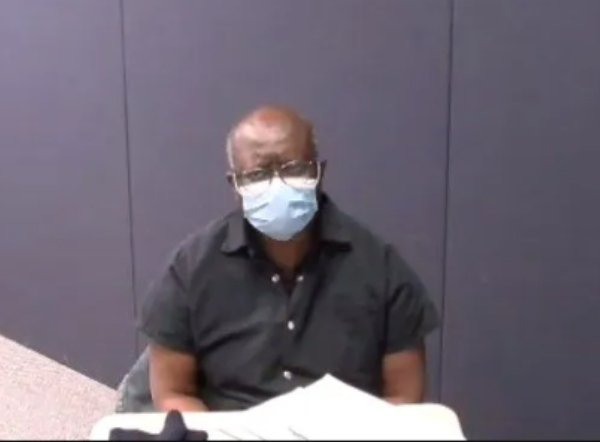
Many Ghanaians, especially journalists, who joined a virtual hearing of Ken Ofori-Atta’s immigration case, Tuesday, were disappointed after a judge declared proceedings closed to the public.
The United States immigration court barred public access to proceedings involving the former Finance Minister, citing sensitive issues surrounding his immigration case. The development means the public interest case will be held in private, further heightening international attention on the matter.
The decision to exclude the public from the case was taken on Tuesday, January 20, 2026, during a hearing at the Annandale Immigration Court, presided over by Immigration Judge David Gardey. The case concerns Ofori-Atta’s immigration status following his arrest by U.S. Immigration and Customs Enforcement (ICE) roughly two weeks ago.
Public Excluded After Defense Request
Court records and a transcript of proceedings indicate that the public exclusion followed a formal request by Ofori-Atta’s legal team. Christopher Chaisson, one of his attorneys, asked that both the bond redetermination hearing and the master calendar hearing be closed, arguing that sensitive matters would be discussed.
Judge Gardey confirmed that under U.S. immigration law, proceedings may be closed if either party requests it under qualifying circumstances. He then ordered all non-parties observing via Webex to exit the hearing immediately.
“As requested by counsel, the matter will be held as a private hearing,” the judge said, adding that the court could not proceed until all members of the public had left the virtual courtroom.
Detention Continues, Bond Considered Privately
During the brief public portion of the session, it was confirmed that Ken Ofori-Atta—who appeared on camera in a face mask and appearing subdued—remains in detention at the Caroline Detention Center and was not physically visible on the Farmville Webex feed at the time the case was called.
The hearing was identified as a bond redetermination hearing, meaning the court was expected to assess whether Ofori-Atta could be released from custody pending further immigration proceedings. However, because the hearing was closed, no details of the bond decision or arguments presented were made public.
As of the conclusion of the public session, no ruling was announced in open court, and the outcome of the bond application remains undisclosed.
Arrest, Immigration Status, and Ghana Prosecution Efforts
ICE authorities arrested Ofori-Atta on allegations that he is unlawfully present in the United States. U.S. officials are also considering removal proceedings, with Ghanaian authorities seeking his return.
In Ghana, both the Office of the Special Prosecutor (OSP) and the Attorney-General’s Department are pursuing his extradition to face alleged malfeasance and corruption-related charges stemming from his tenure as finance minister.
The closed-door nature of the U.S. proceedings has fueled speculation, but legal analysts note that privacy orders are not uncommon in immigration cases involving medical, financial, or security-sensitive information.
A Case With Global Implications
Ofori-Atta’s detention and ongoing immigration case have become a major legal and political story, closely followed in Ghana and abroad. As a central figure in Ghana’s economic management during a turbulent period marked by debt restructuring and IMF negotiations, his legal troubles have significant reputational and diplomatic implications.
For now, the immediate outcome of Tuesday’s court session is clear: the case will proceed behind closed doors, with the former finance minister remaining in ICE custody while U.S. immigration authorities and Ghanaian prosecutors pursue parallel legal paths.
Further developments are expected as the immigration court continues hearings out of public view.








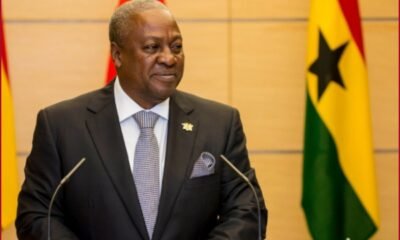

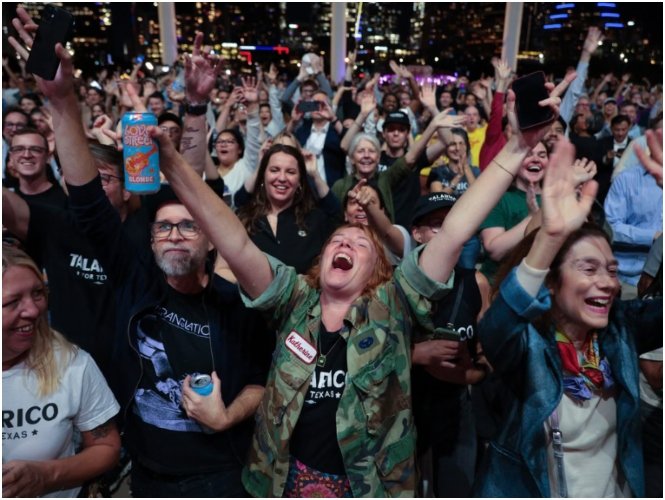
Democrats wrested control of both the House and Senate from Republicans in the 2026 midterm elections, riding a historic wave that swept the party into power in Congress and in statehouses across the country.
On Tuesday, November 3, 2026, American voters delivered a stunning rebuke of President Donald Trump and rejected many of the candidates he had personally recruited and endorsed.
With new majorities set to take office in January, here is a comprehensive update on the key takeaways from a night that reshaped American politics:
1. A historic blue wave — and a visceral rejection of Trump
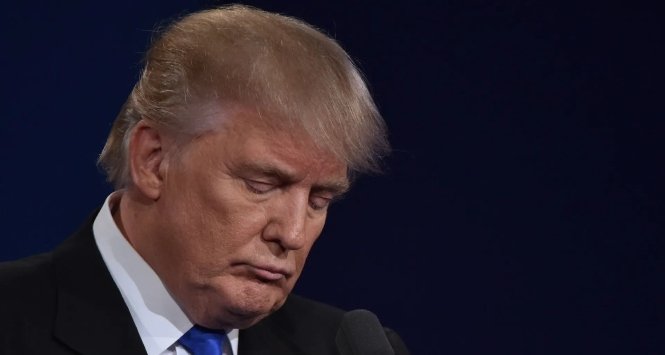
In an election in which Trump urged his faithful to vote as if he were on the ballot, Republicans were washed out of power in places the party hadn’t lost in a generation, and sometimes far longer. Democrats won a Senate race in Kansas for the first time since 1932, a South Carolina Senate seat the GOP had held since Strom Thurmond switched parties in 1964, and a slew of statewide offices in Texas, where they hadn’t won any since the 1990s. The gains the GOP had made during the Trump era, particularly among Latinos and in rural areas, were wiped out in a single night. After a decade of dismal showings in the Rust Belt and Great Plains, the Democratic Party roared back to life in Middle America, winning both the governor’s office and a Senate race in each of Iowa, Michigan, Minnesota and Ohio. The White House is already deflecting blame, but the results were a clear rejection of Trump’s second term.
2. Democrats retake the Senate, flipping seven seats
Democrats flipped the seven Republican-held Senate seats they needed to claim the majority, winning races in Iowa, Kansas, Maine, North Carolina, Ohio, South Carolina and Texas — and doing so by defeating several candidates hand-picked by Trump. The party also retained all of its Senate seats, including a closely watched Michigan contest in which progressive former public health official Abdul El-Sayed defeated Republican former Rep. Mike Rogers, and Minnesota, where Lt. Gov. Peggy Flanagan held off former sports broadcaster Michele Tafoya. The Mississippi Senate race remained too close to call, with Democrat Scott Colom and Republican Sen. Cindy Hyde-Smith separated by a razor-thin margin in a state Trump won by 23 points two years ago.
3. Texas breaks the dam — Democrats win statewide for the first time since 1994
No state illustrated the Democratic wave more dramatically than Texas, which had not elected a Democrat to statewide office in over three decades. The dam broke on Tuesday: Democrat James Talarico won the high-profile open Senate race, the most expensive Senate race in U.S. history, defeating scandal-plagued Republican Attorney General Ken Paxton, who was endorsed by Trump. In an even more striking result, Democrat Gina Hinojosa won the governor’s race, defeating three-term Republican Gov. Greg Abbott, who entered the race with a war chest of over $100 million. Other Republican statewide officials were trailing, including Lt. Gov. Dan Patrick. Taken together, the results augur profound change in what has long been the country’s biggest Republican stronghold.
4. Republican redistricting gambit backfires as Democrats retake the House
Republicans sought an early advantage by redrawing a slew of House districts in red states to pick up more seats. By most accounts, the strategy backfired. Democrats will maintain control of at least eight of the 15 districts targeted by GOP redistricting efforts and have flipped at least four seats away from Republicans, according to CNN projections. In Texas, Democrats were on track to win most of the five seats Republicans reconfigured to help themselves, including the 34th Congressional District in South Texas, which the GOP redrew to be one Trump would have carried by 10 points, but where Democratic Rep. Vicente Gonzalez was winning by double digits. In Alabama, Democratic Rep. Shomari Figures held on despite being drawn into a district Trump would have carried by 14 points.
“We have crushed the Republican gerrymander all across the land,” House Minority Leader Hakeem Jeffries — now on the path to become the first Black speaker of the House — said on X.
5. Trump’s long list of recruitment and endorsement missteps
The political environment might have wiped Republicans out anyway, but a series of GOP recruiting missteps, largely on Trump’s part, appear to have worsened the party’s problems. In Texas, Trump ignored Republicans who lobbied him to endorse the more moderate incumbent, Sen. John Cornyn, stayed out of the primary, and then endorsed Paxton after the runoff — saddling the party with a nominee who was a lackluster campaigner, poor fundraiser and easy target after decades of scandals. In Georgia, his endorsement boosted Rep. Mike Collins over a more moderate alternative backed by popular GOP Gov. Brian Kemp; Democrat Jon Ossoff won easily. In Ohio, Trump effectively cleared the field for Vivek Ramaswamy, whose ad featuring the estranged mother of his Democratic opponent backfired, and Trump and Vice President JD Vance doubled down in defending it. Democrat Amy Acton won.
6. Jon Ossoff and the 2028 shadow campaign
Georgia Sen. Jon Ossoff was viewed as vulnerable just two years ago, after Trump won the state in 2024. On Tuesday, his race was among the first of the closely watched elections to be called as he thumped Republican Mike Collins. While Ossoff has claimed he’s not interested in running for president, calls for him to enter the race will only grow louder after he proved he could win resoundingly in a battleground state. The results were full of encouraging signs for other potential 2028 contenders: Govs. JB Pritzker of Illinois and Josh Shapiro of Pennsylvania cruised to reelection, and Kentucky Gov. Andy Beshear scored a big win when his former aide flipped a GOP-friendly House district. Pritzker nodded to the speculation in his victory speech:
“We climbed one mountain tonight, but we are sitting at the base of another.”
7. The polling industry vindicated
Tuesday night’s results vindicated pollsters who had been calling a blue wave. Republicans, and even some Democrats, were hesitant to predict Democratic domination due to underrepresentation of Trump voters in polls. But surveys accounted for this in their models, and the results held up.
8. A huge swing among Latino voters — and warning signs for the GOP in Florida
In Florida, the results offered evidence of a potentially enormous swing among Latino voters in Democrats’ favor. Democrats held onto three seats Republicans had redrawn to guarantee victories this fall, with CNN projecting Reps. Kathy Castor and Jared Moskowitz will win in redrawn districts, as will Democrat Pia Dandiya in the 22nd District. In central Florida’s heavily Hispanic 9th District, Democratic Rep. Darren Soto narrowly led his Republican challenger. But the biggest eye-opener may come in South Florida’s 27th District in overwhelmingly Latino Miami-Dade County, where Republican Rep. Maria Elvira Salazar won by 20 points two years ago but led Democratic challenger Eliott Rodriguez by just over a thousand votes as of early Wednesday. A swing of that size means the gains Trump made with Latino voters in 2024 have effectively evaporated, at least in Florida.
9. A roster of historic firsts
Before this year, only three Black candidates had ever won governor’s races in the United States, and multiple Black governors had never served simultaneously. Those ranks are rapidly growing, with four Black candidates winning Tuesday. In Georgia, former Atlanta Mayor Keisha Lance Bottoms became the first Black woman elected governor of any state in U.S. history when she became the first Democrat to win the office in 28 years. In Florida, Rep. Byron Donalds became the first Black Republican elected governor in U.S. history. In Wisconsin, Milwaukee County Executive David Crowley won the race to replace outgoing Gov. Tony Evers, and Maryland Gov. Wes Moore won a second term. In Senate races, Rep. Chris Pappas of New Hampshire became the first openly gay man elected to the Senate; Annie Andrews is projected to become the first elected female U.S. senator from South Carolina; and Abdul El-Sayed became the first Muslim elected to the Senate in Michigan. Democrat Deb Haaland became the first Native American woman to win a race for governor with her victory in New Mexico.
10. Musk’s money onslaught meets its match — and Trump declines to accept blame
Tech mogul Elon Musk poured $168 million into two Texas super PACs aimed at salvaging Paxton’s Senate bid and helping the GOP retain its majority, plus millions more through his America PAC and over $5 million to Abbott’s reelection campaign, making him the country’s largest publicly disclosed political donor this cycle, with nearly half a billion dollars pumped into federal committees.
“We just proved that all the money in the world is no match for the people of Texas,” Talarico said in his victory speech. Musk, on X, quipped: “Guess my election-interfering space lasers didn’t work this time.”
Meanwhile, Trump watched returns from the White House East Room, where the mood was described as tense. He went silent on Truth Social for three hours as Democrats kept winning, before posting just after 10:30 p.m.:
“I wasn’t on the Ballot and if I was, we would have won IN A LANDSLIDE!”
He later told Fox News the results were only a “little surprise” and blamed the candidates — many of whom he had selected himself, rather than accept responsibility. “But I don’t view it as a hit on me,” he said.
As votes continue to be counted, Democrats have opportunities to build on a historic night, leading in several competitive Senate races in which the outcome is too early to call.
Ghana News
Ghanaian Community in the Bronx Reels After Second Tragedy: 24-Year-Old Church Organist Found Dead at Dumpsite

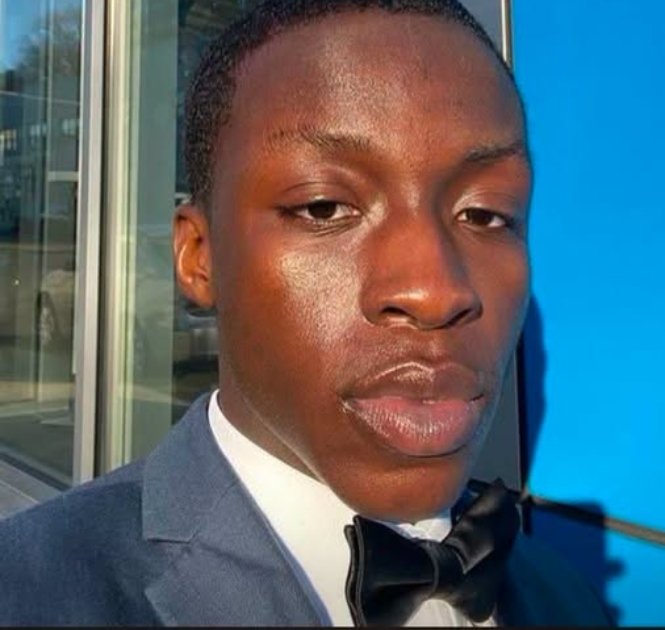
The tight-knit Ghanaian community in the Bronx has been struck by a second devastating tragedy in a matter of weeks, plunging family members, faith leaders, and diaspora networks into deepened mourning and heightened anxiety over safety in the neighborhood.
Joseph Owusu, a 24-year-old Ghanaian youth, was found dead at a dumpsite in the Bronx, roughly two weeks after he was reported missing.
The grim discovery was reportedly made by a scrap collector. Local authorities are continuing to investigate the circumstances surrounding his disappearance and death.
Owusu was well-known and respected within the local diaspora, serving as a dedicated organist at the Ghana United Methodist Church in the Bronx. He was widely remembered for his warm personality and active role in the community — a young man whose music and presence anchored Sunday worship for many Ghanaian families in the borough.
His death comes so soon after the fatal shooting of 15-year-old Javits Frimpong that community leaders describe the collective grief as almost unbearable.
Frimpong, a Ghanaian teenager, was chased and fatally shot in the stomach on the morning of October 29, 2026, near East 171st Street and Crotona Place/Claremont Avenue while on his way to DreamYard Preparatory Academy. He was rushed to the hospital, where he was pronounced dead. The boy had moved to the United States from Ghana just under a year earlier to reunite with his father, Thomas Frimpong, and was remembered as a quiet, clever student who aspired to become a doctor.
His father publicly stated that Javits had been experiencing bullying at school and alleged that school officials had informed him of recent suspensions involving schoolmates just days before the killing. NYPD investigators have reviewed surveillance footage showing suspects fleeing the scene, and a search has centered on identifying those responsible, though police continue to investigate all motives.
The Frimpong case sparked student walkouts demanding an end to gun violence and bullying, community vigils, and high-level diplomatic attention, including condemnation from Ghanaian officials urging a thorough investigation. Now, the discovery of Owusu’s body has compounded calls for answers and for greater protection of immigrant communities in the Bronx.
Community leaders and Ghanaian diaspora networks are urging anyone with information about Owusu’s disappearance or the circumstances of his death to come forward to police. Authorities have not publicly indicated whether foul play is suspected in his case.
As the Bronx Ghanaian community prepares to mourn a second young life in less than a month, faith leaders at the Ghana United Methodist Church and beyond are calling for calm, solidarity, and a thorough accounting from local authorities.
This is a developing story. Updates from community leaders and the NYPD investigation are expected in the coming days.
Ghana News
Ghana’s Ambitious ‘Pharmaceutical Hub’ Aims to Reverse 70% Reliance on Imported Medicines
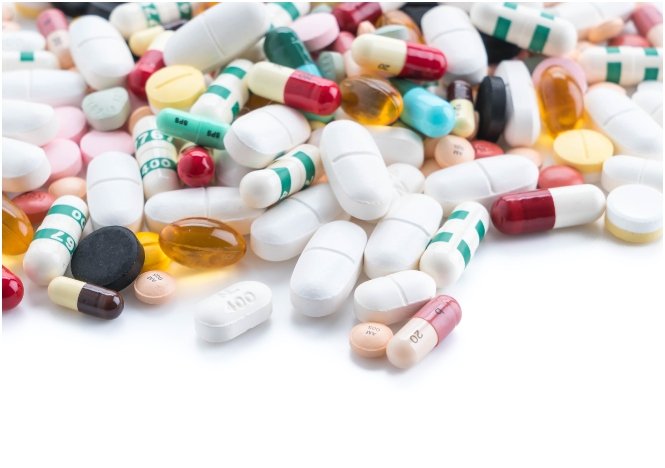
Ghana has unveiled an ambitious plan to reverse its 70% reliance on imported medicines through the establishment of a Pharmaceutical Hub, anchored by the newly launched Ghana Pharmaceutical Manufacturing Policy (GPMP).
The policy, approved by Cabinet and launched on Wednesday, October 28, at the Africa Trade House, provides a strategic framework to build a sustainable, competitive, and integrated pharmaceutical ecosystem.
The launch brought together key government officials, including Elizabeth Ofosu-Adjare, Minister for Trade, Agribusiness and Industry, alongside diplomats, industry stakeholders, and representatives from the National Vaccine Institute (NVI).
A Presidential Legacy Initiative
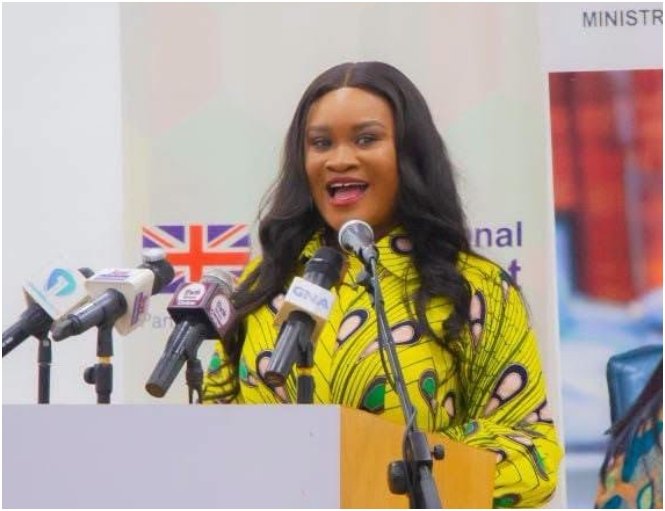
Speaking at the event, Dr. Bernice Makafui Brempong, Presidential Coordinator for the Ghana Pharmaceutical Hub and Senior Executive in charge of Investments in Healthcare and Pharmaceuticals at the Office of the President, described the policy as central to President John Dramani Mahama’s vision of positioning Ghana as a pharmaceutical manufacturing hub in Africa.
“This achievement is central to President John Dramani Mahama’s vision,” Dr. Brempong stated. She noted that while financial support to local manufacturers was provided during the President’s first term, experience has shown that financial backing alone cannot sustain a competitive industry.
“Our ambition is to build an ecosystem where manufacturers can thrive,” she added, pointing to Section 7.7 of the policy, which identifies a purpose-built pharmaceutical park or hub as a “top priority of the Government” under its Industrial Transformation Programme.
Inside the Pharmaceutical Hub
The Ghana Pharmaceutical Hub, a presidential national legacy initiative under the new economy program, will bring manufacturers, input suppliers, research facilities, and shared infrastructure together.
The proposed Phase 2 in the Central Region will focus on producing active pharmaceutical ingredients, herbal medicines, and raw materials, including local production of excipients such as pharmaceutical-grade corn starch, corn syrup, and ethyl alcohol, strengthening the link between agriculture and pharmaceutical manufacturing.
Dr. Brempong stressed that contract manufacturing will be crucial, allowing smaller companies to utilize shared, ready-to-use facilities.
“Not every pharmaceutical company can afford to build its own manufacturing facility,” she noted. “Through shared infrastructure… the Hub seeks to lower these barriers.”
The Hub is also expected to address a critical skills gap by equipping clinical pharmacists with industrial pharmacy skills, creating opportunities for Ghana’s approximately 1,600 unemployed pharmacists.
Policy Provisions and Vision
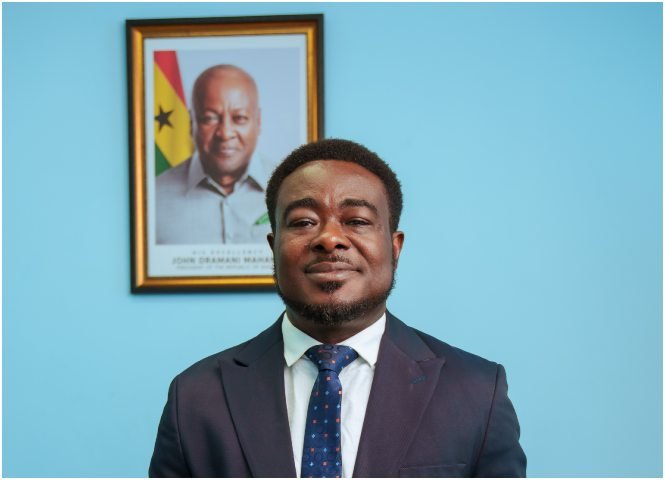
Dr. Sodzi Sodzi-Tettey, CEO of the National Vaccine Institute (NVI), described the policy as the foundation for an “integrated ecosystem” strategy.
He outlined key provisions including local raw material production, pharmaceutical R&D, contract manufacturing, skills development, academia collaboration, tax incentives, investment financing, market expansion, and vaccine manufacturing as a strategic priority.
Dr. Sodzi-Tettey noted the policy directly answers questions from Development Finance Institutions (DFIs) about government support for local manufacturers.
“I can confidently respond and say… Ghana has a Pharmaceutical Manufacturing Policy which articulates in clear concrete terms, the support that government is providing for the sector,” he said.
A Track Record of Growth
The launch highlighted Ghana’s recent pharmaceutical strides. Under the previous Mahama administration, over GHS 50 million was invested in at least three pharmaceutical companies, helping firms like Ernest Chemist build GMP-compliant plants.
In August 2025, President Mahama allocated $50 million to the NVI, which has since established an mRNA laboratory at the Noguchi Memorial Institute for Medical Research, making Ghana one of only five African countries with the technology.
In May 2025, the NVI and Atlantic Lifesciences manufactured Snake Venom Anti-Serum, Ghana’s first biological product. Ghana is on track to produce Anti-Tetanus Serum and its first vaccine, the Tetanus Diphtheria vaccine, in 2027.
Atlantic Lifesciences has also been prequalified under the Africa CDC’s Pooled Procurement Mechanism and awarded a contract to supply oxytocin to Africa.
Call to Action
Dr. Brempong called on financial institutions to develop long-term financing solutions and urged healthcare institutions to prioritize domestic industries.
“The approval of this policy is an important achievement, but it is only the beginning,” she concluded. “Our success will ultimately be measured by the factories established, investments attracted, medicines produced, jobs created and the competitiveness of Ghanaian manufacturers… Let us move from policy to implementation, from ambition to investment, and from dependence to greater domestic productive capacity.”


-

 Festivals & Events10 hours ago
Nkyidwo: Returning to the Sacred Forest Where Ashanti History Began
-

 Entertainment1 day ago
Efya and Tomi Thomas Celebrate Elegant White Wedding in Star-Studded Accra Ceremony
-

 Sights and Sounds8 hours ago
Beyond Souvenirs: Taking a Piece of Ghana Home Through African Skincare
-

 Taste GH4 hours ago
Zomkom: Northern Ghana’s Refreshing Spicy Millet Drink
-

 Entertainment21 hours ago
“I Guess I Lied”: Efya Reacts to 2020 Marriage Comments After Wedding
Pingback: Ghana News Live Blog: Key Updates on January 20, 2026