
Perspectives
How former president Rawlings pioneered heritage tourism in Ghana – in his own words

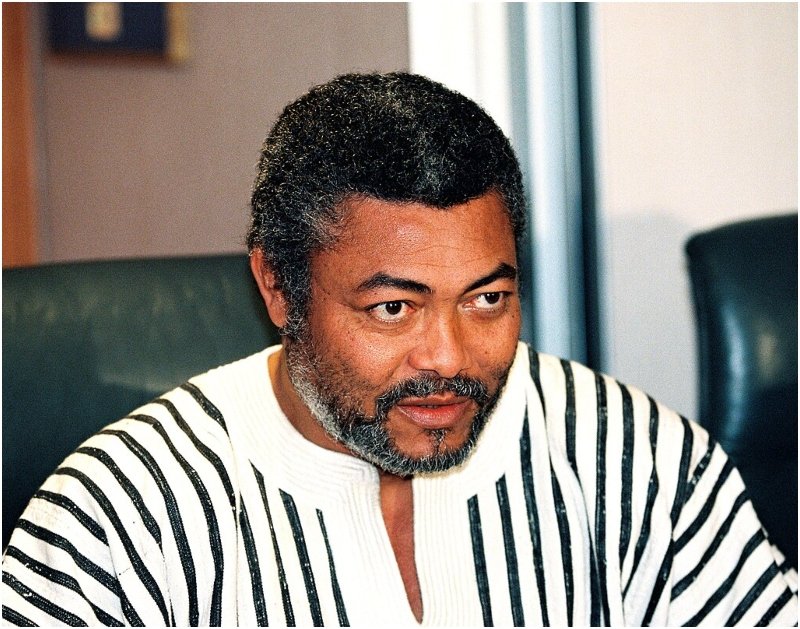
In the 1980s, Flight Lieutenant Jerry John Rawlings launched heritage tourism as a means to economic development in Ghana. Under his initiative, Ghana’s forts and castles – where enslaved Africans were forcibly put on slave ships to cross the Atlantic Ocean into slavery in the Americas – were turned into heritage sites for tourism. It united Africans and African descendant people living in the disapora.
Rawlings was Ghana’s youngest and longest-serving post-independence leader. He led military uprisings in 1979 and 1981 and served as elected president from 1992 to 2000. When Rawlings came to power in 1981, Ghana faced numerous challenges. Food was scarce, medicines unavailable, over a million Ghanaians were deported from Nigeria, and the economy was almost bankrupt. Rawlings understood the capital investment necessary to rebuild the economy.
However, Ghana’s 1979 revolution had criticised the former regime’s ties to the West and Western imperialism, so private investment dried up. Eastern bloc nations gave minimal support. Rawlings was compelled to secure World Bank and International Monetary Fund assistance, a tactical acquiescence that proved pivotal for heritage.
Rawlings rarely gave interviews. This abbreviated interview with him was the first time he spoke publicly on heritage tourism and development. It comprises several conversations in 2018 and 2019.
How did you arrive at this innovative idea – using cultural heritage tourism for development?
I was always interested in culture and art. (He shows me his childhood artwork.) As a child, I was an artist.
At that time (in the 1980s), Ghana was politically stable. Cocoa, gold and timber were our major commodities. The tourism idea was unplanned. But I worked with many progressive-minded people. For instance, Valerie Sackey (Ministry of Communications) and Dr Ben Abdallah (Minister of Culture and Tourism) who approached me with the idea. They targeted cultural heritage, such as the forts and castles, natural heritage, performance and arts – for example Panafest.
Quite frankly, I was surprised by the response. I remember, when I was young, (Kwame) Nkrumah was the star of Africa, and black Africa at that. I was acquainted with African Americans coming to Ghana. We had personalities such as George Padmore and W.E.B. Du Bois. I was familiar with Malcolm X and Martin Luther King. I expected those who visited would want to know Africa better. After all, I was a young student when Muhammad Ali came to my school. Consequently, I saw all of this as part of a natural flow of events – even if it also brought some resentment. Many had a complex relationship with Ghana. After I left school, I observed this first-hand, when I used to ‘be-bop’ around town. African Americans struggled to come to terms with the fact that Africans participated in the transatlantic slave trade and sold their ancestors into slavery. It was a very mixed response.
So, when I was in office, I did not think African Americans travelling to Ghana was something to be revived. I left the matter to those who championed heritage tourism and the various ministries.
Is it possible to describe you as a pragmatist, for trying to reconcile the revolution with ‘real world’ demands?
We had little money to invest in what was important to provide stability – a stable climate, water, roads. But we did well, as tourism became our third largest foreign exchange earner – though we didn’t invest in tourism per se. Ghana was seen as a place where the black man had reason to feel proud and was not exploited by neocolonialism, so that was something in and of itself. The 1979 revolution also restored justice and respect… In our case, this pilgrimage … was a connection to blackness, to ‘Africanness’.
Were there any challenges?
Sure. The African diasporan presence raised the subject of citizenship and nationality. This created issues, including reparations for the transatlantic slave trade and slavery, which also created a polarisation between our own people and African descendants. Still, I would like to mention something interesting. Gradually, African Americans won recognition in various arenas, for example, sports and entertainment. But in the late 1970s and early 1980s, several were so disgusted at their treatment by the United States government that they offered to participate in the Olympics on Ghana’s ‘ticket.’
Unfortunately, soon after, African American perceptions of Africa altered with the Ethiopian famine. Whereas previously, they sympathised with Africa’s struggles and, in a defiant move, wanted to identify with the continent, that sentiment suddenly collapsed. Horrible scenes on the television – overwhelming images of Ethiopians covered in flies, with bloated stomachs, dissuaded lots of African Americans from identifying with Africa.
As head of state, you worked and lived at Osu Castle. What was that like?
Often, I was too busy to give thought to the (slave trade and colonial) past. I saw my fellow black man suffering. When I travelled up north, I saw my people did not have water to flush their toilets and Guinea worm was everywhere. The pressure of economic and social injustice was on me! Don’t forget that I was not always at the castle. I was always on the move. So was (my wife) Nana Konadu Agyeman-Rawlings. I had water, electricity and a bed to sleep on. What more could I have asked for? Why would I spend money on renovating the castle? Many Ghanaians did not have basic necessities. I did not even have the money to buy bullets for my soldiers in Liberia, or to protect people during the violence in the north.
How do you see the heritage tourism and development initiative today?
As for Ghana, we receive people well. Over the years, the ‘return’ has become increasingly known. Ghana has enjoyed a unique position because of our history, independence, Nkrumah, the assertion of black people in Africa’s liberation struggle and black people generally.
We are aware of our responsibilities to ourselves, our fellow Africans, and those in the diaspora. I am not enthusiastic about (financial) reparations. Those taken during the transatlantic slave trade must decide. If they return, we should offer them land and dual citizenship as restorative and social justice … As for diasporans and development … they do not have the money to develop us in Africa. Let us give them the respect that they want, that is due. That is the beginning of it all. Then other things will follow. This way, they can also fight for the continent … help us gain access to what the continent deserves. You see? This is how it should be.
Postscript: President Rawlings passed away as this article was to go to press. It is published with support from the Rawlings family. Thanks to the Journal of Heritage Tourism for permission to republish.
The author, Rachel Ama Asaa Engmann, is Director of Christiansborg Archaeological Heritage Project, Associate Professor at Africa Institute Sharjah & Associate Graduate Faculty, Rutgers University
This article is republished from The Conversation under a Creative Commons license. Read the original article.

Opinion
Open Letter to the British Ambassador on Reparatory Justice: Ghana’s Call to the British Government
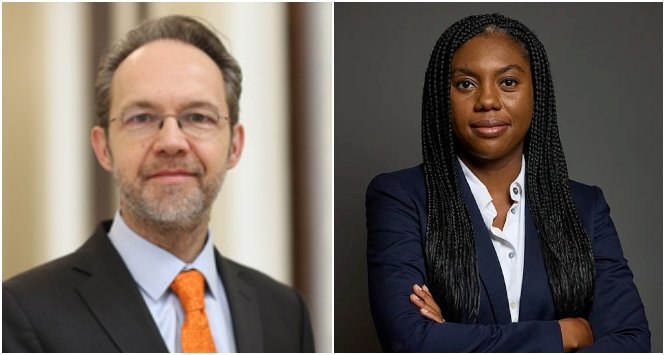
In this open letter to the British Ambassador, Seth Kwame Awuku challenges the United Kingdom’s abstention from a recent UN resolution naming the transatlantic slave trade a crime against humanity, and directly rebuts UK Opposition Leader Kemi Badenoch’s rejection of reparations. Awuku argues that the harms of slavery persist in broken economies and fractured societies, contrasting Britain’s swift 1833 financial compensation to slave owners with its refusal to address descendants’ suffering. He calls on Britain to abandon “selective memory,” embrace reparatory justice, and lead morally within the Commonwealth and Africa, concluding that true partnership requires confronting history’s unfinished ledger.
Open Letter to the British Ambassador on Reparatory Justice: Ghana’s Call to the British Government
Seth K. Awuku
Your Excellency,
In the grand theatre of nations, where history whispers its unfinished business through the voices of the living and the silent testimony of the dead, Ghana stood before the United Nations on 25 March 2026 and helped give birth to a resolution that named the transatlantic slave trade for what it truly was, one of humanity’s gravest crimes against the human spirit.
Much of the Global South rose in solemn chorus. Britain, once the restless engine and greatest beneficiary of that trade, chose to abstain.
Then came the voice of Kemi Badenoch, Leader of the Opposition and guardian of the Conservative flame in Britain. She declared that Britain should not only reject reparations but should have actively opposed the resolution itself. After all, why should today’s Britain pay for sins committed “hundreds of years ago”?
Your Excellency, Ghana replies with the patience of the ages: the chains did not rust away with abolition. The harm did not vanish when the last slave ship sailed into the horizon. Its consequences still walk among us, in broken economies, fractured societies, and the long shadow cast over Black humanity.
As our Minister of Foreign Affairs, Samuel Okudzeto Ablakwa, emphasized after the landmark United Nations vote, “To acknowledge this is not to diminish any other history; it is to deepen our collective moral awareness,” reminding the world that recognizing the past is essential to confronting its enduring effects.
Consider 1833, Your Excellency. When Britain passed the Slavery Abolition Act, she did not plead the distance of time. The British state reached deep into the public purse and paid a colossal sum, twenty million pounds sterling, a fortune that would dwarf billions today, not to the enslaved, but to the slave owners as compensation for the loss of their human “property.” The enslaved received nothing.
Kemi Badenoch’s position flows from the deep river of classical conservatism, as Edmund Burke once taught: reverence for continuity and a prudent refusal to burden today’s citizens with the unlimited debts of long-dead ancestors. Yet history, that mischievous witness and ultimate griot, complicates this doctrine. When property was at stake, time dissolved like morning mist. Britain acted swiftly and generously. When it came to recognising the personhood of the enslaved and their descendants, the same generosity vanished.
Kemi Badenoch would not have mattered so much if she were merely another British politician. What gives her words such resonance – and such danger – is that she is partly of African origin. Her Nigerian roots create the powerful impression that because a Black woman in high office speaks against reparations, her claims must carry special authority and must therefore be right. No, she is, respectfully, out of order, gone haywire, and her view can not be admissible in the moral universe.
Ghana, and much of Africa, speaks from a different moral universe. We insist that the legacies of slavery did not evaporate with the ink on abolition treaties. True justice cannot be confined to symbolic declarations or convenient cut-off dates. Africa’s triple heritage, indigenous resilience, Islamic encounter, and the Christian-Western overlay demand that we confront the full cost of that painful encounter.
Your Excellency, on this moral subject of international relations, Britain must cease its policy of abstention and reject the counsel of selective memory. Britain, heir to both empire and abolition, must rise above the comfort of conservative restraint and lead boldly on reparatory justice. Only through such moral leadership can Britain reclaim its rightful place as a trusted global actor, restore genuine respect across the Commonwealth, and forge deeper, more authentic relations with the nations of the African continent.
True partnership cannot be built on evasion of the past; it must be anchored in moral courage and a willingness to confront history’s unfinished ledger.
History, ever the ultimate griot, keeps its own meticulous accounts.
Ghana and the wider African continent are watching with hope that Britain will choose the path of light over shadow.
With respect and hope for a renewed and just partnership,
Seth K. Awuku
Takoradi, Ghana
Seth K. Awuku, Principal of Sovereign Advisory Ltd., Takoradi, is a Ghanaian writer who focuses on law, politics, diplomacy, and international relations.
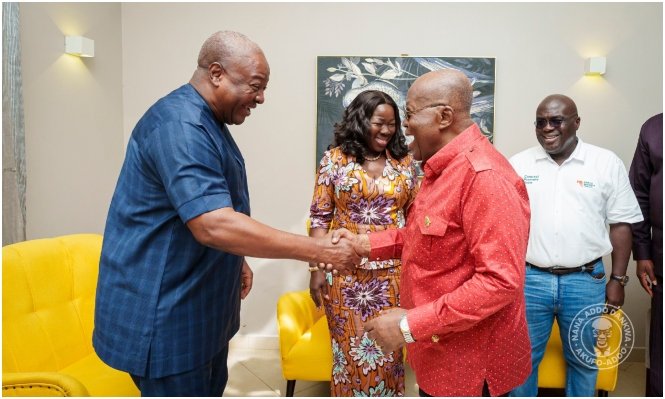
In this sharp political commentary, Felix Anim-Appau draws a powerful parallel between the swift punishment of a hungry young man jailed for stealing a bunch of plantain and the persistent impunity enjoyed by Ghanaian public officials who have cost the state an estimated GH₵100 billion through financial irregularities over the past decade. The author argues that while President John Mahama has delivered notable economic improvements since taking office, his legacy will ultimately be judged not by falling inflation or stable exchange rates, but by whether he breaks the cycle of corruption that has defined successive administrations.
Why President Mahama must not be the new Akufo-Addo
By Felix Anim-Appau
It was a normal week day at Assin Sibinso, my father’s hometown in the Assin South district of the Central region, almost two and a half decades ago.
I was visiting some teacher friends of mine after school when I saw Kwadwo Amoako, a young man in his mid to late twenties then, having been arrested by the residents for stealing a bunch of plantain because he was hungry.
He was beaten to pulp, paraded through the major streets of the community and later handed over to the police. Kwadwo was arraigned, convicted, and sentenced to two years imprisonment for stealing. There was no consideration for the fact that he was answering to nature’s call- hunger.
It’s been a while since I went to church but I remember in Matthew 12:1-8, Mark 2:23-28, and Luke 6:1-5, Jesus and his disciples harvested some corn and ate because they were hungry. Matthew 12:1 puts it as follows:
“At that time Jesus went through the grainfields on the Sabbath. His disciples were hungry and began to pick some heads of grain and eat them”.
The grain didn’t belong to them but it is interpreted by Bible scholars that once they were harvesting to eat and not to sell, it didn’t constitute stealing. If what the Bible says is anything to go by, it means if a man is hungry and takes something little to satisfy his hunger, that should not be deemed stealing.
But Ghana has laws which are incongruous with what’s in the Bible.So, what Kwadwo did is not permitted by Ghanaian laws. Because of that, he was beaten, shamed and jailed in addition.Ghana travel guide
The Auditor-General’s Report
In 2012, when Captain Smart assumed duty at Adom FM as the host of the morning show, the editorial segment dubbed: Fabɛwɔso, was mainly focused on the Report of the Auditor-General (A-G). When I became his Production Assistant in 2017, I had the opportunity to keep in my custody, some copies of the Report. Till date, I still have with me some photocopies of the malfeasance recorded by some state institutions at the time. It started in millions of cedis before increasing to billions.
According to the Auditor-General’s reports over the past decade as reported by Graphic.com, financial irregularities including misappropriation, cash irregularities, procurement breaches, and payroll fraud have cost the state approximately GH₵99.57 billion between 2014 and 2023.TV Shows & Programs
I have never been a friend of Mathematics, but I still remember that when a decimal is five or more, you can round it up to the nearest figure. So, in ten years, this nation lost GH₵100 billion to ‘public servants’ per the A-G’s report.
Public servants and politicians do what Kwadwo did, harvesting where they have not planted, and because they use pens and computers, unlike Kwadwo, who harvested someone’s plantain, or the armed robber who pulled a knife or a gun to rob, their acts have been classified with “nice adjectives” that do not present a true picture of their deeds.
Instead of describing their acts as stealing and labeling them as thieves, we say “financial irregularities,” categorised into misappropriation, cash irregularities, procurement breaches, payroll fraud, and a host of others. Oh, I forgot that other nice name under which all these deeds are branded: Corruption.
Every year, the A-G comes out with a report and I am yet to count just ten people who have been jailed directly in relation to these malfeasance uncovered by the Auditor-General in at least, the last decade.
Public servants and politicians alike, take what belongs to the State everyday. They create, loot and share. The New Patriotic Party (NPP) and National Democratic Congress (NDC) have been playing political chairs with power, and whoever gets the opportunity to govern mess our funds up and go unpunished. It has become a ‘scratch my back and let me scratch your back’ situation. And the few moments one government attempts a prosecution on a political opponent, party foot soldiers besiege the premises of the security agency undertaking the investigations to demand the release of the accused. The process is branded political witch-hunt.Election coverage.
Sometimes, I struggle to understand the mentality of the Ghanaian. Because a person belongs to your political party, it becomes a crime for him to answer to how he expended State funds? Due to this, politicians and civil servants always team up and turn our resources into their own, leaving the poor tax payer at the mercy of posterity.
Scandals under both NPP and NDC
Several high-profile political scandals have occurred in Ghana under both the National Democratic Congress (NDC) and New Patriotic Party (NPP) administrations between 2009 and 2024. I am not saying the years prior to that were scandal-free.Ghana travel guide
But for the purposes of this discussion, I want to limit it to this period. These involved allegations of corruption, procurement breaches, and financial mismanagement, frequently sparking intense public debate and political finger-pointing. However, few weeks after the release of the report, sometimes even days, we will not hear about it again until the next report comes.
If Ghana were any serious country, people should have been languishing in jail for their corrupt deeds. But as usual, scratch my back and I scratch your back so we are still where we are. Let me share with you a few of the major scandals recorded under both governments between the period in question.
Some scandals under NDC administration (2009 to 2016)
GYEEDA Scandal (2013): The Ghana Youth Employment and Entrepreneurial Agency (GYEEDA) was found to have paid millions of Ghana cedis to private companies through irregular, sole-sourced contracts for training and services that were largely non-existent.
SADA Guinea Fowl Scandal (2013): The Savannah Accelerated Development Authority (SADA) spent millions of cedis on projects, including a widely criticised guinea fowl rearing project, with little to show for the investment.
AMERI Deal Scandal (2015): The US$510 million deal for AMERI Energy to supply 10 power turbines to address the power crisis was deemed by opposition MPs to be severely inflated by over US$150 million.
- Some scandals under NPP administration (2017 to 2024)
BOST Contaminated Fuel Scandal (2017): The Bulk Oil Storage and Transportation Company (BOST) sold 5 million litres of contaminated fuel to unlicensed companies, causing a financial loss of about GHC 15 million in revenue to the state. - US$2.25 Billion Bond Saga (2017): Then Finance Minister, Kenneth Nana Yaw Ofori-Atta, who is now a fugitive from justice, was accused of a conflict of interest, alleging that the bond was tailored to benefit his cronies in the banking sector.
Cash for Seat Scandal (2018): Expatriate businesses were allegedly charged up to US$100,000 to sit close to President Akufo-Addo at an awards ceremony, sparking accusations of influence peddling. - PDS Electricity Scandal (2019): The contract to manage Ghana’s electricity distribution was terminated after it was discovered that the Power Distribution Services (PDS) provided fraudulent bank guarantees.
- Agyapa Royalties Deal (2020/2021): The government’s plan to monetise future gold royalties via a listing in Jersey in the Channel Islands (a British Crown Dependency known as a tax haven) was suspended following a report by the Special Prosecutor citing corruption risks, lack of transparency, and procurement breaches.
These are just a few of the many corruption cases reported by the Auditor-General between the period under consideration. Causing financial loss to the State at the various departments and agencies as well as state institutions occurs every year.
The ones I mentioned are just those the public will be familiar with. But the question is, how many people can we count as having been jailed for these scandals?
However, Kwadwo Amoako, like other petty thieves, was convicted and sentenced to two years imprisonment for taking someone’s plantain. As for those taking what belongs to the State, they are walking free. I wonder how this will not incentivise others to learn from those who have gone scot-free.
What influences the voting pattern of some of us
Mr. President, I know the wheels of justice turn slowly as you the politicians have always been telling us. But this time around, you must change the wheels if they’re old so they can move faster. We have been patient for too long and the political chairs have lingered for so many years.TV Shows & Programs
How long should we sit aloof for people to continue milking the state to enrich themselves and their families at the expense of the masses?
In his attempts to become President of the Republic, I voted for him because William Addo Dankwa Akufo-Addo was known to be the ‘no-nonsense’ man who had no heart to tolerate an iota of corruption under his watch.
But what did we see? He turned out to be the ‘Clearer-General’ who was clearing his appointees of corruption even before investigations were conducted.
Because you have been there before and promised to recover every penny taken from the State, many Ghanaians who are not members of the NDC voted for you to see that become a reality due to the level of rot we witnessed under the erstwhile administration.Election coverage
When you were voted into power, I gave you an 18-month “honeymoon” to put things in place before I start critiquing you. Because I felt eight years of damage was too much to be demanding a lot from you in less than a year and a half.
It’s not 18 months yet and what I expected you to be able to do from 18 months on, you were able to do that in less than a year after taking over power. Talk of inflation, exchange rate, fuel prices and what have you.
With the trajectory of the economy as you inherited and where it is now, only a political hypocrite or sycophant would say you haven’t done anything. The economic indices are awesome and I dare say that with what we witnessed under the Akufo-Addo/Bawumia administration, if they were still in power, Ghana’s exchange rate would have been hovering around 25 cedis to a dollar, with a litre of petrol not doing less than same amount.Ghana travel guide
This is based on global indices at their time compared to now, with the current tensions in the Middle East in perspective. Even though the NPP claim you didn’t do anything to achieve this economic feat, they couldn’t achieve same with the “something” they did at the time.
Why Mahama’s achievements will be ‘meaningless’ if…
Despite everything you have achieved and yet to achieve, for some of us, you’ll not be measured by how well the cedi stabilised under you, or how you improved the cost of living. You will not be in my good books for bringing down inflation or fuel prices. But the number of corrupt officials you were able to jail.
Many Ghanaians voted for you because of Operation Recover All Loot (ORAL). But how much have we recovered almost 18 months into your administration? Those who have been found by the Attorney-General, Dr Dominic Ayine, to have plundered the nation into losses are still walking in town as if they haven’t done anything wrong.
On the contrary, those who steal goats, fowls, coins and foodstuffs to satisfy their hunger just like Kwadwo Amoako are handed the swiftest sentences because they are poor. Meanwhile, those who are making the nation lose millions and billions are walking free and all we see from your Attorney-General is update upon update upon updates. Sixteen months is enough to have at least, recorded some convictions.
Another Auditor-General’s report has come and this time around, we don’t want it to be business as usual. We need action. You should act. I am not an expert in law, but I know there are fast-track courts where some cases can be expedited for people found culpable to go to jail.
Or are we going to do the usual back and forth for your tenure to end so that a new government will come and file dozens of nolle prosequis to free their apogees on trial? We are watching you closely to see if you would let people pay for their deeds or it would be business as usual.
Conclusion
Dear Mr. President, the Auditor-General’s reports have become a recurring narrative of causing financial loss to the State and impunity, with perpetrators often escaping accountability every year, at least, since the commencement of the Fourth Republic.
From Rawlings to Akufo-Addo, the Public Accounts Committee hearings has only become a mere formality, with the pattern of corruption being repeated as same movie script with different actors.
Every administration makes an attempt with some prosecutions, but these efforts are often dismissed as politically motivated witch-hunts. But if there are witches, why shouldn’t we hunt them? Why do we shy away from holding those responsible accountable?
Every pesewa misappropriated by these public officials as contained in the Auditor-General’s reports tells us the opportunities we are missing. Our classrooms lack furniture, our communities lack potable water, while basic amenities have become alien to our vicinities. Yet the poor are punished for the petty crimes they commit, while those who loot the State coffers walk free.
Mr. President, I know you’re not directly responsible for jailing people who misappropriate state resources. It is the courts. But, before that could be done, your Attorney-General and Minister of Justice must initiate prosecution for such people to face justice. You promised to recover the loots and I know you knew what you meant when you made that promise.
If you fail to realise this achievement of making those responsible for such losses face the full rigours of the law, your achievements in other areas will be of no relevance to some of us. We will not remember the economic growth or infrastructural projects you have accomplished if those through whom the nation lost billions still visit the same shopping malls with us and shop in trolleys as if they are going to open shopping marts in their homes, drive all the latest vehicles and live lavishly at the expense of the trader who risks her life to Burkina Faso to import tomatoes and pay taxes.
We see how some of your appointees laugh, dine and publicly worship some of the very people you all swore in opposition to prosecute if you’re given the mandate. Today, you’re in power and instead of such persons explaining to the courts how the state lost those huge sums of monies through them, your appointees are feasting with them. What happened, Mr. President?
If those causing financial loss to the State escape justice and walk as free men, describing those making it genuinely in life as lazy or useless because they have benefited in one way or the other from what the State lost through them, what then would be the motivation for people to do what is right? After all, they know they can create, loot and share, and in the end, nothing will happen.
In all honesty, if we don’t see as many prosecutions and convictions as possible under your tenure, I, for one, will not see any difference between your administration and that of Akufo-Addo.
It is time to break this cycle of impunity and show Ghanaians that Justice, is not merely a name given to males in Ghana, nor is it just a title for judges at the courts; Probity and Accountability, are not mere political slogans; but rather, words that should remind every Ghanaian entrusted with State resources that, one day, they will account for their stewardship and should therefore discharge the role as if whatever is under their care are their personal or family properties.TV Shows & Programs
The words have been enough since 1992 and the time for action is now.
Sincerely,
Felix Anim-Appau.
The writer, Felix Anim-Appau, works with the online unit at Media General. The views expressed in this piece are his personal opinions and do not reflect, in any form or shape, those of the Media General Group, where he works. His email address is kwadwoasiedu2012@gmail.com, and he can be found on X as @platofintegrity
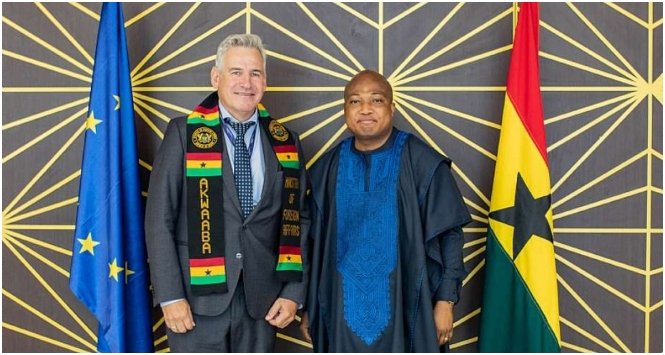
In this open letter to the European Union Ambassador to Ghana, policy analyst Seth Kwame Awuku condemns the EU’s abstention from UNGA Resolution A/80/L.48—a Ghana-led resolution naming the transatlantic slave trade a crime against humanity. Awuku argues that Europe’s silence, masked by legal technicalities, constitutes a moral evasion that wounds the possibility of true partnership.
To the EU Ambassador: The Triple Wound of Silence
By Seth Kwame Awuku
Ghana speaks from the depths of ancestral memory – will Europe answer with the poetry of conscience, or the cold prose of abstention?
To: His Excellency, Ambassador of the European Union to Ghana
Subject: Ghana’s Leadership on Reparative Justice and the EU’s Abstention on UNGA Resolution A/80/L.48
Your Excellency,
History does not forget. It merely waits – patient as the Atlantic, restless as the spirits of the Middle Passage – for the silenced to reclaim their voice.
On 25 March 2026, even as Ghana and the European Union formalized a new pact of cooperation, the United Nations became a theatre of reckoning. Ghana, carrying the scars and the soul of a continent, led Resolution A/80/L.48. It passed with 123 votes in favor, only three against, and 52 abstentions – the entire European Union among them.
The resolution does not invent new truths. It simply names what was long softened by euphemism: the transatlantic trafficking in human beings and the racialized chattel enslavement of millions as among the gravest crimes against humanity – a profound violation of jus cogens, those peremptory norms that no civilization may forever evade.
And yet Europe abstained.
How does one reconcile this? A Europe that adorns itself in the robes of enlightenment, human rights, and moral universality suddenly finds its voice faltering when confronted with the chains it once forged, the ships it once commanded, and the fortunes it once harvested from African blood and bone.
President John Dramani Mahama cut through the veils with piercing clarity:
“Truth begins with language. There was no such thing as a slave , there were human beings who were trafficked and enslaved.”
Foreign Minister Samuel Okudzeto Ablakwa reminded the world that this was no solitary lament, but the collective heartbeat of Africa.
The response was telling. The African Union and CARICOM stood united. Arab and Muslim-majority nations lent their voices. Even Russia added its weight. Most strikingly, the two most populous nations on earth – China and India – stood firmly in favor, joining the global majority that now numbers well over half of humanity.
Europe, meanwhile, retreated behind the familiar shield of legal technicalities – non-retroactivity, hierarchies of suffering, the comforting arithmetic of intertemporal law.
Yet some wounds run too deep for procedural salve. When millions were reduced to cargo across the bitter sea, when entire societies were bled to fuel another continent’s ascent, morality does not dissolve merely because the laws of that era looked the other way. Silence, in the face of such a triple wound – capture, crossing, and commodification – is not neutrality. It is an echo of the old evasion.
Ghana seeks no vengeance cloaked in justice. We extend an open hand: for honest dialogue on apology, for the restitution of stolen cultural souls, for guarantees that yesterday’s dehumanization finds no new masks in our time.
This is the triple heritage we bear: Africa’s ancient resilience, the open wound of yesterday, and the shared moral burden for tomorrow.
Your Excellency, true partnership between Europe and Africa cannot take root in the barren soil of selective amnesia. It must be nourished by truth, watered by memory, and protected by the courage to face history without flinching.
Will Europe persist in the comfort of abstention, or will it rise to the higher poetry of genuine engagement?
The eyes of Africa, the restless spirits of the ancestors, the billions represented by China and India, and generations yet unborn are watching.
The choice, as ever, rests with Europe.
Yours in the restless pursuit of a more honest humanity,
Seth K. Awuku.
About Seth K. Awuku
Policy analyst, writer, poet, and former immigration and refugee law practitioner in Canada; He writes on law, governance, diplomacy and international relations. He is Principal, Sovereign Advisory Ltd, Takoradi.
Email: sethawuku.sa@gmail.com
Tel: 0243022027


Ghana Nears Approval of Cannabis Licences as Country Prepares to Launch Regulated Industry

Prof Prempeh Slams Supreme Court, Police Officer Killed in Road Crash and Other Big Stories in Ghana Today

Newspaper Headlines Today: Wednesday, April 10, 2026
-

 Opinion13 hours ago
Open Letter to the British Ambassador on Reparatory Justice: Ghana’s Call to the British Government
-
 Ghana News2 days ago
Newspaper Headlines Today: Wednesday, April 8, 2026
-

 Festivals & Events2 days ago
Celebrating Black Voices in Fiction at the 2026 Black Girl Book Fair
-
 Africa Watch2 days ago
Ghana Launches Month-Long Cultural Festival in Ethiopia to Strengthen Pan-African Ties
-

 Business2 days ago
Making Sense of the Controversy Surrounding Award of Damang Gold Mine to Engineers & Planners (E&P) Owned by the President’s Brother
-

 Ghana News2 days ago
Ghana Celebrates Link to NASA’s Historic Artemis II Lunar Mission Through Astronaut Christina Koch
-
Ghana News1 hour ago
Newspaper Headlines Today: Wednesday, April 10, 2026
-
 Ghana News15 hours ago
7 Dead, 2 Missing After Boat Capsizes on Volta Lake in Ghana