
Homes & Real Estate
Ghana’s Blue Rose Courts Black American Investors With Bold Real Estate Push in the U.S.


Ghana is rolling out the welcome mat for Black Americans and the broader diaspora — and this time, it’s all about real estate.
Blue Rose Ltd, one of Ghana’s most trusted estate developers, is making a major play for U.S.-based investors by launching a new initiative designed to make buying or building a home in Ghana easier than ever.
The company teamed up with JMK Production LLC USA to host the Ghana–US Real Estate Seminar, a high-energy, investment-focused event set for November 22, 2025, at the Holiday Inn Express & Suites in Maryland.
Billed as “Dream meets reality,” the six-hour seminar promises to demystify the process of homeownership in Ghana — whether you’re interested in a vacation home, a long-term investment, or a future retirement plan on African soil. The event will run both in-person and virtually, making it accessible to diaspora communities nationwide.
“This is your moment,” Blue Rose CEO Eric Ebo Acquah said at a sendoff event in Accra. “Whether you want to diversify your portfolio or secure your dream getaway home, we’re creating a space where investors and dreamers unite.”
A Booming African Market — And A Diaspora Opening
Ghana’s real estate sector is one of the fastest-growing in Africa, driven by rapid urbanization, a rising middle class, and strong housing demand. Blue Rose says the returns on property investment in Ghana remain attractive compared to global averages, making the market ripe for international buyers.
For the diaspora community — especially Black Americans looking to deepen cultural and economic ties with the continent — the opportunity is twofold: meaningful reconnection and strong financial upside.
Blue Rose, with 37 years of experience, has delivered more than 2,500 homes and earned a reputation for transparent processes, flexible payment plans, and legal credibility — including a major 2025 legal victory in the high-profile Shelter Afrique case. The company says it’s committed to affordability, environmental consciousness, and smooth home-acquisition procedures.

Why This Seminar Matters
The event will showcase new housing developments, break down the buying and building process, and connect potential investors directly with Ghana-based developers — a major advantage for diaspora communities often deterred by bureaucracy, misinformation, or distance.
“This seminar provides a unique opportunity for people in the U.S. to connect with real players in Ghana’s real estate industry,” Acquah said. “We’re turning dreams into reality with pathways for investors, families, and retirees.”
JMK Production LLC USA has launched what organizers describe as “massive publicity,” with early interest from both Ghanaians in the U.S. and non-Ghanaian Black Americans eager to explore Africa’s property market.










Homes & Real Estate
Why Multi-Family Units are the New Gold Standard for Ghana’s Real Estate Investors

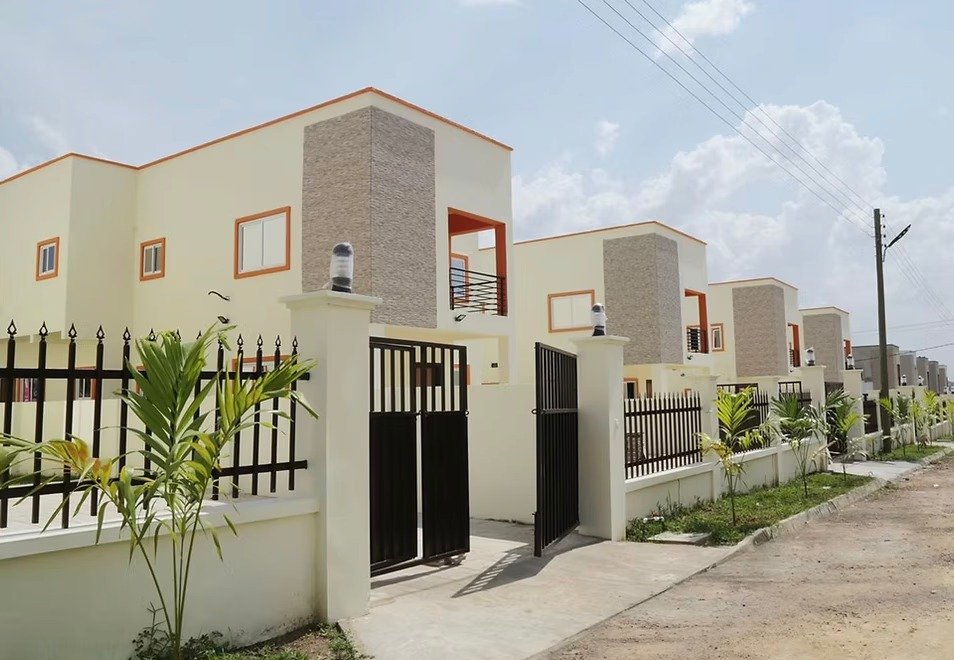
In the sprawling landscape of Accra, the traditional dream used to be a standalone bungalow with a gated perimeter. But as the city’s skyline begins to reach upward, the investment landscape is shifting just as dramatically.
Benaiah Rawlings of Zea Homes recently pointed out a trend that savvy local and diaspora investors can no longer ignore: the single-family home is taking a backseat to the powerhouse potential of the multi-family unit.
In an economy where inflation can be a relentless shadow, real estate remains the ultimate hedge. However, the modern investor isn’t just looking for a “store of value”—they are looking for aggressive, consistent cash flow.
This is where the multi-family model wins. By housing five or more units under one roof, these properties transform a single plot of land into a high-yield revenue engine.
Why Vertical is Vogue
The magnetism of multi-family housing—ranging from the sleek apartments of Harmonia Residence in the Airport Residential Area to the lifestyle-centric condominiums of The Edge in Labone—stems from a simple reality: urban density.
As more people flock to Ghana’s economic hubs for work and culture, the demand for “lock-up-and-go” living has skyrocketed.
For the investor, the math is compelling. If one tenant moves out of a single-family home, your vacancy rate is 100%. If one tenant leaves a ten-unit apartment block, you are still 90% occupied.
This safety net, combined with the ability to centralize maintenance and management costs, offers an “economy of scale” that single units simply cannot match.
Read Also: Rent Control Department mandates ‘Rent Card’ for all tenancies starting April 1, 2026
The New Faces of Living
Today’s market isn’t just about four walls and a roof; it’s about curated experiences.
Mixed-Use Developments: These are the “mini-cities” where your office, your gym, and your favorite bistro are just an elevator ride away.
Student Housing 2.0: Forget the cramped dorms of the past. Modern student hubs near major universities now feature gaming rooms and fitness centers, catering to a generation that demands lifestyle alongside their lectures.
Conclusion
Investing in Ghana’s multi-family sector is a strategic move to diversify a portfolio. These assets allow landlords to absorb rising costs—such as taxes or insurance—by distributing them across a larger tenant base.
It creates a win-win: more stable cash flow for the owner and more accessible, high-quality housing for a growing population.
In a world of fluctuating markets, the “bricks and mortar” of a multi-unit development offer something rare—tangible, scalable, and resilient wealth.
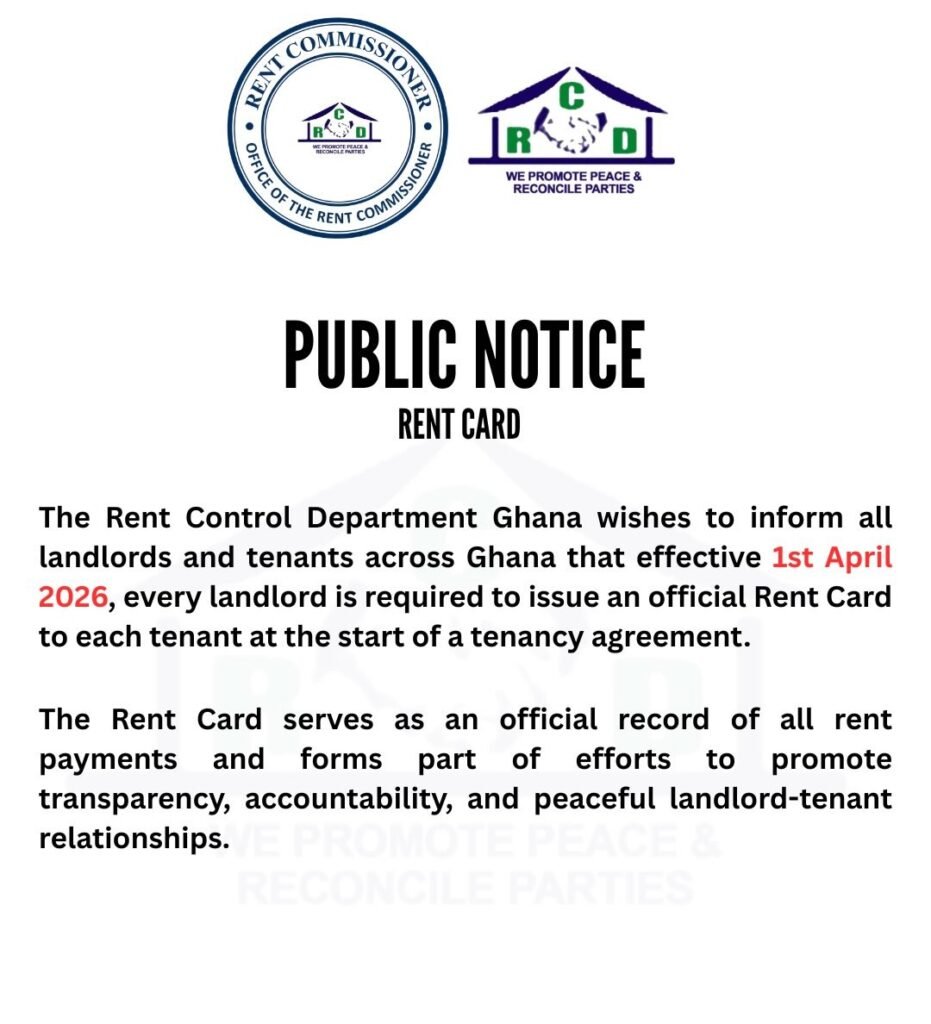
The Rent Control Department has announced a new directive requiring all landlords across Ghana to issue an official Rent Card to tenants at the beginning of every tenancy agreement starting April 1, 2026.
The directive, described as a measure to strengthen accountability in the rental housing sector, is expected to formalize how rent payments are recorded and reduce disputes between landlords and tenants.
In a public notice, the department stated that the Rent Card will serve as an official record of rent payments throughout the tenancy.
“The Rent Card serves as an official record of all rent payments and forms part of efforts to promote transparency, accountability, and peaceful landlord-tenant relationships,” the notice said.
Promoting transparency in Ghana’s rental sector
Housing experts say the initiative is likely to introduce more structure into Ghana’s largely informal rental market, where payment records are often kept privately by landlords or tenants, sometimes leading to misunderstandings.
Under the new directive, landlords will be responsible for issuing the Rent Card to tenants at the start of the tenancy agreement and updating it whenever rent payments are made.
Officials believe the system will make it easier for both parties to verify payments and resolve disagreements if they arise.
“The Rent Card is part of broader efforts to strengthen documentation and improve landlord-tenant relations across the country,” the department said.
What tenants and landlords should expect
While the department has yet to publish detailed operational guidelines, the Rent Card is expected to function similarly to traditional rent record booklets used in several Commonwealth jurisdictions. Each payment made by the tenant will be entered and acknowledged, creating a verified payment history.
Housing advocates say the move could particularly benefit tenants who often struggle to prove payment histories in disputes.
The Rent Control Department has urged all landlords and tenants nationwide to take note of the directive and comply once the policy takes effect on April 1.
The department says further guidance on implementing the Rent Card system will be provided in the coming weeks.
Homes & Real Estate
From Negotiation to Keys: Mastering the Art of the Deal in Ghana’s Elite Real Estate
In Accra’s luxury market, the price on the sign is just a suggestion—your real ‘homecoming’ begins the moment you learn how to call the seller’s bluff.

For many in the diaspora, the dream of “returning home” is often anchored by a physical structure—a sanctuary in the heart of Accra that mirrors the luxury they’ve grown accustomed to in London, New York, or Toronto.
You’ve seen the glossy Instagram reels of glass-fronted apartments in Airport Residential and the sprawling villas of East Legon. But there is a wide, expensive chasm between “liking” a post and holding the keys to a property that actually holds its value.
The Ghana luxury real estate market is booming, but for the unsuspecting returnee, it can feel like navigating a gold mine without a map.
If you want to invest back home, you have to stop thinking like a tourist and start thinking like a local power player.
The Myth of the “Fixed” Price
In many Western markets, the listing price is a rigid starting point. In Ghana’s luxury sector, the sticker price is often an invitation to a dance.
Sellers frequently bake a “Diaspora Premium” into their initial ask, assuming that buyers from abroad aren’t attuned to the local price per square meter.
To win, you must lead with data. Did you know that a high-end apartment in the Airport Residential Area should hover around $6,500 per sqm, while East Legon sits closer to $4,500?
Before you even hop on a Zoom call with an agent, you need to be armed with these benchmarks.
When you walk into a negotiation knowing the last three years of price trends, you aren’t just another buyer; you’re a strategist.
Hunting for the “Ghost” Listings
The best deals in Accra rarely make it to a public website. They exist in the “Coming Soon” shadows—properties held by sellers who want a quiet, professional exit without the circus of a hundred public viewings.
This is where your network becomes your net worth. You need an agent who doesn’t just send you links, but who has the “inside track” on developers prepping for a soft launch.
When you catch a seller before the official marketing blitz, you aren’t just beating the competition; you’re catching the seller at their most flexible.
This is your window to negotiate terms that matter more than price—like extended payment plans or custom floor modifications.
The Psychology of the Opening Move
Never start at the list price. In the Ghanaian luxury context, an opening bid of 10% to 15% below the asking price isn’t an insult; it’s a standard opening gambit.
However, price is only one lever. If you want to keep the seller engaged while offering less cash, get creative with your “contingency add-ons.”
Are you an all-cash buyer? Can you offer a shortened inspection period because you have a trusted local surveyor on standby? Or perhaps you can offer a flexible move-in timeline, allowing the current owner extra time to relocate.
In luxury deals, convenience often carries more weight than a few extra thousand dollars.
The Power of Walking Away (and Coming Back)
The most dangerous thing a diaspora buyer can do is fall in love with a “dream home” before the paperwork is signed. The moment an agent senses your emotional attachment, your leverage evaporates.
Determine your “Walk-Away Price” in your home currency and stick to it. If the numbers don’t align, be prepared to end the conversation politely. Ghana’s market is dynamic; a property that feels “impossible” today might still be sitting unsold in six months. A seller who was stubborn in March is often much more reasonable by September. Patience is a currency that many buyers forget to spend.
The New Frontier: The Developer Direct Route
If the “dance” of resale negotiations feels too exhausting, there is a smarter way to enter the market: The New Build. Specialized developers like VAAL Ghana are shifting the landscape.
By looking at projects like Harmonia Residence, you bypass the risks of inherited defects and “inflated” resale egos.
Starting at $250k for luxury apartments in Airport West, these developments offer something a resale can’t: Customization.
When you buy into a pre-construction phase, you aren’t just buying a box; you’re influencing the finishings, the layout, and the aesthetic.
It’s the ultimate “flex” for a diaspora investor—getting a brand-new, ultramodern home with a gym, rooftop lounge, and 24/7 security, often at a price that compares favorably to a decade-old resale.


Experience the Rare Texture of Apapransa the Celebratory Roasted Corn Delicacy

The Festival of Truth: Why Techiman’s 2026 Apoɔ is the Ultimate Cultural Reset

Khaby Lame is the world’s most followed TikToker: the story of a Senegalese‑born star who sold his identity
-

 Ghana News2 days ago
Helicopter Crash at Tema School Park Kills 2, Security Service Recruitment to be Expanded to 40,000 and Other Trending Issues Today (March 16, 2026)
-

 Ghana News2 days ago
Newspaper Headlines Today: Monday, March 16, 2026
-

 Ghana News1 day ago
Ghana Announces Emergency One-Way Evacuation for Citizens in Qatar Amid Heightened Security Concerns
-

 Ghana News2 days ago
Healthcare for All: President Launches Policy to End Financial Barriers at Facilities Across Ghana
-

 Global Update1 day ago
Influential Foreign Policy Group Sends Direct Message to Trump Warning of Global Risks From His Actions in Iran
-

 Africa Watch1 day ago
France Returns Sacred ‘Talking Drum’ Looted During Colonial Rule to Ivory Coast
-

 Business2 days ago
25 Sittings, Zero Answers: Ghana’s Parliamentary Slow Motion Costing Ghana and Atlantic Lithium Billions
-

 Ghana News18 hours ago
Newspaper Headlines Today: Tuesday, March 17, 2026