
Global Update
Ghana Rushes to Evacuate Critically Injured Peacekeepers After Lebanon Base Strike

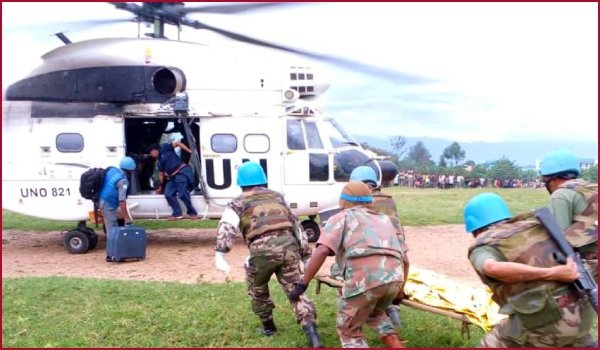
ACCRA, Ghana — Two Ghanaian peacekeepers critically wounded in a missile attack on their UN base in southern Lebanon are awaiting medical evacuation to a specialized hospital, the Ghana Armed Forces (GAF) confirmed Friday, March 6.
Military medics are working to stabilize the soldiers in the aftermath of the strike, the GAF said.
The soldiers, whose identities have not been released, sustained critical injuries when two missiles struck the Ghanaian Battalion Headquarters serving with the United Nations Interim Force in Lebanon (UNIFIL) on Thursday evening. A third peacekeeper has been traumatized by the attack, according to the GAF statement.
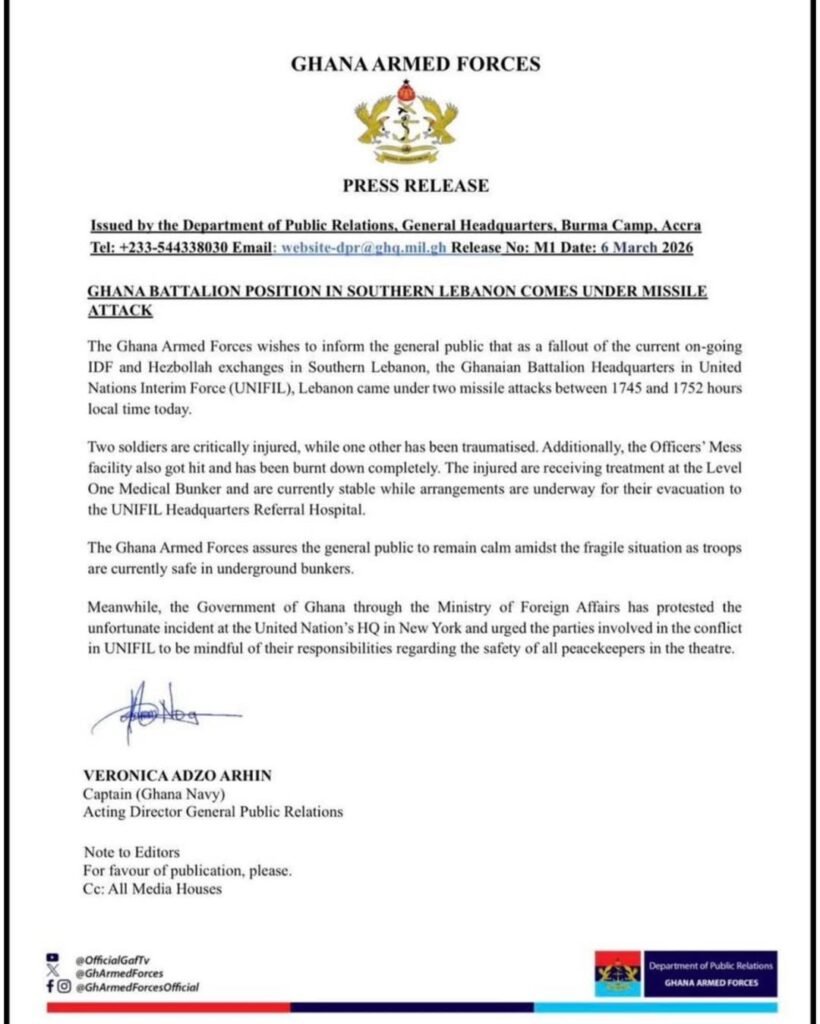
“Two soldiers are critically injured, while one other has been traumatised,” the military said. “The injured are receiving treatment at the Level One Medical Bunker and are currently stable while arrangements are underway for their evacuation to the UNIFIL Headquarters Referral Hospital.”
The Level One Medical Bunker provides basic emergency care, but the critically wounded soldiers require more advanced treatment at the UNIFIL referral hospital, whose location has not been specified.
The most severely injured peacekeeper may ultimately require transfer to a hospital in Beirut, as UNIFIL previously indicated that the most seriously wounded from such incidents are often moved to the Lebanese capital for specialized care.
The attack, which occurred amid ongoing exchanges between Israeli forces and Hezbollah, also caused significant damage to the Ghanaian base.
“The Officers’ Mess facility also got hit and has been burnt down completely,” the military confirmed, noting that other personnel at the base remain safe and have taken shelter in underground bunkers.
Ghana has been one of the largest troop contributors to UN peacekeeping operations for decades, with soldiers deployed in several conflict zones worldwide.
The West African nation’s peacekeepers have served in Lebanon as part of UNIFIL’s mission to monitor the volatile border between Israel and Hezbollah, an area that has seen renewed hostilities since Monday when the Middle East conflict expanded into Lebanon.
The welfare of the injured soldiers has become a priority for Ghanaian military authorities, who are coordinating with UNIFIL medical services to ensure rapid evacuation once the security situation permits. Military officials have not disclosed the specific nature of the soldiers’ injuries, citing medical privacy and operational security.
As the soldiers’ families await news, the Ghana Armed Forces has assured the public that everything possible is being done to save the peacekeepers’ lives and bring them to safety.
The incident underscores the grave risks faced by UN personnel deployed to conflict zones, where they serve as neutral observers in increasingly hostile environments.



Global Update
Influential Foreign Policy Group Sends Direct Message to Trump Warning of Global Risks From His Actions in Iran

An Indonesian foreign policy group has released a video message addressed directly to Donald Trump, warning that recent U.S. and Israeli actions in the Middle East could destabilize global security and violate international norms.
The message was shared by Indonesian diplomat and foreign policy analyst Dino Patti Djalal on social media, where he called on viewers to share the video with policymakers and political leaders in the United States.
Djalal said he was speaking on behalf of the Foreign Policy Community of Indonesia, which he described as one of the largest grassroots foreign policy groups in Southeast Asia and the Indo-Pacific region.
“We hope that you will listen and hear our view,” Djalal said in the video, addressing Trump directly. “This message represents the concern of the overwhelming majority of the Indonesian people.”
Criticism Over Military Escalation
In the video, Djalal criticized what he described as growing U.S. militarism and warned that actions taken by Washington and Israel could escalate tensions across the Middle East.
The message referenced the reported killing of Iranian Supreme Leader Ali Khamenei, arguing that targeting a foreign head of state would violate international law and global norms.
“No leader of any country, no matter how powerful, has the right to plan and execute the murder of another country’s leader,” Djalal said.
He added that such actions would contradict the principles of the United Nations Charter and could set a dangerous precedent for international relations.
Concerns Over Global Stability
The video also warned that escalating conflict could spread across the Middle East, citing countries including Saudi Arabia, United Arab Emirates, Qatar, Turkey and Lebanon as potentially affected by regional instability.
According to Djalal, rising tensions could undermine previous diplomatic efforts to stabilize the region, including reconciliation initiatives between Iran and Saudi Arabia.
He warned that the international system could face consequences similar to those that preceded major global conflicts.
“If direct military action to kill foreign leaders is considered fair game, then any of the world’s 193 countries could see it the same way,” he said.
Economic Impact on Indonesia
The message also highlighted potential economic consequences for Indonesia, the world’s fourth-most populous country.
Djalal said escalating conflict could push up global oil prices, putting pressure on Indonesia’s national budget and potentially leading to higher inflation, rising food prices, increased unemployment and slower economic growth.
Civil Society Appeal
Djalal framed the video as a message from civil society rather than the Indonesian government, noting that governments must often remain cautious in their diplomatic communications.
The group encouraged viewers to circulate the message widely and engage in public discussion about global security and the role of major powers in maintaining international peace.
The video adds to a growing number of international voices calling for restraint and diplomacy as tensions in the Middle East continue to draw global attention.
Global Update
US Defence Stockpiles of Rare Earth Elements Down to Just Two Months as Iran Conflict Escalates
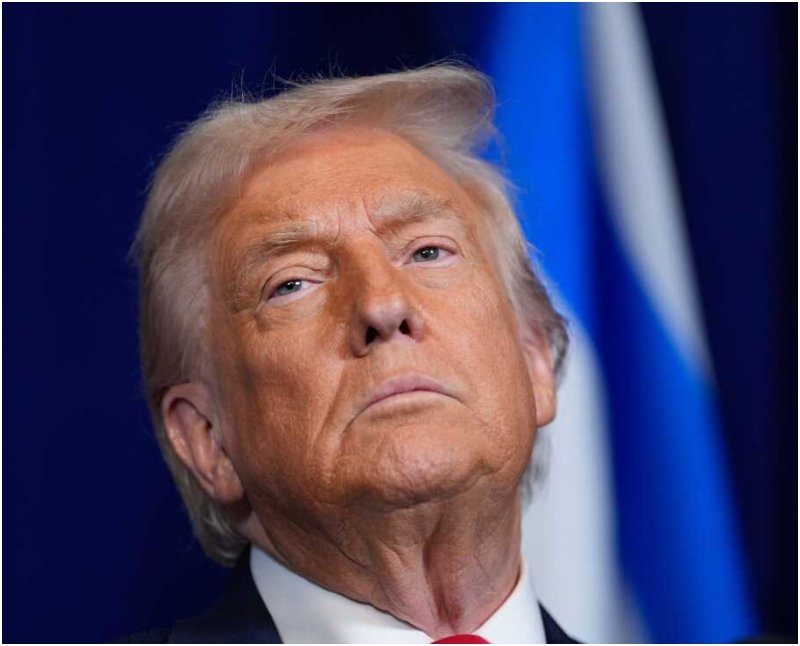
The United States faces a critical vulnerability in its military capabilities, with defence stockpiles of rare earth elements reportedly sufficient for only about two months of sustained operations, according to sources cited by the South China Morning Post and echoed across industry analyses.
The alarming depletion has gained urgency amid the ongoing US-led strikes on Iran, which began on February 28, 2026. Pentagon estimates indicate that the initial days of the campaign alone consumed roughly $5.6 billion in munitions, rapidly drawing down inventories of precision-guided weapons and interceptors that rely heavily on these strategic minerals.
Rare earth elements — such as dysprosium, terbium, neodymium and others — are vital for key defence technologies, including missile guidance systems, fighter jet components, radar arrays, phased-array systems, secure communications and advanced actuators. Without reliable access to these materials, replenishing depleted stocks of systems like THAAD interceptors, Patriot missiles and Tomahawk cruise missiles becomes severely constrained, potentially limiting the duration of high-intensity operations.
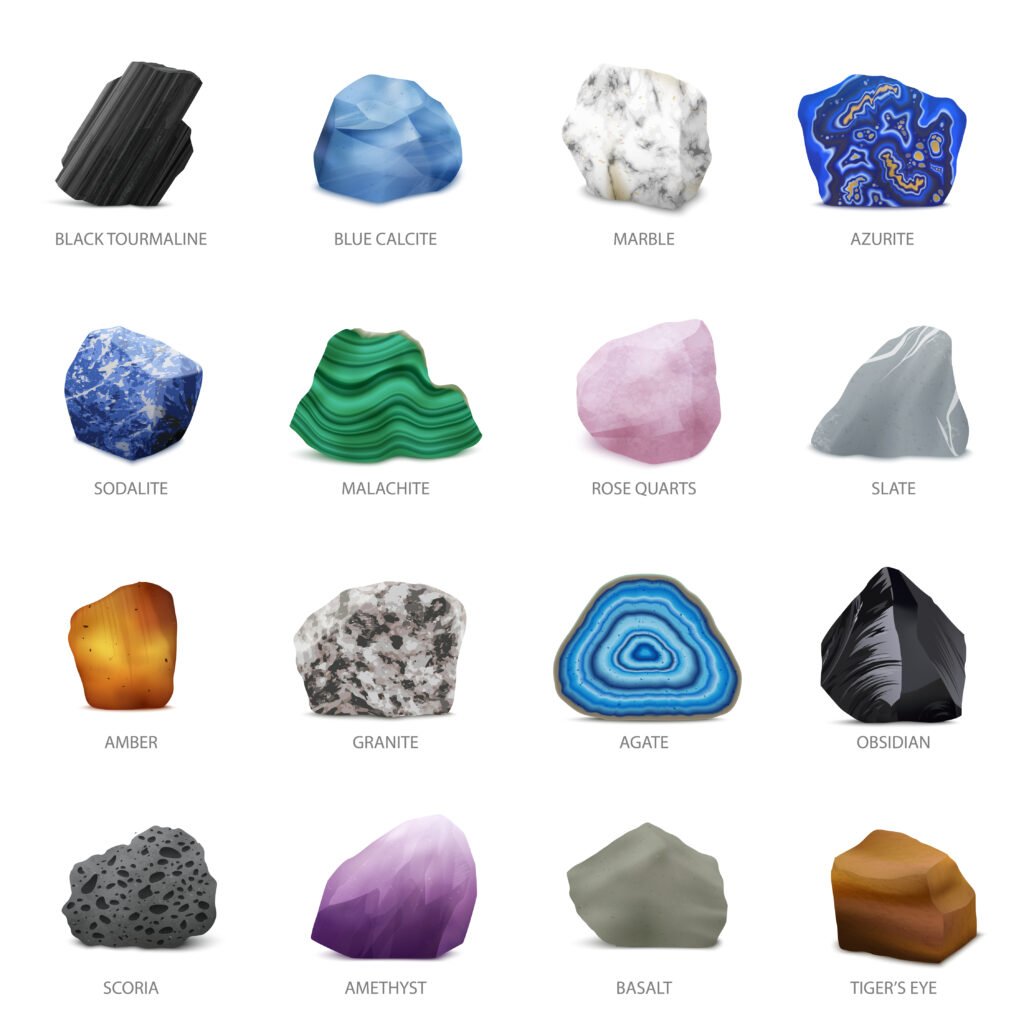
The shortage stems in large part from China’s near-monopoly on global processing and export of rare earths. Industry assessments suggest Chinese-controlled supply chains feature in more than 75% of US defence platforms. Beijing has periodically imposed export restrictions on dual-use minerals critical to US military contractors, amplifying concerns over supply-chain resilience during extended conflict.
The situation has handed China potential indirect leverage: analysts note that any tightening of exports could influence how long Washington can sustain its campaign against Iran. A high-level meeting on rare earth export policies is reportedly scheduled for next month, adding to the uncertainty.
The Pentagon has responded by urgently seeking fresh domestic and allied supplies of 13 critical minerals (including rare earths), issuing requests to mining companies just before the Iran strikes escalated. The Trump administration has also invested in US-based producers like MP Materials and explored partnerships to build resilient “mine-to-magnet” chains, though scaling to meet defence needs could take years.
As domestic buffers dwindle, attention is shifting toward alternative global sources, including Africa’s substantial untapped reserves. Nations such as Botswana (with a newly announced high-grade rare earth deposit containing all 15 elements plus copper, cobalt, nickel and vanadium), South Africa (rich in manganese, platinum group metals and antimony) and the Democratic Republic of the Congo (over 70% of global cobalt) are positioned as strategic options to help diversify away from China-dependent chains.
The two-month stockpile window underscores a broader strategic challenge: prolonged military engagements risk exhausting not just munitions but the foundational materials needed to rebuild them, exposing vulnerabilities in US defence readiness at a time of heightened geopolitical tension.
Global Update
Iran’s New Supreme Leader Mojtaba Khamenei Reportedly Suffered Fractured Foot and Facial Injuries in Opening Airstrikes of US-Israel War
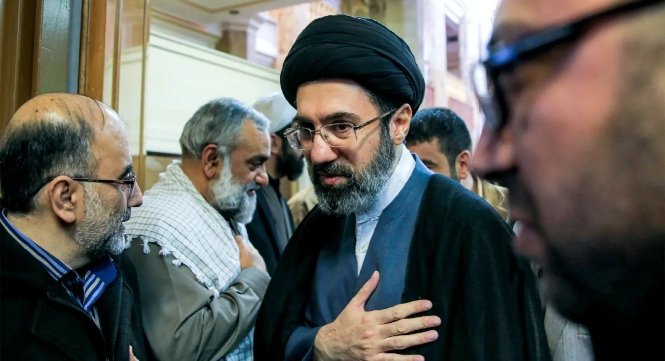
Iran’s newly appointed Supreme Leader, Mojtaba Khamenei, sustained a fractured foot, a bruised left eye, and facial lacerations during the initial wave of US and Israeli airstrikes on February 28, 2026, according to multiple international media reports citing Iranian officials and diplomatic sources.
Mojtaba Khamenei, son of the late Ayatollah Ali Khamenei, was named supreme leader earlier this week following his father’s death in the same February 28 strike. Iranian officials told The New York Times that the new leader was sheltering in a highly secure location when the attack occurred, suffering only “minor” injuries.
He remains conscious and reportedly stable, though no public statement or appearance has been made since his appointment.
The strike that killed Ayatollah Ali Khamenei also claimed the lives of his daughter, a grandchild, daughter-in-law, and son-in-law, according to Iran’s ambassador to Cyprus, Alireza Salarian, who spoke to The Guardian. Salarian indicated that Mojtaba Khamenei’s injuries — particularly the facial bruising and lacerations — have left him uncomfortable and unwilling to deliver a public address.
“I don’t think he is comfortable (in any condition) to give a speech,” Salarian told the Guardian, suggesting the physical and psychological impact of the attack and succession has delayed any televised or recorded statement from the new supreme leader.
Earlier speculation from Israeli media outlets had claimed Khamenei suffered a serious leg injury in the opening hours of the conflict, with CNN later reporting details of the eye bruise and facial cuts. The full extent of his injuries and current medical condition remains unconfirmed by Iranian state media, which has released no images or video of Mojtaba Khamenei since his appointment.
Notably, Khamenei was absent from his own succession rally in Tehran on Monday, where thousands of supporters gathered. State media footage showed only a large portrait of the late Ayatollah Ali Khamenei dominating the stage, with a smaller image of Mojtaba placed to the side — an arrangement some observers described as symbolically overshadowing the new leader.
The rapid ascension of Mojtaba Khamenei — widely viewed as a continuation of dynastic rule within the clerical establishment — has drawn sharp international criticism. US President Donald Trump has publicly rejected the succession, calling the heir an “unacceptable” choice and warning that without American approval, “Iran’s new leader is not going to last long.”
The reported injuries come amid an intensifying US-Israel military campaign against Iranian targets, raising questions about command continuity, internal stability, and the Islamic Republic’s ability to project unified leadership during the ongoing conflict.
Iranian authorities have yet to issue an official medical bulletin or visual confirmation of Mojtaba Khamenei’s condition, leaving open speculation about his capacity to exercise full authority in the early days of his leadership.


Experience the Rare Texture of Apapransa the Celebratory Roasted Corn Delicacy

The Festival of Truth: Why Techiman’s 2026 Apoɔ is the Ultimate Cultural Reset

Khaby Lame is the world’s most followed TikToker: the story of a Senegalese‑born star who sold his identity
-
 Ghana News2 days ago
Helicopter Crash at Tema School Park Kills 2, Security Service Recruitment to be Expanded to 40,000 and Other Trending Issues Today (March 16, 2026)
-

 Ghana News2 days ago
Newspaper Headlines Today: Monday, March 16, 2026
-
 Ghana News1 day ago
Ghana Announces Emergency One-Way Evacuation for Citizens in Qatar Amid Heightened Security Concerns
-

 Ghana News2 days ago
Healthcare for All: President Launches Policy to End Financial Barriers at Facilities Across Ghana
-

 Global Update1 day ago
Influential Foreign Policy Group Sends Direct Message to Trump Warning of Global Risks From His Actions in Iran
-
 Africa Watch1 day ago
France Returns Sacred ‘Talking Drum’ Looted During Colonial Rule to Ivory Coast
-

 Business2 days ago
25 Sittings, Zero Answers: Ghana’s Parliamentary Slow Motion Costing Ghana and Atlantic Lithium Billions
-

 Ghana News18 hours ago
Newspaper Headlines Today: Tuesday, March 17, 2026