
Ghana News
First ECOWAS–AES Crisis Brewing After Burkina Faso Grounds Nigerian War Planes for Breaching Airspace

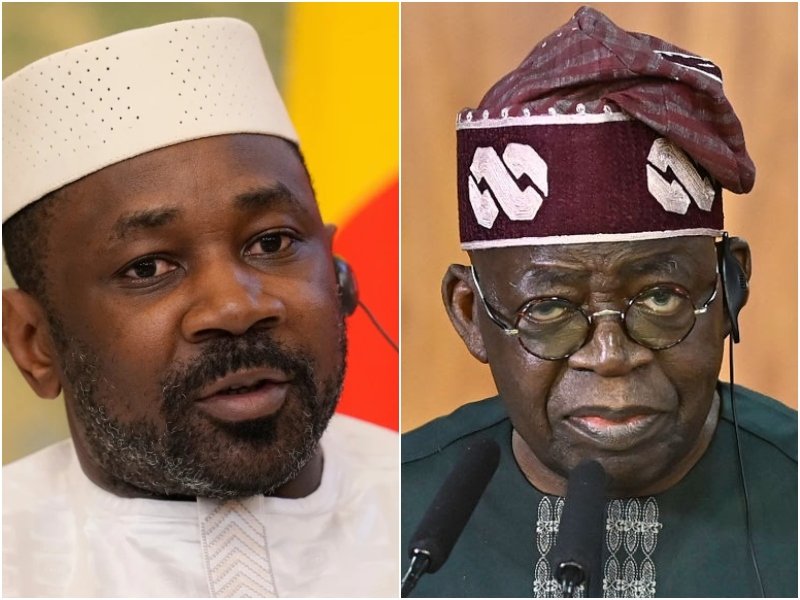
A potentially explosive diplomatic crisis is unfolding in West Africa after Burkina Faso grounded a Nigerian Air Force C-130 transport aircraft.
Eleven personnel of the Nigerian Air Force are now being held for questioning, deepening fractures between the ECOWAS bloc and the breakaway Alliance of Sahel States (AES).
The C-130 was intercepted late Monday, December 8, 2025, and forced to land in Bobo-Dioulasso, a move Burkina Faso insists was necessary after the aircraft allegedly entered AES-controlled airspace without clearance.
Troops immediately surrounded the plane, and all onboard, two crew members and nine passengers, were detained for interrogation, according to Burkinabè officials.
Nigeria disputes this version of the story by Burkina Faso, saying the plane was en route to Portugal when it encountered an in-flight emergency, prompting a diversion to the nearest airfield. Nigerian Air Force spokesman Ehimen Ejodame said the landing followed “standard safety and international procedures,” stressing that the crew had been treated “cordially” by local authorities.
But the Alliance of Sahel States is not treating the matter as routine. Mali’s junta leader, Gen. Assimi Goïta, announced that AES air and anti-air defenses had been placed on maximum alert, with orders to neutralize any aircraft violating confederal airspace. For a region already reeling from coups, sanctions, and shifting security alliances, the signal could not be clearer: the AES bloc is drawing hard lines.
A Flashpoint Months in the Making
The confrontation comes at a combustible moment. Just 24 hours earlier, Nigerian fighter jets played a decisive role in reversing a short-lived coup attempt in Benin. Those airstrikes—targeting coup plotters—were backed by ECOWAS member states but viewed with deep suspicion by the AES governments in Burkina Faso, Mali and Niger.
For them, the Nigerian operation in Benin was further evidence of an ECOWAS security architecture they believe is increasingly weaponized against military-led governments.
“This is not an isolated incident. It is part of a larger geopolitical realignment,” said one West Africa security analyst in Accra. “The AES bloc sees ECOWAS—and by extension Nigeria—as attempting to project dominance through military capacity. Grounding the plane was as much about sovereignty as it was about deterrence.”
Competing Narratives, Rising Risks
While Nigeria insists the C-130 diversion had nothing to do with Benin, the timing is politically sensitive.
The AES statement called the incident a “grave violation of confederal sovereignty”, suggesting that even an emergency landing is now being seen through the lens of suspicion and rivalry. Within the three-nation confederation, airspace has become a symbol of independence from the ECOWAS order they accuse of “inhumane sanctions” and undue interference.
But Nigeria—a regional powerhouse with the continent’s largest population and one of its strongest air forces—will be under pressure at home not to appear weak. Abuja has so far avoided escalating rhetorically, focusing instead on reassuring the public that its personnel are safe.
Diplomacy or Escalation?
For now, both sides appear to be testing boundaries. Burkina Faso is conducting investigations; Nigeria is maintaining a calm public posture. Yet analysts warn that even small miscalculations could snowball.
“Airspace conflicts are some of the most dangerous because they escalate quickly and publicly,” a former ECOWAS diplomat told Ghana Global News. “If cooler heads don’t prevail, this could become the first direct confrontation between ECOWAS and the AES.”
International actors—including the African Union, the EU and major security partners—are likely to watch closely. The AES bloc has been pivoting sharply toward Russia for military cooperation, while ECOWAS remains aligned with Western partners on issues of security, counterterrorism and governance.
What Comes Next?
Much hinges on how fast investigators in Burkina Faso release the Nigerian personnel—or whether they release them at all. The AES leadership may seek concessions or assurances from ECOWAS, especially on military overflights, before taking any step that might be seen domestically as backing down.
Meanwhile, West Africa’s already fragile regional security network is being stretched thin. The Benin coup attempt, Nigeria’s intervention, and Burkina Faso’s airspace enforcement all signal a region at its most polarized in decades.
What began as an emergency landing could become a defining geopolitical showdown.
Or it could be brought back from the brink.
For now, the region—and the world—waits.





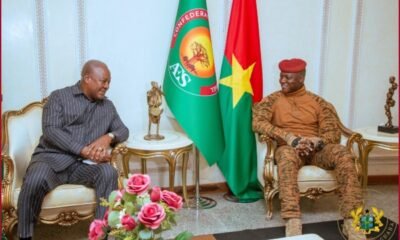




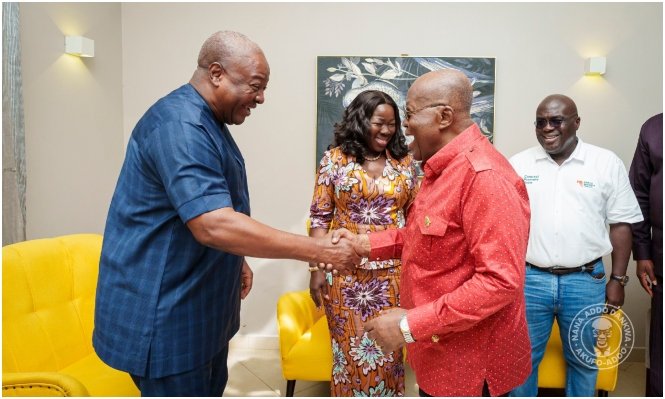
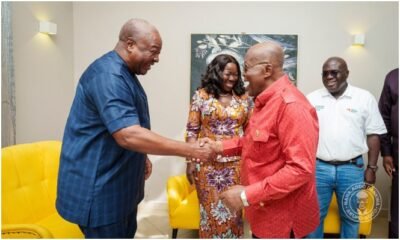
Kwahu, Ghana – Former President Nana Akufo-Addo paid a courtesy call on President John Dramani Mahama on Holy Saturday, April 4, 2026, while both leaders were in the Kwahu enclave for the annual Easter celebrations.
The meeting took place as President Mahama participated in activities linked to the Kwahu Business Forum, a major event held alongside the Easter festivities.
Akufo-Addo, who has maintained a nearly two-decade tradition of spending Easter in Kwahu, described the visit as a cordial engagement during the sacred period.
In a Facebook post, the former president wrote: “On the Holy Saturday of Easter, while in Kwahu where for almost two decades I have consecutively visited during the sacred period of Easter, I called on the President of the Republic, H. E. John Dramani Mahama who is also in Kwahu.”
The encounter highlights a moment of peaceful political civility between the current and immediate past leaders of Ghana amid the festive season. No further details about the substance of their discussion were made public.
The visit comes at a time when both leaders are actively involved in national and regional development conversations, with Mahama using the Kwahu platform to engage stakeholders on economic matters.
Ghana News
Mahama Calls Christ’s Birthplace an ‘Epicentre of War’, New Airport Concourse Planned and Other Big Stories in Ghana Today

We have curated the most relevant and impactful stories from Ghana to keep you informed.
‘It’s Painful Christ’s Birthplace Now an Epicentre of War’ – President Mahama
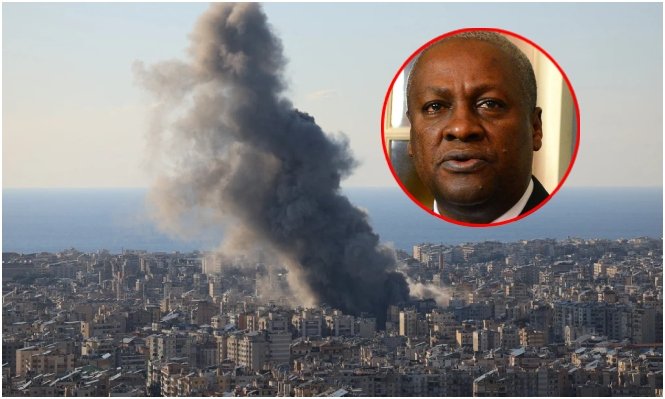
President John Dramani Mahama has described the ongoing violence in the Middle East as a “painful irony,” noting that the birthplace of Christianity and the land where Christ preached love, forgiveness, and peace has become a major centre of conflict. In his Easter message delivered at Black Star Square on April 3, 2026, Mahama said the suffering in the Holy Land cannot be ignored during the season of Easter. He extended Ghana’s thoughts and prayers to the people of Israel, the United Arab Emirates, Qatar, Iran, and the wider Middle East region, urging world leaders to embrace restraint, dialogue, and respect for human dignity.
Read the full story here
Gov’t to Construct New Concourse at Accra International Airport to Ease Congestion
The Ghana Airports Company Limited will begin construction this month on an ultra-modern concourse linking Terminal 2 and Terminal 3 at Kotoka International Airport. The project aims to eliminate current operational bottlenecks, enable seamless passenger transfers, and significantly improve hub efficiency. Key features include five additional passenger boarding bridges, five passenger holding areas, bi-directional travelators, new escalators and elevators, a VIP lounge, four business lounges, and four retail and duty-free pods. The expansion forms part of a broader modernisation drive to provide world-class facilities and strengthen Ghana’s position as a competitive aviation hub in West Africa.
Read the full story here
Gov’t Procures Over 24,000 Medical Equipment to Support Free Primary Healthcare Rollout
The Ghanaian government has acquired 24,534 pieces of medical equipment to strengthen health facilities ahead of the nationwide rollout of its free primary healthcare policy. The consignment, inspected by Health Minister Kwabena Mintah Akandoh, includes baby incubators, radiant warmers, oxygen concentrators, X-ray machines, ultrasound devices, laboratory analysers, vital signs monitors, glucometers, patient monitors, infusion devices, delivery beds, and hospital beds. The equipment will be distributed across government hospitals to improve diagnostics, newborn care, and overall service delivery at the primary level.
Read the full story here
Ghana to Manufacture First Vaccine with Support from Indonesia
Ghana is set to begin local production of its first vaccine with technical and partnership support from the Indonesian government. Honorary Consul of Indonesia to Ghana, Paskal A B Rois, confirmed that a high-level delegation from Ghana’s National Vaccine Institute, Food and Drugs Authority, and GIZ visited Indonesia late last year to finalise arrangements. Once operational, Ghana will become the third African country — after Senegal and South Africa — to manufacture vaccines domestically. The initiative is expected to enhance the country’s health security and reduce dependence on imported vaccines.
Read the full story here
No Business Thrives Without Trust in Justice System — Chief Justice
Chief Justice Paul Baffoe-Bonnie has emphasised that trust in the judicial system is essential for business growth and investor confidence in Ghana. Speaking at the Kwahu Business Forum on April 4, 2026, he stated that contracts must be honoured, property protected, and disputes resolved fairly and predictably for any economy to flourish. The Chief Justice announced that the judiciary is repositioning itself to become an active partner in creating a business-friendly environment anchored in the rule of law. He warned that delays and uncertainty in the justice system carry real economic costs by discouraging investment.
Read the full story here
Ghana News
Ghana President Convenes Emergency Cabinet Meeting to Cushion Ghanaians from Soaring Fuel Prices
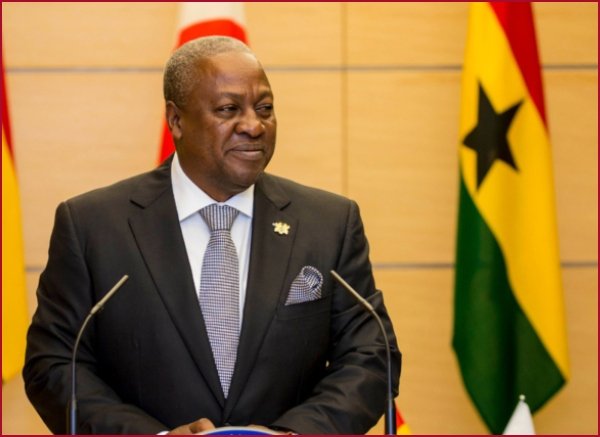
President John Dramani Mahama has convened an emergency cabinet meeting to address the sharp rise in fuel prices caused by the ongoing conflict in the Middle East, particularly the escalation involving Iran.
Speaking on Saturday, April 4, 2026, during the second day of the Kwahu Business Forum, President Mahama stated that the meeting will focus on practical interventions to ease the burden on citizens.
He specifically mentioned the possibility of adjustments in fuel margins and other components of the price build-up to help keep prices relatively stable while hoping for de-escalation of the conflict.
“I have called for this emergency cabinet meeting to decide on specific measures we can take to cushion petroleum prices,” Mahama said. “There are adjustments we can make, particularly in the margins, to help maintain relatively stable prices as we pray for the war to cease.”
The President assured Ghanaians that the government remains committed to protecting the economy from external shocks and has taken steps to build resilience.
“I can confidently tell you that the economy will not collapse because of the war in Iran,” he stated.
Mahama also commended transport unions for showing restraint by not immediately increasing lorry fares despite the fuel price surge.
He urged them to continue exercising patience as the government works on relief measures. Fuel prices rose significantly effective April 1, 2026, with petrol increasing to approximately GH¢13.30 per liter (a 15% hike) and diesel to GH¢17.10 per liter (a 19% hike) for the first half of April.
The government is reviewing options including reductions in margins and levies to provide relief to consumers.
This latest development highlights the direct link between global geopolitical tensions and domestic living costs in Ghana, as the government balances immediate relief with longer-term economic stability.


Renowned Global Bodies Warn Middle East War Will Scuttle Africa’s 2026 Growth

Ex-President Akufo-Addo and President Mahama Exchange Pleasantries on Easter

Mahama Calls Christ’s Birthplace an ‘Epicentre of War’, New Airport Concourse Planned and Other Big Stories in Ghana Today
-
 Ghana News1 day ago
Ghana President Convenes Emergency Cabinet Meeting to Cushion Ghanaians from Soaring Fuel Prices
-
 Ghana News1 day ago
Mahama Calls Christ’s Birthplace an ‘Epicentre of War’, New Airport Concourse Planned and Other Big Stories in Ghana Today
-
 Ghana News1 day ago
Ex-President Akufo-Addo and President Mahama Exchange Pleasantries on Easter
-
 Business1 day ago
Renowned Global Bodies Warn Middle East War Will Scuttle Africa’s 2026 Growth