
Diaspora Investment Guide
Exporting From Ghana in 2026: How Compliance Is Becoming the New Gateway to Global Markets


Exporting from Ghana is no longer the exclusive territory of large corporations. As global demand for African products continues to rise, small and medium-sized enterprises (SMEs), creatives, agro-processors, and manufacturers are increasingly finding pathways to international markets.
But in 2026, one message is clear: compliance is the new currency of global trade.
Whether it is shea butter headed to the United States, processed foods bound for the UK, or fashion products entering European markets, success now depends less on scale and more on getting the paperwork right. Industry experts say regulatory compliance has effectively become a business’s “visa” to the world.
A Clearer Roadmap for Ghanaian Exporters
Ghana’s export ecosystem has matured significantly, with key institutions offering clearer processes and expanding digital services. Entrepreneurs looking to go global must now navigate a defined sequence involving the Office of the Registrar of Companies (ORC), the Ghana Export Promotion Authority (GEPA), and sector regulators such as the Food and Drugs Authority (FDA) and the Ghana Standards Authority (GSA).
The process begins with product clarity. Businesses must first identify exactly what they are selling—whether fashion, cosmetics, processed food, or manufactured goods. This determines which regulatory approvals will be required.
The second step is formal business registration. Companies must be legally registered with the Office of the Registrar of Companies, which now operates largely through Ghana’s digital government services portal. This registration establishes the business as a recognised legal entity, a non-negotiable requirement for international trade.
Compliance: The Step That Cannot Be Skipped
Compliance remains the most critical—and often misunderstood—stage of the export journey. For food, cosmetics, and health-related products, FDA approval is mandatory. Manufactured goods typically require certification from the Ghana Standards Authority, and in many cases, exporters must obtain approvals from both institutions.
Failure to complete this step can result in seized shipments, rejected consignments at foreign ports, or permanent loss of buyer trust.
Once regulatory approvals are secured, exporters must register with the Ghana Export Promotion Authority (GEPA) to obtain an official exporter number, which grants access to global trade opportunities, export support services, and international market linkages.
Businesses are also required to ensure their tax status is active, as compliance with the Ghana Revenue Authority remains essential for both local operations and international credibility.
Start Small, Stay Legal, Go Global
Export advisers recommend that new exporters start with small shipments, secure reliable freight forwarders, and prioritise compliance over speed. While many government services are moving online, entrepreneurs are advised to verify requirements and fees directly from official portals, as regulations and processes can change.
Key official resources include:
- Office of the Registrar of Companies (ORC): www.orc.gov.gh
- Ghana Government Digital Portal: www.ghana.gov.gh
- Ghana Export Promotion Authority (GEPA): www.gepaghana.org
- Food and Drugs Authority (FDA): www.fdaghana.gov.gh
Ghana’s Global Opportunity
As international markets increasingly scrutinise product safety, traceability, and regulatory compliance, Ghanaian businesses that align early stand to benefit the most. The opportunity is significant—but only for those willing to follow the rules.
In 2026, exporting from Ghana is not just about ambition. It is about preparation, compliance, and credibility. For businesses that get it right, the global market is no longer out of reach—it is waiting.










Accra, Ghana – February 26, 2026 – Ghana’s emerging medicinal and industrial cannabis sector—legalized for low-THC (≤0.3%) cultivation, processing, and use since the 2020 Narcotics Control Commission Act amendments and further enabled by the 2023 Amendment Act and L.I. 2475—has moved into active licensing mode.
With the Narcotics Control Commission (NACOC) now issuing permits and investor interest surging, the industry holds potential to generate at least $1 billion annually in revenue, rival traditional exports like cocoa and gold, and create jobs in agriculture, processing, and export.
However, strict regulations prioritize security, public safety, traceability, and anti-diversion measures over rapid revenue. Here are seven essential points every potential investor, farmer, or entrepreneur should understand before entering the market.
- Licensing Is Multi-Layered and Activity-Specific
There is no single “cannabis licence.” Applicants must secure up to 11 separate, non-transferable licences for distinct activities—cultivation, processing, transportation, import/export, storage, and more. Minister of the Interior Muntaka Mohammed-Mubarak emphasized: “You cannot cultivate and assume you can transport. You need another licence for that.” Each licence is valid for three years and subject to renewal. - Proof of a Ready Market (Off-Taker) Is Mandatory
No licence will be issued without a confirmed buyer or off-taker. Authorities require evidence of a ready market before approving any application. “We won’t give you the licence if you don’t show us who you are going to sell it to,” the Minister warned. This rule protects against speculative entry and ensures commercial viability from day one. - Eligibility Favours Ghanaians and Majority-Ghanaian Ownership
Individual applicants must be Ghanaian citizens or permanent residents aged 18+. Corporate entities require at least 50% Ghanaian ownership and a majority of Ghanaian directors. NACOC has clarified that any qualified Ghanaian with documented land access can apply directly—no intermediaries or connections needed. - Strict Security, Traceability, and Compliance Requirements
Licencees face rigorous standards: robust security protocols, GPS tracking, drone surveillance, unannounced inspections, and full product traceability to prevent diversion to illegal markets. The government’s priority is clear: “Our emphasis is more on security and public safety than on money.” Failure risks blacklisting Ghana internationally. - Seeds Must Be Imported—Ghana Does Not Produce Them
Only specialised low-THC varieties (≤0.3%) are permitted. Ghana does not produce these seeds, so all planting material must be imported under a separate import licence. “Government is not positioning itself to provide the seeds. It is a business,” Minister Muntaka stated. - High Barriers for Small-Scale Operators
The need for an off-taker, multiple licences, advanced security infrastructure, and traceability systems creates significant entry barriers for smallholder farmers or startups. Larger, well-capitalized players with established international buyers are better positioned to meet the requirements. - Significant Revenue and Export Potential—If Done Right
Experts project the sector could generate $1 billion+ annually once fully operational, driven by global demand for medicinal cannabinoids, industrial hemp fibre, cosmetics, pharmaceuticals, and food products. Ghana aims to become a centre of excellence in West Africa, leveraging AfCFTA access and competitive land/climate advantages. However, success depends on strict compliance to avoid international sanctions or blacklisting.
The sector offers real economic upside—job creation, export diversification, and foreign exchange—but only for those prepared to navigate a highly controlled, security-first environment.
Interested parties should apply directly through NACOC offices or its online platform, ensuring all documentation (including proof of market/off-taker) is in place before submission.

The global economy feels like it’s balancing on a knife-edge these days. Currencies wobble, markets dip, and that retirement number keeps moving further away. We are all chasing assets that don’t just sit there looking pretty but actually work for us. We want something that fights back against inflation.
For a lot of people, the answer is still stocks or crypto. But if you look a little closer, you might notice a quieter, more tangible shift happening. Smart money is moving away from the screen and back into the soil—specifically, into places where the future is being built right now.
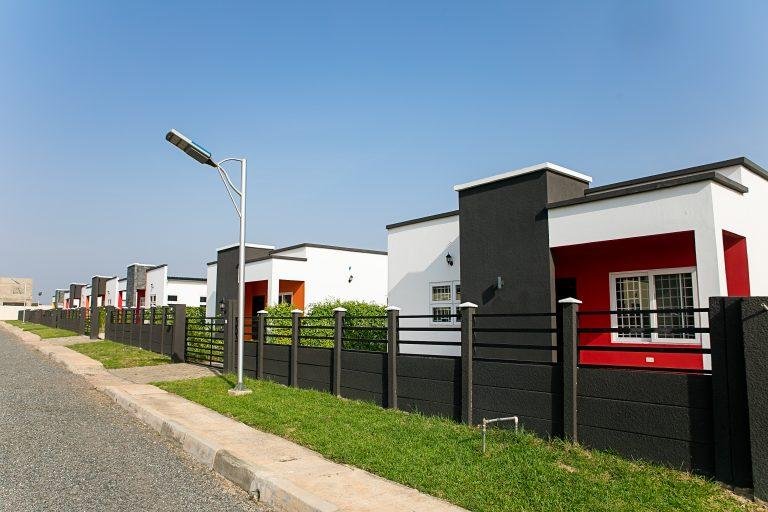
One of those places is a 20-minute drive from the chaos of Accra, Ghana. It’s called Community 25 in Tema, and it’s rewriting the rulebook on what a smart investment looks like.
The Real Estate Rule They Don’t Teach in School
We all know the mantra: location, location, location. But that’s too simple. The real secret is trajectory. You aren’t just buying a location; you are buying the direction that location is moving. You want to get on the train just before it leaves the station, not after it’s packed.
Tema Community 25 is that train. It’s not the city center, and that’s precisely the point. It offers something that urban dwellers globally are now craving: oxygen. Room to breathe. It sits in that sweet spot where infrastructure is arriving (new roads, hospitals, schools) but the prices haven’t yet caught up to the potential. Places are popping up here, and they aren’t just building houses; they are building a different kind of life.
The “Sleep-Factor” Premium
Here is an angle most investment guides ignore: peace of mind has a price tag, and it only goes up.
Think about it. In a world where data breaches are constant and urban anxiety is high, what is the value of a front gate that actually keeps the noise out? What is the premium for 24/7 security that lets you sleep without jumping at every sound? At estates like The Greens, they aren’t just selling you a three-bedroom unit; they are selling you a controlled environment. They are selling order in a world that feels chaotic. And people will always pay extra for that.
I spoke to one investor who put it bluntly: “I don’t just want a tenant; I want a tenant who feels safe enough to stay for five years.” That stability is where the real wealth is built.
Buildings That Breathe
There is another shift happening globally that Ghana is tapping into. The days of building concrete boxes that turn into ovens by noon are ending. The new generation of buyers—whether local or in the diaspora—is savvier. They check for efficiency.
The developers behind The Greens Estate got certified by the World Bank’s IFC through the EDGE program. In plain English? They built homes that use less water and less energy. That’s not just a marketing gimmick. For the owner, it means lower bills. For the investor, it means a property that won’t feel outdated in ten years. It means your asset ages better than the one down the road.
The Bottom Line
You can renovate a kitchen. You can paint a wall. You can even add a patio. But you cannot move the house to a better neighborhood. You cannot manufacture a view of a green space in the middle of a concrete jungle.
If you are looking for an asset that actually holds value, stop looking for the finished product. Look for the place where the finish line is still ahead. Look for the place where the roads are still being paved, where the trees are still young, and where the security guard actually knows your name.
That is the property that doubles. Not because of magic, but because you saw the trajectory before everyone else bought their ticket.

U.S. President Donald Trump has signed a one-year extension of the African Growth and Opportunity Act (AGOA), providing immediate duty-free access and retroactive tax refunds to qualifying exporters in 32 sub-Saharan African countries — but only through December 31, 2026.
The short-term reauthorization, enacted in early February 2026, ends the uncertainty that followed the original September 30, 2025, expiration.
African businesses that paid extra duties since October 2025 can now claim full refunds, delivering quick cash-flow relief to garment makers, horticulture exporters, and other AGOA beneficiaries.
However, the 11-month window — far shorter than previous multi-year renewals — has raised concerns across the continent.
The U.S. has explicitly tied the brief extension to expectations of “reciprocal market access,” signaling that future eligibility could hinge on African governments opening their markets more fully to American goods and services.
Key implications for Ghana and other AGOA-eligible nations include:
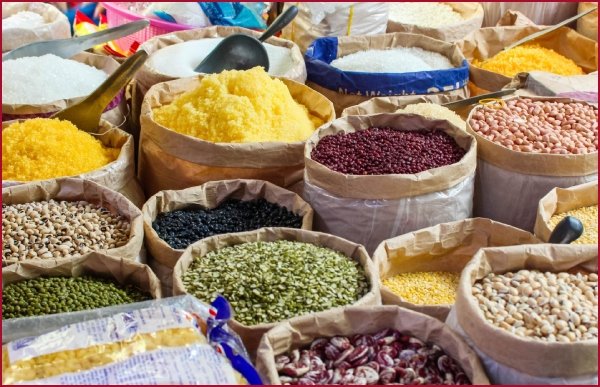
- Immediate duty-free treatment for over 1,800 product lines (textiles, apparel, agricultural goods, handicrafts, etc.) retroactive to October 2025
- A clear 2026 deadline for negotiations on a longer-term or replacement agreement
- Heightened U.S. scrutiny of trade barriers, intellectual property protections, and investment rules
- Continued exclusion of certain countries (e.g., those failing eligibility criteria such as human rights or rule-of-law benchmarks)
Trade analysts describe the move as a deliberate shift toward conditional, shorter-duration trade preferences — a departure from the bipartisan, decade-long renewals that characterized AGOA since its launch in 2000. The one-year horizon gives Washington leverage to push for concessions while giving African exporters a temporary lifeline.
For Ghana — one of AGOA’s most consistent users — the extension secures continued duty-free access for apparel, shea butter products, cashews, and other exports to the U.S. market. Yet exporters and policymakers now face a compressed timeline to prepare for potentially tougher talks in 2026.
The African Union, ECOWAS, and individual governments have welcomed the refund mechanism but expressed concern over the uncertainty.
Many are already calling for a permanent, rules-based successor framework that better aligns with AfCFTA goals and Africa’s industrialisation ambitions.
As the clock ticks toward the end of 2026, the coming months will test whether AGOA’s legacy can evolve into a more balanced, reciprocal partnership — or whether both sides will need to chart an entirely new course for U.S.-Africa trade relations.


I Watched My Friend Lose His Land Because He Trusted the Wrong People

What 1,000 Skips a Day Does to a Man Who Thought He Was Fit

The Week We Forgot About Cocoa and Talked About a Russian Instead
-

 News2 days ago
Ghana Gears Up for Vibrant 69th Independence Day Celebrations: Parades, Plays, Poetry, and Heritage in Focus
-

 Ghana News2 days ago
Newspaper Headlines Today: Tuesday, March 3, 2026
-

 Tourism2 days ago
Emirates Resumes Limited Flights from Dubai as Middle East Airspace Slowly Reopens Amid Ongoing Conflict
-

 Ghana News2 days ago
Ayawaso East By-Election Results Trickle in, ECG Audits Fast-Reading Meters, and Other Trending Topics in Ghana (March 3, 2026)
-

 Commentary2 days ago
At a glance: US‑Israel attack on Iran
-

 Ghana News2 days ago
Ghana’s Top Muslim Leader Condemns Khamenei Assassination, Calls for New World Order Based on ‘Right Over Might’
-

 Business2 days ago
Ghana’s Mega Infrastructure Push: 10 Game-Changing Projects Set to Transform the Country in 2026
-

 Fashion & Style2 days ago
The New Wave of “Afro-Minimalism”: Redefining Luxury Beyond the Print
Pingback: Top Ghana News Headlines Today — December 29, 2025
Pingback: Ghana’s Consumption Tax Reset: What the New VAT Changes Mean for Diasporans Doing Business Back Home - Ghana News Global