
Perspectives
Does adding ‘please’ and ‘thank you’ to your ChatGPT prompts really waste energy?


In this article, Richard Morris of Lincoln University, New Zealand, explores a common question among AI users worldwide: does politely saying “please” and “thank you” to ChatGPT (or other large language models) actually waste energy and increase carbon emissions? The short answer, according to the piece, is: “Yes, but only slightly,” and the impact is far smaller than many people think.
——————
Cut the words “please” and “thank you” from your next ChatGPT query and, if you believe some of the talk online, you might think you are helping save the planet.
The idea sounds plausible because AI systems process text incrementally: longer prompts require slightly more computation and therefore use more energy. OpenAI’s chief executive Sam Altman has acknowledged it all adds to operating costs at the scale of billions of prompts.
At the same time, it is a stretch to suggest that treating ChatGPT politely comes at significant environmental cost. The effect of a few extra words is negligible compared with the energy required to operate the underlying data centre infrastructure.
What is more important, perhaps, is the persistence of the idea. It suggests that many people already sense AI is not as immaterial as it appears. That instinct is worth taking seriously.
Artificial intelligence depends on large data centres built around high-density computing infrastructure. These facilities draw substantial electricity, require continuous cooling, and are embedded in wider systems of energy supply, water and land use.
As AI use expands, so does this underlying footprint. The environmental question, then, is not how individual prompts are phrased, but how frequently and intensively these systems are used.
Why every AI query carries an energy cost
One structural difference between AI and most familiar digital services helps explain why this matters.
When a document is opened or a stored video is streamed, the main energy cost has already been incurred. The system is largely retrieving existing data.
By contrast, each time an AI model is queried it must perform a fresh computation to generate a response. In technical terms, each prompt triggers a fresh “inference” – a full computational pass through the model – and that energy cost is incurred every time.
This is why AI behaves less like conventional software and more like infrastructure. Use translates directly into energy demand.
The scale of that demand is no longer marginal. Research published in the journal Science estimates that data centres already account for a significant share of global electricity consumption, with demand rising rapidly as AI workloads grow.
The International Energy Agency has warned that electricity demand from data centres could double by the end of the decade under current growth trajectories.
Electricity is only one part of the picture. Data centres also require large volumes of water for cooling, and their construction and operation involve land, materials and long-lived assets. These impacts are experienced locally, even when the services provided are global.
AI’s hidden environmental footprint
New Zealand offers a clear illustration. Its high share of renewable electricity makes it attractive to data centre operators, but this does not make new demand impact-free.
Large data centres can place significant pressure on local grids and claims of renewable supply do not always correspond to new generation being added. Electricity used to run servers is electricity not available for other uses, particularly in dry years when hydro generation is constrained.
Viewed through a systems lens, AI introduces a new metabolic load into regions already under strain from climate change, population growth and competing resource demands.
Energy, water, land and infrastructure are tightly coupled. Changes in one part of the system propagate through the rest.
This matters for climate adaptation and long-term planning. Much adaptation work focuses on land and infrastructure: managing flood risk, protecting water quality, maintaining reliable energy supply and designing resilient settlements.
Yet AI infrastructure is often planned and assessed separately, as if it were merely a digital service rather than a persistent physical presence with ongoing resource demands.
Why the myth matters
From a systems perspective, new pressures do not simply accumulate. They can drive reorganisation.
In some cases, that reorganisation produces more coherent and resilient arrangements; in others, it amplifies existing vulnerabilities. Which outcome prevails depends largely on whether the pressure is recognised early and incorporated into system design or allowed to build unchecked.
This is where discussion of AI’s environmental footprint needs to mature. Focusing on small behavioural tweaks, such as how prompts are phrased, distracts from the real structural issues.
The more consequential questions concern how AI infrastructure is integrated into energy planning, how its water use is managed, how its location interacts with land-use priorities, and how its demand competes with other social needs.
None of this implies that AI should be rejected. AI already delivers value across research, health, logistics and many other domains.
But, like any infrastructure, it carries costs as well as benefits. Treating AI as immaterial software obscures those costs. Treating it as part of the physical systems we already manage brings them into view.
The popularity of the “please” myth is therefore less a mistake than a signal. People sense AI has a footprint, even if the language to describe it is still emerging.
Taking that signal seriously opens the door to a more grounded conversation about how AI fits into landscapes, energy systems and societies already navigating the limits of adaptation.
Richard Morris, Postdoctoral Fellow, Faculty of Agriculture and Life Sciences, Lincoln University, New Zealand
This article is republished from The Conversation under a Creative Commons license. Read the original article.

Perspectives
Khaby Lame is the world’s most followed TikToker: the story of a Senegalese‑born star who sold his identity

This article traces Khaby Lame’s meteoric rise from a factory worker in Italy to global stardom through his signature silent, deadpan reaction videos that mock overly complicated “life hack” content.
Khaby Lame is the world’s most followed TikToker: the story of a Senegalese‑born star who sold his identity
Fanny Georges, Université Sorbonne Nouvelle, Paris 3
His name is Khabane Lame, but he is known worldwide as Khaby Lame. Born in Dakar, Senegal, he is the most followed content creator on TikTok.
He became famous for video clips in which he reacts to absurd “life hack” videos with a blank, slightly annoyed face, showing the hack wasn’t needed.
At the time of writing he has over 160 million followers: a world record achieved without uttering a single word. In January he sold his brand rights for nearly US$1 billion.
But there’s another dimension to his story that the western media rarely mention: Khaby Lame is a practising Muslim and a hafiz, a Muslim devotee who has memorised the entire Quran. This after being sent to a Quranic school near Dakar at the age of 14.
The tension between the sacred body of the hafiz and the commercialisation of the influencer’s digital life makes his journey a rich case study.
For me, as a researcher of digital identity, his online career also raises questions about turning personal data into digital assets.
From the suburbs of Turin to the top of the global stage
Khaby Lame’s story reads like a modern-day myth. Not because it’s hard to believe, but because it mirrors the core narratives of digital modernity. It starts with hardship, goes through a period of creative isolation and ends with global recognition.
This is what the French thinker Roland Barthes called “mythical speech”, a story that seems natural and simple, but is actually shaped by deeper forces and structures.
In 2020, at the beginning of the COVID-19 pandemic, Khaby Lame lost his job as a factory worker. He was stuck at home and locked down in social housing in the suburbs of Turin, Italy, where his parents had moved when he was a baby.
Out of this hardship he made a simple decision: he started filming short videos. Just 17 months later, he reached more than 100 million followers on TikTok. He was the first content creator based in Europe to reach that milestone.
His story reflects the promise often promoted by TikTok that the platform can lift anyone up. All you need, it suggests, is a mobile phone, and talent will quickly be rewarded with global fame.
This should be celebrated. But the myth of instant success also needs a closer look. Behind every viral rise lie smart decisions, hard work, and the powerful, and often unpredictable, role of the platfom’s algorithm.
Comic tradition
What sets Khaby Lame apart from almost all the creators before him is the semiotic system (of signs and symbols) he invented – or rather reactivated. He brought back an old comic tradition.
Many compare him to British comedy actor Charlie Chaplin. Others see echoes of US comedian Buster Keaton. Both were masters of Hollywood’s silent slapstick comedy. https://www.youtube.com/embed/Z7-QdoofMq8?wmode=transparent&start=0 Charlie Chaplin in “The Kid – Fight Scene.”
Khaby Lame revives the codes of 1930s Hollywood silent comedy cinema: mime, meaningful glances, no dialogue, and burlesque sketches (short theatrical scenes) that convey messages. But the Chaplin connection ends there, as the two men inhabit their bodies in radically different ways.
Chaplin’s films carry emotional weight, driven by social and political themes. His character, the tramp, is a poor wanderer pushing back against an unfair industrial world.
Khaby Lame’s style is closer to Keaton’s. He says nothing. He simply shows how unnecessary and complicated these internet quick fixes are. His absolute impassivity in the face of the absurd is what Keaton perfected with his famous “great stone face”. https://www.youtube.com/embed/UWEjxkkB8Xs?wmode=transparent&start=0 Buster Keaton ‘The Art of the Gag’.
But while the comic structure is similar, their relationship to their bodies is not. Throughout his life, Keaton remained completely indifferent to religion or metaphysics in any form. Khaby Lame is the opposite. He is a hafiz. The separation of his digital identity from his physical person is notable.
Wordless humour allowed him to build a global audience because there are no language barriers, just as silent film stars like Charlie Chaplin became global icons a century ago.
TikTok’s algorithm favours content that anyone can understand instantly. Chaplin needed a movie theatre, Khaby Lame needs only a phone and an algorithm. The mechanics are similar. The way it spreads has completely changed.
Digital identity
In January 2026, Khaby Lame’s carefully crafted expressive persona took on a new status. It became a financial asset. He sold his company, Step Distinctive Limited, for US$975 million to Rich Sparkle, a publicly traded company based in Hong Kong. The agreement includes the transfer of rights to use his image, voice and behavioural models to create an artificial intelligence-powered digital twin.
This digital twin will produce multilingual content, including material for advertising and promotions. Companies will be able to run commercials in several countries without Khaby being physically present. According to Rich Sparkle, this could help generate over US$4 billion in annual sales, especially through livestream e-commerce (a format already dominant in Asia), broadcast simultaneously around the world.
This transaction marks a turning point. Digital identity no longer merely represents a person. It becomes an asset that can be separated from the individual who created it. Now, a creator is no longer a brand ambassador, but a brand in its own right. In theory, Khaby Lame’s digital being is now legally separate from Khaby Lame himself.
The digital twin is, in this sense, the Buster Keaton body that digital platform capitalism has always dreamed of – impassive, reproducible, available across all time zones.
Signature gesture
Khaby Lame’s signature gesture is to place both palms open and turned upward. This seems simple and easy to understand, a light and humorous sign of of disbelief. But the gesture carries deeper meanings.
In Islamic tradition, as in many African cultures, this same gesture is linked to dua, the act of raising one’s hand in supplication to God. What millions of viewers read as a comic signature is also a spiritual practice.
Yet Khaby Lame’s digital double is not simply an image. It can act in his name. It can speak with his voice. It can repeat his familiar gestures. This is no longer simple representation. It is a form of transferring his way of expressing himself onto a digital system.
The same open hands, the same expressive gaze, the same voice that once recited the suras of the Quran in a school in Dakar are now the attributes of a commercial transaction valued at nearly a billion dollars.
There is an ethical question in handing over his active identity to financial markets.
An ethical question
For many young Africans, especially in Senegal, Khaby Lame embodies the possibility that digital spaces are territories where Africans can succeed, where the hierarchies inherited from colonial history can, at least symbolically, be overturned.
But the deal raises a difficult question: what does it mean to sell your digital self in a world where Black and African bodies have been used and profited from for centuries without consent and fair compensation?
Is this a win or a new form of exploitation? Can the financial benefits balance the transfer of his identity?
More African creators are building global audiences every year. That means these questions will become harder to ignore. Who owns a creator’s digital twin once it’s sold? Who set the rules for its use?
Khaby Lame is not just a social media success story. He is a revelation of the future and, perhaps unwittingly, a pioneer.
Fanny Georges, enseignant-chercheur, Université Sorbonne Nouvelle, Paris 3
This article is republished from The Conversation under a Creative Commons license. Read the original article.

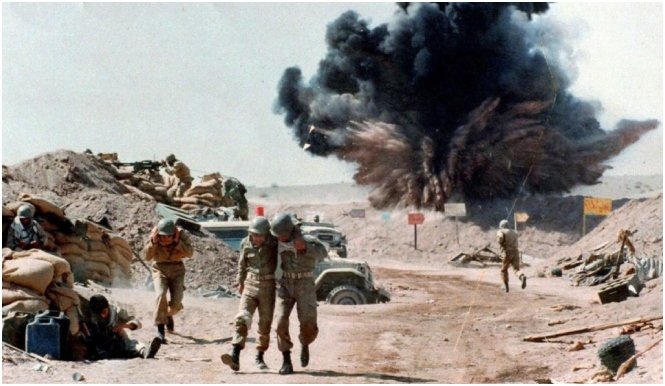
Accra, Ghana – The escalating war involving Iran and Western-led strikes has already sent shockwaves through global energy markets, disrupted maritime trade, and redirected geopolitical attention.
While the human cost in the Middle East continues to mount, a growing body of strategic commentary suggests the conflict—however tragic—could produce unintended but potentially transformative consequences for the African continent.
Rising oil prices represent the most immediate economic ripple. With the Strait of Hormuz under severe threat and Saudi Arabia reportedly planning to reroute exports via the Red Sea, crude prices have surged. For major African producers Angola and Nigeria, higher revenues could provide fiscal breathing room. Yet the broader impact on the continent is largely negative: elevated oil costs drive up fertilizer prices, inflating food costs in import-dependent nations. Historical precedent is stark—similar dynamics in 2007–2008 triggered food-price riots across Africa, from Morocco to Cameroon. Analysts warn that the current spike risks reigniting social unrest unless governments act swiftly with subsidies or alternative supply chains.
Maritime rerouting offers a second, more localized opportunity. If Houthi forces in Yemen escalate Red Sea attacks—as they have done during previous Israel-related conflicts—the traditional Suez Canal route could become untenable. Cargo vessels carrying food and goods from the Atlantic to the Middle East and Asia would then be forced to circumnavigate the Cape of Good Hope. South African ports (Durban, Cape Town, Port Elizabeth) and neighbouring coastal facilities in Namibia and Mozambique stand to gain significantly from increased transshipment traffic, vessel repairs, bunkering, and logistics services. While short-term, this revival of the historic “Cape route” could inject millions into local economies and accelerate port infrastructure upgrades.
Perhaps the most intriguing long-term shift involves the realignment of foreign influence. The United Arab Emirates, Africa’s fourth-largest foreign investor in recent years, has poured billions into ports, airports, and military footholds—most controversially backing the Rapid Support Forces (RSF) in Sudan’s devastating civil war. With Iranian missiles and drones now targeting Emirati territory, analysts argue the UAE will be compelled to redirect resources homeward, potentially withdrawing or scaling back its African footprint. While this may cause short-term investment gaps, it could open space for African governments to negotiate with more transparent or development-focused partners.
Simultaneously, the West’s intense focus on the Middle East—evidenced by France and other NATO members deploying naval assets to the Gulf—may reduce external meddling in African affairs. Countries in the Alliance of Sahel States (Mali, Burkina Faso, Niger) and other regions that have faced repeated Western military or diplomatic pressure could gain breathing room to consolidate sovereignty, pursue regional integration, and build domestic institutions without constant external scrutiny or intervention threats.
None of this diminishes the war’s catastrophic human toll or the global economic pain it inflicts. Food insecurity, inflationary spirals, and redirected investment flows could deepen poverty and instability in vulnerable states. Yet the conflict’s unintended side effects—higher port revenues in the south, diminished Gulf-state interference, and a temporary lull in Western strategic preoccupation—could create narrow windows for African agency and self-determination.
Whether these opportunities are seized depends on African leadership: proactive food-price mitigation, strategic port investment, transparent renegotiation of foreign partnerships, and accelerated regional cooperation. History shows that global crises often accelerate change—sometimes painfully, sometimes productively. The Iran war may prove no exception.
Perspectives
Critical Mineral Supply Faces Risks if Local Communities Aren’t Consulted Enough: The Case of Lithium in Ghana

Published on The Conversation (February 18, 2026), this article argues that the global supply of critical minerals essential for clean energy transitions — such as lithium — is increasingly at risk due to insufficient consultation and inclusion of local communities in mining projects.
Critical Mineral Supply Faces Risks if Local Communities Aren’t Consulted Enough: The Case of Lithium in Ghana
By: Clement Sefa-Nyarko, King’s College London
Clean technologies depend on critical minerals such as lithium and cobalt. Over 65% of the world’s cobalt is mined in the Democratic Republic of Congo. Nearly 40% of the world’s manganese is mined in South Africa. Substantial deposits of lithium are found in Zimbabwe. Ghana is emerging as a miner of that mineral of lithium too.
What’s less well understood is how the supply chains of these minerals are assessed and managed. The dominant view is that only three players matter: the mineral-mining industry, the host state where the minerals are found, and the wider geopolitical equation.
But there’s a fourth piece of the puzzle: the role of communities.
I am an academic researching justice and equity in critical minerals governance and energy transitions. In a recent paper, I examined the role of communities and the presence or absence of a social licence to operate. In other words, community “approval” that allows a project to proceed.
I focused on Ghana’s emerging lithium sector. Communities here are already feeling livelihood and social pressures following the commercial discovery. My research shows that weak and opaque governance around critical-mineral projects create early friction between communities, companies and the state. I found that delays in legal and regulatory processes, exclusion from decision making, and inadequate compensation routinely disrupt livelihoods in lithium rich communities.
These governance failures heighten local tensions. When communities feel sidelined or harmed, the risk of social conflict rises sharply. It can result in project delays, shutdowns and higher costs for both states and companies. These pressures are not incidental. They directly affect the stability of global supply chains.
I argue that effective risk governance must move beyond geopolitics. It must embed the fundamentals of social legitimacy. These include:
- free, prior and informed consent
- fair and transparent benefit-sharing
- sustained, meaningful engagement with affected communities.
Without these basics, no amount of technological innovation or diplomatic negotiation can secure the minerals needed for the energy transition.
As global competition intensifies over access to strategic minerals, the governance of mining sites in the global south becomes important for supply chain assurance.
Why local participation matters
My argument is that local participation is one of the strongest predictors of whether mining projects gain or lose legitimacy, and therefore whether supply chains remain stable or face disruption.
When communities are involved early and meaningfully in decisions about land access, water use, environmental safeguards and compensation, they are more likely to see mining not as an imposed threat but as a negotiated partnership. This reduces uncertainty, builds trust and lowers the likelihood of conflict. Those conditions are essential for predictable mineral flows.
Research in sustainable mining consistently shows that communities are not passive recipients of mining impacts. They are active agents whose consent, cooperation or resistance can determine the lifespan of entire supply chains. Participation creates the space for communities to articulate their needs. It shapes benefit‑sharing mechanisms and ensures that mining does not undermine local livelihoods. When people have no voice in decisions that affect their land, water or social well-being, grievances accumulate and protests, legal challenges or operational blockages become far more likely.
Findings from my research further demonstrate that participation is a practical risk-management tool. It is not a symbolic gesture. In mining communities, weak engagement and unclear communication about land restrictions and compensation create perceptions of dispossession. They intensify tensions that threaten project timelines. Conversely, when engagement is consistent and meaningful, concerns are addressed early. This reduces the likelihood of costly shutdowns and strengthens the long‑term security of mineral supply chains.
Participation anchors mining projects in social legitimacy. It shifts extraction from something done to communities towards something negotiated with them. It turns potential flashpoints into points of cooperation. In a world where a single protest can disrupt global supply chains, community participation is no longer optional. It is a fundamental safeguard for the energy transition.
Way forward
Reducing the risk of supply-chain disruptions is not easy, but there is a clear path to it.
First, future global meetings like the COP climate summits and UN processes should explicitly include critical minerals, sustainable mining and community protections as formal agenda items. This will close the long-standing governance gap that leaves mineral supply chains exposed.
Second, international bodies should develop shared indicators for meaningful participation, benefit-sharing and community legitimacy. Social licence must be treated as a material risk factor that can halt mines and disrupt global markets.
Instead of resisting regulation, mineral-producing countries should help shape global environmental, social and governance expectations. They should reflect local priorities, environmental conditions and value-addition goals, while ensuring stable, responsible mineral flows.
Governments and companies should establish shared governance arrangements covering water use, land access, benefit-sharing and grievance processes. This will build trust early and prevent local conflict.
Also, mineral-rich countries should align on minimum social and environmental standards, free, prior and informed consent requirements, and value-addition policies. These will ensure diversification does not encourage weak oversight or exploitation.
Clement Sefa-Nyarko, Lecturer in Security, Development and Leadership in Africa, King’s College London
This article is republished from The Conversation under a Creative Commons license. Read the original article.


Experience the Rare Texture of Apapransa the Celebratory Roasted Corn Delicacy

The Festival of Truth: Why Techiman’s 2026 Apoɔ is the Ultimate Cultural Reset

Khaby Lame is the world’s most followed TikToker: the story of a Senegalese‑born star who sold his identity
-
 Ghana News2 days ago
Helicopter Crash at Tema School Park Kills 2, Security Service Recruitment to be Expanded to 40,000 and Other Trending Issues Today (March 16, 2026)
-

 Ghana News2 days ago
Newspaper Headlines Today: Monday, March 16, 2026
-
 Ghana News1 day ago
Ghana Announces Emergency One-Way Evacuation for Citizens in Qatar Amid Heightened Security Concerns
-

 Ghana News2 days ago
Healthcare for All: President Launches Policy to End Financial Barriers at Facilities Across Ghana
-

 Global Update1 day ago
Influential Foreign Policy Group Sends Direct Message to Trump Warning of Global Risks From His Actions in Iran
-

 Africa Watch1 day ago
France Returns Sacred ‘Talking Drum’ Looted During Colonial Rule to Ivory Coast
-

 Business2 days ago
25 Sittings, Zero Answers: Ghana’s Parliamentary Slow Motion Costing Ghana and Atlantic Lithium Billions
-

 Ghana News22 hours ago
Newspaper Headlines Today: Tuesday, March 17, 2026