
Perspectives
Ghana’s Democracy at a Crossroads: Justice and Jobs Key to Its Future


In an insightful Atlantic Council report, Joseph Asunka examines Ghana’s remarkable democratic journey since the mid-1990s, pointing out the pivotal role of civil society and independent media in upholding political freedoms while underscoring persistent challenges in judicial independence and youth employment.
Drawing on three decades of data from the Freedom and Prosperity Indexes, the analysis reveals Ghana’s strengths in civic vigilance and electoral integrity but warns of fragility in legal and economic freedoms amid fiscal volatility and social inequalities.
Asunka argues that addressing corruption in the judiciary, creating job opportunities for educated youth, and reforming land ownership for women are critical to preventing democratic erosion and fostering inclusive prosperity.
This piece serves as a timely blueprint for Ghana’s policymakers in 2026 and beyond, as it advocates that true democratic success hinges on equitable justice and economic empowerment.
Full Article Reproduction: Delivering justice and jobs is the real test of Ghana’s storied democracy
By Joseph Asunka | Atlantic Council | December 4, 2025
This is the first chapter in the Freedom and Prosperity Center’s 2026 Atlas, which analyzes the state of freedom and prosperity in ten countries. Drawing on our thirty-year dataset covering political, economic, and legal developments, this year’s Atlas is the evidence-based guide to better policy in 2026.
Bottom lines up front
- Civil society and independent media are the backbone of Ghana’s democracy: Their roles as watchdogs, notably real-time monitoring and publication of polling-station election results, has strengthened credibility of election outcomes.
- Judicial independence remains fragile, with public trust in the judiciary dropping by 20 percentage points since 2011.
- Limited job prospects for Ghana’s growing population of educated youth present a significant threat to its democratic consolidation.
Evolution of freedom
Ghana’s signature achievement since the mid-1990s is the consolidation of civic and political freedoms and a competitive political order in which citizens, journalists, and civic organizations routinely hold leaders to account. The durability of this achievement is not a result of elite benevolence or political will but the product of a dense, independent civil society and a remarkably resilient independent media ecosystem. When governments test the boundaries of civic space, the response is often swift and organized; this social infrastructure is the primary reason Ghana’s civic and political freedoms have remained consistently strong for more than two decades. This context is reflected in the Atlantic Council’s Freedom and Prosperity Indexes’ political subindex for Ghana, which sits well above the economic and legal subindices. In recent years, it sits in the low-to-mid 70s out of a maximum score of 100, a pattern that aligns with lived realities. In the most recent Afrobarometer survey, conducted in 2024, an overwhelming majority of Ghanaians (85 percent) reported that they did not fear political violence or intimidation during the last national elections, a strong testament to the electoral freedoms that Ghanaians enjoy. Moreover, a majority (52 percent) expressed trust in civil society organizations, ahead of religious leaders (who are trusted by 49 percent). Only the military (trusted by 65 percent) ranks ahead of civil society organizations in Ghana.
The historical roots of this civic vigilance matter. From the anti-colonial mobilization led by Kwame Nkrumah, Ghana’s first post-independence president, and mass professional and student associations to later generations of advocacy groups and think tanks, Ghanaians have long treated resistance to state overreach as a civic obligation.
As formal unions of lawyers, teachers, students, and medical professionals gave way to contemporary civil society and independent media organizations and research networks—among them, the Media Foundation for West Africa, the Ghana Anti-Corruption Coalition, the Ghana Integrity Initiative, the Ghana Center for Democratic Development, and many others, including subnational advocacy groups—the core impulse has remained the same: to protect and defend civic space, demand procedural fairness, and insist that those in power remain answerable to the public. This explains why the social reaction to efforts to undermine political freedoms is often met with resistance and why Ghana’s political openings have not been easily reversed.
Ghanaians have long treated resistance to state overreach as a civic obligation.
Electoral integrity is a useful illustration of how these social checks operate. While the courts can usually be swayed by partisan crosscurrents when individual political actors are charged with corruption or other acts of impropriety, the dynamic is often different with election disputes. The vigilance of civil society and independent media organizations in monitoring and independently collating election results at the polling-station level often helps to provide credible evidence when electoral disputes arise. The volume and quality of that evidence strengthen adjudication, making it harder for judicial bias to gain traction and increasing the credibility of outcomes, even in contentious contests. This distinction is important: While the administration of justice in ordinary (nonpolitical) cases is broadly reliable, the politicization of corruption cases can distort judicial behavior; election cases, by contrast, have benefitted from robust, external scrutiny that fortifies the work of the courts.
This juxtaposition points to the core challenge in Ghana’s performance on legal freedom: The judiciary’s structural vulnerability to executive influence, particularly through appointments to the High Court and Supreme Court. Observers can—and do—sort judges into partisan “buckets,” a perception that inevitably erodes confidence in the system’s neutrality. Survey data clearly show a deterioration of citizens’ trust in the judicial system in the last fifteen years, falling by 20 percentage points since 2011. Yet outside of high-stakes political cases, the courts tend to function competently and deliver justice with regularity.
Recent movement in the legal subindex has been mildly positive, driven in part by improvements in informality and, to a lesser degree, by steadier security conditions after the turbulence of the early 2000s. On informality, the government’s digitalization initiatives, including the introduction of national (and tax) identification (the Ghana Card) and a digital address system, have helped to identify and increasingly formalize informal businesses. Other initiatives, such as the institution of fee-free secondary education, opened opportunities for young Ghanaians to further their education instead of entering the informal economy. The National Youth Employment Program, although relatively less successful, helped to draw young entrepreneurs into more formalized activities. Finally, a surge of capital investments into construction, alongside an expansion in mining activities, has created demand for artisans, contractors, and allied tradespeople who transact in more formal ways than the street-level microenterprise typical in developing economies. The result is a measurable reduction in the prevalence of informality, a trend visible within the relevant component of the legal subindex.
The gradual strengthening of security owes more to internal stability than to a benign regional environment. Ghana’s northern border with Burkina Faso and proximity to Nigeria’s insurgency-affected areas create constant risks, and yet Ghana has avoided the cascade of instability that has afflicted parts of the Sahel. That relative steadiness, together with the normal functioning of everyday justice for nonpolitical cases, helps explain why legal freedom is trending slightly upward despite persistent concerns about executive sway over judicial appointments and decisions.
Ghana has avoided the cascade of instability that has afflicted parts of the Sahel.
Corruption control within the justice sector is another area to watch. Across administrations, chief justices have consistently placed anti-corruption at the center of their institutional reform agendas, and recent executive appeals to rebuild public trust in the courts suggest continued political salience. However, these public commitments have not always translated into tangible reforms or outcomes. Public perception of judicial corruption remains high: According to the 2024 Afrobarometer survey, more than 40 percent of Ghanaians believe that “most or all judges and magistrates” are corrupt. The growing trend of presidents appointing loyalists to the Supreme Court has only reinforced these perceptions, contributing to Ghana’s relatively weak performance on the legal subindex. The ongoing constitutional review presents an opportunity to reform judicial appointments and promotions, tighten avenues for corruption, and strengthen judicial independence.
Ghana’s strong performance on elections, civil liberties, and political rights within the political subindex is tempered by weaker scores on legislative constraints on the executive, highlighting concerns about the effectiveness of institutional checks in practice. However, civil society remains uncompromising in defending democratic norms, including contesting attempts to erode these checks. The resulting equilibrium is not perfect—nor is it immutable—but it has proven remarkably resilient over the past generation.
Economic freedoms have followed their own trajectory, with a notable increase from the mid-2000s into the first half of the 2010s, a period that coincided with the broader “Africa Rising” narrative. This period was characterized by strong improvements in governance and economic growth, rising incomes, and a growing middle class. Consolidation of Ghana’s return to constitutional democracy commenced in the year 2000 with the transfer of power from the ruling party to an opposition party, which further boosted optimism in the country’s political and economic outlook. The new political leadership signaled a clear focus on improving the economy, and market openness and property-rights enforcement seemed to find firmer footing. Former President John Kufuor is remembered in this context for emphasizing macroeconomic health and business-climate improvements that many citizens experienced in their daily lives. The results of committed political leadership and effective economic management are reflected in the economic subindex and the other components such as investment freedom and property rights, starting in the mid-2000s.
The subsequent downturn around 2015 is worth noting. Rising debt-service pressures, coupled with a large budget deficit and high inflation culminated in Ghana going in for an IMF program; a similar pattern occurred around 2023-24 as reflected in the downward trend of the economic subindex. These patterns signal the fragility of gains when fiscal anchors are not backed by disciplined fiscal decisions—such as politically motivated increases in public spending during election years and subsidies on utilities and petroleum products, among others—and when investment freedom and property-rights expectations face credibility questions. These observations underscore that Ghana’s enviable political freedoms do not automatically translate into disciplined fiscal management or sustained economic openness. The freedom metrics capture this: The political subindex remains high, while the economic and legal dimensions fluctuate with policy choices that either reinforce or erode market institutions and democratic norms.
Trade freedom tells a more erratic story. Ghana’s trade policy framework has generally been open by regional standards, but the component’s volatility reflects the broader health of the economy and investors’ read on the policy environment. In periods of economic stress, policy consistency suffers, and openness on paper does not translate into confidence in practice. The trends in the data thus track not only tariff schedules and non-tariff measures but also the credibility of macroeconomic management, which is often punctuated in election years.
The trajectory of women’s economic freedom stands out as a major structural improvement. Around 2004, there was a steep rise in the economic subindex driven in part by a cluster of women’s empowerment policies of the Kufuor administration: free maternal health services, including postnatal care services that reduced a key barrier to women’s labor-market participation, and explicit efforts to expand women’s access to finance and enterprise support. Those initiatives may have helped to boost women’s economic autonomy and anchor a higher plateau that persisted in the years that followed. The component’s level has stagnated since about 2008 and hence leaves some room for improvement—but the rapid change around 2004 is unmistakable. Recent Afrobarometer survey data for Ghana show strong popular support for women to have equal rights to work as men. However, more than a quarter of Ghanaians (26 percent) identify employers’ preference for hiring men as the top barrier to women’s advancement, ahead of childcare (17 percent) and skills gaps (16 percent).
Where do remaining constraints lie? First, land ownership: In Ghana, community and family lands are predominantly controlled by male heads; women’s ownership and collateralization of land remain very limited. Given the economic value of land, women remain at a significant disadvantage that dampens entrepreneurship, constrains access to credit, and restricts intergenerational wealth transfer for women. Second, intrahousehold decision-making: In many households, women’s ability to take paid work outside the home remains mediated by male authority. These social and legal frictions are the kinds of de facto constraints that keep the Women’s Economic Freedom component below its potential despite the formal policy gains that started in the mid-2000s.
Evolution of prosperity
Ghana’s prosperity trajectory since the mid-2000s mirrors, in broad outline, the “Africa Rising” era: a period of macroeconomic optimism, improved governance, favorable terms of trade, and political stability across much of the continent. Between 2005 and the mid-2010s, the Prosperity Index registered a strong and upward trend, reflecting the robust growth in incomes and steady improvements in social indicators, even as inequality widened in the classic early-development pattern. Ghana rode this wave and, for several years, significantly outpaced the sub-Saharan Africa average.
The story of the income component is familiar but still striking in its local particulars. A large discovery of offshore oil in the late 2000s added a new driver to a commodity basket already weighted toward gold and cocoa. In the mid-2000s, when global commodity prices were favorable, Ghana’s growth accelerated sharply; in 2011, Ghana recorded a double-digit real GDP growth rate (about 11 percent), up from about 8 percent the year prior. Oil windfalls amplified these gains, though they also heightened exposure to volatility and raised questions about how resource-linked revenues were managed. The income component of the Prosperity Index captures this rise and









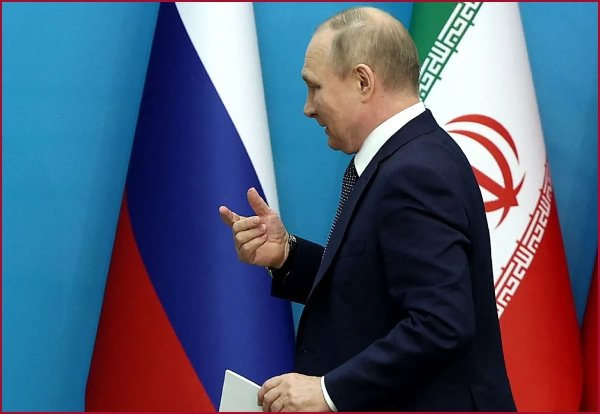
Can Moscow host Africa under drone threat? As Moscow prepares to welcome African leaders to the third Russia-Africa Summit on October 28 to 29, Ukrainian drone strikes have reportedly hit Yandex data centres and targeted the capital region, exposing a delicate contradiction at the heart of the gathering. Russia pitches itself as Africa’s security partner while its own infrastructure proves vulnerable. In this opinion piece, analyst Joseph McCarthy examines the security dilemma facing both Moscow and African governments, arguing that leaders weighing the trip must confront a deeper question: what does it mean to tie your nation’s safety to a partner that is itself under sustained attack? Read the full article below.
Yandex Strikes: Can Moscow Host Africa Under Drone Threat?
Moscow pitches itself as Africa’s security partner while its own infrastructure is exposed
By Joseph McCarthy · Analyst, Sahel governance & security
| 3YANDEX DATA CENTRES REPORTEDLY STRUCK, 8–11 OCT | 650DRONES STRUCK MOSCOW REGION, 6 OCT | 28–29 OctTHIRD RUSSIA-AFRICA SUMMIT, MOSCOW |
Every summit is a performance of strength. The third Russia-Africa Summit, due in Moscow on 28 and 29 October, is meant to show African leaders that Russia remains a confident, well-connected partner despite sanctions, isolation and a costly war. Between 8 and 11 October, Ukrainian drones complicated that script. Three data centres operated by Yandex, the technology giant behind much of Russia’s digital economy, were reportedly struck in the Ryazan, Kaluga and Vladimir regions. For Moscow and for its African guests, the episode poses a security dilemma that no communiqué will resolve.
The first attack, on the night of 7 to 8 October, reportedly set fire to a facility in Sasovo, in Ryazan region, and suspended operations. A second strike hit a site in Kaluga; a third, in Vladimir region, followed on 11 October. Yandex runs payments, email, navigation, ride-hailing, delivery and cloud computing, so the effects spread quickly. Meduza reported disruptions to Yandex Pay, Mail, Disk and Go, while businesses that depend on Yandex Cloud described outages of their own. One user told the outlet: “All my money is on Yandex, so I have no money for food.” The company says customers’ funds are safe, but the episode shows how one point of failure can become hardship for ordinary people within hours.
Recovery may be slow. Reports suggest that replacing specialised equipment could take months, and Russian officials have reportedly acknowledged the difficulty. That matters beyond one company. Moscow has spent years encouraging reliance on domestic platforms as Western technology withdrew. The Yandex strikes show that domestic ownership is not the same as security. Technological sovereignty also means being able to protect, maintain and restore systems under attack.
Moscow will call such strikes aggression against civilian targets. Yet they come after years of Russian missile and drone attacks on Ukrainian cities and energy infrastructure, so the exposure Russia now faces cannot be separated from the war it chose to launch. That context does not make the risk to visitors any smaller; it explains why it is unlikely to disappear before the summit.
Here lies the first half of the dilemma, and it is Moscow’s. Hosting African leaders in the capital is a statement of confidence, but it also puts that confidence on display. Russia must keep airspace open, transport moving and digital systems running while the war reaches ever deeper into its territory. On 20 September, roughly 450 drones were reportedly aimed at the capital; on 6 October, around 650 struck the Moscow region. Every intercept shows that defences work. Every strike that lands, and every airport closure, suggests the opposite. The summit cannot merely proceed; it must avoid becoming a showcase for exposure. Moscow will almost certainly respond with heavy security, restricted airspace and tightly managed movement. That may protect delegates, but it also turns the gathering into a fortress, held in spite of the war rather than in a country at ease with itself.
None of this proves that Russia cannot protect the summit. Vulnerability to long-range drones is not the same as losing the ability to defend territory, and the more widely a country’s civilian and commercial infrastructure is distributed, the harder it is to shield. Delegations may well land, meet and leave without incident. But that is a probability, not a guarantee, and guarantees are precisely what Russia is selling.
That brings us to the second half of the dilemma, which belongs to African governments. The immediate question is personal safety. In early September, Air Tanzania suspended its Dar es Salaam to Moscow route after a risk assessment, then resumed it days later. Further attacks could prompt airspace restrictions, diversions and tighter security that complicate movement between airports, hotels and venues. These are scenarios, not confirmed disruptions, yet every government weighing the trip must price them in, including the level at which it chooses to be represented.
The deeper question is strategic. Security cooperation is the core of Russia’s offer to Africa: Moscow says it has military agreements with more than 40 African states, and Russian security personnel are embedded in countries such as Mali and the Central African Republic. Governments that rely on that protection are tying their own security to a partner that is itself under sustained attack. A security provider at war is also a provider that is stretched, distracted and targeted. The more a government leans on Russia to guarantee its safety, the more it imports the risks of Russia’s war.
“The more a government leans on Russia to guarantee its safety, the more it imports the risks of Russia’s war.”
Call it a dilemma of dependence. The relationship meant to be a source of protection can become a channel for exposure, and the closer the embrace, the harder it is to step back.
What should African governments do? Engage, but with open eyes. They can ask for written security and contingency arrangements for their delegations, diversify their security partnerships so that no single patron’s vulnerability becomes their own, and insist that cooperation strengthens national institutions rather than simply protecting incumbent governments. Strategic autonomy means having choices. It does not mean choosing between Moscow and everyone else, or accepting one patron’s risks as the price of its protection.
The Kremlin wants the summit to show that sanctions have not isolated Russia. The Yandex strikes complicate that message without defeating it. They pose a simple test for any partner who offers security: can it secure itself? The answer will not come from speeches in Moscow. It will come from whether the summit runs smoothly, and from what follows. Until then, African leaders have every reason to listen politely, travel carefully and commit slowly.
■
Joseph McCarthy is an analyst and researcher specialising in governance, security and political transitions in the Sahel. He writes on geopolitics, development and African diplomacy. joecarthy30@gmail.com
Perspectives
Policy Brief: ‘A Test of Agency: Ghana’s BRICS Application and the Future of Strategic Diversification’ | By Col Festus Aboagye (rtd)
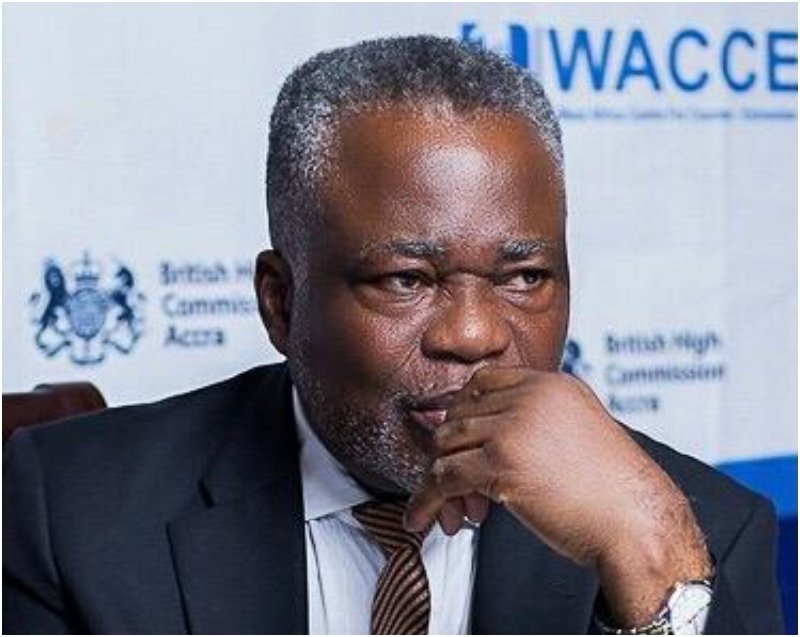
Ghana’s proposed BRICS membership has generated considerable debate. Yet the issue is often presented as a binary choice between traditional Western partnerships and emerging powers.
In ‘A Test of Agency: Ghana’s BRICS Application and the Future of Strategic Diversification’, Colonel Festus Aboagye (Retired) argues that a more useful lens is strategic agency: Ghana’s capacity to choose, manage, and, where necessary, disengage from external partnerships to pursue its national interests.
The brief explores the potential benefits, risks, and policy choices surrounding BRICS engagement. It offers a framework for evaluating future commitments through the lenses of accountability, transparency, sovereignty, and strategic flexibility.
‘A Test of Agency: Ghana’s BRICS Application and the Future of Strategic Diversification’ | By Col. Festus Aboagye (rtd)
Ghana’s decision to seek BRICS membership is a significant foreign-policy initiative. Public discussion has tended to fall into two camps. One sees BRICS as an escape from excessive dependence on Western institutions and markets.
The other sees a step towards alignment with China, Russia and other emerging powers. Both could be oversimplifications. The more important question is whether participation would strengthen Ghana’s strategic agency: its ability to choose, scrutinise, alter and, where necessary, exit external partnerships in pursuit of national interests.
This brief argues that the application is best understood as a test of agency rather than alignment.
- An announcement, not yet an application. On 6 October 2026, Ghana announced a Cabinet decision to apply. On the available evidence, no formal application had been submitted by 10 October 2026.
A forum, not an alliance or a common market. BRICS confers no automatic trade preferences, finance or security guarantees. Most gains would depend on agreements with individual members and institutions.
The benefits lie in diversification, not replacement. Membership could broaden Ghana’s partners, strengthen its bargaining position, and provide a platform to push for global governance reform.
The risks are real but conditional. They include new dependency, fiscal exposure, technology lock-in, diplomatic pressure, and reactions from Western partners, including a United States tariff threat.
Outcomes, not symbolism. Membership should be judged by whether it broadens options, strengthens leverage and preserves accountability.
Click here to read the full article.
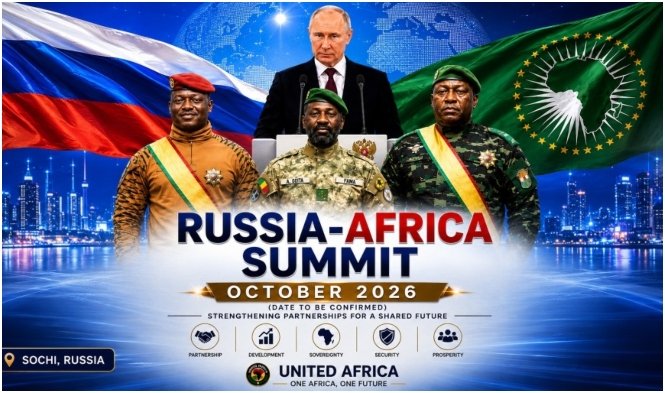
As Moscow prepares to host the third Russia-Africa Summit on 28–29 October 2026, the gathering arrives at a moment of heightened scrutiny. Nearly five years into its war in Ukraine, Russia is seeking to prove that its partnerships with African states have survived Western sanctions and remain strategically valuable. But the deeper question is what Africa gains in return. Drawing on trade figures, security partnerships in the Sahel, and the intersection of military cooperation with resource interests, this analysis by Joseph McCarthy examines whether the relationship is genuinely reciprocal or whether Africa is becoming an increasingly important source of the political influence, strategic resources, and economic resilience that Moscow needs to sustain its own geopolitical ambitions. Read the full article below.
Russia-Africa Summit: The Search for Resources, Influence and War Resilience
As the Ukraine war deepens Russia’s search for strategic resources, political allies and economic resilience, the third Russia-Africa Summit raises a difficult question: what does Africa gain in return?
Russia’s renewed engagement with Africa should be understood against the backdrop of a war in Ukraine that has become a test of Moscow’s economic, military and political endurance. Since the invasion of Ukraine, Russia has faced extensive Western sanctions, restrictions on trade and finance, and increasing pressure on the sources of revenue that sustain its war effort. In this environment, Africa has acquired a significance that extends beyond traditional diplomacy. The continent offers Moscow political partnerships, alternative markets, military cooperation and, critically, access to valuable natural resources and potential revenue streams that can help Russia withstand external pressure.
This helps explain the evolution of the Russia-Africa summits. The first summit, held in Sochi in 2019, was largely presented as an effort to rebuild and institutionalise Russia’s relationship with Africa, with trade, investment, security and political cooperation at the centre of the agenda. By the time of the second summit in St Petersburg in 2023, however, the geopolitical context had changed dramatically. Russia was already deep into its war in Ukraine and under extensive Western sanctions. The summit therefore served not only to deepen economic and political relations but also to demonstrate that Moscow remained capable of maintaining significant partnerships outside the Western bloc.
The third summit schedule on 28-29 October 2026, comes at an even more consequential moment. Russia is seeking to demonstrate that its relationship with Africa has survived the prolonged Ukraine war and remains capable of producing strategic benefits. The question for African governments should increasingly be whether the relationship is producing comparable benefits for them. Moscow’s partnership with Africa cannot be assessed only through diplomatic declarations, military agreements or high-level summits. It should also be judged by what African states receive in return and by what Russia gains from the relationship.
One of the most important areas to examine is natural resources. Russia’s interest in Africa is not simply about obtaining diplomatic support. Access to gold and other strategic commodities can provide alternative sources of revenue at a time when Moscow is seeking to reduce the impact of Western sanctions. Gold is particularly important because it can be traded through opaque networks and converted into revenue outside conventional financial channels. The U.S. Treasury has previously linked Wagner-associated gold operations in Africa to the financing of the group’s activities, including its operations in Ukraine. This does not mean that every Russian engagement with an African resource-producing state is designed to finance the Ukraine war.
It does, however, demonstrate why African resources can have strategic value for a Russia seeking to sustain its power and resilience under sanctions. The same logic extends beyond gold. Russia has increasingly shown interest in energy and critical raw materials, while its security partnerships in countries such as Mali and the Central African Republic have created relationships in which military and political cooperation can intersect with economic and resource interests. The emerging model therefore deserves closer scrutiny, Russia provides security assistance and political backing, while gaining influence, commercial opportunities and potentially privileged access to resources.
Mali provides one of the clearest case studies. Russia’s military presence in the country began with the arrival of Wagner personnel in 2021 and subsequently evolved into the Africa Corps structure. Moscow has presented this relationship as an alternative to Western security partnerships and as evidence of Russia’s willingness to assist African states in defending their sovereignty. Yet the relationship also raises a fundamental question: what does Russia receive in return for its military and political support?
That question becomes particularly important when the wider context of the Ukraine war is considered. If Russia can secure access to gold and other strategic resources, strengthen relationships with resource-rich governments and establish alternative economic channels, those relationships can help Moscow mitigate the effects of sanctions and sustain its broader strategic capacity. The relationship should therefore not be viewed solely through the narrow lens of counterterrorism. It is also part of a wider contest over resources, influence and economic resilience.
The economic figures contained in the summit case study reinforce the need to ask what kind of partnership Moscow is actually building. At the 2019 Sochi summit, Vladimir Putin announced a target of increasing Russia-Africa trade to $40 billion. According to Russian data cited in the document, trade stood at $27.7 billion in 2025, while Russia accounted for less than 1 percent of foreign direct investment in Africa. These figures do not prove that Russia’s Africa strategy has failed, nor do they capture every form of strategic value that Moscow derives from the continent. If Russia’s conventional economic footprint remains relatively modest, why is Moscow investing so heavily in strategic relationships with African states? One answer is that the value of Africa to Russia cannot be measured by trade and investment alone. Political influence, military access, diplomatic support, alternative markets and access to natural resources can all have strategic value. For a country fighting a prolonged war under sanctions, these forms of influence can become as important as conventional economic indicators.
This is why the third Russia-Africa Summit should be examined as more than another diplomatic gathering. Moscow wants to use the summit to demonstrate that its partnership with Africa remains strong despite the Ukraine war. The circumstances surrounding the meeting expose the tension at the heart of that claim. African officials are being asked to travel to Moscow while Ukrainian drone attacks have repeatedly disrupted air traffic around the Russian capital. On September 20 an attack involving more than 450 drones caused fresh disruption in the Moscow region, while Air Tanzania temporarily suspended its Moscow route following a risk assessment. The irony is difficult to ignore. Russia presents itself as a security partner for Africa, yet some African officials must consider their own security when travelling to the Russian capital. More importantly, African governments must now assess whether the strategic benefits of their relationship with Moscow justify the risks and costs associated with it.
For Ghana, this calculation is particularly important. The security consequences of Russia’s growing involvement in the Sahel cannot be separated from Ghana’s own national and regional security interests. A source close to the Ghanaian delegation cited in the summit document questions whether the relationship is genuinely “win-win” and points directly to the deteriorating security situation in the Sahel and its spillover towards Ghana’s northern borders. This should concern African governments is Russia’s engagement with Africa primarily delivering security and development benefits to African states, or is Africa increasingly becoming an important source of the political influence, strategic resources and economic resilience that Moscow needs to sustain its own geopolitical ambitions?
The answer is unlikely to be simple. Russia’s relationship with Africa serves multiple purposes, and resource access is only one component of a broader strategy. But the Ukraine war has changed the calculation. What may once have been presented principally as an effort to expand trade, investment and diplomatic relations now also has to be viewed through the lens of Russia’s need to preserve strategic autonomy, withstand sanctions and maintain the capacity to wage a prolonged war.
The third Russia-Africa Summit therefore represents a test not simply of whether African leaders will continue to engage Moscow, but of whether Russia can convince them that this engagement is genuinely reciprocal. For African states, the critical question is no longer whether Russia wants a deeper relationship with Africa. It clearly does. The more important question is what Moscow needs from Africa, what Africa receives in return, and whether the balance between the two is becoming increasingly unequal.
Joseph McCarthy is an analyst and researcher specialising in governance, security and political transitions in the Sahel. He writes on geopolitics, development and African diplomacy. joecarthy30@gmail.com


Funding Fears Loom For Ghana’s Life-Saving Malaria Vaccine Five Years After Roll Out

‘There was a Coordinated Disclosure Plan’: AI-Discovered Flaw in PHP Triggers Global Internet Chaos as Cybercriminals Race to Exploit It

Yandex Strikes: Can Moscow Host Africa Under Drone Threat?
-
 Ghana News2 days ago
Major Sexual Abuse Scandal Rocks Ghana High School: Obuasi School Headmaster Sues Journalist for GH¢2 Million as Investigation Into Alleged Misconduct Widens
-
 Opinion2 days ago
Yandex Strikes: Can Moscow Host Africa Under Drone Threat?
-
 Global Update2 days ago
‘There was a Coordinated Disclosure Plan’: AI-Discovered Flaw in PHP Triggers Global Internet Chaos as Cybercriminals Race to Exploit It
-
 Ghana News2 days ago
Funding Fears Loom For Ghana’s Life-Saving Malaria Vaccine Five Years After Roll Out