
Arts and GH Heritage
‘Hair Has Always Been an Archive’: Meet Marianne Costade, the Artist Safeguarding Africa’s Cultural Memory

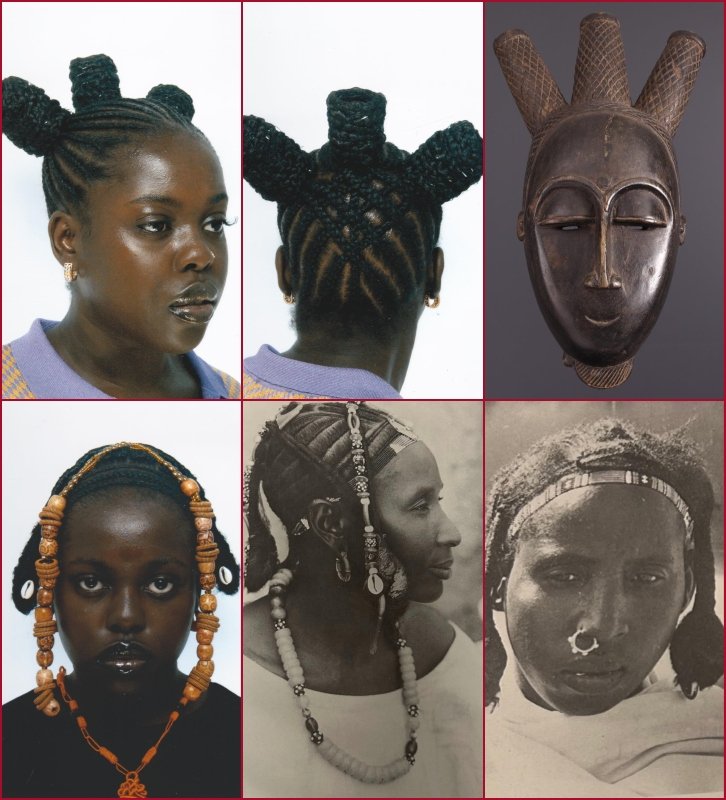
Artist Marianne Costade is using one of humanity’s oldest forms of expression to ensure an important part of Africa’s heritage is not forgotten.
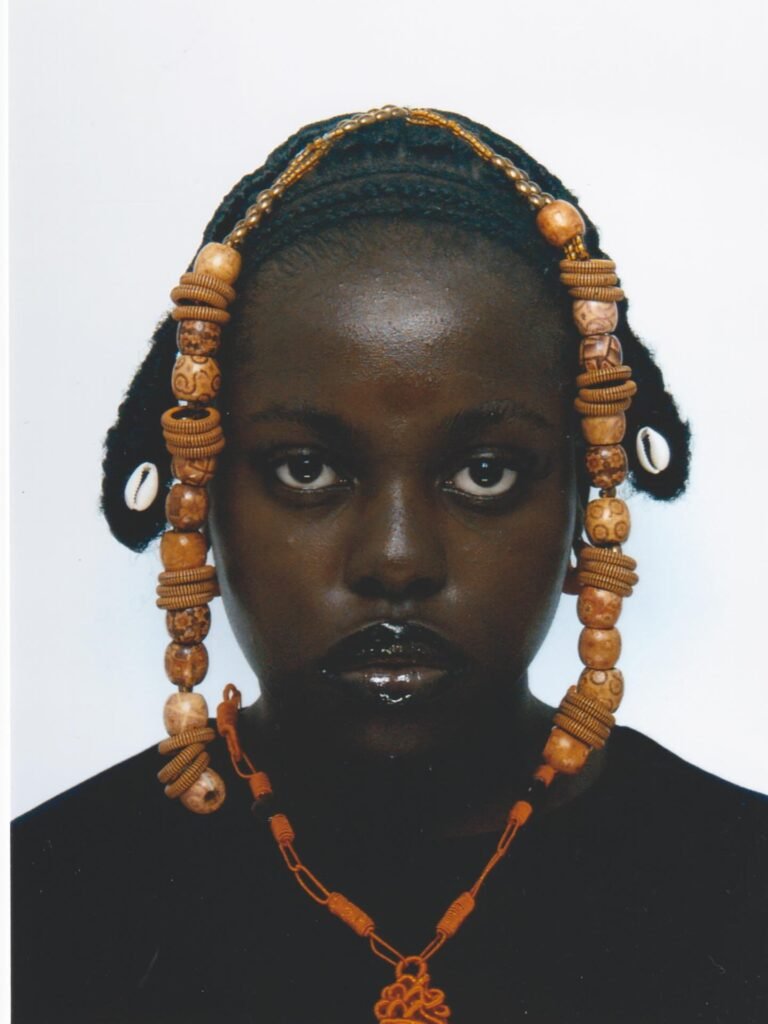
The Franco-Senegalese and Congolese visual artist has spent the last several years documenting traditional African hairstyles, transforming them into what she describes as a living archive of Black memory (you can see her works here).
Through photography, performance, and self-portraiture, Costade is preserving centuries of cultural knowledge encoded in hair—knowledge that colonialism, slavery, and cultural assimilation often sought to erase.
Her work has attracted growing international attention for highlighting a truth frequently overlooked outside the African continent: for generations, hairstyles have served as a language of identity, resistance, spirituality, and community.
An Artist Who Calls Herself an “Archaeologist of Black Memory”
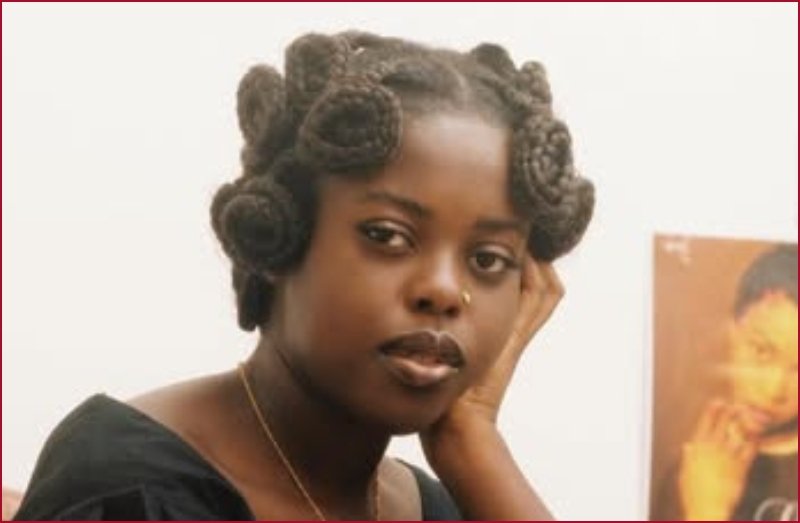
Costade refers to herself as an “archaeologist of Black memory,” a description that reflects the purpose behind her ongoing artistic project.
Since 2021, she has been systematically recreating traditional African hairstyles from different regions and ethnic groups, documenting each one through carefully composed photographs and artistic installations.
Rather than relying on historical illustrations or museum artifacts alone, Costade places herself at the center of the project, photographing her own body as both canvas and historical record.
Her self-documentation explores not only how these hairstyles looked, but also what they communicated.
Hairstyles That Tell Stories Across Continents
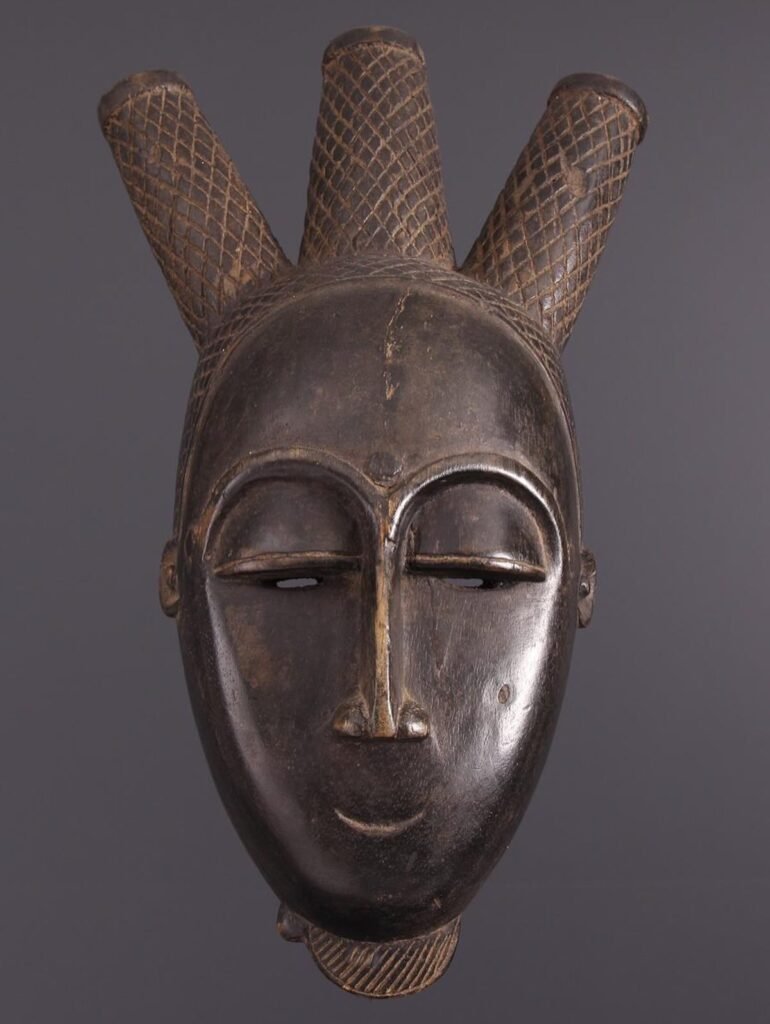
Among the styles Costade has recreated are the Yoruba Koroba hairstyle from present-day Nigeria, the Somala hairstyle associated with Madagascar, and intricate braided patterns inspired by so-called “map braids.”
According to longstanding oral histories, some enslaved Africans used braided cornrow patterns to symbolize escape routes, conceal pathways, or carry seeds that could sustain them during their search for freedom.
Whether marking social status, age, family lineage, spirituality, or acts of resistance, hairstyles often functioned as visual forms of communication long before written records documented many of these traditions.
Costade’s work seeks to recover those stories for contemporary audiences.
More Than Beauty
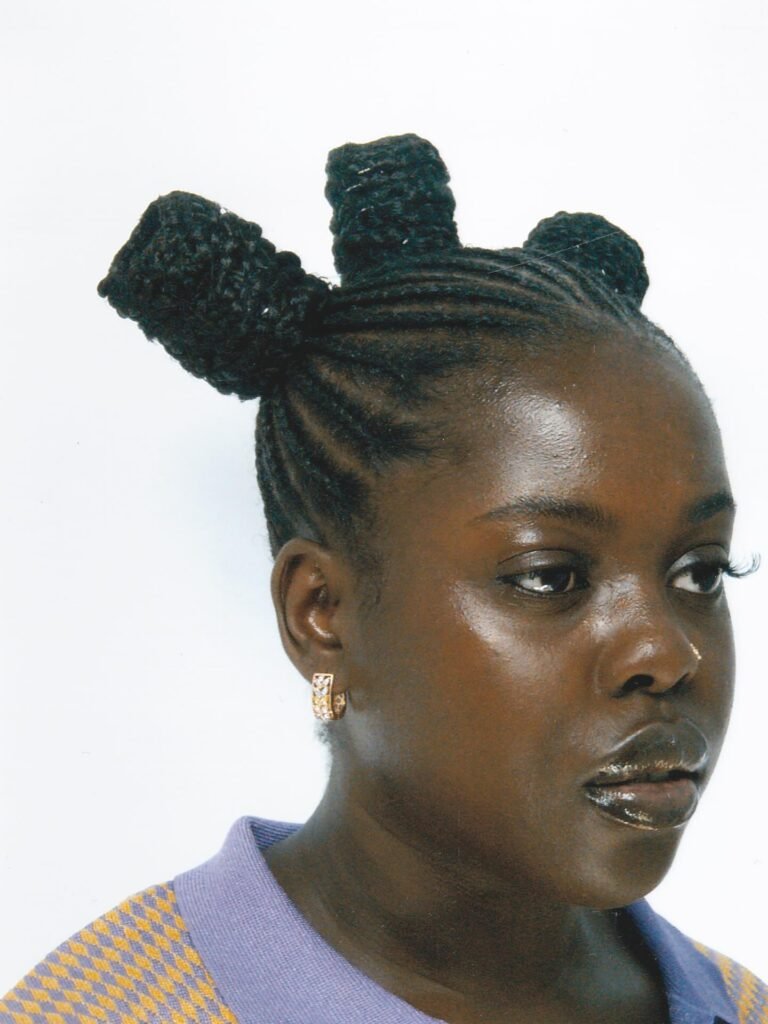
For Costade, hair is not simply a matter of fashion.
It is an archive.
Throughout African history, hairstyles have reflected cultural identity, celebrated important life milestones, and strengthened community bonds. Hair grooming itself has often been a communal ritual, with techniques and traditions passed from one generation to the next.
Her installations combine photography with live performance to recreate the intimacy of these practices, emphasizing that African hairstyling has always been deeply connected to care, belonging, and collective memory.
By placing these traditions inside galleries and cultural institutions, Costade invites audiences to view hairstyles with the same historical significance often reserved for paintings, manuscripts, or sculptures.
Preserving Heritage in an Era of Cultural Debate
Costade’s work arrives at a time when conversations about cultural identity, representation, and historical preservation are taking place across museums, universities, and public institutions worldwide.
As discussions continue over whose histories are documented—and whose are forgotten—her project offers a reminder that heritage exists in everyday practices as much as in written archives.
For many people of African descent, hairstyles have remained one of the most enduring links to ancestral traditions despite centuries of displacement and oppression.
Costade’s visual archive helps ensure those traditions remain visible for future generations.
A Living Record of Black History
Through every braid, sculptural style, and carefully recreated design, Costade is preserving more than artistic techniques.
She is documenting stories of migration, resilience, survival, and identity that have traveled across continents and generations.
Her work challenges viewers to reconsider African hairstyles not simply as cultural expressions, but as historical documents in their own right.
In doing so, Marianne Costade is helping ensure that an essential chapter of African and Black history continues to be seen, remembered, and celebrated around the world.








Arts and GH Heritage
When Second-Hand Clothes Become a Playground for Community
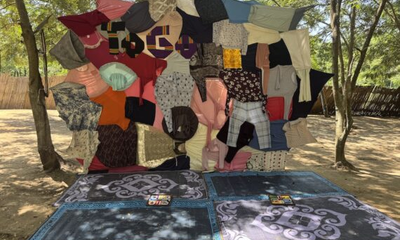
Using Broni Wawu garments purchased at a local market, Bamfo creates enclosed and open environments designed for participation rather than distant observation.

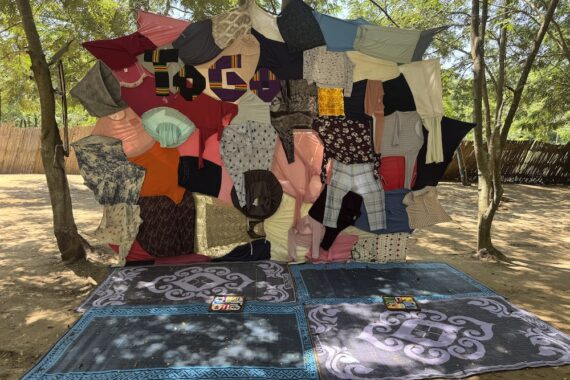
In Atakpamé, Ghanaian artist Dr. Frederick Bamfo transforms discarded garments into interactive spaces where children, cultural memory and collective play meet.
A discarded shirt can carry more than the memory of a former owner. In the hands of Ghanaian artist and academic Dr. Frederick Bamfo, it can become part of a place where children gather, games begin and strangers find reasons to connect.
His installation, The Games Feast, developed during the Karp Artists’ and Researchers’ Residency in Atakpamé, Togo, gives second-hand clothing a new social life.

Using Broni Wawu garments purchased at a local market, Bamfo creates enclosed and open environments designed for participation rather than distant observation.
The choice of material speaks to a familiar West African reality. Second-hand clothing circulates through markets, connecting consumers to international trade networks while raising questions about consumption, waste and the afterlife of textiles.
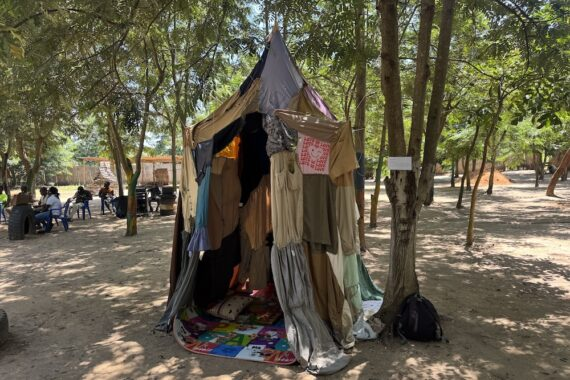
Often valued primarily for their usefulness or affordability, these garments become something different in Bamfo’s work: vessels of memory and possibilities for human connection.
The installation’s defining feature, however, is not simply its reuse of clothing. It is what happens inside these improvised spaces.
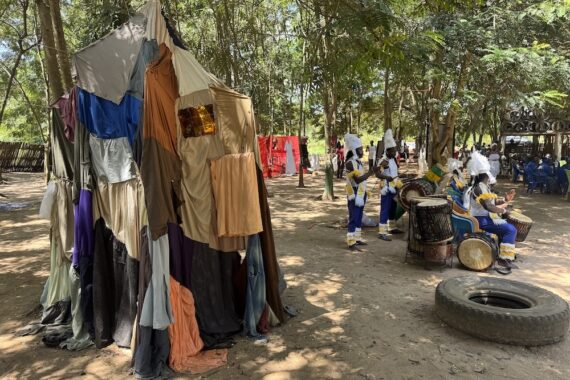
Children help shape the project’s collaborative spirit, while games such as ludo and oware, alongside dancing and skipping, turn the artwork into a setting for shared experience.
These activities draw on familiar forms of play that have long helped communities build relationships and pass cultural knowledge between generations.
Here, they also challenge conventional ideas of an art installation as something to admire without touching or entering.
For Bamfo, the transformation is both material and social. Clothing once associated with individual bodies becomes a collective environment, while everyday games become tools for participation.
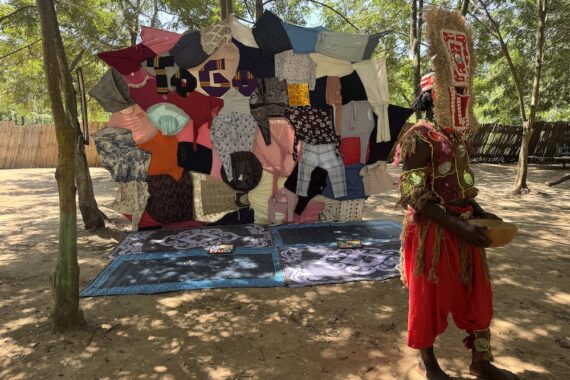
In Atakpamé, The Games Feast suggests that the most meaningful second life of a discarded garment may not be another wardrobe, but a space where people come together.
Arts and GH Heritage
Who Owns the Right to Be Called an Artist? A Debate in Togo Challenges the Rules of Art
From Ghana’s traditional craftsmen to self-taught street artists, creative excellence rarely follows a single road.
An artist may spend years in a university studio learning perspective, composition and art history.
Another may acquire the same confidence with materials through years of observation, experimentation and work passed down through generations. Which deserves greater recognition?
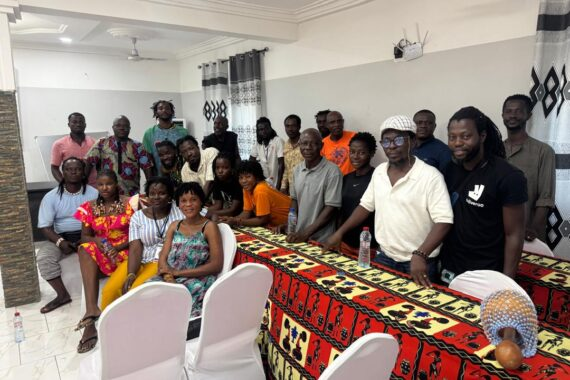
At Hotel Hong Kong in Atakpamé, Togo, this question became a starting point for a wider conversation about who gets to define artistic excellence.
Beyond the walls of the academy
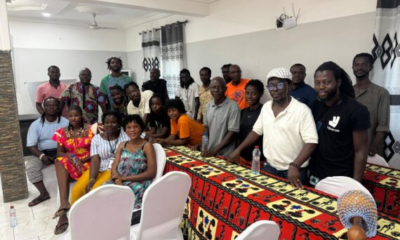
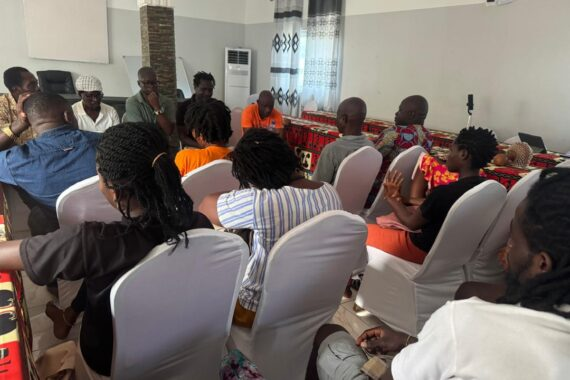
The panel discussion, organised as part of the ongoing Karp Kamina Artists and Researchers Residency, brought together Ghanaian artists Frederick Bamfo, Livingstone Amoako and Ray Agbo.
Moderated by Kojo Biney, with Samuel Olou, the residency’s director, translating into French, the conversation examined the opportunities and limitations of formal and self-directed artistic education.
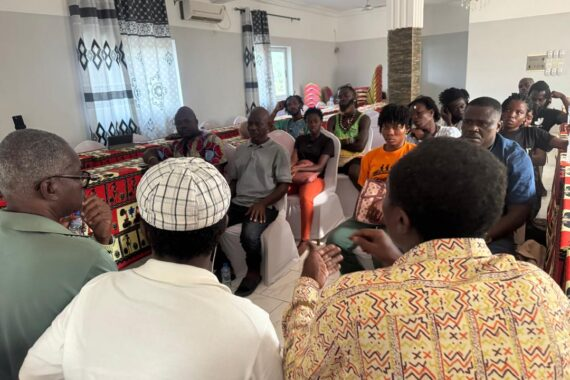
Art academies offer structured training, experienced mentors, studio facilities and access to professional networks.
Yet these advantages do not automatically produce originality. Outside institutional settings, artists often develop distinctive approaches through everyday encounters, community knowledge, apprenticeships and experimentation.
Ghana’s traditions offer another lesson
Ghana’s fantasy coffin makers illustrate why artistic knowledge cannot be measured by academic qualifications alone.
These craftspeople transform wood into elaborate forms representing professions, personal identities and family histories.
Their expertise is built through practical experience, inherited techniques and close relationships between makers and their communities.
Such traditions challenge institutions to reconsider what counts as legitimate artistic training and whose work deserves exhibition space, critical attention and commercial support.
Making room for different creative journeys
The discussion at Hotel Hong Kong did not present formal education and independent practice as opposing forces.
Instead, it highlighted the need for an art world that values technical knowledge without dismissing unconventional paths.
For African artists navigating galleries, museums and international exhibitions, that distinction matters.
Creativity may begin in a classroom, a workshop or on the street. The greater challenge is ensuring that opportunity does not depend solely on where an artist learned to create.
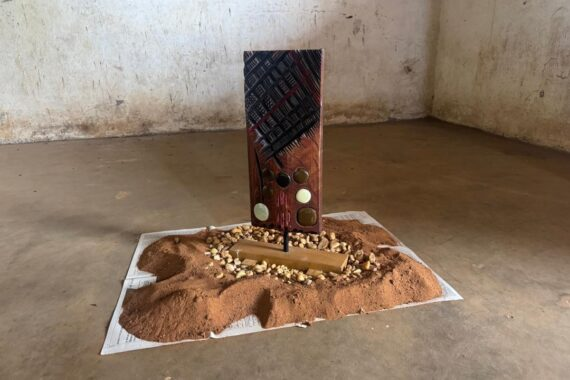
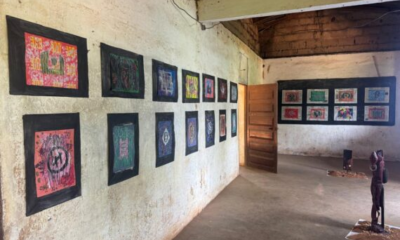
An old building can hold more than dust and silence. In Atakpamé, Togo, an abandoned German colonial structure is finding a new purpose as a space where African cultural expression challenges the weight of history.
Through Conversations: Symbolism and Lifestyle, Ghanaian artists Kojo Biney and Ray Agbo invite audiences to look afresh at the ordinary encounters that bind communities together.
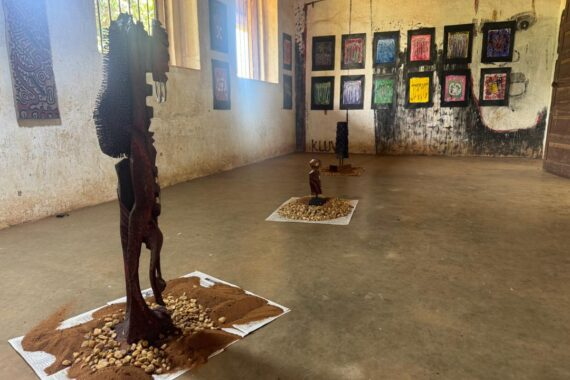
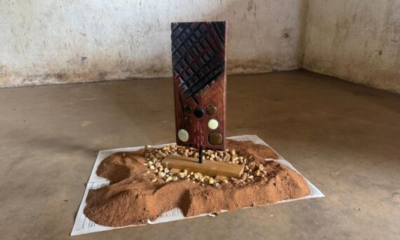
Their paintings and sculptures explore a language that often needs no words: the exchange of kola nuts, bargaining between market traders and customers, and the sharing of palm wine.
These gestures may appear familiar, yet each carries social meaning. They can express welcome, negotiate relationships, establish trust and pass knowledge between generations.
By bringing such moments into the gallery, the artists suggest that culture is not preserved only in museums or ceremonial performances. It lives in everyday interactions.
A building becomes part of the conversation
Presented during the Karp Kamina Artists and Researchers Residency 2026, the exhibition draws on Atakpamé’s cultural landscape, where Ana and Ewe-speaking communities meet. Known as the “city of seven hills”, the town provides a fitting setting for an exploration of identity and shared heritage.
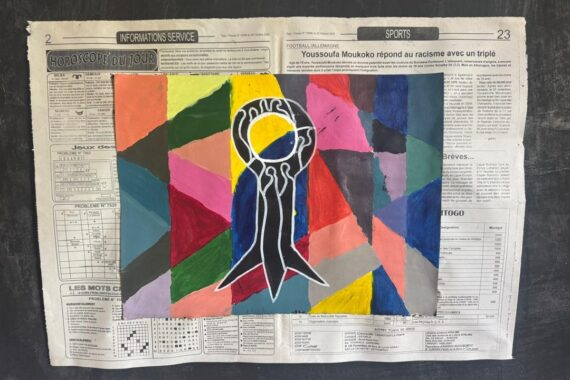
The installation also places paintings alongside newspaper pages, linking artistic interpretation with the ways public events and personal memories become part of the historical record.
Yet the building itself may be the exhibition’s most powerful statement. Once associated with German colonial rule, the structure now houses contemporary African perspectives. Its past is not erased; instead, it becomes part of the encounter.
For older visitors, the space may recall another era. For younger audiences, it offers an opportunity to question how history shapes the present.
As the exhibition closes on Friday, October 16, 2026, its lasting invitation is to recognise that heritage is not frozen in time. Like conversation itself, it remains alive through the meanings people continue to create and share.


Funding Fears Loom For Ghana’s Life-Saving Malaria Vaccine Five Years After Roll Out

‘There was a Coordinated Disclosure Plan’: AI-Discovered Flaw in PHP Triggers Global Internet Chaos as Cybercriminals Race to Exploit It
