
Festivals & Events
Where History Walks Again: Inside Saltpond’s Colourful Odambea Festival

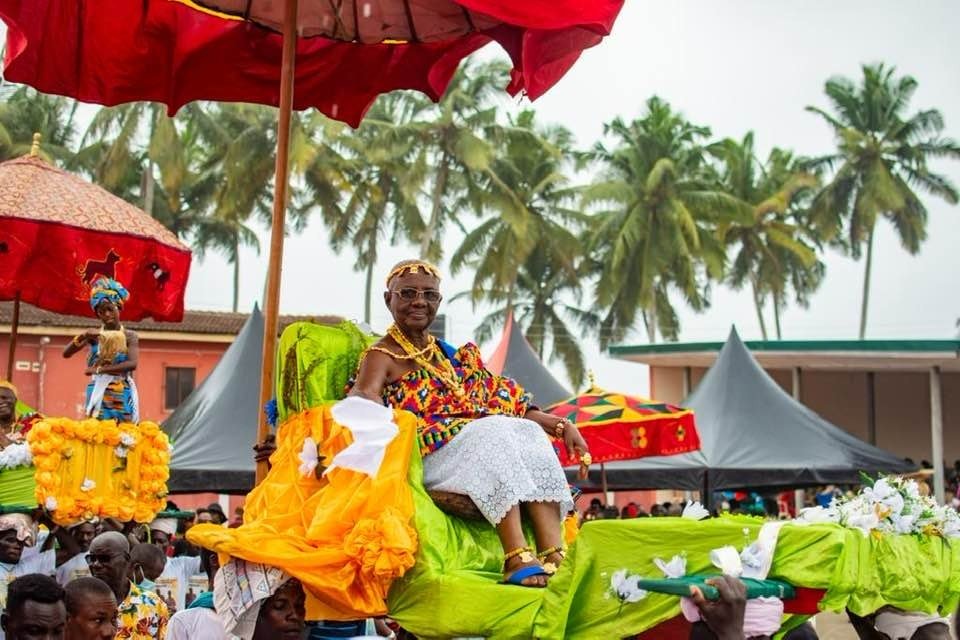
The streets of Saltpond burst into life long before the first ceremonial procession begins.
Drums echo through the coastal town, women wrapped in brilliant kente and traditional cloth move gracefully through cheering crowds, and chiefs adorned in gold ornaments are carried high in ornate palanquins.
The scent of local delicacies drifts through the air as songs celebrating ancestry mingle with the rhythmic beat of fontomfrom drums. For one unforgettable weekend every August, Saltpond becomes a living stage where history is not simply remembered—it is performed.
Celebrated on the last Saturday of August, the Odambea Festival is the most important cultural event of the Nkusukum Traditional Area in Ghana’s Central Region.
Its name, derived from the Fante expression meaning “crossing over” or “migration,” commemorates the remarkable journey of the Nkusukum people from their ancestral homeland to their present settlement in Saltpond.
More than a historical anniversary, the festival honours the courage, resilience, and unity that enabled an entire community to establish a new home.
The highlight of Odambea is the dramatic re-enactment of the migration itself. Participants recreate scenes from the ancestors’ journey, bringing centuries-old stories vividly to life.
Traditional warriors, elders and youth take part in colourful processions, while chiefs hold durbars where customary greetings, cultural performances and royal pageantry reinforce the authority of traditional leadership.
Throughout the celebrations, drumming, dancing, storytelling and the firing of ceremonial muskets create an atmosphere filled with excitement and pride.
Beyond the spectacle, Odambea remains deeply meaningful to the people of Saltpond. Families separated by distance return home for reunions, disputes are settled, friendships renewed, and younger generations learn the history that textbooks alone cannot fully capture.
The festival strengthens community bonds while preserving customs that continue to define Nkusukum identity in a rapidly changing world. Spiritually, it is also a time to honour ancestors whose sacrifices laid the foundation for today’s community.
For visitors, Odambea offers far more than colourful photographs or lively entertainment. It provides a rare opportunity to witness a community telling its own story through ceremony, music and shared memory.
Anyone hoping to understand Ghana beyond its landmarks will find that a journey to Saltpond during Odambea is an unforgettable encounter with the enduring power of heritage.








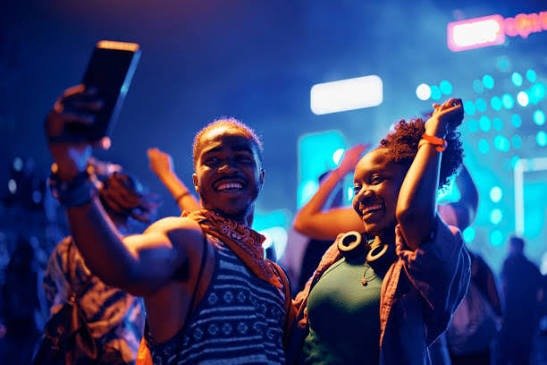
Pitch Accra sets the scene for a New Year’s Eve gathering that brings music lovers together as Ghana welcomes the first moments of 2027.
As the final hours of 2026 slip away, Accra will offer music lovers another reason to gather, celebrate and welcome a new year together. Compozers Fest Ghana Edition is scheduled for December 31, 2026, bringing the festive energy of New Year’s Eve to Pitch Accra.
Organised by December in Ghana, an events organiser with a growing following, the celebration offers an opportunity to experience Accra’s nightlife during one of the busiest periods on Ghana’s social calendar.
Music, Community and Celebration
Music has long been central to Ghanaian social life, accompanying celebrations, festivals and gatherings across generations. From highlife and hiplife to Afrobeats and contemporary African sounds, the country’s musical landscape reflects a continuing conversation between tradition and modern influences.
A festival held on New Year’s Eve provides a natural meeting point for these musical cultures and the people who enjoy them.
For Ghanaians returning home for the festive season, it offers another opportunity to reconnect with the city’s entertainment scene. International visitors can experience Accra’s year-end atmosphere alongside residents and members of the diaspora.
Although detailed information about the festival’s performers and programme has not been announced in the supplied listing, the event is scheduled to begin at 10 pm and continue into January 1, 2027.
Making New Year’s Eve Memorable
The venue, Pitch Accra, will host the gathering on Accra Road, Accra. Tickets also come with a Visa card promotion: eligible purchases receive 15 per cent back, with the refund processed within three to five working days after the event. The organiser states that tickets are non-refundable.
For visitors planning a festive-season trip, Compozers Fest Ghana Edition offers another event to consider when exploring Accra after dark.
As 2026 draws to a close, the celebration promises a chance to gather with friends, enjoy the city’s nightlife and begin 2027 in the company of fellow music lovers.

The steady beat of drums fills the air as singing voices rise and dancers bring the streets of Vane to life. In this town in Ghana’s Volta Region, November brings more than the promise of a successful harvest.
It ushers in the Amu Brown Rice Festival, a celebration that connects the rewards of the land with memories of a historic victory that secured the community’s present homeland.
At the heart of the festival is rice, a crop that represents both agricultural achievement and the value of collective effort. As families and community members gather to mark the harvest, the occasion becomes an opportunity to celebrate the work of farmers and recognise the importance of food production to local life.
Yet the festival’s significance reaches beyond the fields. Its commemoration of a victory associated with securing the community’s homeland gives the celebration a deeper historical meaning. It recalls the struggles and determination behind the community’s settlement, connecting present generations with the experiences that shaped their identity.
The festivities feature drumming, dancing and singing, bringing traditional expression to the centre of community life.
A durbar of chiefs provides an important gathering point, bringing traditional leadership into the celebration and reinforcing the relationship between heritage, authority and communal belonging.
For younger generations, the festival offers an opportunity to encounter local history through shared participation rather than words alone.
For visitors, it provides a glimpse of how agricultural seasons, historical memory and traditional leadership continue to shape cultural life in Ghana.
As communities navigate social change, celebrations such as Amu Brown Rice help preserve inherited customs while creating space for people to gather, reconnect and pass their stories forward.
For anyone exploring Ghana beyond its familiar tourist attractions, a November visit to Vane offers a chance to experience a living tradition in which the harvest is not simply food, but a reminder of history, resilience and belonging.
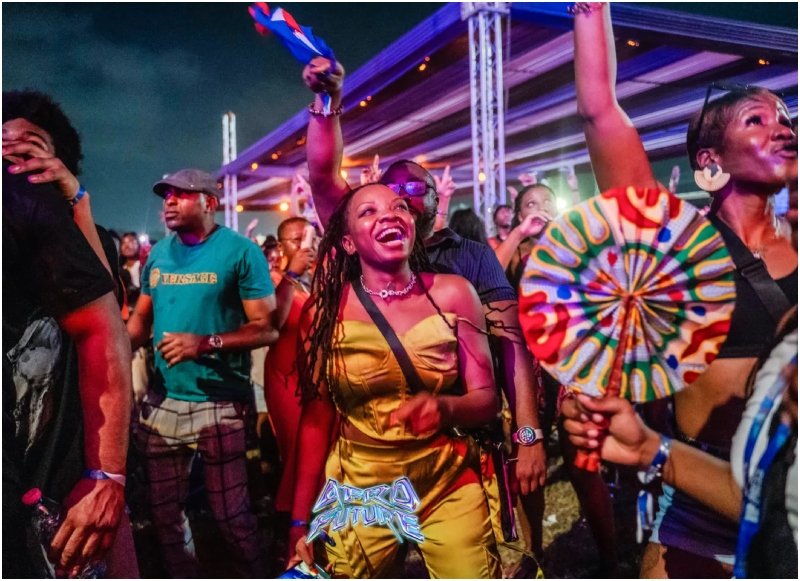
When Friday night arrives in Accra, the city comes alive with music, conversation and the irresistible pull of a good night out.
On November 13, 2026, The Turnup at Enzo invites partygoers to gather for an evening of entertainment, social connection and lively nightlife at Enzo Accra on Boundary Road.
Organised by AFROWAVE 2019, an event organiser with 32 events and more than 1,600 total attendees listed on Eventbrite, the gathering promises an in-person experience built around music, fun and good company.
Scheduled for 8 pm to 11:30 pm, the three-and-a-half-hour event offers an opportunity to enjoy Accra after dark.
While the event details do not specify particular performers, musical genres or food offerings, its central appeal is familiar to anyone who has experienced Ghanaian social life: the pleasure of meeting friends, discovering new faces and sharing music in a relaxed setting.
Accra’s nightlife forms an important part of its contemporary cultural identity, bringing together residents, returning members of the diaspora and international visitors.

From Afrobeats and highlife nights to modern DJ-led parties, music provides a common language across generations and backgrounds.
The Turnup at Enzo offers visitors an opportunity to experience this social side of the capital.
For tourists, it could be a chance to connect with Accra beyond its historic landmarks, markets and beaches. For locals, it offers another reason to step away from the week’s routines and enjoy an evening with friends.
With Enzo Accra providing the setting, the focus is on showing up, enjoying the atmosphere and making memories through shared experiences.
If you’re planning a Friday night in Ghana’s capital, The Turnup at Enzo is worth considering. Gather your friends, bring your energy and make room for an evening of music, connection and Accra nightlife.


Funding Fears Loom For Ghana’s Life-Saving Malaria Vaccine Five Years After Roll Out

‘There was a Coordinated Disclosure Plan’: AI-Discovered Flaw in PHP Triggers Global Internet Chaos as Cybercriminals Race to Exploit It
