
Africa Watch
Mali, Burkina Faso and Niger Launch $895M AES Regional Investment Bank

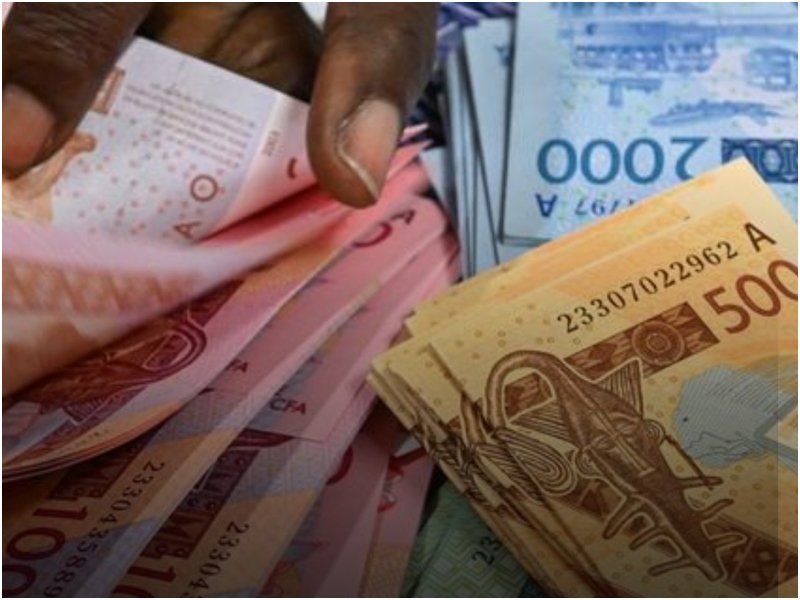
The military-led governments of Mali, Burkina Faso and Niger have jointly launched a new regional investment bank capitalised at 500 billion CFA francs (about US$895 million).
The move marks a major step in their effort to finance development independently following their withdrawal from the Economic Community of West African States (ECOWAS).
The bank, which is now officially operational, is designed to fund large-scale infrastructure, energy and agricultural projects across the three Sahel countries The three countries form the Alliance of Sahel States (AES), a political and military bloc after military takeovers in these countries. The bloc that broke away from ECOWAS aims for deeper integration, a unified military, and new economic structures.
The news regional bank is expected to pool resources from the three economies that are rich in natural assets. Mali and Burkina Faso are among Africa’s leading gold producers, while Niger holds some of the world’s most significant uranium reserves.
Speaking after the signing ceremony in Bamako, Burkina Faso’s Finance Minister, Aboubakar Nacanabo, described the initiative as a strategic necessity.
“Creating a development bank is a matter of financial stability, economic development and financing strategic projects,” he said, underscoring the bloc’s intent to take greater control of its economic future.
According to officials, the bank will be capitalized partly through domestic measures. The three governments plan to introduce new taxes to support the lender, with each country expected to contribute around 5% of its tax revenues. Serge Balima, an adviser to Burkina Faso’s junta leader Ibrahim Traoré, previously indicated that this approach reflects a deliberate shift away from dependence on foreign donors.
The launch of the bank comes amid mounting challenges in the Sahel, including political instability, climate stress and a widening Islamist insurgency. Mali, Burkina Faso and Niger have repeatedly accused ECOWAS of failing to adequately support their security efforts, a grievance that culminated in their exit from the regional bloc.
Mali’s Finance Minister, Alousséni Sanou, confirmed that the initial capital has been secured, allowing the institution to begin operations. He said the next phase will involve appointing the bank’s leadership and mobilising additional funding from within the region and beyond.
For observers across West Africa, including Ghana, the development signals a significant realignment in regional economic cooperation. While questions remain about governance, sustainability and investor confidence, the new bank represents a bold attempt by the three Sahel states to assert financial sovereignty and chart a new development path outside traditional regional structures.





Africa Watch
The West Africa Corridor’s Dirty Secret: Liberia’s Record Cocaine Bust Exposes State-Sanctioned Trafficking

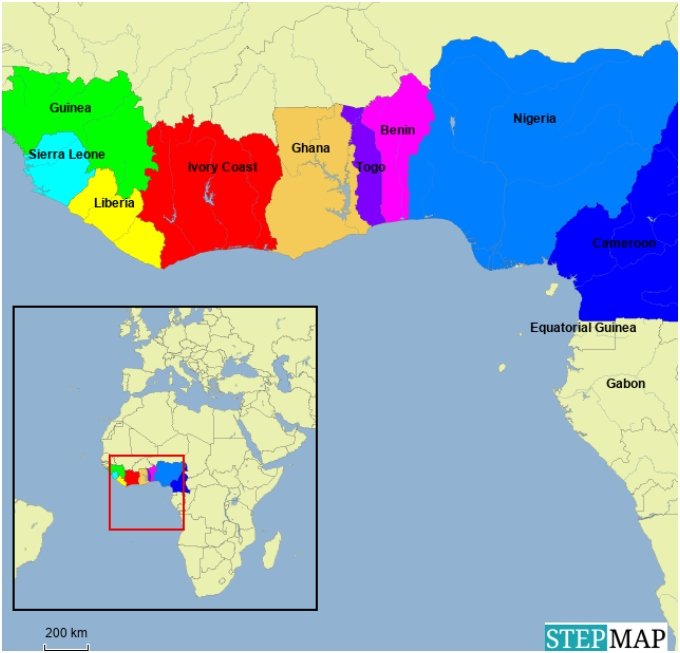
Two months ago, Liberian authorities made history. In a warehouse in Duazon, just outside the capital, they discovered nearly four metric tons of cocaine—an estimated $317 million street value—making it the largest drug bust in the nation’s history.
Days later, law enforcement agents publicly incinerated the haul alongside a smaller 237-kilogram seizure, sending a dramatic signal that Liberia was no longer “a place of comfort” for traffickers.
Yet, as the smoke cleared, a far more troubling reality emerged from the ashes. The investigation has moved deeper into Liberia’s security establishment, exposing a systemic rot that challenges the very narrative of a state successfully waging war on drugs. As Police Inspector General Gregory O.W. Coleman told a government press briefing: the Duazon operation was “definitely sanctioned by state actors at the very, very senior level” of government.
A Political Bombshell
The gravity of the scandal reached its peak on August 19, when authorities charged former Vice President Jewel Howard-Taylor—who served from 2018 to 2024—with drug trafficking, money laundering, criminal solicitation, and conspiracy. She was stopped at Roberts International Airport while attempting to leave for Ghana and taken into custody.
Justice Minister Oswald Tweh’s statement was emphatic: “There will be no selective justice, political protection, sacred cows or compromise with organized criminality.”
Yet Howard-Taylor’s office has vehemently denied the charges, framing the case as a “politically motivated witch-hunt and an abuse of state power,” and alleging that unnamed government figures may use artificial intelligence to fabricate evidence against her.
The Pipeline Within
While the former Vice President’s arrest captured global headlines, the investigation has also pulled back the curtain on a disturbing institutional problem. Senior police officers were allegedly not just passive bystanders but active facilitators. Coleman named the chief of highway patrol and the head of major crimes as having driven escort for the massive drug consignment, using police vehicles to move it from the shoreline to the stash house.
“We have identified key state actors who played a role in transporting, escorting the movement of these narcotic substance from the landing site to the holding ground using police vehicles as escort, one in the front, one in the back,” Coleman said.
A deputy commander at the airport was also identified as a key actor.
President Joseph Boakai has responded with sweeping administrative action, dismissing senior officials from airport security, the Liberia National Police, the National Security Agency, and the Liberia Drug Enforcement Agency. A deputy commissioner was dismissed after reportedly admitting to accepting a $10,000 bribe.
The Vanishing Suspects
Despite these actions, a troubling question remains unanswered: who is actually being held accountable?
The two foreign nationals arrested at the scene—a Serbian and a dual Colombian-Spanish citizen—have become the most visible faces of the investigation. Meanwhile, more than a dozen Liberian suspects named in writs of arrest have largely disappeared from public view, with little visible movement toward trial.
As one FrontPageAfrica analysis noted, “For the public, the answers remain unclear. The result is a widening perception that while the two foreign nationals are being visibly prosecuted, several Liberian suspects have effectively vanished from the case.”
This perception is particularly damaging given Coleman’s admission. If the country’s top police officer says senior state actors were involved, why does the visible face of justice remain largely two foreign nationals?
A Regional Crisis
Liberia’s situation is not an isolated incident but a glaring example of a wider continental problem. According to the Global Initiative Against Transnational Organized Crime, at least 30% of cocaine destined for European markets now passes through West Africa. The region has become a critical transit corridor, with smugglers exploiting porous borders and weak enforcement.
The report notes that large shipments of cocaine are supported by “protection systems provided by politicians, security officials, and armed groups,” where “territorial control and access to institutional cover make trafficking possible.”
This dynamic extends across the region, with Sierra Leone recently identified as a strategic hub for a route that saw a record 30-tonne seizure by Spanish authorities.
A Defining Moment
For Liberia, this scandal represents a critical test of institutional integrity. Anti-corruption group CENTAL has warned that dismissals alone are insufficient. “Narcotics of such quantity do not transit a country whose borders, seaports, and airports are functioning without compromises and collusive networks. This is a governance failure before it is a criminal one,” said CENTAL Executive Director Anderson Miamen.
The government has secured international support, with the U.S. Drug Enforcement Administration now working in-country alongside Liberian investigators.
However, the lingering questions about who orchestrated the operation and who remains protected will likely determine whether these actions are remembered as a decisive turning point or merely another episode in Liberia’s long struggle against organized crime.

Liberia has agreed to accept as many as 1,200 people deported from the United States, in one of the largest known arrangements between the Trump administration and an African country under its intensified immigration enforcement policy.
Liberian Information Minister Jerolinmek Piah announced the agreement Tuesday in Monrovia, saying the deportees will arrive over the course of a year. The first group, consisting of 20 people, is expected to arrive Thursday.
According to reports by AfricaNews, the agreement allows the United States to send people to Liberia who are not necessarily Liberian citizens.
“Those to be transferred from the United States of America to Liberia will include citizens or nationals of African and Western hemisphere countries who are medically authorized to travel,” Piah told reporters.
The arrangement represents a significant expansion of a Trump administration strategy that has sought to remove migrants from the United States even when their destination is not their country of origin.
Deportees may be from other countries
Under the agreement, Liberia could receive deportees from other African nations as well as countries in the Western Hemisphere.
The development is part of a broader U.S. effort to establish agreements with countries willing to receive migrants who have been ordered removed from the United States.
The Trump administration has reached similar arrangements with several African countries, with advocates raising concerns about the circumstances surrounding some deportations.
A particularly contentious issue involves migrants whose removal to their home countries has been blocked by U.S. immigration judges because they could face danger or persecution if returned.
Piah did not say whether any of the people expected to be transferred to Liberia have such protection orders.
Liberia says deportees can seek asylum
The Liberian government said those arriving under the arrangement will have options once they are in the country.
According to Piah, deportees may seek asylum in Liberia after their arrival.
He also said they would be free to leave Liberia whenever they choose.
Liberia will receive assistance from the United States to help manage the deportation program and strengthen the country’s migration system, Piah said.
The agreement therefore goes beyond simply accepting deportees. It will also involve U.S. support for Liberia’s ability to manage migrants and asylum seekers.
Part of Trump’s broader immigration crackdown
The agreement comes as the Trump administration continues its aggressive campaign to increase deportations and deter illegal immigration.
The administration has pursued agreements with countries willing to accept deportees who cannot or will not be returned directly to their countries of nationality.
Advocates have criticized the practice, particularly where deportations involve people who have sought protection in the United States or whose return to their home countries has been deemed unsafe.
The use of third countries can also create questions about what legal protections deportees will have after they arrive and whether they have meaningful opportunities to challenge their removal.
Liberian officials have not indicated that all 1,200 potential deportees have been identified, nor have they provided details about their nationalities, immigration histories or individual circumstances.
For now, the first test of the agreement is expected Thursday, when the initial group of 20 deportees is due to arrive in Monrovia.
The arrangement could ultimately make Liberia one of the most significant African destinations for people removed from the United States under the Trump administration’s evolving migration policy.
Africa Watch
Beyond the Music: Maxwell’s South Africa Cancellation Sparks Conversation About Celebrity Image

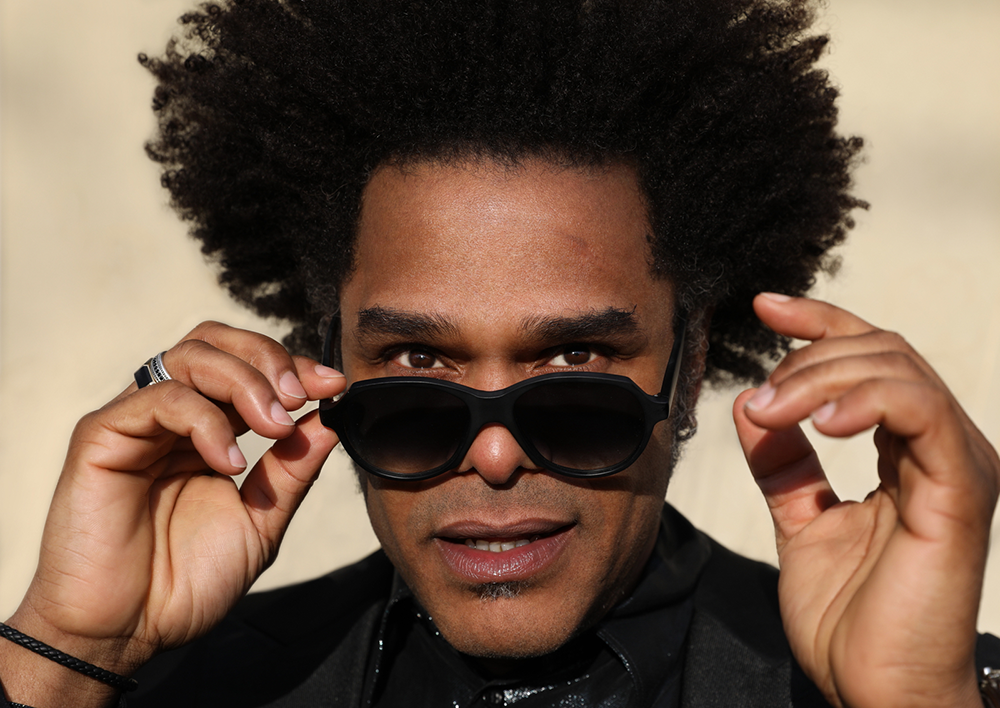
Sometimes the biggest fashion story is about the outfit that never makes it onto the stage.
The cancellation of Maxwell’s highly anticipated South African concerts has left thousands of fans disappointed, but it has also sparked a different conversation about the lasting influence of celebrity image.
The Grammy-winning R&B icon was due to perform at Pretoria’s SunBet Arena on 8 August and Cape Town’s Grand Arena, GrandWest on 11 August before announcing that “unforeseen circumstances beyond my control” had forced him to cancel both appearances.
Promoters later confirmed that Maxwell would not be travelling to South Africa at any point in 2026, with hopes now pinned on rescheduled dates in 2027.
For an artist like Maxwell, a concert has always been about more than the music. His carefully cultivated aesthetic—sharp tailoring, luxurious fabrics, understated jewellery and his unmistakable natural hair—has become inseparable from his artistic identity.
Long before “quiet luxury” became a fashion buzzword, Maxwell embodied refined elegance that never relied on excess. His wardrobe has consistently reflected the same qualities found in his music: confidence, restraint and timeless sophistication.
That visual identity helps explain why the cancelled performances feel like a cultural loss beyond the concert calendar.
Fans were preparing not only to hear classics performed live but also to witness an artist whose presence has shaped men’s style across generations.
His look has influenced performers, stylists and fashion-conscious audiences who appreciate clothing that speaks through craftsmanship rather than spectacle.
Online speculation has attempted to explain the cancellation, with some social media users questioning whether recent concerns about xenophobic tensions in South Africa played a role.
There is, however, no evidence supporting that claim, and neither Maxwell nor the event promoters have linked the decision to safety concerns. Until an official explanation emerges, the reason remains unknown.
What remains certain is that Maxwell’s influence extends beyond the stage. Even in his absence, his personal brand continues to remind the entertainment industry that true style is not measured by appearances alone, but by the lasting impression an artist leaves wherever their name is announced.


A Borderless Insurgency, a Divided Response: The ECOWAS–AES Security Dilemma

Ghana Positions Accra as West Africa’s Premier Aviation Hub with New Airport Hotels Complex

Canada Strikes Back: Ontario Cancels Musk’s Starlink Contract, Bans U.S. Firms from Provincial Deals in Retaliation for Trump Tariffs
-
 Ghana News2 days ago
Diplomatic Row: President Mahama and Israeli Ambassador Lock Horns Over Gaza
-

 Ghana News2 days ago
Top Headlines From Ghanaian Newspapers: Thursday, August 27, 2025
-
 Health & Wellness2 days ago
Your Calves Are Your Second Heart: The Travel Health Risk Too Many People Ignore
-
 Global Update16 hours ago
Canada Strikes Back: Ontario Cancels Musk’s Starlink Contract, Bans U.S. Firms from Provincial Deals in Retaliation for Trump Tariffs
-
 Ghana News15 hours ago
Ghana Positions Accra as West Africa’s Premier Aviation Hub with New Airport Hotels Complex
-

 Arts and GH Heritage2 days ago
The Tower of Discarded Things: How Teshie Turns Letting Go into a Festival Ritual
-

 Ghana News16 hours ago
Top Headlines From Ghanaian Newspapers: Friday, August 28, 2025
-
 Fashion & Style2 days ago
Joan Jade’s Bloom Collection Makes Raffia the Main Character of African Fashion