
Ghana News
7 Takeaways From Mahama’s 2026 State of the Nation Address

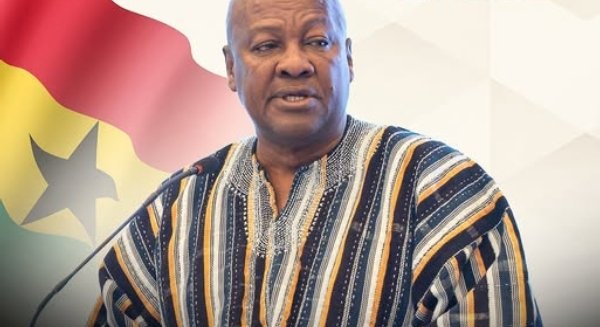
ACCRA — President John Dramani Mahama delivered his second State of the Nation Address since returning to office on Friday, February 27, 2026, before a full chamber of Parliament, diplomatic corps, and distinguished guests.
Against the backdrop of Ghana’s ongoing economic recovery and its repositioning on the continental stage, the address offered both a reflection on progress made and a roadmap for the years ahead.
Here are seven key takeaways from the President’s address with implications for Ghana and the broader West African region.
1. Economic Stabilization and the Path to Growth
President Mahama opened his address with a focus on the macroeconomic gains achieved since the depths of the 2022-2023 economic crisis. He reported that real GDP growth averaged 6.1 percent in the first three quarters of 2025, signaling a robust recovery from the downturn that had threatened to unravel decades of development gains.
Inflation, which peaked at alarming levels during the crisis, has been brought under control—declining sharply from 23.8 percent in 2024 to 3.8 percent in January 2026. This stabilization has translated into tangible relief for households, with the cost of living beginning to ease after years of pressure.
The President attributed this turnaround to disciplined fiscal management and the successful implementation of policies designed to restore confidence in the economy. He emphasized that sustaining this trajectory requires continued adherence to the fiscal consolidation path agreed upon with international partners.
Global significance: Ghana’s economic recovery serves as a test case for IMF-supported programs in West Africa. Success here could influence how other regional economies approach post-pandemic restructuring.
2. The Gold Board Revolution and Reserve Accumulation
A centerpiece of the address was the success of the Ghana Gold Board (GoldBod) in transforming the country’s approach to foreign exchange generation. President Mahama announced that in 2025 alone, GoldBod brought in approximately $10 billion in foreign exchange at a fraction of the cost of previous borrowing arrangements.
This achievement underpins the government’s ambitious Ghana Accelerated National Reserve Accumulation Policy (GANRAP), which aims to build international reserves equivalent to 15 months of import cover by the end of 2028—far exceeding the conventional three-month benchmark.
The President contrasted this approach with past practices, noting that between 2017 and 2024, Ghana borrowed $21.7 billion to support reserves at an interest cost of $3.84 billion. The GoldBod model, he argued, represents a sustainable alternative that leverages Ghana’s natural rather than its future revenue.
Global significance: As gold prices remain elevated amid global uncertainties, Ghana’s strategy offers a model for resource-rich developing economies seeking to build buffers without accumulating debt.
3. Energy Sector Transformation and the Gas-to-Power Agenda
President Mahama outlined ambitious plans to transform Ghana’s energy sector, which has historically been a drain on foreign exchange reserves. He announced the construction of a state-owned 1,200MW power plant and a second gas processing plant (GPP2) as part of a comprehensive Gas-to-Power Transformation Policy.
These investments aim to significantly reduce the approximately $3 billion annually that Ghana has historically spent on energy sector shortfalls and Independent Power Producer (IPP) payments. By developing domestic gas processing capacity, the government seeks to convert a persistent drain on reserves into a source of energy security and fiscal relief.
The President stated that these projects would be executed with transparency and efficiency, learning from the challenges that plagued previous energy sector initiatives.
Regional significance: Ghana’s energy transformation has implications for the entire West African Power Pool, potentially positioning the country as a net exporter of electricity to neighboring states.
4. Educational Reform and Human Capital Development
The address signaled a renewed focus on education as the foundation of long-term transformation. President Mahama announced initiatives to strengthen technical and vocational education, improve learning outcomes at the basic level, and expand access to tertiary education for qualified students from underserved communities.
Specific references to Free Senior High School policy adjustments suggested the Mahama administration is seeking to address implementation challenges while maintaining the program’s core commitment to expanding access.
The President noted that these investments are essential to preparing Ghanaian youth for the opportunities of the 21st century economy—both at home and in the context of increasing labor mobility across the African continent.
Continental significance: With Africa’s youth population booming, Ghana’s approach to education and skills development offers lessons for countries across the region facing similar demographic pressures and opportunities.
5. Infrastructure Development and Regional Integration
President Mahama spoke strongly about ongoing infrastructure projects designed to improve connectivity both within Ghana and with neighboring countries. Road and rail networks received particular attention, with the President explaining their role in reducing transportation costs, improving market access for farmers, and facilitating regional trade.
The address noted progress on key corridors linking Ghana to Burkina Faso, Togo, and Côte d’Ivoire—reflecting a commitment to the African Continental Free Trade Area (AfCFTA) vision of a seamlessly connected continent.
The President called on Parliament to expedite approval of infrastructure financing agreements, arguing that delays in project implementation cost the economy far more than the interest on borrowed funds.
Regional significance: Ghana’s position as a gateway to West Africa gives its infrastructure investments regional importance. Improved connectivity benefits landlocked neighbors and strengthens ECOWAS integration.
6. Digital Transformation and Governance Innovation
The address celebrated Ghana’s progress in digital governance, with the President announcing expansions to the digital addressing system, improvements in e-government services, and investments in broadband infrastructure to bridge the digital divide between urban and rural areas.
President Mahama positioned digital transformation as both an economic opportunity—enabling the growth of tech startups and digital services exports—and a governance imperative, reducing corruption through transparency and improving service delivery to citizens.
He called on the private sector to partner with government in building the digital ecosystem, stressing that the state cannot and should not attempt to drive digital transformation alone.
Global significance: Ghana has emerged as a leader in digital governance in West Africa. Its experience offers insights for other developing countries seeking to leapfrog traditional development pathways through technology.
7. Democratic Consolidation and Institutional Strength
In a section of the address clearly aimed at both domestic and international audiences, President Mahama reaffirmed his commitment to democratic governance, rule of law, and institutional strengthening. He praised Parliament’s role in scrutinizing government actions, acknowledged the independence of the judiciary, and committed to protecting the space for civil society and media.
The President’s acknowledgment of the formal parliamentary processes—from the arrival procession to the signing of the Parliamentary Album—reflected a deep appreciation for the institutional traditions that underpin Ghana’s democratic stability.
In a region where democratic backsliding has become a concern, Ghana’s continued commitment to constitutional governance carries weight beyond its borders.
Continental significance: As one of Africa’s most stable democracies, Ghana’s institutional health is watched closely across the continent. Signals of democratic strength in Accra resonate from Nairobi to Dakar.
The Ceremony: Tradition and Continuity
Beyond the policy content, the State of the Nation Address itself demonstrated the strength of Ghana’s democratic institutions. The formal procession, the Guard of Honour formed by the Ghana Air Force under Commander Flt Lt Obil Paa Kwesi Grant, and the presence of the full diplomatic corps all underscored the importance of this constitutional ritual.
The opening prayer, invoking divine guidance for “this Parliament of the Republic of Ghana,” and the singing of the national anthem situated the address firmly within both spiritual and pan-African contexts.
President Mahama’s appearance before the Ninth Parliament, Second Session, with Rt Hon Alban Sumana Kingsford Bagbin in the Speaker’s chair and His Lordship Justice Paul Baffoe-Bonnie representing the judiciary, reflected the continuity of Ghana’s constitutional order.
Looking Ahead
As President Mahama concluded his address, he returned to the theme that had opened it: the opportunity before Ghana to build on the stability achieved and accelerate toward transformation. The targets are ambitious—15 months of import cover, sustained growth, energy independence, educational excellence—but the President argued they are achievable with continued discipline and national unity.
The question now is whether the policy vision outlined in the address can be translated into implementation reality—a challenge that will test not only the executive but Parliament, the private sector, and the Ghanaian people themselves.







Ghana News
Independence Day Spending Scaled Down, CIA’s Role in Nkrumah’s Overthrow and Other Trending Issues in Ghana Today (March 6, 2026)

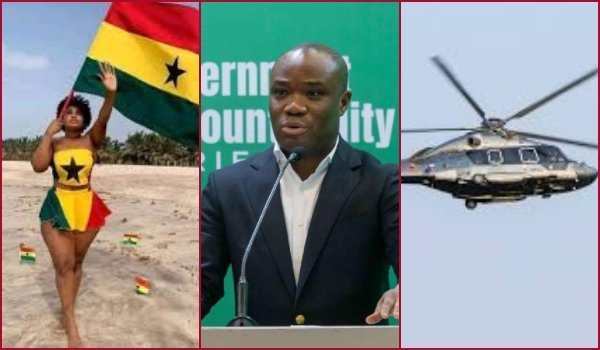
Welcome to our rolling news update from Ghana, bringing you the latest developments as they happen. Check back frequently for new additions as events unfold.
69th Independence Day Celebration Scaled Down to GH¢1.5m
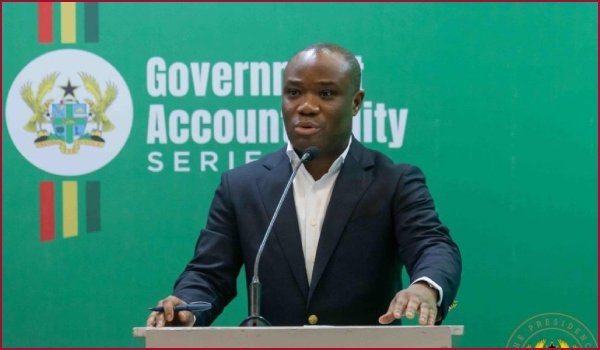
The government has significantly reduced the budget for Ghana’s 69th Independence Day celebrations to GH¢1.5 million, down from previous years, according to Minister of State for Government Communications Felix Kwakye Ofosu. Speaking on March 5, 2026, he explained the decision reflects fiscal discipline and a shift toward modest, meaningful observances focused on national reflection rather than extravagance. The scaled-down event at Black Star Square will still feature the traditional parade, presidential address, and cultural displays, but with streamlined logistics and no lavish spending.
Read the full story here
Today in History: Declassified Documents Show the CIA Orchestrated Nkrumah’s Removal – Mahama
President John Dramani Mahama has referenced declassified U.S. documents that reveal the CIA’s direct role in the 1966 coup that overthrew Ghana’s founding President Kwame Nkrumah. In remarks tied to Independence Day reflections on March 6, 2026, Mahama highlighted how external interference disrupted Ghana’s early post-independence trajectory. The documents, long sought by historians, confirm U.S. support for the National Liberation Council that toppled Nkrumah while he was abroad, underscoring ongoing debates about foreign influence in Africa’s liberation history.
Read the full story here
How US & China Are Fighting to Stop Ghana from Implementing New Gold Royalty Regime – Report
Ghana is facing intense diplomatic pressure from both the United States and China over its planned increase in gold royalties and local content rules for mining firms. A March 5, 2026, report reveals that Washington and Beijing—major players in Ghana’s mining sector—are lobbying against the changes, fearing reduced profits and influence. The proposed regime aims to boost state revenue from gold exports and strengthen local participation, but foreign governments argue it could deter investment. The tension highlights Ghana’s delicate balancing act between sovereignty and attracting FDI.
Read the full story here
Wa Serial Killer Reveals Motive Behind Killing Spree
The suspect in the Wa serial killings in the Upper West Region has confessed to the murders, citing personal grievances and revenge as motives. Police confirmed on March 5, 2026, that the man—arrested after a months-long manhunt—admitted to targeting his victims over disputes involving land, relationships, and perceived betrayals. The killings, which terrorised the Wa community, involved multiple stabbing incidents. Authorities say investigations are ongoing to establish full details and any accomplices.
Read the full story here
Police Announce Road Closures in Accra for 69th Independence Day Celebrations
The Ghana Police Service has announced major road closures in Accra on March 6, 2026, to facilitate smooth conduct of the 69th Independence Day national parade and related events. Affected routes include sections of Independence Avenue, Castle Road, and key arteries around Black Star Square and Jubilee House. Motorists are advised to use alternative routes, expect heavy traffic, and plan early travel. Security will be heightened, with checkpoints and restricted access zones in place.
Read the full story here
Ghana Air Force Welcomes First Airbus H175 Helicopter in Major Fleet Modernisation Drive
The Ghana Air Force has taken delivery of its first Airbus H175 helicopter, a significant step in its ongoing fleet modernisation programme. The aircraft, handed over on March 5, 2026, is equipped for multi-role missions including search and rescue, troop transport, and medical evacuation. The acquisition forms part of broader efforts to enhance air mobility, disaster response, and national security capabilities. Two more H175s are expected in the coming months.
Read the full story here
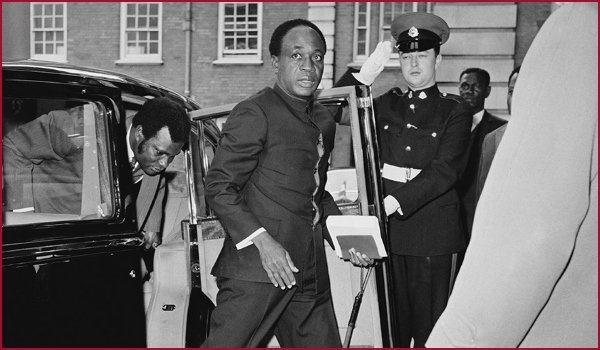
ACCRA — On March 6, 1957, Kwame Nkrumah stood before a jubilant crowd and declared Ghana “free forever.”
The first sub-Saharan African nation to shake off colonial rule, Ghana became a beacon of hope for a continent still in chains. Nkrumah was hailed as the liberator, the visionary, the man who proved Africans could govern themselves.
Nine years later, on February 24, 1966, those same streets of Accra erupted again—this time in celebration of his overthrow.
“I’d never seen such an explosion of joy,” recalls late former President of Ghana, Jerry John Rawlings, in a CGTN Africa documentary titled, Kwame Nkrumah: A Story of Vision and Tragedy.
The man who led Ghana to freedom had become, in the eyes of many, its captor.
Watch the insightful documentary in full below:
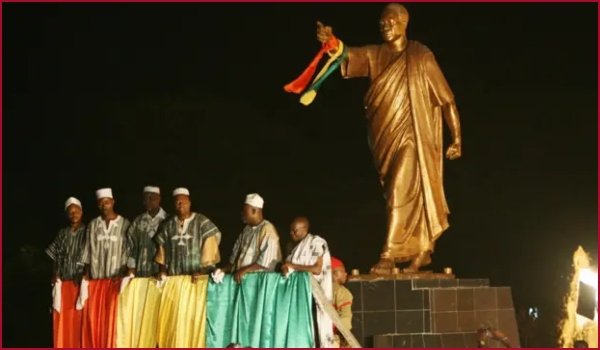
ACCRA, Ghana — As Ghana prepares to mark another Independence Day on March 6, archival footage and photographs from 1957 continue to capture the historic moment when the country became the first sub-Saharan African nation to gain independence from colonial rule.
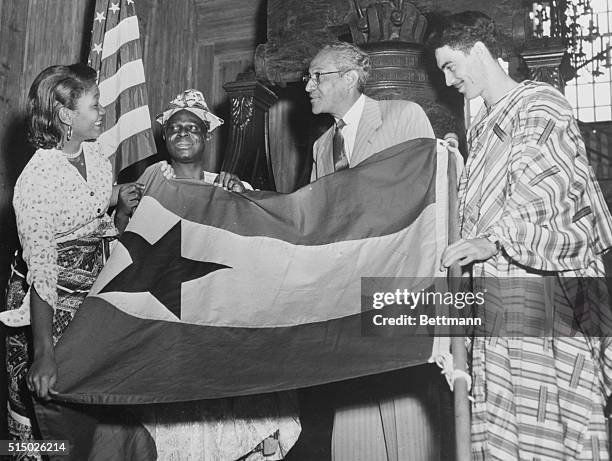
In the early hours of March 6, 1957, thousands gathered in Accra as the Union Jack was lowered and Ghana’s new red, gold and green flag with the black star was raised for the first time. The newly independent nation emerged from the former British colony known as the Gold Coast, symbolizing a turning point not only for Ghanaians but for liberation movements across Africa. Watch the video below:
At the center of the moment was Dr. Kwame Nkrumah, the country’s first prime minister, who declared in a famous address that the long struggle for freedom had ended and that Ghana was “free forever.”
The speech, delivered to massive crowds celebrating through the night, remains one of the defining moments in African political history. Watch another powerful archival footage from 1957 below:
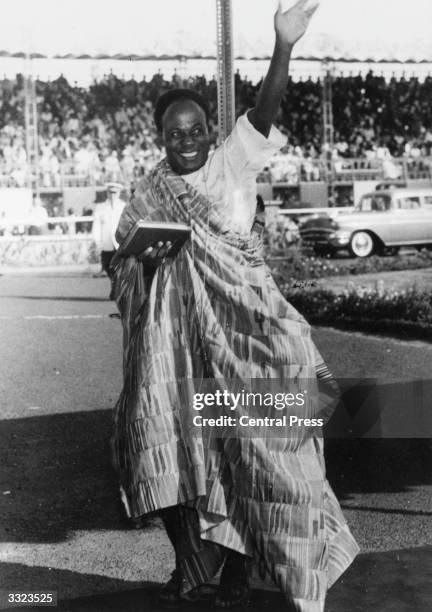
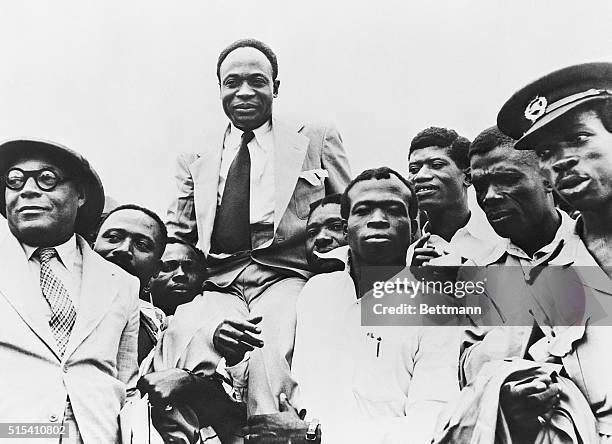
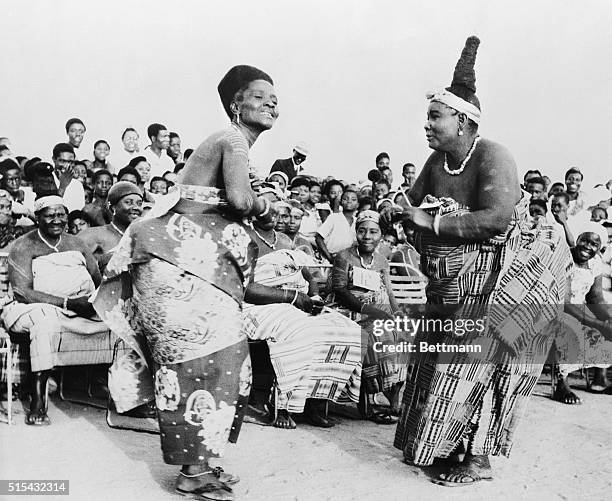
Historic Photos from Ghana’s Independence (Getty Images)
Getty archival photos from the period show jubilant crowds filling the streets of Accra, government officials carrying Nkrumah on their shoulders, and international dignitaries arriving to witness the birth of a new nation.
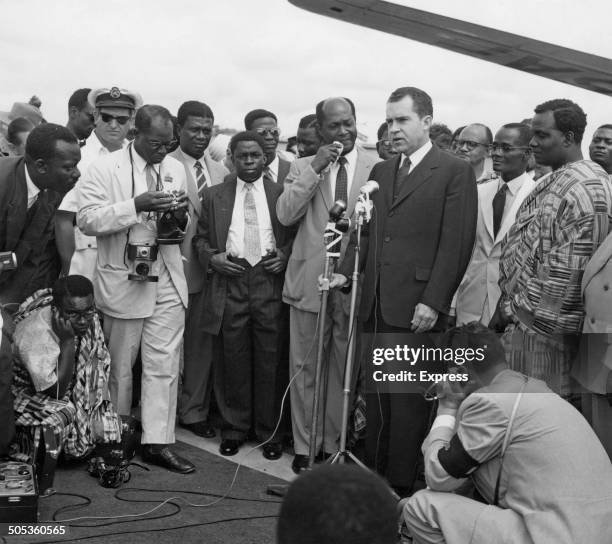
The celebrations drew global attention. Among those present were foreign leaders and diplomats, including then U.S. Vice President Richard Nixon, highlighting the international significance of Ghana’s independence.
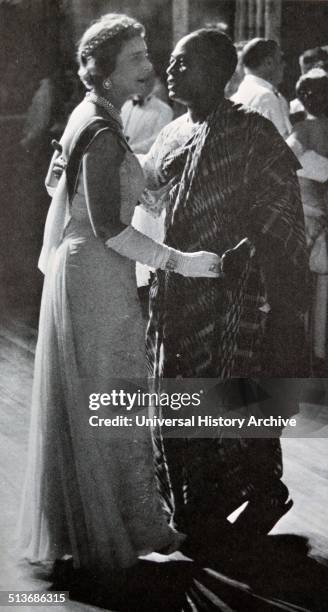
Other images from the period capture religious ceremonies, traditional dancing, and parades held across the capital as citizens celebrated the historic end of colonial rule.
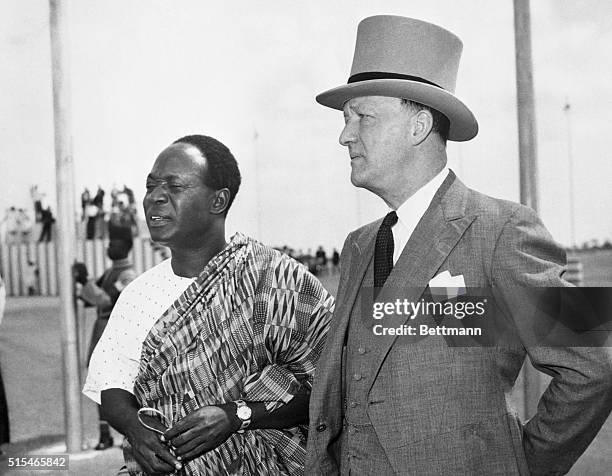
A Moment That Changed Africa
Ghana’s independence quickly became a catalyst for political change across the continent. Nkrumah championed Pan-African unity, and the country’s success inspired independence movements in several other African nations during the late 1950s and 1960s.
Today, landmarks such as Independence Square and the Black Star Gate in Accra, inscribed with “Freedom and Justice” and “AD 1957,” remain enduring symbols of the country’s sovereignty and national pride.
As Ghana commemorates its independence anniversary, the historic footage and photographs from 1957 continue to serve as powerful reminders of the moment when a nation — and a continent — stepped into a new era of self-determination.


Independence Day Spending Scaled Down, CIA’s Role in Nkrumah’s Overthrow and Other Trending Issues in Ghana Today (March 6, 2026)

Video: How Kwame Nkrumah, Ghana’s Founding Father, Became Its ‘Prisoner’

The ‘Ghanaian’ Saturday Morning Rhyme That Crossed the Ocean
-
 Business2 days ago
Ghana Records 14th Straight Drop in Inflation, Hits 3.3% in February 2026
-
 Ghana News15 hours ago
69 Years of Independence: Quick Timeline of Ghana’s Biggest Milestones Since 1957
-

 Ghana News23 hours ago
Vendor Defends Frying With Plastic in Oil, Missing Young Woman, and Other Trending Topics in Ghana Today (March 5, 2026)
-
 Ghana News1 day ago
Ghana and St Kitts and Nevis Sign Agreement to Deploy Ghanaian Nurses and Doctors
-

 Global Update21 hours ago
US Tells Stranded Americans in Middle East: Don’t Rely on Government for Evacuation
-

 Ghana News21 hours ago
Ghana’s Independence Day Traditions: A Vibrant Celebration of Freedom, Pride & Unity
-

 Ghana News1 day ago
Newspaper Headlines Today: Thursday, March 5, 2026
-
 Culture17 hours ago
“You’re Supposed to Be Creating Jobs”: Ghana’s Ministry of Creative Arts Under Fire for Using AI Instead of Real Creatives For New Ad