
Business
4 Overlooked Investment Channels in Ghana’s Booming Agri-Food Sector


While global investor attention in Africa often focuses on real estate, fintech and renewable energy, a quieter revolution is brewing in Ghana’s agricultural heartlands.
For diaspora and international investors seeking tangible impact and financial return, a network of university-incubated ventures and community cooperatives presents a compelling, yet largely hidden, portfolio of opportunities.
Here are four under-the-radar channels to invest directly in Ghana’s next generation of food and nutrition businesses.
1. The Student-Led Agri-Food Pipeline: Betting on the Next Generation
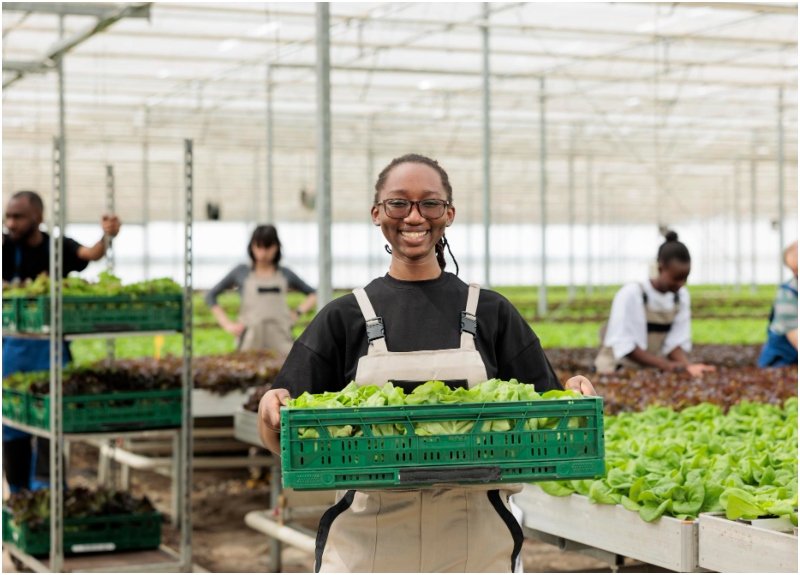
Forget the stereotype of academic research gathering dust. The University of Ghana Business School (UGBS) Innovation and Incubation Hub is channeling student ingenuity into commercial ventures. With a portfolio of over 100 agri-food and nutrition startups, the hub is a pipeline for scalable solutions. These are not just ideas; they are student-led businesses addressing real gaps in the food value chain, from sustainable farming tech to innovative nutrition products. For the diaspora investor, this offers a chance to provide seed and early-stage capital to highly-educated, tech-savvy entrepreneurs tackling local problems with global relevance. It’s an opportunity to get in at the ground floor of Ghana’s future agri-business leaders.
2. The Rural Cooperative Model: Scaling “Informal” Genius

Perhaps the most potent opportunity lies in rural communities where traditional expertise meets modern business strategy. The UGBS hub has facilitated the formation of formal cooperative associations among producers in areas like Kade (the palm oil hub) and Dormaa Ahenkro (the egg hub). These cooperatives solve key investment barriers: they aggregate production, standardize quality, and manage collective finances. Investors can fund these entities to scale production, invest in branded packaging, and secure bulk market contracts. This model turns informal, high-potential rural enterprises into bankable, scalable businesses, offering investors a stake in established production with massive growth potential.
3. The BRIInG Project Spin-Offs: FDA-Ready Community Ventures

A major UK-funded initiative, the RISA Fund, has already done the heavy lifting. It identified seven community-based product lines—including egg powder, tomato paste, pasteurized pineapple juice, and organic cereal—and brought them to the brink of commercialization. These ventures have received technical training, quality assurance support, and are now navigating Food and Drugs Authority (FDA) certification. With the initial grant period ending, these FDA-ready businesses are actively seeking private follow-on funding to achieve commercial sustainability. This is a unique low-risk, high-impact entry point: investing in de-risked ventures with proven prototypes, established community buy-in, and a clear path to market. One palm oil cooperative under this project is already in advanced talks for a ~1 billion Cedis investment.
4. Solving Critical Bottlenecks: The Dry Ice Investment

True investment insight often lies in solving a single, critical bottleneck. A prime example is in Ghana’s fishing industry. Researchers have introduced dry ice as a far superior method to preserve fish quality compared to traditional wet ice. However, the upfront cost is prohibitive for individual fishers. An investor or consortium could fund the establishment of a dry ice supply and leasing service for fishing communities. This targeted growth capital addresses a specific need, drastically reduces post-harvest losses, improves product value, and creates a profitable service model. It demonstrates how targeted investment in a specific innovation can unlock value across an entire supply chain.
An Enriching Q&A Session at the UGBS
This analysis is based on a recent expert Q&A session with Sylvia Nyako, Programs Lead at the University of Ghana Business School (UGBS) Innovation and Incubation Hub. The session, titled “Becoming a diaspora investor,” detailed the hub’s direct work with over 100 startups and several rural community cooperatives, outlining the specific investment-ready opportunities now available to private capital.
The UK government-sponsored initiative, RISA Fund, is funding the SMEs and rural cooperative projects. The UGBS Nest is spearheading these vibrant investment avenues as part of its “Bridging the Research Innovation-Industry Assimilation Gap through Technology Capacity Building in Rural Ghana” (BRIInG) project.
Real Opportunities for Global Investors:
The narrative of African investment is expanding. For diaspora and impact-focused investors, Ghana’s landscape offers more than just traditional sectors. By engaging with university incubation pipelines and structured rural cooperatives, capital can drive food security, empower communities, and build sustainable businesses. The opportunities are ready; they are simply waiting for the right investors to look beyond the obvious.
Watch the full session below:












Business
Top 20 Profitable Business Ideas in Ghana for 2026 – High-Growth Opportunities for Entrepreneurs

Ghana’s economy continues to show resilience and diversification, creating fertile ground for both local and foreign entrepreneurs.
With a growing middle class, rapid urbanization, increasing digital adoption, and government support for SMEs and export-oriented ventures, several sectors are delivering strong returns in 2026.
Business advisory firm HE Consulting has released an updated ranking of the 20 most profitable and realistic business ideas currently viable in Ghana, based on market demand, startup capital requirements, scalability, and current economic trends.
The list reflects opportunities across agriculture, technology, services, retail, and renewable energy.
Top 10 Highlights from the 2026 Ranking
- Poultry Farming (Broilers & Layers)
Still the most consistent high-margin agribusiness due to steady demand for eggs and chicken. Modern semi-automated setups with 5,000–10,000 birds can generate strong monthly profits. - Commercial Maize & Rice Farming + Aggregation
Rising food prices and government import-substitution policies make large-scale grain farming + off-taker contracts one of the safest bets for serious capital. - E-commerce & Last-Mile Logistics
Online retail continues to explode. Businesses offering same-day delivery in Accra, Kumasi, and Takoradi or niche vertical marketplaces are seeing 100–300% YoY growth. - Solar Energy Solutions (Off-grid & Mini-grids)
High electricity tariffs and frequent outages drive demand for solar home systems, commercial rooftop installations, and mini-grid projects in rural areas. - Mobile Money & Fintech Services
Agent banking, digital lending, insurance micro-products, and cross-border remittances remain among the fastest-growing sub-sectors. - Real-Estate Development & Property Management
Demand for affordable housing, student accommodation, and mid-range gated communities in peri-urban areas continues to outstrip supply. - Cold Chain & Agro-Processing
Mango, pineapple, cashew, shea butter, and tomato processing plants with export certification can access premium international markets. - Private Security Services
Corporate, residential, and event security demand remains extremely high due to urban growth and limited public policing capacity. - Pharmacy & Healthcare Retail Chains
Rapid expansion of mini-clinics, diagnostic labs, and branded pharmacy outlets in secondary cities. - Waste Management & Recycling
Plastic collection, e-waste processing, and organic composting businesses benefit from both ESG investor interest and new local government contracts.
Additional Strong Performers (11–20)
- Borehole drilling & water supply services
- Event planning & outdoor catering
- Fashion retail & second-hand clothing export
- Ride-hailing & car rental fleets
- Digital marketing & social media management agencies
- Beauty & cosmetics manufacturing/distribution
- Fitness centres & gym chains
- Courier & intra-city delivery services
- Daycare & early childhood education centres
- Commercial cleaning services for offices & estates
Key Takeaways for Investors & Entrepreneurs
- Low-to-medium capital ideas (₵50,000–₵300,000) still dominate the top ranks: poultry, retail pharmacy, event planning, cleaning services, and digital agencies.
- High-capital plays (₵1–10 million+) — solar mini-grids, agro-processing plants, real estate, and large-scale grain farming — offer the largest long-term upside but require strong partnerships and regulatory navigation.
- Export-oriented agriculture and value-added processing continue to benefit from AfCFTA access and Ghanaians in the diaspora.
- Digital-first businesses (e-commerce, fintech, digital marketing) enjoy the fastest customer acquisition and lowest physical overhead.
HE Consulting advises new entrants to conduct thorough market validation, secure reliable off-takers or distribution channels early, and prioritize compliance with Ghana Investment Promotion Centre (GIPC) and sector-specific regulations.
The full “Top 20 Profitable Business Ideas in Ghana – 2026 Edition” report is available on the HE Consulting website.

Accra, Ghana – A consortium of Ghanaian pension funds, managed by IC Asset Managers (Ghana) Ltd, has committed up to $11 million to Atlantic Lithium, marking a landmark step toward greater local ownership in what is poised to become Ghana’s first commercial lithium mine.
The investment forms part of a larger $16.4 million funding package secured by the company to advance the Ewoyaa Lithium Project in the Central Region toward construction and production.
The Ghanaian funds will acquire shares immediately valued at approximately $5 million, with an additional $6 million potentially available through milestone-linked warrants tied to key project achievements.
These milestones include parliamentary ratification of the mining lease, a final investment decision, and the start of construction. The structure aligns investor returns with project progress and reduces risk exposure.
Atlantic Lithium CEO Keith Muller described the deal as a strong vote of confidence in both the project and Ghana’s critical-minerals future.
“We are delighted to welcome a number of Ghanaian pension funds to the Company’s share register,” a Joy News report quotes him. “The interest of the Ghanaian investors in Atlantic Lithium reflects a broader desire in Ghana to see the country deliver upon its critical mineral promises and diversify its revenue stream beyond its existing portfolio, which is centred on gold.”
Obed Tawiah Odenteh, Chief Investment Officer of IC Asset Managers, highlighted the strategic importance of the move.
“Historically, mining has not featured prominently in our portfolios. However, the global transition toward green energy, coupled with Ghana’s discovery of lithium, presents a unique opportunity to participate in a strategic asset that could have a lasting impact on the country’s industrial future,” he stated.
The remaining $5.4 million of the package will come from a separate share placement with Long State Investments Ltd.
Ewoyaa is one of the most advanced hard-rock lithium projects in West Africa and is seen as central to Ghana’s ambition to enter the global battery-minerals supply chain. Domestic participation is viewed as a way to retain more economic value in-country, create skilled jobs, drive technology transfer, and support downstream industrial growth.
The investment is expected to be executed partly through the Ghana Stock Exchange, enabling broader Ghanaian retail and institutional participation in the project.
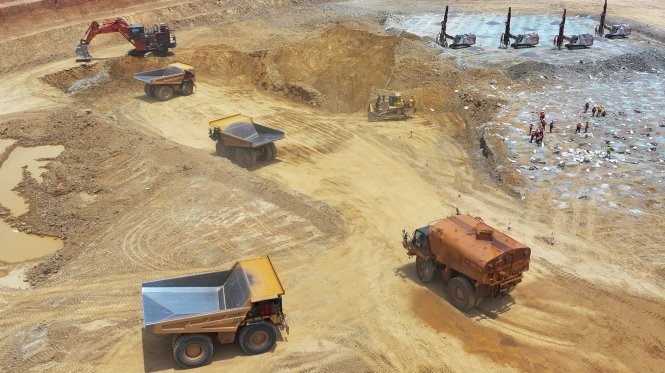
Accra, Ghana – For the first time in more than a century, a wholly Ghanaian-owned company stands on the verge of assuming full operational control of a major large-scale gold mine, potentially marking the most significant shift toward domestic ownership in the country’s modern mining history.
Engineers and Planners (E&P) Company Limited, a leading indigenous mining services firm, is actively positioning itself to acquire and operate the Damang Mine in the Western Region — an asset that has produced over four million ounces of gold during its lifetime under South African multinational Gold Fields Limited.
Gold Fields’ 30-year mining lease for Damang expired in 2025. The government granted a one-year extension to ensure continuity while transition arrangements were finalized. The company has since confirmed it will formally hand over the mine to the state on April 18, 2026.
Documents reviewed by industry sources reveal that E&P’s pursuit of Damang began years earlier, rooted in its long-standing role as a major mining contractor at the site. Having operated extensively within the complex, E&P developed deep familiarity with the mine’s geology, equipment, workforce and operational systems — giving it a unique technical edge over potential external bidders.
Key milestones in the timeline include:
- September 2023: Gold Fields issued a Notice of Demobilisation to E&P, signaling the wind-down of active pit mining by December 2023 and a shift to processing stockpiles until lease expiry.
- September 25, 2023: E&P formally wrote to Gold Fields requesting the opportunity to purchase the Damang Mine — a bold move to transition from contractor to owner-operator.
- March 12, 2024: The Ministry of Lands and Natural Resources issued a “no objection” letter allowing E&P and Gold Fields to negotiate, subject to eventual government approval.
- December 8, 2025: Minister Emmanuel Armah-Kofi Buah confirmed government awareness of the proposed acquisition and agreed to include E&P in the mine’s transition team.
- January 26, 2026: E&P reiterated its call for final negotiations, noting no response had yet been received from Gold Fields despite earlier discussions.
Industry observers describe the development as potentially historic. Since large-scale commercial gold mining began in Ghana over 100 years ago, major producing assets have remained overwhelmingly under foreign control. If E&P succeeds, it would become the first indigenous firm in the modern era to take full operational charge of a Tier-1 gold mine.
Analysts say the transition could serve as a powerful precedent, encouraging other Ghanaian entrepreneurs and companies to move beyond support services into full mine ownership. It would also signal growing confidence in local technical and managerial capacity within one of Africa’s most important gold-producing nations.
However, the process remains subject to final government approval and completion of commercial negotiations. With the April 18, 2026 handover date approaching, stakeholders are watching closely to see whether Ghana can translate decades of mining experience into genuine domestic ownership of a flagship asset.


The Taste of the Sidewalk: Chasing Ghana’s Perfect Bite of Ghana’s Kofi Broke Man

The Night They Banned the Song: How a Highlife Guitar Felled a General and Renamed an Airport

5 Realistic Guide to Weight Loss on Ghanaian Foods
-

 Ghana News2 days ago
Newspaper Headlines Today: Wednesday, March 18, 2026
-

 Ghana News2 days ago
UK Engages Ghana on Counterterrorism and Maritime Security
-
Ghana News23 hours ago
Newspaper Headlines Today: Thursday, March 19, 2026
-

 Ghana News2 days ago
Two Scrap Dealers Lynched, Video of Mahama’s Reaction After Atta Mills’ Death Resurfaces and Other Trending Issues Today (March 18, 2026)
-

 Ghana News23 hours ago
New Video Captures Victims Piloting Microlight Before Fatal Crash, Dormaahene Breaks Down in Tears and Other Trending Issues Today (March 19, 2026)
-
 Ghana News2 days ago
Germany Hands Over Four Operational Shelters to Ghana Immigration Service at Aflao Border
-

 Ghana News22 hours ago
Ghana to Table Landmark UN Resolution on Slave Trade in September
-

 Ghana News22 hours ago
54 Ghanaian Soldiers Return Home After Successful Hurricane Relief Mission in Jamaica