
Global Update
‘Trump Action Tracker’: Team of International Academics Begin Documenting Alleged Authoritarian Actions by DJT

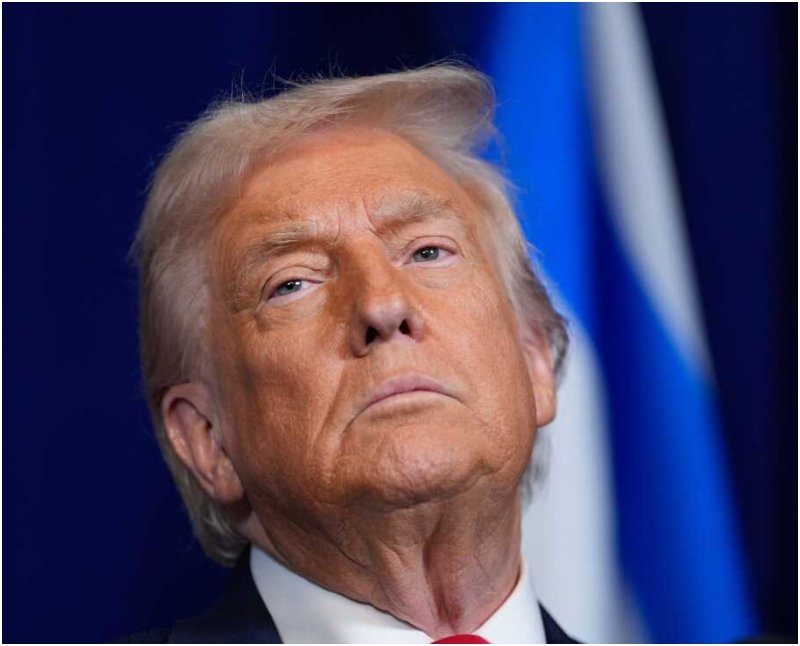
An international team of academics and researchers has launched a new online database documenting actions taken by U.S. President Donald Trump since the start of his second term in January 2025.
The Trump Action Tracker is a global effort to monitor democratic governance and the rule of law in one of the world’s most influential countries.
The ambitious project is led by British professor Christina Pagel and supported by a multidisciplinary team based across several countries. The group brings together expertise in public health, law, political science, data analysis, and democratic studies, reflecting what its creators describe as the international stakes of U.S. political decisions.
According to the project’s organisers, the tracker was designed to systematically log and categorise actions taken by the Trump administration that may have implications for democratic institutions, civil liberties, and international norms.
The database is updated in real time and draws on publicly available sources, including executive orders, official government statements, court filings, and policy directives.
The team categorises each logged action into five broad areas: undermining democracy, suppressing dissent, attacking civil rights, targeting science and academia, and destabilising foreign policy. By mapping these actions over time, the tracker aims to reveal broader patterns rather than isolated incidents.
Project contributors say the international composition of the research team is intentional. U.S. domestic policy, they argue, often has far-reaching consequences beyond American borders—affecting global trade, migration, climate cooperation, security alliances, and international institutions.
“Decisions made in Washington rarely stay in Washington,” one project description notes, emphasising that shifts in U.S. governance standards can influence political norms worldwide, including in developing democracies.
Since January 2025, the Trump administration has faced multiple legal challenges in U.S. courts over issues such as immigration enforcement, executive authority, education policy, and the restructuring of federal agencies. Several of these cases are ongoing, and some actions logged in the tracker are now the subject of active litigation.
Legal analysts say tools like the Trump Action Tracker reflect a broader trend toward cross-border collaboration in democratic oversight. International research groups increasingly use data-driven platforms to monitor government behaviour, especially in countries whose policies have global ripple effects.
For audiences in Africa and other regions, the tracker provides a lens into how governance changes in powerful states can shape global legal and political environments. Observers note that debates over executive power, judicial independence, and civil rights are not unique to the United States, making comparative analysis especially relevant.
While critics have questioned whether such projects can remain politically neutral, the tracker’s organisers maintain that their methodology is evidence-based and transparent. Each entry includes sourcing and contextual explanation, allowing users to assess the information independently.

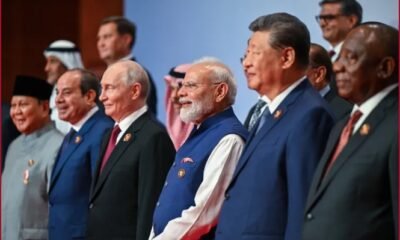







BRICS leaders have condemned unilateral tariffs and other trade barriers that they say distort international commerce, stopping short of directly naming U.S. President Donald Trump as the bloc confronts an increasingly fractured global trading system.
The criticism was included in the New Delhi Declaration, unanimously adopted by BRICS leaders at the group’s 18th summit in India. The declaration raised concerns about “unilateral tariff and non-tariff measures” while calling for greater cooperation to protect global trade, supply chains, energy flows and maritime security.
The carefully worded position allowed BRICS members to present a united front on trade without directly confronting Washington. The bloc includes several countries affected by U.S. tariff policies, including China, Russia and India, while also maintaining important economic relationships with the United States and other Western economies.
The declaration did not identify the United States by name. That diplomatic restraint was notable given the broader trade tensions surrounding the summit and Trump’s previous characterization of BRICS as an “anti-American” project, along with threats of additional tariffs against countries aligning themselves with the bloc.
The summit came as BRICS members sought to protect their economies from disruptions to international commerce. Leaders called for cooperation around supply chains, energy security and maritime routes as wars and geopolitical tensions continue to affect global trade.
Russian President Vladimir Putin used the summit to criticize what he described as efforts by countries accustomed to “colonial categories” to contain emerging competitors through tariffs, sanctions and force. His comments reflected a broader BRICS argument that unilateral economic measures can undermine international rules and restrict the ability of emerging economies to compete.
The declaration also criticized sanctions imposed without authorization from the United Nations Security Council, saying such measures undermine international law and the principles of the UN Charter. That position carries particular significance for Russia, which has faced extensive Western sanctions since its full-scale invasion of Ukraine in 2022.
India’s position illustrates the delicate balance BRICS is attempting to maintain. New Delhi has strong relationships with both Western economies and BRICS members, including Russia. The summit material notes that India had previously faced a 25% tariff on its goods imposed by Trump as a penalty for its purchase of Russian crude, while India subsequently reduced its Russian oil imports.
Beyond opposing tariffs, BRICS is seeking greater economic autonomy through expanded cooperation, including local-currency payment systems and efforts to strengthen energy security. Those priorities fit into the bloc’s larger push for a more multipolar global economy in which emerging and developing nations have greater influence over the rules governing international commerce.
The declaration ultimately reflects a difficult balancing act. BRICS members have clear disagreements over foreign policy and maintain different relationships with Washington, but they share an interest in reducing the economic disruption caused by trade barriers and preserving greater room for developing economies to pursue their own economic priorities.

The Adabraka District Court has remanded a security guard accused of murdering a retired medical doctor and his wife at their residence in Asylum Down, Accra, and concealing their bodies in a septic tank in a case that has shocked the nation’s capital.
Abraham Newton Awundok, who worked with a private security firm stationed opposite the couple’s residence, is accused of killing Dr. Jesse Amuah, 80, and his wife, Elizabeth Esi Amuah, 64, on March 23, 2026.
He has been charged with two counts of murder, but his plea was not taken. The court adjourned the case to September 21, 2026.
A Fatal Dispute Over Unpaid Wages
The prosecution told the court that Awundok became acquainted with the couple in January 2026 and later assisted them with household chores for payment. The relationship, however, turned deadly over an unpaid debt.
The court heard that on March 22, 2026, after completing his chores, Awundok demanded payment from Mrs. Amuah, but she offered him toothpaste and deodorant instead. He accepted the items but continued to demand his money, resulting in a misunderstanding.
The following day, March 23, at about 10:00 AM, Awundok returned to the residence and, after completing his chores, demanded GH¢1,500 from Mrs. Amuah. The two exchanged words, after which Awundok left. He later returned and told Mrs. Amuah that it was because of her “bad character” that people did not want to work or stay with her. The court heard that Mrs. Amuah insulted Awundok in response, after which he allegedly picked up a pestle and struck her several times on the head.
Her screams attracted Dr. Amuah, who rushed to the scene to rescue his wife. Awundok allegedly attacked the elderly doctor with a kitchen knife, inflicting multiple wounds on his face, before striking him with a pestle and a piece of cement concrete. The prosecution said Awundok continued to hit the couple with the cement concrete while they lay unconscious until they died.
A Gruesome Cover-Up
After the killings, Awundok allegedly fled the scene in the couple’s Nissan Sunny vehicle, registration number GT 159-X, taking with him their mobile phones, an unspecified amount of money, and other valuables.
The court further heard that at about 10:00 PM on March 24, Awundok returned to the residence, wrapped the bodies in curtains and clothes, placed them in a “Ghana Must Go” bag, and dumped them in the septic tank. He allegedly concealed the clothes he wore during the incident in the septic tank, sealed it with cement mortar, and cleaned bloodstains at the scene.
The prosecution said Awundok later sold one of the couple’s mobile phones to a mobile money vendor at Cantonments for GH¢700 and gave the vehicle to his sister at Cantonments for use in Uber or taxi operations. On April 22, 2026, he allegedly fled to Dubai.
Discovery and Arrest
The couple’s family, after failing to hear from them for weeks, reported the matter to the Police on April 30, 2026. Police investigations led to the gruesome discovery of the bodies and Awundok’s clothes in the septic tank. The bodies were retrieved and deposited at the Police Hospital for preservation and autopsy.
A post-mortem examination conducted on May 7, 2026, gave the cause of death as severe head injury and suspected assault.
Police intelligence subsequently led to Awundok’s arrest at his hideout in Dubai, and he was brought to Ghana on August 30, 2026. During interrogation, Awundok admitted to the crime and indicated that he acted out of anger due to the insults rained on him by Mrs. Amuah. He pleaded for forgiveness.
Community in Shock
The brutal nature of the killings has sent shockwaves through the Asylum Down community, where the elderly couple was well known. The case has also raised questions about the vetting and supervision of security personnel assigned to residential areas.
The court’s adjournment to September 21 will allow for further investigations and the presentation of more evidence by the prosecution.
Global Update
Canada Strikes Back: Ontario Cancels Musk’s Starlink Contract, Bans U.S. Firms from Provincial Deals in Retaliation for Trump Tariffs

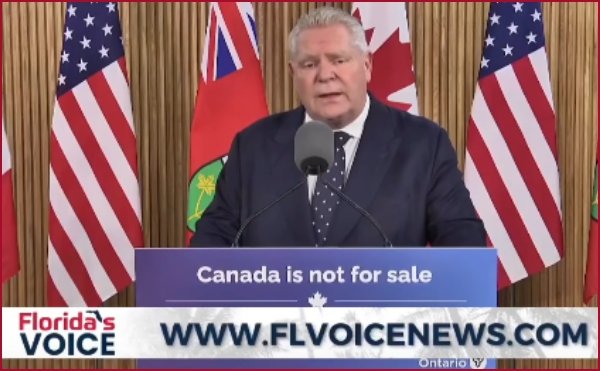
Ontario Premier Doug Ford has escalated Canada’s response to the United States’ new economic tariffs, announcing a sweeping ban on American companies bidding for provincial contracts and canceling a C$100 million deal with Elon Musk’s Starlink.
The move marks one of the most aggressive retaliatory actions taken by a Canadian province since President Donald Trump’s 25% import tax on Canadian goods took effect.
Speaking at a news conference on Monday, Ford did not mince words, directly blaming President Trump for the escalating trade war.
“Ontario won’t do business with people hell-bent on destroying our economy,” Ford stated, emphasizing that the province is “ripping up” its contract with the satellite internet company.
The premier outlined the province’s hardline stance: “Canada didn’t start this fight with the US, but you better believe we’re ready to win it.” Ford argued that Trump’s tariffs are not just political talking points but have severe, tangible consequences for businesses, workers, families, and the entire North American economy. He warned that American businesses stand to lose billions due to the economic fallout initiated by Washington.
The agreement with Starlink was signed last November to provide high-speed internet to 15,000 underserved homes and businesses. Musk, CEO of SpaceX and a close ally of Trump, reacted to the news with a brief, dismissive post on X: “Oh well.”
Ford acknowledged the possibility of legal challenges from Starlink but stated the province is willing to pay a penalty if necessary, citing the principle of the matter.
“It’s the principle,” he said.
This provincial retaliation comes on the heels of Prime Minister Justin Trudeau’s federal counter-tariff plans. Trudeau announced C$30 billion in immediate tariffs on American goods, with an additional C$125 billion scheduled to follow in 21 days if the U.S. proceeds with the levies, totaling C$155 billion ($107 billion).
Ontario is not alone in its response. Officials in Quebec, British Columbia, and New Brunswick have announced plans to pull American liquor from provincial shelves and revisit contracts with U.S. firms. Meanwhile, Canadian premiers are set to travel to Washington D.C. to lobby against the tariffs and attend a meeting of U.S. state governors.
While President Trump and Mexican President Claudia Sheinbaum agreed to a one-month delay on tariffs for Mexico after she promised to send additional National Guard troops to the border, Canadian officials told the New York Times they are not optimistic about receiving a similar reprieve.
The tariff dispute has had immediate market impacts, with all three major U.S. stock exchanges tumbling on Monday following the trade orders. Ford’s message to Washington was clear: you cannot threaten your closest neighbors with economic punishment and expect no pushback.


-

 Sights and Sounds1 day ago
Why Bliss Family Entertainment Is Airport City’s Go-To Haven
-

 Health & Wellness2 days ago
First In, Last Out: Understanding Your Body’s Natural Fat Storage Blueprint
-
 Festivals & Events14 hours ago
Accra Welcomes New York Leadership for a Historic Night of Community
-

 Taste GH14 hours ago
The Timeless Appeal of Koose and Spiced Millet Koko
-

 Festivals & Events1 day ago
Where Cascades Meet Culture: The Majestic Grandeur of the Wli Falls Festival
-

 Homes & Real Estate3 hours ago
How Mechanical, Electrical, and Plumbing Audits Protect Your Real Estate Investment
-

 Fashion & Style2 hours ago
When Aesthetics Backfire: What the Converse Imagery Controversy Teaches the Global Style Industry