
Perspectives
Regional Security at the Brink: U.S. Distributed Footprint, Security Partnerships and Sovereignty Trade-Offs in Post-Niger West Africa

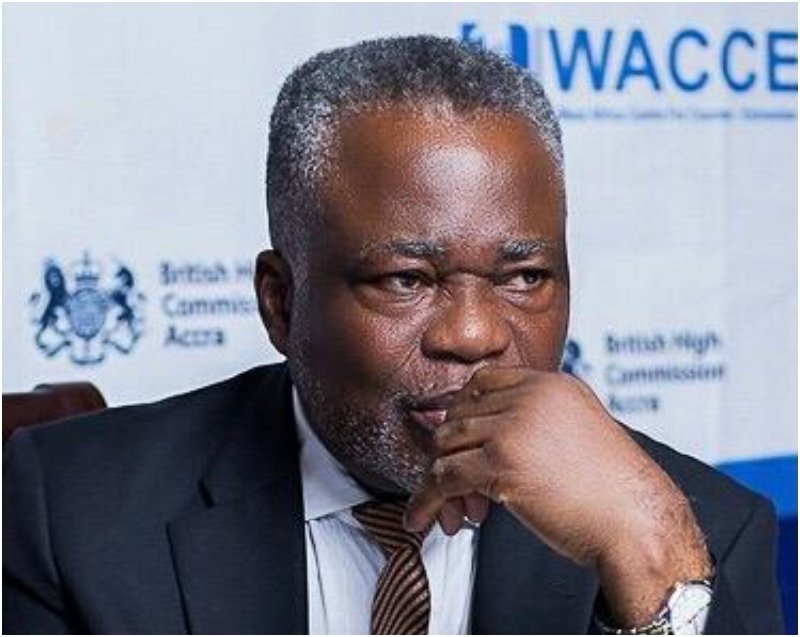
This paper by academic and retired Ghana army chief, Colonel Festus Aboagye, provides a comprehensive analysis of the U.S. military’s strategic repositioning across West Africa following the forced withdrawal from Niger in August 2024. Examining the December 2025 airstrikes in Sokoto, Nigeria, it documents the emergence of a so-called distributed “light footprint” model spanning Ghana, Benin, Côte d’Ivoire, and Chad—and assesses the sovereignty implications of this novel security architecture.
Colonel Festus Aboagye (Retired)
28 December 2025
Abstract
The December 2025 U.S. airstrikes in Sokoto, Nigeria, mark a critical inflexion point in West African security architecture. Following its expulsion from Niger, Washington has deployed a distributed “light footprint” across Ghana, Benin, Côte d’Ivoire, and Chad—a novel operational model that reduces coup vulnerability while increasing regional dependency. This paper documents three converging dynamics: 1) the shift from advisory support to direct kinetic intervention, justified through instrumentalised religious persecution narratives that obscure multifaceted governance failures; 2) Nigeria’s acceptance of foreign strikes despite sovereignty costs, reflecting capability gaps in precision airpower; and 3) the emergence of asymmetric security dependencies that risk entrenching external military presence under a humanitarian guise. Drawing on operational analysis and threat assessment, the paper proposes five African Union institutional mechanisms—from post-strike accountability protocols to continental drone policies—designed to reassert African agency before externalised counterterrorism becomes the irreversible norm.
I. Introduction
On Christmas Day 2025, the United States (U.S.) conducted a series of significant airstrikes against Islamic State targets in Sokoto State, northwestern Nigeria, representing a marked escalation in U.S. military involvement in West Africa.
This paper aims to sound an early strategic warning by critically analysing the shift toward foreign kinetic intervention in West Africa, the instrumentalisation of religious narratives in counterterrorism, and the emergence of a distributed external military footprint, and assessing how these dynamics risk undermining sovereignty, inflaming sectarian tensions, and entrenching neocolonial security dependency.
II. Operational Overview
The strikes targeted two ISIS encampments in Sokoto State, within the Bauni forest in Tangaza local government area, specifically linked to the Islamic State-Sahel Province (ISSP), sometimes known locally as “Lakurawa”. U.S. Africa Command (AFRICOM) characterised the strikes as “deadly”, reporting that they killed “multiple ISIS terrorists” with no confirmed civilian casualties as of December 26. Any subsequent acknowledgement of civilian fatalities will likely heighten opposition to the U.S. engagement in Nigeria.
To understand why these strikes represent a strategic escalation rather than routine counterterrorism, it is essential to examine the threat landscape that prompted direct U.S. kinetic action.
III. The ISSP/Lakurawa Threat: Strategic Context
ISSP militants, sometimes operating under the name “Lakurawa”, are part of long-established networks that have expanded from Niger’s Dosso region into northwestern Nigeria’s Sokoto and Kebbi states. Active since approximately 2017, these armed fighters—primarily from the Fulani pastoral ethnic group—were initially invited by Sokoto traditional authorities to protect communities from bandit groups, but “overstayed their welcome, clashing with community leaders and enforcing a harsh interpretation of Sharia law.
ISSP became more active in Nigeria’s border communities after Niger’s July 2023 military coup, which fractured cross-border military cooperation. Empirically, ISSP has maintained a low profile, operating covertly to infiltrate and entrench itself along the Niger-Nigeria border while expanding toward Benin. Politically motivated violence in border regions, including Dosso (Niger), Alibori (Benin), and Sokoto-Kebbi (Nigeria), has more than doubled since 2023.
This escalating violence is not confined to border security metrics—it carries profound symbolic and strategic dimensions that extend far beyond immediate counterterrorism objectives.
A critical question remains unaddressed: would Nigerian sovereignty be better served by rejecting external intervention and accepting slower, indigenous responses—even if this allows ISSP to consolidate territorial control in the interim? While the answer depends on whether one prioritises short-term operational gains or long-term strategic autonomy, the Tinubu administration’s calculus clearly favoured immediate capability supplementation over purist sovereignty principles.
IV. Strategic Significance and Regional Spillover
Sokoto’s selection as a strike target carries symbolic weight beyond counterterrorism: the historic Sokoto Caliphate, responsible for spreading Islam into Nigeria, remains revered by Nigerian Muslims, making operations here extremely sensitive. Throughout 2025, Jama’at Nusrat al-Islam wal-Muslimin (JNIM) and ISSP further entrenched their presence in the Benin-Niger-Nigeria tri-border area, transforming previously distinct Sahelian and Nigerian theatres into a single, interconnected conflict environment stretching from Mali to western Nigeria.
The security crisis is fundamentally a governance problem, with militants exploiting the near absence of state presence in conflict hotspots—areas with some of Nigeria’s highest levels of poverty, hunger, and unemployment. While Nigerian military airstrikes target militant hideouts, operations are not usually sustained, and militants easily relocate through vast forests connecting several northern states.
This context clarifies why U.S. intervention occurred: ISSP represents a transnational jihadist expansion exploiting governance vacuums and coup-induced security disruptions. However, it raises fundamental questions about whether kinetic strikes address underlying governance and development deficits, or whether such interventions risk becoming perpetual responses to symptoms rather than causes.
V. Political Context: Coordination and Competing Narratives
Understanding the threat context alone, however, does not explain the most problematic dimension of the December 25 strikes: the stark divergence between how the U.S. and Nigeria framed the operation’s purpose and justification.
Joint Operations and Diplomatic Coordination
In the immediate aftermath, President Trump’s announcement emphasised unilateral resolve. However, both the Pentagon and the Nigerian Foreign Ministry quickly confirmed the strikes were a joint operation, with two direct conversations between Nigerian Foreign Minister Yusuf Tuggar and U.S. Secretary of State Marco Rubio on the day of the strikes to coordinate intelligence.
The “Religious Freedom” Framing and Its Contradictions
The most distinctive feature of the strikes was the conflicting U.S. vs Nigeria narrative framing:
- U.S. Perspective: Presidential rhetoric characterised the strikes as a direct response to the “slaughter of Christians”, claimed to be occurring at “levels not seen for centuries”. This followed the October 2025 redesignation of Nigeria as a “Country of Particular Concern” for religious freedom and Trump’s November ultimatum threatening to go in “guns-a-blazing” if Nigeria failed to protect Christian communities.
- Nigerian Perspective: The Nigerian government and independent analysts emphasise that violence in the North-West is multifaceted, affecting both Christians and Muslims, with Muslims often constituting the majority of victims in Muslim-majority northern regions. Table 1 shows the narrative contestation matrix: security vs religious framing by the U.S. and Nigeria.
| External Narrative (U.S.) | Local / Regional Reality |
|---|---|
| Protection of Christians: Framed as a religious persecution response | Multi-actor Insecurity: Complex violence affecting all communities |
| Moral urgency: “Slaughter at levels not seen for centuries” | Criminal–terrorist hybrid violence: Both Christians and Muslims were victimised |
| Counterterrorism: Part of the global “Peace Through Strength” | Governance failure: Security overstretch and state weakness |
| External Legitimacy: Unilateral resolve with coordinated action | Sovereignty sensitivity: Pragmatic but delicate acceptance of intervention |
The religious framing by the U.S. risks inflaming sectarian tensions and providing extremist groups with recruitment propaganda, while potentially obscuring the multifaceted nature of regional insecurity.
Nigerian Domestic Calculations
President Tinubu faces mounting pressure to demonstrate security progress, with over 10,200 deaths from armed group attacks and 12,290 abductions generating ₦13 billion (about US$9 million) in ransom demands during his first two years. The deteriorating situation—which saw the North-Central zone overtake the Northeast as Nigeria’s new epicentre of violence and prompted a sweeping military reshuffle in October 2025—has severely tested his administration’s credibility on its core “Renewed Hope” security agenda.
Nigeria’s 3-Phase Drone/UAS Acquisition
The strikes reflect pragmatic calculations about capability gaps despite modernisation efforts. Nigeria’s unmanned aerial capability has developed through three distinct phases (see Table 2 below). In Phase 1 (2014–2020), China anchored Nigeria’s entry into armed drones with the CH-3A (2014), later expanding MALE and UCAV capacity through Wing Loong II and CH-4 systems, establishing persistent ISR and strike capabilities for counter-insurgency operations. During phase 2 (2022–2023), Türkiye drove diversification with Bayraktar TB2s and tactical systems (Songar, TOGAN, BAHA), creating a layered drone mix combining long-endurance strike platforms with flexible short-range assets. Phase 3 (2018–2025) saw the emergence of indigenous development with the Tsaigumi ISR drone (2018), culminating in the public debut of a locally produced attack drone (2025); these signalled ambitions to reduce external dependence.
| Year | System/Type | Origin | Status | Notes |
|---|---|---|---|---|
| 2006-07 | Aerostar (ISR) | Israel | Acquired | First operational UAV fleet; 9 units |
| 2014 | CH-3A (UCAV) | China | Delivered | Used in strike roles against insurgents |
| 2016 | Yabhon Flash-20 | UAE | Reported | Acquisition disclosed 2016 |
| 2018 | Tsaigumi (ISR) | Nigeria | Inducted | Indigenous platform (AFIT + UAVision) |
| 2020 | Wing Loong II (UCAV) | China | Disclosed | NAF confirmed acquisition Nov 2020 |
| 2020-21 | CH-4/CH-4B (UCAV) | China | Ordered | Expected delivery late 2021 |
| 2021 | Aerosonde Mk 4.7 (ISR) | USA | Contracted | DoD contract completed Sept 2021 |
| 2022 | Bayraktar TB2 (UCAV) | Türkiye | Acquired | Operational by Sept 2022 |
| 2022 | Songar (armed rotary) | Türkiye | Acquired | Fleet expansion noted |
| 2023 | Wing Loong II (additional) | China | Sighted | Multiple airframes observed at NAF facilities |
| 2023 | TOGAN/BAHA (tactical ISR) | Türkiye | Delivered | Export to security forces Aug 2023 |
| 2025 | Indigenous attack drone | Nigeria | Debuted | Publicly showcased April–Nov 2025 |
Nigeria’s UAV Capability Mix
Despite this diversified acquisition timeline, Nigeria’s operational UAV ecosystem remains constrained by strategic dependencies. Table 3 categorises Nigeria’s current unmanned capabilities by function, revealing a capability structure heavily reliant on external suppliers despite indigenous development efforts.
| Category | Primary Systems | Role | Operational Significance |
|---|---|---|---|
| ISR-only UAVs | Aerostar (Israel); Tsaigumi (Nigeria); BAHA (Türkiye) | Surveillance, target acquisition, border monitoring | Foundation of situational awareness; supports both air and ground operations |
| Armed Multirotor / Tactical UAVs | Songar (Türkiye) | Close-range strike, urban and counter-insurgency support | Precision effects at tactical level; suited for internal security operations |
| MALE / UCAV Platforms | CH-3A; Wing Loong II; CH-4 (China); Bayraktar TB2 (Türkiye) | Persistent ISR, precision strike, counterterrorism | Strategic enablers; substitute for manned airpower in permissive environments |
The “Targeting Circuit” Bottleneck: Why Nigeria Could Not Act Alone
NAF’s inability to neutralise the Sokoto targets independently, despite possessing an inventory of Chinese (CH-4) and Turkish Bayraktar (TB2) drones, reveals critical technological and intelligence bottlenecks. This deficit in precision airpower drives a profound asymmetric security dependency on the U.S. The “crucial question” of why Nigeria required U.S. kinetic intervention lies in three areas of efficacy:
- Sensor Resolution and “Fused” Intelligence: While Nigeria’s Turkish and Chinese platforms provide battlefield-grade electro-optical/infrared (EO/IR) imagery, they often lack the Multi-Spectral Targeting System (MTS-B) found on the U.S. MQ-9 Reaper. The MTS-B offers an “ID Card” resolution standard, capable of identifying high-value targets (HVTs) by facial features or specific clothing from extreme altitudes where the drone remains invisible. Furthermore, Nigeria’s “targeting circuit” for its existing fleet is essentially a “closed loop” where pilots rely on immediate visual feeds. In contrast, the U.S. provides a “fused” intelligence architecture, where live drone data is analysed in real-time by a global network of specialists who cross-reference it with signals intelligence (SIGINT) to confirm identities in complex civilian environments.
- Munition Precision–Hellfire vs. MAM-L: The choice of munition represents a vital sovereignty trade-off. The U.S. AGM-114 Hellfire—specifically its Low Collateral Damage (LCD) variants like the R9X—is engineered for “surgical” strikes with a highly focused blast radius. Conversely, the Chinese AR-1 and Turkish MAM-L munitions in Nigeria’s arsenal are generally designed for open warfare with higher explosive yields. For the Sokoto strikes occurring near civilian clusters, the Nigerian government likely assessed that its own munitions carried an unacceptable risk of “collateral tragedies,” similar to previous accidental NAF strikes.
- The “Legal and Political” Shield: Beyond hardware, the use of U.S. platforms serves as an “Accountability Outsourcing” mechanism. By utilising U.S. targeting oversight, the Tinubu administration can claim that the operation met international “gold standards” for civilian protection, providing political insurance against the domestic fallout of a botched strike. As detailed in Table 4, this reliance is fundamentally a product of the efficacy gap between U.S. and regional systems, where the MQ-9 Reaper’s superior sensor resolution and surgical munition choices provide a level of precision currently unavailable to Nigeria’s indigenous or existing foreign fleet.
| Feature | U.S. MQ-9 Reaper | Turkish TB2 / Chinese Wing Loong |
|---|---|---|
| Primary Sensor | MTS-B (Ultra-high resolution) | Standard EO/IR (Battlefield grade) |
| Munition Choice | Hellfire (Specific LCD variants) | MAM-L / AR-1 (General-purpose explosive) |
| Intelligence Loop | Global “fused” network | Localised “pilot-in-the-loop” |
| Mission Profile | Surgical HVT elimination | Tactical battlefield support |
These competing narratives and domestic calculations reflect more profound strategic shifts in U.S.-Africa security relations that extend well beyond Nigeria’s immediate counterterrorism needs. The strategic shifts manifest most visibly in the U.S. military’s geographic repositioning across West Africa. Table 5 summarises the four critical dimensions of strategic transformation signalled by the Sokoto strikes:
| Factor | Assessment |
|---|---|
| Shift in Engagement | Marks a transition from “advise and assist” to direct kinetic action in the Nigerian theatre. |
| Regional Expansion | By striking in Sokoto (North-West) rather than the traditional Islamic State West Africa Province (ISWAP) stronghold in the North-East (Borno), the U.S. acknowledges the spread of IS-affiliated groups toward the Sahel/Niger border. |
| Sovereignty vs. Necessity | Nigerian government approval suggests pragmatic, if delicate, acceptance of U.S. airpower to compensate for domestic security overstretch. |
| Global Context | Occurring a week after similar U.S. operations in Syria, these strikes may reflect a broader “Peace Through Strength” campaign to degrade ISIS global affiliates simultaneously. |
VI. The New U.S. Military Footprint: From Centralised to Distributed
Strategic Rationale for Redistribution
Following Niger’s July 2023 coup and the August 2024 forced withdrawal, the U.S. abandoned its centralised model—anchored by massive desert bases like Air Base 201—in favour of a distributed “light footprint” strategy across multiple coastal West African nations. This approach reduces vulnerability to single-country political upheaval, though it increases drone flight times to Sahel targets.
Current Operational Locations (Late 2025)
Personnel and heavy equipment from Niger’s former Air Base 101 and 201 were initially consolidated at U.S. facilities in Germany and Italy before redistribution. By late 2025, U.S. counterterrorism operations span four main locations:
- Ghana: Primary operational hub, with intelligence flights and strikes launched from Accra’s Kotoka International Airport and potentially Tamale Air Force Base in the north.
- Benin: Forward surveillance site, where Washington invested $4 million to upgrade a northern airfield (near Parakou or Karimama) for reconnaissance missions, helicopter operations, and Special Forces border security training.
- Côte d’Ivoire: Strategic pivot point, with ongoing 2025 negotiations to establish drone deployments from existing military infrastructure in Abidjan and northwestern sites near Odienné, close to the Mali and Guinea borders.
- Chad: Maintains northern surveillance capabilities through special operations forces who returned to N’Djamena in late 2024, following a brief earlier withdrawal.
While this distributed model offers tactical flexibility, it introduces systemic risks that extend beyond immediate operational concerns. To contextualise this emerging architecture, Table 6 situates the U.S. distributed footprint within the broader spectrum of contemporary security partnership models operating across Africa, highlighting the distinctive sovereignty trade-offs inherent in each approach.
| Security Partnership Model | Example | Sovereignty Trade-off |
|---|---|---|
| Full Basing Rights | Djibouti (U.S./China/France) | High presence, long-term commitment |
| Distributed Light Footprint | West Africa 2025 | Lower visibility, uncertain commitment |
| Equipment/Training Only | U.S.-Tunisia | Minimal presence, capacity gaps remain |
| Regional Force (African-led) | AMISOM/ATMIS/AUSSOM | Higher ownership, chronic underfunding |
VII. Risks and Implications
While this distributed architecture offers operational advantages in a politically unstable region, it generates four categories of risk that African policymakers and continental institutions must urgently address.
Extremist Recruitment and Propaganda
Foreign intervention, particularly when framed in religious terms, provides extremist groups with recruitment material to portray conflicts as a “Crusade” against Islam. ISSP and other terrorist networks in Nigeria, coastal Guinea countries, and the MENA region may escalate operations in response.
Sectarian Tensions
The U.S. emphasis on “protecting Christians” within the broader “global war on terror” narrative risks inflaming existing religious tensions within Nigeria’s diverse population and beyond, absent balanced local diplomacy.
Uncertain Long-Term Commitment
Defence Secretary Pete Hegseth’s “more to come” comment suggests sustained operations in Nigeria, coastal Guinea areas, and the Sahel. However, a critical dilemma persists: counterterrorism in a region that may not be a top U.S. strategic priority offers no guarantee of long-term engagement, potentially leaving African partners vulnerable to abandonment.
Asymmetric Security Dependencies
Recent West African developments carry a long-term risk of creating asymmetric security dependencies that erode strategic autonomy by outsourcing regional security to competing global powers pursuing strategic containment policies that may not align with African sovereignty and stability. It is permissible to conclude that, without a genuine partnership that respects African agency, these dynamics could lead to a long-term erosion of sovereignty. The danger is that the “regional security” narrative becomes a convenient vehicle for external powers to maintain a military presence that serves their geopolitical interests under the guise of collaborative security and humanitarian protection.
These risks—ranging from extremist recruitment to sovereignty erosion—are not hypothetical future scenarios. They are already materialising in the immediate aftermath of the Sokoto strikes, demanding urgent strategic reflection on the path forward.
VIII. Conclusion
The Christmas Day 2025 airstrikes in Sokoto State mark a pivotal moment in U.S.-Africa security relations, signalling Washington’s transition from advisory support to direct kinetic intervention in Nigeria’s counterterrorism landscape. While operationally coordinated between both governments, the strikes reveal a troubling divergence in narrative framing: the U.S. administration’s emphasis on religious persecution conflicts with Nigeria’s understanding of the violence as a complex, multifaceted security crisis affecting communities across religious lines.
The shift to a distributed military footprint across Ghana, Benin, Côte d’Ivoire, and Chad demonstrates strategic adaptation following the Niger withdrawal. Yet it also represents a broader recalibration of Western engagement in the region. This decentralised approach, while reducing vulnerability to single-country political instability, raises fundamental questions about sovereignty, sustained commitment, and the risk of inadvertently fuelling the very extremism it seeks to combat through religiously charged rhetoric that terrorist groups can exploit for recruitment.
Most critically, these developments risk establishing a troubling precedent: the gradual outsourcing of regional security to external powers pursuing containment strategies that may not align with Africa’s long-term stability interests. Without careful diplomatic management, balanced local engagement, and genuine partnership that respects African agency, current counterterrorism efforts could inadvertently serve neocolonial dynamics rather than sustainable peace. The international community must remain vigilant that the “regional security” narrative does not become a vehicle for undermining African sovereignty under the guise of protecting lives. This is the challenge for the African Union and African regional organisations.
Meeting this challenge requires moving beyond declaratory statements to concrete institutional mechanisms. The following policy recommendations provide an actionable framework for the AU Peace and Security Council to reassert continental agency in the face of externalised security interventions.
IX. Recommendations
To address the concerns of sovereignty, neocolonial dependency, and narrative imposition following the U.S. airstrikes in Nigeria, the AU must transition from reactive diplomacy to proactive institutional oversight. The strategic landscape in late 2025 makes it imperative that the AU Peace and Security Council (PSC) consider the following policy recommendations.
- Establish Continental Oversight of Foreign Kinetic Action: The AU should require that any foreign military strike on member-state territory—regardless of host-state consent—be formally notified to the AU PSC within 24-72 hours, supported by a standardised Post-Strike Accountability Brief covering civilian impact, intelligence justification, and legal basis under AU norms. The purpose is to prevent bilateral security arrangements from bypassing and undermining continental transparency and non-indifference principles. However, the AU will have no enforcement mechanism against major powers that ignore this requirement.
- Counter-Narrative Weaponisation through African Analysis: Mandate the African Centre for the Study and Research on Terrorism (ACSRT) to issue an independent Threat Context Report following any major external intervention in Africa. This will anchor counterterrorism narratives in African-led analysis and prevent the reduction of complex conflicts into sectarian or ideological propaganda.
- Regulate Distributed Foreign Military Footprints: Develop an AU Continental Drone and Surveillance Policy setting clear limits on the scope, duration, basing, and authorisation of foreign unmanned aerial vehicles (UAVs) and intelligence, surveillance and reconnaissance (ISR) operations on African soil. The purpose is to prevent the gradual entrenchment of coastal states as permanent launch platforms for external military operations outside a collective AU strategy.
- Reinvigorate the ASF for Sahelian Security: Fast-track the reconceptualisation of the African Standby Force (ASF) to incorporate a counterterrorism capability, to close critical regional capability gaps and reduce reliance on foreign airpower. After more than 20 years of chronic underfunding and lack of full operationalisation, why would the ASF change now?
- Mediate the AU–Sahel Divide: Convene a high-level AU-led Sahel Reconciliation Dialogue to re-engage the Alliance of Sahel States (AES) members within the continental security framework, decoupling security reintegration from immediate political conditionalities. The purpose is to close the geopolitical vacuum that enables external powers to exploit regional fragmentation. Given that AES states have explicitly rejected AU mediation, it remains to be seen what leverage the AU has.
All said and done, it is worth acknowledging that while these obstacles are pertinent, they do not negate the recommendations’ validity.
References
Official Government & Military Statements
U.S. Africa Command (AFRICOM). (2025, December 25). U.S. Africa Command conducts strike against ISIS in Nigeria. [Press Release]. https://www.africom.mil/pressrelease/36158/us-africa-command-conducts-strike-against-isis-in-nigeria
U.S. Commission on International Religious Freedom (USCIRF). (2025, November 3). Naming of Nigeria as a Country of Particular Concern is an important step to advance religious freedom. [Press Release]. https://www.uscirf.gov/news-room/releases-statements/naming-nigeria-country-particular-concern-important-step-advance
U.S. Department of Defence & Ministry of National Defence of Niger. (2024, August 5). Joint statement on the completion of withdrawal of U.S. forces and assets from Air Base 201 in Agadez. https://www.war.gov/News/Releases/Release/Article/3861097/joint-statement-from-the-us-department-of-defense-and-the-department-of-nationa/
U.S. Department of State. (2025, October 30). 2025 Redesignation of Countries of Particular Concern for religious freedom. [Official Statement].
U.S. Department of War. (2025, December 25). Statement from Secretary Hegseth on precision strikes in Nigeria. [Official Communication].
African Union Peace and Security Council. (2016, May 30). Communiqué of the 601st meeting of the PSC on the establishment of foreign military bases in Africa. (PSC/PR/COMM.(DCI). https://www.peaceau.org/en/article/communique-of-the-601st-meeting-of-the-peace-and-security-council
News & Investigative Reports
CBS News. (2025, December 26). U.S. launches strikes on ISIS targets in Nigeria on Christmas Day, Trump says. https://www.cbsnews.com/news/u-s-launches-strikes-on-isis-targets-in-nigeria-trump-says/
Business Insider Africa. (2025, May 18). U.S. moves closer to establishing its drone base in West African country. https://africa.businessinsider.com/local/lifestyle/us-moves-closer-to-establishing-its-drone-base-in-west-african-country/xld76wd
Weiss, C. (2025, December 26). U.S. strikes Islamic State in Nigeria. FDD’s Long War Journal. https://www.longwarjournal.org/archives/2025/12/us-strikes-islamic-state-in-nigeria.php
The Times of Israel. (2025, December 26). Trump says U.S. struck ISIS targets in Nigeria after group targeted Christians. https://www.timesofisrael.com/trump-says-us-struck-isis-targets-in-nigeria-after-group-targeted-christians/
Think Tank & Policy Analysis
Centre for Strategic and International Studies (CSIS). (2025, November 20). President Trump’s redesignation of Nigeria as a “Country of Particular Concern—CPC”: A serious, well-founded wake-up call. https://www.csis.org/analysis/president-trumps-redesignation-nigeria-country-particular-concern-cpc-serious-well-founded
Thurston, A. (2024, January 10). Is that U.S. drone base in Niger really necessary? Responsible Statecraft. https://responsiblestatecraft.org/us-niger-drone-base/
The Tricontinental: Institute for Social Research. (2021, July 6). Defending our sovereignty: U.S. military bases in Africa and the future of African unity (Dossier No. 42). https://thetricontinental.org/dossier-42-militarisation-africa/
Threat Assessment Sources
Armed Conflict Location & Event Data Project (ACLED). (2024). Political violence in the Nigeria-Niger-Benin border region [Data file]. https://acleddata.com/
Barnett, J. (2024). Lakurawa and the Islamic State’s expansion in north-west Nigeria. Hudson Institute. https://www.hudson.org/
Mahmoud, Y. (2025). The Sahel-Nigeria conflict convergence: JNIM and ISSP in the tri-border region. African Arguments. https://africanarguments.org/
Pérouse de Montclos, M.-A. (2025). Islamic State expansion along the Niger-Nigeria border: From banditry to jihadism. Institute for Security Studies. https://issafrica.org/
Raineri, L., & Rossi, A. (2025). The governance dimensions of insurgency in north-west Nigeria. West Africa Report, 12(3), 45-67.
Zenn, J. (2024). Islamic State Sahel Province: Operational evolution and strategic objectives in West Africa. Jamestown Foundation Terrorism Monitor, 22(24), 12-18.
Drone Capabilities & Ecosystems
Baykar Technologies. (n.d.). Bayraktar TB2 tactical UAS. https://baykartech.com/en/uav/bayraktar-tb2/
International Institute for Strategic Studies. (2023). The Military Balance 2023. Routledge. https://www.iiss.org/publications/the-military-balance
Jane’s Defence Weekly. (2022). Nigeria expands UAV inventory with Turkish systems. https://www.janes.com/
Military Africa. (2024). Nigeria’s drone inventory: From CH-3A to indigenous attack UAVs. https://www.military.africa/2025/12/us-launches-airstrike-against-isis-networks-in-northwest-nigeria/
Textron Systems. (n.d.). Aerosonde UAS. https://www.textronsystems.com/products/aerosonde
U.S. Department of Defence. (2021). Contract announcements: Aerosonde systems for partner nations. https://www.defense.gov/News/Contracts/
General Atomics Aeronautical Systems. (2024). MQ-9B SkyGuardian/SeaGuardian: The next generation of Remotely Piloted Aircraft Systems. https://www.ga-asi.com/remotely-piloted-aircraft/mq-9b



Digital Storytelling Team, The Conversation
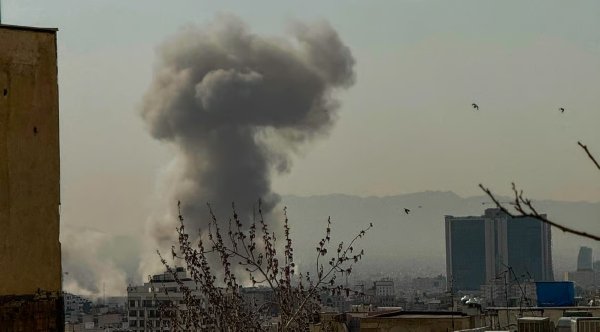
The US and Israel have launched joint coordinated attacks on Iran, prompting retaliatory strikes from Iran on Israel and US military bases in the region.
Ayatollah Ali Khamenei, Iran’s supreme leader for 36 years, has been killed in the strikes, Iranian state media reported.
Iran’s Supreme National Security Council says he was killed early Saturday morning at his office. Satellite imagery shows significant damage to parts of the Leadership House compound, which is Khamenei’s office in Tehran.
Iranian school struck
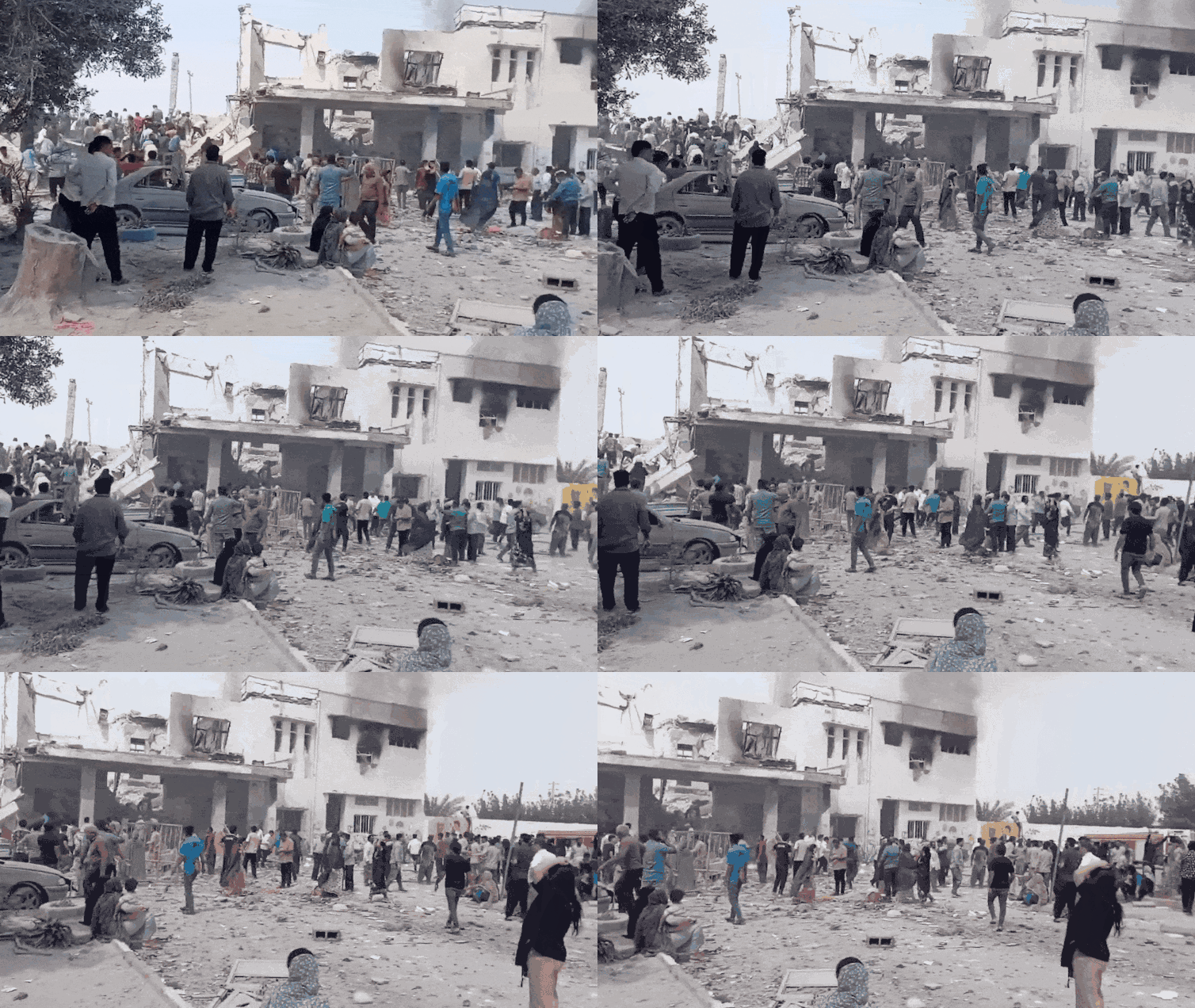
More than 100 children have reportedly been killed by US and Israeli air strikes on a school, according to Iranian authorities. They say the strikes hit a girls’ elementary school in the city of Minab in the country’s south.
Video has emerged of crowds of people searching through the rubble.
“Hundreds of civilians have been killed and injured as a result of the aggression and atrocious crime of the United States regime and the Israeli regime, and the deliberate … targeting of civilian infrastructure,” Amir-Saeid Iravani, Iran’s ambassador to the United Nations, told an emergency meeting of the UN Security Council.
Digital Storytelling Team, The Conversation
This article is republished from The Conversation under a Creative Commons license. Read the original article.

While Ghana’s headline macroeconomic indicators—falling inflation, a sharply appreciating cedi, and IMF programme progress—have earned international praise, a deeper, quieter crisis continues to erode the daily lives of ordinary citizens, writes Dominic Senayah. In this powerful opinion piece, the policy analyst and international relations professional argues that the country’s recent exchange-rate stability masks a structural cost-of-living emergency that no salary can reasonably sustain.
What the Exchange Rate Conceals: Ghana’s hidden cost of living crisis
By Dominic Senayah
There is a quiet arithmetic to suffering. It does not make front pages. It does not generate dramatic headlines that bring in international cameras or set Parliament alight. It happens instead at the market stall, at the landlord’s door, at the end of the month when the salary notification arrives, and the mental calculation begins and fails. It is the arithmetic of a country where the cost of simply existing has outpaced the means by which ordinary people are expected to exist. This is Ghana’s hidden cost of living crisis, and those of us who love the country, who hold its passport, who carry it with us wherever we go in the world, can no longer afford to normalise it.
I write this as a Ghanaian living and working in England. The distance has not made me detached. If anything, the contrast has sharpened my concern. I know what a functioning relationship between wages, housing, and food looks like in practice. And I know that what Ghana has at present falls far short of what it is capable of delivering to its people.
The Rent That No Salary Can Justify
Let us begin where every life begins, with a roof. As of early 2026, a one-bedroom apartment in Accra commands around GH₵2,200 per month, with Cantonments, Airport Residential, and Labone pushing considerably higher. But the monthly rate is only part of the punishment. It is normal in Ghana to pay one or two years of rent upfront, placing an enormous financial demand on a tenant before they have even moved in. The average monthly salary sits at approximately GH₵2,579 — roughly $210 at current exchange rates — with entry-level civil servants earning between GH₵2,200 and GH₵3,200. A mid-level public servant asked to pay two years upfront on a modest Accra flat faces a demand exceeding a full year of gross salary, payable before a single sock has been unpacked.
The comparison with Nigeria is instructive. Lagos — Africa’s most commercially intense city, far larger and more complex than Accra, regularly offers comparable housing at lower dollar-equivalent rates. That a smaller city prices its residents more aggressively is a structural anomaly deserving frank scrutiny. Ghana’s landlord class, hedging against cedi depreciation through dollar-denominated rents, has turned housing into a mechanism of extraction that the wage economy cannot support. The result is a generation of professionals commuting three to five hours daily because they cannot afford to live near where they work.
A Country That Grows Food and Cannot Afford to Feed Itself
Ghana spans multiple agro-ecological zones supporting cocoa, yams, plantains, cassava, tomatoes, pepper, groundnuts, maize, and rice. The ecological potential is profound. And yet the price of tomatoes in an Accra market routinely exceeds what the same produce costs in countries that must import it from thousands of miles away. This is a policy failure, not a natural one. According to the World Food Programme, Ghana loses US$1.9 billion annually to post-harvest waste due to poor road networks, inadequate storage, and the near-total absence of cold chain infrastructure, with losses estimated between 20 and 50 per cent across various crop types. The farmer in Brong-Ahafo who watches tomatoes rot on the roadside because the truck did not come is not a lazy farmer. He is a farmer abandoned by systems never built with sufficient urgency.
At the consumer end, supply is erratic, middlemen extract margins at every link, and what arrives in the city comes bruised and expensive. Ghana, once a significant tomato producer in West Africa, now imports over 7,000 metric tons of tomatoes annually from neighbouring countries. The same logic applies to rice, poultry, and a growing range of processed foods. Ghana has fertile land and an empty value chain, and until the infrastructure connecting the two is treated as a national emergency, this contradiction will persist.
Salaries, Corruption, and the Structural Explanation Nobody Wants to Give
Petty corruption in Ghana is routinely framed as a moral failure. The condemnation is not unwarranted, but it rarely arrives at the structural diagnosis necessary for real solutions. When a port official takes an unofficial payment or a nurse charges informally for a service that should be free, the issue is often not characterised. It is mathematics. If the average salary is GH₵2,579 and a basic one-bedroom flat in Accra costs between GH₵1,500 and GH₵2,800 per month, the gap between income and shelter is insurmountable before a single meal or school fee is considered. People in structurally impossible positions find structural workarounds. Ghana cannot build trustworthy institutions on the foundation of a workforce that cannot survive on its formal income. The enforcement agencies expected to police corruption while living within these same constraints are being asked to do something human societies have always found very difficult to sustain.
The Import Economy’s Double Standard
Walk through any Ghanaian market, and the shelves are full of Chinese electronics with dubious longevity, imported cooking oil, and imported clothing. The quality differential between goods manufactured for African markets and those produced by the same factories for Western consumers is not accidental. It is a calibrated response to weak regulatory environments. Where consumer protection law lacks enforcement, the incentive to produce durably disappears. Ghanaian consumers are being sold shorter lifespans in their goods and longer suffering in their wallets. Capital that could fund agro-processing in the forest belt or cold chain infrastructure in the north instead cycles through import speculation with a six-month horizon, extracting from the population rather than building it up.
Towards Price Regulation: What Is Actually Feasible
This is where most commentary on Ghana’s cost of living crisis falls short, diagnosing the problem without engaging seriously with solutions. Full command-style price fixing is not the answer. Ghana tried broad price controls under the Rawlings era, and the outcome was predictable: market distortions, shortages, and a thriving black market that harmed the very people it was meant to protect. But there is a meaningful space between laissez-faire chaos and discredited command economies, and Ghana has both the institutional architecture and the precedent from comparable economies to occupy it.
The first viable intervention is a national reference pricing system for staple goods. The government already publishes some commodity price data, but inconsistently and with almost no reach into the market itself. A properly resourced weekly publication of government-verified benchmark prices for staple foods displayed at market entrances, bus terminals, and broadcast via radio and SMS to rural communities arms the consumer with information, which is the most powerful and least distorting check on seller greed. Rwanda has implemented this model for agricultural produce with a measurable effect on price gouging at the retail level. It preserves market freedom while eliminating the information asymmetry that predatory pricing depends upon.
The second is a functioning rent tribunal. Ghana’s Rent Act of 1963 technically prohibits excessive advance payment demands, but it is widely ignored because the mechanism for enforcing it is inaccessible to ordinary tenants. A simplified housing tribunal modelled on those that operate effectively in South Africa and the United Kingdom, that allows tenants to challenge dollar-denominated rents and multi-year upfront demands, would be a targeted, enforceable intervention requiring legislative update rather than significant fiscal outlay. The legal framework exists. What is missing is the political will to resource and publicise it.
The third is deeper utilisation of the Ghana Commodity Exchange, launched in 2018 but still dramatically underused. A functioning commodity exchange creates transparent, publicly visible price discovery for agricultural goods, which structurally reduces the power of middlemen to arbitrarily inflate margins between farm gate and urban market. Integrating smallholder farmers and market women through mobile phone access is both technically feasible and commercially attractive given Ghana’s mobile penetration rates. This is not a distant aspiration. It is an operational gap in an existing institution.
The fourth is consumer protection enforcement with genuine deterrent value. Current fines under the Consumer Protection Agency Act are derisory relative to the profits available from price exploitation. Raising penalty thresholds meaningfully and giving the agency a publicised rapid-response function, a hotline that triggers market inspection within 48 hours of a complaint,t would shift the risk calculus for sellers without requiring price fixing of any kind. None of these measures alone resolves the crisis. Together, they constitute a coherent, Ghana-feasible regulatory architecture that addresses greed at its structural root rather than its moral surface.
Where the Government Has Done Well — And What Must Follow
Macroeconomic honesty requires acknowledging what has been achieved. Inflation fell for thirteen consecutive months, from 23.5 per cent in January 2025 to 3.8 per cent in January 2026, single digits for the first time since 2021. The cedi appreciated 40.7 per cent against the dollar in 2025, reversing the prior year’s 19.2 per cent depreciation, earning World Bank recognition as the best-performing currency in Sub-Saharan Africa. The IMF completed its fifth Extended Credit Facility review in December 2025 with positive assessments across growth, reserves, and debt trajectory. Currency stability anchors import prices, reduces the landlord’s dollar-denomination incentive, and creates the predictability businesses need. But stability is the floor of a better economy, not its ceiling. The ceiling requires structural transformation in agriculture, manufacturing, institutional quality, and the wage-to-cost relationship,p which stabilisation enables but cannot itself deliver.
The Reorientation Ghana Needs
Ghana will not become Denmark overnight, and no reasonable person expects that. But the distance between where Ghana is and where it is capable of being is not as vast as learned helplessness suggests. Wealthy Ghanaians must be persistently encouraged, through deliberate policy incentives andcultural expectationsn, to invest in domestic productive capacity rather than import speculation or offshore accumulation. Patient capital that builds agro-processing, cold chain networks, or quality housing is less glamorous than a Shenzhen container but far more durable as national wealth.
Young Ghanaians expressing frustration are not being ungrateful. They are giving accurate feedback to a system that has not yet decided to work for them. Their constrained futures are not the inevitable consequence of poverty but the outcome of choices about investment, infrastructure, and the relationship between wages and the cost of living that can be made differently.
The exchange rate is the number the world watches closely. What it conceals is the daily life Ghanaians actually live. The stability of 2025 has been earned. Now comes the harder, more human work of making it mean something to the nurse in Tamale, the graduate in Kumasi, and the family in Nima who still cannot make the numbers add up.
About the Author

Dominic Senayah is an International Relations professional and policy analyst based in England, specialising in African political economy, humanitarian governance, and migration diplomacy. He holds an MA in International Relations from the UK and writes on trade policy, institutional reform, and Ghana–UK relations for audiences across Africa, the United Kingdom, and the wider Global South.
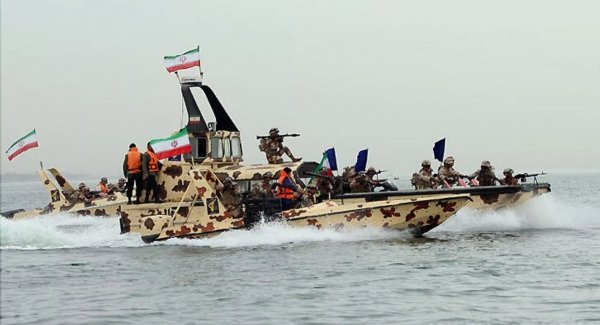
The US and Israel’s unprovoked attack on Iran and Iran’s retaliatory closure of the narrow chokepoint exit from the Persian Gulf may have “cascading consequences for the global economy,” culminating in severe blows to the US dollar and other fiat currencies, says energy economist Dr. Kazi Sohag.
“Approximately 17-20 million barrels of oil – representing over 20% of the world’s daily consumption – pass through this narrow waterway every day. These shipments originate primarily from Saudi Arabia, Iraq, the UAE, Kuwait, Iran, and Qatar, and flow toward major importers including China, India, Japan, South Korea, and the European Union,” Sohag explained.
“But the ripple effects would not stop there. The Bab el-Mandeb Strait and the Suez Canal—already volatile due to Houthi activity in the Red Sea—could also face further disruptions. Currently, 8.8 to 9.2 million barrels of oil and 4.1 billion cubic feet of liquefied natural gas transit those routes daily. A synchronized blockade across these chokepoints would magnify the supply shock exponentially.”
If sustained, the “immediate consequence” of the supply disruption will be “a sharp spike in energy prices,” not only via physical shortages of crude, but thanks to amplification by financial market speculators, hedge funds, banks and algorithmic traders trading futures, Sohag explained.
More broadly, the energy crunch may cause global stock markets to plunge and inflation to surge, “not just in fuel, but across transport, manufacturing and food production, rendering basic goods and services unaffordable for many.”
Worse yet, “as the gap between monetary supply and real economic output widens, confidence in fiat currencies could erode, potentially triggering a crisis in the global monetary system,” Sohag stressed.
“Oil-exporting countries such as Russia, Nigeria, Angola, Malaysia, and even the United States could see short-term gains from rising prices. But for the US, the benefits would be mixed. While energy producers might profit, a collapse in global trade and a reduction in dollar-denominated transactions could weaken the dollar’s international standing.”
“The world must now brace for a cascade of economic, financial, and geopolitical consequences that could redefine the contours of international stability for years to come,” the economist summed up.


Ibrahim Mahama Acquires New $70 Million Private Jet

Ghana’s Top Muslim Leader Condemns Khamenei Assassination, Calls for New World Order Based on ‘Right Over Might’

The New Wave of “Afro-Minimalism”: Redefining Luxury Beyond the Print
-

 News13 hours ago
Ghana Gears Up for Vibrant 69th Independence Day Celebrations: Parades, Plays, Poetry, and Heritage in Focus
-

 Tourism11 hours ago
Emirates Resumes Limited Flights from Dubai as Middle East Airspace Slowly Reopens Amid Ongoing Conflict
-

 Ghana News14 hours ago
Newspaper Headlines Today: Tuesday, March 3, 2026
-
 Ghana News14 hours ago
Ayawaso East By-Election Results Trickle in, ECG Audits Fast-Reading Meters, and Other Trending Topics in Ghana (March 3, 2026)
-

 Ghana News2 days ago
Court Slaps Barker-Vormawor with GH₵5m for Defaming Kan Dapaah and Other Trending Topics in Ghana (March 2, 2026)
-
 Fashion & Style5 hours ago
The New Wave of “Afro-Minimalism”: Redefining Luxury Beyond the Print
-
 Ghana News4 hours ago
Ghana’s Top Muslim Leader Condemns Khamenei Assassination, Calls for New World Order Based on ‘Right Over Might’
-
 Commentary11 hours ago
At a glance: US‑Israel attack on Iran