
Taste GH
Nyoma: The Silky Yam Dish from Akuapim That Feels Like Home in a Bowl
Nyoma is a silky yam delicacy from Akuapim in Ghana’s Eastern Region, known for its smooth texture and gentle, nourishing preparation.

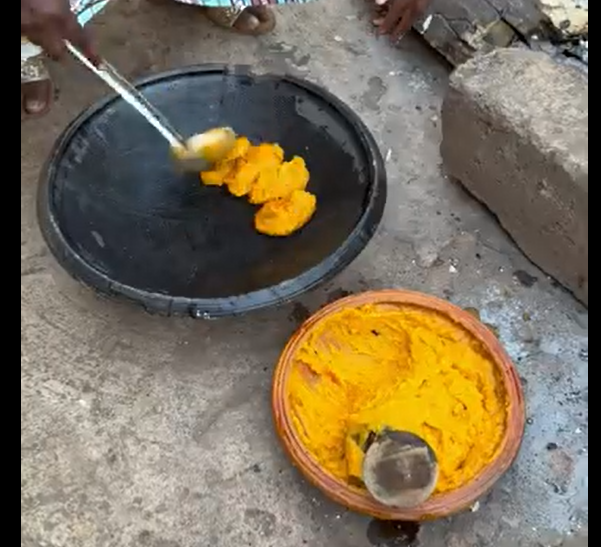
There’s a quiet joy that comes with discovering a dish you didn’t grow up eating, yet somehow feels familiar. That is the experience ‘Nyoma’, a lesser-known yam delicacy from Akuapim in Ghana’s Eastern Region, feels like. It is simple, comforting, and deeply thoughtful in its preparation.
That is how YouTuber TheRealDzifa felt when she first encountered Nyoma while travelling through the Akuapim, a place known not just for its hills but for food that respects patience and process. At first glance, Nyoma could easily be mistaken for mpotompoto. Look closer—and taste—and the difference becomes clear.
The cooking begins with fresh yams, peeled and gently cooked with tomatoes, onions, pepper, momone, kobi, and fish. Any fish works, really—local or imported—making it accessible even for those recreating it abroad. Once the vegetables soften, they’re blended into a rich base and returned to the pot. Seasoning and salt follow, then time does its work.
Read Also: Okro Stew: How to Prepare the Ghanaian Stew That Stretches, & Survives
Here’s where Nyoma earns its reputation. When the yam softens, part of it is removed and ground smoothly in an earthenware bowl, gradually mixed with its own broth and a touch of palm oil. The grinding continues until the texture is silky, almost custard-like. No chunks. No shortcuts.
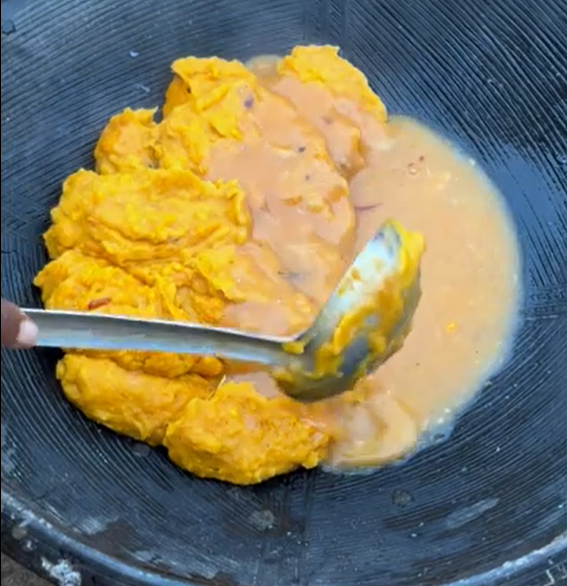
Served with the light, flavourful broth, Nyoma is intentionally gentle—perfect for babies, elders, or anyone craving something warm that goes down easy. Unlike mpotompoto, this dish is about smoothness, care, and balance.





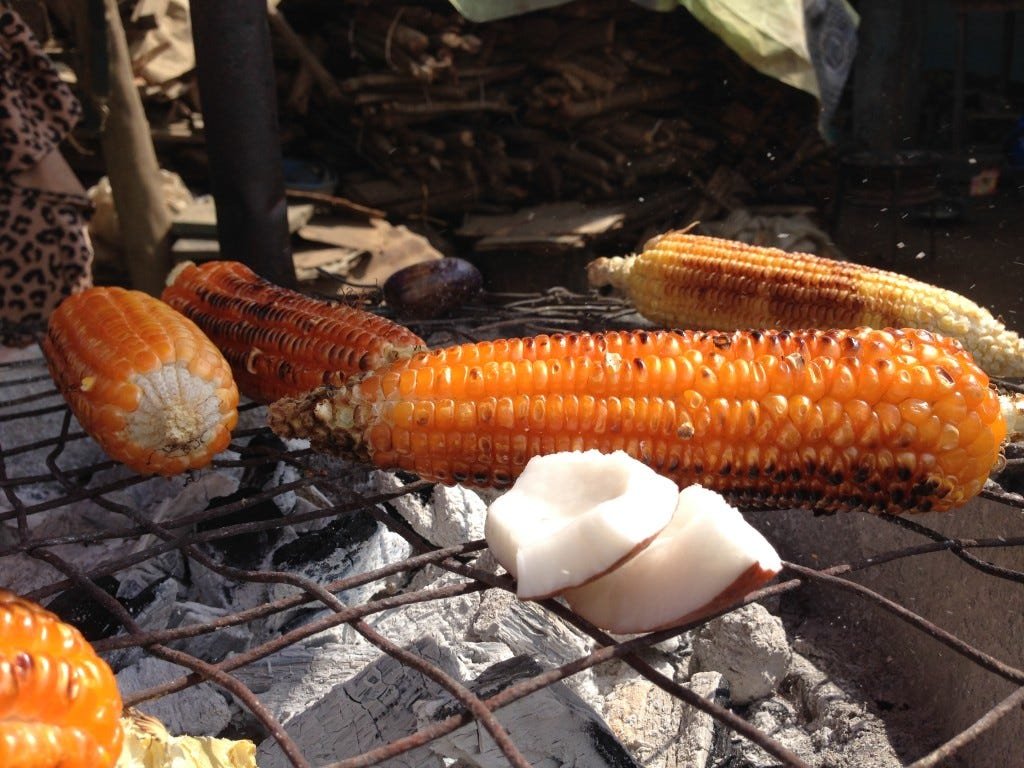
The smell reaches you before the sight of it—sweet, smoky, and unmistakably Ghanaian.
Along busy roads, outside markets, and at quiet neighborhood corners, roasted corn sizzles over glowing charcoal, turning a simple cob into one of the country’s most beloved street snacks.
In Ghana, roasted corn is more than something to nibble on; it is a small ritual woven into everyday life. Vendors fan open charcoal grills while rows of fresh maize slowly char, their golden kernels blistering and caramelising in the heat.
The result is a balance of flavours—naturally sweet corn deepened by a hint of smoke and a gentle crunch that gives way to juicy kernels.
During the maize harvest season, the snack becomes almost impossible to ignore. Stalls appear everywhere, from bustling city roads in Accra to quiet roadside stops in small towns.
Often, the corn is paired with fresh coconut, whose cool, milky sweetness perfectly complements the warm smokiness of the roasted kernels.
For many Ghanaians, roasted corn carries the taste of late afternoons and long journeys. Commuters buy it on their way home, students snack on it after school, and travellers reach for it during road trips across the country. It is affordable, filling, and surprisingly nutritious, rich in fibre and energy.
For visitors to Ghana, roasted corn offers something rare: a taste of daily life. No restaurant reservation is required—just follow the drifting aroma of charcoal and maize, and you will find one of Ghana’s simplest and most authentic culinary pleasures.
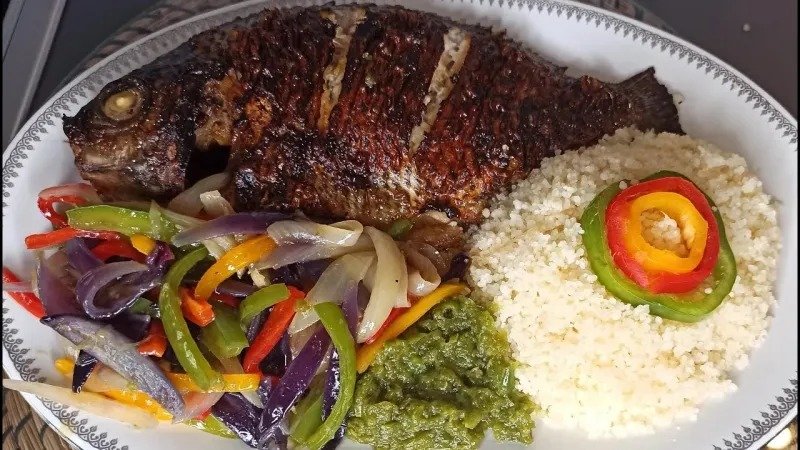
While the world often obsesses over Ghana’s spicy rice dishes, those in the know look toward the coast for a texture and tang that is entirely singular: akyeke and tilapia.
If you walk through the bustling streets of Osu or find yourself seaside in Takoradi, the air is thick with the scent of salted, grilled fish and the fermented brightness of cassava.
Akyeke (pronounced a-check-eh) is the crown jewel of the Nzema people, though its popularity has swept across the nation. At first glance, it looks like couscous, but the similarity ends there.
Made from fermented, grated cassava, it carries a light, fluffy texture and a signature tartness that cuts through the richness of its accompaniments. It is almost always served with a plump, charcoal-grilled tilapia—the skin charred to a crisp, the flesh underneath steaming and succulent.
The magic, however, lies in the “sides.” A mountain of akyeke is crowned with a vibrant medley of diced tomatoes, onions, and spicy green chilies, all drizzled with high-quality coconut oil or crude palm oil.
It is a masterpiece of temperature and texture—cold, zesty vegetables meeting hot, oily fish. For the health-conscious traveler, it is a gluten-free powerhouse, offering sustained energy without the heaviness of fried starches.
Eating akyeke is an experience in balance. It’s the go-to lunch for the Ghanaian professional and the ultimate weekend indulgence for families.
For any visitor, it represents the true taste of West African coastal life: breezy, bold, and brilliantly fresh.
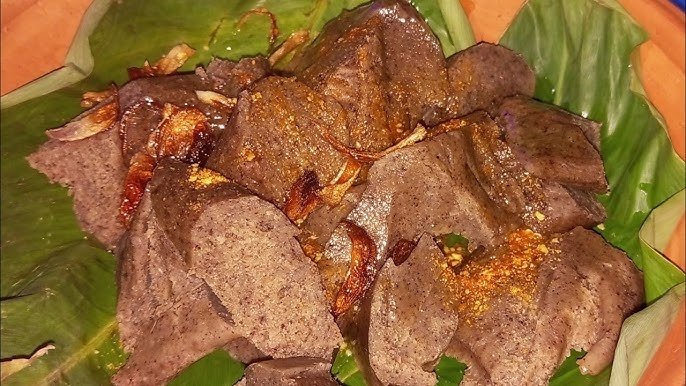
On a typical morning in northern Ghana, the soft aroma of freshly steamed tubani drifting from a roadside stall is enough to draw a small crowd.
Wrapped neatly in leaves and served warm, this humble bean cake has long been a comforting and nourishing staple for many households.
Tubani—sometimes spelled tumbani—is made from black-eyed pea flour mixed with water and a small amount of potassium carbonate, locally known as kawe.
The mixture is whisked into a smooth batter, carefully poured into leaves, and then steamed until it firms into a soft, fluffy cake. The result is simple yet satisfying: a light, protein-rich dish that has sustained generations.
But tubani’s appeal goes far beyond its ingredients. In northern Ghana, it is a familiar sight in markets, roadside food stalls, and neighbourhood corners, especially in the early morning hours. Vendors unwrap the steaming bundles and serve them with a generous drizzle of shea butter or oil, often topped with pepper and chopped onions.
The flavour is mild and earthy, allowing the spicy toppings to bring the dish to life.
For many people in the north, tubani is more than a snack—it is breakfast, lunch on the go, or a quick evening bite after a long day. Its affordability and nutritional value make it especially popular among students, workers, and travellers.
@akosuahstastyrecipe Enjoy one of the most nutritious Ghanaian 🇬🇭food from the NORTH 😍 Ideally you have to cook this for 30-40mins But because of this Comfee multipurpose cooker From @Kitchen And Beyond Limited the tubani was done in 15mins😍I LOVE SOFT LIFE…Call kitchen and beyond on 024 285 7393 and get yours NOW 🇬🇭INGREDIENTS 4 cups black eye beans 1 teaspoon potash (kawa) Salt to taste Kebab pepper Onion Oil NOTE 🇬🇭You can blend the beans into powder and mix with water or you can use the method i used . 🇬🇭You can add some seasoning if you want Serve with hot sauce ,stew ,or suya spice #ghana #ghanatiktok🇬🇭 #ghanatiktok🇬🇭 #ghanafood #fyp #bean #beanstiktok #ghanaianfood ♬ Yalma Dage Wanga – King Ayisoba
Visitors to Ghana who venture beyond the big cities often discover tubani as part of the region’s vibrant food culture.
Its preparation method—steaming batter in leaves—reflects culinary traditions passed down through families over decades.
In a country known for bold flavours and hearty meals, tubani stands out for its quiet simplicity. Yet that very simplicity is what makes it unforgettable.


Pope Leo XIV to Embark on Ambitious 10-Day Tour of Four African Nations

U.S. Warns Citizens to Reconsider Travel to Nigeria Citing Terrorism

Netherlands Reclaims Position as World’s Top Exporter of Cocoa Products, Ghana Remains Key Supplier
-

 Opinion2 days ago
Open Letter to the British Ambassador on Reparatory Justice: Ghana’s Call to the British Government
-

 Ghana News1 day ago
Newspaper Headlines Today: Wednesday, April 10, 2026
-

 Ghana News2 days ago
7 Dead, 2 Missing After Boat Capsizes on Volta Lake in Ghana
-

 Taste GH1 day ago
Smoke, Sweetness and Street Life: The Timeless Charm of Ghana’s Roasted Corn
-
 Business14 hours ago
Netherlands Reclaims Position as World’s Top Exporter of Cocoa Products, Ghana Remains Key Supplier
-

 Business24 hours ago
Ghana Nears Approval of Cannabis Licences as Country Prepares to Launch Regulated Industry
-

 Business2 days ago
3 Things Ghana is Doing to Reduce Fuel Prices Amid Global Uncertainty
-

 Ghana News2 days ago
Ghana Announces Suspension of Taxes, Other Measures to Reduce Fuel Prices Amid Global Crisis