
Culture
New Study Reveals Many Ghanaian Celebs Are Battling Mental Issues in Silence

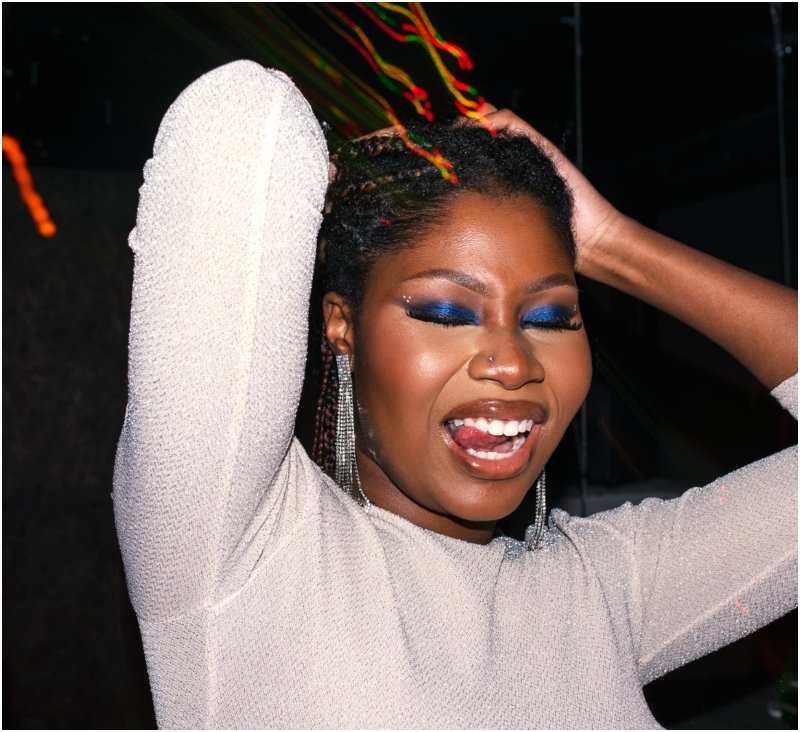
A groundbreaking study has revealed that many Ghanaian celebrities in the entertainment and sports industries are quietly struggling with mental health issues such as depression and anxiety, often hiding their pain behind closed doors due to deep-rooted societal stigma.
The research, published by The Conversation and republished on January 11, 2026, explains why speaking up could be a game-changer for both the stars and the broader Ghanaian public.
Conducted by Lyzbeth King, a PhD student at Ohio University’s School of Communication Studies, and Mary Kiura, an Assistant Professor of Organizational Communication at Purdue University Fort Wayne, the study draws from in-depth interviews with 20 Ghanaian celebrities, including actors and comedians.
Participants shared how they cope with mental health challenges in a society where such issues are frequently attributed to spiritual causes rather than medical ones.
Many turn to private prayer, fasting, or dawn vigils at churches instead of seeking professional therapy.
One male actor described waking up early to pray outside, allowing “the dawn dew to fall on me just so that I could pray and ask God to use the dew to change the happenings in my life.”
Others rely on discreet peer support within the industry.
A male actor and comedian explained, “Among celebrities who go through mental health issues, we talk. We have discussions among ourselves… I can call a colleague and say, guy, I have been experiencing this breakdown.”
The fear of judgment is profound: celebrities worry that admitting struggles could lead to lost opportunities, damaged reputations, or being labeled “weak” or spiritually afflicted. This mirrors wider Ghanaian attitudes, where religious explanations often overshadow clinical approaches, leading many to prayer camps rather than counselors.
The researchers point out that while prayer and faith play a vital role in Ghanaian culture, they should complement—not replace—professional mental health care. Celebrities, as influential figures, hold unique power to shift public perceptions. By speaking openly, they could normalize conversations, reduce stigma, and encourage others to seek help.
The study calls for a holistic approach: involving religious leaders, mental health professionals, families, and workplaces to foster compassion and understanding. It highlights that celebrities’ silence reflects the prevalence of mental illness across society and stresses the importance of investing in mental health resources continent-wide.
READ THE FULL ARTICLE PUBLISHED ON THE CONVERSATION BELOW:
Ghanaian celebrities are dealing with mental illness stigma behind closed doors – why speaking up matters
Lyzbeth King, Ohio University and Mary Kiura, Purdue University Fort Wayne
Imagine living in a country where talking openly about depression or anxiety can cost you your job, your reputation, or even your freedom. That is still the reality in Ghana, where mental illness is often explained in spiritual terms, and seeking help can mean being taken to a prayer camp instead of seeing a therapist. Even with global mental health awareness campaigns flooding social media and calendar days dedicated to ending stigma, many Ghanaians continue to struggle in silence.
We study communication and wanted to understand how Ghanaian celebrities, in particular, communicatively manage the stigma that is associated with their mental illness. Celebrities are often treated as near-superhuman figures; they are admired for their talent, resilience and public influence. But they suffer too.
For our research, we reached out to some celebrities who helped us reach out to others who were experiencing or had experienced a mental illness. Altogether, 20 celebrities were interviewed.
Most of them told us they hide their struggles and turn to private prayer rather than professional care. Fear of being labelled “weak”, judged as “spiritually afflicted” or losing work opportunities keeps them quiet. Instead of speaking out, they pray behind closed doors, hoping their symptoms will disappear before anyone notices.
Their status makes it even harder for them to speak openly about their mental illnesses. Their careers depend on credibility and the impression of strength. As a result, they cope privately, turning to prayer rather than professional help.
Celebrities influence public perceptions. Therefore, understanding how they manage mental illness stigma can offer valuable insights into broader societal attitudes and behaviours towards mental health communication.
Insights from our conversations
Our candid conversations with 20 Ghanaian celebrities in the entertainment and sports industries revealed the unique ways they manage stigma associated with mental illness. For example:
I would wake up at dawn and walk to a church and pray. I could stand outside for the dawn dew to fall on me just so that I could pray and ask God to use the dew to change the happenings in my life. (male, actor)
Some reported that prayer served not only as a way of managing stigma, but also as a source of healing from the mental illness itself. One said that “prayers and fasting” helped.
Others use a combination of acceptance and praying to cope. Acceptance is a stigma management strategy identified by health and stigma researcher Rebecca Meisenbach. It refers to acknowledging the existence of stigma around a certain condition and its application to the individual.
Acceptance as a stigma management strategy manifests through behaviours such as displaying symptoms associated with the mental illness and forming bonds with other individuals who are similarly stigmatised.
Our study participants said they managed stigma by connecting with others going through similar experiences:
When I was dealing with depression and all of that, the person I spoke to about it was my cousin. He was also depressed at the time. So it was like, we are sharing notes. You know, and we end up encouraging each other. (male, actor and comedian)
Another male actor and comedian shared: “Among celebrities who go through mental health issues, we talk. We have discussions among ourselves. It will not be possible to go out and say it publicly but among ourselves, I can call a colleague and say, guy, I have been experiencing this breakdown.”
What needs to be done
Our research shows an important truth for Ghanaians. The people we admire most are also actively navigating mental health challenges behind closed doors. Their silence and ways of handling their mental struggles reflect the same fears many ordinary Ghanaians carry. If people in the spotlight are quietly battling mental illnesses, it shows that mental illness is far more common than some people are willing to admit.
This is why real mental illness conversations must begin now. To reduce mental illness stigma, it must be openly spoken about, and every shift starts somewhere: in our homes, religious spaces and workplaces. When people speak honestly about their struggles, and if others listen and respond with compassion, it creates a culture where seeking mental help is not seen as shameful.
Celebrity stories show that prayer plays a central role in how celebrities largely cope with mental illness. Prayer is meaningful, culturally rooted and, for many, spiritually essential. But prayer should not replace medical help. In short, prayer and seeking medical help should not be seen as mutually exclusive; rather, they should be seen as complementary.
Mental health professionals and religious leaders can help reframe mental illness healing as a process that can be accomplished through both medical care and spiritual prayers and not as a choice between them, especially in a religious culture like Ghana. Doing this can offer a more holistic pathway to recovery and a more accepting community for people who fear stigmatisation.
Healing does not have to be hidden, and help does not have to be feared. A new culture of openness can begin with each person who chooses to speak, listen and support. We hope that this shift starts now and that Ghana becomes a place where spiritual care and medical support work in tandem to make mental health care accessible and stigma-free.
Lyzbeth King, PhD Student, School of Communication Studies, Ohio University and Mary Kiura, Assistant Professor of Organizational Communication, Purdue University Fort Wayne
This article is republished from The Conversation under a Creative Commons license. Read the original article.


If you blinked, you missed it. Between Monday’s rush and Wednesday’s lunch, Ghana’s social media forgot about cocoa prices, forgot about politics, and spent two full days arguing about a Russian man none of us had heard of before.
The Yaytseslav Situation
His name is Vyacheslav Trahov. Online, he goes by Yaytseslav. And for 48 hours, he owned Ghanaian Twitter.
The man walked around Accra Mall with Meta glasses, approached women, struck up conversations, and filmed everything. Some ended up at his apartment. Some ended up on his Telegram channel, where subscribers pay $5 a month for content too explicit for YouTube.
By Tuesday, the timeline had split into factions. One side called the women “cheap.” Another side pointed out the obvious: a foreigner secretly filming intimate encounters and monetising them without consent isn’t exposing anything except his own criminality.
By Wednesday evening, the Russian was reportedly deleting Ghana content from his channels. The consensus? Ghanaians don’t play that game.
Meanwhile, the 5G News Dropped
Buried under the Russian drama, Next Gen Infraco quietly launched commercial 5G operations. Available in parts of Accra, Kumasi, and Tamale now. Nationwide coverage promised by March 2027, just in time for Ghana @70.
The Duabo King Lesson
The same week, TikToker Duabo King learned that views have consequences. He posted a video accusing Kumasi police officers of misconduct with commercial workers. Under interrogation, he admitted fabricating the whole thing. Just wanted to trend.
He’s now in police custody—the charge: publication of false news with intent to cause fear and panic.
And Heritage Month Started
March 3 kicked off Heritage Month 2026 with a simple call from the Tourism Minister: See Ghana, Eat Ghana, Wear Ghana, Feel Ghana. Culinary showcases, regattas, and festivals running through March. Probably worth more attention than a Russian with a hidden camera.
But the algorithm decides, doesn’t it?
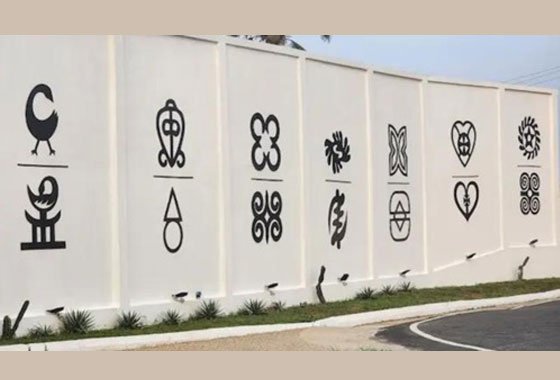
There is a building in Kumasi where the gate does not just open. It speaks.
Wrought into the iron, before you even step inside, is the symbol Bi Nka Bi. It means “no one should bite the other.” You do not read it in a book. You feel it as you walk through. The building itself is telling you how to behave while you are in its presence.
This is the quiet work of Adinkra symbols in Ghana today. They are no longer just stamped on cloth for funerals and festivals. They have moved into the walls. Into the floors. Into the places where we live, work, and gather. And they are speaking to us whether we notice or not.
From Funeral Cloth to Foundation
Adinkra started somewhere else entirely. The word itself comes from di nkra, meaning to say goodbye. The stamped patterns on cloth were once messages for the departed, a way of sending loved ones off with wisdom tucked into the fabric.
But symbols that carry meaning do not stay in one place for long. Slowly, they slipped off the cloth and into the world.
Walk through almost any public building in Accra or Kumasi today and you will see them. Gye Nyame on the wall of a church, reminding everyone inside who is in charge. Sankofa carved into the entrance of a school, telling students before they even sit down that the past is not finished with them yet. Funtumfunafu Denkyemfunafu, the conjoined crocodiles, on the floor of a community hall, whispering that even in competition, we share the same stomach.
The Architects Who Listened
There was a moment, somewhere in the last twenty years, when Ghanaian architects stopped copying glass boxes from Dubai and started looking at their own feet.
They realized that a building in Ghana should not look like any other building. It should carry the weight of where it sits. So they began asking questions. What if the railings carried Nyansapo (the knot of wisdom)? What if the courtyard was laid out in the shape of Ese Ne Tekrema (the teeth and the tongue), reminding people that even when they disagree, they must live together?
The work of people like Joe Osae-Addo and others in the Ghanaian architecture scene has pushed this forward. Not by forcing tradition onto modern buildings, but by letting the symbols find their natural place. A Sankofa on a school gate is not a decoration. It is a lesson that does not need a teacher.
What the Walls Are Saying
If you pay attention, the symbols start to read like a map of Ghanaian values.
Gye Nyame appears where people need reassurance—churches, mosques, even the front of some trotro stations. Dwennimmen, the ram’s horns, show up at courts and council buildings, reminding officials to be strong but humble. Mate Masie, meaning “what I hear, I keep,” sits quietly in libraries and archives.
The buildings are not just shelters. They are philosophy made visible.
Why It Matters Now
There is a reason this is happening during Adinkra Month, and there is a reason it matters beyond our borders.
The world is hungry for meaning. Everywhere, people are tired of buildings that look like airports, that feel like nothing. When a tourist walks into a hotel in Accra and sees Akoma (the heart) woven into the terrazzo floor, they are not just seeing a pattern. They are standing in a culture that decided not to forget itself.
For Ghanaians, it is something else. It is a reminder that we do not need to import identity. It is already in the ground. In the iron. In the wall.
Next time you walk into a building, look down. Look at the gate. Look at the pillars. There is a symbol there, and it has been waiting for you to notice.
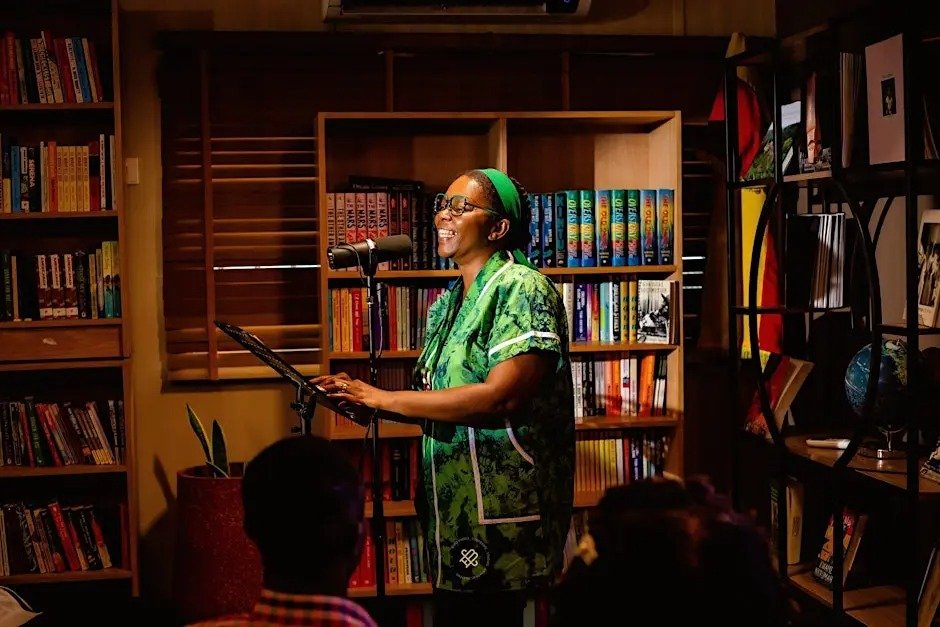
On 6 March, the official programme will proceed as usual. Speeches. A parade. Schoolchildren standing in the sun. It is important, yes. But if you want to feel independent, not just watch it, there is another place you should be.
The day after the flags go up, on Saturday, 7 March, a different kind of celebration is taking over East Legon. It is called Our Heritage through Music and Literature. And it is built on a simple idea: that Ghana’s freedom did not just happen in a conference room in 1957. It happens every time we tell our own stories.
Where the Stories Live
The event runs from midday until evening at the e-Ananse Library. If you do not know the name, you should. Ananse is the spider. The storyteller. The trickster who taught us that words have power. Holding an independence celebration in a place named after him tells you everything about what this day will feel like.
It opens with something quiet but necessary. A reading from Poetra Asantewa’s book, Someone Birthed Them Broken, put together with the Bibliophiles and Vibes Book Club. Before the music starts, before the crowd grows, there will be people sitting with a book, asking themselves what it means to be Ghanaian right now. That is the foundation.
Games That Remember
Between the literature and the music, the organisers have made space for something we do not do enough anymore. Play.
There will be outdoor and indoor Ghanaian games. The kind our parents played before screens arrived. It sounds simple. But watch a child learn ampe from an elder, or watch a tourist try to figure out our local board games, and you will see something shift. Culture passes from hand to hand in those moments. No lecture required.
Poetry That Listens
As the sun softens, the poets take over. Ancestors Answer Me is the name of the session, curated by Creatives Project Ghana. Four poets will stand up and try to connect the people who came before to the questions we are asking now. It could get heavy. It could get beautiful. Probably both.
The Evening Belongs to the Musicians
Then, the music.
TSIE, whose voice carries the weight of highlife and the lightness of now. Elsie Raad, who moves between genres like someone who refuses to be pinned down. Koo Kumi and Mr. Poetivist, both carrying the torch for spoken word and sound.
They will play acoustic. No heavy bass to drown out the thinking. Just voices and instruments, asking you to listen.
Why You Should Come
If you are visiting Ghana, you could spend your Independence Day weekend at a hotel pool. You would miss nothing but heat. Or you could come here, to East Legon, and sit in a room with people who are still figuring out what freedom means.
If you are Ghanaian, you could stay home. Or you could bring yourself and your questions to a place where we use music and words to do what Ananse always did—remind ourselves that the story is not over yet.
Date: Saturday, 7 March
Time: 12 pm – 8 pm
Location: e-Ananse Library, East Legon, Accra



-

 News2 days ago
Ghana Gears Up for Vibrant 69th Independence Day Celebrations: Parades, Plays, Poetry, and Heritage in Focus
-

 Ghana News2 days ago
Newspaper Headlines Today: Tuesday, March 3, 2026
-

 Tourism2 days ago
Emirates Resumes Limited Flights from Dubai as Middle East Airspace Slowly Reopens Amid Ongoing Conflict
-
 Ghana News2 days ago
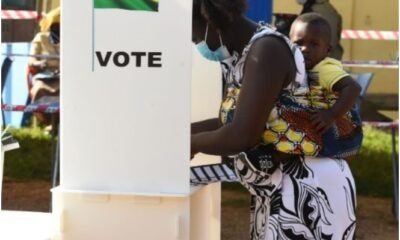
Ayawaso East By-Election Results Trickle in, ECG Audits Fast-Reading Meters, and Other Trending Topics in Ghana (March 3, 2026)
-

 Commentary2 days ago
At a glance: US‑Israel attack on Iran
-

 Ghana News2 days ago
Ghana’s Top Muslim Leader Condemns Khamenei Assassination, Calls for New World Order Based on ‘Right Over Might’
-

 Business2 days ago
Ghana’s Mega Infrastructure Push: 10 Game-Changing Projects Set to Transform the Country in 2026
-
 Fashion & Style2 days ago
The New Wave of “Afro-Minimalism”: Redefining Luxury Beyond the Print