
Culture
New Study Reveals Many Ghanaian Celebs Are Battling Mental Issues in Silence

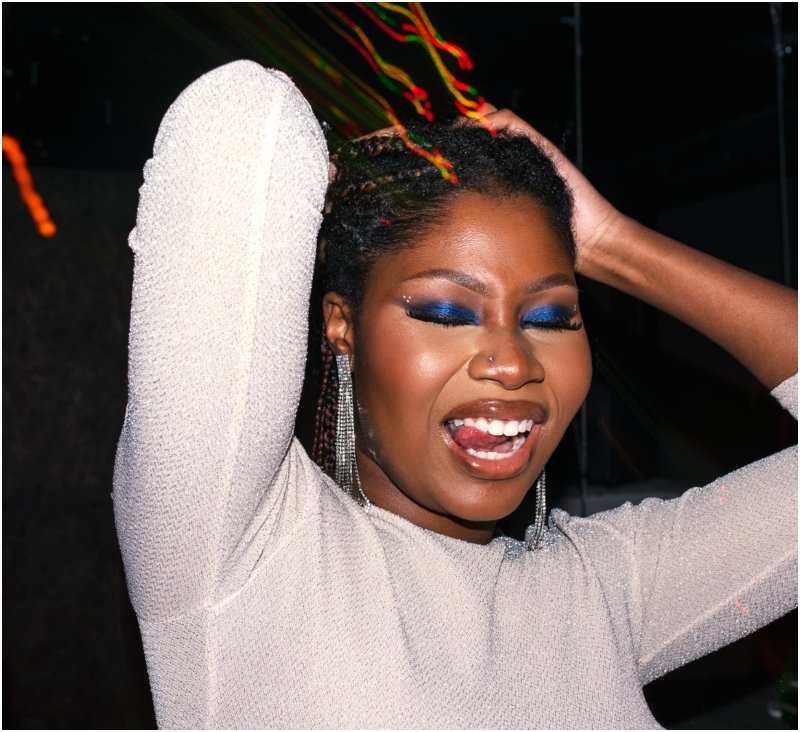
A groundbreaking study has revealed that many Ghanaian celebrities in the entertainment and sports industries are quietly struggling with mental health issues such as depression and anxiety, often hiding their pain behind closed doors due to deep-rooted societal stigma.
The research, published by The Conversation and republished on January 11, 2026, explains why speaking up could be a game-changer for both the stars and the broader Ghanaian public.
Conducted by Lyzbeth King, a PhD student at Ohio University’s School of Communication Studies, and Mary Kiura, an Assistant Professor of Organizational Communication at Purdue University Fort Wayne, the study draws from in-depth interviews with 20 Ghanaian celebrities, including actors and comedians.
Participants shared how they cope with mental health challenges in a society where such issues are frequently attributed to spiritual causes rather than medical ones.
Many turn to private prayer, fasting, or dawn vigils at churches instead of seeking professional therapy.
One male actor described waking up early to pray outside, allowing “the dawn dew to fall on me just so that I could pray and ask God to use the dew to change the happenings in my life.”
Others rely on discreet peer support within the industry.
A male actor and comedian explained, “Among celebrities who go through mental health issues, we talk. We have discussions among ourselves… I can call a colleague and say, guy, I have been experiencing this breakdown.”
The fear of judgment is profound: celebrities worry that admitting struggles could lead to lost opportunities, damaged reputations, or being labeled “weak” or spiritually afflicted. This mirrors wider Ghanaian attitudes, where religious explanations often overshadow clinical approaches, leading many to prayer camps rather than counselors.
The researchers point out that while prayer and faith play a vital role in Ghanaian culture, they should complement—not replace—professional mental health care. Celebrities, as influential figures, hold unique power to shift public perceptions. By speaking openly, they could normalize conversations, reduce stigma, and encourage others to seek help.
The study calls for a holistic approach: involving religious leaders, mental health professionals, families, and workplaces to foster compassion and understanding. It highlights that celebrities’ silence reflects the prevalence of mental illness across society and stresses the importance of investing in mental health resources continent-wide.
READ THE FULL ARTICLE PUBLISHED ON THE CONVERSATION BELOW:
Ghanaian celebrities are dealing with mental illness stigma behind closed doors – why speaking up matters
Lyzbeth King, Ohio University and Mary Kiura, Purdue University Fort Wayne
Imagine living in a country where talking openly about depression or anxiety can cost you your job, your reputation, or even your freedom. That is still the reality in Ghana, where mental illness is often explained in spiritual terms, and seeking help can mean being taken to a prayer camp instead of seeing a therapist. Even with global mental health awareness campaigns flooding social media and calendar days dedicated to ending stigma, many Ghanaians continue to struggle in silence.
We study communication and wanted to understand how Ghanaian celebrities, in particular, communicatively manage the stigma that is associated with their mental illness. Celebrities are often treated as near-superhuman figures; they are admired for their talent, resilience and public influence. But they suffer too.
For our research, we reached out to some celebrities who helped us reach out to others who were experiencing or had experienced a mental illness. Altogether, 20 celebrities were interviewed.
Most of them told us they hide their struggles and turn to private prayer rather than professional care. Fear of being labelled “weak”, judged as “spiritually afflicted” or losing work opportunities keeps them quiet. Instead of speaking out, they pray behind closed doors, hoping their symptoms will disappear before anyone notices.
Their status makes it even harder for them to speak openly about their mental illnesses. Their careers depend on credibility and the impression of strength. As a result, they cope privately, turning to prayer rather than professional help.
Celebrities influence public perceptions. Therefore, understanding how they manage mental illness stigma can offer valuable insights into broader societal attitudes and behaviours towards mental health communication.
Insights from our conversations
Our candid conversations with 20 Ghanaian celebrities in the entertainment and sports industries revealed the unique ways they manage stigma associated with mental illness. For example:
I would wake up at dawn and walk to a church and pray. I could stand outside for the dawn dew to fall on me just so that I could pray and ask God to use the dew to change the happenings in my life. (male, actor)
Some reported that prayer served not only as a way of managing stigma, but also as a source of healing from the mental illness itself. One said that “prayers and fasting” helped.
Others use a combination of acceptance and praying to cope. Acceptance is a stigma management strategy identified by health and stigma researcher Rebecca Meisenbach. It refers to acknowledging the existence of stigma around a certain condition and its application to the individual.
Acceptance as a stigma management strategy manifests through behaviours such as displaying symptoms associated with the mental illness and forming bonds with other individuals who are similarly stigmatised.
Our study participants said they managed stigma by connecting with others going through similar experiences:
When I was dealing with depression and all of that, the person I spoke to about it was my cousin. He was also depressed at the time. So it was like, we are sharing notes. You know, and we end up encouraging each other. (male, actor and comedian)
Another male actor and comedian shared: “Among celebrities who go through mental health issues, we talk. We have discussions among ourselves. It will not be possible to go out and say it publicly but among ourselves, I can call a colleague and say, guy, I have been experiencing this breakdown.”
What needs to be done
Our research shows an important truth for Ghanaians. The people we admire most are also actively navigating mental health challenges behind closed doors. Their silence and ways of handling their mental struggles reflect the same fears many ordinary Ghanaians carry. If people in the spotlight are quietly battling mental illnesses, it shows that mental illness is far more common than some people are willing to admit.
This is why real mental illness conversations must begin now. To reduce mental illness stigma, it must be openly spoken about, and every shift starts somewhere: in our homes, religious spaces and workplaces. When people speak honestly about their struggles, and if others listen and respond with compassion, it creates a culture where seeking mental help is not seen as shameful.
Celebrity stories show that prayer plays a central role in how celebrities largely cope with mental illness. Prayer is meaningful, culturally rooted and, for many, spiritually essential. But prayer should not replace medical help. In short, prayer and seeking medical help should not be seen as mutually exclusive; rather, they should be seen as complementary.
Mental health professionals and religious leaders can help reframe mental illness healing as a process that can be accomplished through both medical care and spiritual prayers and not as a choice between them, especially in a religious culture like Ghana. Doing this can offer a more holistic pathway to recovery and a more accepting community for people who fear stigmatisation.
Healing does not have to be hidden, and help does not have to be feared. A new culture of openness can begin with each person who chooses to speak, listen and support. We hope that this shift starts now and that Ghana becomes a place where spiritual care and medical support work in tandem to make mental health care accessible and stigma-free.
Lyzbeth King, PhD Student, School of Communication Studies, Ohio University and Mary Kiura, Assistant Professor of Organizational Communication, Purdue University Fort Wayne
This article is republished from The Conversation under a Creative Commons license. Read the original article.

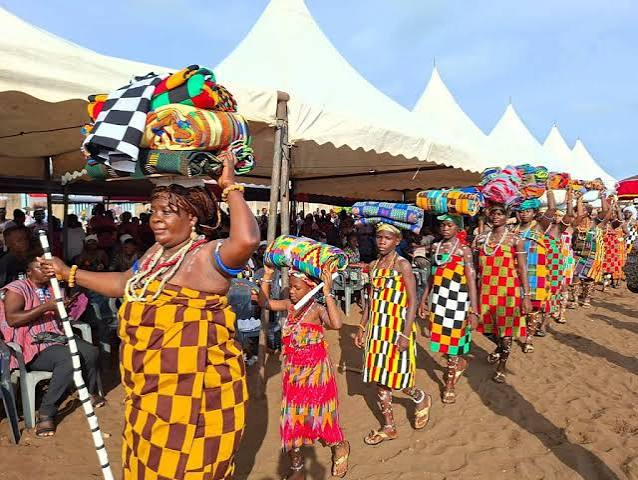
Water splashes against an imaginary wall as people gather to witness one of the most powerful stories in Ewe history.
In Ve-Deme, in Ghana’s Volta Region, the Velukusi Festival brings an ancestral struggle for freedom into the present, transforming a story of oppression, courage and escape into a living act of remembrance.
Celebrated during the first week of October, Velukusi commemorates the traditional account of the Ewes’ escape from the cruel rule of King Aghorkoli in Togo. According to the story passed down through generations, the Ewes were held behind a formidable wall.
Determined to break free, they repeatedly poured water onto a section of the structure until it weakened and collapsed.
Their escape did not end with the fallen wall. To conceal their direction of travel, they walked backwards, leaving misleading footprints for those who might pursue them. This extraordinary detail has become a defining feature of the festival’s historical re-enactment.
Bringing Ancestral Courage to Life
During Velukusi, the community revisits the escape through a dramatic performance that allows younger generations and visitors to connect with the experience of their forebears.
The re-enactment gives physical expression to a story that speaks of collective determination, ingenuity and the enduring human desire for freedom.
The festival reaches its climax with a colourful display of traditional cloths and beads, followed by a grand durbar of chiefs.
Traditional regalia, customary leadership and communal gatherings place Ewe identity at the centre of the celebration.
A Living Heritage
For the people of Ve-Deme, Velukusi is more than a historical commemoration. It strengthens community bonds and keeps ancestral memory alive at a time when younger generations are increasingly exposed to global influences.
For visitors exploring Ghana, the festival offers an opportunity to encounter the Volta Region’s heritage through storytelling, ceremony and traditional craftsmanship.
Velukusi reminds us that freedom is worth remembering—and that experiencing the traditions of Ve-Deme is a meaningful way to understand the resilience of the Ewe people.
Reels & Social Media Highlights
Ghana’s Timeline Erupts: Showboy’s Crude Plea, Asantewaa’s Silence, and a Nation Divided


On Wednesday, 14th October 2026, Ghana’s social media didn’t just trend — it combusted. At the center of the firestorm: Showboy, a deported ex-convict and self-styled provocateur, posting a video begging TikTok star Asantewaa to sleep with him because “everyone has chopped her except me.”
The phrase — crude street slang for sex — detonated across Facebook, X, and TikTok, splitting users between outrage, disgust, and reluctant laughter.
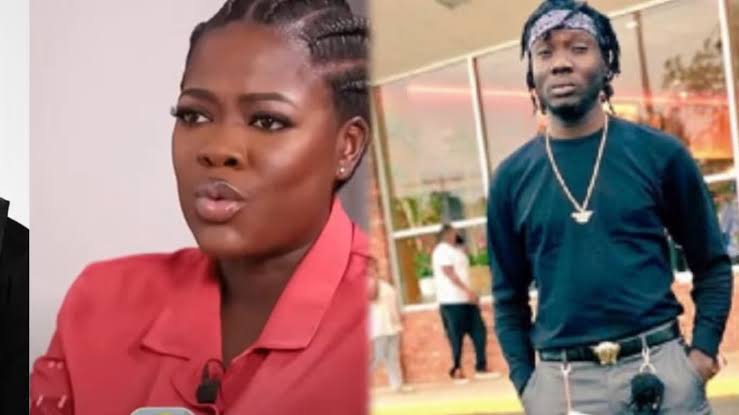
The Asantewaa saga had been simmering for weeks. First, rapper AMG Armani claimed a one-night stand and a pregnancy.
@notorioustrend1 Showboy Goes Hard On Asantewaa For Exp0sing Some Secret In Her Marriage On TikTok Live #ghanabloggers #ghanatiktok🇬🇭 #asantewaaaaa #showboy #notorioustrend ♬ original sound – Notorious🥷 Trend📸
Then Asantewaa herself explained she left her husband over sickle cell genotype compatibility, insisting she wasn’t with Armani until after the split. Showboy’s video poured petrol on the embers.
But the timeline wasn’t only burning with celebrity gossip. In Obuasi, the GES interdicted a headmaster accused of sexual misconduct after students rioted and vandalized school property.
The story — girls alleging assault inside the headmaster’s bungalow, a menstruation claim used as pretext, a school in ruins — resonated because it echoed a painful national truth: institutions meant to protect children often fail them.
Meanwhile, in Agona Nkwanta, a viral video of a man assaulting his wife led to a three-month jail sentence on the very same day, a rare moment of accountability that many users celebrated, even as they questioned why it took a viral clip for justice to move.
What made October 14th distinctly Ghanaian was the collision of these stories.
A culture wrestling publicly with how women are treated — by men like Showboy who see clout in disrespect, by authority figures who abuse trust — while simultaneously turning tragedy into meme fodder, joke captions, duet videos.
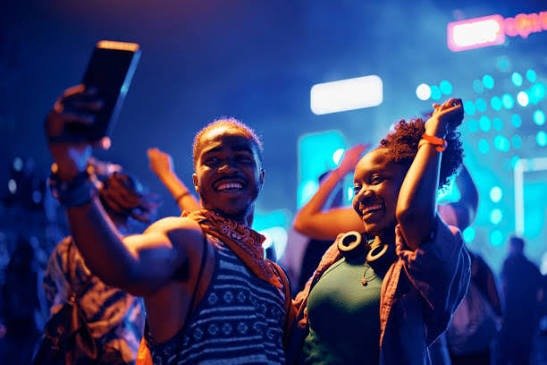
As the festive season winds down, Accra has one more reason to stay awake. Live in Ghana – MaddFest arrives at Alora Beach Resort on January 3, 2027, promising six hours of nightlife and celebration for partygoers eager to keep Ghana’s festive spirit alive.
Organised by December in Ghana, an event organiser with experience hosting entertainment events, MaddFest forms part of the social energy surrounding Ghana’s popular festive season, when music, nightlife and gatherings draw locals and international visitors together.
A Night Out by the Beach
Scheduled for Sunday, January 3, from 10 p.m. to 4 a.m., the event offers an opportunity to experience Accra after dark in a beach resort setting.
While specific performers, food offerings and activities have not yet been detailed, the event’s late-night format promises an extended opportunity for guests to socialise and enjoy the city’s entertainment scene.
Ghana’s December festivities have grown into a major attraction for the diaspora and international travellers, with concerts, parties and cultural gatherings creating opportunities to reconnect with home and discover contemporary Ghanaian music and lifestyle.
Events such as MaddFest contribute to this atmosphere, where entertainment becomes a meeting point for different generations and cultures.
Why MaddFest Deserves a Place on Your Calendar
For visitors, MaddFest offers a chance to experience Accra’s nightlife beyond daytime sightseeing.
Ghanaians returning from abroad may also find it an opportunity to reconnect with friends and enjoy the country’s lively entertainment culture.
The event is not presented as a traditional cultural festival, but its social setting reflects the role music, dancing and shared celebrations play in Ghanaian life.
With Alora Beach Resort providing the setting, guests can plan a night out that extends into the early hours of Monday morning.
Whether you are visiting Ghana for the festive season or simply looking for another reason to enjoy Accra, Live in Ghana – MaddFest offers a date worth considering. Check the official event listing for ticket details and announcements before making plans.



-

 Ghana News1 day ago
OBITUARY: Gamal Gorkeh Nkrumah, Son of Ghana’s Founding President, Dies in Cairo
-

 Festivals & Events1 day ago
MaddFest 2027: Welcome the New Year with a Night of Celebration in Accra
-
 Health & Wellness2 days ago
Walking Is More Than Exercise: Small Steps That Can Transform Your Health
-
 Arts and GH Heritage2 days ago
Inside Togo’s Abandoned Colonial Building, African Artists Reclaim Cultural Memory
-

 Global Update1 day ago
Wave of Student Killings at Mexico Universities Raises Safety Concerns
-
 Ghana News1 day ago
Mahama to Churches: The Real Sermon Is Written After the Closing Prayer
-

 Reels & Social Media Highlights1 day ago
Ghana’s Timeline Erupts: Showboy’s Crude Plea, Asantewaa’s Silence, and a Nation Divided
-

 Taste GH13 hours ago
Simple, Nourishing and Rooted in Tradition: Discover Ghana’s Kapala