
Global Update
ICE Deputy Director Resigns

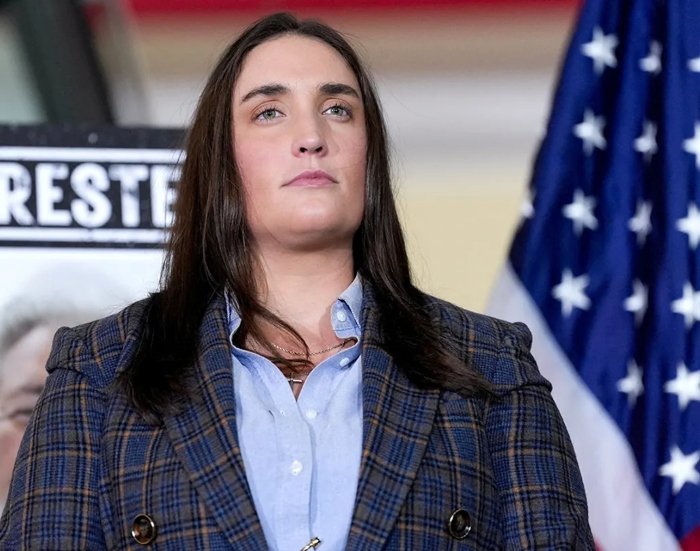
Madison Sheahan, the deputy director of U.S. Immigration and Customs Enforcement (ICE), has resigned from her position.
She stepped down to launch a bid for Congress in Ohio’s 9th District, Fox News reported on Thursday, January 15, citing multiple federal law enforcement sources.
The resignation, announced internally marks a sudden move by a key figure in the Trump administration’s immigration enforcement apparatus.
Sheahan, who has been a vocal advocate for strict border security and interior enforcement, is challenging long-serving Democratic incumbent Rep. Marcy Kaptur in a district that has seen mixed voting patterns in recent elections — with many counties favoring President Donald Trump in November 2024, despite Kaptur’s re-election.
“No Excuses. Let’s Get It Done,” reads the message on Sheahan’s campaign website.
She positioned herself as a defender of “American jobs, American paychecks, and American values,” stating:
“For too long, Northwest Ohio has been represented by a career politician who has grown comfortable with the swamp and disconnected from the people back home. I am running because President Trump deserves a Congress that stands firmly behind his agenda, and Ohio deserves an elected Representative that will make America safer, more affordable, and more prosperous.”
Homeland Security Secretary Kristi Noem praised Sheahan’s leadership in a statement:
“I’ve known her for years, she loves her family, Ohio and her country. She will be a great defender of freedom when she goes to Congress. Madison Sheahan is a work horse, strong executor, and terrific leader who led the men and women of ICE to achieve the American people’s mandate to target, arrest, and deport criminal illegal aliens. We wish her all the best.”
Under Sheahan’s tenure as deputy director, ICE reportedly expanded significantly, growing from roughly 20,000 employees and a $10 billion budget to an $85 billion organization with more than 30,000 professionals. She is credited with overseeing the hiring of 12,000 new law enforcement officers within 180 days, aligning with the administration’s aggressive immigration enforcement goals.
Before joining ICE, Sheahan served as Secretary of the Louisiana Department of Wildlife and Fisheries under Governor Jeff Landry, managing a $280 million budget and leading over 800 employees. She previously held leadership roles under former South Dakota Governor Kristi Noem.
Kaptur’s campaign responded to the announcement by highlighting her long record of bipartisan service: “While Republicans from near and far will fight through a messy primary in this district they gerrymandered again just this fall, Congresswoman Kaptur is focused on delivering real results for her constituents. She’s working to lower costs for working families, protect access to affordable health care, and bring transformative investments to Northwest Ohio. Voters are tired of the self-dealing corruption and culture of lawlessness they’ve seen over the last year. They want a leader focused on affordability and real results, and Marcy Kaptur consistently works across the aisle to deliver both.”
Sheahan’s decision to leave ICE comes at a time of heightened focus on U.S. immigration policy, including recent visa pauses and enforcement actions affecting nationals from several African countries, including Ghana. Her congressional bid is expected to center on border security, economic protectionism, and support for President Trump’s agenda, potentially influencing U.S.-Ghana relations and diaspora discussions.











Global Update
“Africa Speaks Powerfully, but Empty”: Nigerian Professional Exposes Continent’s Mobility Crisis

As African leaders converged on the Ethiopian capital last week for the African Union summit to discuss unity, integration, and shared destiny, a Nigerian professional who was blocked from attending a parallel peace conference in Mauritania is exposing the stark contradiction between the continent’s rhetoric and its reality.
Habibah Waziri, Managing Director of BGR Consulting, which operates across Nigeria, Rwanda and Ghana, was scheduled to co-launch the Women in Youth Summit at the Africa Conference for Peace in Mauritania.
Her mission was to help shape discussions on designing a peace architecture that is “intelligent, secure, inclusive, culturally grounded, and human.”
Instead, her visa was rejected twice.
Mobility Barriers Highlight Continental Fragmentation
Speaking from her base in Nigeria, Waziri detailed the logistical absurdities that African professionals routinely face when attempting to move across their own continent.
To travel from Nigeria to Mauritania for the conference, her most realistic flight options were Air France and Turkish Airlines—carriers that would require her to leave the continent entirely, transit through Europe or Istanbul, and then fly back into Africa. Her first preference, Royal Air Maroc, proved impractical within the constraints she faced.
“Across the continent, countries are falling out of the ECOWAS block, retreating from regional commitments in favour of herded national postures,” Waziri said. “Mobility, which was once the promise, is becoming collateral damage.”
Visa Rejections and the “Risk” of African Passports
Waziri pointed to the systemic barriers embedded in visa processes across Africa, noting that her Nigerian passport—carried by one of the continent’s most economically active populations—is consistently “read as a risk and not as potential.”
“This perception quietly shapes outcomes of visas, which in turn affects opportunity, access, and free movement,” she explained. “And perception, when left unchallenged, hardens policy.”
The dual barriers of fragmented air connectivity and restrictive visa regimes create what she describes as a fundamental obstacle to the very integration African leaders profess to champion.
Women Bear the Brunt of Closed Borders
Waziri emphasised that the impact of these barriers falls disproportionately on African women, who serve as what she calls “the connective tissue” of the continent’s economy and social fabric.
“Across Africa, women already power economic development through cross-border trade, informal markets, community-level peace building, and emerging digital economies,” she stated.
“When borders close, women’s economic power contracts. When visas fail, women’s leadership disappears from decision-making spaces. Peace processes become narrower, economies become less resilient, and futures become less inclusive.”
Ambition Without Infrastructure
As AU leaders discussed the African Continental Free Trade Area (AfCFTA) and other integration initiatives, Waziri warned that grand declarations amount to little without practical foundations.
“While leaders are in Addis Ababa to chart Africa’s new future, the present is reminding us firmly that this ambition without infrastructure is honestly just symbolism,” she said. “Africa will continue to speak powerfully, but empty.”
She argued that if the continent structurally limits who gets to speak, who gets to move, and who gets to shape outcomes, then the vision of unity remains hollow.
“Peace cannot be built in isolation,” Waziri added. “And the future cannot be negotiated by half of the continent.”
Call for Practical Integration
Waziri’s experience underscores a growing demand among African professionals for tangible progress on freedom of movement, including:
- Streamlined visa processes that treat African passport holders as assets rather than risks
- Strengthened intra-African air connectivity that reduces reliance on non-African carriers
- Recognition that mobility is essential for trade, peace-building, and inclusive development
“Our work is still ahead, and the signal could not be clearer,” she concluded. “Our infrastructure has not yet caught up with our ambition.”
The African Union summit continues through this week, with leaders expected to issue declarations on continental integration.
Whether those declarations will translate into the practical changes that professionals like Waziri require remains an open question.
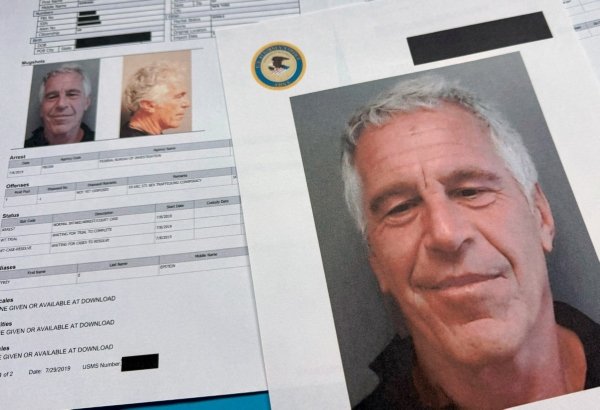
Newly unsealed court documents from the Jeffrey Epstein civil case, made public in early February 2026, contain several references to Ghana.
The mentions, however, do not accuse any Ghanaian citizens or officials of wrongdoing or direct involvement in Epstein’s criminal activities. They appear in depositions, flight logs, and witness statements related to Epstein’s international travel and business dealings in the early 2000s.
According to summaries published by GhanaWeb on February 13, 2026, the references primarily involve:
- Epstein’s brief business and travel connections to West Africa during that period
- A former high-profile associate of Epstein who had commercial interests or meetings linked to Ghana
- Passing mentions of Ghana in the context of broader African financial or investment discussions Epstein pursued
None of the documents implicate current or former Ghanaian government officials, business leaders, or private citizens in any criminal conduct. The references are largely contextual and do not form part of the core allegations against Epstein or his co-conspirators.
Ghanaian authorities have not issued an official comment on the disclosures. Legal and diplomatic experts note that the mentions appear incidental and do not trigger any immediate investigative action under Ghanaian law.
The files are part of the long-running civil defamation lawsuit brought by Virginia Giuffre against Ghislaine Maxwell, with thousands of pages unsealed in stages since 2024.
The Epstein case continues to generate global headlines, with new batches of documents periodically revealing names, travel records, and financial connections. While the Ghana references have sparked online discussion in the country, analysts caution against over-interpretation, as the documents do not suggest any Ghanaian participation in Epstein’s sex-trafficking network.
The latest unsealing adds to the ongoing public fascination and scrutiny surrounding Epstein’s elite network, even years after his 2019 death in custody.
Global Update
King Charles to Host Nigerian President Bola Tinubu for State Visit in March 2026 – First in 37 Years
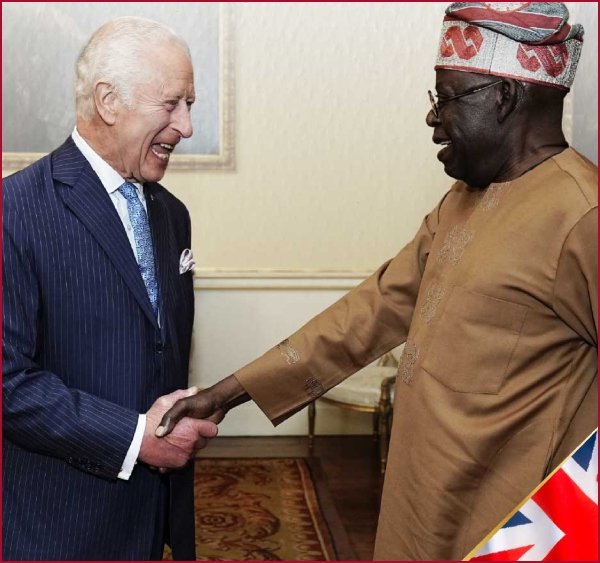
Buckingham Palace has announced that King Charles III and Queen Camilla will welcome President Bola Ahmed Tinubu of Nigeria and First Lady Oluremi Tinubu for a two-day state visit to the United Kingdom from March 18 to March 19, 2026.
The visit, centered at Windsor Castle, marks the first official state visit by a Nigerian president to the UK in 37 years—the last being in 1989 under military leader Gen. Ibrahim Babangida.
The announcement, made on February 7, 2026, follows the high-profile private trip by Prince Harry and Meghan Markle to Nigeria in May 2024, where the couple participated in Invictus Games events, mental health initiatives, and cultural engagements. While Palace officials have not drawn a direct connection, the timing adds symbolic resonance to the strengthening of UK-Nigeria ties amid ongoing Commonwealth cooperation and bilateral diplomacy.
The state visit will include traditional ceremonial elements—such as a formal welcome, bilateral meetings with King Charles, a state banquet, and engagements highlighting shared priorities in trade, security, education, climate action, and cultural exchange. President Tinubu previously met King Charles at Buckingham Palace in September 2024 and during the COP28 summit in Dubai in 2023.
The visit reflects the UK’s renewed emphasis on deepening partnerships with African nations under the Labour government, with Nigeria—Africa’s largest economy and a key Commonwealth member—playing a central role. It also underscores continued diplomatic momentum following recent UK engagements with other African leaders.
No detailed program has been released yet, but officials say the visit will reinforce long-standing historical, economic, and people-to-people links between the two countries.


Ibrahim Mahama Acquires New $70 Million Private Jet

Ghana’s Top Muslim Leader Condemns Khamenei Assassination, Calls for New World Order Based on ‘Right Over Might’

The New Wave of “Afro-Minimalism”: Redefining Luxury Beyond the Print
-

 News13 hours ago
Ghana Gears Up for Vibrant 69th Independence Day Celebrations: Parades, Plays, Poetry, and Heritage in Focus
-

 Tourism11 hours ago
Emirates Resumes Limited Flights from Dubai as Middle East Airspace Slowly Reopens Amid Ongoing Conflict
-

 Ghana News14 hours ago
Newspaper Headlines Today: Tuesday, March 3, 2026
-

 Ghana News14 hours ago
Ayawaso East By-Election Results Trickle in, ECG Audits Fast-Reading Meters, and Other Trending Topics in Ghana (March 3, 2026)
-

 Ghana News2 days ago
Court Slaps Barker-Vormawor with GH₵5m for Defaming Kan Dapaah and Other Trending Topics in Ghana (March 2, 2026)
-
 Fashion & Style5 hours ago
The New Wave of “Afro-Minimalism”: Redefining Luxury Beyond the Print
-
 Ghana News4 hours ago
Ghana’s Top Muslim Leader Condemns Khamenei Assassination, Calls for New World Order Based on ‘Right Over Might’
-

 Commentary11 hours ago
At a glance: US‑Israel attack on Iran