
Ghana News
Ghana’s TRAFFITECH-GH Cameras to Begin Full Enforcement Oct. 1, With Fines Up to GH₵2,400

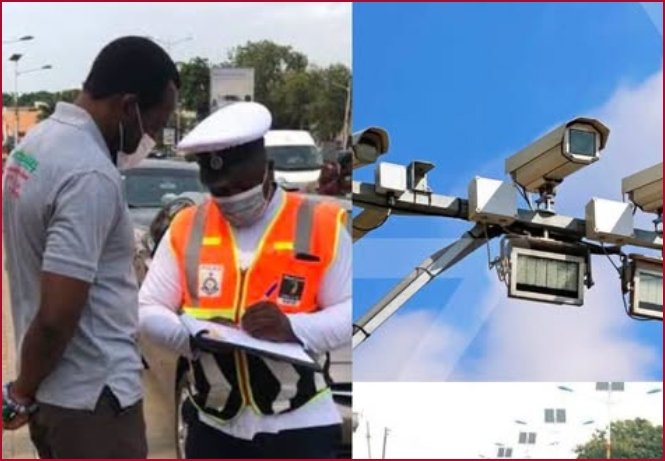
Motorists face graduated penalties under new Road Traffic Regulations; repeat offenders risk licence suspension after sixth violation within 24 months
Motorists across Ghana will face full enforcement under the TRAFFITECH-GH automated traffic system beginning October 1, 2026, with fines ranging from GH₵60 to GH₵2,400 depending on the offence and repeat violations, according to the Ghana Police Service.
The system, developed by the Ghana Police Service (GPS) to enforce road traffic laws and improve road safety, uses cameras and sensors to automatically capture images and video of vehicles that flout regulations, including speeding and running red lights.
Penalty Structure: One Unit Equals GH₵12
Under the new Road Traffic Regulations, 2026 (L.I. 2519), fines are calculated in penalty units, with one penalty unit valued at GH₵12. The regulations prescribe fines and, in some cases, imprisonment for a range of offences including illegal racing, jumping red lights, improper parking, disobeying traffic officers, and using television monitors while driving.
For camera-detected violations, the penalty escalates with repeated offences within a 24-month period: the first, second, and third offences each attract GH₵120; the fourth offence rises to GH₵180; and the fifth offence reaches GH₵240. A sixth offence within 24 months may lead to court action and licence suspension or revocation for at least 12 months, along with mandatory retraining and retesting.
Major Offences and Corresponding Penalties
The Ghana Police Service has published a breakdown of key offences and their penalties:
| Offence | Fine Range | Possible Imprisonment |
|---|---|---|
| Drink or drug driving | GH₵600 – GH₵2,400 | Up to 40 months |
| Mobile phone use while driving | Up to GH₵600 | Up to 3 months |
| Jumping a red light | GH₵120 – GH₵360 | Up to 30 days |
| Street/drag racing and speeding | GH₵120 – GH₵300 | Up to 30 days |
| Parking in disability bays | Up to GH₵300 | Up to 8 months |
| Operating TV monitor while driving | Up to GH₵300 | Up to 30 days |
| Jaywalking or refusing footbridge | Up to GH₵60 | — |
Source: GhanaWeb and Starr FM
Commercial transport operators face steeper penalties. Okada or aboboyaa operators without authorisation could face fines ranging from GH₵600 to GH₵1,200 and up to 24 months in prison, while riders could face fines of GH₵300 to GH₵600 and up to eight months in prison.
How TRAFFITECH-GH Works
The system deploys fixed, mobile, and laser speed-measurement devices to capture offences including speeding and running red lights. Pictures and videos are automatically transmitted to a back office for validation, after which an Electronic Notice of Violation (ENV) is issued by SMS to the registered vehicle owner.
“The ENV will have a Ticket Number and will indicate the location, date, and time of the traffic offence, as well as the vehicle registration number, offence description, payment amount, and payment deadline,” the Police Service states.
For camera-detected offences, notices go to the registered owner of the vehicle, regardless of who was driving at the time. The Police has warned vehicle owners to be mindful of who uses their vehicles.
Payment and Contesting
Recipients of an ENV have 14 days to either pay the fine or contest it online. Payments can be made through www.ghana.gov.gh using mobile money (MTN, Telecel, AirtelTigo) or a debit or credit card, or by dialling *222# and selecting option 6.
Those who default on payment will incur an additional 1% penalty on the original fine for each day of default after the 14-day period.
Rollout Delayed to November 1
While the original announcement set October 1 as the start date, the Ghana Police Service subsequently rescheduled the full implementation of TRAFFITECH-GH to November 1, 2026. The delay followed preparations including nationwide training of Motor Traffic and Transport Department (MTTD) personnel.
Background and Legal Framework
TRAFFITECH-GH is being introduced as part of efforts to strengthen road traffic enforcement through technology and reduce violations on Ghana’s roads. The automated system is designed to identify traffic offences and support enforcement without relying solely on physical intervention by traffic officers.
The legal basis for the enforcement is the Road Traffic Regulations, 2026 (L.I. 2519), which prescribes fines and imprisonment for a wide range of offences. Additional offences enforced under TRAFFITECH-GH include expired roadworthiness certificates, wrongful overtaking, non-use of seatbelts, use of an expired licence, driving an uninsured vehicle, and misuse of sirens.
The regulations also introduce provisions on automated enforcement, allowing offences detected by traffic enforcement devices to attract graduated fines and, after repeated violations, possible suspension or revocation of a driver’s licence.












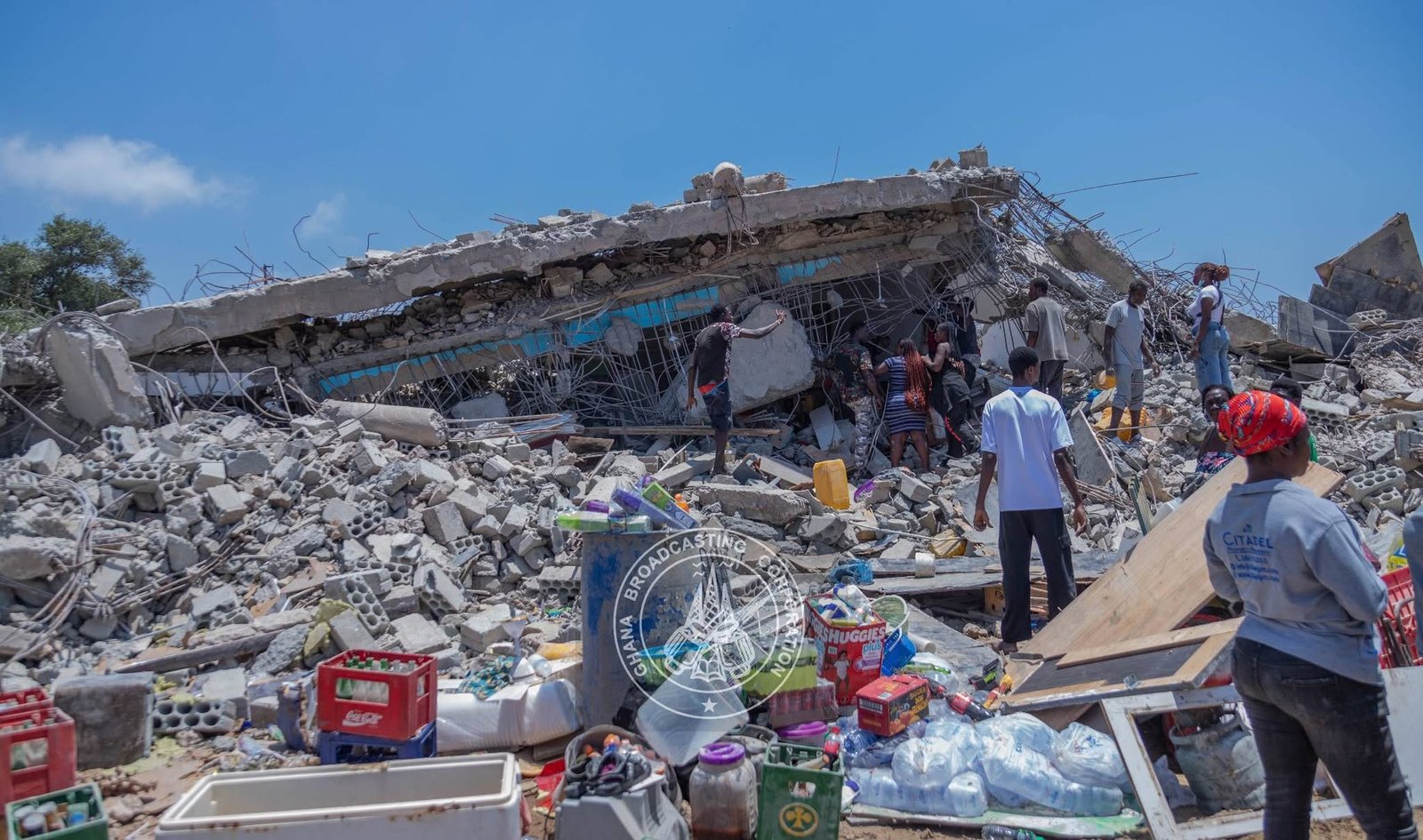
What was billed as an anti-flood operation has instead exposed a bitter land dispute, leaving businesses destroyed, a lawmaker in tears, and government officials scrambling to distance themselves from the chaos
The pre-dawn demolition of beachfront structures near one of Ghana’s most iconic hotels has ignited a political firestorm, with a senior government official insisting the controversial operation was not a state-led flood mitigation exercise but a private request from the Labadi Beach Hotel.
Stan Xoese Dogbe, Deputy Chief of Staff in charge of Operations and leader of the Anti-Flood Taskforce, broke his silence on Friday, October 2, 2026, after videos of military personnel pulling down structures at La Pleasure Beach circulated widely on social media.
“Let’s not get it twisted. Friday’s action along a section of the beachfront was not a Flood Mitigation Action by the government task force,” Dogbe wrote on Facebook.
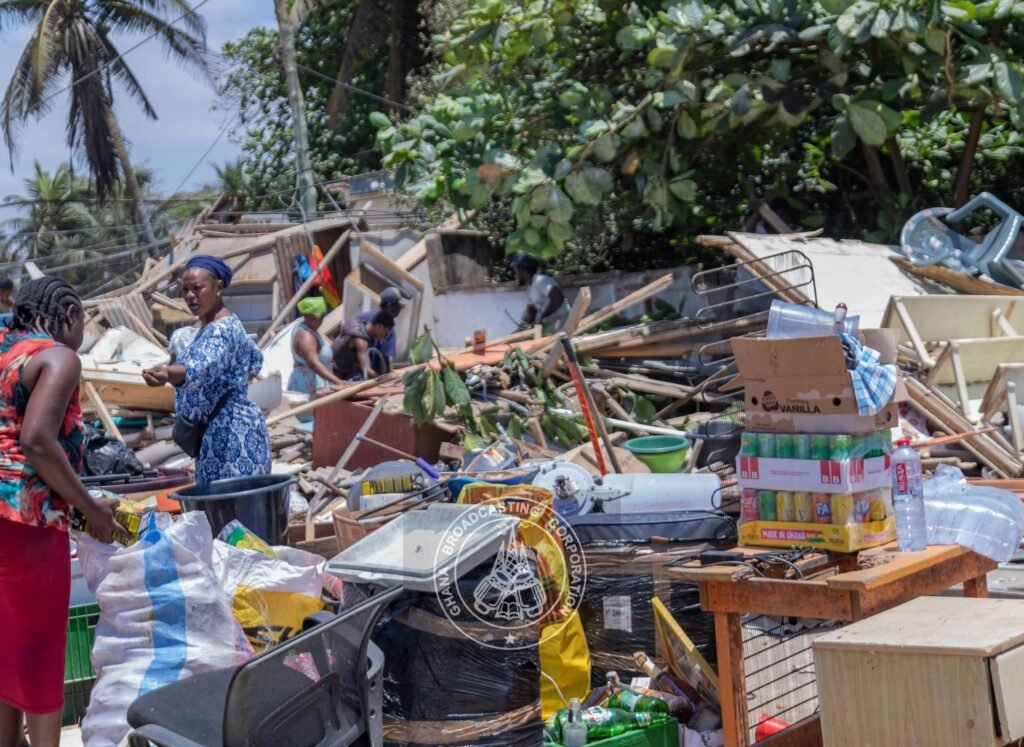
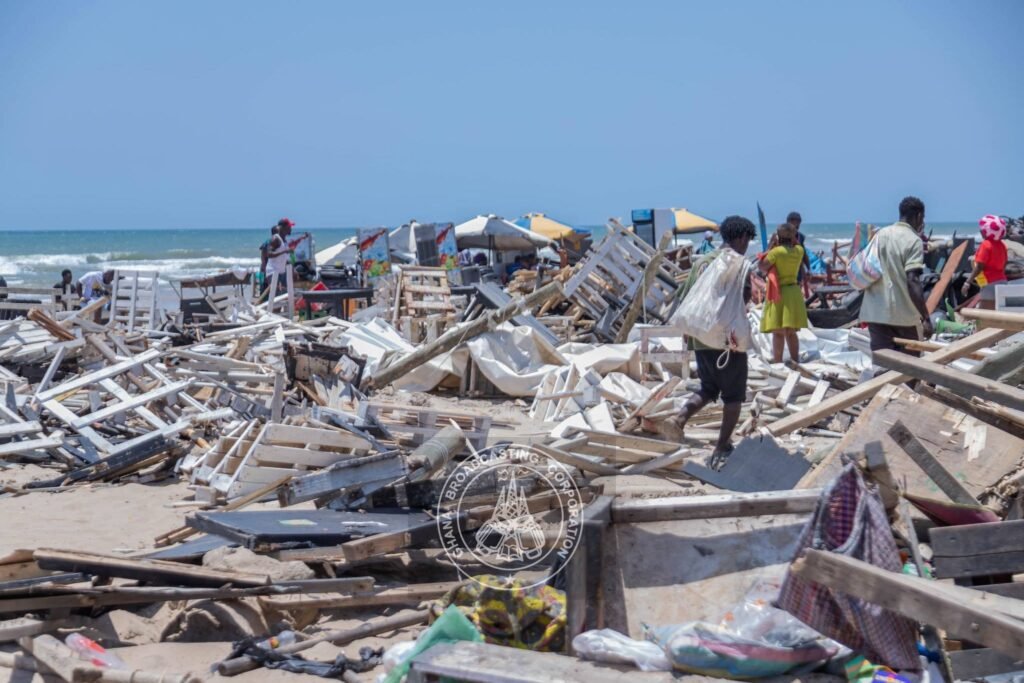
A 4 a.m. Operation
Personnel from the Ghana Armed Forces’ 48 Engineer Regiment, supported by the Ghana Police Service, arrived at the site around 4 a.m. on Friday, October 2, 2026, ordering workers and residents to vacate within minutes.
“We were given two weeks’ notice to start packing, but we thought it was a joke,” one worker told the Ghanaian Times, describing the scene as structures came down roughly 15 minutes after the evacuation order.
Among the hardest-hit businesses were the Polo Beach Club and Pera Beach, popular entertainment venues near the Labadi Beach Hotel. The Polo Beach Club, valued at over GH¢41 million in 2023, was described as “the single most expensive and most luxurious beach club on the La beachfront”.
Dogbe’s Clarification
Dogbe said the operation was conducted under National Security supervision following a formal request from Labadi Beach Hotel, which had raised concerns that the structures were “adversely affecting the safety, tranquillity and reputation of the Hotel”.
“These are structures, some permanently built (Polo Beach Club and others) on the beach in front of the hotel,” he said, adding that the hotel complained the businesses were “diminishing the visitor experience and undermining the orderly management of one of Ghana’s most important tourism destinations”.
He drew a sharp distinction between the beachfront demolition and the government’s actual flood mitigation work, which he said was ongoing at Kpeshie Lagoon, East Legon Boundary Road, Oyarifa, and behind Mayfair Estates.
MP Confronts Military
La Dadekotopon Member of Parliament Rita Naa Odoley Sowah arrived at the scene and confronted military personnel, demanding to know why the demolition was proceeding despite what she said were assurances that the area would be spared.
“It is the Labadi Beach Hotel, with their board chairman, who is leading this exercise. Government has no knowledge of it,” she said.
The MP also alleged that some military personnel were firing shots and wielding guns while directing people to leave. “What is it, do you want to kill us? What has La done?” she asked.
Legal Dispute at the Heart
The demolition is the latest chapter in a bitter legal battle between the Labadi Beach Hotel and Spartan-Ives Limited, operators of the Polo Beach Club, over ownership of the contested beachfront land.
According to court documents filed in September 2026, Spartan-Ives acquired a 20-year lease of the disputed land from the La Stool in June 2022 for GH¢1.5 million. The company alleges the hotel has been “waging war” against it, denying access and now using connections to National Security to circumvent judicial proceedings.
The lawsuit specifically names Richard Jakpa, Director of Special Operations at the National Security Council Secretariat, accusing him of “hiding behind the Secretariat” to carry out the hotel’s “extra judicial and unlawful bidding”.
Polo Beach Club’s management had previously resisted a vacate directive, arguing the ownership dispute was before the courts and should be resolved through judicial process before any demolition.
Workers Left in Distress
The demolition has devastated livelihoods. Workers and residents were seen attempting to recover belongings from rubble, with some reportedly in tears as their sources of income crumbled.
“Since you guys want us to steal, we will steal,” one disgruntled worker told reporters. “When the foreigners come, we will ‘kwashey’ them physically”.
Dogbe, however, framed the demolition as necessary for sanitation and security reasons, questioning whether the hotel was justified in reclaiming its beachfront.
“We must all be concerned about the serious sanitation issues that these unauthorised and unregulated commercial operations cause, in addition to the security risks,” he said.
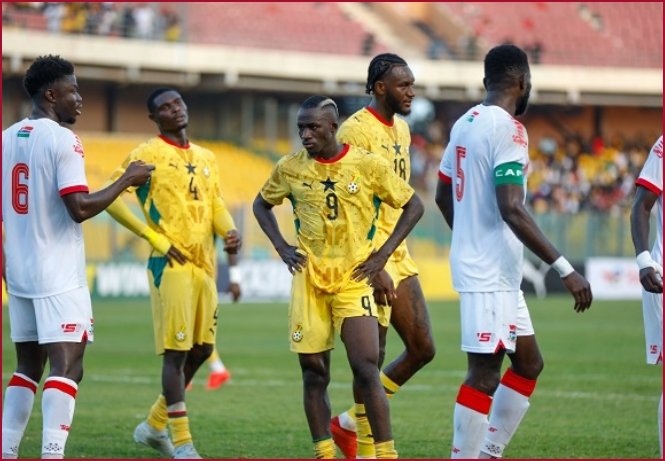
Communications Minister calls for national team to be disbanded as Ghana sits bottom of AFCON qualifying group with zero points
Ghana’s national football team is facing an unprecedented crisis after a shocking 4-2 home defeat to The Gambia intensified public anger and prompted a government minister to call for the team to be disbanded entirely.
The Black Stars suffered a stunning collapse at the Accra Sports Stadium on Tuesday, Sept. 29, 2026, blowing a 2-0 first-half lead to lose 4-2 in their 2027 Africa Cup of Nations qualifier. The defeat leaves Ghana bottom of Group C with zero points from their opening two matches.
The Match: From Dominance to Disaster
Ghana appeared in control after racing to a 2-0 lead through an Ernest Nuamah penalty and a Felix Afena-Gyan free-kick. However, The Gambia levelled before half-time, and Ebrima Colley struck twice after the break to seal a famous 4-2 victory—The Gambia’s first win over Ghana in 33 years.
The result came just days after Ghana opened their Group C campaign with a 2-0 defeat to Côte d’Ivoire in Bouaké under coach Carlos Queiroz.
| Metric | Detail |
|---|---|
| Matchday 2 Result | Ghana 2–4 The Gambia |
| Previous Result | Ivory Coast 2–0 Ghana |
| Group Position | Bottom of Group C (0 points) |
| Last Qualifier Win | September 2023 vs. Central African Republic |
| Qualification Impact | Early uphill battle for 2027 AFCON |
Political Firestorm: Calls for Disbandment
The defeat has triggered a wave of public and political backlash. Fans fiercely booed the players off the pitch at the Accra Sports Stadium following the final whistle.
Communications Minister Sam George publicly urged for the Black Stars to be completely disbanded and the Ghana Football Association (GFA) leadership sacked, even suggesting Ghana should accept a FIFA ban if it provides necessary time to rebuild from scratch.
“As for the Black Stars, my position before is my position today. Disband the team. Sack the FA,” George wrote on X.
He argued that Ghana should accept a two-year FIFA ban to allow for a proper rebuild, insisting that the current “patchwork approach” was worse than the painful truth. FIFA rules prohibit government interference in the running of national football associations, and breaches can lead to suspension.
Defensive and Leadership Failures
Analysts have pointed to tactical lapses, individual errors, and a lack of composure across the backline. Stand-in captain Gideon Mensah conceded a crucial penalty, compounding the team’s defensive woes. Questions are mounting over the current selection and readiness of the squad.
Ghana have not won an AFCON qualifier since beating the Central African Republic in September 2023—a drought that has left confidence in the current setup at an all-time low.
With zero points from two matches, Ghana faces an uphill battle to qualify for the 2027 Africa Cup of Nations. The calls for radical restructuring—including disbanding the national team and sacking the football association—reflect a deepening crisis that extends beyond the pitch.
The coming weeks will be critical as the GFA, government, and football stakeholders grapple with the fallout from one of Ghana’s most humiliating defeats in recent memory.
Ghana News
President Mahama Defends Rejection of U.S. Health Compact, Calls Terms ‘Humiliating’ and a Threat to Sovereignty
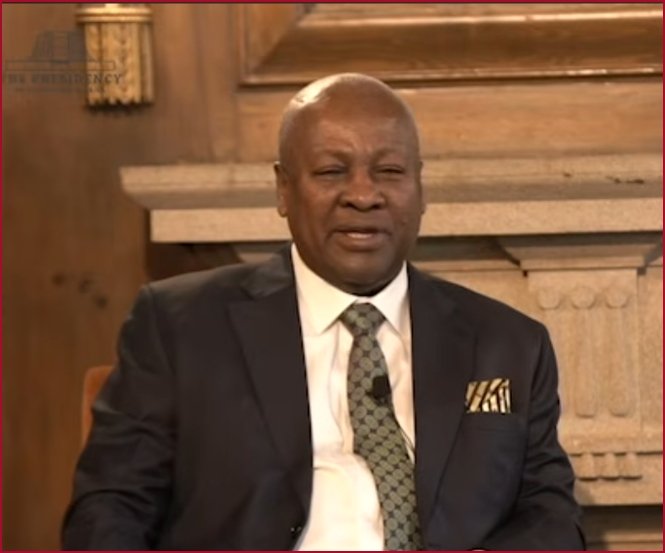
Accra says demands for pathogen profiles, medical records and exemption from FDA scrutiny prompted Cabinet to reject deal ‘in record time’
President John Dramani Mahama has justified Ghana’s decision to reject a new health compact presented by the United States to replace funding previously provided under the U.S. Agency for International Development (USAID), describing its conditions as humiliating and an affront to the country’s sovereignty.
Speaking at a session dubbed “A Conversation with President John Dramani Mahama” at the Council on Foreign Relations (CFR) in New York, Mahama said Ghana, as a sovereign and democratic nation, subjected the document to due process.
The Ministry of Health studied the compact and presented an Information Paper to Cabinet, where several provisions were flagged.
“It states that we shall give the United States our pathogen profile. It also says we should give our medical records. I mean, who takes another country’s medical records?” Mahama said.
He added that the compact also required Ghana to commit a set amount of money as counterpart funding and stipulated that any medications or medical products brought into the country under the program would not be subject to inspection by the Food and Drugs Authority (FDA), the agency responsible for assaying food and drug safety.
“It was humiliating,” Mahama said, adding that Cabinet rejected the compact in record time.
“It was the compact that was thrown out in record time in our Cabinet. I’ve never seen anything thrown out as fast as that. And so, of course, we rejected it,” he stated.
The President said the Minister of Health was subsequently directed to inform the U.S. Ambassador that Ghana would manage on its own.
“We said ‘no, we don’t want it’ and we’re doing fine,” Mahama added.
The rejection was first reported by Reuters on April 28, 2026. A source familiar with the negotiations said Ghana balked at terms requiring the sharing of sensitive health data. The same issue sank talks with Zimbabwe this year and prompted a court to suspend implementation of Kenya’s deal pending a case filed by a consumer protection group.
Spokespeople for Ghana’s foreign ministry and government did not respond to requests for comment, according to Reuters. The U.S. State Department said it does not disclose details of bilateral negotiations.
“We continue to look for ways to strengthen the bilateral partnership between our two countries,” a State Department spokesperson said.
The Trump administration in September announced a new “America First Global Health Strategy” that calls for poorer nations to play a bigger role in fighting HIV/AIDS, malaria, tuberculosis and polio and eventually transition from aid to self-reliance. USAID was dismantled last year.
The U.S. has disbursed $219 million in foreign assistance to Ghana, including $96 million specifically for health, for 2024, the year before the Trump administration’s cuts to foreign aid, according to government foreign assistance data. The deal the two sides started negotiating last November would have called for $109 million in U.S. assistance for health over five years, the source said.
Washington set April 24 as the deadline to conclude negotiations, and Accra decided it could not agree to what was being proposed, the source said. As of Monday, the State Department had signed 32 deals under the “America First Global Health Strategy” representing $20.6 billion in funding, made up of $12.8 billion from the U.S. and $7.8 billion in “co-investment from recipient countries.”
Accra Reset and Health Sovereignty
Mahama explained that the Accra Reset initiative was triggered by the abrupt withdrawal of U.S. aid support. An amount of $174 million, which had been programmed into the national budget, was withdrawn, creating a significant gap in the education and health sectors.
The health sector alone suffered a $74 million shortfall annually, affecting critical areas including medical research, HIV and AIDS testing laboratories, the administration of the President’s Emergency Plan for AIDS Relief (PEPFAR) program, and the provision of antiretroviral drugs.
Mahama said the development compelled the government to make emergency budgetary provisions to cover the gap and reignited the conversation on Africa’s health sovereignty.
The standoff reflects growing tensions between African governments and the Trump administration over the terms of renewed health assistance, with data privacy, regulatory oversight and sovereignty emerging as major sticking points.


Ghana Property & Lifestyle Expo Returns to Accra for a Decade of Opportunities

Ghanaian Tomato Stew: The Rich, Fragrant Sauce Everyone Should Try

Building in Stages? Why Your Concrete Slab Needs Protection Before the Next Floor
-
 Arts and GH Heritage2 days ago
Congo: Capturing Life Beyond War
-

 Sights and Sounds9 hours ago
Looking for a Different Day Out in Accra? Bambo’s Has You Covered
-

 Health & Wellness1 day ago
Your Body Is Still Working While You Sleep — And Your Sleep May Matter More Than You Think
-
 Homes & Real Estate8 hours ago
Building in Stages? Why Your Concrete Slab Needs Protection Before the Next Floor
-
 Taste GH3 hours ago
Ghanaian Tomato Stew: The Rich, Fragrant Sauce Everyone Should Try
-
 Festivals & Events2 hours ago
Ghana Property & Lifestyle Expo Returns to Accra for a Decade of Opportunities