
Ghana News
Ghana Bans Preaching and Hawking in Moving Vehicles, Enforcing Long-Ignored 2012 Law

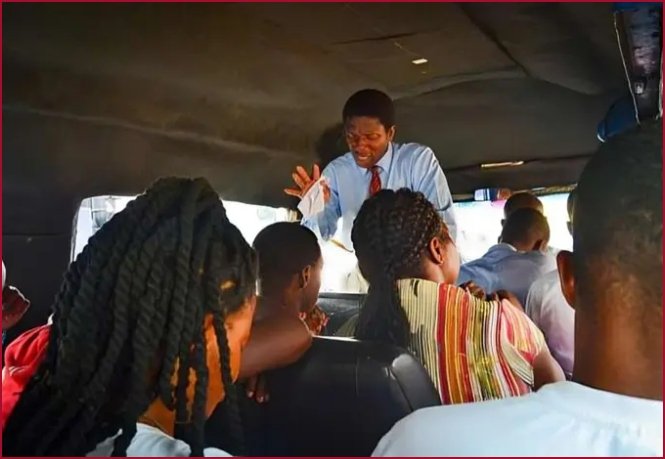
Ghana has begun enforcing a long-ignored ban on preaching and hawking in public and commercial vehicles while they are in motion, with offenders now facing up to eight months in prison, a fine of up to $52, or both.
The ban itself is not new. Preaching and hawking on moving public vehicles have been prohibited under Ghanaian law since 2012, but weak enforcement meant the practice continued largely unchecked for over a decade. That changed this year.
Parliament passed tougher new rules in May 2026, and the government launched a public awareness campaign this month to signal that the law will now be taken seriously.
A Nuisance, Not a Faith Issue
Under the new regulations, preaching on the move is treated as a nuisance offence, categorized alongside hawking, regardless of the preacher’s faith.
“The law treats preaching on the move as a nuisance, like hawking, whatever the preacher’s faith,” officials said. “The government says it’s about passengers’ safety and comfort.”
The government’s position is that the practice distracts drivers, disrupts passengers, and creates safety risks in already congested traffic environments.
A Contentious Ban in a Christian-Majority Nation
Ghana is a conservative, Christian-majority country where preaching in commercial vehicles, especially buses, is a common and deeply embedded cultural practice. Many Ghanaians view it as a form of ministry and a daily spiritual encounter.
The country’s constitution guarantees religious freedom, though those rights are explicitly subject to the rights of others, a provision the government is now leaning on to justify the enforcement crackdown.
Opinion Is Split
The ban has sparked a national debate.
Critics argue that preaching on buses is a nuisance and a safety risk, particularly when preachers stand, move through aisles, or raise their voices in ways that distract drivers.
Supporters of the practice say evangelism is a Christian duty and that the constitution protects their freedom of religion. Some have accused the government of overreach and of targeting a deeply held spiritual tradition.
What It Means for Riders
For now, passengers in Ghana’s trotros, buses, and taxis will notice a quieter commute. Preachers who ignore the ban could face fines, imprisonment, or both—though it remains to be seen how aggressively the new rules will be enforced across the country’s sprawling transport network.
The government says the crackdown is about safety, not faith. But in a nation where religion and public life are closely intertwined, the debate is unlikely to fade quietly.











Ghana News
Ghana’s New Road Traffic Regulations 2026: The Full List of Offences, Fines, and Penalties
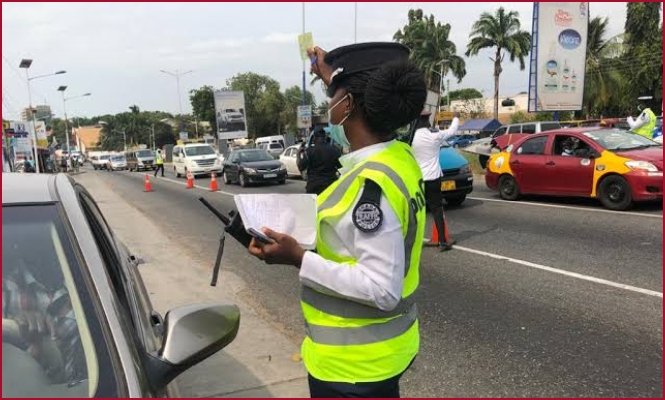
Ghana’s new Road Traffic Regulations, 2026 (L.I. 2519), prescribe fines and, in some cases, imprisonment for a range of road traffic offences, including illegal racing, jumping red lights, improper parking, disobeying traffic officers, and using television monitors while driving.
The regulations also introduce provisions on automated enforcement, allowing offences detected by traffic enforcement devices to attract graduated fines and, after repeated violations, possible suspension or revocation of a driver’s license.
A 14-page offences schedule prepared by D/Sgt. Nana Kwadwo Otibu-Gyan of the Legal and Prosecution Unit, RHQ/Ho, outlines several of the offences and penalties under the regulations. Below are some of the key provisions.
Stop signs, red lights and racing
1. Street racing, drag racing and speed competitions – Section 221
- Driving, or permitting another person to drive, in a race, speed competition, or endurance test on a road attracts a fine of 10 to 25 penalty units, imprisonment for up to 30 days, or both.
- Participating in an unauthorized race under Section 221(2) attracts the same penalty.
2. Failure to stop at STOP or YIELD signs – Section 222
- Under Sections 222(1) to 222(6), failing to stop or yield the right of way at an intersection marked by a STOP or YIELD sign, or failing to stop before a pedestrian crossing, attracts a fine of 10 to 30 penalty units, imprisonment for up to 30 days, or both.
- Approaching a YIELD sign without slowing down under Section 222(2) attracts the same penalty.
3. Jumping a red light – Section 222(7)–(8)
- Jumping a red light at a signalized intersection attracts a fine of 10 to 30 penalty units, imprisonment for up to 30 days, or both.
4. Railway crossings – Section 223
- Failing to stop within the prescribed distance of a railway line at a level crossing, or proceeding before it is safe to do so, attracts a fine of 5 to 25 penalty units or imprisonment for up to 30 days.
- Walking, driving or riding through, around or under a closed railway gate under Section 223(3) attracts the same penalty.
Overtaking, traffic officers and restricted parking
1. Overtaking at pedestrian crossings – Section 224
- Overtaking a vehicle that has stopped at a pedestrian crossing to allow a pedestrian to cross attracts a fine of 10 to 25 penalty units or imprisonment for up to 30 days.
- Failing to slow down when approaching a marked pedestrian crossing under Section 224(2) attracts the same penalty.
2. Disobeying traffic control officers or devices – Section 226(3)
- Disobeying a traffic control officer or traffic control device attracts a fine of 10 to 25 penalty units or imprisonment for up to 30 days.
3. Unauthorized use of bus stops or taxi stands – Section 227(3)
- Using a bus stop or taxi stand without authorisation attracts a fine of 10 to 25 penalty units or imprisonment for up to 30 days.
4. Parking in spaces reserved for persons with disabilities – Section 228(3)
- Parking in a space reserved for persons with disabilities without entitlement attracts a fine of up to 25 penalty units, imprisonment for up to eight months, or both.
Processions, funerals and public transport
1. Driving in a procession without obeying the rules – Section 229(2)
- Driving in a procession without complying with the applicable rules attracts a fine of 10 to 25 penalty units or imprisonment for up to 30 days.
2. Driving through a funeral or authorized procession – Section 230(3)
- Driving through a funeral or other authorized procession attracts a fine of 10 to 25 penalty units or imprisonment for up to 30 days.
3. Stopping or parking buses and taxis outside designated areas – Section 231(4)
- Stopping or parking a bus or taxi outside a designated stop or stand attracts a fine of 10 to 25 penalty units or imprisonment for up to 30 days.
4. Failure to provide facilities for persons with disabilities on public transport – Section 232(2)
- Failure to provide the required facilities for persons with disabilities on public transport attracts a fine of 10 to 25 penalty units or imprisonment for up to 30 days.
Parking offences – Section 235
Section 235 sets out several offences relating to improper parking:
- Parking contrary to traffic signs or near junctions – Section 235(1): Parking contrary to a traffic sign or within a prohibited distance of a junction attracts a fine of 10 to 25 penalty units or imprisonment for up to 30 days.
- Parking in front of building entrances or exits – Section 235(1)(d)–(e): Parking in front of a building entrance or exit attracts the same penalty.
- Parking contrary to instructions in designated parking areas – Section 235(2): Parking in a designated parking area contrary to the applicable instructions attracts a fine of 10 to 25 penalty units or imprisonment for up to 30 days.
- Parking in prohibited areas – Section 235(3): Parking in a loading area, a reserved permit-holder bay, on slip roads, a hard shoulder or central reserve, or near a junction, bend or crossing in a manner that obscures a traffic sign attracts a fine of 10 to 25 penalty units or imprisonment for up to 30 days.
- Double parking – Section 235(4): Parking abreast of another vehicle, commonly referred to as double parking, attracts the same penalty.
- Parking in an area designated for another category of vehicle – Section 235(5): Parking in an area designated for a different category of vehicle attracts a fine of 10 to 25 penalty units or imprisonment for up to 30 days.
Billboards, television monitors and automated fines
1. Outdoor advertising signs obstructing traffic controls – Section 236(3)
- An outdoor advertising sign that interferes with traffic or obscures a traffic sign or device attracts a fine of 25 to 50 penalty units or imprisonment for up to three months.
2. Operating a television monitor while driving – Section 237(2)
- Using or operating a television monitor on the dashboard of a vehicle while it is in motion attracts a fine of up to 25 penalty units, imprisonment for up to 30 days, or both.
3. Automated road traffic offences – Section 242(12)
- The regulations provide for offences detected by Traffic Enforcement Devices, including cameras, to attract graduated automated fines. The schedule provides for:
- First to third offence: 10 penalty units (GH¢120)
- Fourth offence: 15 penalty units (GH¢180)
- Fifth offence: 20 penalty units (GH¢240)
- Sixth offence within 24 months: Possible court-ordered licence revocation or suspension for a minimum of 12 months, together with retraining and retesting.
General penalty – Regulation 243
Regulation 243 provides a general penalty where the regulations do not prescribe a specific punishment for a particular contravention. According to the schedule, such an offence attracts a fine of 10 to 50 penalty units, imprisonment for up to eight months, or both.
Penalty point system
Regulation 244 also allows a court to order retraining for offences involving carelessness, recklessness, or willful disregard of the regulations, in addition to any fine or imprisonment imposed.
Other offences
- Washing or repairing vehicles on the road – Section 139(3)(b): Washing or repairing a vehicle on a road attracts a fine of 25 penalty units or imprisonment for up to 30 days.
- Preaching or hawking on a moving public or commercial vehicle – Section 141: Preaching or hawking on a moving public or commercial vehicle attracts a fine of 10 to 50 penalty units or imprisonment for up to eight months.
- Selling goods on or alongside roads – Section 142(1): Selling goods on or alongside a road, on a pedestrian walkway, or near a railway crossing attracts a fine of up to 50 penalty units or imprisonment for up to three months.
The schedule also lists other offences covering areas including tyres, brakes, learner drivers, and vehicle and driver requirements.
The Road Traffic Regulations, 2026 (L.I. 2519), are now in force, and the offences schedule is being used as a reference for enforcement and prosecution. The provisions mean that motorists and other road users could face not only fines but, depending on the offence, imprisonment or additional measures such as retraining, retesting, and license suspension.
Authored by D/Sgt. Nana Kwadwo Otibu-Gyan, Legal & Prosecution Unit, RHQ/Ho.
25 Key Offences Under Ghana’s New Road Traffic Regulations, 2026 (L.I. 2519)
Penalty units are as prescribed under L.I. 2519. Most offences carry a fine, a jail term, or both, at the court’s discretion.
| # | Offence | Regulation | Penalty (fine / imprisonment) |
|---|---|---|---|
| 1 | Using a mobile phone while driving | Reg. 132 | Up to 50 units, up to 3 months, or both |
| 2 | Driving under the influence of alcohol or drugs | Reg. 131 | 50 to 200 units, up to 40 months, or both |
| 3 | Jumping a red light | Reg. 222(7)-(8) | 10 to 30 units, up to 30 days, or both |
| 4 | Failing to stop or yield at STOP and YIELD signs | Reg. 222 | 10 to 30 units, up to 30 days, or both |
| 5 | Street racing, drag racing and speed competitions | Reg. 221 | 10 to 25 units, up to 30 days, or both |
| 6 | Speeding, exceeding the prescribed limit | Reg. 212 | 10 to 25 units, up to 30 days, or both |
| 7 | Failing to slow down in dangerous conditions | Reg. 213 | 50 to 100 units, 3 to 6 months, or both |
| 8 | Breaking railway crossing rules | Reg. 223 | 5 to 25 units, up to 30 days, or both |
| 9 | Overtaking at a pedestrian crossing | Reg. 224 | 10 to 25 units, up to 30 days, or both |
| 10 | Disobeying traffic control officers or devices | Reg. 226 | 10 to 25 units, up to 30 days, or both |
| 11 | Failing to wear a seat belt | Reg. 144 | 10 to 50 units, up to 8 months, or both |
| 12 | Riding without a helmet or reflective clothing | Reg. 109 | 25 to 50 units, 1 to 3 months, or both |
| 13 | Driving without warning triangles or approved devices | Reg. 108 | 25 to 50 units, 30 days to 3 months, or both |
| 14 | Driving with a tinted front windscreen | Reg. 92 | 25 to 50 units, 1 to 3 months, or both |
| 15 | Using unsafe or worn-out tyres | Reg. 87 | 25 to 50 units, 30 days to 3 months, or both |
| 16 | Driving without a fire extinguisher and first-aid kit | Reg. 94 | 10 to 25 units, up to 30 days, or both |
| 17 | Overloading a vehicle | Reg. 118 | 25 to 50 units, up to 3 months, or both |
| 18 | Operating commercial motorcycles or tricycles without authorization | L.I. 2519 | Operator: 50 to 100 units, 8 to 24 months, or both. Rider: 25 to 50 units, up to 8 months, or both |
| 19 | Overcharging passengers | Reg. 180 | 10 to 25 units, up to 30 days, or both |
| 20 | Stopping or parking buses and taxis outside designated areas | Reg. 231 | 10 to 25 units, up to 30 days, or both |
| 21 | Boarding or alighting at unauthorized places | Reg. 204 | Up to 5 units, up to 7 days, or both |
| 22 | Jaywalking or failing to use a footbridge | Reg. 203 | Up to 5 units, up to 7 days, or both |
| 23 | Improper parking | Reg. 228, 235 | 10 to 25 units, up to 30 days, or both. Disability bays: up to 25 units, up to 8 months, or both |
| 24 | Preaching or hawking in a moving public or commercial vehicle | Reg. 141 | 10 to 50 units, up to 8 months, or both |
| 25 | Selling goods on roads and walkways, or washing or repairing a vehicle on the road | Reg. 142, 139 | Selling: up to 50 units, up to 3 months, or both. Washing or repairing: up to 25 units, up to 30 days, or both |
Automated enforcement: Under Regulation 242, offences detected by Traffic Enforcement Devices carry graduated fines: 10 penalty units for the first, second and third offences, 15 units for a fourth and 20 units for a fifth. A sixth offence within 24 months can result in court proceedings, license suspension or revocation for at least 12 months, plus retraining and retesting.
Source: Road Traffic Regulations, 2026 (L.I. 2519).
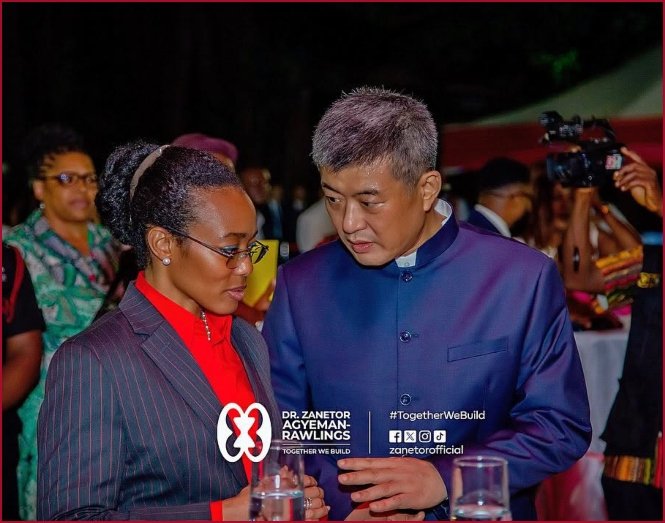
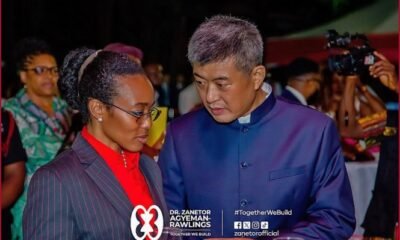
Ghana’s Minister for Environment, Science and Technology, Dr. Zanetor Agyeman-Rawlings, has delivered a direct message to China: continue investing in Ghana, but do so responsibly, in compliance with Ghanaian laws, and without destroying the environment or harming public health.
The Minister made the call while representing President John Dramani Mahama at the 77th National Day reception of the People’s Republic of China in Accra.
The event brought together government officials, members of the diplomatic corps, Chinese business leaders, and members of the Chinese community in Ghana.
A Call for Responsible Partnership
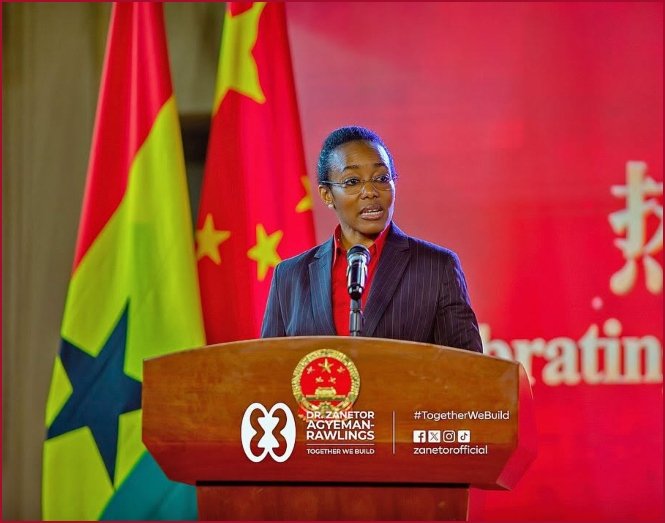
Speaking at the reception, Dr. Agyeman-Rawlings acknowledged the longstanding relationship between Ghana and China, describing it as one built on cooperation across infrastructure, trade, investment, education, health, agriculture, energy, security, and culture.
But she was equally clear that this partnership must be anchored in respect for the rule of law and environmental sustainability.
“As we pursue these opportunities, I emphasised that respect for the rule of law must remain central to the partnerships and investments we build,” she said. “Development must also be responsible and sustainable. Economic growth cannot come at the expense of the health and well-being of our people or the protection of our environment.”
The Minister’s call comes against the backdrop of extensive environmental damage associated with illegal mining, known locally as galamsey, including the involvement of some Chinese nationals.
The Environmental Toll
The scale of the devastation is staggering. According to a Forestry Commission survey, 8,923.8 hectares of forest reserves had been affected across 45 forest reserves and one national park as of December 31, 2024. The Ashanti Region recorded the largest affected area, with 4,948.9 hectares.
The damage extends far beyond forests. Illegal mining has severely polluted Ghana’s water bodies, increasing turbidity and making water treatment more difficult and costly.
At the Daboase Water Treatment Plant in the Western Region, raw water turbidity reached 11,955 NTU on August 14, 2026, according to a report on the impact of illegal mining along the River Pra. This level was significantly above the plant’s permitted raw-water threshold of 500 NTU, placing enormous pressure on treatment operations.
Ghana Water Company Limited has previously reported that pollution from illegal mining had deteriorated water quality in the Western Region, requiring additional treatment and contributing to equipment breakdowns.
The Aisha Huang Precedent
The involvement of some Chinese nationals in illegal mining has become a sensitive issue in Ghana-China relations. One of the most prominent cases is that of Chinese national Aisha Huang, who was sentenced by an Accra High Court in December 2023 to four and a half years in prison and fined GH¢48,000.
She was convicted of offences including undertaking mining operations without a licence and facilitating illegal mining activities. She was also ordered to be deported after serving her sentence.
China’s Response
Ghana’s Ambassador to China, Kojo Bonsu, has said the Chinese government is deeply concerned about the involvement of some of its nationals in illegal mining and is working with Ghana to address the problem.
He noted that recent discussions between Ghana and China had produced commitments to promote responsible mining and ensure Chinese companies operating in Ghana comply with the country’s mining and environmental regulations.
The latest cooperation includes a three-point strategy agreed between Ghana’s Ministry of Lands and Natural Resources and China’s Ministry of Natural Resources. The strategy covers efforts to tackle illegal mining, strengthen geological surveys, and promote responsible investment.
The two sides also agreed to cooperate on green mining technology, environmental protection, and technology transfer, while establishing a technical team to support implementation.
Economic Ties Remain Strong
Despite these tensions, China remains Ghana’s largest trading partner. According to the Chinese Ambassador, Cong Song, bilateral trade reached a record $14.1 billion in 2025, representing a 19.3% increase over the previous year.
Hundreds of Chinese enterprises and members of the Chinese community operate across sectors including infrastructure, energy, mining, manufacturing, the digital economy, and green agriculture.
A Delicate Balance
Dr. Agyeman-Rawlings’ statement reflects the delicate balance Ghana must strike: attracting foreign investment for economic growth while protecting its natural resources and public health.
Her call for respect for the rule of law and environmental sustainability signals that Ghana is willing to hold its partners accountable, even as it values the economic relationship.
The Minister’s message was clear: Ghana welcomes investment, but not at the cost of its environment or its people’s well-being.
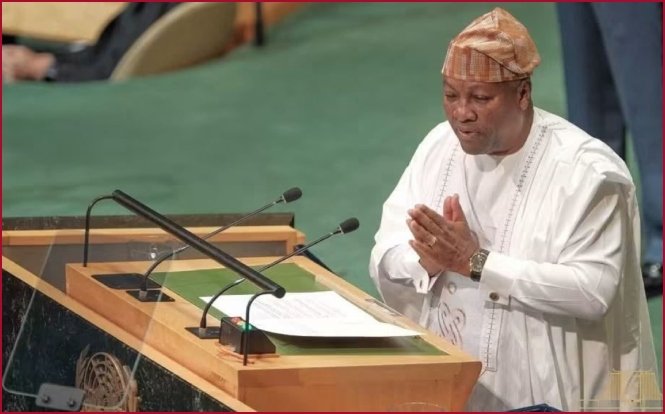
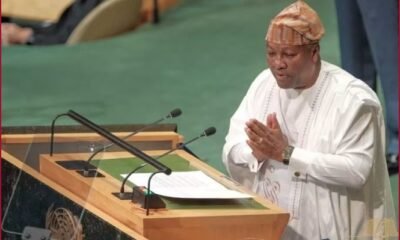
President John Dramani Mahama addressed the 81st United Nations General Assembly, delivering a speech that ranged from deeply personal reflections on identity and belonging to searing indictments of global injustice.
Here are ten of the most poignant moments from his address.
1. On the Power of Truth and Silence
“The world may not transform overnight because of the speeches that we deliver here in this August Assembly, but history would faithfully record the truths we choose to speak and the silences that we choose to keep when we are granted the privilege of addressing this global town hall.”
Mahama opened by acknowledging the limits of rhetoric while underscoring the moral weight of what leaders choose to say, and what they choose to ignore.
2. On Belonging and Its Dark Side
“When belonging is weaponized by political expediency, it transforms into nativism, chauvinism, xenophobia and the dangerous prejudices that are extended to people who are deemed different from us. It becomes the pretext for discrimination, for displacement, for persecution and war.”
Drawing on his own multicultural Ghanaian heritage, Mahama warned that the same force that anchors communities can be twisted into a weapon of division.
3. On the Transatlantic Slave Trade
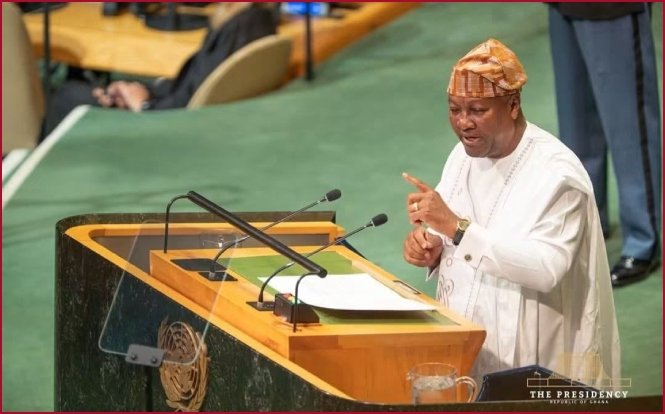
“They did not vanish. They were hunted. They were captured. They were trafficked. They were bought. They were sold. They were exploited in exchange for profit. They were ripped from their families and communities they belong to. Their unpaid labor built the cities, industries, banking institutions and empires of the modern Western world.”
In one of the most powerful passages of his speech, Mahama rejected the passive language historically used to describe the slave trade, insisting on naming the active violence and exploitation that built the modern world.
4. On Africa’s Place at the UN Security Council
“Africa is home to 1.5 billion people, over 18% of humanity and constitutes the largest regional voting bloc in this General Assembly. And yet, Africa remains without a single permanent seat on the United Nations Security Council. This is fundamentally unacceptable in the 21st century.”
Mahama pointed out that Security Council reform was not a request but a necessary correction to a global governance structure built for a bygone era.
5. On the Tragedy in Gaza
“How many more lives must be lost before the world acts with decisive moral authority? The blood of 5-year-old Hind Rajab and the more than 20,000 children that have been killed in this brutal conflict cries out to the conscience of the world.”
Mahama called for an end to “diplomatic euphemisms” and demanded that the world confront the human carnage in Gaza with moral clarity, while also condemning terrorism and insisting on respect for international humanitarian law by all parties.
6. On Climate Justice
“We in Africa contribute less than 4% of global greenhouse gases. And yet we bear some of the heaviest burden of climate devastation.”
Mahama highlighted the stark inequity of climate change—those least responsible suffering the most, and called for developed nations to fulfill their financial commitments through non-debt-creating grants, not loans.
7. On the “Ghanaian Miracle”
“Macroeconomic indicators mean little if they do not translate into real improvements in our people’s daily lives. Economic growth and progress must have a human face.”
While celebrating Ghana’s economic recovery, Mahama insisted that true progress is measured not in statistics but in the lived experience of ordinary citizens.
8. On Democracy’s Soul
“Democracy loses its soul when it protects elite privileges while abandoning the vulnerable.”
This succinct declaration captured Mahama’s vision of governance that prioritizes the poor, the marginalized, and the vulnerable, not just the powerful.
9. On the Need for Political Courage
“The daunting crises confronting our world are not insurmountable. What we lack is not resources or intellect. What we lack is the political courage to see one another as a part of a single human family.”
Mahama argued that the world’s problems are solvable, but only if leaders summon the will to act with solidarity rather than self-interest.
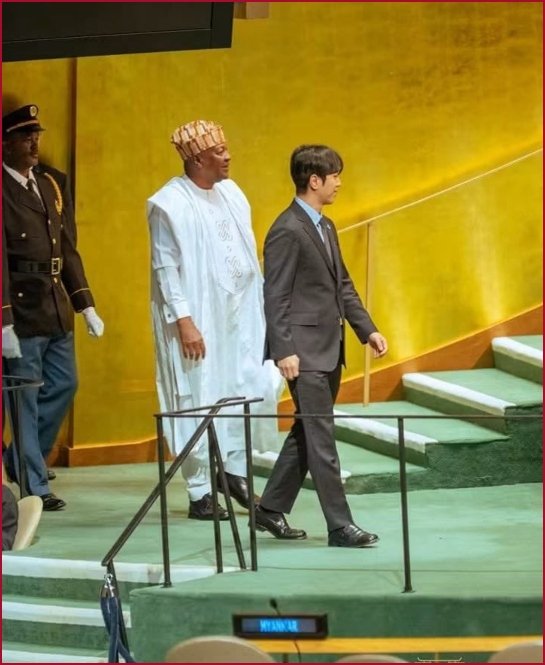
10. On Belonging to the Human Family
“That refugee fleeing violence belongs. That migrant seeking opportunity belongs. That child in Gaza, Sudan, or Ukraine belongs. The descendants of enslaved Africans seeking justice belong. The indigenous community protecting its ancestral lands and environment belongs. The small island states threatened by rising oceans belong to humanity. The poor, the vulnerable, and the marginalized belong. They belong to our common human family.”
In the speech’s emotional climax, Mahama returned to the theme of belonging, declaring that every human being, regardless of circumstance, deserves dignity, rights, and a voice.
Final Reflection
President Mahama closed by expanding Kwame Nkrumah’s famous declaration, saying: “The freedom of any nation is insecure unless it is linked to the freedom of all humanity.” It was a fitting end to a speech that challenged the world to build bridges rather than walls, and to speak truth with humility and courage.


Ghana Bans Preaching and Hawking in Moving Vehicles, Enforcing Long-Ignored 2012 Law

Ghana’s New Road Traffic Regulations 2026: The Full List of Offences, Fines, and Penalties

Moliy’s ‘Shake It to the Max’ Takes Dancehall’s Top Honour
-

 Taste GH21 hours ago
Dzowoe: Ghana’s Sweet-and-Spicy Peanut Snack That Packs a Punch
-

 Health & Wellness2 days ago
How Skipping Delivers Maximum Fitness in Half the Time
-
 Ghana News1 day ago
Ghana Tells China: Invest, But Protect Our Environment
-
 Ghana News1 day ago
10 Poignant Things President Mahama Said at the 81st UN General Assembly
-
 Africa Watch24 hours ago
Two Permanent Security Council Seats and a Veto: Africa Makes Bold Demand at the UN
-

 Fashion & Style2 days ago
Gabrielle Henry Takes Miss Universe to Court Over Traumatic Stage Fall
-
 Festivals & Events21 hours ago
Accra to Host Global Migration Leaders at Metropolis Conference 2026
-

 Health & Wellness21 hours ago
The Wellness Trend Your Kidneys Probably Don’t Need