
Business
Ghana Gov’t to Absorb GH¢5.8 Billion COCOBOD Debt in Radical Move to Save Sector

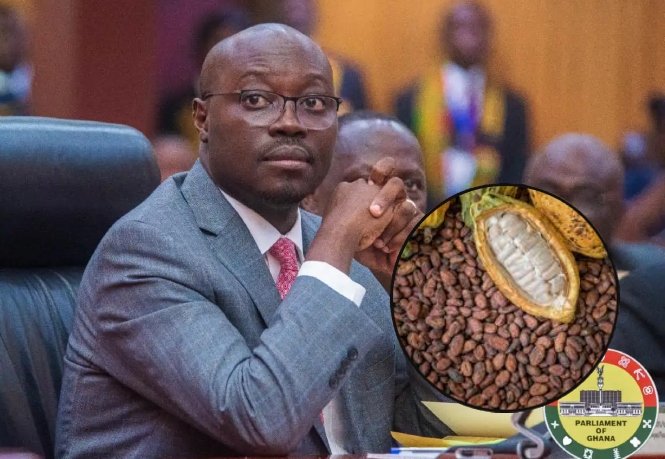
The Ghanaian government will absorb GH¢5.18 billion in legacy debt from the Ghana Cocoa Board (COCOBOD) onto the balance sheets of the Ministry of Finance and the Bank of Ghana.
Finance Minister Dr. Cassiel Ato Forson announced the decision on Thursday, February, 12, 2026, in a sweeping bailout designed to pull the state-owned cocoa regulator back from the brink of insolvency.
The debt conversion, which requires parliamentary approval, aims to restore COCOBOD’s positive equity and strengthen its balance sheet to enable implementation of a new domestic financing model for cocoa purchases.
“COCOBOD currently owes the Ministry of Finance 3.7 billion Ghana cedis which arose from the conversion of non-marketable cocoa bills into a loan, and the Bank of Ghana another 10-year loan of 1.38 billion Ghana cedis,” Dr. Forson told a press conference at Jubilee House.
The Minister stressed that the debt was inherited by the current administration.
“This debt has since been inherited by the current administration and the current management of the Ghana Cocoa Board,” he said.
The bailout represents an explicit acknowledgment that COCOBOD’s financial position had deteriorated to the point where it could no longer service its obligations to the state. The Board defaulted on a GH¢70 million bridge finance facility extended by the Ministry of Finance in July 2024, a debt also inherited by the new administration.
Road Liabilities Transferred Separately
In a parallel move, the Cabinet has directed the transfer of GH¢4.35 billion in road-related liabilities to the Ministry of Roads and Highways and the Ministry of Finance.
Dr. Forson revealed that between 2014 and 2024, COCOBOD awarded road contracts worth GH¢26.5 billion, with GH¢21.5 billion committed between 2018 and 2021 alone. Despite an agreement under Ghana’s 2023 IMF programme to rationalise COCOBOD’s road contract exposure from GH¢21.7 billion to GH¢6.9 billion, the previous board and management failed to conduct the required exercise.
That rationalization has now been completed under the supervision of the Ministry of Finance and the Ministry of Roads, reducing exposure from GH¢21.7 billion to GH¢4.35 billion.
“Cabinet noted that road construction accounts for a significant part of the financial difficulties that COCOBOD is facing at the moment,” Dr. Forson said.
Permanent Ban on Quasi-Fiscal Spending
To prevent recurrence, a new Cocoa Board bill will be presented to Parliament prohibiting COCOBOD from engaging in quasi-fiscal expenditures and other non-core functions, with sanctions for any future breaches.
The government has additionally secured a $500 million World Bank facility to construct agricultural roads, including cocoa roads, permanently transferring road infrastructure responsibility away from COCOBOD.
Political and Fiscal Implications
The debt assumption adds to Ghana’s already strained public finances, though the government argues the bailout is necessary to preserve the cocoa sector, which provides livelihoods for over 800,000 farming families and remains a cornerstone of the national economy.
Dr. Forson framed the intervention as a clean break from eight years of mismanagement.
“A careful review of the cocoa sector over the last 8 years revealed gross mismanagement which requires immediate and comprehensive reforms,” he stated.
Parliamentary approval is now required for the debt conversion.
Minority legislators have yet to respond to the announcement, though the scale of the bailout is expected to generate significant debate regarding fiscal responsibility and accountability for the accumulated liabilities.












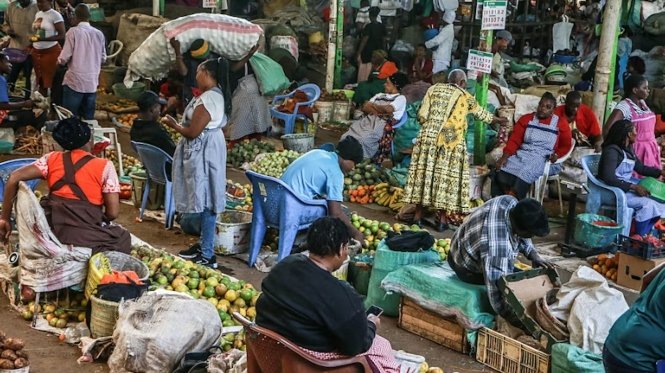
Four leading African and global development institutions have issued a stark joint warning that the escalating Middle East conflict is transmitting economic shocks to Africa faster and more intensely than previous global disruptions, potentially shaving at least 0.2 percentage points off the continent’s GDP growth in 2026 if the crisis lasts beyond six months.
The African Development Bank Group (AfDB), African Union Commission (AUC), United Nations Development Programme (UNDP), and United Nations Economic Commission for Africa (UNECA) released the policy brief on April 2, 2026, on the sidelines of the 58th Session of the Economic Commission for Africa.
The brief highlights surging fuel and food prices, higher shipping and insurance costs, exchange rate pressures, and tightening fiscal space as the main transmission channels.
Oil prices have already risen by 50% since the conflict intensified, while disruptions to the Strait of Hormuz — which handles about 20% of global oil exports — have drastically reduced traffic. The Middle East accounts for 15.8% of Africa’s imports and 10.9% of its exports.
The brief identifies fertilizer supply disruptions as potentially even more damaging than the oil shock for some countries, as reduced Gulf LNG supply affects ammonia and urea production during the critical planting season. Currencies in 29 African countries have already depreciated, raising debt servicing costs and making imports more expensive.
Particularly vulnerable nations include Senegal, Sudan, Cabo Verde, South Sudan, and The Gambia. However, some countries may see limited gains: Nigeria from higher oil prices and refined exports via the Dangote Refinery, Mozambique from LNG opportunities, and ports in South Africa, Namibia, Mauritius, and Kenya from rerouted shipping.
The institutions called for immediate coordinated action, including pooled fuel procurement, emergency food corridors, diversified fertilizer sourcing, and targeted social protection.
In the medium to long term, they urged accelerated renewable energy deployment, deeper AfCFTA integration, and the creation of a Continental Crisis and Resilience Compact focused on energy and food security, financial safety nets, and greater strategic autonomy.
This coordinated alert from Africa’s premier development bodies underscores the urgent need for the continent to move beyond reactive measures toward structural solutions that build long-term resilience against global shocks.
Accra, Ghana – As global fuel markets face severe disruptions from escalating tensions involving Iran and the potential closure of key shipping routes like the Strait of Hormuz, Ghana is emerging as one of the more insulated economies in Africa by diversifying its energy supplies, including through increased imports from Russia.
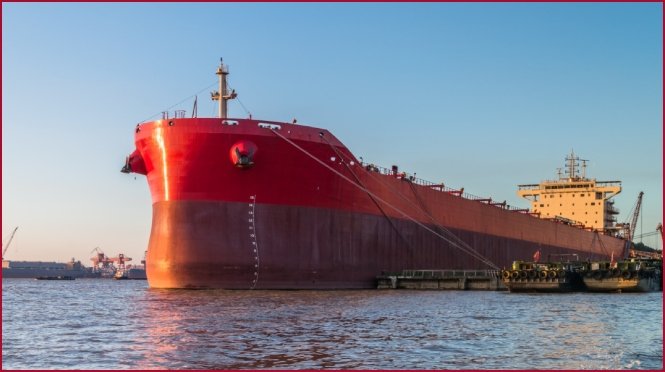
A tanker carrying approximately 320,000 barrels of refined petroleum products from Russia is currently en route to Ghana’s main oil hub in Tema, per a report by Business Insider Africa. The vessel, Hellas Fighter, loaded at Vysotsk and last tracked passing Mauritania, is expected to arrive on April 6. This shipment reflects Ghana’s pragmatic strategy to widen its supplier base amid uncertainty in traditional supply chains.
President John Dramani Mahama recently stated that Ghana currently has enough petroleum stocks to last about six weeks. Speaking at the World Affairs Council in Philadelphia, he acknowledged that fuel prices affect virtually every sector of the economy but assured that the government is taking steps to cushion the impact and secure additional supplies.
“We are making a real push to ensure that the economy is cushioned,” Mahama said, while expressing hope that “cooler heads will prevail” in the ongoing crisis.
The move toward Russian fuel highlights a broader shift across parts of Africa, where countries are actively diversifying sources to mitigate risks from global shocks, shipping disruptions, and price volatility.
While many sub-Saharan nations remain highly vulnerable due to heavy reliance on imports and foreign exchange constraints, Ghana’s approach demonstrates an effort to maintain stability through strategic sourcing.
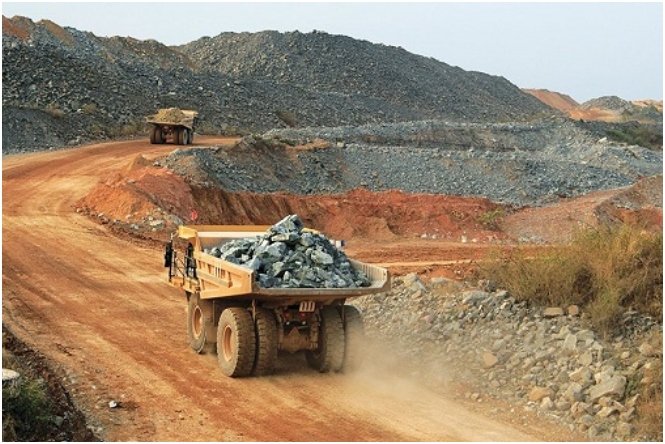
Accra, Ghana – Ghana has limited the tender process for the takeover of Gold Fields Ltd.’s Damang gold mine to companies that are 100% owned by Ghanaian citizens, as the government prepares to assume full control of the asset in April 2026.
The decision, outlined in a notice dated March 24 and signed by Lands and Natural Resources Minister Emmanuel Armah-Kofi Buah, reflects the country’s broader push to increase local ownership and participation in its mining sector. The deadline for submitting offers is Tuesday, March 31, 2026.
Gold Fields, which has operated Damang for nearly 30 years, saw its mining lease expire last year. The government granted a 12-month extension to ensure a smooth transition, during which the company restarted mining activities and submitted a detailed feasibility study to extend the mine’s operational life. Damang produced 88,000 ounces of gold last year.
Under the tender requirements, the successful bidder must have proven experience in open-pit gold mining, the capacity to operate the mine for at least another decade, and access to more than $500 million in funding for project development. The eventual owner will take over the asset on April 18.
This move aligns with a continental trend of African governments seeking greater control and revenue shares from their natural resources. In Ghana, major mines are still largely owned by multinational companies such as AngloGold Ashanti, Newmont, and China’s Zijin Mining. The Damang transition is being watched closely as a test case for increasing indigenous involvement in the sector.
Gold Fields is also negotiating a lease extension for its larger Tarkwa operation. Since 2000, the company has invested approximately $5 billion in its Ghanaian operations and contributed around $2.9 billion to the state through taxes, royalties, and dividends. It currently employs more than 7,000 people in the country, 99% of whom are Ghanaian nationals.


Renowned Global Bodies Warn Middle East War Will Scuttle Africa’s 2026 Growth

Ex-President Akufo-Addo and President Mahama Exchange Pleasantries on Easter

Mahama Calls Christ’s Birthplace an ‘Epicentre of War’, New Airport Concourse Planned and Other Big Stories in Ghana Today
-
 Business1 day ago
Ghana Turns to Russian Fuel to Cushion Impact of Global Energy Crisis
-
 Tourism1 day ago
5 Things You Need to Know About Ghana’s Visa-Free Entry for All Africans
-
 Ghana News2 hours ago
Ghana President Convenes Emergency Cabinet Meeting to Cushion Ghanaians from Soaring Fuel Prices
-
 Ghana News1 hour ago
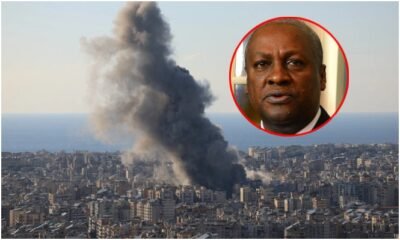
Mahama Calls Christ’s Birthplace an ‘Epicentre of War’, New Airport Concourse Planned and Other Big Stories in Ghana Today
-
 Ghana News57 minutes ago
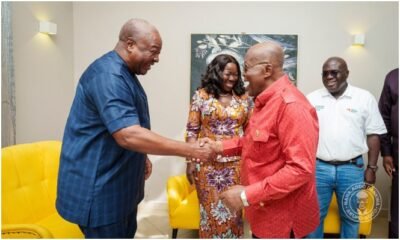
Ex-President Akufo-Addo and President Mahama Exchange Pleasantries on Easter
-
 Ghana News1 day ago
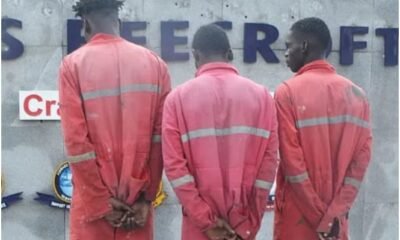
Ghanaian Stowaways Bound for Europe End Up in Nigeria After Five Days at Sea
-
 Ghana News1 day ago
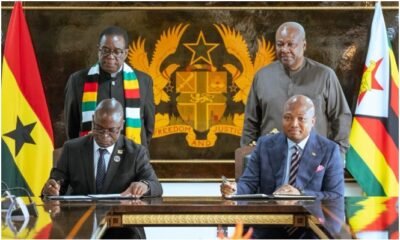
Here Are the 10 Key Agreements Signed Between Ghana and Zimbabwe During Mnangagwa’s State Visit
-

 Health & Wellness1 day ago
3 Surprising Signs Your Body Is Building Muscle