
Ghana News
Ghana-based Creator Worried After Viral Kidnapping Claim by U.S. Tourist: ‘False Narratives Hurt All of Us’


A Ghana-based content creator is leading a growing call for accountability and clarity after a viral social media post by a U.S. influencer.
The influencer, Ari Mackey, alleged she had been kidnapped by Ghanaian police, raising serious concerns about misinformation and its impact on national reputation and diaspora trust.
@charmainesposts, who has lived in Ghana for years, took to Instagram to address the fallout from the deleted video posted by Mackey, urging both the Ghanaian government and the international community to confront the broader implications of unchecked narratives. Her message has quickly become the dominant public frame in the story, even as the alleged victim’s account has disappeared and official evidence remains absent.
“This isn’t just a ‘he said, she said,’” she declared. “If something happens to you, you deserve safety and justice. But false narratives don’t just hurt Ghana. They hurt all of us.”
Her call to action focuses on two urgent points: clarity from authorities and responsible discourse from global audiences when claims involving safety, law enforcement, and international visitors go viral.
What Happened — and What’s Missing
Earlier this week, Mackey, a U.S. content creator, claimed in a now-deleted video that she had been kidnapped by Ghanaian police during a visit—singling out the incident as a reason for caution amid Ghana’s extremely popular December tourism season.
The claim went viral, drawing global attention and sparking widespread concern among diaspora communities. Ghana Police opened an investigation, but the woman left the country, deleted her video, blocked investigators, and never filed a formal report.
No official police names were mentioned, no evidence was shared publicly, and no formal complaint was ever lodged. With the core source now silent and unreachable, the factual basis of her claim remains unresolved.
The Real Risk: A Global Perception Crisis
@charmainesposts says the danger now is not just about this one allegation but about how such unverified claims ripple outward, undermining public trust and damaging a country’s hard-earned reputation. Her perspective is shaped by lived experience: she has resided in Ghana for five years and speaks from both personal familiarity and digital influence.
“One viral post can unravel years of strategy,” she said in her video.
Her warning cuts to the heart of how global narratives—especially those involving issues of policing, race, and travel—can shift perceptions in ways that have tangible consequences for tourism, investment, and diaspora engagement.
December in Ghana is peak season not just for vacationers but for returnees seeking cultural reconnection and business opportunity. In 2024, Ghana welcomed 1.2 million international visitors, generating a record $4.8 billion in tourism revenue—numbers powered in part by initiatives such as Detty December and diaspora-focused campaigns spanning the last decade.
“It makes home feel like a scam,” she said of how confusing or contradictory stories can make Ghana feel unsafe to those with ancestral or personal ties to the country.
Beyond One Woman’s Claim
The creator stressed that acknowledging real harm doesn’t mean accepting unverified accusations without question. Instead, her message is rooted in urging both Ghanaian authorities and global audiences to:
– Communicate transparently when allegations arise
– Protect the rights and safety of all visitors
– Reject the spread of narratives that lack substantiation
– Consider the broader impact of viral claims on national image and diaspora trust
“Whether something really happened or not,” she said, “Ghana deserves clarity. And when stories like this go unchecked, it deepens mistrust rather than building bridges.”









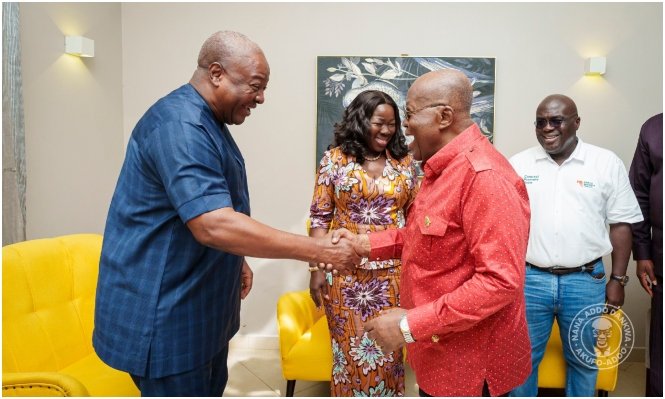
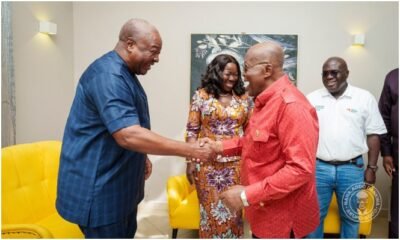
Kwahu, Ghana – Former President Nana Akufo-Addo paid a courtesy call on President John Dramani Mahama on Holy Saturday, April 4, 2026, while both leaders were in the Kwahu enclave for the annual Easter celebrations.
The meeting took place as President Mahama participated in activities linked to the Kwahu Business Forum, a major event held alongside the Easter festivities.
Akufo-Addo, who has maintained a nearly two-decade tradition of spending Easter in Kwahu, described the visit as a cordial engagement during the sacred period.
In a Facebook post, the former president wrote: “On the Holy Saturday of Easter, while in Kwahu where for almost two decades I have consecutively visited during the sacred period of Easter, I called on the President of the Republic, H. E. John Dramani Mahama who is also in Kwahu.”
The encounter highlights a moment of peaceful political civility between the current and immediate past leaders of Ghana amid the festive season. No further details about the substance of their discussion were made public.
The visit comes at a time when both leaders are actively involved in national and regional development conversations, with Mahama using the Kwahu platform to engage stakeholders on economic matters.
Ghana News
Mahama Calls Christ’s Birthplace an ‘Epicentre of War’, New Airport Concourse Planned and Other Big Stories in Ghana Today

We have curated the most relevant and impactful stories from Ghana to keep you informed.
‘It’s Painful Christ’s Birthplace Now an Epicentre of War’ – President Mahama
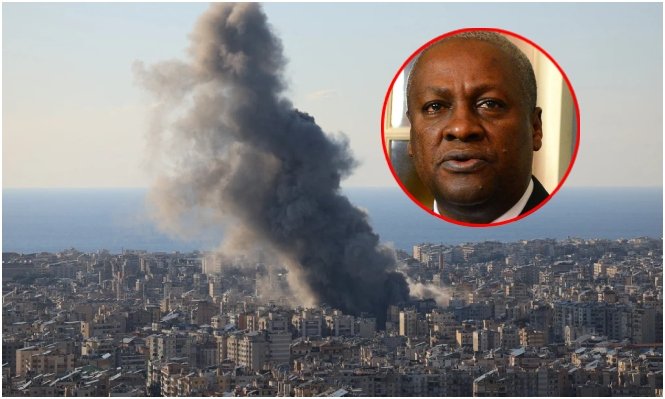
President John Dramani Mahama has described the ongoing violence in the Middle East as a “painful irony,” noting that the birthplace of Christianity and the land where Christ preached love, forgiveness, and peace has become a major centre of conflict. In his Easter message delivered at Black Star Square on April 3, 2026, Mahama said the suffering in the Holy Land cannot be ignored during the season of Easter. He extended Ghana’s thoughts and prayers to the people of Israel, the United Arab Emirates, Qatar, Iran, and the wider Middle East region, urging world leaders to embrace restraint, dialogue, and respect for human dignity.
Read the full story here
Gov’t to Construct New Concourse at Accra International Airport to Ease Congestion
The Ghana Airports Company Limited will begin construction this month on an ultra-modern concourse linking Terminal 2 and Terminal 3 at Kotoka International Airport. The project aims to eliminate current operational bottlenecks, enable seamless passenger transfers, and significantly improve hub efficiency. Key features include five additional passenger boarding bridges, five passenger holding areas, bi-directional travelators, new escalators and elevators, a VIP lounge, four business lounges, and four retail and duty-free pods. The expansion forms part of a broader modernisation drive to provide world-class facilities and strengthen Ghana’s position as a competitive aviation hub in West Africa.
Read the full story here
Gov’t Procures Over 24,000 Medical Equipment to Support Free Primary Healthcare Rollout
The Ghanaian government has acquired 24,534 pieces of medical equipment to strengthen health facilities ahead of the nationwide rollout of its free primary healthcare policy. The consignment, inspected by Health Minister Kwabena Mintah Akandoh, includes baby incubators, radiant warmers, oxygen concentrators, X-ray machines, ultrasound devices, laboratory analysers, vital signs monitors, glucometers, patient monitors, infusion devices, delivery beds, and hospital beds. The equipment will be distributed across government hospitals to improve diagnostics, newborn care, and overall service delivery at the primary level.
Read the full story here
Ghana to Manufacture First Vaccine with Support from Indonesia
Ghana is set to begin local production of its first vaccine with technical and partnership support from the Indonesian government. Honorary Consul of Indonesia to Ghana, Paskal A B Rois, confirmed that a high-level delegation from Ghana’s National Vaccine Institute, Food and Drugs Authority, and GIZ visited Indonesia late last year to finalise arrangements. Once operational, Ghana will become the third African country — after Senegal and South Africa — to manufacture vaccines domestically. The initiative is expected to enhance the country’s health security and reduce dependence on imported vaccines.
Read the full story here
No Business Thrives Without Trust in Justice System — Chief Justice
Chief Justice Paul Baffoe-Bonnie has emphasised that trust in the judicial system is essential for business growth and investor confidence in Ghana. Speaking at the Kwahu Business Forum on April 4, 2026, he stated that contracts must be honoured, property protected, and disputes resolved fairly and predictably for any economy to flourish. The Chief Justice announced that the judiciary is repositioning itself to become an active partner in creating a business-friendly environment anchored in the rule of law. He warned that delays and uncertainty in the justice system carry real economic costs by discouraging investment.
Read the full story here
Ghana News
Ghana President Convenes Emergency Cabinet Meeting to Cushion Ghanaians from Soaring Fuel Prices
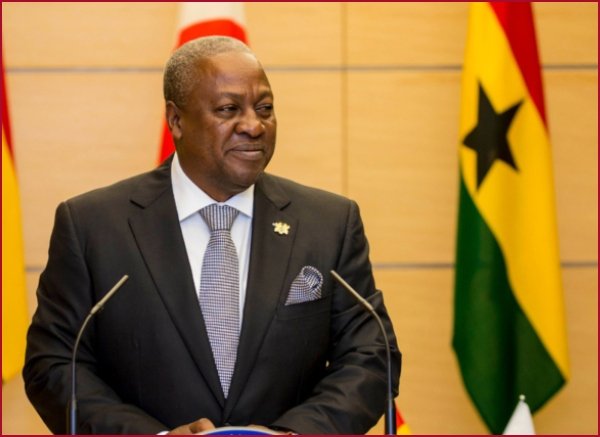
President John Dramani Mahama has convened an emergency cabinet meeting to address the sharp rise in fuel prices caused by the ongoing conflict in the Middle East, particularly the escalation involving Iran.
Speaking on Saturday, April 4, 2026, during the second day of the Kwahu Business Forum, President Mahama stated that the meeting will focus on practical interventions to ease the burden on citizens.
He specifically mentioned the possibility of adjustments in fuel margins and other components of the price build-up to help keep prices relatively stable while hoping for de-escalation of the conflict.
“I have called for this emergency cabinet meeting to decide on specific measures we can take to cushion petroleum prices,” Mahama said. “There are adjustments we can make, particularly in the margins, to help maintain relatively stable prices as we pray for the war to cease.”
The President assured Ghanaians that the government remains committed to protecting the economy from external shocks and has taken steps to build resilience.
“I can confidently tell you that the economy will not collapse because of the war in Iran,” he stated.
Mahama also commended transport unions for showing restraint by not immediately increasing lorry fares despite the fuel price surge.
He urged them to continue exercising patience as the government works on relief measures. Fuel prices rose significantly effective April 1, 2026, with petrol increasing to approximately GH¢13.30 per liter (a 15% hike) and diesel to GH¢17.10 per liter (a 19% hike) for the first half of April.
The government is reviewing options including reductions in margins and levies to provide relief to consumers.
This latest development highlights the direct link between global geopolitical tensions and domestic living costs in Ghana, as the government balances immediate relief with longer-term economic stability.


Renowned Global Bodies Warn Middle East War Will Scuttle Africa’s 2026 Growth

Ex-President Akufo-Addo and President Mahama Exchange Pleasantries on Easter

Mahama Calls Christ’s Birthplace an ‘Epicentre of War’, New Airport Concourse Planned and Other Big Stories in Ghana Today
-
 Ghana News22 hours ago
Ghana President Convenes Emergency Cabinet Meeting to Cushion Ghanaians from Soaring Fuel Prices
-
 Ghana News21 hours ago
Mahama Calls Christ’s Birthplace an ‘Epicentre of War’, New Airport Concourse Planned and Other Big Stories in Ghana Today
-
 Ghana News21 hours ago
Ex-President Akufo-Addo and President Mahama Exchange Pleasantries on Easter
-
 Business21 hours ago
Renowned Global Bodies Warn Middle East War Will Scuttle Africa’s 2026 Growth