
Editorial
Ghana and Côte d’Ivoire Must Act or Watch the Cocoa Industry Fade: An Editorial


A recent warning from the European Union to two of Africa’s cocoa producing giants, Ghana and Côte d’Ivoire, is clear: adapt the cocoa sector now — or risk losing access to the world’s largest chocolate market.
The recent push from EU and French development partners comes after five years of research under the Cocoa4Future initiative, which uncovered uncomfortable truths: current cocoa farming practices in Ghana and Côte d’Ivoire are undermining both the land and the long-term security of the industry. The urgency is not a threat, it is a wake-up call.

Cocoa’s Global Weight — And Its Environmental Cost
Ghana and Côte d’Ivoire together account for roughly two-thirds of the world’s cocoa supply.
That dominance gives them enormous influence. But it also carries massive responsibility.
Deforestation linked to cocoa cultivation has already devastated vast tracts of primary rainforest. Studies highlight cocoa as a key driver behind up to 37% of forest loss in protected areas in Côte d’Ivoire and more than 13% in Ghana.
Between 2001 and 2015, cocoa-related deforestation alone contributed to nearly one-third of Ghana’s and a quarter of Côte d’Ivoire’s forest losses.
As global demand for chocolate rises, so do the numbers: more clearing, older soils, stressed ecosystems. Add to that the emerging threats of climate change — droughts, unpredictable weather — and the result becomes stark: the industry feeding the world now undermines its own future.
The EU Isn’t Punishing — It’s Protecting Its Market
Starting in late 2025, the new EU Deforestation Regulation (EUDR) will require companies importing cocoa (and other commodities) into EU markets to prove their supply chains are “deforestation-free, legally sourced, and fully traceable.”
In effect, this law is not about punishing West African producers — it is about protecting European businesses and consumers who demand deforestation-free chocolate and ethically sourced goods. As such, the pressure is real and the deadline inescapable.
Even before EUDR formally activates, major buyers have begun to shift their sourcing practices. Some smaller farms and exporters already fear exclusion.
Reforms Are Possible — But They Must Be Structural
The good news: reform is not a fantasy. The research presented at the Cocoa4Future workshop offers a roadmap grounded in reality. Key recommendations include:
- Agroforestry adoption: shifting away from low- or no-shade monocultures to shade-tree systems that preserve soil, biodiversity, and long-term yield stability.
- Disease management: scaling up production of disease-resistant seedlings (especially to fight Cocoa Swollen Shoot Disease) and strengthening early-detection training.
- Strengthening farmer support: improved access to affordable credit, agricultural inputs, diversified buyer networks, and stronger cooperatives to give farmers better bargaining power.
- Clear land and tree-tenure laws: so farmers who plant shade trees or rehabilitate land can benefit long-term — rather than facing loss of rights.
- Traceability and certification: invest in national traceability systems and support smallholders to meet sustainability standards required under EU-linked supply chains.
These are not cosmetic fixes. They require political will, public investment, and cooperation between governments, farmers, industry players, and international development partners.
The True Cost of Inaction
Failing to act is not merely an environmental failure — it is an economic risk. The world is watching. European buyers, global consumers, regulators — all are moving toward sustainability and transparency.
If Ghana and Côte d’Ivoire lag, they risk losing more than market share. They could lose credibility, investment, and the social license that their generations of smallholder farmers depend on. Governments may be forced to react under crisis conditions — leading to even harsher consequences for rural livelihoods.
Moreover, continuing unsustainable cocoa farming accelerates forest loss, exacerbates climate change, depletes soil fertility, and threatens biodiversity. That damage is often irreversible. Once forest is gone, it rarely returns — and with it goes ecosystem services: clean water, stable climate, resilient soils.
For the Global Community: This Isn’t Just Cocoa. It’s Climate Justice and Supply-Chain Integrity
For consumers in New York, London, Paris, or Tokyo — this matters. Every chocolate bar, cocoa drink, or dessert sold in the global supply chain carries a footprint. As the world confronts climate change, biodiversity loss, and supply-chain ethics, cocoa stands at a crossroads.
Supporting sustainable and ethical cocoa is more than a consumer choice. It is a statement: that the love of chocolate does not come at the price of destroyed forests, exploited labor, or environmental collapse.
For the governments of Ghana and Côte d’Ivoire, the choice is clear: act with urgency now — or become casualties of a shifting global standard they once defined. The fate of the industry, the environment, and millions of farming families hangs in the balance.
They have the data. They have the roadmap. Now they need the courage to act.









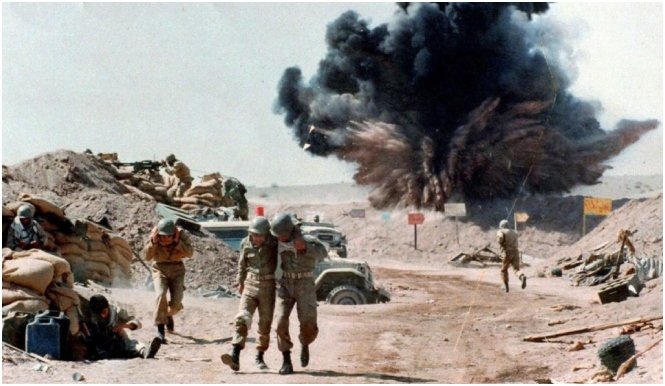
Accra, Ghana – The escalating war involving Iran and Western-led strikes has already sent shockwaves through global energy markets, disrupted maritime trade, and redirected geopolitical attention.
While the human cost in the Middle East continues to mount, a growing body of strategic commentary suggests the conflict—however tragic—could produce unintended but potentially transformative consequences for the African continent.
Rising oil prices represent the most immediate economic ripple. With the Strait of Hormuz under severe threat and Saudi Arabia reportedly planning to reroute exports via the Red Sea, crude prices have surged. For major African producers Angola and Nigeria, higher revenues could provide fiscal breathing room. Yet the broader impact on the continent is largely negative: elevated oil costs drive up fertilizer prices, inflating food costs in import-dependent nations. Historical precedent is stark—similar dynamics in 2007–2008 triggered food-price riots across Africa, from Morocco to Cameroon. Analysts warn that the current spike risks reigniting social unrest unless governments act swiftly with subsidies or alternative supply chains.
Maritime rerouting offers a second, more localized opportunity. If Houthi forces in Yemen escalate Red Sea attacks—as they have done during previous Israel-related conflicts—the traditional Suez Canal route could become untenable. Cargo vessels carrying food and goods from the Atlantic to the Middle East and Asia would then be forced to circumnavigate the Cape of Good Hope. South African ports (Durban, Cape Town, Port Elizabeth) and neighbouring coastal facilities in Namibia and Mozambique stand to gain significantly from increased transshipment traffic, vessel repairs, bunkering, and logistics services. While short-term, this revival of the historic “Cape route” could inject millions into local economies and accelerate port infrastructure upgrades.
Perhaps the most intriguing long-term shift involves the realignment of foreign influence. The United Arab Emirates, Africa’s fourth-largest foreign investor in recent years, has poured billions into ports, airports, and military footholds—most controversially backing the Rapid Support Forces (RSF) in Sudan’s devastating civil war. With Iranian missiles and drones now targeting Emirati territory, analysts argue the UAE will be compelled to redirect resources homeward, potentially withdrawing or scaling back its African footprint. While this may cause short-term investment gaps, it could open space for African governments to negotiate with more transparent or development-focused partners.
Simultaneously, the West’s intense focus on the Middle East—evidenced by France and other NATO members deploying naval assets to the Gulf—may reduce external meddling in African affairs. Countries in the Alliance of Sahel States (Mali, Burkina Faso, Niger) and other regions that have faced repeated Western military or diplomatic pressure could gain breathing room to consolidate sovereignty, pursue regional integration, and build domestic institutions without constant external scrutiny or intervention threats.
None of this diminishes the war’s catastrophic human toll or the global economic pain it inflicts. Food insecurity, inflationary spirals, and redirected investment flows could deepen poverty and instability in vulnerable states. Yet the conflict’s unintended side effects—higher port revenues in the south, diminished Gulf-state interference, and a temporary lull in Western strategic preoccupation—could create narrow windows for African agency and self-determination.
Whether these opportunities are seized depends on African leadership: proactive food-price mitigation, strategic port investment, transparent renegotiation of foreign partnerships, and accelerated regional cooperation. History shows that global crises often accelerate change—sometimes painfully, sometimes productively. The Iran war may prove no exception.
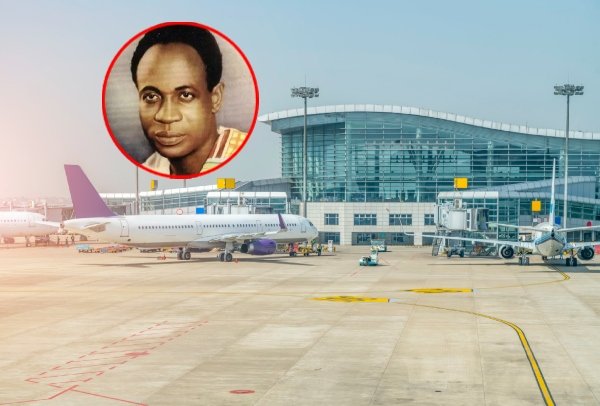
Ghana faces a defining moment. The proposal to rename Kotoka International Airport has once again ignited passionate debates.
On one side, proponents see it as a vital step toward purging symbols of coups and instability, arguing that honoring Lieutenant-General Emmanuel Kwasi Kotoka—a key architect of the 1966 overthrow—undermines our democratic ethos. On the other, critics decry the move as needless revisionism, warning that it risks erasing complex historical layers and diverting attention from pressing economic woes. These contrasting views, while valid in highlighting the tension between progress and preservation, miss a deeper opportunity: any renaming effort that sidesteps Osagyefo Dr. Kwame Nkrumah is not just shortsighted but fundamentally half-baked.
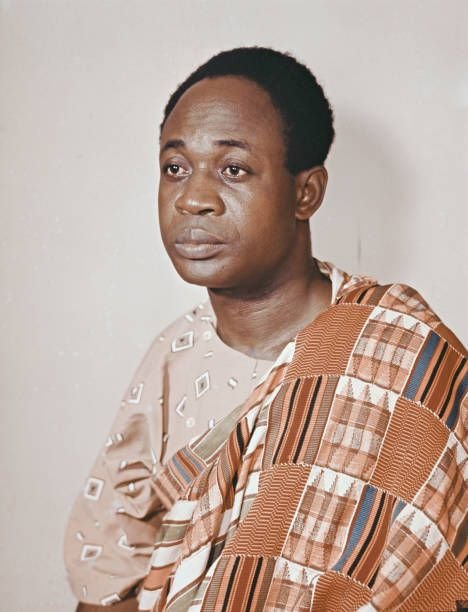
Ghana stands at a pivotal moment in its post-colonial journey, one where Nkrumah’s visionary ideals of pan-African unity, self-reliance, and continental renaissance are not relics of the past but blueprints for the future. Consider the “Year of Return” in 2019 and its extension into “Beyond the Return”—initiatives that have drawn thousands of African descendants back to our shores, fostering economic ties, cultural reconnection, and a renewed sense of African pride.
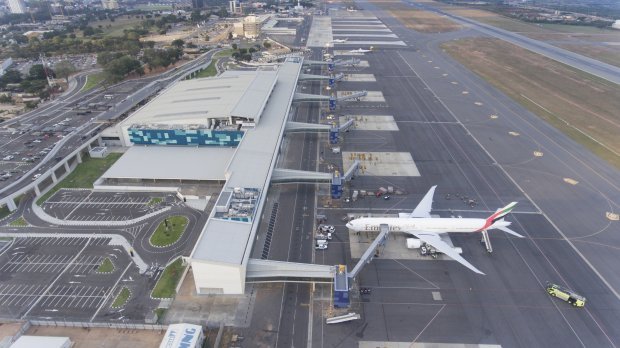
Nkrumah’s clarion call for a united Africa, free from neo-colonial shackles, resonates profoundly with this renaissance. His foresight in championing the Organization of African Unity (now the African Union) aligns seamlessly with today’s push for intra-African trade via the AfCFTA and the global reckoning with historical injustices like the transatlantic slave trade. Renaming the airport after Kotoka’s coup victim—Ghana’s founding president—would not merely correct a historical anomaly, it would signal to the world that Ghana is reclaiming its narrative in an era where African agency is ascendant.
There is no better symbolism for diasporan returnees arriving in Ghana — where their ancestors, centuries prior were sold into slavery — than arriving to reclaim their heritage at Kwame Nkrumah International Airport.
The reluctance to center Nkrumah exposes a national habit of incompleteness, a pattern etched into our landscape. Look no further than the Kwame Nkrumah Mausoleum in Accra: a grand tribute to the Osagyefo, yet one that feels unfinished. In fact, my reading on the design, which resembles a broken pyramid, is meant to reflect both Nkrumah’s unfinished Pan-African vision and Ghana’s continuing journey after him.
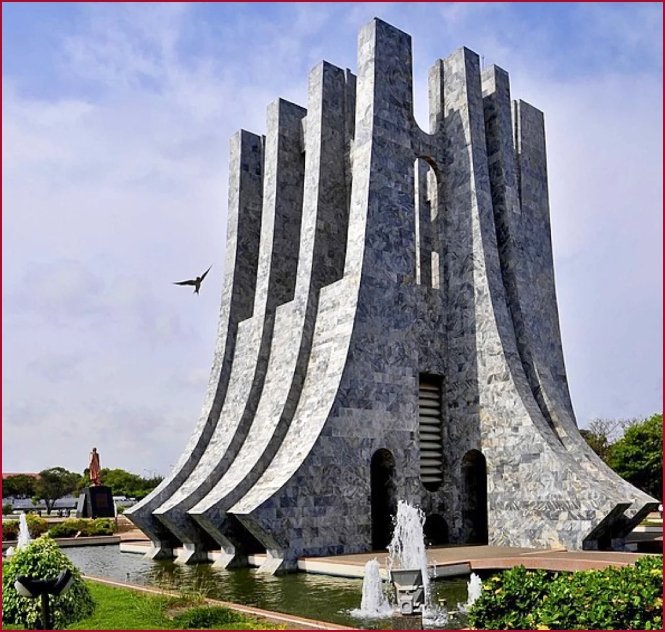
I am not an expert in symbols and symbolsim, but I feel deeply that that symbolism is self-defeating. Spiritually, it may suggest we will never get anything completed; we will always be in a perpetual cycle of starting things and never completing. I digress. Back to the airport renaming.
Renaming the airport “Kwame Nkrumah International Airport” would be a bold act of completion, transforming our gateway to the world into a monument of triumph rather than division. It would honor the man who built the original airfield as part of his ambitious development agenda, ensuring that every arriving visitor encounters Ghana through the lens of its liberator, not its disruptors. Sometimes, it feels like we are only ones (I mean Ghanaians) belittling Nkrumah’s influence and impact on the African continent. But if only we could throw away our political lenses, his grandeur and vision would be visible to all of us.

A bold decision like changing the name of a country’s main international airport demands careful consultation to avoid partisan pitfalls, but let’s not let fear of controversy perpetuate half-measures. Ghana deserves a symbol that inspires unity and ambition, not one mired in the dark shadows of 1966. Kotoka did Ghana no good by masterminding Nkrumah’s overthrow. Let’s not split hairs about that. If Nkrumah had flaws at all, on hindsight, he was the best for Ghana and the Black race.
By embracing Nkrumah fully in this timely renaming agenda, we don’t just rename an airport—we complete a chapter, fortifying our role in Africa’s awakening. The time is now: let’s finish what we started!

Something seismic has just happened in Burkina Faso—and Africa, and the world, should be paying close attention.
With the stroke of a decree approved by the council of ministers, the military-led government of President Ibrahim Traoré has dissolved all political parties and scrapped the legal framework governing their existence. Party offices, assets, structures—gone. Transferred to the state. Politics, as Burkina Faso has known it for decades, has been put on pause.
This is not administrative housekeeping.
This is a fundamental rewrite of the political order.
The government’s justification is blunt: political parties, it says, have become engines of division, corruption, and elite self-interest. Too many parties, too little nation-building. Too much competition for power, too little service to the people. The solution, in Traoré’s view, is unity before politics—a state rebuilt first, elections later.
It is a message that resonates far beyond Ouagadougou.
Across Africa, fatigue with multiparty democracy is real. For millions, democracy has meant elections without electricity, constitutions without jobs, and politicians who rotate offices while poverty stays put. Against that backdrop, some are asking an uncomfortable question: If democracy has not delivered, why defend it so fiercely?
But history demands honesty—and honesty complicates the applause.

Africa also knows this story well. The suspension of political parties has often been the opening chapter in longer, darker books: prolonged military rule, shrinking civic space, silenced dissent, and leaders who promise transition but grow comfortable with control. Coups, too, have a long and disappointing record. They rarely end as advertised.
And yet—this is where Burkina Faso unsettles easy conclusions.
Traoré is not governing like yesterday’s coup leaders. His administration has moved aggressively on national sovereignty: reclaiming control over resources, rejecting external political tutelage, pushing self-reliance, and speaking a language of dignity that resonates deeply with a generation raised on the failures of dependency. Crucially, many Burkinabè appear to be backing him—not out of fear, but belief.
This is what makes the moment dangerous and fascinating.
Is dissolving all political parties the first step toward authoritarian consolidation?
Or is it an audacious—if risky—attempt to reset a political system that many believe was never truly democratic to begin with?
From Accra to Addis Ababa, from Paris to Washington, observers will rush to label this move. But Burkina Faso is not a textbook case; it is a country at war with insurgency, burdened by history, and searching—desperately—for a model that works for itself.
Still, power without pluralism is power unchecked. And no matter how popular a leader may be today, the absence of political competition tomorrow raises a simple, enduring question: who watches the watcher?
Burkina Faso now stands at a fork in the road. One path leads to a genuine, time-bound reconstruction of the state, followed by a return to accountable civilian rule—stronger, leaner, and more rooted in the people. The other leads to a familiar African tragedy: revolutionary rhetoric giving way to permanent exception.
Which path Traoré chooses will define not just his legacy, but Burkina Faso’s place in Africa’s political future.
This is not a moment for blind praise or reflexive condemnation. It is a moment for vigilance, debate, and clear-eyed realism.
A reset may be necessary.
But history warns: when politics disappears, it rarely stays gone quietly.
The question now is not whether Burkina Faso has changed.
It has.
The question is whether this change will liberate the state—or outgrow the consent of its people.


New Video Captures Victims Piloting Microlight Before Fatal Crash, Dormaahene Breaks Down in Tears and Other Trending Issues Today (March 19, 2026)

Newspaper Headlines Today: Thursday, March 19, 2026

The Day the Antelope Danced: Uncovering the Soul of Ashanti’s Adowa
-
 Ghana News1 day ago
Newspaper Headlines Today: Wednesday, March 18, 2026
-
 Ghana News1 day ago
UK Engages Ghana on Counterterrorism and Maritime Security
-

 Taste GH2 days ago
Experience the Rare Texture of Apapransa the Celebratory Roasted Corn Delicacy
-

 Ghana News1 day ago
Two Scrap Dealers Lynched, Video of Mahama’s Reaction After Atta Mills’ Death Resurfaces and Other Trending Issues Today (March 18, 2026)
-

 Health & Wellness1 day ago
Three Amazing things that Happen When You Introduce Vegetables to Your Diet
-
 Festivals & Events1 day ago
The Whispering Rocks of Tengzug: Invoking the Rain at the 2026 Gologo Festival
-
 Ghana News24 hours ago
Germany Hands Over Four Operational Shelters to Ghana Immigration Service at Aflao Border
-

 Business2 days ago
Ghanaian Pension Funds Commit $11m to Atlantic Lithium’s Ewoyaa Project