
Ghana News
Fuel Prices Set to Rise From May 16, Disturbing Sex Abuse Images and Other Big Stories in Ghana Today


Welcome to our curated morning news roundup. We have sifted through the major headlines to bring you the most relevant stories shaping Ghana today.
Disturbing Images Surface in East Legon Sex Abuse Case
Graphic images and videos have surfaced online depicting a 35-year-old businessman, identified as Joshua Kojo Anane Boateng who was arrested by the Ghana Police Service for allegedly drugging and sexually abusing multiple young women at his East Legon residence. The visuals, which have sparked widespread outrage on social media, allegedly show the suspect with unconscious victims in various states of undress. Police have confirmed that the suspect is in custody and that investigations are ongoing, with authorities urging any other potential victims to come forward to assist in building a strong case against him.
The arrest followed a formal complaint from a victim who alleged she was offered a drugged drink, leading to her incapacitation and subsequent assault. Investigators reportedly retrieved several incriminating items, including drugs and recording devices, from the suspect’s home. The case has reignited public conversation about the safety of women in social settings and the urgent need for stricter enforcement of laws against sexual violence. The police have assured the public that a thorough investigation will be conducted to ensure justice is served, as the suspect is expected to be arraigned in court soon. Read the full story here
Parliamentarian Breaks Silence on Arrest and Fraud Allegations
Member of Parliament for Asante Akyemm North Ohene Kwame Frimpong, popularly known as O.K. Frimpong, has publicly addressed reports of his arrest over alleged fraud in 2025, providing his side of the story. The outspoken lawmaker clarified that the issue stemmed from a business transaction gone wrong, which he described as a contractual dispute rather than a criminal act of fraud. He emphasized that he was never formally charged or detained by police, contrary to circulating rumors, and that the matter was resolved amicably between the involved parties without any judicial proceedings.
In his detailed explanation, Frimpong used the opportunity to criticize what he termed a politically motivated smear campaign aimed at tarnishing his reputation. He revealed that the complainant in the case later withdrew the petition after realizing it was a misunderstanding over payment schedules for a service rendered. The MP, known for his anti-corruption advocacy, expressed frustration over how unverified information spreads rapidly, causing undue harm to public figures. He reaffirmed his commitment to transparency and promised to release documents related to the transaction to clear his name completely. Read the full story here
Togo Police Arrest Suspect in Murder of Ghanaian Car Dealer
The Criminal Investigations Department (CID) of the Ghana Police Service has arrested a suspect in connection with the murder of 27-year-old car dealer, Yaw Osei Ashitey Amma, whose burnt body was discovered inside a vehicle at Atomic Junction on the Legon bypass road on April 7, 2026. Briefing the press on May 12, 2026, the Director-General of the CID, Lydia Yaako Donkor, said the suspect, Wisdom Tetteh, was arrested in Togo.
“The suspect, a close friend and neighbour of the deceased, was arrested on April 30, 2026, in the Republic of Togo through Interpol collaboration while attempting to sell the deceased’s mobile phone. He was subsequently handed over to the Ghana Police Service at the Aflao border and conveyed to the CID headquarters homicide unit for further investigations,” she noted. Read the full story here
Over 500,000 Candidates Begin 2026 WASSCE Across Ghana Today
Today marks the commencement of the 2026 West African Senior School Certificate Examination (WASSCE), with over 500,000 candidates from accredited senior high schools across Ghana sitting for their first paper. The West African Examinations Council (WAEC) has deployed thousands of invigilators and supervisors to ensure the smooth conduct of the exams, which will run for the next several weeks. Students are expected to write papers in core subjects including English Language, Mathematics, Integrated Science, and Social Studies, alongside various electives. WAEC has reiterated its zero-tolerance policy for cheating, with advanced security measures, including biometric verification and drone surveillance at high-risk centers, put in place.
The examination has gotten off to a largely peaceful start, with no major incidents reported in the morning sessions. Education Minister Yaw Osei Adutwum visited several centers in the Greater Accra Region to boost the morale of candidates, urging them to remain focused and avoid any form of malpractice. Parents and guardians have been advised to provide the necessary support for their wards, including ensuring they arrive at examination centers on time. The results of this examination are critical for university admissions, and the government has assured the public that all logistical challenges have been addressed to protect the integrity of the exams. Read the full story here
NIA Workers Begin Strike Over Conditions of Service
Staff of the National Identification Authority (NIA) have downed tools today, initiating a nationwide strike over protracted negotiations regarding their conditions of service. The workers, under the auspices of their various unions, are demanding improved remuneration, better safety protocols at registration centers, and a clear career progression path. The strike action has effectively paralyzed the registration and replacement of Ghana Cards at many district offices, causing frustration among citizens who rely on the card for access to banking, healthcare, and other essential services. The unions have vowed to continue the industrial action until their grievances are addressed by management.
The NIA management has appealed to the striking workers to return to the negotiation table, warning that the shutdown is negatively impacting the authority’s mandate to enroll eligible Ghanaians. In a statement, the authority acknowledged the workers’ concerns but described the strike as premature and illegal, given that discussions were still ongoing with the Fair Wages and Salaries Commission. Meanwhile, civil society organizations have urged both parties to find a quick resolution, as prolonged delays in issuing the Ghana Card could derail government’s digitalization agenda. No date has been set for the next round of negotiations. Read the full story here
Fuel Prices Set to Rise From May 16 Despite Possible Extension of Gov’t Intervention
Ghanaian consumers are bracing for an increase in fuel prices starting May 16, 2026, even if the government extends its current price stabilization policy, according to the Chamber of Oil Marketing Companies (COMAC). CEO Dr. Riverson Oppong outlined two scenarios: if the government extends the intervention, petrol could rise by 2.5-3% to around GH¢14.50 per litre, and diesel to about GH¢16.50. If the intervention ends, prices could climb more steeply to approximately GH¢15.80 for petrol and GH¢18.05 for diesel. The looming increase is attributed to rising global crude oil prices, which have hit about $107 per barrel, driven partly by fears of potential US strikes on Iran.
Dr. Oppong cautioned against the assumption that importing products from Nigeria would automatically lead to lower local prices, drawing a clear distinction between product availability and pump prices. The expected fuel hike is likely to exert further pressure on domestic inflation and transportation costs, even as institutions like the IMF and World Bank project Ghana’s inflation to end the year at single-digit levels. Meanwhile, the government is facing mounting pressure from labor unions and transport operators to absorb the impending increases to prevent economic shocks. A final decision on the intervention extension is expected from the Finance Ministry before the May 16 deadline. Read the full story here
Bank of Ghana Mops Up GH¢19bn to Manage Excess Liquidity
The Bank of Ghana (BoG) has successfully absorbed GH¢19.06 billion from the domestic money market through its latest 14-day bill auction (Tender 861), conducted on May 11, 2026. The short-term bills were allotted at a weighted average discount rate of 10.4579%, translating into an effective interest rate of 10.50% for the investment period. This significant liquidity mop-up is a key monetary policy tool deployed by the central bank to regulate money supply, prevent surplus funds from fueling inflation, and stabilize the foreign exchange market. The auction attracted bid rates ranging between 10.40% and 10.49%.
The operation comes at a time when Ghana’s interest rate environment has seen sharp declines following sustained disinflation and recent policy easing. However, the scale of the auction suggests the central bank remains cautious about liquidity conditions in the banking sector. This move reinforces the BoG’s active liquidity management strategy to maintain price stability. For commercial banks, the 14-day bill offers a low-risk short-term investment alternative as yields on Treasury bills and other government securities moderate. Analysts see this as a prudent step to consolidate macroeconomic gains achieved under the ongoing IMF-supported program. Read the full story here
Ghana Urged to Reduce Dependence on Dollar Loans for Infrastructure
The Ghana Consulting Engineers Association has issued a strong call for the government to significantly reduce its reliance on foreign currency borrowing for infrastructure projects, advocating instead for long-term local currency bonds. Association President Kwabena Bempong, speaking at the FIDIC Africa 2026 Infrastructure Conference in Accra, warned that heavy dependence on dollar-denominated financing exposes the country to severe exchange rate risks. He noted that whenever the cedi depreciates, the cost of repaying external loans for roads, bridges, and other projects balloons, undermining fiscal stability. He stressed that infrastructure requires patient capital, not short-term instruments like treasury bills.
The Association recommends issuing cedi-denominated infrastructure bonds targeted at local institutional investors such as pension funds. This strategy would provide a stable, predictable funding source while deepening Ghana’s domestic capital market and creating local investment opportunities. Bempong pointed out that past projects financed through external borrowing have led to higher debt servicing costs during periods of currency volatility. The proposal aligns with Ghana’s ongoing efforts to balance infrastructure expansion with debt sustainability and fiscal consolidation. The government is yet to officially respond to the recommendation, but the call adds to growing expert consensus for innovative, sustainable infrastructure financing models. Read the full story here






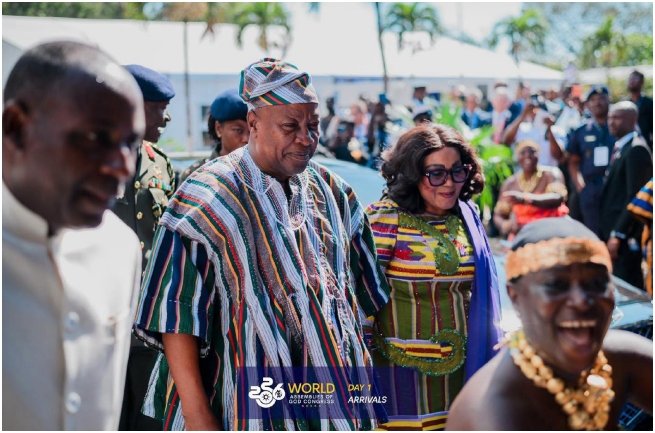
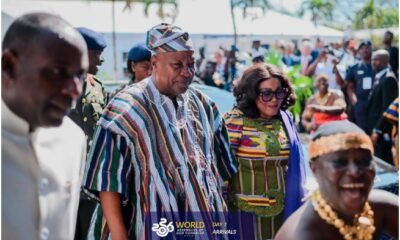
President John Dramani Mahama has challenged thousands of church delegates gathered in Ghana’s capital to measure the success of their global congress not by the eloquence of its sermons, but by the lives they transform after the final prayer is said.
“The lasting story of this conference, this congress, will be written in the lives that we touch after the closing prayer,” Mahama told more than 10,000 participants at the opening ceremony of the 10th Triennial Congress of the World Assemblies of God Fellowship on Wednesday, October 14, 2026.
The president urged delegates to return to their home countries with concrete plans to serve their communities — mentoring young people, supporting schools, strengthening health ministries and standing beside congregations serving under difficult conditions.
Faith Must Be Tangible
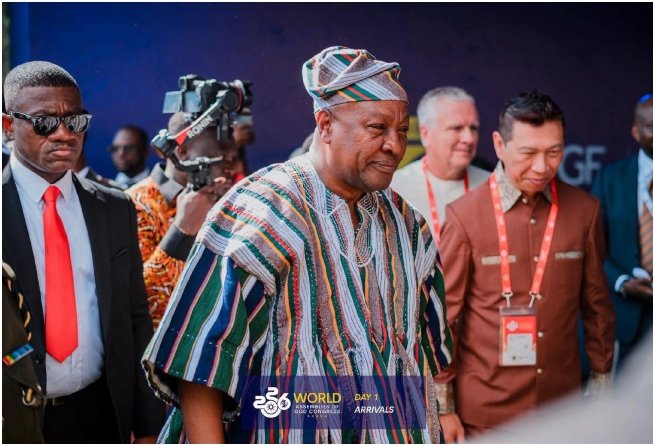
Mahama argued that faith becomes real only when it meets human need. He offered a vivid portrait of what practical Christianity looks like: a hungry child receiving a meal, a patient treated with compassion, a young person acquiring a skill, a widow finding companionship, and a struggling family receiving support from its community.
He called on the church to give greater attention to the relationship between preaching the gospel and serving people in practical ways, saying the two must not be separated.
“Spiritual authority entails a duty of care,” the president said, stressing that churches must provide safe environments for children and vulnerable people. He warned that spiritual leadership carries a responsibility to protect the trust placed in it through responsible conduct.
A Warning on Youth and Technology
Turning to youth development, Mahama acknowledged that young people today are growing up in a world of extraordinary opportunity, but also considerable pressure. Technology, he said, connects young people across continents while simultaneously exposing them to constant comparisons, misinformation and competing expectations about who they should become.
He urged churches and families to create environments where young people can ask questions freely, receive guidance, develop their abilities and take on meaningful responsibilities. Delegates, he said, should mentor young people by listening to them, offering opportunities for service and modelling integrity.
The president also called on the church to recognise the contributions of women of faith, saying their wisdom, talents and leadership deserve full recognition.
A Call for Global Solidarity
Addressing the global nature of the fellowship, Mahama expressed hope that members with greater resources would find ways to support those with fewer. The fellowship, he said, would grow stronger when its members shared their gifts and stood with one another through difficult times.
He also spoke directly to the responsibility of public office, saying those entrusted with power had a particular duty to serve with humility, honesty and integrity. Faith, he added, should deepen respect for citizens and concern for those whose voices are least likely to reach the centres of power.
Historic Honour for a Pentecostal President
At the ceremony, the World Assemblies of God Fellowship presented Mahama with its maiden Global Leadership Excellence and Trailblazer Award. The citation described him as the first member of the Assemblies of God worldwide to become president of a country — a milestone for the denomination.
Organisers also presented him with a Bible and urged him to allow the Word of God to guide his leadership.
The fellowship honoured First Lady Mrs. Lordina Mahama for her work supporting vulnerable people through her compassion ministry.
Former Malawian President Dr. Lazarus Chakwera also received the Global Leadership Excellence Award. His citation described him as the second member of the denomination — and the first minister of the gospel within the fellowship — to become president of a country.
Prayers for Wisdom and Redistribution
Following the awards, general superintendents and Ghanaian church leaders gathered around Mahama to pray for him. The prayer leader, Reverend Dominic Yeo, the fellowship’s Global Chairman, asked God to grant the president “divine wisdom” and prayed for the continuation of what he described as a reformation agenda.
He also prayed for “a redistribution of wealth throughout this nation so that all Ghanaians will be blessed,” a prayer that resonated beyond the sanctuary walls in a country where economic inequality remains a pressing concern.
A Global Gathering in Accra
The 10th Triennial Congress has drawn more than 10,000 participants to Accra, making it one of the largest Pentecostal gatherings on the continent this year. The event brings together delegates from across the global fellowship, reflecting the denomination’s growing presence in Africa and beyond.
For Mahama, however, the congress’s true significance will not be found in its attendance figures or its ceremonies — but in what delegates do once they return home.
“Faith becomes tangible,” he said, “when a hungry child receives a meal, a patient is treated with compassion, a young person acquires a skill, a widow finds companionship and a struggling family receives support from its community.”
The closing prayer, it seems, is only the beginning.
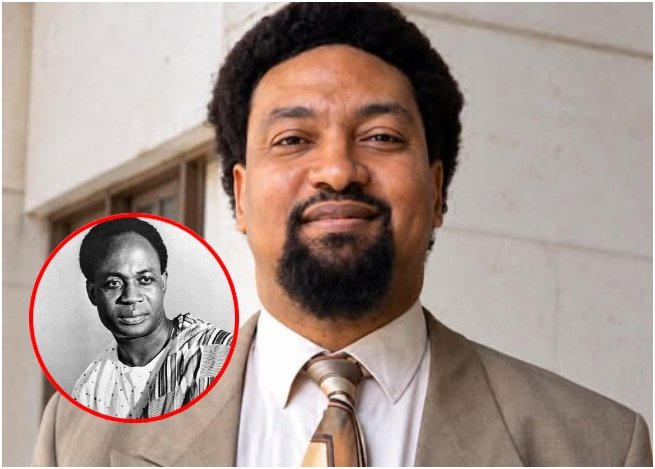
Gamal Gorkeh Nkrumah, the journalist, writer, and intellectual son of Ghana’s founding president, Osagyefo Dr. Kwame Nkrumah, has died in Cairo, Egypt, following a prolonged illness. He was 67.
The Nkrumah family announced his passing in a statement released Tuesday, describing it as “a profound loss not only to our family and loved ones, but also to the wider community of friends, colleagues and readers who valued his insight, humanity and unwavering engagement with the great questions of our time.”
According to the family, Gamal Nkrumah passed away peacefully after receiving care at a rehabilitation centre, where he had been recovering from a stroke.
A Life of Intellectual Engagement
Born in 1958, Gamal Nkrumah carved out a distinct identity as a newspaper journalist and commentator, dedicating his voice and intellect to examining the political, social, and cultural forces shaping Africa and the wider world.
Throughout his life, the family said, he remained “deeply committed to the ideals of justice, human dignity, African unity and international solidarity.”
Described as a man of “profound intellectual curiosity, independence of thought and quiet conviction,” Gamal carried forward the legacy of his father in his own distinctive way, while building a reputation firmly grounded in his own principles and achievements.
His passing marks the loss of a respected voice in African journalism and intellectual life, one whose work spanned continents and engaged deeply with the pressing issues of his time.
A Family in Mourning
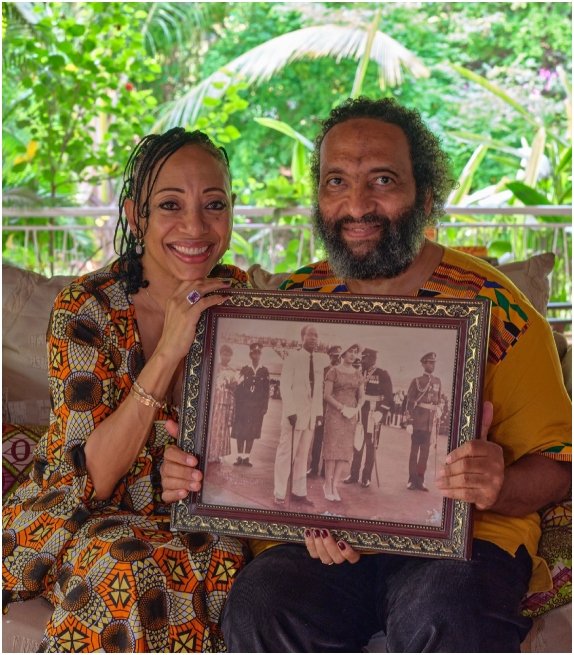
Gamal was one of the acknowledged children of Kwame Nkrumah and Fathia Nkrumah. He is survived by his siblings: Samia Nkrumah (born 1960), a politician and former leader of the Convention People’s Party (CPP); Dr. Francis Nkrumah (born 1962), a paediatrician; and Sekou Nkrumah (born 1964), a politician and photographer.
The Nkrumah family remembered Gamal “with immense love, gratitude and pride,” stating that “his wisdom, kindness and devotion to the values he held dear will remain an enduring source of inspiration.”
Gratitude and Requests for Privacy
In their statement, the family expressed heartfelt appreciation to all those who stood with Gamal throughout his illness, particularly the medical professionals and caregivers in Cairo who provided him with care and dignity.
They also extended “deepest thanks” to the governments and people of his two countries, Egypt and Ghana, for their generous support.
The family has kindly requested privacy as it mourns this deeply personal loss. Details concerning memorial arrangements and opportunities to pay tribute to his life and legacy will be communicated in due course.
“May he rest in eternal peace,” the statement concluded.
Ghana News
Ohio Court Orders Ghanaian Care Worker to Repay $53,278 After Workers’ Compensation Fraud Conviction

Betty Boateng, 50, of Columbus, pleaded guilty to a fifth-degree felony after investigators found she collected disability benefits while working for two in-home care employers
A US-based Ghanaian woman has been ordered to repay more than $53,000 to the state of Ohio after admitting she collected workers’ compensation disability benefits while simultaneously holding paid jobs, authorities announced.
Betty Boateng, 50, of Columbus, pleaded guilty to one count of Workers’ Compensation Fraud, a fifth-degree felony, following an investigation by the Ohio Bureau of Workers’ Compensation (BWC) Special Investigations Department, the agency said in a news release dated October 9, 2026.
Investigators found that Boateng “knowingly and with fraudulent intent returned to work for two different employers during periods when she was receiving BWC disability benefits to which she was not entitled.”
Evidence gathered during the probe showed she earned wages while continuing to accept disability checks, resulting in improper payments totaling $53,278.40.
Sentencing in Franklin County
On September 23, 2026, a judge in the Franklin County Court of Common Pleas accepted Boateng’s guilty plea and proceeded directly to sentencing, ordering:
- A 12-month suspended sentence
- 60 months of community control
- Mandatory reporting requirements
- Restitution of $53,278.40 to the Ohio BWC
- Waiver of fines, with court costs imposed
The case centered on Boateng’s work providing non-medical in-home care services for multiple employers, work she performed while receiving disability benefits she was not entitled to.
“Fraud Hurts Honest Workers”
BWC Administrator Stephanie McCloud said the agency remains committed to protecting the state’s workers’ compensation fund.
“Fraud against the workers’ compensation system hurts honest Ohio workers and employers,” McCloud said. “We are committed to holding accountable those who abuse the system and ensuring that funds remain available for individuals truly in need.”
The BWC urged anyone who knows of or suspects workers’ compensation fraud to contact its Special Investigations Department at 1-800-OHIO-BWC.
A Cautionary Tale for the Diaspora
The conviction adds to a growing list of cases involving Ghanaian nationals abroad facing fraud-related charges in the United States. Ghanaian communities in the US — particularly in cities such as Columbus, which has a sizable Ghanaian population — have increasingly been urged to understand the strict compliance rules attached to public benefit programs.
Workers’ compensation fraud in Ohio can be prosecuted as a felony depending on the amount involved, and convictions typically require full restitution in addition to any criminal penalties.



-
 Ghana News1 day ago
OBITUARY: Gamal Gorkeh Nkrumah, Son of Ghana’s Founding President, Dies in Cairo
-

 Sights and Sounds2 days ago
EPP BookShop at Legon: A Destination for Students, Families and Book Lovers
-

 Health & Wellness1 day ago
Walking Is More Than Exercise: Small Steps That Can Transform Your Health
-

 Festivals & Events1 day ago
MaddFest 2027: Welcome the New Year with a Night of Celebration in Accra
-
 Homes & Real Estate2 days ago
Building Smarter in Ghana: Could Plastic Rebar Clips Improve Construction Efficiency?
-
 Arts and GH Heritage1 day ago
Inside Togo’s Abandoned Colonial Building, African Artists Reclaim Cultural Memory
-
 Global Update1 day ago
Wave of Student Killings at Mexico Universities Raises Safety Concerns
-
 Ghana News1 day ago
Mahama to Churches: The Real Sermon Is Written After the Closing Prayer