
Africa Watch
France Returns Sacred ‘Talking Drum’ Looted During Colonial Rule to Ivory Coast

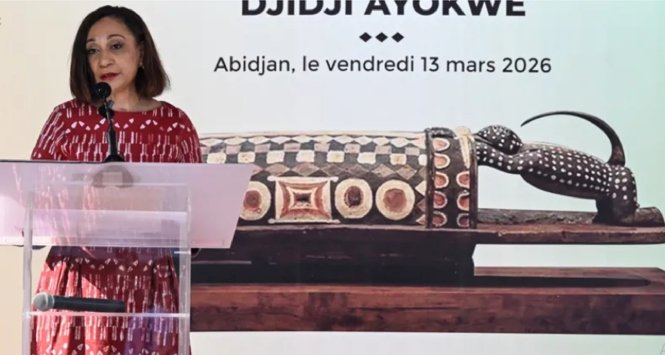
Abidjan, Ivory Coast – More than a century after it was seized by French colonial forces, the sacred Djidji Ayôkwé (Panther Lion) talking drum — a monumental cultural artefact of the Ebrié people — has been formally repatriated to Ivory Coast, marking a significant step in France’s ongoing restitution efforts for colonial-era objects.
The drum, over three metres long, weighing approximately 430 kg and carved from iroko wood, arrived at Abidjan International Airport on a specially chartered flight on March 15, 2026. It was received with traditional music, dance and a ceremonial welcome from Ebrié community leaders, local chiefs, and government officials. The artefact remained in its large wooden crate marked “fragile” during the airport ceremony.
Ivory Coast’s Minister of Culture, Françoise Remarck, described the moment as “historic” and one of “justice and remembrance.” She told the BBC: “We are living through a moment that finally marks the return of the Djidji Ayôkwé to its land of origin.”
Francis Tagro, Director of the Museum of Civilizations in Abidjan, said the drum would be placed “in a place of honour in the heart of the national museum,” where it is expected to inspire pride and cultural education among younger generations.
The Djidji Ayôkwé, traditionally used by the Ebrié (based in and around Abidjan) to warn of danger, mobilise communities for war, and summon people to ceremonies, was looted in 1916, taken to France in 1929, and displayed first at the Trocadéro Museum and later at the Quai Branly Museum in Paris.
Its return was authorised by a special law passed by the French parliament on 20 February 2026. The drum is the first item on a list of 148 cultural objects Ivory Coast is seeking to repatriate from France and other countries.
France has accelerated restitution since President Emmanuel Macron’s 2017 pledge to return colonial-era artefacts. Previous returns include Abomey royal treasures to Benin and a historic sabre to Senegal.
On 29 January 2026, the French Senate adopted a framework law to streamline the removal of such objects from national collections; the bill is now before the National Assembly.
The handover is widely viewed as a milestone in addressing the legacy of colonial plunder and restoring cultural heritage to its rightful communities.

Africa Watch
Madagascar Strongman Dissolves Government After Just Five Months, Flings Transition into Turmoil
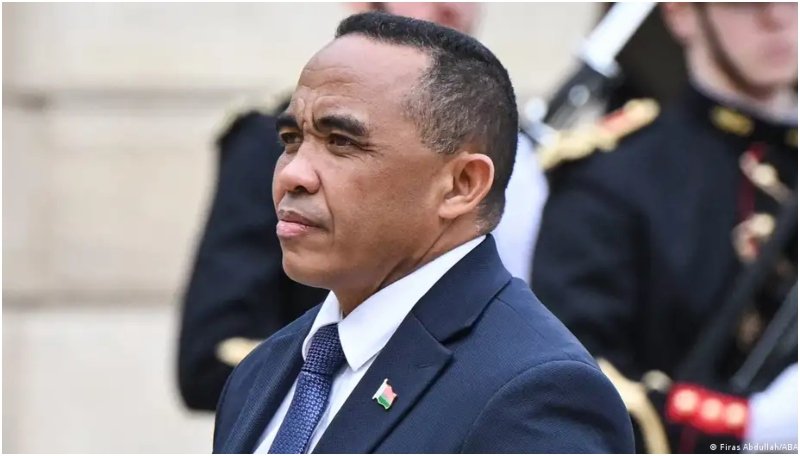
In a move that has plunged the island nation’s fragile political transition into fresh uncertainty, Madagascar’s military leader, Colonel Michael Randrianirina, has dismissed his prime minister and dissolved the entire Cabinet.
The decision comes barely five months after the government was sworn in following his seizure of power during last year’s youth-led uprising.
A statement from the presidency released late on Monday announced that, “in accordance with the provisions of the constitution, the government is suspended from its duties.” The statement confirmed that a new prime minister would be appointed “shortly,” but offered no timeline for the decision, nor any explanation for the abrupt dismissals.
The now-dissolved government, a hybrid cabinet of civilian ministers, military officials, and critics of the ousted former president, Andry Rajoelina, was only sworn in on October 28. It was led by Prime Minister Herintsalama Rajaonarivelo, a private sector businessman appointed by Randrianirina after Rajoelina fled the country last October.
A Leader Who Rejects the ‘Coup’ Label
Colonel Randrianirina first rose to power on a wave of public fury. In September of last year, protests triggered by chronic water and power shortages snowballed into a mass movement against the Rajoelina administration, which was violently suppressed. As the government lost control, Randrianirina emerged as the leader of the new military junta.
He vehemently rejects the term “coup,” preferring the title “President of the Refoundation of the Republic.” He maintains that the Constitutional Court legitimately “transferred power” to him, and he has promised a two-year transition period.
“The main objectives of my term, which will last a maximum of two years, are to find concrete solutions for the people,” Randrianirina had declared upon announcing the initial government.
Despite this pledge, his timeline has been ambiguous. In February, he announced a programme for constitutional reform consultations through 2026, with a presidential election scheduled for the last quarter of 2027—a timeline that stretches his self-declared two-year mandate.
Balancing on the International Stage and at Home
The domestic political earthquake came just hours before the African Union Peace and Security Council (PSC) was scheduled to hold its fourth meeting on Madagascar since the political crisis began in October. The dissolution is likely to complicate the AU’s efforts to mediate a stable transition and could draw sharp criticism from the continental body.
The move also casts a shadow over Randrianirina’s recent high-profile diplomatic forays. In February, he sought to legitimize his leadership on the world stage, meeting with Vladimir Putin in Russia and visiting Madagascar’s former colonial power, France, for talks with Emmanuel Macron. He hailed a “new era of cooperation” in Moscow and a “renewed” but “balanced” partnership with Paris—a significant gesture given that anti-French sentiment was a powerful current in the protests that toppled the previous government.
A History of Instability
Monday’s dissolution of the government injects a new dose of volatility into a nation with a long and troubled history of military interventions. Since gaining independence from France in 1960, Madagascar has experienced three prior coups d’état—in 1972, 1975, and 2009.
With the cabinet now dissolved and no clear reason given, questions abound. Was this a power struggle within the junta? A move against perceived incompetence? Or a consolidation of power before the next phase of the transition? For now, Madagascar waits, its political future as opaque as the reasons for its latest governmental collapse.
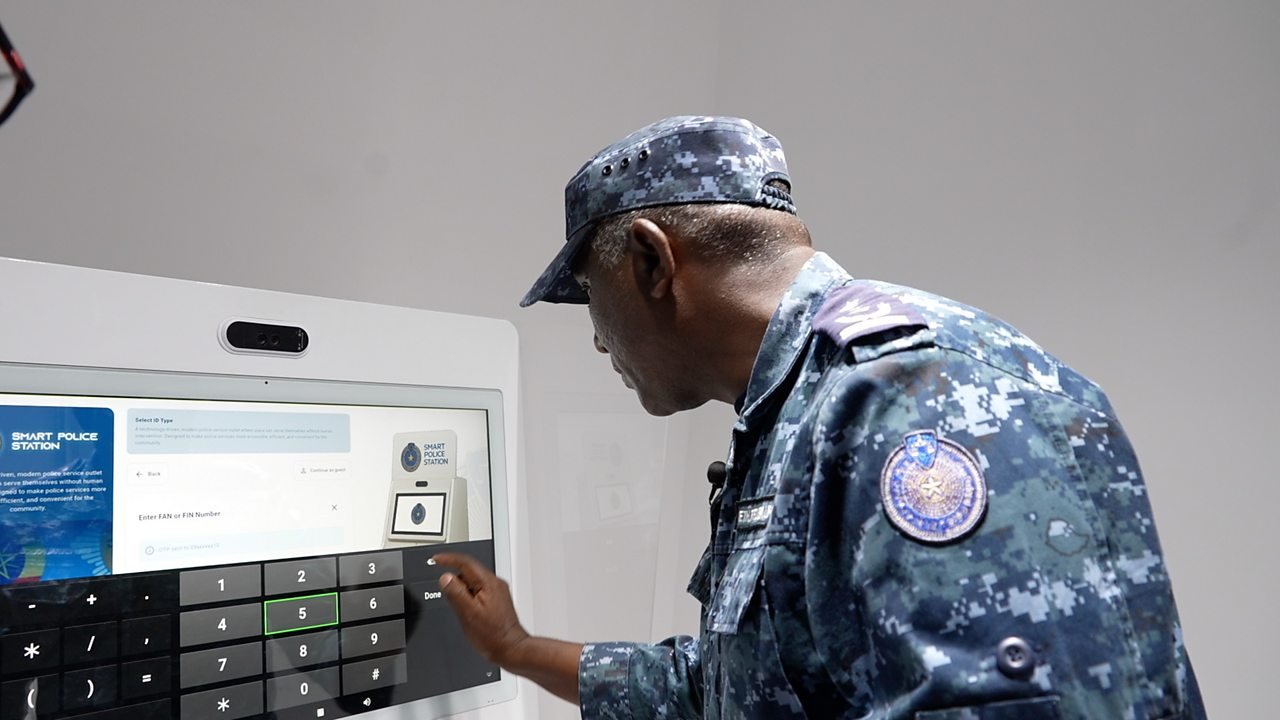
Addis Ababa, Ethiopia – March 6, 2026 – Ethiopia has opened its first fully automated, unmanned “smart police station” in the capital, allowing citizens to report crimes and access police services without any face-to-face interaction with officers.
The Pylos project station, launched in Addis Ababa, features a self-service kiosk where individuals can file reports directly through a digital interface. Once a report is submitted, a police officer is notified remotely and can respond—either by dispatching a patrol unit already operating in the area or by contacting the reporter for follow-up.
There are no physical officers stationed inside the facility, marking a significant shift toward technology-driven public safety.
The initiative is part of Ethiopia’s broader push to modernize government services, reduce waiting times, and improve access to justice in a rapidly urbanizing capital. Addis Ababa has faced rising incidents of theft, fraud, and other property crimes; a 2025 research paper noted that fraud alone accounted for nearly 20% of reported offenses in some parts of the city.
However, the project faces challenges related to digital access and literacy. By the end of 2025, only about one in five Ethiopians were using the internet regularly, despite the country having more than 93 million mobile connections.
Experts say scaling digital literacy programs will be critical to ensure the system serves all citizens, not just the tech-savvy urban population.
“This is a bold step toward 21st-century policing, but the digital divide remains a real barrier,” said one expert familiar with the project. “Traditional stations are still fully operational and will continue to run alongside the smart system.”
In a BBC report, the police chief overseeing the station expressed strong optimism during a recent visit, describing the technology as a way to make reporting faster and more efficient while freeing officers to focus on fieldwork.
For now, the smart station operates as a pilot, with potential expansion to other cities depending on its success and public reception.
The move comes as several African countries experiment with digital tools in public safety and justice delivery, aiming to improve efficiency in resource-constrained environments.
Africa Watch
How African Nations Are Evacuating Their Nationals Amid the Escalating Middle East Crisis
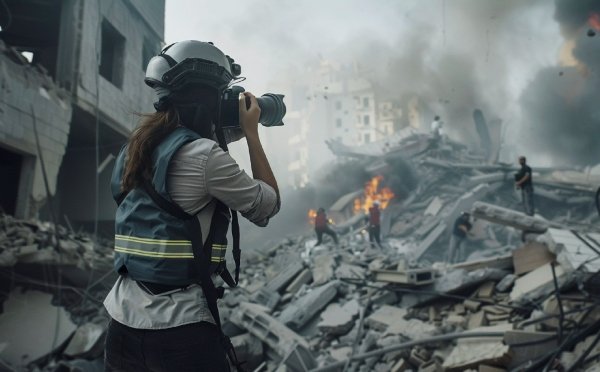
Accra, Ghana – March 1, 2026 – Several African governments, including, Kenya, Nigeria, Sudan, and Uganda, have activated emergency evacuation plans for their citizens caught in the rapidly deteriorating security situation in the Middle East, following joint US-Israeli airstrikes on Iran that killed Supreme Leader Ayatollah Ali Khamenei and triggered widespread Iranian retaliatory missile and drone attacks across the Gulf region.
The strikes, which targeted Iranian military and nuclear facilities early Saturday, prompted Iran to launch barrages against Israel and US military bases in Qatar, Bahrain, the United Arab Emirates, Kuwait, Iraq, Jordan, and Saudi Arabia—countries that host tens of thousands of African nationals working as laborers, students, professionals, and businesspeople.
Overnight follow-up airstrikes by US and Israeli forces have intensified the crisis, with Iranian leadership vowing “crushing retaliation” and civilian areas in multiple cities now smoldering from the exchange of fire.
Ghana has moved swiftly to protect its nationals. The Ministry of Foreign Affairs and Regional Integration announced on Saturday the partial evacuation of non-essential staff from its embassy in Tehran, retaining only essential personnel to provide consular services. A formal advisory urged Ghanaians to avoid all non-essential travel to and from the Middle East, remain indoors, avoid crowds and sensitive sites, keep travel documents ready, and register with the nearest diplomatic mission. Emergency contact lines have been widely circulated.
Nigeria’s Ministry of Foreign Affairs confirmed it has finalized detailed emergency evacuation plans for citizens stranded in Iran and Israel. Sudan announced the immediate evacuation of its nationals from the region. Uganda is airlifting 48 of its students via Turkey, while Kenya is making similar arrangements to relocate its citizens from affected countries.
South Africa’s Department of International Relations and Cooperation (DIRCO) has taken a more cautious approach, urging its nationals in the region to exercise vigilance, register with the nearest diplomatic mission for tracking purposes, and avoid unnecessary movement.
The crisis has severely disrupted commercial aviation. Airspace closures in Iran, Iraq, Qatar, the UAE, and other Gulf states have led to mass flight cancellations and diversions, stranding thousands—including African sports teams, students, and workers. Airlines such as Emirates, Etihad, Qatar Airways, and others have suspended services, with many passengers rerouted or delayed indefinitely.
The evacuations reflect growing concern among African governments over the safety of their diaspora in a region that has become a flashpoint. With no clear de-escalation in sight and the risk of broader regional conflict, foreign ministries across the continent continue to monitor developments closely and prepare for further contingencies.


Experience the Rare Texture of Apapransa the Celebratory Roasted Corn Delicacy

The Festival of Truth: Why Techiman’s 2026 Apoɔ is the Ultimate Cultural Reset

Khaby Lame is the world’s most followed TikToker: the story of a Senegalese‑born star who sold his identity
-
 Ghana News2 days ago
Helicopter Crash at Tema School Park Kills 2, Security Service Recruitment to be Expanded to 40,000 and Other Trending Issues Today (March 16, 2026)
-

 Ghana News2 days ago
Newspaper Headlines Today: Monday, March 16, 2026
-
 Ghana News1 day ago
Ghana Announces Emergency One-Way Evacuation for Citizens in Qatar Amid Heightened Security Concerns
-

 Ghana News2 days ago
Healthcare for All: President Launches Policy to End Financial Barriers at Facilities Across Ghana
-

 Global Update1 day ago
Influential Foreign Policy Group Sends Direct Message to Trump Warning of Global Risks From His Actions in Iran
-

 Ghana News15 hours ago
Newspaper Headlines Today: Tuesday, March 17, 2026
-

 Business2 days ago
25 Sittings, Zero Answers: Ghana’s Parliamentary Slow Motion Costing Ghana and Atlantic Lithium Billions
-
 Ghana News15 hours ago
President Mahama Launches Nationwide ‘Resetting Ghana Tour’, Fuel Tanker Explosion and Other Trending Issues Today (March 17, 2026)