
Business
Explainer: Ghana’s Growth and Sustainability Levy, 2026 – What Parliament Just Passed and Why It Matters

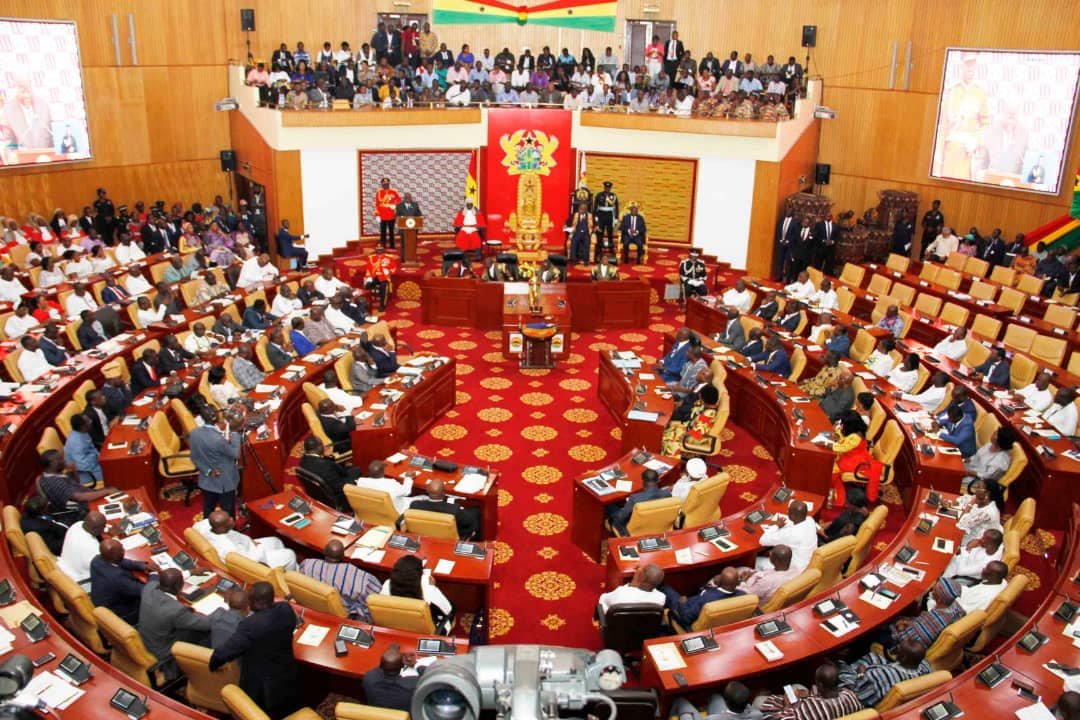
On Friday, March 13, 2026, Ghana’s Parliament passed the Growth and Sustainability Levy, 2026, a targeted fiscal adjustment designed to ease financial pressure on the country’s mining sector amid rising global commodity prices and a newly implemented sliding-scale royalty regime.
The legislation reduces the levy imposed on mining companies’ gross production from 3% to 1%. This move is not a blanket tax cut but a deliberate offset mechanism introduced to cushion operators against significantly higher royalty payments triggered by elevated gold prices on the international market.
Background: The Sliding-Scale Royalty Regime
The change comes shortly after the rollout of the Minerals and Mining Royalties Regulation, which links royalty rates directly to the prevailing price of gold. Under this system:
– When an ounce of gold reaches $1,900, mining firms pay 5% royalties.
– At $2,000+, the rate rises to 6%.
– When prices exceed $4,500 per ounce, royalties jump to 12%.
This price-triggered structure was introduced to help government revenue keep pace with windfall gains during high-price periods.
However, it substantially increases operational costs for mining companies precisely when global prices are favourable — a situation critics argue can discourage investment, reduce profitability, and threaten employment in one of Ghana’s most important economic sectors.
Government Rationale: Protecting the Mining Industry
Presenting the bill, Deputy Finance Minister Mr Thomas Nyarko Ampem explained that the reduction in the Growth and Sustainability Levy is explicitly intended to “cater for windfall taxes.” By lowering the levy, the government aims to maintain a balanced fiscal environment that keeps Ghana’s mining sector competitive even as royalty obligations rise with commodity prices.
The levy was originally introduced as a temporary measure during economic recovery periods. Its adjustment reflects a policy shift toward long-term sustainability for an industry that contributes significantly to foreign exchange earnings, employment, and community development across mining regions.
Opposition Concerns
Not all lawmakers supported the immediate passage. Minority Leader and Effutu MP Mr Alexander Afenyo-Markin urged caution, arguing that slashing the levy from 3% to 1% may not deliver meaningful relief to mining firms’ finances and expenditure.
He called for further scrutiny to ensure the adjustment genuinely supports sector viability rather than simply shifting fiscal burdens elsewhere.
Broader Implications for Ghana’s Mining Sector
Mining remains one of Ghana’s economic pillars, with gold as the flagship commodity. The new levy adjustment is expected to:
- Improve cash flow for operators facing higher royalties at elevated gold prices
- Encourage continued investment in exploration and expansion
- Help preserve jobs in mining-dependent communities
- Maintain Ghana’s attractiveness as a mining jurisdiction in West Africa
However, the sliding-scale royalties themselves remain in force, meaning government revenue will still rise sharply during price booms — just with a smaller portion offset by the reduced levy.
What Happens Next?
The Growth and Sustainability Levy, 2026, now awaits presidential assent to become law. Once operational, it will apply to all qualifying mining companies and is expected to take immediate effect for the 2026 fiscal year.
For mining executives, investors, and communities, the bill represents a pragmatic compromise: government retains its ability to capture windfall gains while providing targeted relief to keep operations sustainable.
Whether this balance proves effective will be closely watched in the months ahead as gold prices continue to fluctuate on global markets.

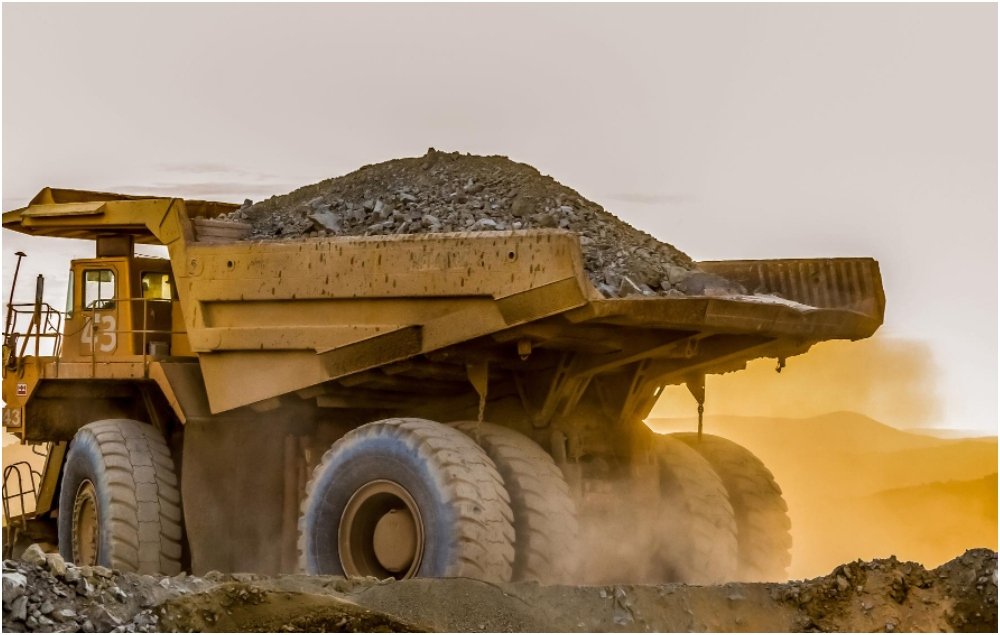
Accra, Ghana – A consortium of Ghanaian pension funds, managed by IC Asset Managers (Ghana) Ltd, has committed up to $11 million to Atlantic Lithium, marking a landmark step toward greater local ownership in what is poised to become Ghana’s first commercial lithium mine.
The investment forms part of a larger $16.4 million funding package secured by the company to advance the Ewoyaa Lithium Project in the Central Region toward construction and production.
The Ghanaian funds will acquire shares immediately valued at approximately $5 million, with an additional $6 million potentially available through milestone-linked warrants tied to key project achievements.
These milestones include parliamentary ratification of the mining lease, a final investment decision, and the start of construction. The structure aligns investor returns with project progress and reduces risk exposure.
Atlantic Lithium CEO Keith Muller described the deal as a strong vote of confidence in both the project and Ghana’s critical-minerals future.
“We are delighted to welcome a number of Ghanaian pension funds to the Company’s share register,” a Joy News report quotes him. “The interest of the Ghanaian investors in Atlantic Lithium reflects a broader desire in Ghana to see the country deliver upon its critical mineral promises and diversify its revenue stream beyond its existing portfolio, which is centred on gold.”
Obed Tawiah Odenteh, Chief Investment Officer of IC Asset Managers, highlighted the strategic importance of the move.
“Historically, mining has not featured prominently in our portfolios. However, the global transition toward green energy, coupled with Ghana’s discovery of lithium, presents a unique opportunity to participate in a strategic asset that could have a lasting impact on the country’s industrial future,” he stated.
The remaining $5.4 million of the package will come from a separate share placement with Long State Investments Ltd.
Ewoyaa is one of the most advanced hard-rock lithium projects in West Africa and is seen as central to Ghana’s ambition to enter the global battery-minerals supply chain. Domestic participation is viewed as a way to retain more economic value in-country, create skilled jobs, drive technology transfer, and support downstream industrial growth.
The investment is expected to be executed partly through the Ghana Stock Exchange, enabling broader Ghanaian retail and institutional participation in the project.
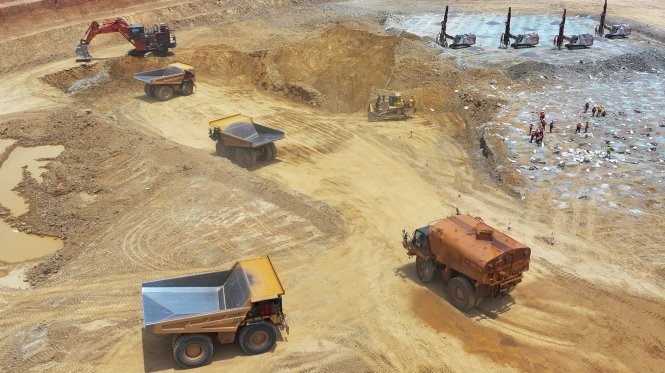
Accra, Ghana – For the first time in more than a century, a wholly Ghanaian-owned company stands on the verge of assuming full operational control of a major large-scale gold mine, potentially marking the most significant shift toward domestic ownership in the country’s modern mining history.
Engineers and Planners (E&P) Company Limited, a leading indigenous mining services firm, is actively positioning itself to acquire and operate the Damang Mine in the Western Region — an asset that has produced over four million ounces of gold during its lifetime under South African multinational Gold Fields Limited.
Gold Fields’ 30-year mining lease for Damang expired in 2025. The government granted a one-year extension to ensure continuity while transition arrangements were finalized. The company has since confirmed it will formally hand over the mine to the state on April 18, 2026.
Documents reviewed by industry sources reveal that E&P’s pursuit of Damang began years earlier, rooted in its long-standing role as a major mining contractor at the site. Having operated extensively within the complex, E&P developed deep familiarity with the mine’s geology, equipment, workforce and operational systems — giving it a unique technical edge over potential external bidders.
Key milestones in the timeline include:
- September 2023: Gold Fields issued a Notice of Demobilisation to E&P, signaling the wind-down of active pit mining by December 2023 and a shift to processing stockpiles until lease expiry.
- September 25, 2023: E&P formally wrote to Gold Fields requesting the opportunity to purchase the Damang Mine — a bold move to transition from contractor to owner-operator.
- March 12, 2024: The Ministry of Lands and Natural Resources issued a “no objection” letter allowing E&P and Gold Fields to negotiate, subject to eventual government approval.
- December 8, 2025: Minister Emmanuel Armah-Kofi Buah confirmed government awareness of the proposed acquisition and agreed to include E&P in the mine’s transition team.
- January 26, 2026: E&P reiterated its call for final negotiations, noting no response had yet been received from Gold Fields despite earlier discussions.
Industry observers describe the development as potentially historic. Since large-scale commercial gold mining began in Ghana over 100 years ago, major producing assets have remained overwhelmingly under foreign control. If E&P succeeds, it would become the first indigenous firm in the modern era to take full operational charge of a Tier-1 gold mine.
Analysts say the transition could serve as a powerful precedent, encouraging other Ghanaian entrepreneurs and companies to move beyond support services into full mine ownership. It would also signal growing confidence in local technical and managerial capacity within one of Africa’s most important gold-producing nations.
However, the process remains subject to final government approval and completion of commercial negotiations. With the April 18, 2026 handover date approaching, stakeholders are watching closely to see whether Ghana can translate decades of mining experience into genuine domestic ownership of a flagship asset.
Business
25 Sittings, Zero Answers: Ghana’s Parliamentary Slow Motion Costing Ghana and Atlantic Lithium Billions

Accra, Ghana – More than 25 parliamentary sittings have passed since Ghana’s revised lithium mining lease was re-laid before the House on December 19, 2025, yet no public report, debate or ratification vote has materialized.
The delay is raising serious concerns among international mining investors about transparency, predictability and Ghana’s attractiveness as a destination for critical-mineral capital.
The lease, first signed in October 2023 between the Government of Ghana and Barari DV Ghana Ltd (a subsidiary of Australian-listed Atlantic Lithium), covers the Ewoyaa Lithium Project in the Central Region.
Political deadlock prevented ratification in the previous Parliament. A revised agreement was signed in 2025 and initially presented on November 11, 2025, but withdrawn ten days later by Lands and Natural Resources Minister Emmanuel Armah-Kofi Buah amid uproar over a proposed royalty reduction from 10% to 5%.
On December 19, 2025, the minister re-laid the lease, this time accompanied by a sliding-scale royalty framework that adjusts between 5% and 12% depending on global lithium prices. The document was immediately referred to the Lands and Natural Resources Committee for scrutiny and recommendation to the plenary.
Despite at least one dedicated committee session and more than two dozen full House sittings since then, there has been no visible progress, no published committee report, and virtually no official communication on the status of deliberations. The prolonged silence has begun to erode investor confidence.
A significant individual shareholder in Atlantic Lithium, speaking on condition of anonymity, told industry sources: “I’m gradually losing confidence in the country. Everyone is watching this. Who would invest in Ghana’s mining sector given how this has been handled since 2023? How can they go around wooing the whole mining world and then do nothing back at home?”
Another investor noted that sentiment is already shifting.
Some shareholders are selling positions in Ghana-linked mining stocks because “a couple of my investors have been turning quite negative on Ghana as they seem unwilling or unable to get things moving.”
The Ewoyaa project is viewed globally as one of the most advanced hard-rock lithium developments in West Africa, with potential to position Ghana as a key supplier in the clean-energy transition. However, large-scale mining investments require clear timelines, predictable permitting processes and transparent negotiations — qualities that observers say are currently in short supply.
Government officials have previously stressed the need to balance national benefits (including higher royalties during price booms) with commercial viability for the developer.
Finding that equilibrium requires careful consultation, but stakeholders argue that regular public updates on the parliamentary process are equally essential to maintain credibility.
As lithium demand continues to surge worldwide, prolonged uncertainty over Ewoyaa risks sending negative signals to other potential investors in Ghana’s critical-minerals sector.
Without visible movement or communication from Parliament or the relevant committee, questions about institutional capacity and political will are growing louder.
The Real Cost of Slow Motion
With lithium carbonate prices recovering strongly in early 2026 — trading between $15,000 and $17,000 per tonne in major markets — analysts estimate that Ewoyaa’s targeted annual output of approximately 300,000–350,000 tonnes of spodumene concentrate could generate gross revenues of $450–600 million per year at current market levels. Under the proposed sliding royalty scale, Ghana could collect $25 to $70 million annually in royalties alone once production begins.
The ongoing delay in Parliament means these revenues remain unrealised. Over the next two years, analysts project that parliamentary inaction could cost the country $50 to $140 million in direct royalty income, with broader economic losses — including forgone jobs, local supply-chain activity, infrastructure development and foreign direct investment inflows — potentially running into the hundreds of millions as investor sentiment sours.
Government officials have previously stressed the need to balance national benefits with the developer’s commercial viability. Finding that equilibrium requires careful consultation, but stakeholders argue that regular public updates on the parliamentary process are equally essential to maintain credibility.
As lithium demand continues to surge worldwide, prolonged uncertainty over Ewoyaa risks sending negative signals to other potential investors in Ghana’s critical-minerals sector. Without visible movement or communication from Parliament or the relevant committee, questions about institutional capacity and political will are growing louder.


Experience the Rare Texture of Apapransa the Celebratory Roasted Corn Delicacy

The Festival of Truth: Why Techiman’s 2026 Apoɔ is the Ultimate Cultural Reset

Khaby Lame is the world’s most followed TikToker: the story of a Senegalese‑born star who sold his identity
-

 Ghana News2 days ago
Newspaper Headlines Today: Monday, March 16, 2026
-

 Ghana News2 days ago
Helicopter Crash at Tema School Park Kills 2, Security Service Recruitment to be Expanded to 40,000 and Other Trending Issues Today (March 16, 2026)
-

 Ghana News1 day ago
Ghana Announces Emergency One-Way Evacuation for Citizens in Qatar Amid Heightened Security Concerns
-

 Ghana News2 days ago
Healthcare for All: President Launches Policy to End Financial Barriers at Facilities Across Ghana
-

 Global Update1 day ago
Influential Foreign Policy Group Sends Direct Message to Trump Warning of Global Risks From His Actions in Iran
-

 Africa Watch1 day ago
France Returns Sacred ‘Talking Drum’ Looted During Colonial Rule to Ivory Coast
-

 Ghana News15 hours ago
Newspaper Headlines Today: Tuesday, March 17, 2026
-

 Business2 days ago
25 Sittings, Zero Answers: Ghana’s Parliamentary Slow Motion Costing Ghana and Atlantic Lithium Billions