
Africa Watch
As Xenophobic Attacks Rise, Cape Town’s ‘Apartheid Wall’ Draws Accusations of Misaligned Priorities by Black South Africans

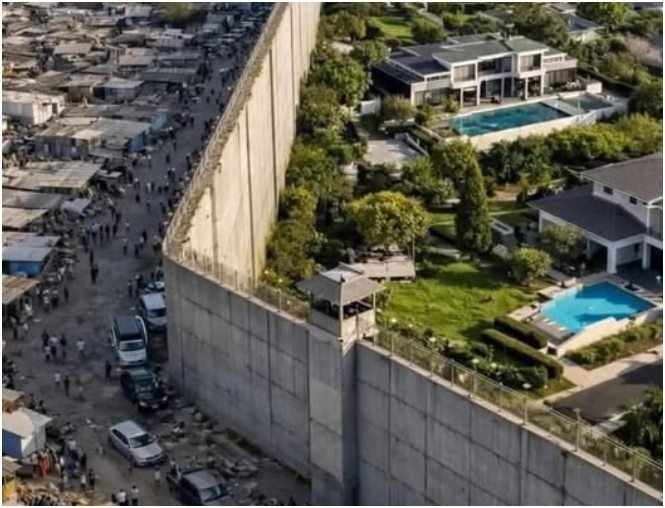
A wall against crime or against the poor? As xenophobic attacks rise, critics say Black South Africans are fighting the wrong enemies
CAPE TOWN — A controversial $7 million wall rising along Cape Town’s N2 highway has reignited a painful debate about race, poverty, and belonging in post-apartheid South Africa.
For a growing number of pan-African voices, the structure is a symptom of something deeper: a dangerous misalignment of priorities among black South Africans, who are simultaneously turning violent against fellow African immigrants while a resurgent settler class consolidates power.
The nearly 9-kilometer “N2 Edge” safety barrier, branded by critics as an “apartheid wall,” is designed to separate the highway leading from Cape Town International Airport from the sprawling, impoverished black townships of Nyanga and surrounding settlements. The route has long been known as the “N2 hell run” due to frequent hijackings, smash-and-grab ambushes, and occasional deadly attacks on motorists.
City officials, led by the centre-right Democratic Alliance (DA), defend the R114 million (approximately $7 million) project as a necessary crime-fighting measure. Mayor Geordin Hill-Lewis said the road is used by “hundreds of thousands of people a day,” many of them local commuters who feel unsafe.
A woman was fatally stabbed at a traffic light just off the highway after leaving the airport complex in December 2025, an incident that accelerated the project’s approval.
But former anti-apartheid activist and cleric Allan Boesak has called the wall an attempt to “hide the poor.”
“They are trying to build a wall behind which they are trying to hide the poor,” Boesak said at a recent Ramadan community gathering. “They are trying to hide the fact that there is indeed a black Cape Town and a white Cape Town – a privileged Cape Town and a privileged-deprived Cape Town.”
A Wave of Xenophobic Violence
The wall controversy comes amid a resurgence of xenophobic and Afrophobic attacks across South Africa. In recent months, immigrants from Ghana, Zimbabwe, Malawi, Mozambique, Nigeria, and other African nations have been assaulted, robbed, and driven from their homes in townships near Johannesburg, Durban, and Cape Town (as shown in many viral videos inundating social media feeds).
Shops owned by foreign nationals have been looted, and at least seven people have been killed in xenophobic mob attacks since the beginning of the year, according to civil society monitors.
South African police have made dozens of arrests, but community leaders say the violence reflects deep-seated resentment over unemployment, housing shortages, and crime, frustrations that are frequently misdirected at fellow Africans.
One pro-African unity commentator, whose analysis has circulated widely in response to the recent violence, argues that black South Africans are being manipulated by a familiar colonial playbook.
“The settler class has always been unified,” the commentator, Shannel R Oliver wrote. “When will Africa be?”
The U.S.-based commentator pointed to historical precedents:
“The Belgians turned the Hutu against the Tutsi. The British divided the Igbo and the Yoruba, the Fante and the Ashanti — specifically to crush unified African resistance. Today the targets are Xhosa and Zulu, township against township, African immigrant against South African.”
Strategic Assets and Secessionist Ambitions
The wall’s construction also coincides with renewed efforts by some members of Cape Town’s white minority to break the Western Cape away from South Africa entirely. A UK-born immigrant named Phil Craig has been lobbying Washington to support secession, reportedly comparing Cape Town’s strategic value to Panama and Greenland — two territories former U.S. President Donald Trump has threatened to seize by military force.
Oliver described Craig’s campaign as “an invitation to a foreign power to invade a sovereign nation” and “treason.”
Cape Town generates approximately 10% of South Africa’s entire GDP. With Red Sea shipping lanes disrupted by conflict, the Cape Sea Route has emerged as one of the world’s most strategically valuable maritime corridors.
“Whoever controls Cape Town controls the southern gateway of an entire continent,” Oliver warned.
Two Crises, One Question
On the ground in Nyanga, residents say the wall does nothing to address their own vulnerability to crime. According to police statistics, the Nyanga Police Station recorded the highest number of robberies with aggravating circumstances in the country between October and December 2025, and the second-highest number of murders — a 29% increase from the previous quarter.
“Walls might stop bullets but it doesn’t stop crime,” said city councillor Jonathan Cupido of the GOOD political party. Cupido accused the DA-led city government of trying to “hide what we cannot fix.”
At the Cape Town Mardi Gras festival this month, activists carried banners reading “Homes not walls!” — redirecting attention to the city’s deepening housing crisis. Nyanga Community Policing Forum chairman Dumisani Qwebe urged authorities to focus on improving living environments “rather than thinking of building a security wall on the N2.”
Yet as black South Africans protest the wall and, in other moments, attack African immigrants, the commentator’s central question lingers: Who is the real enemy?
“European immigrants are flooding in, buying up land and driving up costs, welcomed by the same settler class building the apartheid wall,” he wrote. “While South African communities are turned against each other, the settler class has always been unified. When will Africa be?”
City authorities have not responded to accusations that the wall is racially motivated. The N2 Edge project is proceeding as planned, with completion expected in early 2027.




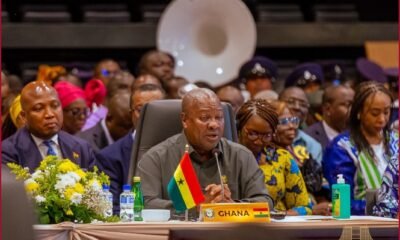



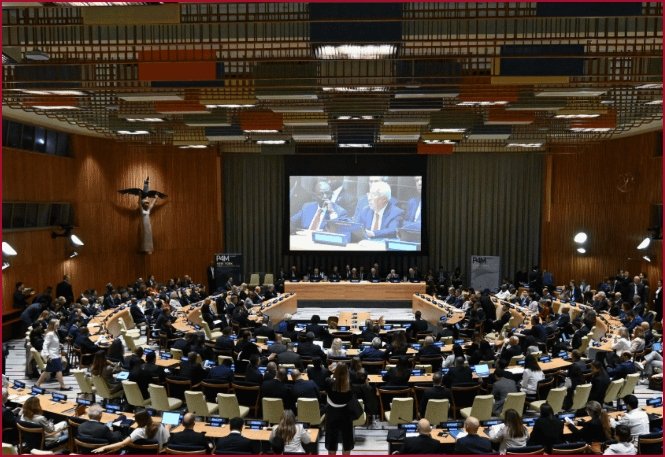
Africa has made its boldest demand yet for reform of the United Nations Security Council: at least two permanent seats with veto powers, and five non-permanent seats for the continent.
Vice-President Kashim Shettima of Nigeria delivered the demand while presenting President Bola Tinubu’s national statement at the 81st UN General Assembly in New York, positioning Africa’s case as both a moral imperative and a necessary correction to a global governance structure built for a bygone era.
“The world of 2026 cannot remain captive to the distribution of power in 1945,” Shettima declared, drawing a sharp contrast between the Security Council’s post-World War II origins and today’s geopolitical realities.
A Longstanding Demand
Nigeria’s position is consistent with the Ezulwini Consensus and Sirte Declaration, adopted as the Common African Position. Under this framework, Africa seeks at least two permanent seats with all existing privileges, including veto power for as long as the privilege exists, alongside five non-permanent seats on the Council.
The African Union reaffirmed the demand in May, stating that Africa’s exclusion from permanent representation constituted a historical imbalance requiring correction.
Shettima argued that institutions claiming authority to act for humanity must adequately reflect the people on whose behalf decisions are taken. Africa, he noted, is home to 1.5 billion people and constitutes the largest regional voting bloc in the General Assembly—yet remains without a single permanent seat.
The 1945 Problem
The Security Council has five permanent members: China, France, Russia, the United Kingdom, and the United States, each possessing veto power. This configuration has remained unchanged since the UN’s founding in 1945, apart from a single expansion of non-permanent membership from six to ten in 1965.
Africa currently has no permanent representative on the Council.
Shettima said Africa could no longer remain outside permanent membership while issues concerning the continent continued to occupy substantial attention of the Council. He linked Security Council reform to efforts to restore confidence in multilateralism amid widening geopolitical divisions.
“Differences among nations must not obscure their common humanity or responsibility to preserve peace for future generations,” he said.
Nigeria’s Peacekeeping Record
Shettima recalled Nigeria’s contributions to international and regional peace operations in Liberia, Sierra Leone, Darfur, Mali, and The Gambia. He said Nigeria also continues to work through ECOWAS, the African Union, and Gulf of Guinea mechanisms, covering mediation, counter-terrorism, democratic governance, and maritime security.
According to him, these efforts demonstrate Nigeria’s commitment to international peace and security—and its readiness to assume greater responsibility on the global stage.
A Warning Against Propaganda
The Vice-President also warned against a global environment where propaganda blurred distinctions between victims and aggressors and complicated accountability. He maintained that an inclusive and effective UN remained indispensable to global peace and sustainable development.
Shettima reaffirmed Nigeria’s commitment to the UN Charter and international cooperation, saying Nigeria supported an international system where diplomacy takes precedence over coercion and international law guides relations among states.
He identified the conflict in Sudan and other theatres as requiring urgent diplomacy because of their humanitarian, economic, and geopolitical consequences.
The Road Ahead
Nigeria’s demand comes amid renewed calls by African leaders for reforms to an institution whose permanent membership remains unchanged since its creation. The African Union’s preferred reform model provides for at least two permanent African seats, including veto privileges while existing members retain them, and five non-permanent seats.
Whether the five permanent members, particularly China, Russia, and the United States, will support a reform that dilutes their power remains uncertain. Previous reform efforts have stalled for decades.
But Shettima made clear that Africa’s patience is wearing thin. The continent, he said, remains committed to a multilateral order capable of responding more credibly to 21st-century realities.
“The world of 2026 cannot remain captive to the distribution of power in 1945,” he repeated, leaving little doubt that Africa intends to keep pressing until its voice is heard, and its seat secured.

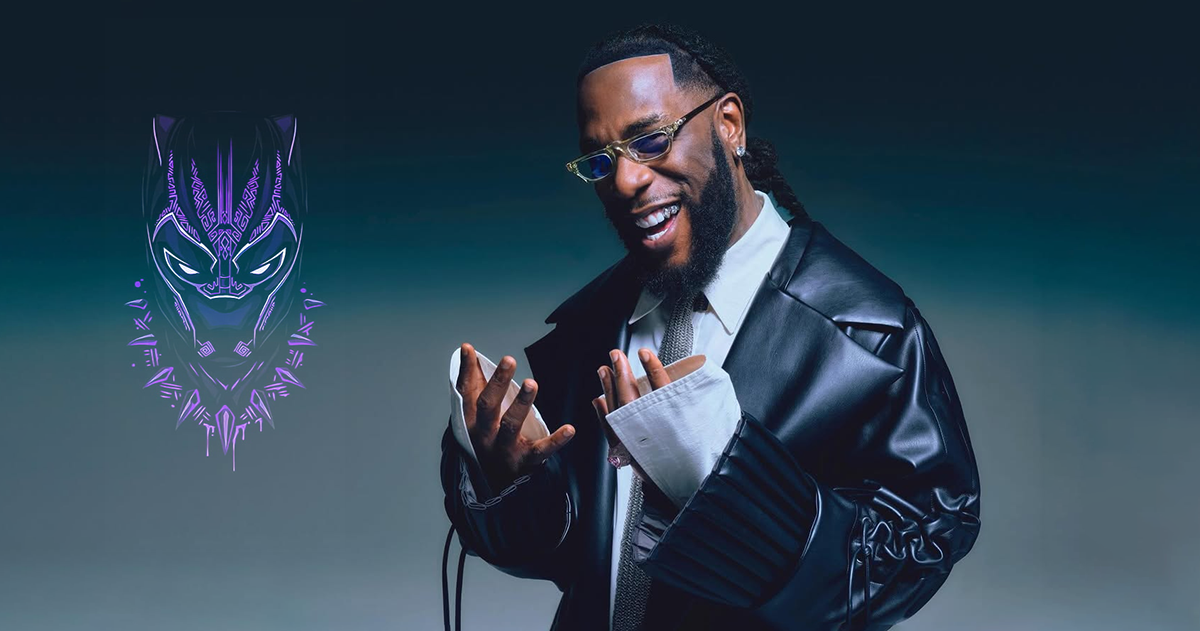
The fictional kingdom of Wakanda may be thousands of miles away from Lagos, Accra, and Johannesburg, but its soundscape remains deeply tied to the rhythms of the African continent.
Reports circulating across social media and film databases suggest that Nigerian megastar Burna Boy could be making a high-profile return to the Black Panther franchise.
According to credit listings briefly spotted on IMDb, the Grammy-winning “African Giant” is featured among the music contributors for Marvel Studios’ anticipated next chapter in the Wakandan saga.
The listed lineup also features Nigerian singer CKay, South African pop phenom Tyla, and American hip-hop icon Kendrick Lamar, who curated the record-breaking original Black Panther album in 2018.
For fans across the continent, the news has sparked immediate celebration. The Black Panther franchise has consistently served as a global megaphone for modern African culture.
When Wakanda Forever debuted, Burna Boy’s haunting track “Alone” stood out as one of the emotional pillars of the film’s soundtrack.
Rejoining the lineup alongside hitmakers like CKay and Tyla signals a continued commitment by film directors and music supervisors to keep contemporary African sounds at the heart of Hollywood’s biggest blockbuster universe.
However, music enthusiasts and industry insiders know that online database entries carry a major caveat.
IMDb listings are frequently crowdsourced or updated ahead of formal production stages, meaning unconfirmed cast and crew additions can circulate long before studio executives step in. Marvel Studios has maintained its trademark secrecy, offering no official tracklist or artist confirmations.
Whether the current roster proves accurate or undergoes shifts before release, the mere prospect highlights Afrobeats’ firmly established footprint in global pop culture.
Until Marvel officially drops the needle, fans will be keeping a close watch—and hoping the African Giant lands back in Wakanda.
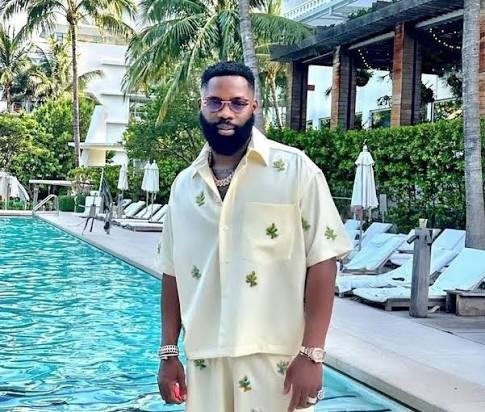
A British-Nigerian businessman and social media influencer died from a pulmonary embolism after undergoing a penis enlargement procedure in Thailand, a UK coroner’s inquest has heard.
Igho “Tiny” Ubiribo, also known as “Ego”, was 43 when he died in Bangkok following complications from the cosmetic procedure during a trip to Thailand with his wife.
Evidence presented at the inquest said Ubiribo had 40ml of hyaluronic acid and lidocaine injected into his penis at an unnamed clinic in March.
Shortly after the procedure, he developed chest pain and collapsed twice at his hotel.
He was taken to Sukhumvit Hospital, where doctors suspected a pulmonary embolism — a potentially fatal blockage of a blood vessel supplying the lungs.
His condition deteriorated despite emergency treatment, with medical staff reportedly performing CPR for more than 100 minutes.
Ubiribo died in the early hours of March 6.
His body was subsequently repatriated to the UK for further examination. A post-mortem reportedly detected cellular filler material in his lungs consistent with hyaluronic acid, the substance used during the cosmetic procedure.
Evidence presented to the inquest indicated that the material found in his lungs matched the filler administered during the treatment.
The coroner concluded that the cosmetic procedure had caused the fatal pulmonary embolism.
The case highlights the potentially serious complications associated with injectable cosmetic procedures, particularly when performed outside a patient’s home country. Pulmonary embolisms can occur when material enters the bloodstream and travels to the lungs, where it can obstruct blood flow and become life-threatening.
Ubiribo’s death has also drawn attention to the risks surrounding cosmetic procedures undertaken abroad, where patients may face unfamiliar medical standards, follow-up arrangements and emergency care systems.
The circumstances of his death were examined during the UK inquest as authorities sought to establish how the procedure ultimately led to the fatal complication.


Funding Fears Loom For Ghana’s Life-Saving Malaria Vaccine Five Years After Roll Out

‘There was a Coordinated Disclosure Plan’: AI-Discovered Flaw in PHP Triggers Global Internet Chaos as Cybercriminals Race to Exploit It

Yandex Strikes: Can Moscow Host Africa Under Drone Threat?
-
 Reels & Social Media Highlights1 day ago
Ghana’s Digital Heartbeat: Outrage, Satire, and the Fight for Accountability
-

 Festivals & Events13 hours ago
Compozers Fest Ghana Edition: Welcoming 2027 with Music in Accra
-
 Taste GH12 hours ago
Airport Residential Area: Where Accra’s Dining Scene Meets Global Flavours
-
 Ghana News8 hours ago
Major Sexual Abuse Scandal Rocks Ghana High School: Obuasi School Headmaster Sues Journalist for GH¢2 Million as Investigation Into Alleged Misconduct Widens
-
 Health & Wellness1 day ago
Beyond Bigger Muscles: Why Strength Training Matters for Healthy Ageing
-
 Fashion & Style1 day ago
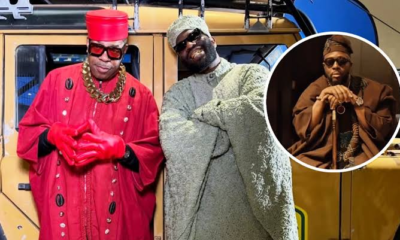
Wyclef Jean Gives Ghanaian Kaftan a Global Spotlight After ‘Chineke’ Fashion Inspiration
-

 Health & Wellness1 day ago
Four Everyday Lifestyle Habits That Can Make Weight Loss Easier
-
 Health & Wellness12 hours ago
Why Keeping Weight Off Can Be Harder Than Losing It