
Culture
Diddy’s Last-Minute Bid to Block Netflix Docuseries Fails as ‘The Reckoning’ Drops


Sean “Diddy” Combs’ legal team fired off a cease-and-desist letter to Netflix on December 1, demanding the streaming giant pull a four-part docuseries executive-produced by his longtime rival, Curtis “50 Cent” Jackson.
Hours later, Sean Combs: The Reckoning premiered anyway, pulling back the curtain on the hip-hop mogul’s rise, fall, and the allegations that have dogged him for decades.
The letter, obtained by CNN, accused Netflix of using “stolen footage” from Combs’ private archives—clips he had commissioned since age 19 to chronicle his own life. One segment, filmed just six days before his September 2024 arrest, shows Combs in a tense strategy session with lawyers, saying,
“We need to find someone who will work with us who has worked in the dirtiest of dirty businesses. We are losing.”
Combs’ spokesperson, Juda Engelmayer, called the series a “shameful hit piece” and slammed Netflix for partnering with Jackson, whom he described as a “longtime adversary with a personal vendetta.” The team also blasted Netflix co-CEO Ted Sarandos for what they saw as a “vindictive response” after Combs declined to participate in a Netflix-controlled project.
Director Alexandria Stapleton shot back swiftly, insisting the footage was obtained legally and that the team had “moved heaven and earth” to protect their source’s anonymity.
“One thing about Sean Combs is that he’s always filming himself,” she said in a statement to Deadline. “We reached out to his legal team multiple times for comment but heard nothing.” Netflix echoed this, telling the outlet, “The claims being made about Sean Combs: The Reckoning are false.”
As of December 2, the series cracked Netflix’s U.S. Top 10 within hours of launch, though exact viewership figures won’t drop until Wednesday.
Combs, serving a 50-month sentence at New Jersey’s Fort Dix for two counts of transportation to engage in prostitution (acquitted on more serious sex trafficking and racketeering charges), has denied all related civil claims in roughly 70 lawsuits alleging drugging and assault—some involving minors.
This isn’t his first media battle; he sued NBCUniversal for $100 million over a Peacock documentary earlier this year. Jackson, meanwhile, has trolled Combs relentlessly on Instagram, posting edited clips tying the beef to past Jay-Z drama and promoting the series with glee.
Perspective
For a man who built an empire on control—Bad Boy Records, MTV awards, champagne showers—watching his own words weaponized by a nemesis feels like poetic payback.
Jackson’s involvement turns what could have been a somber reckoning into a spectacle, but it raises a fair question: When does rivalry cross into exploitation? Combs’ footage obsession was always about legacy; now it’s unraveling it in real time.

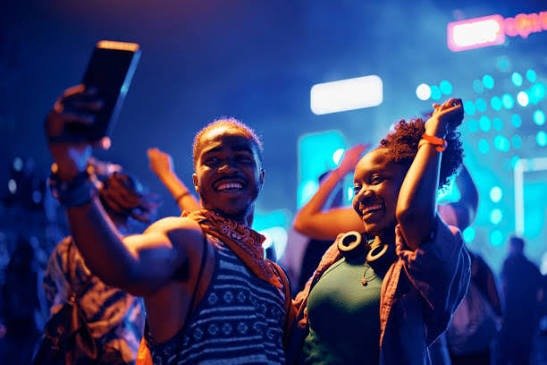
Pitch Accra sets the scene for a New Year’s Eve gathering that brings music lovers together as Ghana welcomes the first moments of 2027.
As the final hours of 2026 slip away, Accra will offer music lovers another reason to gather, celebrate and welcome a new year together. Compozers Fest Ghana Edition is scheduled for December 31, 2026, bringing the festive energy of New Year’s Eve to Pitch Accra.
Organised by December in Ghana, an events organiser with a growing following, the celebration offers an opportunity to experience Accra’s nightlife during one of the busiest periods on Ghana’s social calendar.
Music, Community and Celebration
Music has long been central to Ghanaian social life, accompanying celebrations, festivals and gatherings across generations. From highlife and hiplife to Afrobeats and contemporary African sounds, the country’s musical landscape reflects a continuing conversation between tradition and modern influences.
A festival held on New Year’s Eve provides a natural meeting point for these musical cultures and the people who enjoy them.
For Ghanaians returning home for the festive season, it offers another opportunity to reconnect with the city’s entertainment scene. International visitors can experience Accra’s year-end atmosphere alongside residents and members of the diaspora.
Although detailed information about the festival’s performers and programme has not been announced in the supplied listing, the event is scheduled to begin at 10 pm and continue into January 1, 2027.
Making New Year’s Eve Memorable
The venue, Pitch Accra, will host the gathering on Accra Road, Accra. Tickets also come with a Visa card promotion: eligible purchases receive 15 per cent back, with the refund processed within three to five working days after the event. The organiser states that tickets are non-refundable.
For visitors planning a festive-season trip, Compozers Fest Ghana Edition offers another event to consider when exploring Accra after dark.
As 2026 draws to a close, the celebration promises a chance to gather with friends, enjoy the city’s nightlife and begin 2027 in the company of fellow music lovers.
Arts and GH Heritage
When Second-Hand Clothes Become a Playground for Community
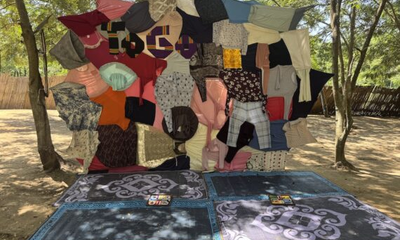
Using Broni Wawu garments purchased at a local market, Bamfo creates enclosed and open environments designed for participation rather than distant observation.

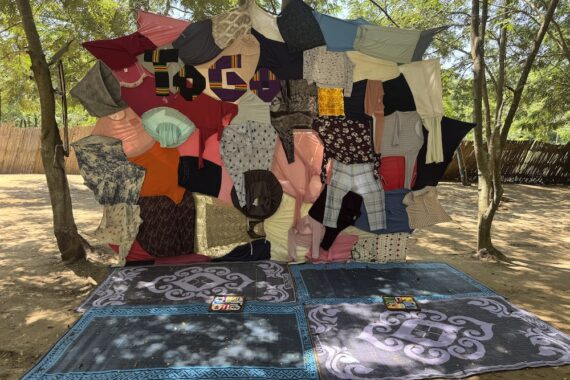
In Atakpamé, Ghanaian artist Dr. Frederick Bamfo transforms discarded garments into interactive spaces where children, cultural memory and collective play meet.
A discarded shirt can carry more than the memory of a former owner. In the hands of Ghanaian artist and academic Dr. Frederick Bamfo, it can become part of a place where children gather, games begin and strangers find reasons to connect.
His installation, The Games Feast, developed during the Karp Artists’ and Researchers’ Residency in Atakpamé, Togo, gives second-hand clothing a new social life.
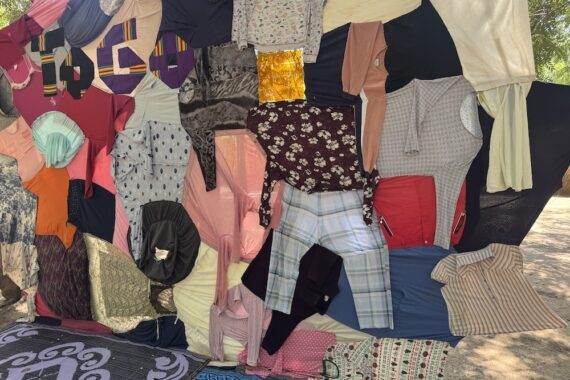
Using Broni Wawu garments purchased at a local market, Bamfo creates enclosed and open environments designed for participation rather than distant observation.
The choice of material speaks to a familiar West African reality. Second-hand clothing circulates through markets, connecting consumers to international trade networks while raising questions about consumption, waste and the afterlife of textiles.
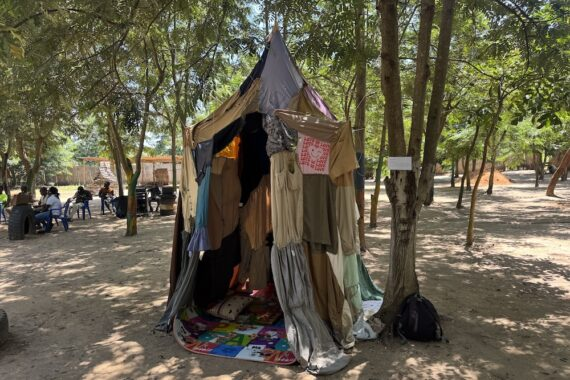
Often valued primarily for their usefulness or affordability, these garments become something different in Bamfo’s work: vessels of memory and possibilities for human connection.
The installation’s defining feature, however, is not simply its reuse of clothing. It is what happens inside these improvised spaces.
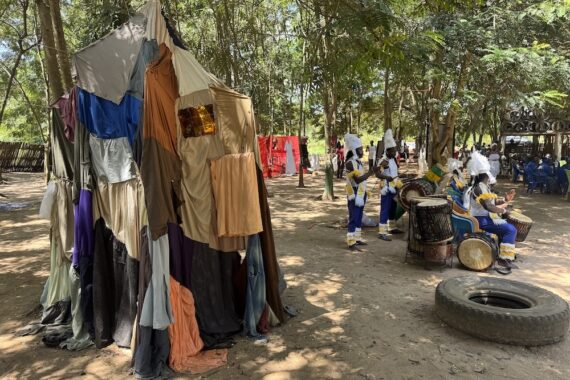
Children help shape the project’s collaborative spirit, while games such as ludo and oware, alongside dancing and skipping, turn the artwork into a setting for shared experience.
These activities draw on familiar forms of play that have long helped communities build relationships and pass cultural knowledge between generations.
Here, they also challenge conventional ideas of an art installation as something to admire without touching or entering.
For Bamfo, the transformation is both material and social. Clothing once associated with individual bodies becomes a collective environment, while everyday games become tools for participation.
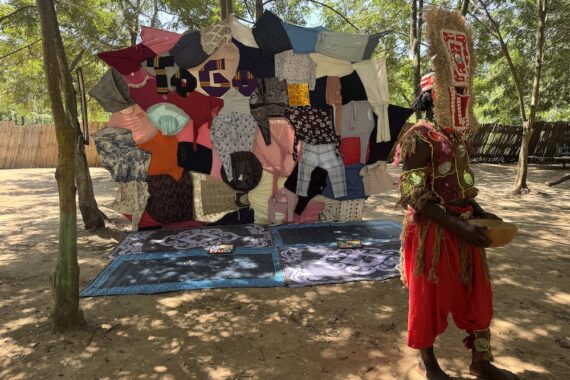
In Atakpamé, The Games Feast suggests that the most meaningful second life of a discarded garment may not be another wardrobe, but a space where people come together.
Reels & Social Media Highlights
Ghana’s Digital Heartbeat: Outrage, Satire, and the Fight for Accountability

Ghana’s social media space on Wednesday, October 21, 2026, felt less like a scrolling feed and more like a pressure cooker.
Between the crimson solidarity of #RedWednesday, the dust of a collapsing high-rise, and the astonishing unravelling of a political spokesperson, Ghanaians were simultaneously furious, entertained, and deeply skeptical.
The day’s emotional center was the Obuasi SHTS sexual abuse scandal. Activists declared “Red Wednesday,” urging citizens to wear red in solidarity with the alleged victims.
The mood turned from grief to rage when a leaked clip showed NDC communicator Daniel Nortey dismissing the allegations with the callous remark, “He’s a rapist, so what?”
The backlash was immediate and fierce, with figures like Nana Aba Anamoah condemning the comment, forcing Nortey into a swift, televised apology . Meanwhile, a very different kind of accountability played out in satire.
A viral video, amplified by Ashanti Regional Minister Frank Amoakohene, juxtaposed Dr. Mahamudu Bawumia’s past claims of completing the Pwalugu Dam against his recent promise to build it, using the “A few moments later” meme to devastating effect .
Amidst the politics, raw reality intruded. A video of concrete blocks raining down from the Villagio construction site in Accra sparked safety fears, but it was the cameraman’s subsequent claim that the company threatened him with “police and lawyers” that truly ignited the timeline.
Even the beach wasn’t safe from scrutiny: creator Ivy Prosper’s on-the-ground photos of a still-littered Labadi Beach exposed the polished, viral images of a “Miami-style” shoreline as misleading, triggering a wave of cynical “smoke and mirrors” commentary.
What united these disparate moments was a collective demand for transparency. Whether mocking a politician’s memory, calling out a spokesperson’s inhumanity, or fact-checking a pretty picture, Ghanaian netizens were not merely consuming content—they were actively auditing the world around them, one screenshot at a time.


Funding Fears Loom For Ghana’s Life-Saving Malaria Vaccine Five Years After Roll Out

‘There was a Coordinated Disclosure Plan’: AI-Discovered Flaw in PHP Triggers Global Internet Chaos as Cybercriminals Race to Exploit It

Yandex Strikes: Can Moscow Host Africa Under Drone Threat?
-

 Ghana News1 day ago
Major Sexual Abuse Scandal Rocks Ghana High School: Obuasi School Headmaster Sues Journalist for GH¢2 Million as Investigation Into Alleged Misconduct Widens
-

 Reels & Social Media Highlights2 days ago
Ghana’s Digital Heartbeat: Outrage, Satire, and the Fight for Accountability
-

 Festivals & Events2 days ago
Compozers Fest Ghana Edition: Welcoming 2027 with Music in Accra
-
 Taste GH1 day ago
Airport Residential Area: Where Accra’s Dining Scene Meets Global Flavours
-

 Health & Wellness2 days ago
Four Everyday Lifestyle Habits That Can Make Weight Loss Easier
-
 Health & Wellness1 day ago
Why Keeping Weight Off Can Be Harder Than Losing It
-
 Arts and GH Heritage2 days ago
When Second-Hand Clothes Become a Playground for Community
-
 Opinion1 day ago
Yandex Strikes: Can Moscow Host Africa Under Drone Threat?