
Business
7 Key Things to Know Before Entering Ghana’s Medicinal Cannabis Business in 2026


Accra, Ghana – February 26, 2026 – Ghana’s emerging medicinal and industrial cannabis sector—legalized for low-THC (≤0.3%) cultivation, processing, and use since the 2020 Narcotics Control Commission Act amendments and further enabled by the 2023 Amendment Act and L.I. 2475—has moved into active licensing mode.
With the Narcotics Control Commission (NACOC) now issuing permits and investor interest surging, the industry holds potential to generate at least $1 billion annually in revenue, rival traditional exports like cocoa and gold, and create jobs in agriculture, processing, and export.
However, strict regulations prioritize security, public safety, traceability, and anti-diversion measures over rapid revenue. Here are seven essential points every potential investor, farmer, or entrepreneur should understand before entering the market.
- Licensing Is Multi-Layered and Activity-Specific
There is no single “cannabis licence.” Applicants must secure up to 11 separate, non-transferable licences for distinct activities—cultivation, processing, transportation, import/export, storage, and more. Minister of the Interior Muntaka Mohammed-Mubarak emphasized: “You cannot cultivate and assume you can transport. You need another licence for that.” Each licence is valid for three years and subject to renewal. - Proof of a Ready Market (Off-Taker) Is Mandatory
No licence will be issued without a confirmed buyer or off-taker. Authorities require evidence of a ready market before approving any application. “We won’t give you the licence if you don’t show us who you are going to sell it to,” the Minister warned. This rule protects against speculative entry and ensures commercial viability from day one. - Eligibility Favours Ghanaians and Majority-Ghanaian Ownership
Individual applicants must be Ghanaian citizens or permanent residents aged 18+. Corporate entities require at least 50% Ghanaian ownership and a majority of Ghanaian directors. NACOC has clarified that any qualified Ghanaian with documented land access can apply directly—no intermediaries or connections needed. - Strict Security, Traceability, and Compliance Requirements
Licencees face rigorous standards: robust security protocols, GPS tracking, drone surveillance, unannounced inspections, and full product traceability to prevent diversion to illegal markets. The government’s priority is clear: “Our emphasis is more on security and public safety than on money.” Failure risks blacklisting Ghana internationally. - Seeds Must Be Imported—Ghana Does Not Produce Them
Only specialised low-THC varieties (≤0.3%) are permitted. Ghana does not produce these seeds, so all planting material must be imported under a separate import licence. “Government is not positioning itself to provide the seeds. It is a business,” Minister Muntaka stated. - High Barriers for Small-Scale Operators
The need for an off-taker, multiple licences, advanced security infrastructure, and traceability systems creates significant entry barriers for smallholder farmers or startups. Larger, well-capitalized players with established international buyers are better positioned to meet the requirements. - Significant Revenue and Export Potential—If Done Right
Experts project the sector could generate $1 billion+ annually once fully operational, driven by global demand for medicinal cannabinoids, industrial hemp fibre, cosmetics, pharmaceuticals, and food products. Ghana aims to become a centre of excellence in West Africa, leveraging AfCFTA access and competitive land/climate advantages. However, success depends on strict compliance to avoid international sanctions or blacklisting.
The sector offers real economic upside—job creation, export diversification, and foreign exchange—but only for those prepared to navigate a highly controlled, security-first environment.
Interested parties should apply directly through NACOC offices or its online platform, ensuring all documentation (including proof of market/off-taker) is in place before submission.




Business
From Raw Minerals to Luxury Brand: Ghana’s Gold Value-Addition Strategy Gains Global Momentum with UK Showroom
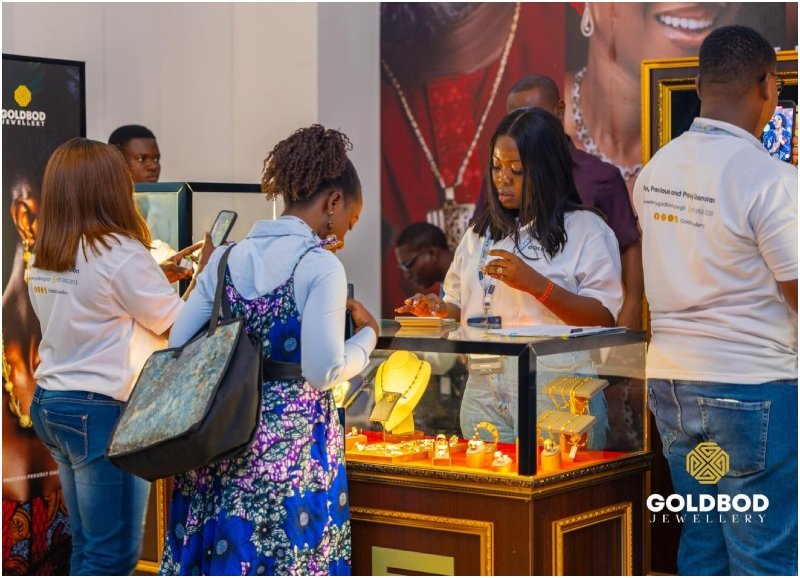
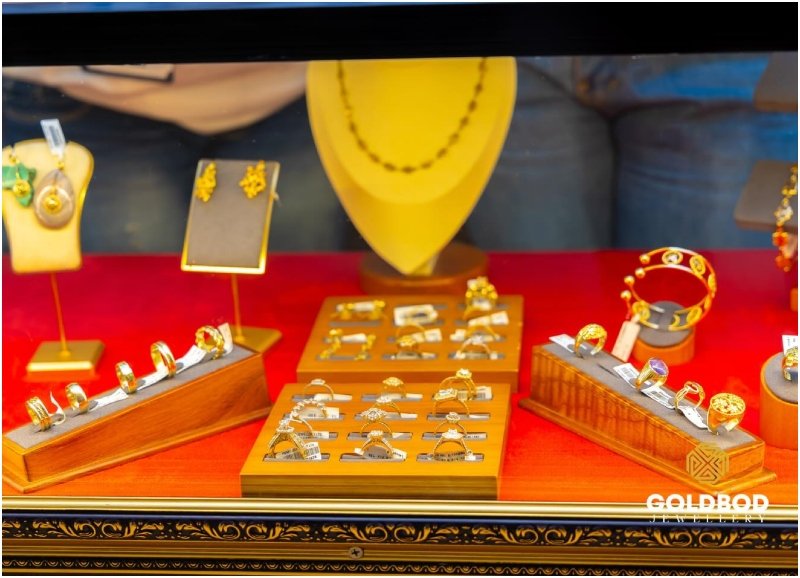
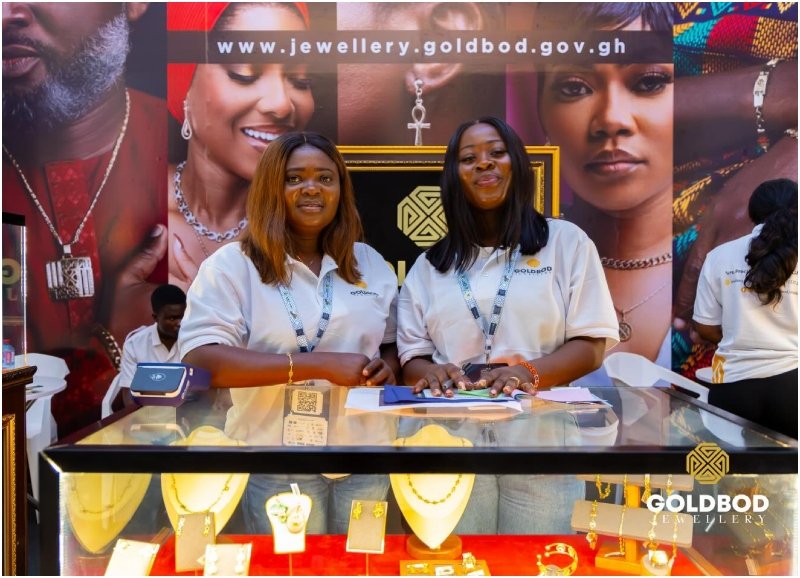
Ghana’s ambition to transform its gold sector from a raw mineral exporter into a competitive player in the global luxury jewelry market has received a significant boost, with indigenous company GOLDBOD Jewellery setting its sights on establishing a flagship showroom in the United Kingdom.
The move, which aligns with the government’s broader strategy of increasing value addition within the gold sector, reflects Ghana’s determination to maximize returns from its mineral resources through local beneficiation, manufacturing and branding initiatives designed to generate employment and enhance export earnings.
Chief Executive Officer of GOLDBOD Jewellery, Gertrude Emefa Donkor, recently paid a courtesy call on Ghana’s High Commissioner to the United Kingdom, Sabah Zita Benson, to present the company’s vision of showcasing premium jewelry and investment-grade gold products crafted from responsibly sourced Ghanaian gold.
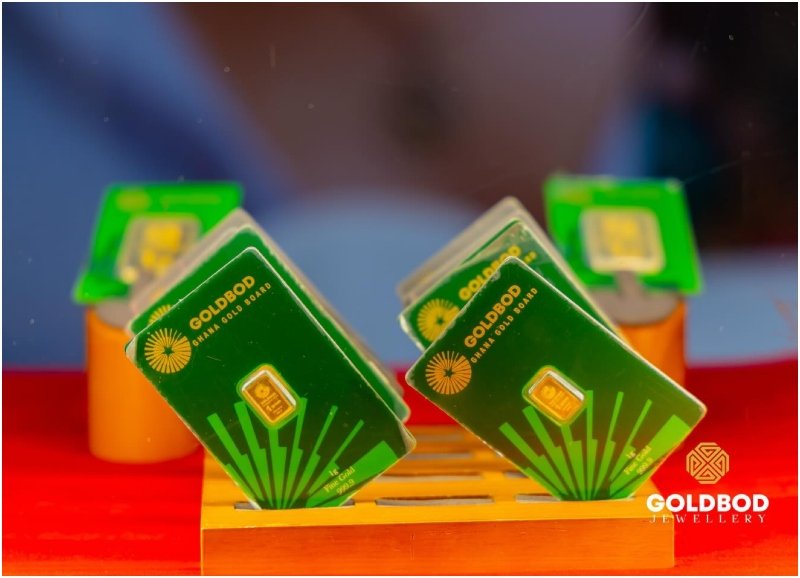
During the discussions, Miss Donkor highlighted the growing demand for the company’s innovative Gold Tablet, revealing that the product sold out during this year’s Ghana Party in the Park in London, one of the largest annual gatherings of the Ghanaian diaspora in Europe. She noted that the overwhelming patronage reflects growing confidence among diaspora communities and international consumers in authenticated Ghanaian gold products.
The planned expansion comes as Ghana, Africa’s leading gold producer, intensifies efforts to move beyond the export of raw minerals and establish a reputation as a trusted source of responsibly produced, value-added gold products.
The strategy is central to the country’s industrialization agenda, which seeks to create jobs, boost foreign exchange earnings and reduce dependence on primary commodity exports.
High Commissioner Benson reaffirmed the Mission’s commitment to supporting Made-in-Ghana products in the UK market, noting that the High Commission continues to collaborate with relevant public institutions, private sector stakeholders and business associations to create opportunities for Ghanaian enterprises seeking to expand internationally.
She expressed optimism that the proposed showroom would not only showcase the quality and craftsmanship of Ghanaian jewelry but also reinforce Ghana’s reputation as a trusted source of responsibly produced gold products. She added that initiatives of this nature complement the government’s broader agenda of leveraging trade, investment and economic diplomacy to promote sustainable national development.
The engagement underscores the evolving role of Ghana’s diplomatic missions in advancing economic diplomacy by facilitating market access for Ghanaian businesses and strengthening commercial partnerships abroad. The United Kingdom remains one of Ghana’s key trading partners and a strategic destination for Ghanaian exports, investment and diaspora engagement.
As Africa’s leading gold producer, Ghana has long been a major supplier of raw gold to international markets. However, successive governments have recognised that real economic transformation lies in retaining more value from the mineral through local processing, manufacturing and branding. GOLDBOD Jewellery’s UK expansion represents a tangible example of this vision taking shape on the global stage.
Industry observers note that the success of such initiatives could encourage more Ghanaian companies to explore international markets, particularly in sectors where the country holds a comparative advantage. The diaspora market, in particular, presents a significant opportunity for Ghanaian brands seeking to build consumer confidence and establish a foothold in competitive markets.
The meeting between Miss Donkor and High Commissioner Benson reflects growing collaboration between Ghana’s diplomatic missions and indigenous businesses as the country seeks to strengthen its presence in international markets while advancing industrialization, export diversification and value addition within the mining sector.
With the proposed showroom in the United Kingdom, GOLDBOD Jewellery is positioning itself as a flagship brand for Ghanaian gold, demonstrating that African products can compete at the highest levels of the global luxury market.
The move signals a new chapter in Ghana’s economic story, one in which the nation’s natural resources are transformed into globally recognised brands that tell the story of Ghanaian craftsmanship, quality and innovation.
Business
Ghana Beats the Odds: IMF Approves Final Review, Offering Blueprint for Africa’s Debt-Ridden Economies
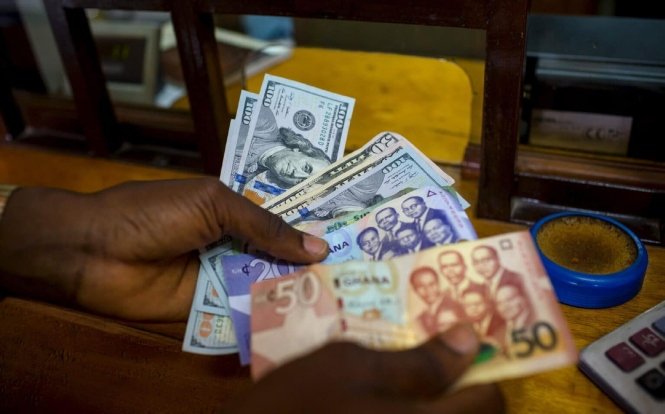
Three years after defaulting on its debt, Ghana formally exits the IMF bailout program with a $318 million final disbursement—and a new reform framework that could show other distressed African nations the way forward
The Executive Board of the International Monetary Fund on Monday approved Ghana’s sixth and final review under the Extended Credit Facility (ECF) program, formally concluding the country’s three-year, $3 billion bailout arrangement and unlocking a final disbursement of approximately $318 million.
The Board also approved Ghana’s request for a 36-month Policy Coordination Instrument (PCI), a non-financing arrangement that will guide the country’s economic reforms now that the bailout has ended.
The approval marks the culmination of one of the most dramatic economic turnarounds in recent African history—a recovery that began in the depths of crisis in late 2022, when Ghana defaulted on most of its external debt, inflation topped 54%, and the cedi was in free fall.
“Ghana’s ECF-supported economic program has delivered substantial stabilization gains,” the IMF said in a May statement after reaching a staff-level agreement with the government. “Inflation has declined rapidly, international reserves have been rebuilt, and confidence in the cedi has improved.”
From Default to Credibility
Ghana entered the 36-month ECF arrangement in May 2023 with access to about $3 billion to help restore macroeconomic stability, implement fiscal reforms, and support the country’s debt restructuring program. At the time, the country was in the throes of its worst economic crisis in a generation.
The turnaround has been striking. Inflation has plunged from 54% in December 2022 to just 5.3% in June 2026. Gross international reserves have reached an all-time high of approximately $14.5 billion as of February 2026, providing nearly six months of import cover. The public debt-to-GDP ratio has fallen sharply from a peak of over 80% to 45% by June 2026.
Perhaps most significantly, Ghana’s sovereign credit ratings have improved from restricted default—”junk status”—to ‘B’ with a positive outlook, representing five distinct rating level upgrades.
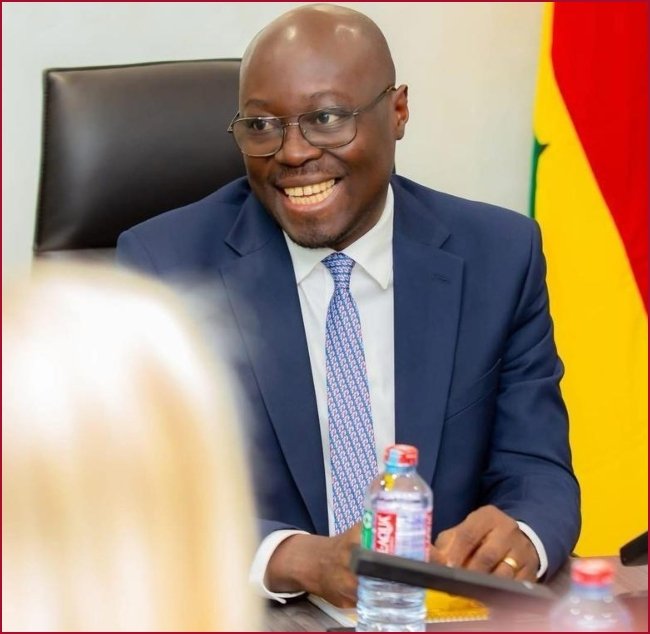
“Every quantitative performance criterion, but one, set for the final review has been met,” Finance Minister Dr. Cassiel Ato Forson told Parliament while presenting the 2026 Mid-Year Budget Review. He noted that Ghana achieved 10 out of 11 quantitative targets and 8 out of 10 structural benchmarks.
A Blueprint for Africa
For other African nations struggling with debt distress—including Zambia, Ethiopia, and Kenya—Ghana’s trajectory offers a potential roadmap. The country’s success demonstrates that aggressive fiscal consolidation, coupled with credible IMF engagement and good-faith debt restructuring, can restore market confidence within a relatively short timeframe.
The PCI framework that Ghana is now entering is particularly instructive. Unlike the ECF, the PCI does not provide direct funding. Instead, it offers closer policy engagement with the IMF and signals a country’s commitment to reforms, helping to strengthen investor confidence and attract support from development partners.
“Completing the ECF does not mean Ghana walks away from the IMF,” Forson explained. “It means Ghana changes the nature of the relationship.”
The new program will focus on six priority areas: growth-friendly fiscal consolidation, debt sustainability, fiscal transparency and governance, stronger monetary and exchange rate policy frameworks, financial sector stability, and economic diversification.
Forson described the PCI as “a structured, internationally monitored platform through which Ghana commits to a specific set of macroeconomic and structural reform policies, submits to regular independent review, and signals to the world that the discipline of the past eighteen months is not a temporary posture adopted under crisis conditions. It is a permanent feature of how this country will be governed.”
The Work Isn’t Over
Despite the celebration, the IMF has made clear that Ghana’s reform agenda is far from complete. The Fund has urged the government to press ahead with reforms in the energy sector, particularly efforts to improve efficiency at the Electricity Company of Ghana (ECG) through private sector participation.
“Priority should be given to tackling distribution and collection losses at ECG, including advancing private sector participation in the distribution segment,” the IMF stated.
The government has indicated that private sector participation in ECG is expected to commence by early 2027.
The PCI is also designed to help Ghana maintain macroeconomic stability, build resilience against external shocks, address structural imbalances, and support sustainable economic growth. With the global environment remaining uncertain—including potential spillovers from conflicts and volatile commodity prices—sustaining the reform momentum will be critical.
A New Chapter
Monday’s approval formally concludes Ghana’s 16th IMF program since independence. For a country that was written off by many international investors just three years ago, the milestone represents a remarkable redemption story.
“This milestone reflects improved fiscal performance, normalized relations with global creditors, and renewed market confidence,” said Felix Kwakye Ofosu, Minister of State for Government Communications.
Finance Minister Forson has already declared that Ghana does not expect to seek another IMF bailout in the foreseeable future. The country now aims to achieve “Investment Grade” status, a goal that would further lower borrowing costs and unlock long-term institutional investment for critical infrastructure.
For now, however, the immediate priority is clear: cement the gains, stay the course, and prove that Ghana’s recovery is not just a temporary reprieve—but a permanent transformation.
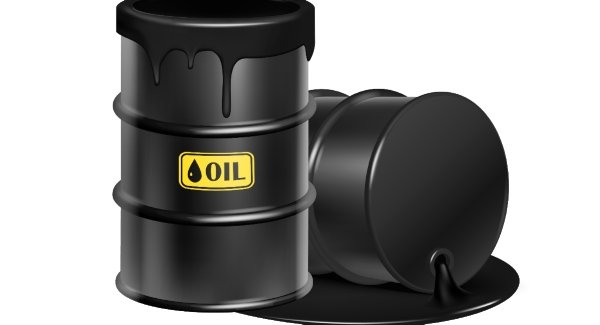
Ghana has lost more than US$16.5 billion in potential gross oil revenue over the past six years as crude oil production plummeted by nearly half from its 2019 peak, according to a devastating new report by the prominent Institute for Energy Security (IES).
The analysis, authored by energy experts Smith Prosper Boahene and Prince Lumor, paints a grim picture of a sector in freefall.
Crude oil output crashed from 71.44 million barrels in 2019 to just 37.30 million barrels in 2025, a staggering decline of almost 48 percent. The Energy Commission projects production will fall further to 34.83 million barrels in 2026, extending the downward trajectory into a seventh consecutive year.
The production collapse has delivered a hammer blow to government finances. Total petroleum receipts nosedived by 43.27 percent, from US$1.36 billion in 2024 to US$770.27 million in 2025. The decline was driven by both lower production volumes and a fall in the average realised crude oil price from US$86.12 to US$74.93 per barrel.
The first half of 2025 alone told a harrowing story: crude oil production declined by 26 percent year-on-year to 18.42 million barrels, while petroleum receipts collapsed from US$840 million to US$370 million.
IES described the prolonged downturn as “not a routine cyclical dip” but a structural crisis born of deep-rooted operational and policy failures.
“The decline is not attributable to one shock, but to several structural, operational, and policy failures compounding over an unusually long period,” the report stated.
Using an “illustrative counterfactual” model, IES projected a scenario in which Ghana maintained a modest annual production growth rate of three percent through sustained drilling, new petroleum agreements and improved reservoir management. Under that scenario, cumulative production would have exceeded actual output by approximately 221 million barrels—a missed opportunity that translates directly into the US$16.5 billion revenue hole.
Petroleum revenue contributes about 10 percent of total government income and supports critical public infrastructure and national development programmes. The sustained collapse therefore has far-reaching implications for Ghana’s fiscal stability, affecting everything from road construction to healthcare funding.
The report identified natural depletion of mature oil fields, insufficient replacement reserves and the failure to sign new petroleum agreements since 2018 as the principal causes. Ghana’s oil production remains dangerously concentrated in just three offshore fields—Jubilee, TEN and Sankofa Gye Nyame. Although Jubilee remained the country’s largest producing field in 2025 with 22.2 million barrels, it also recorded the sharpest year-on-year decline of more than 30 percent, partly due to a planned production shutdown between March 26 and April 8.
IES noted that the temporary production increase recorded in 2024 following drilling under the Jubilee South East project demonstrated that targeted investment can slow production decline. The report also clarified that while COVID-19 disruptions worsened the downturn in 2021, the decline had already begun before the pandemic.
“COVID-19 aggravated an already-declining trend rather than starting it,” the report noted.
Financial economist Professor Lord Mensah has attributed the sharp decline in petroleum revenues to inconsistent fiscal and investment policies, urging government to channel available oil revenues into infrastructure development, agriculture and export-led economic diversification.
IES concluded that Ghana’s prolonged decline in oil production requires urgent policy action.
“Ghana’s six consecutive years of crude oil production decline are far more than a cyclical fluctuation. The data show a structural crisis… Reversing it will require new licensing, accelerated investment, improved operational efficiency, strengthened institutional capacity, and diversified revenue management, implemented with the urgency the data clearly demonstrate is overdue,” the report said.


Game-Changing Move: Ghana Sets Up New Fiscal Council to Scrutinize Government Spending and Win Back Investors

Ghana’s Persistence Pays Off: AU Formally Commits to Tabling Xenophobia Petition in January 2027

Top Headlines From Ghanaian Newspapers: Wednesday, Sept. 9, 2026
-

 Ghana News1 day ago
Top Headlines From Ghanaian Newspapers: Tuesday, Sept. 8, 2026
-

 Ghana News1 day ago
How Ghana’s Government Pressured MTN, Telecel, and AirtelTigo to Cut Data Prices
-

 Arts and GH Heritage2 days ago
The Stories We Live With: Inside Nubuke Foundation’s Weight of the Ordinary
-

 Ghana News1 day ago
Buckingham Palace Responds to Jamaica’s $10 Billion Reparations Demand, But the UK Government’s Wallet Remains Shut
-
 Ghana News12 hours ago
Ghana’s Persistence Pays Off: AU Formally Commits to Tabling Xenophobia Petition in January 2027
-

 Africa Watch2 days ago
British-Nigerian Influencer Dies After Penis Enlargement Procedure in Thailand
-
 Ghana News13 hours ago
Top Headlines From Ghanaian Newspapers: Wednesday, Sept. 9, 2026
-

 Reels & Social Media Highlights1 day ago
Medikal in Church and ‘Cheater’ Memes