
Culture
Meet Kwame Adusei: The Ghanaian Designer Dressing Hollywood’s A-List

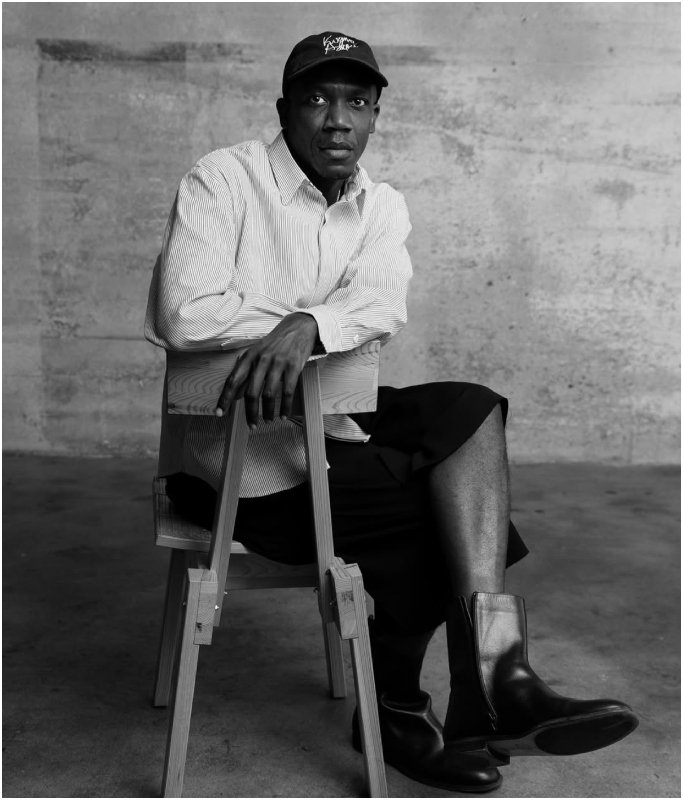
Ghanaian fashion designer Kwame Adusei is steadily cementing his place on the global fashion map, dressing some of Hollywood’s biggest stars while redefining gender-fluid luxury with distinctly African roots.
Adusei’s rising profile was highlighted in a 2024 Vogue feature, which described him as “quickly becoming a staple in celebrity closets.” He has also been featured in other top news media in America.
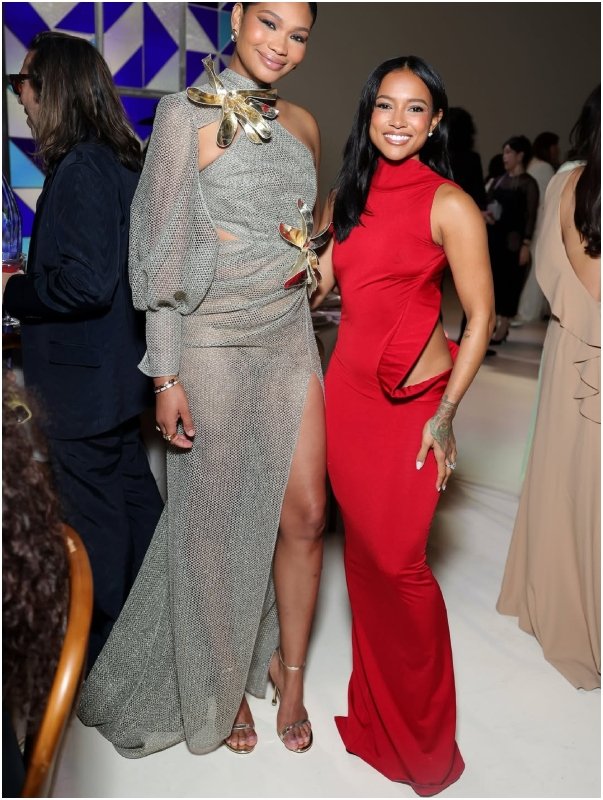
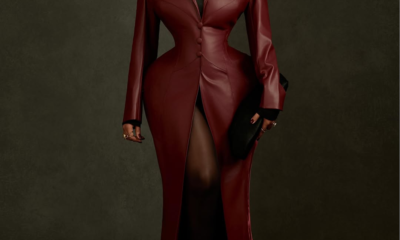
His designs—celebrated for their bold tailoring, sensuality, and exploration of androgyneity—have been worn by international stars including Beyoncé, Kylie Jenner, Lori Harvey, Kali Uchis, Ciara, and Reneé Rapp.
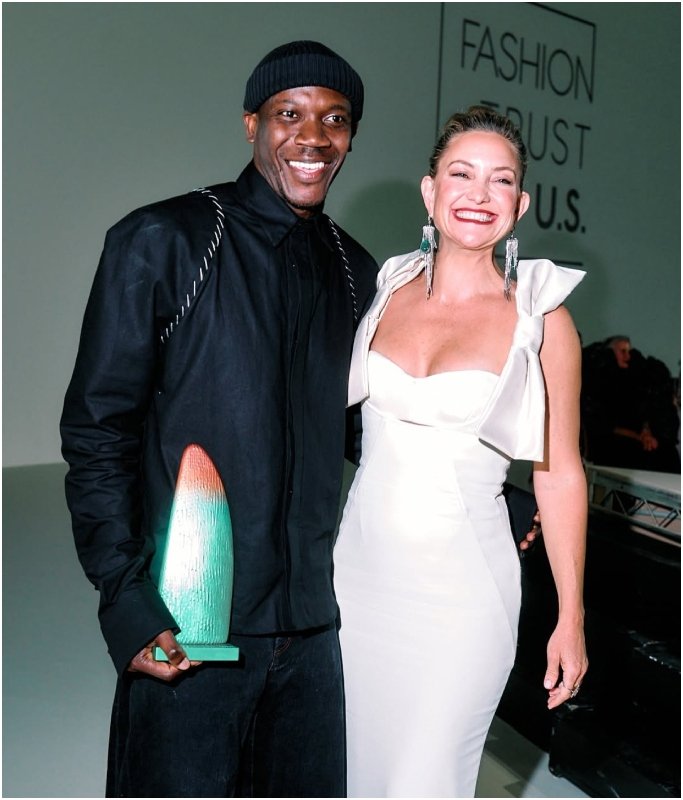
From Ghana to the Global Fashion Stage
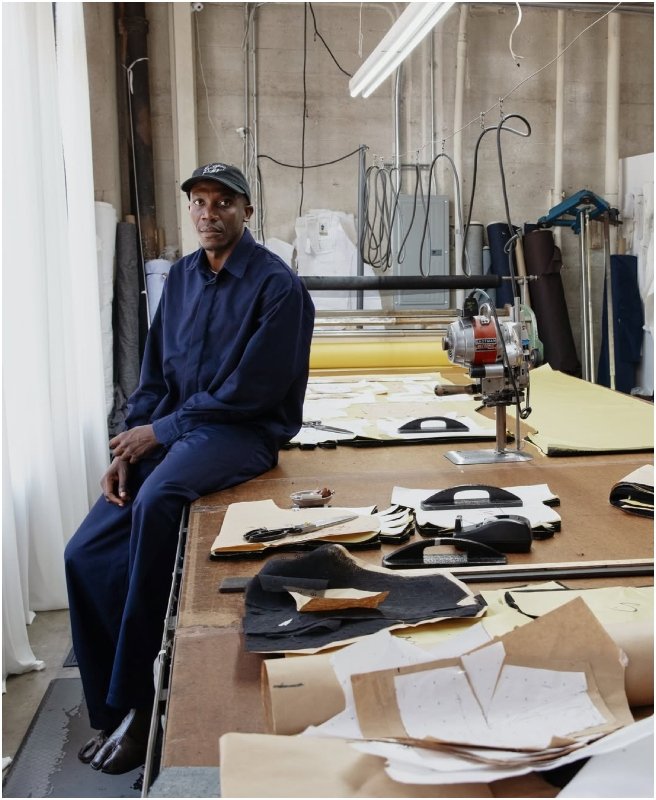
Before gaining international attention, Adusei spent a decade building his craft in Ghana, where precision tailoring and construction formed the backbone of his work. That foundation, he says, shaped his ability to respond creatively under pressure.
“In Ghana, people bring two or three yards of fabric from the market and show you a picture of Beyoncé and say, ‘I want the same outfit,’” Adusei recalled in the Vogue interview. “You’d better not say you can’t make it.”
That demanding environment refined his technical skills and eye for detail, even leading him to collaborate closely with French ateliers, where he became fluent in French and deepened his understanding of couture-level craftsmanship.
A Cold Start in New York, a Creative Home in Los Angeles
Seeking new challenges, Adusei moved from Ghana to New York City, only to discover that winter was an unexpected test. “Moving straight from a tropical place to New York, you find out that the trench coat is not as warm as you think,” he joked.
He later relocated to Los Angeles, where his brand found a more natural fit. In just two years, Adusei has opened a storefront on Doheny Drive in West Hollywood, placing his label at the heart of one of the world’s most influential fashion and entertainment hubs.
African Identity at the Core
Despite relocating abroad, Adusei made a conscious decision to place his African identity at the center of his brand. He chose to name the label after himself—a move he initially found daunting.
“It is very vulnerable,” he said. “If you have your name on something, you have to earn it.”
For Adusei, the decision reflects a desire to challenge global perceptions of African fashion.
“When I moved to LA, I realized that a lot of people didn’t have a reference when it comes to African fashion,” he noted, despite the continent’s rich design heritage.
Redefining Androgyny Through Tailoring
Adusei’s work is widely recognized for its exploration of gender-neutral fashion, though he is careful to distinguish his approach from conventional menswear-inspired designs. His philosophy centers on tailoring garments to flatter women’s bodies while drawing inspiration from masculine silhouettes.
“With most gender-neutral clothing, the cut is fundamentally for the male body,” he explained. “There’s a way to cut the same fabric so the female body looks way sexier, more protected, and very comfortable.”
This balance of form and function has become a signature of his brand.
Inspired by Kente and West African Tradition
One of Adusei’s key inspirations comes from traditional West African wedding ceremonies, where families use the same Kente cloth but create unique designs through individual tailors.
“It’s the most beautiful ceremony because everybody looks very different, but it’s the same type of fabric,” he said.
While the African influence may not always be immediately visible, Adusei describes it as the “beating heart” of his fashion philosophy—informing his emphasis on individuality, craftsmanship, and cultural continuity.
Ghana on the Global Fashion Map
As Adusei’s designs continue to appear on red carpets and in high-profile editorial spreads, his journey underscores the growing global influence of Ghanaian creatives.
His success highlights how African designers are not only participating in global fashion, but actively reshaping it—on their own terms.








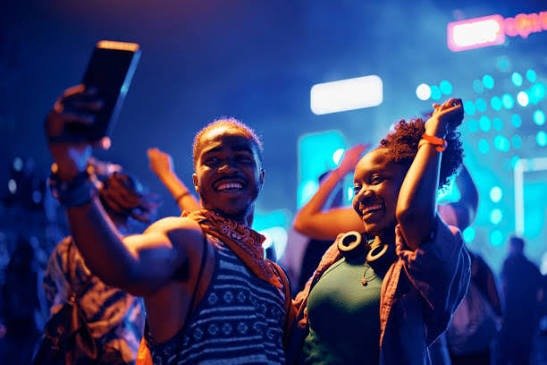
Pitch Accra sets the scene for a New Year’s Eve gathering that brings music lovers together as Ghana welcomes the first moments of 2027.
As the final hours of 2026 slip away, Accra will offer music lovers another reason to gather, celebrate and welcome a new year together. Compozers Fest Ghana Edition is scheduled for December 31, 2026, bringing the festive energy of New Year’s Eve to Pitch Accra.
Organised by December in Ghana, an events organiser with a growing following, the celebration offers an opportunity to experience Accra’s nightlife during one of the busiest periods on Ghana’s social calendar.
Music, Community and Celebration
Music has long been central to Ghanaian social life, accompanying celebrations, festivals and gatherings across generations. From highlife and hiplife to Afrobeats and contemporary African sounds, the country’s musical landscape reflects a continuing conversation between tradition and modern influences.
A festival held on New Year’s Eve provides a natural meeting point for these musical cultures and the people who enjoy them.
For Ghanaians returning home for the festive season, it offers another opportunity to reconnect with the city’s entertainment scene. International visitors can experience Accra’s year-end atmosphere alongside residents and members of the diaspora.
Although detailed information about the festival’s performers and programme has not been announced in the supplied listing, the event is scheduled to begin at 10 pm and continue into January 1, 2027.
Making New Year’s Eve Memorable
The venue, Pitch Accra, will host the gathering on Accra Road, Accra. Tickets also come with a Visa card promotion: eligible purchases receive 15 per cent back, with the refund processed within three to five working days after the event. The organiser states that tickets are non-refundable.
For visitors planning a festive-season trip, Compozers Fest Ghana Edition offers another event to consider when exploring Accra after dark.
As 2026 draws to a close, the celebration promises a chance to gather with friends, enjoy the city’s nightlife and begin 2027 in the company of fellow music lovers.
Arts and GH Heritage
When Second-Hand Clothes Become a Playground for Community
Using Broni Wawu garments purchased at a local market, Bamfo creates enclosed and open environments designed for participation rather than distant observation.

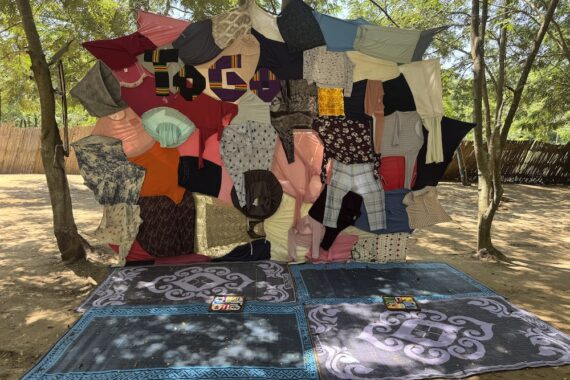
In Atakpamé, Ghanaian artist Dr. Frederick Bamfo transforms discarded garments into interactive spaces where children, cultural memory and collective play meet.
A discarded shirt can carry more than the memory of a former owner. In the hands of Ghanaian artist and academic Dr. Frederick Bamfo, it can become part of a place where children gather, games begin and strangers find reasons to connect.
His installation, The Games Feast, developed during the Karp Artists’ and Researchers’ Residency in Atakpamé, Togo, gives second-hand clothing a new social life.
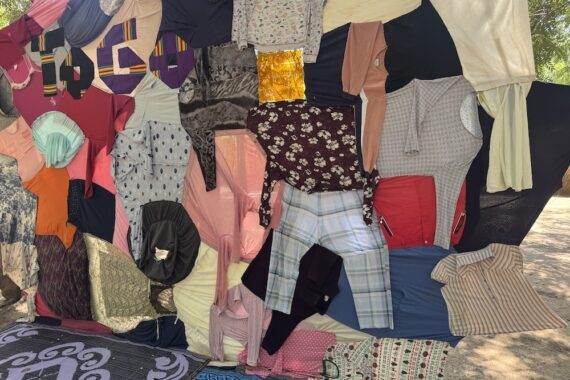
Using Broni Wawu garments purchased at a local market, Bamfo creates enclosed and open environments designed for participation rather than distant observation.
The choice of material speaks to a familiar West African reality. Second-hand clothing circulates through markets, connecting consumers to international trade networks while raising questions about consumption, waste and the afterlife of textiles.
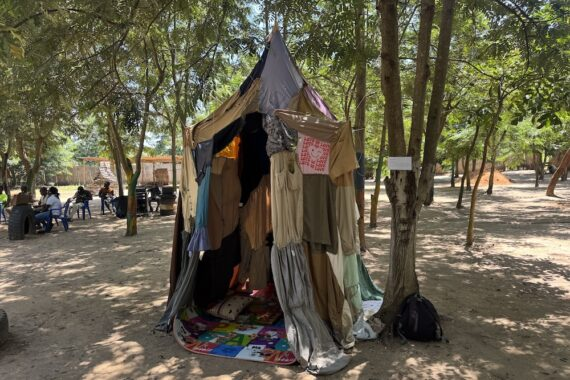
Often valued primarily for their usefulness or affordability, these garments become something different in Bamfo’s work: vessels of memory and possibilities for human connection.
The installation’s defining feature, however, is not simply its reuse of clothing. It is what happens inside these improvised spaces.
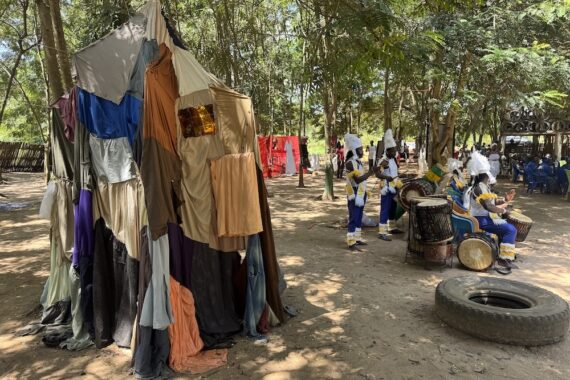
Children help shape the project’s collaborative spirit, while games such as ludo and oware, alongside dancing and skipping, turn the artwork into a setting for shared experience.
These activities draw on familiar forms of play that have long helped communities build relationships and pass cultural knowledge between generations.
Here, they also challenge conventional ideas of an art installation as something to admire without touching or entering.
For Bamfo, the transformation is both material and social. Clothing once associated with individual bodies becomes a collective environment, while everyday games become tools for participation.
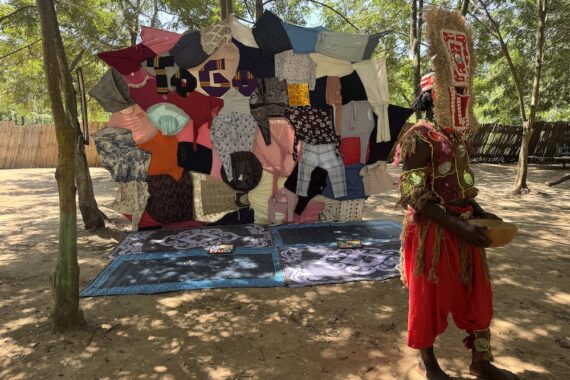
In Atakpamé, The Games Feast suggests that the most meaningful second life of a discarded garment may not be another wardrobe, but a space where people come together.
Reels & Social Media Highlights
Ghana’s Digital Heartbeat: Outrage, Satire, and the Fight for Accountability

Ghana’s social media space on Wednesday, October 21, 2026, felt less like a scrolling feed and more like a pressure cooker.
Between the crimson solidarity of #RedWednesday, the dust of a collapsing high-rise, and the astonishing unravelling of a political spokesperson, Ghanaians were simultaneously furious, entertained, and deeply skeptical.
The day’s emotional center was the Obuasi SHTS sexual abuse scandal. Activists declared “Red Wednesday,” urging citizens to wear red in solidarity with the alleged victims.
The mood turned from grief to rage when a leaked clip showed NDC communicator Daniel Nortey dismissing the allegations with the callous remark, “He’s a rapist, so what?”
The backlash was immediate and fierce, with figures like Nana Aba Anamoah condemning the comment, forcing Nortey into a swift, televised apology . Meanwhile, a very different kind of accountability played out in satire.
A viral video, amplified by Ashanti Regional Minister Frank Amoakohene, juxtaposed Dr. Mahamudu Bawumia’s past claims of completing the Pwalugu Dam against his recent promise to build it, using the “A few moments later” meme to devastating effect .
Amidst the politics, raw reality intruded. A video of concrete blocks raining down from the Villagio construction site in Accra sparked safety fears, but it was the cameraman’s subsequent claim that the company threatened him with “police and lawyers” that truly ignited the timeline.
Even the beach wasn’t safe from scrutiny: creator Ivy Prosper’s on-the-ground photos of a still-littered Labadi Beach exposed the polished, viral images of a “Miami-style” shoreline as misleading, triggering a wave of cynical “smoke and mirrors” commentary.
What united these disparate moments was a collective demand for transparency. Whether mocking a politician’s memory, calling out a spokesperson’s inhumanity, or fact-checking a pretty picture, Ghanaian netizens were not merely consuming content—they were actively auditing the world around them, one screenshot at a time.


Funding Fears Loom For Ghana’s Life-Saving Malaria Vaccine Five Years After Roll Out

‘There was a Coordinated Disclosure Plan’: AI-Discovered Flaw in PHP Triggers Global Internet Chaos as Cybercriminals Race to Exploit It

Yandex Strikes: Can Moscow Host Africa Under Drone Threat?
-
 Sights and Sounds2 days ago
Mind Craft Camps Accra Turns School Holidays into Adventures in Creativity and Discovery
-

 Reels & Social Media Highlights21 hours ago
Ghana’s Digital Heartbeat: Outrage, Satire, and the Fight for Accountability
-

 Ghana News5 hours ago
Major Sexual Abuse Scandal Rocks Ghana High School: Obuasi School Headmaster Sues Journalist for GH¢2 Million as Investigation Into Alleged Misconduct Widens
-

 Festivals & Events10 hours ago
Compozers Fest Ghana Edition: Welcoming 2027 with Music in Accra
-
 Taste GH9 hours ago
Airport Residential Area: Where Accra’s Dining Scene Meets Global Flavours
-

 Fashion & Style1 day ago
Wyclef Jean Gives Ghanaian Kaftan a Global Spotlight After ‘Chineke’ Fashion Inspiration
-

 Health & Wellness1 day ago
Beyond Bigger Muscles: Why Strength Training Matters for Healthy Ageing
-

 Health & Wellness22 hours ago
Four Everyday Lifestyle Habits That Can Make Weight Loss Easier