
Arts and GH Heritage
10 Uniquely Ghanaian Things You Propably Didn’t Know

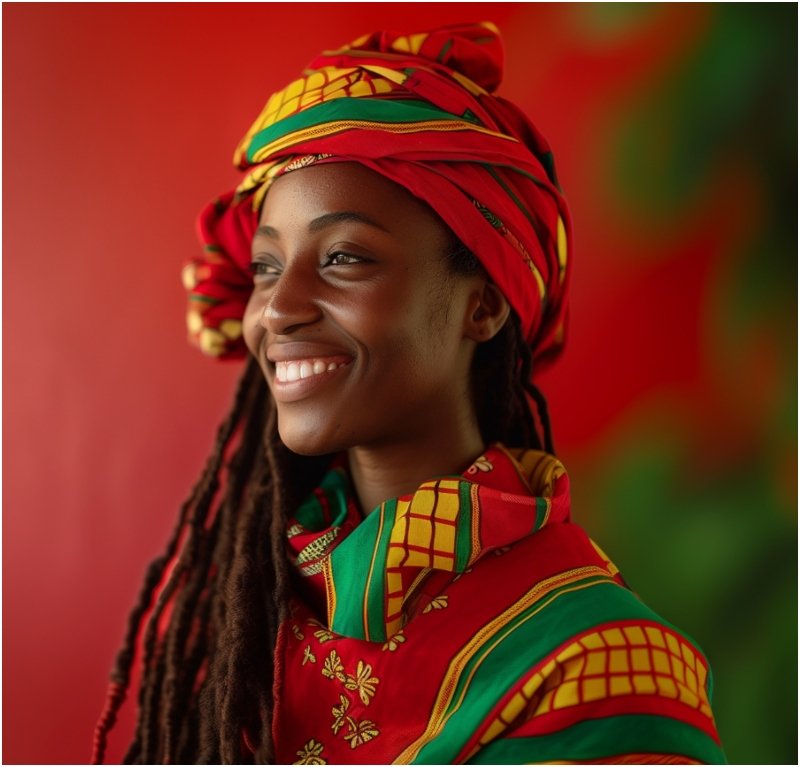
Ghana, often called the “Gateway to Africa,” is a nation rich in history, innovation, and cultural heritage.
From pioneering infrastructure to global cultural exports, here are 10 fascinating facts that highlight what makes this West African gem truly unique—many of which might surprise even seasoned travelers.
Tema Harbour: Africa’s Largest Modern Port Expansion Led by a Visionary Leader
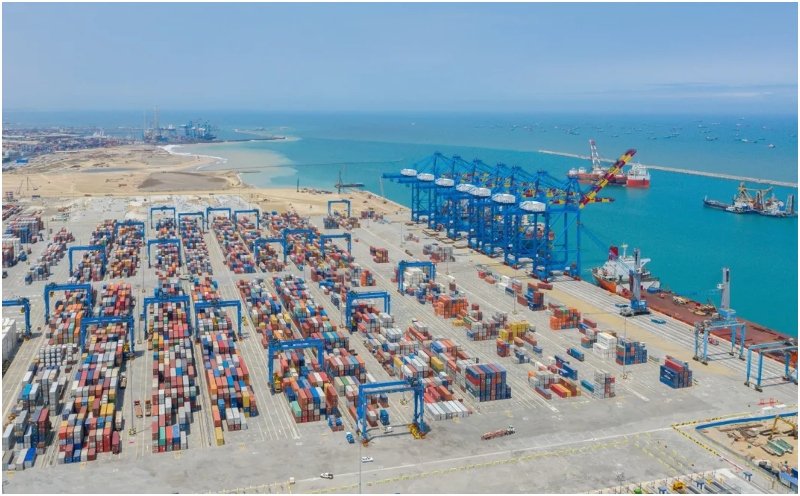
Ghana’s first President Dr. Kwame Nkrumah, built the country’s first major harbour at Tema. However, under President John Dramani Mahama’s first administration between 2012 and 2017, Ghana expanded the infrastructure tremendously by launching a $1.5 billion expansion drive. The epic project was completed in phases and fully commissioned in November 2025. This public-private partnership with Meridian Port Services (MPS) tripled the port’s capacity to over 3 million TEUs annually, making it West Africa’s premier trade hub. What you might not know: The project saved Ghana over $500 million through innovative financing and created thousands of jobs, positioning the country as a maritime powerhouse without direct government funding.
Jenga: The Global Game Born from Ghanaian Childhood Play
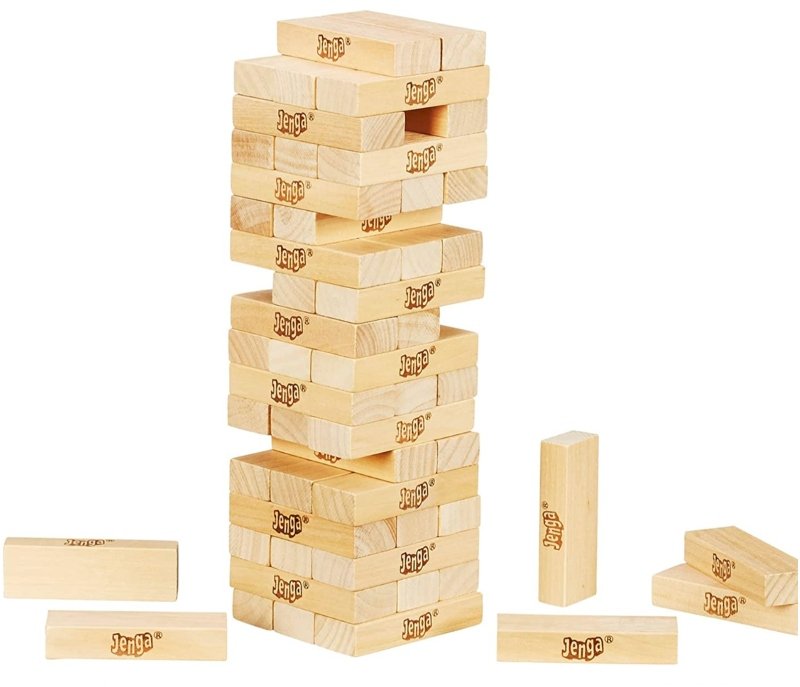
The iconic stacking game Jenga, played by millions worldwide, was invented by British designer Leslie Scott, inspired by her teenage years in Ghana during the 1970s. Using wooden blocks from a family game in Takoradi, she refined the concept into what became “Jenga”—from the Swahili word “kujenga,” meaning “to build.” Released in 1983, it has sold over 80 million sets, but its roots trace back to simple Ghanaian playtime amid limited toys, blending creativity with cultural resourcefulness.
Kente Cloth: Ghana’s Newly Protected Cultural Icon
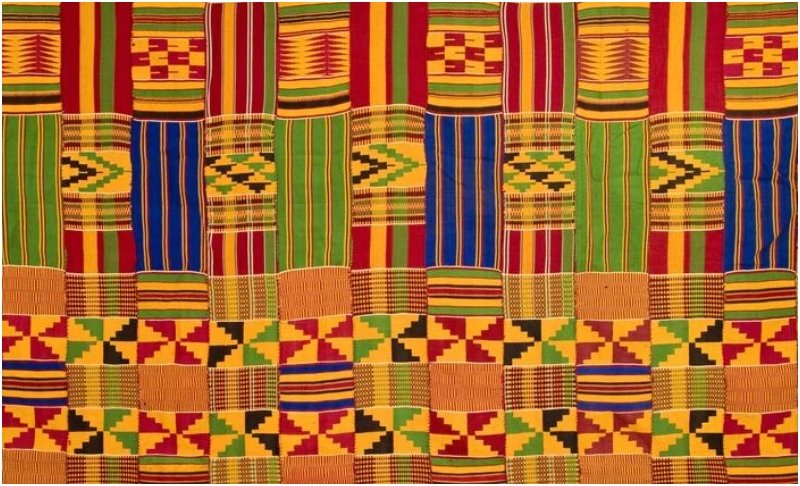
Kente, the vibrant woven fabric synonymous with African royalty and pride, originated among. Ghana’s Ashanti and Ewe peoples centuries ago. In a landmark move in 2025, Ghana secured Geographical Indication (GI) status for Kente through the World Intellectual Property Organization (WIPO), ensuring only cloth handwoven in designated Ghanaian communities can legally bear the name. This protects against global imitations and cultural appropriation, while its UNESCO Intangible Cultural Heritage listing (2024) underscores patterns symbolizing wisdom, wealth, and history—each design telling a story passed down generations.
Lake Volta: The World’s Largest Man-Made Reservoir

Created in 1965 by the Akosombo Dam on the Volta River, Lake Volta spans 8,502 square kilometers—larger than some countries—and holds 148 cubic kilometers of water, making it the biggest artificial lake by surface area globally. Built under Kwame Nkrumah’s vision for industrialization, it generates 60% of Ghana’s electricity via hydropower and supports massive fishing industries. Lesser-known fact: Its creation displaced over 80,000 people across 700 villages, creating a complex legacy of progress and human cost.
Adinkra Symbols: Ancient Wisdom in Visual Code

Originating from the Akan people in the 19th century, Adinkra symbols are a unique Ghanaian invention—over 50 intricate designs stamped on cloth, pottery, and architecture, each conveying philosophical proverbs like “Sankofa” (learn from the past) or “Gye Nyame” (except for God). Used in funerals, ceremonies, and modern fashion, they represent one of Africa’s oldest visual communication systems, blending art with moral teachings and now influencing global tattoos and designs.
Fantasy Coffins: Celebrating Life Through Artful Death
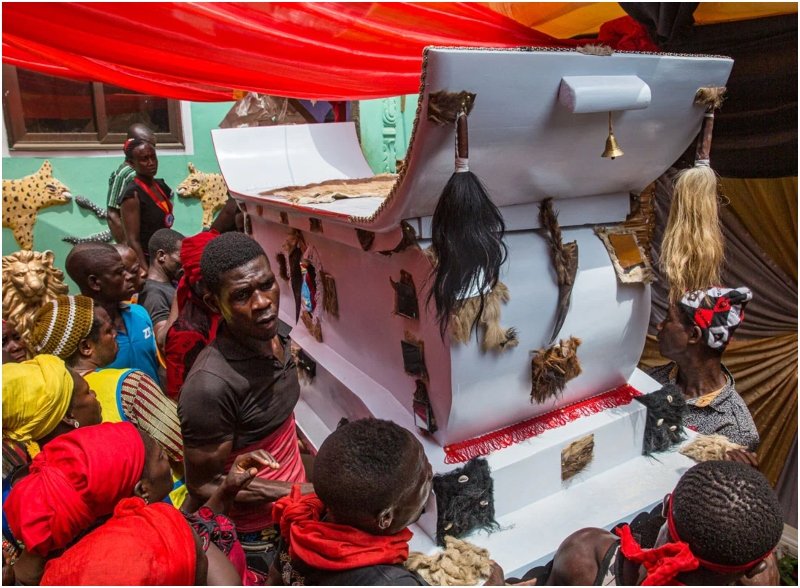
A tradition among the Ga people in Greater Accra, fantasy coffins (or “abebuu adekai”) are custom-built caskets shaped like everyday objects—fish for fishermen, cars for drivers, or even Coca-Cola bottles—to symbolize the deceased’s life or profession. Invented in the 1950s by artisan Seth Kane Kwei, this quirky cultural practice has gained international fame, with pieces in museums worldwide, turning funerals into vibrant tributes to individuality.
Highlife Music: The Birthplace of Afro-Fusion Sounds
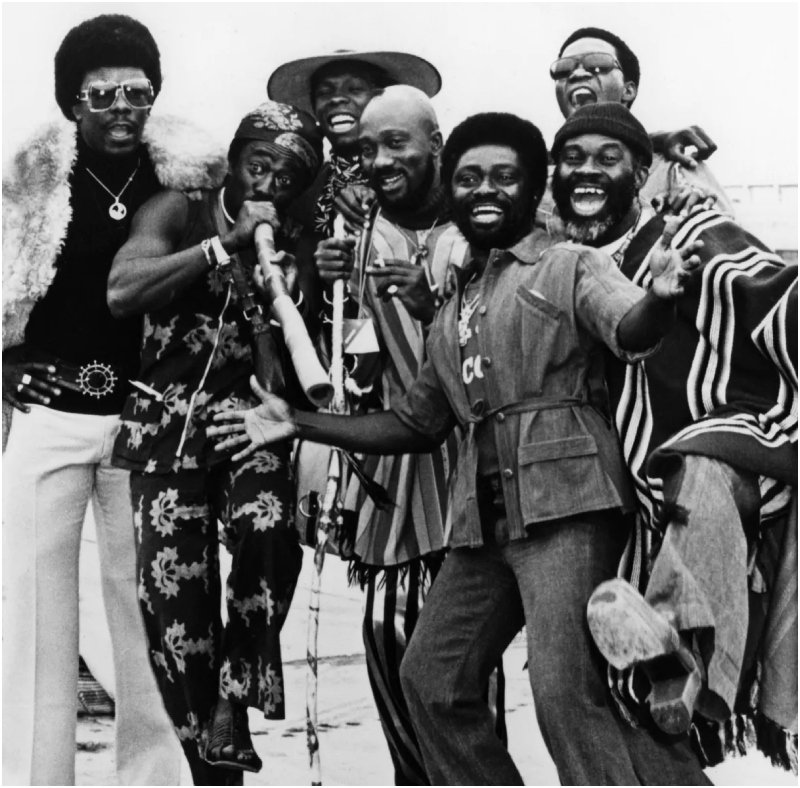
Ghana pioneered Highlife in the 1920s, a genre blending traditional Akan rhythms with Western jazz, calypso, and brass bands, evolving into modern Afrobeats influences. Icons like E.T. Mensah popularized it across Africa, and today, artists like Sarkodie fuse it with hip-hop. Fun fact: It emerged from coastal elites (“high life”) but became a Pan-African staple, symbolizing post-colonial joy and resilience.
Below is a video of an old highlife tune:
Cocoa Dominance: Sweet Secrets of the World’s Second-Largest Producer

Ghana produces over 800,000 tons of cocoa annually, second only to Côte d’Ivoire, fueling 20% of global chocolate. Introduced by Tetteh Quarshie in 1879 after smuggling beans from Fernando Po, it’s now a $2 billion industry. Unique twist: Ghana’s premium beans are fermented longer for richer flavor, and the country pioneered fair-trade certifications to combat child labor—yet most Ghanaians have never tasted finished chocolate.
Kakum Canopy Walkway: Africa’s Thrilling Treetop Adventure

Suspended 30 meters above the rainforest floor, Kakum National Park’s 350-meter canopy walkway—built in 1995—is Africa’s first and longest, offering views of rare wildlife like forest elephants and monkeys. What you didn’t know: Constructed with help from Canadian volunteers using local materials, it draws 200,000 visitors yearly, boosting eco-tourism while preserving one of West Africa’s last primary rainforests.
Pan-African Legacy: Cradle of Modern African Independence

Ghana became the first sub-Saharan nation to gain independence in 1957 under Kwame Nkrumah, who coined “neo-colonialism” and hosted the All-African Peoples’ Conference, inspiring liberation movements continent-wide. Intriguing detail: Nkrumah’s vision led to the Organization of African Unity (now AU) in 1963, and Ghana’s Black Star Gate symbolizes this—yet his overthrow in 1966 highlights the fragile balance between idealism and power.







Arts and GH Heritage
When Second-Hand Clothes Become a Playground for Community
Using Broni Wawu garments purchased at a local market, Bamfo creates enclosed and open environments designed for participation rather than distant observation.

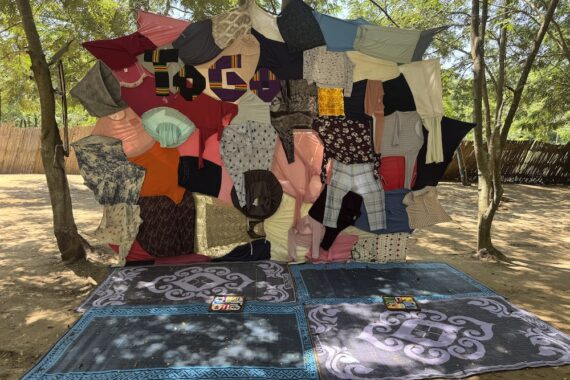
In Atakpamé, Ghanaian artist Dr. Frederick Bamfo transforms discarded garments into interactive spaces where children, cultural memory and collective play meet.
A discarded shirt can carry more than the memory of a former owner. In the hands of Ghanaian artist and academic Dr. Frederick Bamfo, it can become part of a place where children gather, games begin and strangers find reasons to connect.
His installation, The Games Feast, developed during the Karp Artists’ and Researchers’ Residency in Atakpamé, Togo, gives second-hand clothing a new social life.
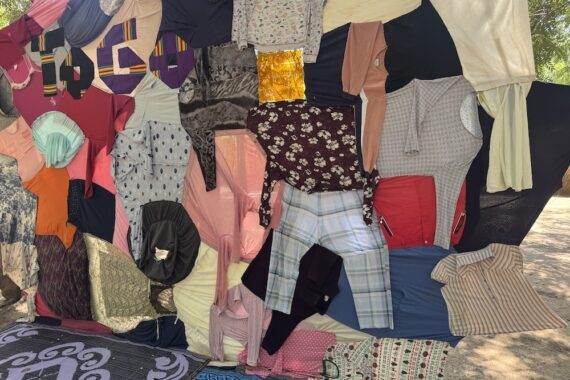
Using Broni Wawu garments purchased at a local market, Bamfo creates enclosed and open environments designed for participation rather than distant observation.
The choice of material speaks to a familiar West African reality. Second-hand clothing circulates through markets, connecting consumers to international trade networks while raising questions about consumption, waste and the afterlife of textiles.
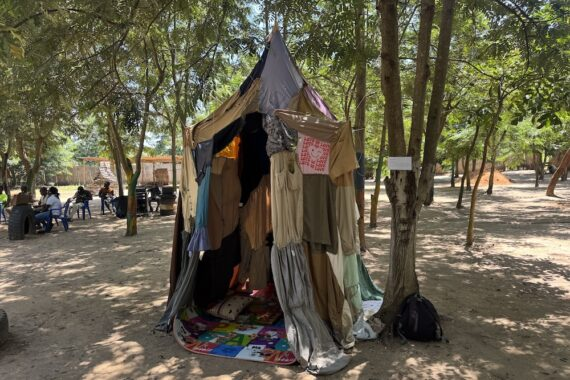
Often valued primarily for their usefulness or affordability, these garments become something different in Bamfo’s work: vessels of memory and possibilities for human connection.
The installation’s defining feature, however, is not simply its reuse of clothing. It is what happens inside these improvised spaces.
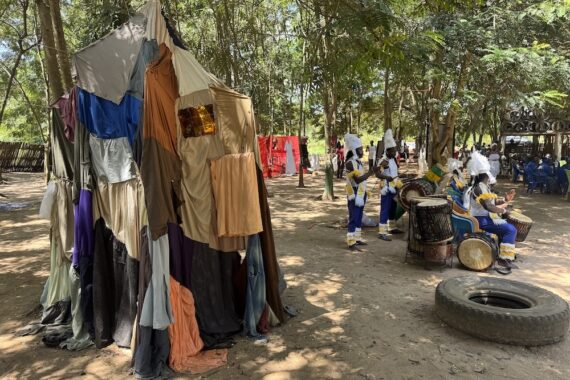
Children help shape the project’s collaborative spirit, while games such as ludo and oware, alongside dancing and skipping, turn the artwork into a setting for shared experience.
These activities draw on familiar forms of play that have long helped communities build relationships and pass cultural knowledge between generations.
Here, they also challenge conventional ideas of an art installation as something to admire without touching or entering.
For Bamfo, the transformation is both material and social. Clothing once associated with individual bodies becomes a collective environment, while everyday games become tools for participation.
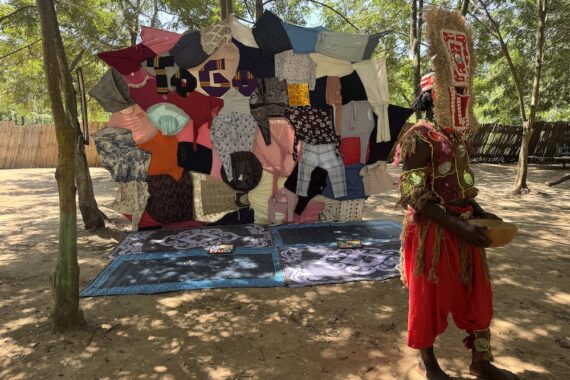
In Atakpamé, The Games Feast suggests that the most meaningful second life of a discarded garment may not be another wardrobe, but a space where people come together.
Arts and GH Heritage
Who Owns the Right to Be Called an Artist? A Debate in Togo Challenges the Rules of Art
From Ghana’s traditional craftsmen to self-taught street artists, creative excellence rarely follows a single road.
An artist may spend years in a university studio learning perspective, composition and art history.
Another may acquire the same confidence with materials through years of observation, experimentation and work passed down through generations. Which deserves greater recognition?
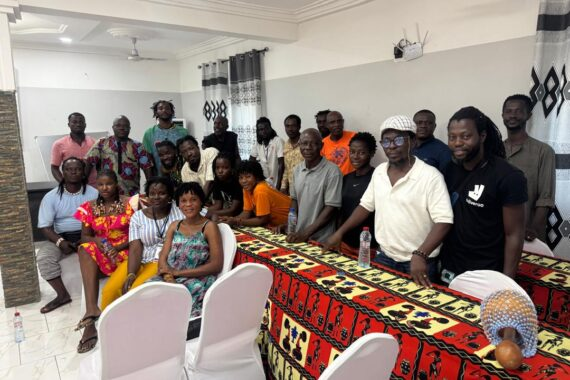
At Hotel Hong Kong in Atakpamé, Togo, this question became a starting point for a wider conversation about who gets to define artistic excellence.
Beyond the walls of the academy
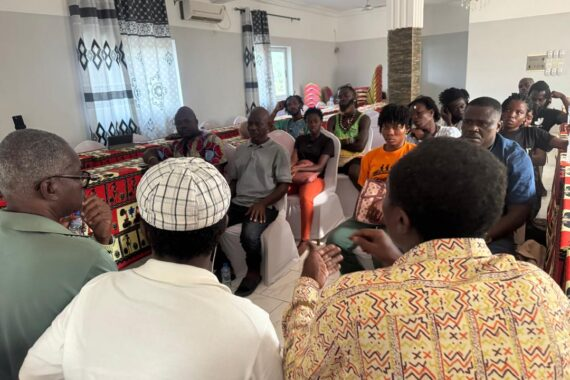
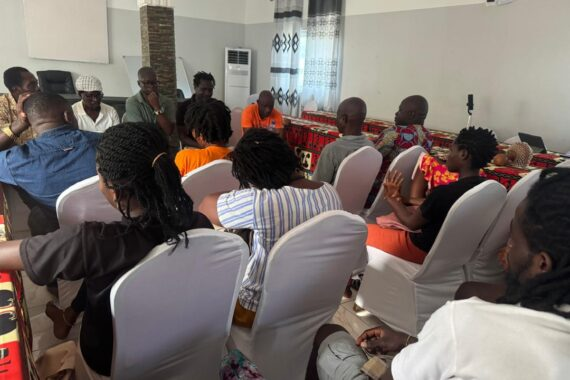
The panel discussion, organised as part of the ongoing Karp Kamina Artists and Researchers Residency, brought together Ghanaian artists Frederick Bamfo, Livingstone Amoako and Ray Agbo.
Moderated by Kojo Biney, with Samuel Olou, the residency’s director, translating into French, the conversation examined the opportunities and limitations of formal and self-directed artistic education.
Art academies offer structured training, experienced mentors, studio facilities and access to professional networks.
Yet these advantages do not automatically produce originality. Outside institutional settings, artists often develop distinctive approaches through everyday encounters, community knowledge, apprenticeships and experimentation.
Ghana’s traditions offer another lesson
Ghana’s fantasy coffin makers illustrate why artistic knowledge cannot be measured by academic qualifications alone.
These craftspeople transform wood into elaborate forms representing professions, personal identities and family histories.
Their expertise is built through practical experience, inherited techniques and close relationships between makers and their communities.
Such traditions challenge institutions to reconsider what counts as legitimate artistic training and whose work deserves exhibition space, critical attention and commercial support.
Making room for different creative journeys
The discussion at Hotel Hong Kong did not present formal education and independent practice as opposing forces.
Instead, it highlighted the need for an art world that values technical knowledge without dismissing unconventional paths.
For African artists navigating galleries, museums and international exhibitions, that distinction matters.
Creativity may begin in a classroom, a workshop or on the street. The greater challenge is ensuring that opportunity does not depend solely on where an artist learned to create.
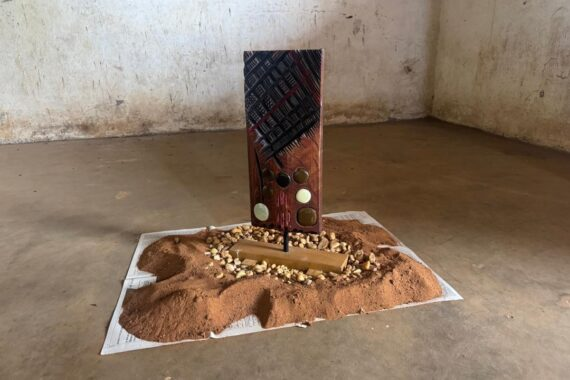
An old building can hold more than dust and silence. In Atakpamé, Togo, an abandoned German colonial structure is finding a new purpose as a space where African cultural expression challenges the weight of history.
Through Conversations: Symbolism and Lifestyle, Ghanaian artists Kojo Biney and Ray Agbo invite audiences to look afresh at the ordinary encounters that bind communities together.
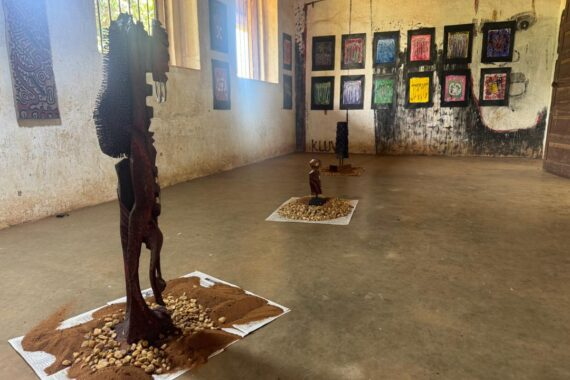
Their paintings and sculptures explore a language that often needs no words: the exchange of kola nuts, bargaining between market traders and customers, and the sharing of palm wine.
These gestures may appear familiar, yet each carries social meaning. They can express welcome, negotiate relationships, establish trust and pass knowledge between generations.
By bringing such moments into the gallery, the artists suggest that culture is not preserved only in museums or ceremonial performances. It lives in everyday interactions.
A building becomes part of the conversation
Presented during the Karp Kamina Artists and Researchers Residency 2026, the exhibition draws on Atakpamé’s cultural landscape, where Ana and Ewe-speaking communities meet. Known as the “city of seven hills”, the town provides a fitting setting for an exploration of identity and shared heritage.
The installation also places paintings alongside newspaper pages, linking artistic interpretation with the ways public events and personal memories become part of the historical record.
Yet the building itself may be the exhibition’s most powerful statement. Once associated with German colonial rule, the structure now houses contemporary African perspectives. Its past is not erased; instead, it becomes part of the encounter.
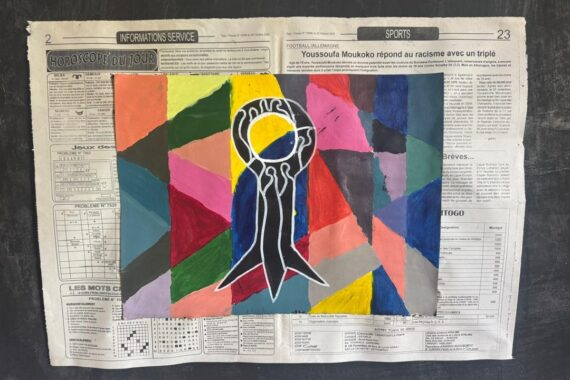
For older visitors, the space may recall another era. For younger audiences, it offers an opportunity to question how history shapes the present.
As the exhibition closes on Friday, October 16, 2026, its lasting invitation is to recognise that heritage is not frozen in time. Like conversation itself, it remains alive through the meanings people continue to create and share.


Funding Fears Loom For Ghana’s Life-Saving Malaria Vaccine Five Years After Roll Out

‘There was a Coordinated Disclosure Plan’: AI-Discovered Flaw in PHP Triggers Global Internet Chaos as Cybercriminals Race to Exploit It

Yandex Strikes: Can Moscow Host Africa Under Drone Threat?
-
 Ghana News19 hours ago
Major Sexual Abuse Scandal Rocks Ghana High School: Obuasi School Headmaster Sues Journalist for GH¢2 Million as Investigation Into Alleged Misconduct Widens
-

 Reels & Social Media Highlights1 day ago
Ghana’s Digital Heartbeat: Outrage, Satire, and the Fight for Accountability
-

 Festivals & Events24 hours ago
Compozers Fest Ghana Edition: Welcoming 2027 with Music in Accra
-
 Taste GH24 hours ago
Airport Residential Area: Where Accra’s Dining Scene Meets Global Flavours
-
 Fashion & Style2 days ago
Wyclef Jean Gives Ghanaian Kaftan a Global Spotlight After ‘Chineke’ Fashion Inspiration
-

 Health & Wellness2 days ago
Beyond Bigger Muscles: Why Strength Training Matters for Healthy Ageing
-

 Health & Wellness1 day ago
Four Everyday Lifestyle Habits That Can Make Weight Loss Easier
-

 Health & Wellness23 hours ago
Why Keeping Weight Off Can Be Harder Than Losing It