
Africa Watch
Almost 1 Million Migrants Trapped in Libya’s Hell as Ghana Rescues 144


On Tuesday evening, 144 Ghanaian nationals touched down at Kotoka International Airport in Ghana. They were exhausted, traumatized, and grateful to be alive.
Their return, facilitated by the International Organization for Migration (IOM) under the Voluntary Humanitarian Return (VHR) Programme, marked the end of a nightmare that had trapped them in Libya’s brutal migrant detention system.
But for the nearly 1 million other migrants still in the North African transit hub, the nightmare continues.
According to the IOM’s Displacement Tracking Matrix, an estimated 936,134 migrants were present in Libya as of January–February 2026, representing a slight decrease from the record high of 939,638 recorded in November–December 2025. The unofficial number is believed to be much higher.
These migrants—predominantly from Sudan (36%), Niger (20%), Egypt (19%), and Chad (9%)—have converged on Libya in search of economic opportunity or as a launching point for the perilous Central Mediterranean crossing to Europe. Yet for the vast majority, Libya has become a prison, not a gateway.
84% Have No Legal Status
The numbers are staggering. A large majority of migrants in Libya lack legal documentation, with 84 per cent reporting no residency or work permits. This renders them virtually invisible to the state and uniquely vulnerable to exploitation, arbitrary detention, forced labor, and extortion.
Economic hardship remains the most widely reported challenge, affecting over two-thirds of migrants. But beyond poverty lies a systematic cruelty. Migrants are held in detention centres across the country—some 5,700 refugees and migrants are currently in official detention, with 3,300 of them vulnerable to ongoing fighting in and around Tripoli.
In September 2025, around 900 detainees—including 400 Sudanese and others from Bangladesh, Egypt, Eritrea, Ethiopia, and Somalia—were held in the Tobruk detention centre in a facility built for just 150. In February 2025, leaked videos showed the beating and whipping of migrants and asylum seekers, including children, by officials at the Ajdabiya detention facility.
The Deadliest Crossing on Earth
For those who escape detention and attempt the Mediterranean crossing, the odds are grim. The Central Mediterranean route remains the world’s deadliest migration corridor.
In 2026 alone, at least 865 people have already been reported dead or missing along the route. Around 765 of those deaths occurred in the Central Mediterranean—an increase of more than 150 per cent compared to the same period last year. Across the Mediterranean as a whole, at least 990 deaths have been recorded in 2026, making it one of the deadliest starts to a year since 2014.
“We are witnessing a horrifying surge in deaths at Europe’s doorstep,” said IOM Director General Amy Pope. “Saving lives must come first. But we also need stronger, unified efforts to stop traffickers and smugglers from exploiting vulnerable people.”
Ghana’s Lifeline—and Its Limits
The repatriation of 144 Ghanaians is a small but significant humanitarian victory. The returnees arrived in two batches on July 14, 2026, and were received by officials from the Ministry of Foreign Affairs, Ghana Immigration Service, NADMO, Ministry of Gender, Department of Social Welfare, and the Ghana Health Service.
Upon arrival, they underwent immigration and health screening and received immediate humanitarian assistance including food, psychosocial support, and transportation. They will also be enrolled in reintegration programmes offering livelihood assistance, vocational skills training, and other socio-economic empowerment initiatives.
But 144 returnees represent a fraction of the Ghanaians still trapped. Seven evacuation flights have been scheduled to facilitate the return of stranded Ghanaians who have registered for the government-supported repatriation exercise. According to IOM Ghana, more than 8,000 Ghanaian migrants have been supported to return home voluntarily since 2017, including 2,077 in 2025 alone.
“Worse Than South Africa”
During a recent fact-finding mission to Libya, Member of Parliament for Kintampo South, Felicia Adjei, described the conditions endured by undocumented Ghanaian migrants in Libya as “worse than the current wave of anti-immigrant violence in South Africa”—a comparison that underscores the severity of the crisis.
The government has urged Ghanaians considering migration abroad to pursue safe, regular, and legal migration pathways, warning against the dangers posed by irregular migration and human smuggling networks.
A Crisis Without End
The IOM estimates that the number of migrants in Libya has grown by roughly 33 per cent since 2024, now representing about 13 per cent of Libya’s total population. Despite a decline in migration inflows and outflows in early 2026, the structural vulnerabilities facing migrants remain profound.
Mass graves have been discovered. Secret underground prisons have been uncovered. Air strikes have killed scores of migrants in their detention centres. And still, they come, driven by economic hardship, conflict, and the desperate hope of a better life.
For the 144 Ghanaians who made it home, the nightmare is over. For the 936,000 still trapped in Libya’s migrant hell, the journey continues.









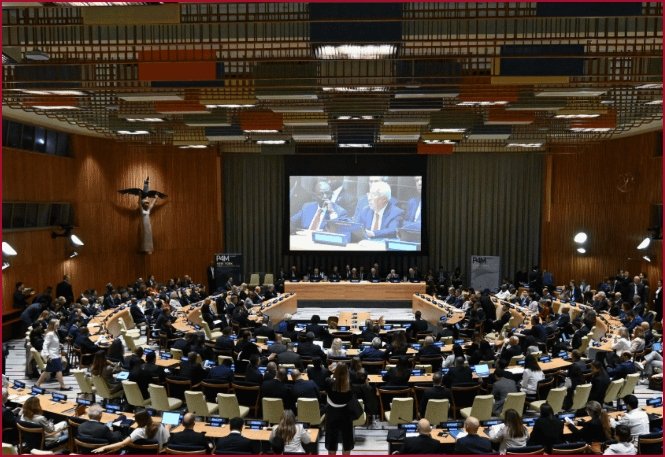
Africa has made its boldest demand yet for reform of the United Nations Security Council: at least two permanent seats with veto powers, and five non-permanent seats for the continent.
Vice-President Kashim Shettima of Nigeria delivered the demand while presenting President Bola Tinubu’s national statement at the 81st UN General Assembly in New York, positioning Africa’s case as both a moral imperative and a necessary correction to a global governance structure built for a bygone era.
“The world of 2026 cannot remain captive to the distribution of power in 1945,” Shettima declared, drawing a sharp contrast between the Security Council’s post-World War II origins and today’s geopolitical realities.
A Longstanding Demand
Nigeria’s position is consistent with the Ezulwini Consensus and Sirte Declaration, adopted as the Common African Position. Under this framework, Africa seeks at least two permanent seats with all existing privileges, including veto power for as long as the privilege exists, alongside five non-permanent seats on the Council.
The African Union reaffirmed the demand in May, stating that Africa’s exclusion from permanent representation constituted a historical imbalance requiring correction.
Shettima argued that institutions claiming authority to act for humanity must adequately reflect the people on whose behalf decisions are taken. Africa, he noted, is home to 1.5 billion people and constitutes the largest regional voting bloc in the General Assembly—yet remains without a single permanent seat.
The 1945 Problem
The Security Council has five permanent members: China, France, Russia, the United Kingdom, and the United States, each possessing veto power. This configuration has remained unchanged since the UN’s founding in 1945, apart from a single expansion of non-permanent membership from six to ten in 1965.
Africa currently has no permanent representative on the Council.
Shettima said Africa could no longer remain outside permanent membership while issues concerning the continent continued to occupy substantial attention of the Council. He linked Security Council reform to efforts to restore confidence in multilateralism amid widening geopolitical divisions.
“Differences among nations must not obscure their common humanity or responsibility to preserve peace for future generations,” he said.
Nigeria’s Peacekeeping Record
Shettima recalled Nigeria’s contributions to international and regional peace operations in Liberia, Sierra Leone, Darfur, Mali, and The Gambia. He said Nigeria also continues to work through ECOWAS, the African Union, and Gulf of Guinea mechanisms, covering mediation, counter-terrorism, democratic governance, and maritime security.
According to him, these efforts demonstrate Nigeria’s commitment to international peace and security—and its readiness to assume greater responsibility on the global stage.
A Warning Against Propaganda
The Vice-President also warned against a global environment where propaganda blurred distinctions between victims and aggressors and complicated accountability. He maintained that an inclusive and effective UN remained indispensable to global peace and sustainable development.
Shettima reaffirmed Nigeria’s commitment to the UN Charter and international cooperation, saying Nigeria supported an international system where diplomacy takes precedence over coercion and international law guides relations among states.
He identified the conflict in Sudan and other theatres as requiring urgent diplomacy because of their humanitarian, economic, and geopolitical consequences.
The Road Ahead
Nigeria’s demand comes amid renewed calls by African leaders for reforms to an institution whose permanent membership remains unchanged since its creation. The African Union’s preferred reform model provides for at least two permanent African seats, including veto privileges while existing members retain them, and five non-permanent seats.
Whether the five permanent members, particularly China, Russia, and the United States, will support a reform that dilutes their power remains uncertain. Previous reform efforts have stalled for decades.
But Shettima made clear that Africa’s patience is wearing thin. The continent, he said, remains committed to a multilateral order capable of responding more credibly to 21st-century realities.
“The world of 2026 cannot remain captive to the distribution of power in 1945,” he repeated, leaving little doubt that Africa intends to keep pressing until its voice is heard, and its seat secured.

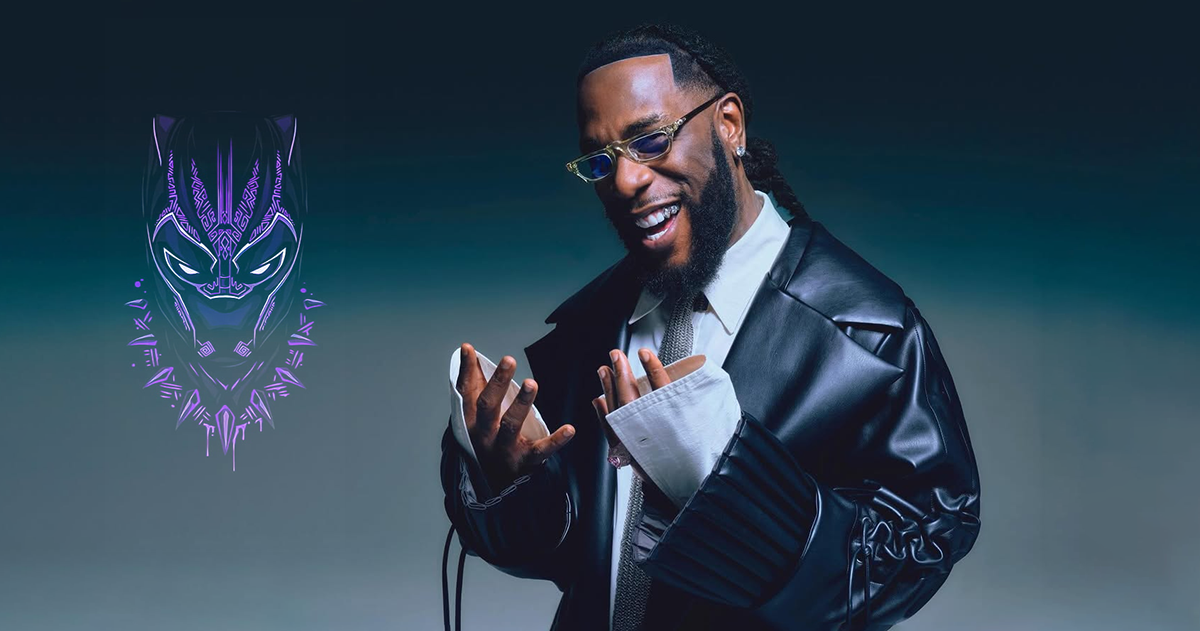
The fictional kingdom of Wakanda may be thousands of miles away from Lagos, Accra, and Johannesburg, but its soundscape remains deeply tied to the rhythms of the African continent.
Reports circulating across social media and film databases suggest that Nigerian megastar Burna Boy could be making a high-profile return to the Black Panther franchise.
According to credit listings briefly spotted on IMDb, the Grammy-winning “African Giant” is featured among the music contributors for Marvel Studios’ anticipated next chapter in the Wakandan saga.
The listed lineup also features Nigerian singer CKay, South African pop phenom Tyla, and American hip-hop icon Kendrick Lamar, who curated the record-breaking original Black Panther album in 2018.
For fans across the continent, the news has sparked immediate celebration. The Black Panther franchise has consistently served as a global megaphone for modern African culture.
When Wakanda Forever debuted, Burna Boy’s haunting track “Alone” stood out as one of the emotional pillars of the film’s soundtrack.
Rejoining the lineup alongside hitmakers like CKay and Tyla signals a continued commitment by film directors and music supervisors to keep contemporary African sounds at the heart of Hollywood’s biggest blockbuster universe.
However, music enthusiasts and industry insiders know that online database entries carry a major caveat.
IMDb listings are frequently crowdsourced or updated ahead of formal production stages, meaning unconfirmed cast and crew additions can circulate long before studio executives step in. Marvel Studios has maintained its trademark secrecy, offering no official tracklist or artist confirmations.
Whether the current roster proves accurate or undergoes shifts before release, the mere prospect highlights Afrobeats’ firmly established footprint in global pop culture.
Until Marvel officially drops the needle, fans will be keeping a close watch—and hoping the African Giant lands back in Wakanda.

A British-Nigerian businessman and social media influencer died from a pulmonary embolism after undergoing a penis enlargement procedure in Thailand, a UK coroner’s inquest has heard.
Igho “Tiny” Ubiribo, also known as “Ego”, was 43 when he died in Bangkok following complications from the cosmetic procedure during a trip to Thailand with his wife.
Evidence presented at the inquest said Ubiribo had 40ml of hyaluronic acid and lidocaine injected into his penis at an unnamed clinic in March.
Shortly after the procedure, he developed chest pain and collapsed twice at his hotel.
He was taken to Sukhumvit Hospital, where doctors suspected a pulmonary embolism — a potentially fatal blockage of a blood vessel supplying the lungs.
His condition deteriorated despite emergency treatment, with medical staff reportedly performing CPR for more than 100 minutes.
Ubiribo died in the early hours of March 6.
His body was subsequently repatriated to the UK for further examination. A post-mortem reportedly detected cellular filler material in his lungs consistent with hyaluronic acid, the substance used during the cosmetic procedure.
Evidence presented to the inquest indicated that the material found in his lungs matched the filler administered during the treatment.
The coroner concluded that the cosmetic procedure had caused the fatal pulmonary embolism.
The case highlights the potentially serious complications associated with injectable cosmetic procedures, particularly when performed outside a patient’s home country. Pulmonary embolisms can occur when material enters the bloodstream and travels to the lungs, where it can obstruct blood flow and become life-threatening.
Ubiribo’s death has also drawn attention to the risks surrounding cosmetic procedures undertaken abroad, where patients may face unfamiliar medical standards, follow-up arrangements and emergency care systems.
The circumstances of his death were examined during the UK inquest as authorities sought to establish how the procedure ultimately led to the fatal complication.


Funding Fears Loom For Ghana’s Life-Saving Malaria Vaccine Five Years After Roll Out

‘There was a Coordinated Disclosure Plan’: AI-Discovered Flaw in PHP Triggers Global Internet Chaos as Cybercriminals Race to Exploit It
