
Tourism
Tragic Underwater Proposal That Claimed American Tourist’s Life In Tanzania Still Haunts Travelers Six Years Later


Six years after the heartbreaking death of American tourist Steven Weber, who drowned in 2019 while proposing underwater in Tanzania, the story continues to resurface online, reshared by travelers, safety advocates and newly engaged couples.
What was once a shocking BBC report has evolved into a cautionary tale in 2025, reminding a new generation of adventure-seekers about the hidden risks of extreme vacation experiences.
Weber, from Baton Rouge, Louisiana, died during a dream trip with his girlfriend, Kenesha Antoine, at the luxurious Manta Resort on Pemba Island. The couple had booked the resort’s famed underwater room, a $1,700-a-night submerged cabin offering panoramic views of marine life — a bucket-list destination that still attracts global tourists today.
On their third day, Weber attempted a dramatic marriage proposal by free-diving outside the room and pressing handwritten notes against the glass as Antoine filmed. The video captured him revealing a ring and flipping over a sheet of paper that read:
“I can’t hold my breath long enough to tell you everything I love about you… But everything I love about you, I love more every day!”
Moments later, he disappeared from view and never resurfaced.

The Manta Resort said at the time that Weber drowned while free-diving alone near the underwater cabin. Staff responded to what they described as a “problem in the water,” but were unable to save him.
Antoine later confirmed his death in a heartbreaking Facebook post, writing that Weber “never emerged from those depths.”
Why the Story Matters in 2025
While the tragedy occurred in 2019, it has regained traction across TikTok, Instagram Reels and travel forums, where the resurfaced video continues to shock new audiences. Many users — especially younger travelers planning exotic trips — are encountering the story for the first time.
The renewed attention comes amid global conversations about adventure tourism safety, social-media-driven risk-taking, and the booming post-pandemic demand for immersive travel experiences. In East Africa alone, underwater, cliffside and safari-themed luxury stays have multiplied over the past decade.
Safety experts say Weber’s death remains a classic example of how easily romantic gestures can turn dangerous when performed without professional supervision.
“People see these jaw-dropping social-media proposals and assume they’re harmless,” said one East African travel risk analyst. “But underwater stunts, especially breath-hold dives, come with serious physiological risks — even for experienced swimmers.”
The U.S. Travel Safety Institute also noted an uptick in accidents involving tourists attempting influencer-style feats in scenic destinations.

Legacy of a Viral Tragedy
For many travelers, Weber’s proposal remains one of the most emotional and unforgettable viral moments of the past decade — a love story turned heartbreaking within seconds.
The Manta Resort, which continues to operate, has since increased its guest safety briefings but has not changed the design or usage policies of its underwater room.
The incident still raises questions in 2025 about how far resorts should go in regulating what guests attempt around their facilities, especially as tourism-driven content creation grows more daring.
Yet for others, Weber’s story endures for a different reason: its emotional weight. Even today, his final message to Antoine — filled with sincerity, excitement and devotion — continues to move viewers worldwide.
A tragedy frozen on video.
A proposal seen by millions.
And a reminder that even the most beautiful moments can turn unforgiving in nature’s domain.




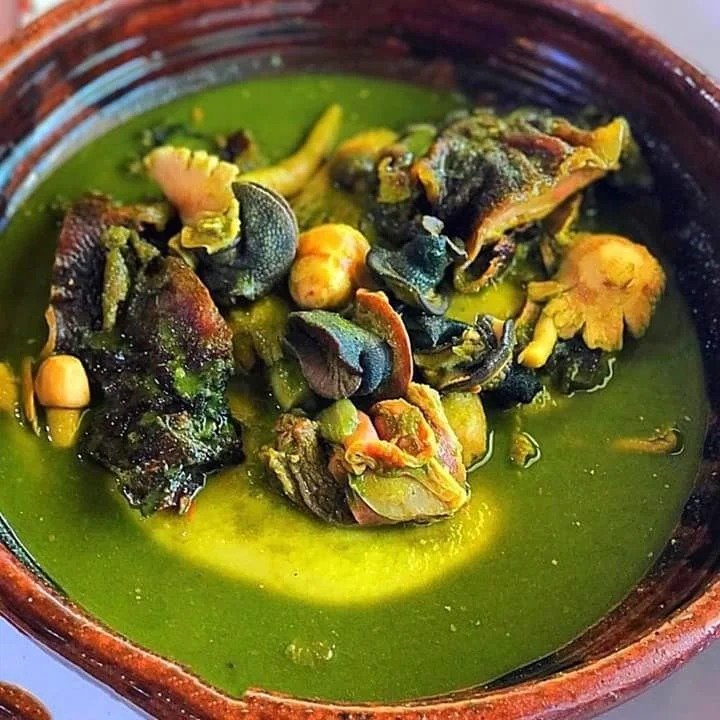
One glance at Ebunuebunu and you understand why Ghanaians call it one of the country’s most beautiful soups.
Its striking emerald-green colour arrives at the table steaming beside a generous mound of fufu, promising a meal that is as comforting as it is deeply rooted in tradition.
Also known as Abunuabunu, this beloved Akan soup transforms humble cocoyam leaves—locally called kontomire—into something unforgettable.
The leaves are blended into a silky base, often alongside turkey berries, creating a soup that is earthy, fresh and slightly herbaceous.
In some homes, spinach stands in when cocoyam leaves are unavailable, but the soul of the dish remains the same.
The aroma is unmistakably Ghanaian. Local spices mingle with smoked fish, snails or tender lamb, each ingredient adding its own layer of richness.
Smoked fish brings a deep savoury character, snails offer a pleasantly chewy bite, while lamb creates a hearty finish that makes the soup especially satisfying.
Turkey berries cut through the richness with a gentle bitterness that gives Ebunuebunu its distinctive balance.
The soup’s appeal goes beyond flavour. Cocoyam leaves are valued for their vitamins and minerals, while turkey berries have long been celebrated in Ghanaian kitchens for their nutritional qualities. Together, they create a meal that feels nourishing without sacrificing indulgence.
Served piping hot with soft, stretchy fufu, Ebunuebunu is more than lunch or dinner—it’s a gathering dish. It appears at family meals, festive occasions and Sunday tables where conversation lingers long after the bowls are empty.
For first-time visitors to Ghana, it offers a delicious introduction to Akan culinary heritage. For Ghanaians, every spoonful carries the familiar taste of home.

The Battle of Katamanso was not simply a clash of armies. It was the moment when rival communities chose unity over division—and altered the course of the Gold Coast’s history.
In 1826, an estimated 40,000 Ashanti warriors marched south, determined to crush resistance and tighten control over the coast.
Their advance met an unlikely coalition on the plains near Dodowa, where Ga, Fante, Akwamu, Denkyira and other southern forces stood together, backed by British and Danish military support.
What followed was a brutal contest that stretched for hours. The forest became a battlefield of musket fire, cannon blasts and hand-to-hand combat as smoke hung over the trees and both sides paid a heavy price.
By the time the fighting ended, the outcome stunned the region. The Ashanti army, long regarded as one of West Africa’s most formidable military forces, suffered devastating losses, including prominent commanders.
For the Ashanti Kingdom, it marked one of the most painful defeats in its early history and brought its southern advance to a halt.
The consequences reached far beyond the battlefield. The victory strengthened southern alliances, boosted trade around Accra and gave Britain greater influence along the coast.
Political power began shifting toward the coastal settlements that would later play an increasingly important role in Ghana’s colonial story.
Katamanso’s legacy also lives in culture. Oral traditions recall mourning rituals, including hairstyles created to express collective grief, preserving the memory of lives lost long after the weapons fell silent.
Nearly two centuries later, the Battle of Katamanso remains a reminder that history can turn not only on military strength, but on the power of unlikely alliances.

There is a certain kind of magic in waking up somewhere completely unfamiliar. One moment you are falling asleep as a train rolls through the countryside, and the next you are stepping onto a platform in another city without paying for an extra hotel night.
It is one of those simple travel tricks that seasoned Europe explorers swear by, yet many first-time visitors never think to use.
After years of travelling across the continent, experienced travellers are sharing the practical habits that make European adventures smoother, cheaper and more rewarding.
From smarter transport choices to overlooked destinations, these tips prove that seeing more of Europe is not always about spending more money.
One of the biggest money-saving strategies is taking advantage of Europe’s extensive night train network. Countries including Austria, Germany, Italy and parts of Central Europe are connected by overnight rail services that allow passengers to travel while they sleep.
Instead of checking into another hotel, travellers can board an evening train and wake up ready to explore a new destination.
For budget-conscious travellers, including many Ghanaians planning multi-country European trips, this can stretch travel funds considerably while turning the journey itself into part of the experience.
Another surprisingly useful habit is downloading offline maps before arriving. Google Maps allows users to save entire cities or regions to their phones, making navigation possible even without mobile data or a reliable internet connection.
That can be especially helpful when arriving at airports late at night, exploring rural areas or trying to find accommodation in unfamiliar neighbourhoods.
Airport spending is another area where frequent travellers are finding unexpected savings. Those flying through participating European airports can use the Club Avolta app to collect loyalty points while shopping or dining.
The app offers rewards and discounts at selected airport retailers and restaurants, giving travellers extra value on purchases they might already be making during long layovers.
Accommodation is another area where travellers can rethink old assumptions. Staying directly in a city centre often comes with premium prices, but Europe’s public transport systems make nearby towns and suburbs surprisingly practical alternatives.
A short train or tram ride can significantly reduce accommodation costs while offering a quieter, more local experience away from tourist crowds.
Cities like Amsterdam, Paris and Milan all have neighbouring communities that provide easy access without the higher price tag.
Perhaps the strongest recommendation is to look beyond Europe’s most famous hotspots altogether.
Eastern Europe continues to attract travellers looking for a different side of the continent. Countries such as Poland, Romania, Hungary and Bulgaria often combine historic architecture, vibrant local culture and lower travel costs with fewer crowds than destinations like Paris or Venice.
Many visitors describe the region as offering a more relaxed pace, warm hospitality and authentic experiences that are becoming harder to find in Europe’s busiest tourist centres.
As international travel becomes more accessible, especially for Africans exploring Europe for leisure, study or business, these practical travel habits can make a noticeable difference. Sometimes the smartest travel upgrade is not booking a more expensive flight.
It is simply knowing the tricks that experienced travellers wish they had discovered much sooner.



-

 Ghana News22 hours ago
‘We Need Factories’: Ato Forson Calls on China to Invest in Ghana’s Industrial Future
-

 Ghana News2 days ago
American Expats in Ghana Get a Helping Hand to Vote in 2026 U.S. Midterm Elections
-

 Ghana News22 hours ago
Government Deploys Military to Mallam in High-Stakes Bid to End Perennial Flooding
-

 Ghana News2 days ago
Top Headlines from Ghanaian Newspapers: Monday, August 24, 2026
-
 Africa Watch2 days ago
The West Africa Corridor’s Dirty Secret: Liberia’s Record Cocaine Bust Exposes State-Sanctioned Trafficking
-

 Reels & Social Media Highlights13 hours ago
Bawumia’s 2028 Play, Abena Korkor’s Return, and a Security Alarm
-

 Festivals & Events2 days ago
Ahoba Kuma Festival: How the Abura People Keep Their Warrior Legacy Alive
-

 Fashion & Style1 day ago
The 5 Jeans Every Woman Should Own Before Buying Another Pair