
Ghana News
5 Things to Expect in Mahama’s State of the Nation Address Today

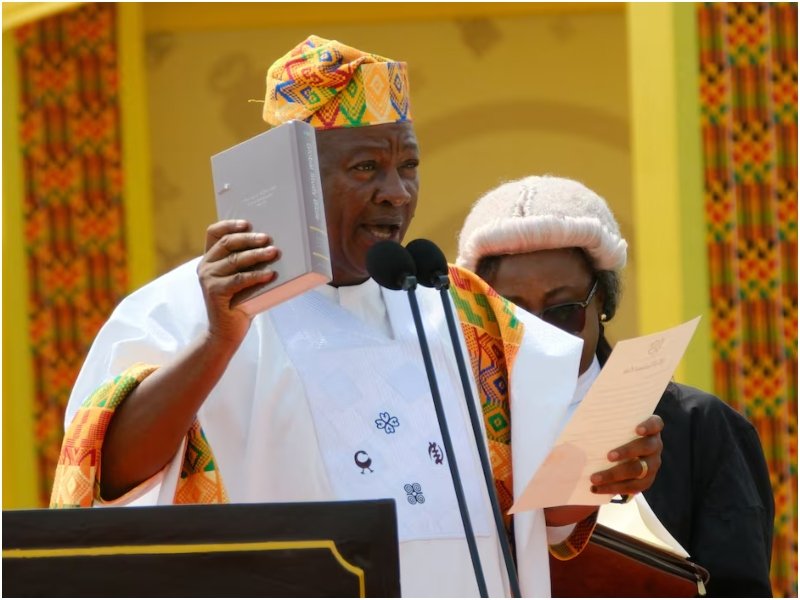
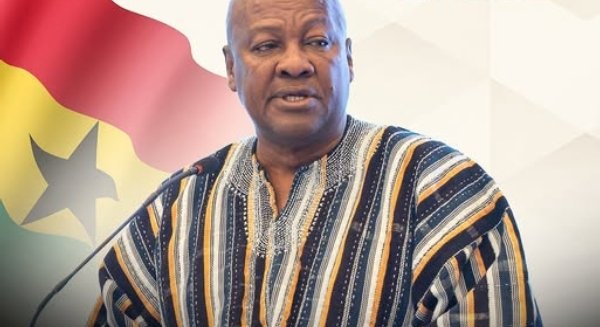
Accra, Ghana – February 27, 2026 – President John Dramani Mahama is set to deliver his second State of the Nation Address (SONA) in Parliament today, Friday, February 27, 2026.
The address will fulfil his constitutional obligation under Article 67 of the 1992 Constitution to report on the nation’s progress and outline priorities at the start of the parliamentary session.
The address, scheduled to begin with MPs seated on Friday morning, comes amid high expectations for concrete updates on economic recovery, flagship initiatives, and solutions to pressing challenges like youth unemployment and the cost of living.
As Ghanaians tune in for what is expected to set the tone for legislative and developmental actions in 2026, here are five key things observers anticipate in today’s SONA:
- Economic Consolidation and Macroeconomic Stability
With inflation trending downward, cedi appreciation, and food/fuel prices easing in recent months, the President is likely to highlight progress under the “Resetting Ghana” agenda. Expect detailed updates on debt sustainability, energy sector reforms, reduced system losses, and upstream petroleum investments. Mahama may reassure citizens of continued macroeconomic gains while outlining measures to protect stability, boost domestic production, and improve everyday livelihoods amid ongoing global pressures. - Progress and Implementation of the 24-Hour Economy Initiative
A flagship policy signed into law earlier this year, the 24-Hour Economy Authority is central to job creation, productivity, and export growth. The address is expected to provide early implementation updates, including incentives for private-sector participation, energy upgrades to support round-the-clock operations, and initial job impacts. Observers anticipate reassurances on how the policy will drive industrial revival and position Ghana as a competitive manufacturing hub in West Africa. - Agriculture, Agribusiness, and Food Security Advances
Key programmes like Feed Ghana, Nkoko Nkitinkiti (poultry), and cocoa sector reforms are likely to feature prominently. The President may report on steps to eliminate import bills (e.g., $300 million in poultry), boost local production, reduce food inflation, and strengthen non-traditional exports. Updates on anti-galamsey efforts, water body protection, and climate-resilient agriculture are also anticipated to address food security and rural livelihoods. - Youth Unemployment, Education, and Human Capital Development
Responding to calls from the Minority and civil society, Mahama is expected to present targeted solutions for Ghana’s youth bulge and persistent joblessness—one of the most cited national challenges. Expect references to expanded STEM/TVET programmes, elimination of double-track in senior high schools, teacher deployment reforms, and accountability for education spending (including the GH¢42 billion GETFund allocation). Health and affirmative action/equity measures may also tie into broader human capital investments. - Infrastructure, Governance, and Anti-Corruption Commitments
The US$10 billion “Big Push” infrastructure agenda, roads, energy, and climate action are likely to receive attention, alongside governance reforms. Experts urge updates on implementing the Constitution Review Committee Report to tackle corruption and deliver a fit-for-purpose system. International relations, including recent diplomatic engagements, may feature as Ghana seeks to strengthen partnerships for trade, investment, and security.
Today’s SONA will provide critical insight into the Mahama administration’s roadmap for 2026, balancing reflection on early gains with forward-looking policies to sustain momentum amid economic reset efforts.
Live coverage is available across major networks, with Parliament proceedings starting promptly.








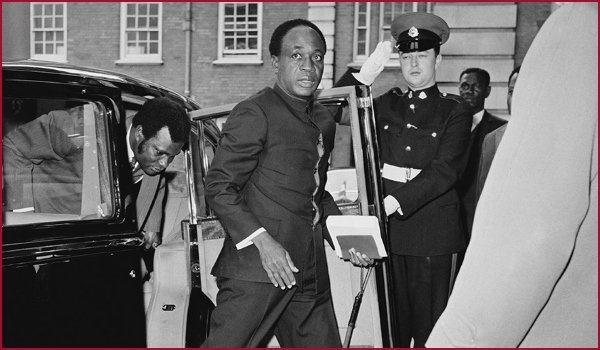
ACCRA — On March 6, 1957, Kwame Nkrumah stood before a jubilant crowd and declared Ghana “free forever.”
The first sub-Saharan African nation to shake off colonial rule, Ghana became a beacon of hope for a continent still in chains. Nkrumah was hailed as the liberator, the visionary, the man who proved Africans could govern themselves.
Nine years later, on February 24, 1966, those same streets of Accra erupted again—this time in celebration of his overthrow.
“I’d never seen such an explosion of joy,” recalls late former President of Ghana, Jerry John Rawlings, in a CGTN Africa documentary titled, Kwame Nkrumah: A Story of Vision and Tragedy.
The man who led Ghana to freedom had become, in the eyes of many, its captor.
Watch the insightful documentary in full below:
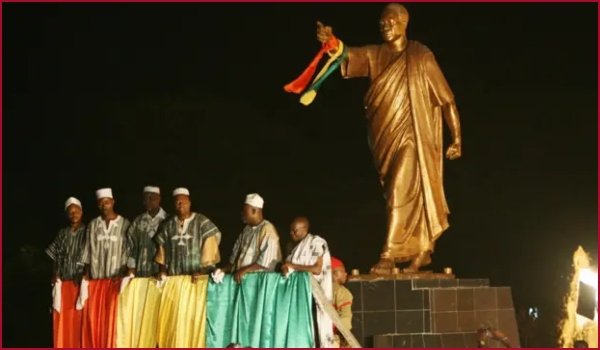
ACCRA, Ghana — As Ghana prepares to mark another Independence Day on March 6, archival footage and photographs from 1957 continue to capture the historic moment when the country became the first sub-Saharan African nation to gain independence from colonial rule.
In the early hours of March 6, 1957, thousands gathered in Accra as the Union Jack was lowered and Ghana’s new red, gold and green flag with the black star was raised for the first time. The newly independent nation emerged from the former British colony known as the Gold Coast, symbolizing a turning point not only for Ghanaians but for liberation movements across Africa. Watch the video below:
At the center of the moment was Dr. Kwame Nkrumah, the country’s first prime minister, who declared in a famous address that the long struggle for freedom had ended and that Ghana was “free forever.”
The speech, delivered to massive crowds celebrating through the night, remains one of the defining moments in African political history. Watch another powerful archival footage from 1957 below:
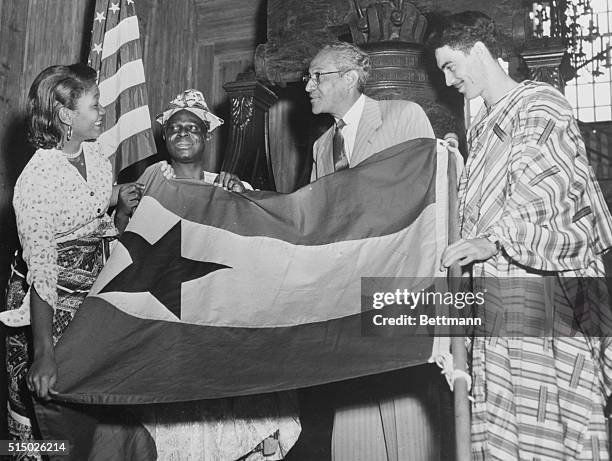
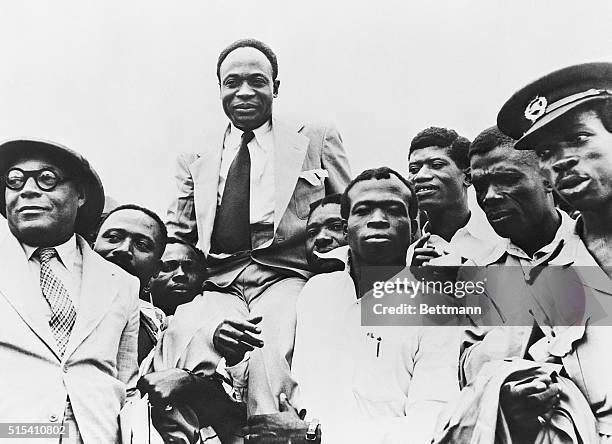
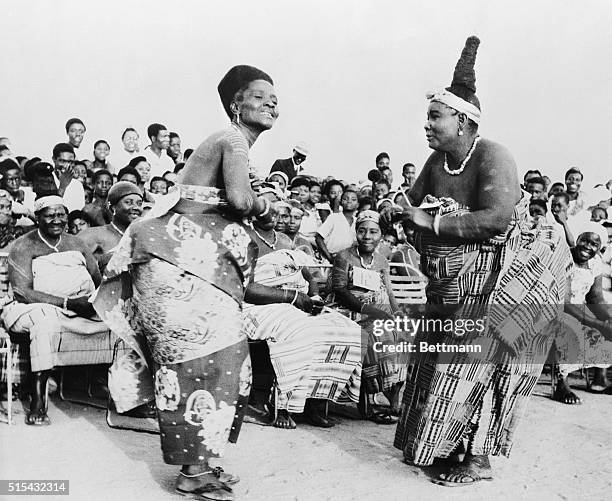
Historic Photos from Ghana’s Independence (Getty Images)
Getty archival photos from the period show jubilant crowds filling the streets of Accra, government officials carrying Nkrumah on their shoulders, and international dignitaries arriving to witness the birth of a new nation.
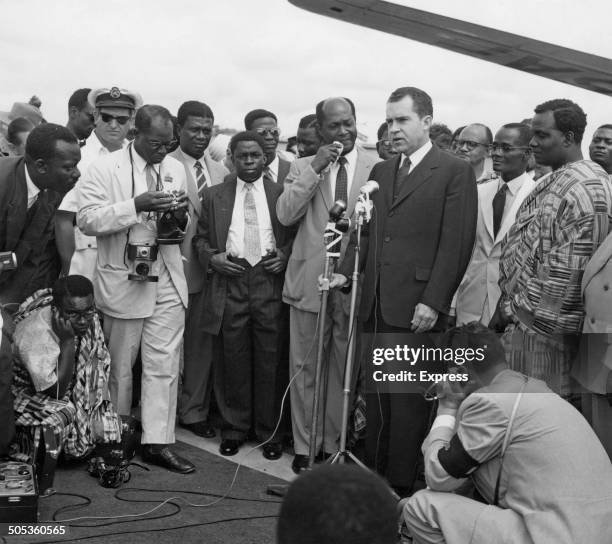
The celebrations drew global attention. Among those present were foreign leaders and diplomats, including then U.S. Vice President Richard Nixon, highlighting the international significance of Ghana’s independence.
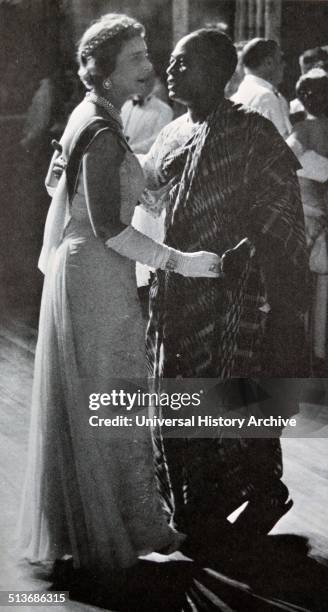
Other images from the period capture religious ceremonies, traditional dancing, and parades held across the capital as citizens celebrated the historic end of colonial rule.
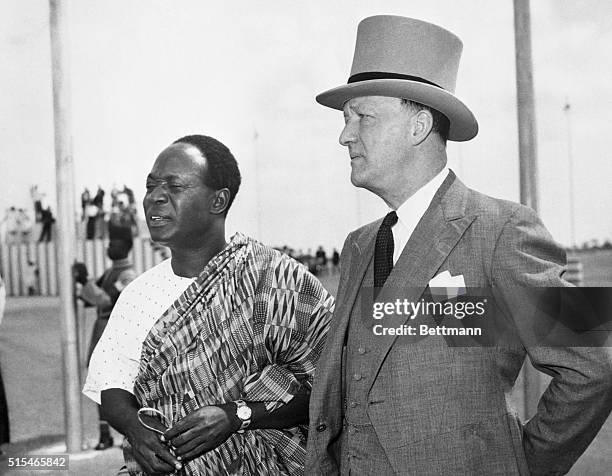
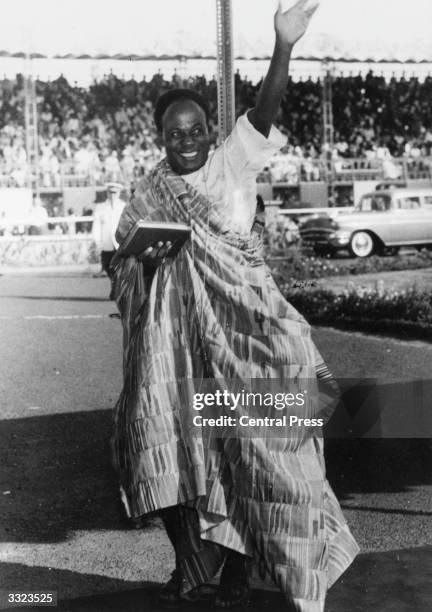
A Moment That Changed Africa
Ghana’s independence quickly became a catalyst for political change across the continent. Nkrumah championed Pan-African unity, and the country’s success inspired independence movements in several other African nations during the late 1950s and 1960s.
Today, landmarks such as Independence Square and the Black Star Gate in Accra, inscribed with “Freedom and Justice” and “AD 1957,” remain enduring symbols of the country’s sovereignty and national pride.
As Ghana commemorates its independence anniversary, the historic footage and photographs from 1957 continue to serve as powerful reminders of the moment when a nation — and a continent — stepped into a new era of self-determination.
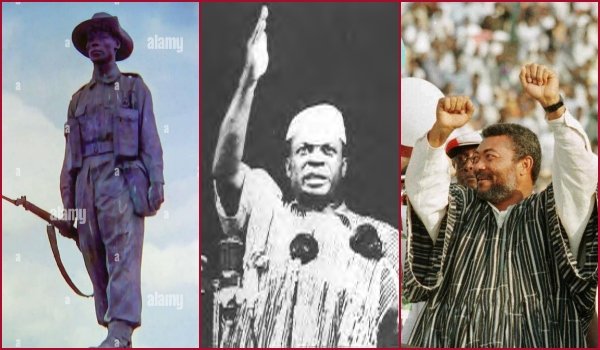
Accra, Ghana – March 5, 2026 – As Ghana prepares to celebrate its 69th Independence Day tomorrow, March 6, here’s a concise timeline of the defining moments that have shaped the nation since breaking free from British colonial rule in 1957—the first sub-Saharan African country to do so.
1957 – Independence Achieved
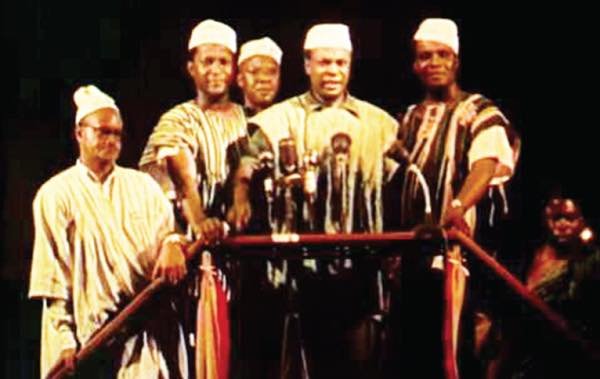
March 6: Kwame Nkrumah declares Ghana independent at midnight in Accra. The Gold Coast becomes Ghana. The Black Star replaces the Union Jack, and Nkrumah’s famous words echo:
“We are going to demonstrate to the world… that we are prepared to lay our own African identity.”
1960 – Ghana Becomes a Republic
July 1: Ghana adopts a republican constitution. Nkrumah becomes the first President. The Queen ceases to be head of state.
1964 – One-Party State Declared
Nkrumah’s Convention People’s Party (CPP) becomes the sole legal party. Political opposition is banned.
1966 – First Coup
February 24: Nkrumah is overthrown while abroad by the National Liberation Council (NLC) led by Lt Gen Joseph Ankrah. The First Republic ends.
1969 – Return to Civilian Rule
August: Kofi Abrefa Busia’s Progress Party wins multiparty elections. Second Republic begins.
1972 – Second Coup
January 13: Col Ignatius Acheampong overthrows Busia. National Redemption Council takes power.
1979 – Flight Lieutenant Jerry John Rawlings’ First Coup
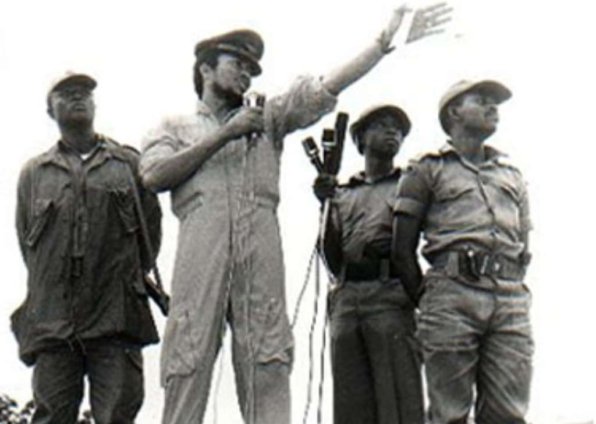
June 4: Rawlings leads the Armed Forces Revolutionary Council (AFRC), executes eight senior military officers including three former heads of state, then hands over to civilian rule after three months.
1981 – Rawlings’ Second Coup
December 31: Rawlings returns, overthrows President Hilla Limann. Provisional National Defence Council (PNDC) established.
1992 – Fourth Republic Begins
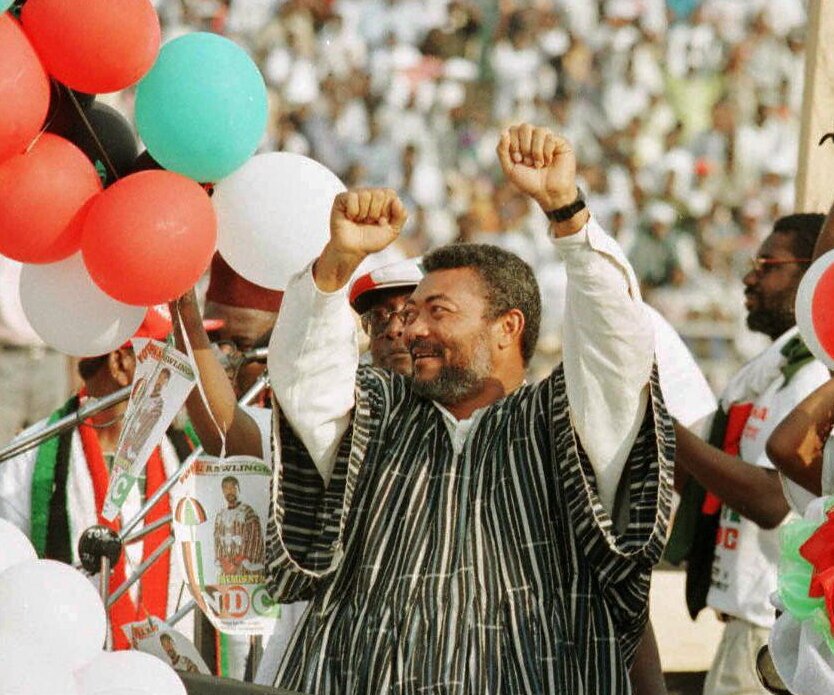
Constitution approved by referendum. Jerry Rawlings wins the first multiparty presidential election under the Fourth Republic.
2000 – First Peaceful Handover
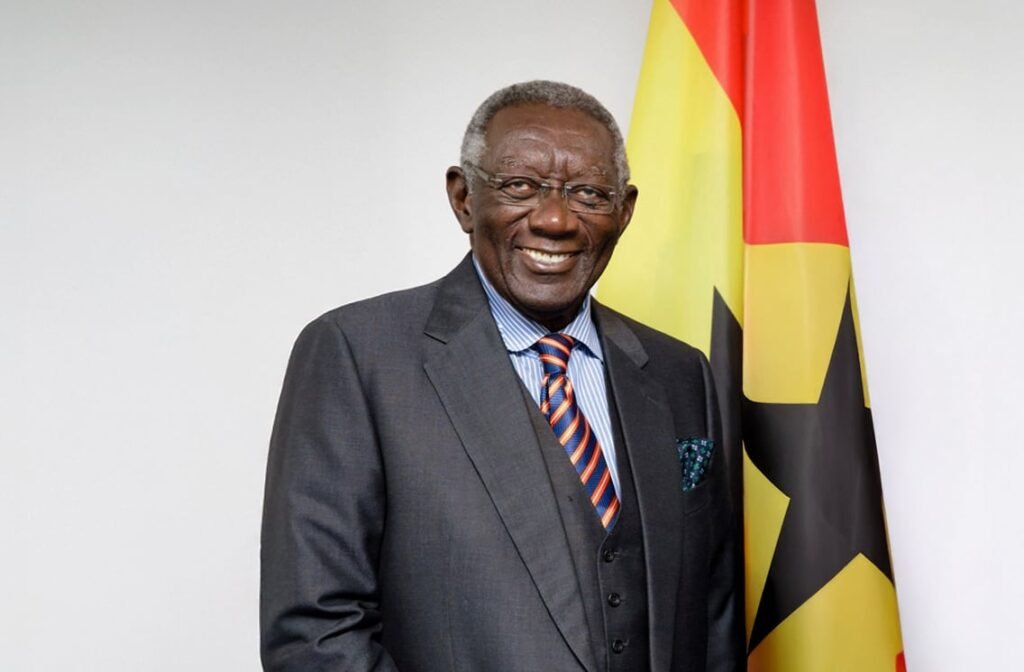
John Agyekum Kufuor of the NPP defeats NDC’s John Atta Mills. First peaceful transfer of power between parties.
2009 – Mills Becomes President
John Evans Atta Mills (NDC) wins election, marking another peaceful handover.
2012 – John Dramani Mahama Succeeds Mills
Mills dies in office. Mahama becomes president and wins election later that year.
2017 – Nana Akufo-Addo Takes Office
NPP’s Nana Addo Dankwa Akufo-Addo sworn in after defeating Mahama.
2020 – Akufo-Addo Re-elected
Akufo-Addo wins second term amid tight contest and post-election tensions.
2024 – Mahama Returns
John Dramani Mahama defeats Vice President Mahamudu Bawumia, returning to the presidency after eight years.
2026 – 69th Independence Day
Theme: “Building Prosperity, Restoring Hope.” Ghana looks back with pride on nearly seven decades of self-rule while confronting contemporary challenges—economic recovery, youth unemployment, climate resilience, and regional influence.
From the euphoria of 1957 to today’s focus on stability and growth, Ghana’s journey remains a powerful symbol of African self-determination.



-
 Business2 days ago
Ghana Records 14th Straight Drop in Inflation, Hits 3.3% in February 2026
-
 Ghana News15 hours ago
69 Years of Independence: Quick Timeline of Ghana’s Biggest Milestones Since 1957
-
 Ghana News22 hours ago
Vendor Defends Frying With Plastic in Oil, Missing Young Woman, and Other Trending Topics in Ghana Today (March 5, 2026)
-
 Ghana News1 day ago
Ghana and St Kitts and Nevis Sign Agreement to Deploy Ghanaian Nurses and Doctors
-

 Global Update21 hours ago
US Tells Stranded Americans in Middle East: Don’t Rely on Government for Evacuation
-

 Ghana News21 hours ago
Ghana’s Independence Day Traditions: A Vibrant Celebration of Freedom, Pride & Unity
-

 Ghana News1 day ago
Newspaper Headlines Today: Thursday, March 5, 2026
-
 Culture17 hours ago
“You’re Supposed to Be Creating Jobs”: Ghana’s Ministry of Creative Arts Under Fire for Using AI Instead of Real Creatives For New Ad