
News
WHO Director-General Rejects US Withdrawal Claims as ‘Untrue,’ Urges Return to Global Health Cooperation


The World Health Organization (WHO) has firmly rebutted the United States’ justifications for its withdrawal from the agency, with Director-General Tedros Adhanom Ghebreyesus labeling the reasons “untrue” and warning that the move endangers both American and global security.
This development highlights deepening divides in international health governance, at a time when pandemics and health crises continue to threaten vulnerable populations worldwide, including in Africa.
The US formally exited the WHO earlier this week, fulfilling a notification issued a year prior under President Donald Trump’s administration. The decision revives tensions from 2020, when Trump first announced a withdrawal amid the COVID-19 pandemic, accusing the WHO of being overly influenced by China and failing to hold Beijing accountable for the virus’s origins. Although the Biden administration reversed that move in 2021, Trump’s return to office in 2025 has seen a resurgence of isolationist policies, including cuts to international organizations.
In a post on X (formerly Twitter) on January 24, 2026, Tedros stated that the US’s foundational role in the WHO, established in 1948 as a United Nations specialized agency.
“As a founding member of @WHO, the United States of America has contributed significantly to many of WHO’s greatest achievements, including the eradication of smallpox,” he stated. He added that the agency has always respected member states’ sovereignty and that the withdrawal “makes both the US and the world less safe.”
The US cited several grievances, including claims by Secretary of State Marco Rubio and Health Secretary Robert F. Kennedy Jr. that the WHO had “tarnished and trashed everything that America has done for it.” A symbolic point of contention was an American flag allegedly withheld by the WHO, though it was later returned. The administration also accused the organization of obstructing information sharing during the early stages of the COVID-19 outbreak.
Countering these, the WHO reiterated its transparency efforts: In early January 2020, it alerted governments to a “pneumonia of unknown cause” in China and declared a Public Health Emergency of International Concern on January 30, when cases outside China were minimal.
“The reverse is true,” the WHO stated regarding US accusations. “As we do with every Member State, WHO has always sought to engage with the United States in good faith, with full respect for its sovereignty.”
For Ghana and other African nations, the US withdrawal is concerning. The WHO has been instrumental in initiatives like polio eradication and Ebola response, with Africa benefiting from technical support and funding.
Ghana, as a WHO member and host to regional health offices, has advocated for stronger multilateralism, especially post-COVID. The absence of the US—the largest WHO donor—could strain resources for ongoing challenges like mpox outbreaks and climate-related diseases.
Tedros expressed hope for the US’s return, underscoring the need for collective action in an interconnected world. As global health threats evolve, this rift could undermine preparedness, urging other nations to step up contributions.
WHO withdrawal, Tedros Adhanom Ghebreyesus, US foreign policy, COVID-19 response, international health, sovereignty, global security, 362.106 (International health organizations and services)







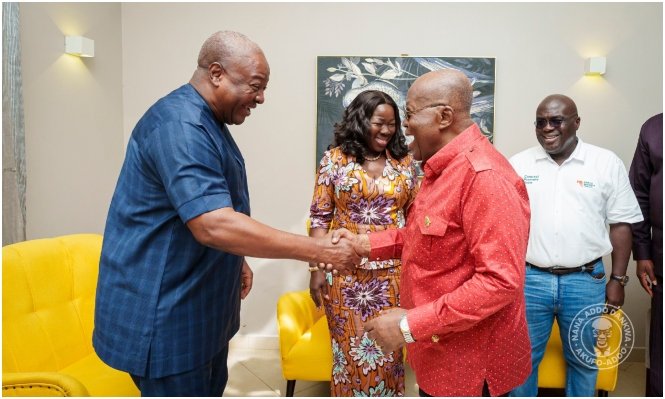
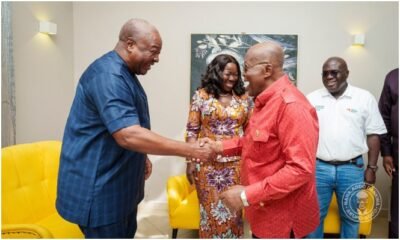
Kwahu, Ghana – Former President Nana Akufo-Addo paid a courtesy call on President John Dramani Mahama on Holy Saturday, April 4, 2026, while both leaders were in the Kwahu enclave for the annual Easter celebrations.
The meeting took place as President Mahama participated in activities linked to the Kwahu Business Forum, a major event held alongside the Easter festivities.
Akufo-Addo, who has maintained a nearly two-decade tradition of spending Easter in Kwahu, described the visit as a cordial engagement during the sacred period.
In a Facebook post, the former president wrote: “On the Holy Saturday of Easter, while in Kwahu where for almost two decades I have consecutively visited during the sacred period of Easter, I called on the President of the Republic, H. E. John Dramani Mahama who is also in Kwahu.”
The encounter highlights a moment of peaceful political civility between the current and immediate past leaders of Ghana amid the festive season. No further details about the substance of their discussion were made public.
The visit comes at a time when both leaders are actively involved in national and regional development conversations, with Mahama using the Kwahu platform to engage stakeholders on economic matters.
Ghana News
Mahama Calls Christ’s Birthplace an ‘Epicentre of War’, New Airport Concourse Planned and Other Big Stories in Ghana Today
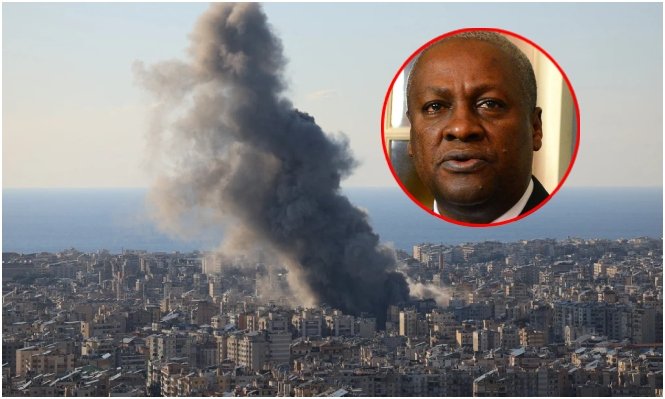
We have curated the most relevant and impactful stories from Ghana to keep you informed.
‘It’s Painful Christ’s Birthplace Now an Epicentre of War’ – President Mahama
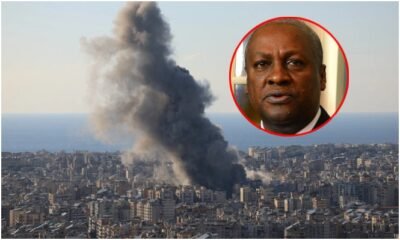
President John Dramani Mahama has described the ongoing violence in the Middle East as a “painful irony,” noting that the birthplace of Christianity and the land where Christ preached love, forgiveness, and peace has become a major centre of conflict. In his Easter message delivered at Black Star Square on April 3, 2026, Mahama said the suffering in the Holy Land cannot be ignored during the season of Easter. He extended Ghana’s thoughts and prayers to the people of Israel, the United Arab Emirates, Qatar, Iran, and the wider Middle East region, urging world leaders to embrace restraint, dialogue, and respect for human dignity.
Read the full story here
Gov’t to Construct New Concourse at Accra International Airport to Ease Congestion
The Ghana Airports Company Limited will begin construction this month on an ultra-modern concourse linking Terminal 2 and Terminal 3 at Kotoka International Airport. The project aims to eliminate current operational bottlenecks, enable seamless passenger transfers, and significantly improve hub efficiency. Key features include five additional passenger boarding bridges, five passenger holding areas, bi-directional travelators, new escalators and elevators, a VIP lounge, four business lounges, and four retail and duty-free pods. The expansion forms part of a broader modernisation drive to provide world-class facilities and strengthen Ghana’s position as a competitive aviation hub in West Africa.
Read the full story here
Gov’t Procures Over 24,000 Medical Equipment to Support Free Primary Healthcare Rollout
The Ghanaian government has acquired 24,534 pieces of medical equipment to strengthen health facilities ahead of the nationwide rollout of its free primary healthcare policy. The consignment, inspected by Health Minister Kwabena Mintah Akandoh, includes baby incubators, radiant warmers, oxygen concentrators, X-ray machines, ultrasound devices, laboratory analysers, vital signs monitors, glucometers, patient monitors, infusion devices, delivery beds, and hospital beds. The equipment will be distributed across government hospitals to improve diagnostics, newborn care, and overall service delivery at the primary level.
Read the full story here
Ghana to Manufacture First Vaccine with Support from Indonesia
Ghana is set to begin local production of its first vaccine with technical and partnership support from the Indonesian government. Honorary Consul of Indonesia to Ghana, Paskal A B Rois, confirmed that a high-level delegation from Ghana’s National Vaccine Institute, Food and Drugs Authority, and GIZ visited Indonesia late last year to finalise arrangements. Once operational, Ghana will become the third African country — after Senegal and South Africa — to manufacture vaccines domestically. The initiative is expected to enhance the country’s health security and reduce dependence on imported vaccines.
Read the full story here
No Business Thrives Without Trust in Justice System — Chief Justice
Chief Justice Paul Baffoe-Bonnie has emphasised that trust in the judicial system is essential for business growth and investor confidence in Ghana. Speaking at the Kwahu Business Forum on April 4, 2026, he stated that contracts must be honoured, property protected, and disputes resolved fairly and predictably for any economy to flourish. The Chief Justice announced that the judiciary is repositioning itself to become an active partner in creating a business-friendly environment anchored in the rule of law. He warned that delays and uncertainty in the justice system carry real economic costs by discouraging investment.
Read the full story here
Ghana News
Ghana President Convenes Emergency Cabinet Meeting to Cushion Ghanaians from Soaring Fuel Prices
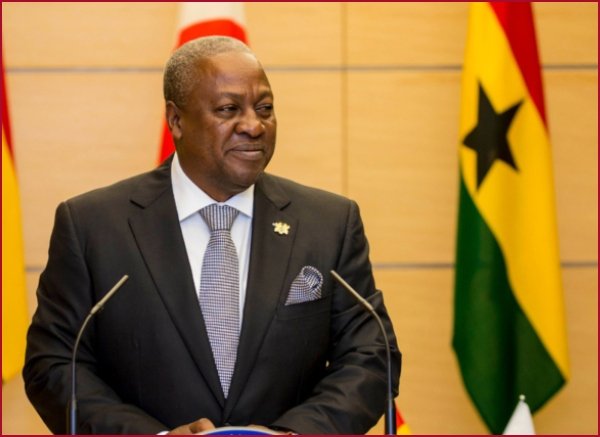
President John Dramani Mahama has convened an emergency cabinet meeting to address the sharp rise in fuel prices caused by the ongoing conflict in the Middle East, particularly the escalation involving Iran.
Speaking on Saturday, April 4, 2026, during the second day of the Kwahu Business Forum, President Mahama stated that the meeting will focus on practical interventions to ease the burden on citizens.
He specifically mentioned the possibility of adjustments in fuel margins and other components of the price build-up to help keep prices relatively stable while hoping for de-escalation of the conflict.
“I have called for this emergency cabinet meeting to decide on specific measures we can take to cushion petroleum prices,” Mahama said. “There are adjustments we can make, particularly in the margins, to help maintain relatively stable prices as we pray for the war to cease.”
The President assured Ghanaians that the government remains committed to protecting the economy from external shocks and has taken steps to build resilience.
“I can confidently tell you that the economy will not collapse because of the war in Iran,” he stated.
Mahama also commended transport unions for showing restraint by not immediately increasing lorry fares despite the fuel price surge.
He urged them to continue exercising patience as the government works on relief measures. Fuel prices rose significantly effective April 1, 2026, with petrol increasing to approximately GH¢13.30 per liter (a 15% hike) and diesel to GH¢17.10 per liter (a 19% hike) for the first half of April.
The government is reviewing options including reductions in margins and levies to provide relief to consumers.
This latest development highlights the direct link between global geopolitical tensions and domestic living costs in Ghana, as the government balances immediate relief with longer-term economic stability.


Renowned Global Bodies Warn Middle East War Will Scuttle Africa’s 2026 Growth

Ex-President Akufo-Addo and President Mahama Exchange Pleasantries on Easter

Mahama Calls Christ’s Birthplace an ‘Epicentre of War’, New Airport Concourse Planned and Other Big Stories in Ghana Today
-
 Ghana News1 day ago
Ghana President Convenes Emergency Cabinet Meeting to Cushion Ghanaians from Soaring Fuel Prices
-
 Ghana News24 hours ago
Mahama Calls Christ’s Birthplace an ‘Epicentre of War’, New Airport Concourse Planned and Other Big Stories in Ghana Today
-
 Ghana News24 hours ago
Ex-President Akufo-Addo and President Mahama Exchange Pleasantries on Easter
-
 Business23 hours ago
Renowned Global Bodies Warn Middle East War Will Scuttle Africa’s 2026 Growth