
Ghana News
Top Ghana Headlines: December 12, 2025 – Notorious Fraudster Arrested, Fuel Price Dip, Forex Crackdown Effects…Plus More


From falling fuel prices that promise a merrier Christmas, to a brazen courtroom invasion in Bono-East and a major health alert on everyday products, Ghana is making headlines at home and abroad.
Here’s your crisp, no-nonsense digest of the stories shaping the nation today – curated for Ghanaians everywhere and friends of Ghana across the globe. Enjoy.
1. Fuel Prices to Drop for Christmas
Ghanaians could enjoy lighter wallets this holiday season as petroleum prices signal a downward trend, according to Gabriel Kumi, Board Chairman of the Chamber of Oil Marketing Companies (COMAC). Speaking on JoyNews’ PM Express Business Edition on December 12, Kumi highlighted global declines in key products: diesel down about 10%, petrol around 6%, and LPG between 1-1.5%.
“Fortunately, Ghanaians are going to have a very good Christmas in terms of petroleum prices, because already the indication is that the price of finished petroleum products is going down,” he said.
The relief is set to kick in mid-December, with a general drop expected by the December 16 pricing window, provided the cedi holds steady. This comes as a second window covering the festive period promises further easing, easing strains on transport and cooking costs for families from Kumasi markets to Accra commuters. For global watchers eyeing Ghana’s economic pulse, this stability underscores the interplay of international oil markets and local currency resilience amid ongoing forex pressures.
2. Crackdown on Forex Black Market Dealers Seen As a Disrupter
The government’s aggressive raids on black market forex traders are backfiring, distorting rates and fueling cedi instability that ripples into fuel pricing, says Duncan Amoah, Executive Secretary of the Chamber of Petroleum Consumers (COPEC).
On December 11, Amoah’s team witnessed rates swing wildly within an hour while sourcing dollars, blaming the task force’s arrests—such as the seizure of GH¢1.2 million from 41 traders in Accra—for “unintended shocks.”
“Whatever the task force did yesterday… is also having a negative impact,” he noted, urging a “more friendly way” to regulate dealers who supply vital forex access.
This volatility exacerbates fuel costs, as the cedi’s erratic “on and off” performance—gaining then losing value—hikes import bills for petroleum. With recent police actions clamping down on “abokyi” operators, COPEC calls for a policy rethink to avoid worsening distortions. For international investors tracking West Africa’s currency woes, this news reflects the tightrope between enforcement and economic flow in Ghana’s informal markets.
3. Mob Storms District Court, Frees Prisoners in Shocking Assault on Justice System
A violent mob disrupted proceedings at the Kwame Danso District Court in Bono-East Region on December 10, freeing two remand prisoners and leaving judicial staff traumatized in a brazen attack that has sparked nationwide outrage.
The incident unfolded during the trial of Isaac Kwabena Mintah and two others on charges of unlawful damage, stealing, and assault; enraged locals, chanting threats from the nearby police station, stormed the courtroom with weapons, smashed furniture, and targeted the magistrate’s chambers before Atebubu reinforcements intervened. The Judicial Service Staff Association of Ghana (JUSAG) condemned the “disturbing trend” in a December 11 statement by National President Samuel Afotey Otu, demanding the Inspector General of Police (IGP) apprehend perpetrators and Chief Justice Paul Baffoe-Bonnie shutter the court until safety is assured.
“We further demand that the Inspector General of Police and his team take immediate steps to apprehend the perpetrators… and bring them to face the full rigor of the law,” JUSAG urged.
This follows repeated assaults on local police stations, raising alarms over Ghana’s rule-of-law reputation as Africa’s democratic beacon— a concern for global human rights observers monitoring vigilante justice in emerging democracies.
4. UNICEF-FDA Probe Exposes Toxic Metals in Everyday Ghanaian Products
A stark joint report from UNICEF and Ghana’s Food and Drugs Authority (FDA) has uncovered alarming levels of lead, cadmium, and mercury in popular items like cereal mixes, turmeric, and skin creams, posing severe health risks to vulnerable populations.
Testing 1,691 samples, the study found lead exceeding safe limits by over 100 times (up to 11,000 ppm vs. 20 ppm cap) in 78% of unbranded kohl from Upper East and Eastern regions, 42.1% of turmeric in Greater Accra and Central areas, 29% of cadmium-laced Tom Brown cereal mixes, and 24.6% of lead-tainted bentonite clay. Skin-lightening creams also failed miserably. UNICEF health specialist Dr. Emmanuel Kyeremateng-Amoah warned of lead poisoning’s devastating effects, calling for bolstered ministry resources for testing.
The FDA vows arrests for violators and stresses checking expiry dates and packaging. Consumers are advised to shun unbranded goods; for the global African diaspora sourcing heritage remedies, this is a wake-up call on supply chain safety in traditional markets.
5. Ghanaian Influencer Abu Trica Indicted in US for $8M Romance Scam
Snapchat sensation Abu Trica, real name Frederick Kumi, a 31-year-old from Swedru, faces up to 20 years in a US federal indictment for his role in an $8 million romance fraud ring targeting elderly Americans since 2023.
Charged with wire fraud conspiracy and money laundering by the FBI’s Cleveland Division, Trica allegedly used AI-faked personas to build trust via messages and calls, then siphoned funds for sham emergencies, routing proceeds through US accomplices to Ghana.
Ghanaian authorities have arrested him, marking a win for cross-border cyber enforcement led by Divine Selasi Agbeti. Social media erupted with condemnation of his cash-flaunting videos, drawing parallels to Hushpuppi:
“They will commit fraud then start flaunting… for what?” tweeted one person.
Another commented: “Small small, dem go barb all of them 1 by 1.”
Others invoked Proverbs on deceitful gains, lamenting how such displays pressure youth into crime. As Ghana grapples with its digital underbelly, this case spotlights the perils of unchecked online opulence for a global audience tuning into African influencer scandals.
6. President Mahama Lands in Kenya for State Visit, Eyes Jamhuri Day Ties
President John Dramani Mahama arrived in Nairobi on December 12 for an official state visit to Kenya, received with full military honors as Guest of Honour for tomorrow’s Jamhuri Day celebrations marking the republic’s founding. Accompanied by key officials, Mahama will attend a presidential luncheon hosted by President William Ruto before departing on December 13.
While specifics on trade or security agendas remain light, the trip underscores strengthening bilateral bonds amid East-West African diplomacy. For global observers, it’s a timely flex of Ghana’s regional leadership post-election.
7. US Diasporan Battles Greedy Landlord in Ghana Rent Dispute
A US-based Ghanaian returnee, @starringcourtny on TikTok, claims her landlord hiked fees post-payment of $1,532.62 for a 27-day “super safe” apartment stay, invoicing extras because “they could get more.”
“A dollar is a dollar; it doesn’t change for me,” she vented, armed with receipts and cedi conversions.
After escalating to Ghana’s Rent Control Office, a December 22 mediation is set—the landlord cited “complications” for missing the initial slot. Her story is an example of pitfalls for diaspora renters navigating homecoming deals; thorough docs are key, experts say.
Checkout what the print media are reporting also today
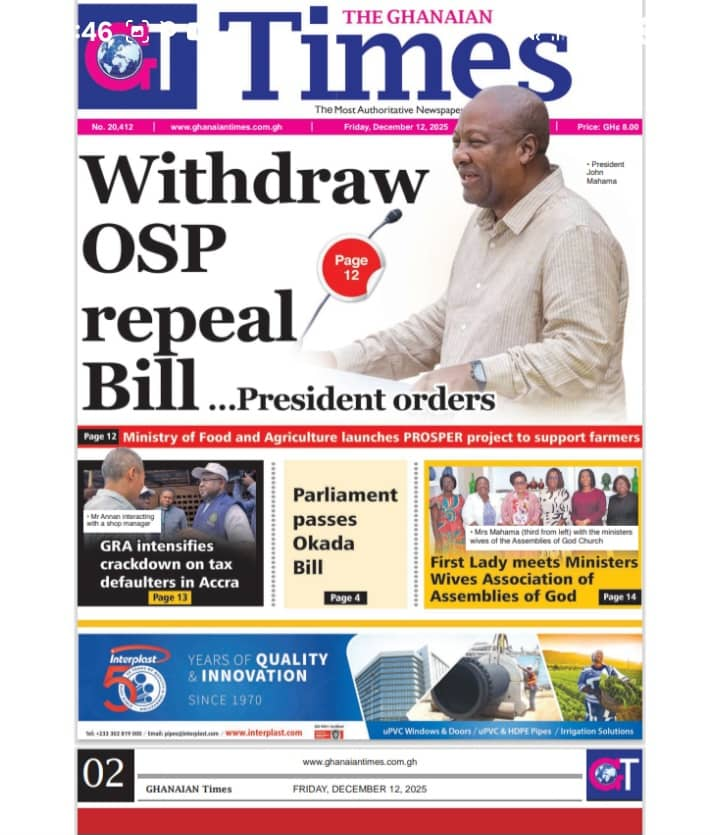

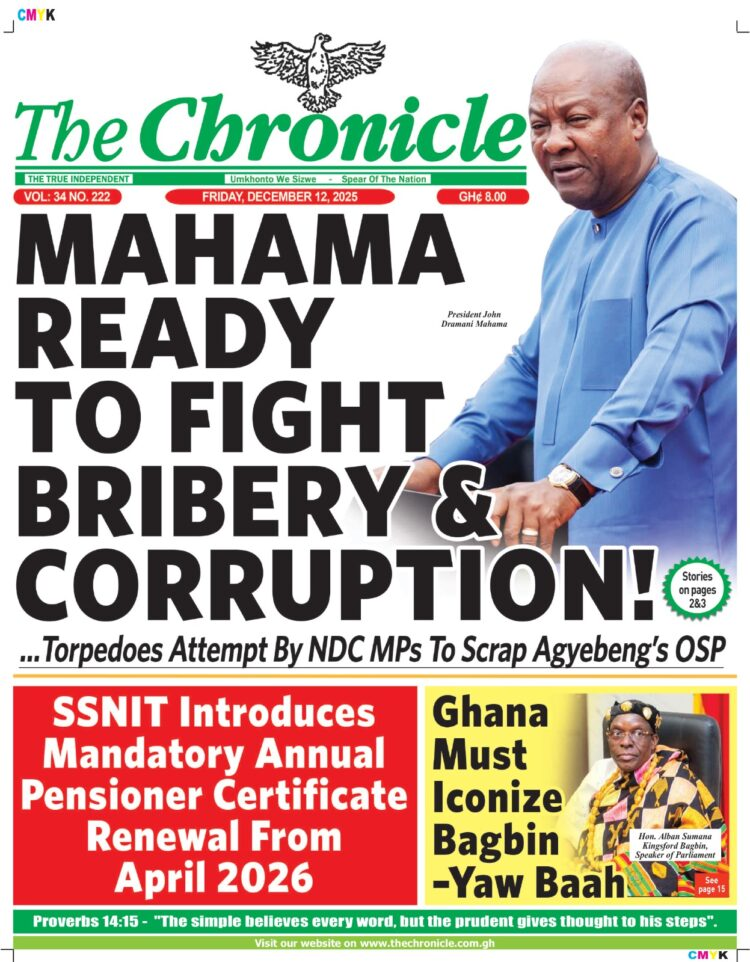
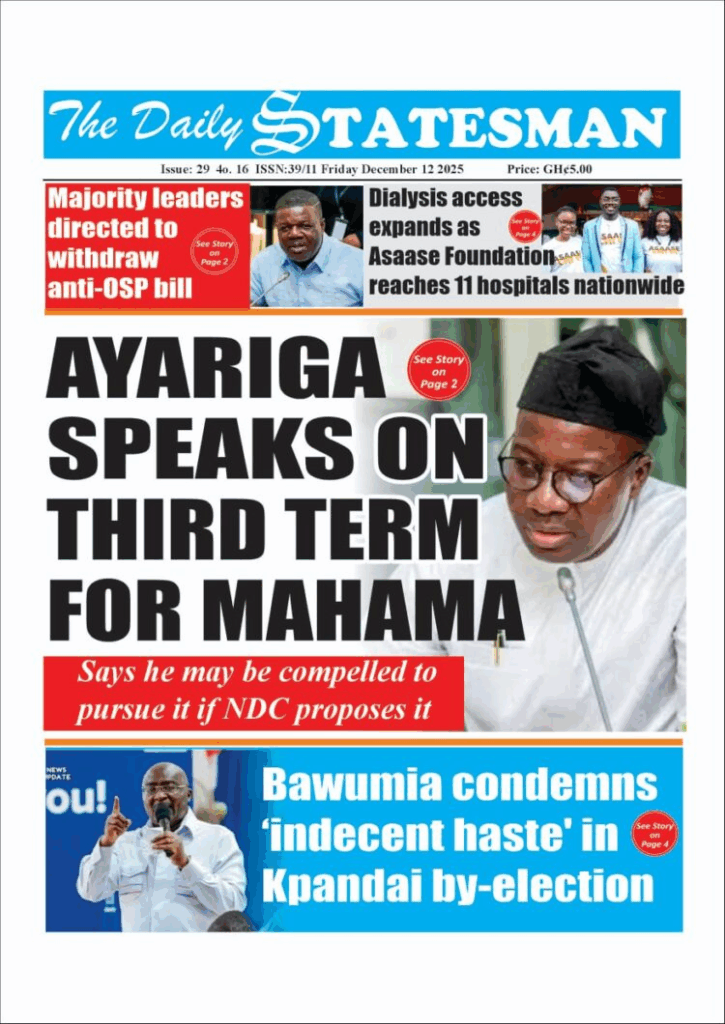







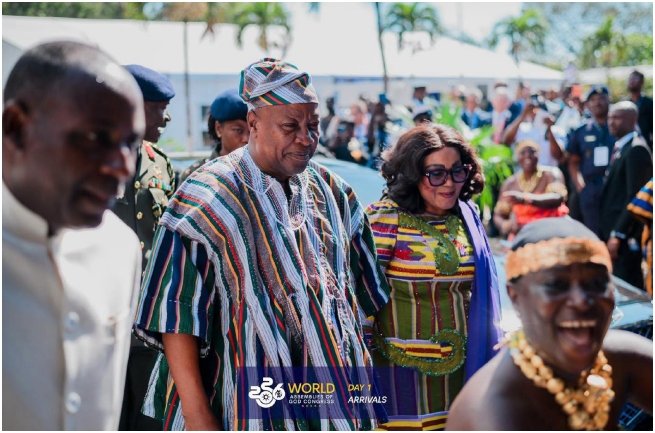
President John Dramani Mahama has challenged thousands of church delegates gathered in Ghana’s capital to measure the success of their global congress not by the eloquence of its sermons, but by the lives they transform after the final prayer is said.
“The lasting story of this conference, this congress, will be written in the lives that we touch after the closing prayer,” Mahama told more than 10,000 participants at the opening ceremony of the 10th Triennial Congress of the World Assemblies of God Fellowship on Wednesday, October 14, 2026.
The president urged delegates to return to their home countries with concrete plans to serve their communities — mentoring young people, supporting schools, strengthening health ministries and standing beside congregations serving under difficult conditions.
Faith Must Be Tangible
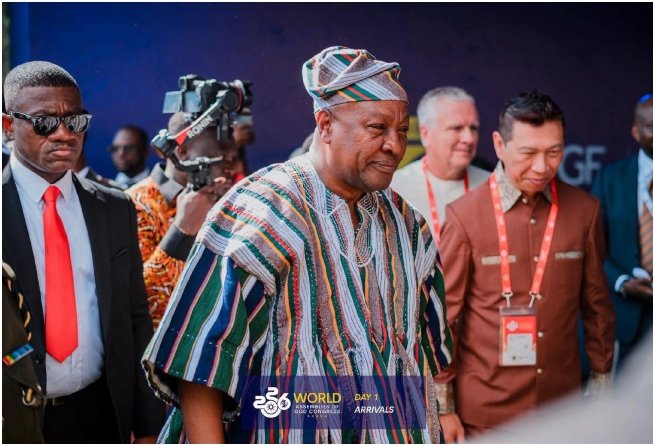
Mahama argued that faith becomes real only when it meets human need. He offered a vivid portrait of what practical Christianity looks like: a hungry child receiving a meal, a patient treated with compassion, a young person acquiring a skill, a widow finding companionship, and a struggling family receiving support from its community.
He called on the church to give greater attention to the relationship between preaching the gospel and serving people in practical ways, saying the two must not be separated.
“Spiritual authority entails a duty of care,” the president said, stressing that churches must provide safe environments for children and vulnerable people. He warned that spiritual leadership carries a responsibility to protect the trust placed in it through responsible conduct.
A Warning on Youth and Technology
Turning to youth development, Mahama acknowledged that young people today are growing up in a world of extraordinary opportunity, but also considerable pressure. Technology, he said, connects young people across continents while simultaneously exposing them to constant comparisons, misinformation and competing expectations about who they should become.
He urged churches and families to create environments where young people can ask questions freely, receive guidance, develop their abilities and take on meaningful responsibilities. Delegates, he said, should mentor young people by listening to them, offering opportunities for service and modelling integrity.
The president also called on the church to recognise the contributions of women of faith, saying their wisdom, talents and leadership deserve full recognition.
A Call for Global Solidarity
Addressing the global nature of the fellowship, Mahama expressed hope that members with greater resources would find ways to support those with fewer. The fellowship, he said, would grow stronger when its members shared their gifts and stood with one another through difficult times.
He also spoke directly to the responsibility of public office, saying those entrusted with power had a particular duty to serve with humility, honesty and integrity. Faith, he added, should deepen respect for citizens and concern for those whose voices are least likely to reach the centres of power.
Historic Honour for a Pentecostal President
At the ceremony, the World Assemblies of God Fellowship presented Mahama with its maiden Global Leadership Excellence and Trailblazer Award. The citation described him as the first member of the Assemblies of God worldwide to become president of a country — a milestone for the denomination.
Organisers also presented him with a Bible and urged him to allow the Word of God to guide his leadership.
The fellowship honoured First Lady Mrs. Lordina Mahama for her work supporting vulnerable people through her compassion ministry.
Former Malawian President Dr. Lazarus Chakwera also received the Global Leadership Excellence Award. His citation described him as the second member of the denomination — and the first minister of the gospel within the fellowship — to become president of a country.
Prayers for Wisdom and Redistribution
Following the awards, general superintendents and Ghanaian church leaders gathered around Mahama to pray for him. The prayer leader, Reverend Dominic Yeo, the fellowship’s Global Chairman, asked God to grant the president “divine wisdom” and prayed for the continuation of what he described as a reformation agenda.
He also prayed for “a redistribution of wealth throughout this nation so that all Ghanaians will be blessed,” a prayer that resonated beyond the sanctuary walls in a country where economic inequality remains a pressing concern.
A Global Gathering in Accra
The 10th Triennial Congress has drawn more than 10,000 participants to Accra, making it one of the largest Pentecostal gatherings on the continent this year. The event brings together delegates from across the global fellowship, reflecting the denomination’s growing presence in Africa and beyond.
For Mahama, however, the congress’s true significance will not be found in its attendance figures or its ceremonies — but in what delegates do once they return home.
“Faith becomes tangible,” he said, “when a hungry child receives a meal, a patient is treated with compassion, a young person acquires a skill, a widow finds companionship and a struggling family receives support from its community.”
The closing prayer, it seems, is only the beginning.
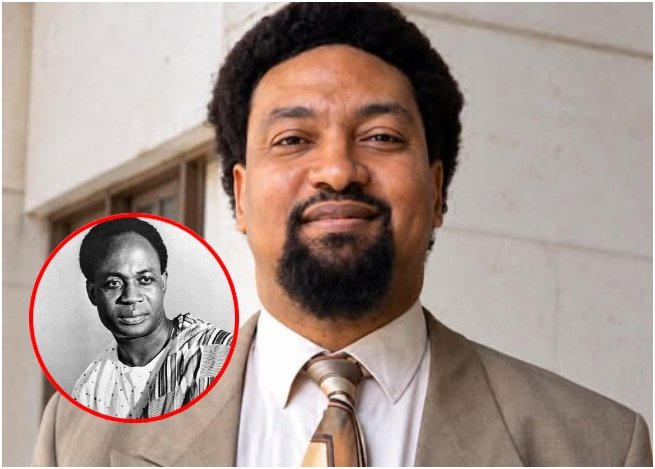
Gamal Gorkeh Nkrumah, the journalist, writer, and intellectual son of Ghana’s founding president, Osagyefo Dr. Kwame Nkrumah, has died in Cairo, Egypt, following a prolonged illness. He was 67.
The Nkrumah family announced his passing in a statement released Tuesday, describing it as “a profound loss not only to our family and loved ones, but also to the wider community of friends, colleagues and readers who valued his insight, humanity and unwavering engagement with the great questions of our time.”
According to the family, Gamal Nkrumah passed away peacefully after receiving care at a rehabilitation centre, where he had been recovering from a stroke.
A Life of Intellectual Engagement
Born in 1958, Gamal Nkrumah carved out a distinct identity as a newspaper journalist and commentator, dedicating his voice and intellect to examining the political, social, and cultural forces shaping Africa and the wider world.
Throughout his life, the family said, he remained “deeply committed to the ideals of justice, human dignity, African unity and international solidarity.”
Described as a man of “profound intellectual curiosity, independence of thought and quiet conviction,” Gamal carried forward the legacy of his father in his own distinctive way, while building a reputation firmly grounded in his own principles and achievements.
His passing marks the loss of a respected voice in African journalism and intellectual life, one whose work spanned continents and engaged deeply with the pressing issues of his time.
A Family in Mourning
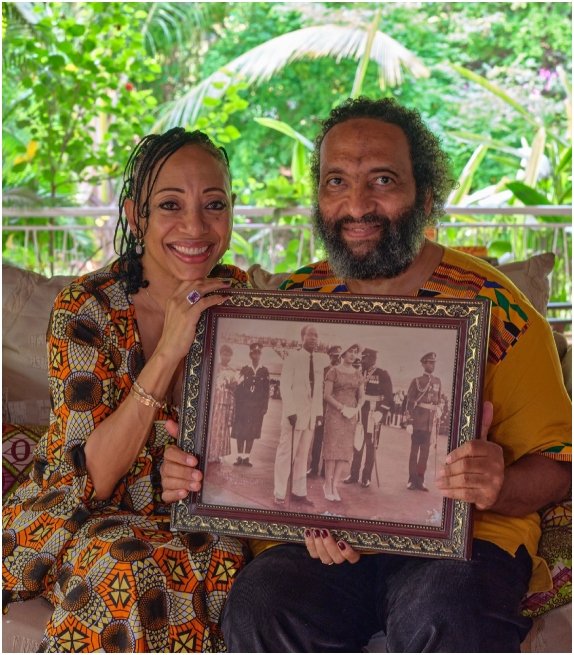
Gamal was one of the acknowledged children of Kwame Nkrumah and Fathia Nkrumah. He is survived by his siblings: Samia Nkrumah (born 1960), a politician and former leader of the Convention People’s Party (CPP); Dr. Francis Nkrumah (born 1962), a paediatrician; and Sekou Nkrumah (born 1964), a politician and photographer.
The Nkrumah family remembered Gamal “with immense love, gratitude and pride,” stating that “his wisdom, kindness and devotion to the values he held dear will remain an enduring source of inspiration.”
Gratitude and Requests for Privacy
In their statement, the family expressed heartfelt appreciation to all those who stood with Gamal throughout his illness, particularly the medical professionals and caregivers in Cairo who provided him with care and dignity.
They also extended “deepest thanks” to the governments and people of his two countries, Egypt and Ghana, for their generous support.
The family has kindly requested privacy as it mourns this deeply personal loss. Details concerning memorial arrangements and opportunities to pay tribute to his life and legacy will be communicated in due course.
“May he rest in eternal peace,” the statement concluded.
Ghana News
Ohio Court Orders Ghanaian Care Worker to Repay $53,278 After Workers’ Compensation Fraud Conviction

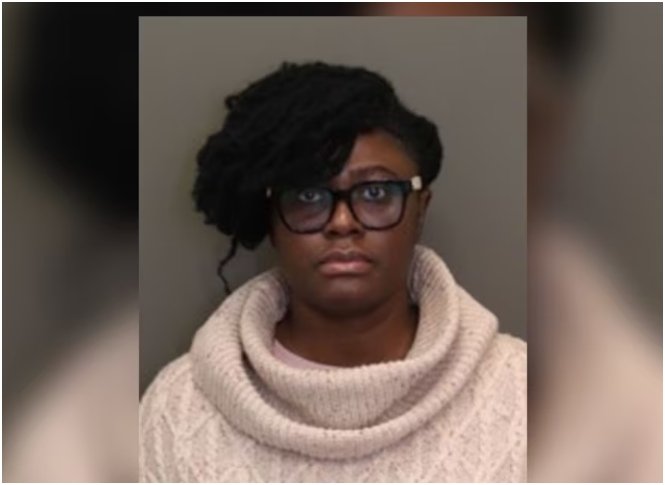
Betty Boateng, 50, of Columbus, pleaded guilty to a fifth-degree felony after investigators found she collected disability benefits while working for two in-home care employers
A US-based Ghanaian woman has been ordered to repay more than $53,000 to the state of Ohio after admitting she collected workers’ compensation disability benefits while simultaneously holding paid jobs, authorities announced.
Betty Boateng, 50, of Columbus, pleaded guilty to one count of Workers’ Compensation Fraud, a fifth-degree felony, following an investigation by the Ohio Bureau of Workers’ Compensation (BWC) Special Investigations Department, the agency said in a news release dated October 9, 2026.
Investigators found that Boateng “knowingly and with fraudulent intent returned to work for two different employers during periods when she was receiving BWC disability benefits to which she was not entitled.”
Evidence gathered during the probe showed she earned wages while continuing to accept disability checks, resulting in improper payments totaling $53,278.40.
Sentencing in Franklin County
On September 23, 2026, a judge in the Franklin County Court of Common Pleas accepted Boateng’s guilty plea and proceeded directly to sentencing, ordering:
- A 12-month suspended sentence
- 60 months of community control
- Mandatory reporting requirements
- Restitution of $53,278.40 to the Ohio BWC
- Waiver of fines, with court costs imposed
The case centered on Boateng’s work providing non-medical in-home care services for multiple employers, work she performed while receiving disability benefits she was not entitled to.
“Fraud Hurts Honest Workers”
BWC Administrator Stephanie McCloud said the agency remains committed to protecting the state’s workers’ compensation fund.
“Fraud against the workers’ compensation system hurts honest Ohio workers and employers,” McCloud said. “We are committed to holding accountable those who abuse the system and ensuring that funds remain available for individuals truly in need.”
The BWC urged anyone who knows of or suspects workers’ compensation fraud to contact its Special Investigations Department at 1-800-OHIO-BWC.
A Cautionary Tale for the Diaspora
The conviction adds to a growing list of cases involving Ghanaian nationals abroad facing fraud-related charges in the United States. Ghanaian communities in the US — particularly in cities such as Columbus, which has a sizable Ghanaian population — have increasingly been urged to understand the strict compliance rules attached to public benefit programs.
Workers’ compensation fraud in Ohio can be prosecuted as a felony depending on the amount involved, and convictions typically require full restitution in addition to any criminal penalties.



-

 Ghana News23 hours ago
OBITUARY: Gamal Gorkeh Nkrumah, Son of Ghana’s Founding President, Dies in Cairo
-

 Health & Wellness1 day ago
Walking Is More Than Exercise: Small Steps That Can Transform Your Health
-

 Festivals & Events21 hours ago
MaddFest 2027: Welcome the New Year with a Night of Celebration in Accra
-

 Sights and Sounds2 days ago
EPP BookShop at Legon: A Destination for Students, Families and Book Lovers
-
 Homes & Real Estate2 days ago
Building Smarter in Ghana: Could Plastic Rebar Clips Improve Construction Efficiency?
-
 Arts and GH Heritage1 day ago
Inside Togo’s Abandoned Colonial Building, African Artists Reclaim Cultural Memory
-

 Global Update22 hours ago
Wave of Student Killings at Mexico Universities Raises Safety Concerns
-

 Ghana News22 hours ago
Mahama to Churches: The Real Sermon Is Written After the Closing Prayer