
Reels & Social Media Highlights
The ‘Ghanaian’ Saturday Morning Rhyme That Crossed the Ocean


If you grew up in Ghana in the 90s, Saturday mornings had a soundtrack. And that soundtrack was Chichukule.
The voice belonged to Uncle George Lane—or as the kids called him, Uncle Gorgeous Georgie. On Chichukule, which aired on GTV, he brought stories, rhythms, and life lessons into living rooms across the country. He moved. He danced. He made you feel like he was talking only to you.
But here is the thing about that famous song. Most of us assumed Uncle George wrote it. A new video from @Sankofatapes on Instagram is reminding us that the truth is a little deeper.
The melody had been around for close to a century. It was passed down orally, sung by children long before television existed. Uncle George simply gave it a face and a Saturday time slot.
What happened next? The song slipped out of Ghana and started walking.
Across West Africa, kids sang it. In the Caribbean, it found new playgrounds. And then, something unexpected happened. In the 1970s, two Latin musicians—Willy Colón and Héctor Lavoe—got hold of it.
They sampled the tune, added salsa horns, and turned it into a full-blown Latin track. Also titled Chichukule, it became a salsa record. A piece of Ghanaian childhood, pressed onto vinyl and played in dancehalls across Mexico and Latin America.
Think about that journey. A rhyme whispered by Ghanaian grandmothers to their grandchildren. Carried orally for decades. Placed on television by a man with a big smile. Then floated across oceans to become a salsa rhythm in a language thousands of miles away.
Uncle George may not have invented the song. But he gave it wings. And now, every time that tune plays—whether in a classroom in Accra or a club in Mexico City—it still sounds like Saturday morning.



Reels & Social Media Highlights
How Social Media is Painting Ghana’s 69th Independence Day Celebration
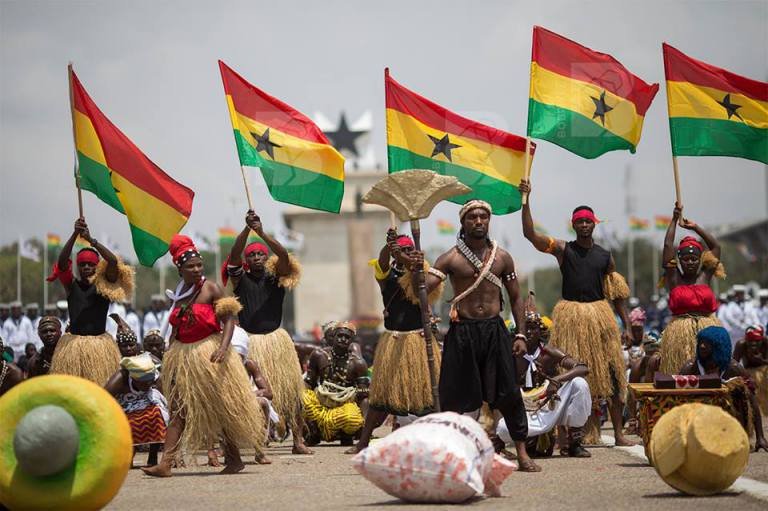
Scroll through your timeline tonight, and you will feel it. The flags are going up in the neighborhoods. The last-minute tailors are working overtime. But the main stage for this year’s Independence celebration? It is right in our palms.
On Friday, March 6, Ghana turns 69. And if you want to know how we are really preparing, forget the parade routes. Look at the trends. Right now, the energy is split between a football-fueled frenzy and a quiet revival of everything hand-woven.
The National Jersey Hunt
Let us address the chaos. If you do not have a Black Stars jersey by now, you might have to sit this one out.
Social media has turned jersey-buying into a competitive sport. Videos are surfacing everywhere showing crowds crammed into sports shops, grabbing at anything that is red, gold, and green. Prices that sat quietly at GH¢80 have reportedly jumped to GH¢1500 in some spots. Vendors and customers are going back and forth, and there is already talk of regulators stepping in.
Why now? It is not just fashion. The Black Stars are heading to the World Cup, and that energy is spilling directly into our national day. People are tired of waiting for politics to give them a reason to feel proud. Football delivered first.
🥳Some 69 on Friday to celebrate Ghana at 69 🇬🇭🇬🇭 pic.twitter.com/dyZJidYOgh
— 𝖲ɣᑯ౿ᑯ𓃵 (@Mi_Syded) March 5, 2026
As one user put it:
Football brings us together in ways politics never could 🇬🇭 who else agrees
— Grace_Unspeakable (@Great8_Grace) March 3, 2026
Another fan captured the rush:
This is the real Black Stars spirit – rush am before dem increase price again! March 6 we go show full force, no cap!
— Stessy ✨ (@stessysteve) March 3, 2026
But where there is a trend, there is always a gentle pushback. Content creator Kobe Boujee raised an eyebrow and asked the question on some minds:
How about Ghanaians channel the same energy to the Fugu this March, like the Ghana jersey?? At least you could wear it one very occasion.
— Kobe Boujee (@kobeboujee) March 2026
The Fugu Hold
And honestly? The timing is right.
Just weeks ago, the Fugu (or Batakari) was at the center of an unexpected storm. When President Mahama wore one to Zambia, the jokes came fast. But the comeback was faster. Ghanaians turned the mockery into a movement, pushing #FuguDay and #FuguPride to trend globally with millions of posts.
A vintage clip of Kwame Nkrumah is making the rounds again, reminding us why this matters:
Kwame Nkrumah wore African cloth while declaring that we are capable of managing our own affairs. We must trade among ourselves, produce what we consume, add value to our resources, respect our culture, and project pride in who we are. Development starts with mindset. Culture is power. Identity is strength. Self-belief is development.
— Abeiku Santana (@AbeikuSantana) February 2026
March is officially Ghana Month, and the “wear Ghana” push has real legs this year. Offices are coordinating Fugu Wednesdays. Podcast hosts are sitting in Kente. Families are booking studio sessions in matching prints. The debate online—jersey versus smock, modern versus traditional—is lively. But the fact that we are arguing about culture at all? That is the win.
The Eve Mood
Beyond the clothes, the preparation is also mental. The Ghana Studies Association is hosting a heavy conversation with President Mahama and ex-President Kufuor on “Ghana in Uncertain Times.” The Africa Prosperity Network is mixing musicians with politicians to talk about opening borders.
And for the ones who just want to feel something good, a video from the 10th Independence celebration at Labadi Beach is floating around:
Throwback to Ghana’s 10th independence Anniversary celebration at Labadi Beach in March 1967.
— Trendsgist (@Trendsgistt) March 3, 2026
Watching the crowd in 1967 move to highlife by the shore hits different tonight. It is a quiet reminder that this feeling—this pride—is not new. It just wakes up every March.
Tonight’s Vibe
So as we sit in Independence Eve, the preparation looks different on everyone. Some are ironing jerseys. Some are shaking out smocks. Some are logging into Zoom to hear the elders speak.
The thread tying it all together? A real hunger to feel good about home again. Whether it comes from a World Cup qualification or a strip of handwoven cloth, the pride is honest.
Tomorrow, wear something. Wear red, gold, and green. Wear a jersey. Wear a smock. Just wear it like you mean it.
Happy 69th, Ghana. We are not just counting years. We are living them.
If you blinked, you missed it. Between Monday’s rush and Wednesday’s lunch, Ghana’s social media forgot about cocoa prices, forgot about politics, and spent two full days arguing about a Russian man none of us had heard of before.
The Yaytseslav Situation
His name is Vyacheslav Trahov. Online, he goes by Yaytseslav. And for 48 hours, he owned Ghanaian Twitter.
The man walked around Accra Mall with Meta glasses, approached women, struck up conversations, and filmed everything. Some ended up at his apartment. Some ended up on his Telegram channel, where subscribers pay $5 a month for content too explicit for YouTube.
By Tuesday, the timeline had split into factions. One side called the women “cheap.” Another side pointed out the obvious: a foreigner secretly filming intimate encounters and monetising them without consent isn’t exposing anything except his own criminality.
By Wednesday evening, the Russian was reportedly deleting Ghana content from his channels. The consensus? Ghanaians don’t play that game.
Meanwhile, the 5G News Dropped
Buried under the Russian drama, Next Gen Infraco quietly launched commercial 5G operations. Available in parts of Accra, Kumasi, and Tamale now. Nationwide coverage promised by March 2027, just in time for Ghana @70.
The Duabo King Lesson
The same week, TikToker Duabo King learned that views have consequences. He posted a video accusing Kumasi police officers of misconduct with commercial workers. Under interrogation, he admitted fabricating the whole thing. Just wanted to trend.
He’s now in police custody—the charge: publication of false news with intent to cause fear and panic.
And Heritage Month Started
March 3 kicked off Heritage Month 2026 with a simple call from the Tourism Minister: See Ghana, Eat Ghana, Wear Ghana, Feel Ghana. Culinary showcases, regattas, and festivals running through March. Probably worth more attention than a Russian with a hidden camera.
But the algorithm decides, doesn’t it?
Reels & Social Media Highlights
Ghana Social Media Digest: The “720 Birds” Storm and a Love Story for the Ages
As February ended and March began, Ghanaian social media—particularly Facebook and X (formerly Twitter) – was set ablaze by two dominant and contrasting trends: a fiery political controversy and a heartwarming tribute to football royalty.
The “#MahamaLied” Frenzy
The weekend’s biggest talking point stemmed from President John Dramani Mahama’s State of the Nation Address (SONA) delivered on February 27. During his speech, the President outlined the Nkoko Nkitinkiti poultry programme, stating that 720 birds had been distributed to 13,000 farmers during a pilot phase.
The arithmetic almost instantly broke the internet. Ghanaians on X did the math, calculating that this meant roughly 0.05 birds per farmer, leading to an avalanche of memes and sarcastic commentary.
The hashtags #MahamaLied, #StateOfHopelessAddress, and #CocoaFarmersHaircut began trending as users questioned the feasibility of the figures. Many speculated it was a slip of the tongue, suggesting the President likely meant 720,000 birds, but the damage was done as the joke took on a life of its own .
Check out the reaction that started it all:
Eiii John Mahama says he distributee distributed 720 birds to 13,000 farmers.
— Gen. Buhari (@Gen_Buhari_) February 27, 2026
Herr so how will 13,000 peopple share 720 birds?? This is the biggest lies ever to be told by a Ghanaian since independence.#StateOfHopelessAddress#MahamaLied#CocoaFarmersHaircut pic.twitter.com/wZTo3MK9qi
A “Masterclass in Loyalty”
Amidst the political firestorm, a softer trend captured hearts. As the month of love wound down, a viral Facebook post from DFKOrg Magazine celebrating the 40-year marriage of football legend Abedi ‘Pele’ Ayew and his wife Maha trended across platforms.
Their story, which began in France in the 1980s, was hailed as the foundation of Ghana’s greatest football dynasty, producing sons André, Jordan, and Rahim Ayew


Mahama on Independence Day: Ghana Must Lead in AfCFTA to Unlock Africa’s Economic Destiny

Ghana’s 5G Future Hinges on Speed and Scale – Telecom Expert Warns as NCA Targets Exclusivity Clause

5 Foreign Governments Pressure Ghana to Abandon Proposed Gold Royalty Overhaul
-
 Ghana News19 hours ago
69 Years of Independence: Quick Timeline of Ghana’s Biggest Milestones Since 1957
-

 Ghana News4 hours ago
Independence Day Spending Scaled Down, CIA’s Role in Nkrumah’s Overthrow and Other Trending Issues in Ghana Today (March 6, 2026)
-
 Ghana News1 day ago
Vendor Defends Frying With Plastic in Oil, Missing Young Woman, and Other Trending Topics in Ghana Today (March 5, 2026)
-
 Ghana News5 hours ago
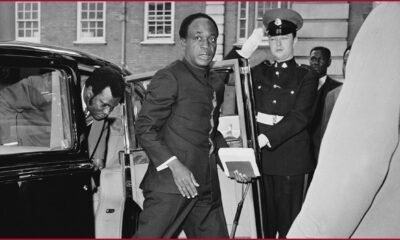
Video: How Kwame Nkrumah, Ghana’s Founding Father, Became Its ‘Prisoner’
-
 Taste GH6 hours ago
Why Ghanaians Keep Coming Back to Rice Balls and Groundnut Soup
-
 Business3 hours ago
5 Foreign Governments Pressure Ghana to Abandon Proposed Gold Royalty Overhaul
-

 Culture21 hours ago
“You’re Supposed to Be Creating Jobs”: Ghana’s Ministry of Creative Arts Under Fire for Using AI Instead of Real Creatives For New Ad
-
 Ghana News1 hour ago
Mahama on Independence Day: Ghana Must Lead in AfCFTA to Unlock Africa’s Economic Destiny